Round table discussions

Residential security and smart homes are rapidly changing facets of the larger physical security marketplace, driven by advances in consumer technology and concerns about rising crime rates. During the COVID-19 pandemic, many people spent more time at home and became more aware of the need for greater security. As workplaces opened back up, returning workers turned to technology to help them keep watch over their homes from afar. We asked this week’s Expert Panel Roundtable: What are the...

Since the advent of the physical security industry, access control has been synonymous with physical cards, whether 125 kHz ‘prox’ cards or the newer smart card alternatives. However, other credentials have also come on the scene, including biometrics and even smart phones. Some of these choices have distinct cost and security advantages over physical cards. We asked this week’s Expert Panel Roundtable: How soon will the access control card become extinct and why?

Cost is a reality to be managed. No matter how powerful or desirable a technology may be to a customer, the sale often comes down to the basic question: Can I afford it? And affordability extends not just to the purchase price, but to the cost of technology over its lifespan. In addition to advances in technology capabilities, the security industry has also achieved inroads to make its offerings more worth the cost. We asked this week’s Expert Panel Roundtable: What is the physical securi...

“Deep learning” is recently among the more prevalent jargon in the physical security industry, and for good reason. The potential benefits of this subset of artificial intelligence (AI) are vast, and those benefits are only now beginning to be understood and realised. But how can we separate the marketing hype from reality? How can we differentiate between future potential and the current state of the art? To clarify the latest on this new technology, we asked this week’s Exper...

Crime prevention is a basic goal of security, even if a security system merely convinces a criminal to seek out a different target. However, many of today’s security technologies are most useful after the fact, to provide forensic information about a crime that has already taken place. Solving a crime presents a whole new level of challenge. Surely, prevention is the best approach. We asked this week’s Expert Panel Roundtable: How successful is the security industry in crime preventi...

Artificial intelligence (AI) is simultaneously an emerging technology, a common term in popular culture, and a buzzword in the security industry. But these aspects of the term can lead to misunderstanding in the marketplace. AI technology is continuing to emerge, but what is the reality today? How do depictions of AI in popular culture impact how it is understood in the real world of security? As a buzzword, at what point does marketing hype garble our understanding of reality? We asked this wee...

The idea of touchless systems has gained new levels of prominence during the last year, driven by the global COVID-19 pandemic. Contactless systems have been part of the industry’s toolbox for decades, while technologies like facial and iris recognition are finding new uses every day. We asked this week’s Expert Panel Roundtable: Which security markets are embracing touchless, contactless systems and why?

Adoption of General Data Protection Regulation (GDPR) by the European Union in 2016 set a new standard for data privacy. But adherence to GDPR is only one element, among many privacy concerns sweeping the global security community and leaving almost no product category untouched, from access control to video to biometrics. Because privacy concerns are more prevalent than ever, we asked this week’s Expert Panel Roundtable: What is the impact on the physical security market?

Many of us take critical infrastructure for granted in our everyday lives. We turn on a tap, flip a switch, push a button, and water, light, and heat are all readily available. But it is important to remember that computerised systems manage critical infrastructure facilities, making them vulnerable to cyber-attacks. The recent ransomware attack on the Colonial Pipeline is an example of the new types of threats. In addition, any number of physical attacks is also possibilities. We asked this we...
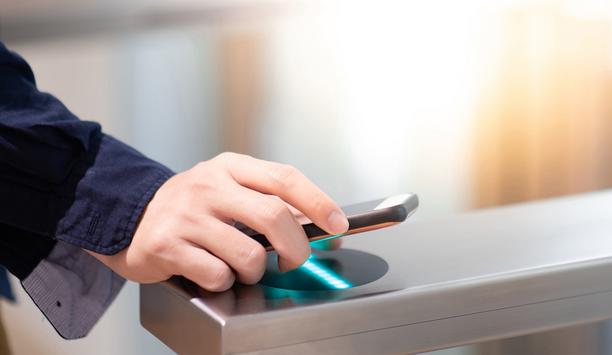
There is a broad appeal to the idea of using a smartphone or wearable device as a credential for physical access control systems. Smartphones already perform a range of tasks that extend beyond making a phone call. Shouldn’t opening the door at a workplace be among them? It’s a simple idea, but there are obstacles for the industry to get there from here. We asked this week’s Expert Panel Roundtable: What are the challenges and benefits of mobile access control solutions?

In-person training sessions were mostly canceled during the worst of the COVID-19 pandemic. However, the need for training continued, and in some cases increased, as the security industry sought to adapt to the changing business climate of a global emergency. So how well did we as an industry adjust? We asked this week’s Expert Panel Roundtable: How has security industry training changed in the last year?

Perimeter security is the first line of defence against intruders entering a business or premises. Traditionally associated with low-tech options such as fencing, the field of perimeter security has expanded in recent years and now encompasses a range of high-tech options. We asked this week’s Expert Panel Roundtable: What are the latest trends in perimeter security technology?

Large public events were out of the question during the depths of the pandemic. However, public events are likely to experience a resurgence along with a more optimistic outlook in the coming months. In addition, there will likely be pent-up enthusiasm for these events among individuals weary from months of isolation. We asked this week’s Expert Panel Roundtable: What are the security challenges of public events planners in 2021?

In the past few weeks, the light at the end of the COVID-19 tunnel has brightened, providing new levels of hope that the worst of the pandemic is behind us. Dare we now consider what life will be like after the pandemic is over? Considering the possible impact on our industry, we asked this week’s Expert Panel Roundtable: Which security technologies will be most useful in a post-pandemic world?

Security systems are vital to any company. Nowadays, however, they can also provide additional benefits to any enterprise beyond protecting people, assets and facilities. Specifically, systems that were previously focused on security can now be leveraged in new ways to benefit the broader enterprise. When this happens, the security department transitions from a ‘cost centre’ to a repository of data that can benefit the whole company, and even contribute to the bottom line. We asked t...

The topic of video analytics has been talked and written about for decades, and yet is still one of the cutting-edge themes in the physical security industry. Some say yesterday’s analytics systems tended to overpromise and underdeliver, and there are still some skeptics. However, newer technologies such as artificial intelligence (AI) are reinvigorating the sector and enabling it to finally live up to its promise. We asked this week’s Expert Panel Roundtable: What new technologies a...

During the coronavirus lockdown, employees worked from home in record numbers. But the growing trend came with a new set of security challenges. We asked this week’s Expert Panel Roundtable: What is the impact of the transition to remote working/home offices on the security market?

Contact tracing has been more than a buzzword during the coronavirus pandemic. In some cases, it has been an issue of life and death. Tracking who an infected person has been in contact with is an important tool to minimise disease spread, and technology from the physical security industry claimed a role in contact tracing early on – and continues to provide benefits as companies seek to reopen. We asked this week’s Expert Panel Roundtable: How can the security industry enhance conta...

When technology performs a required task effectively, there is little reason to upgrade to the ‘next big thing’. In this regard, the physical security market is notoriously slow to change. Much of yesterday’s most robust and dependable equipment is still in place at thousands of customer sites, still performing as well as the day it was installed. However, there comes a point when any technology becomes outdated. We asked this week’s Expert Panel Roundtable: Which securi...

When the United Kingdom voted to leave the European Union, a world of uncertainty unfolded for those doing business in the UK and the EU. The referendum was passed in July 2016. Including subsequent delays, the separation was completed after four years in January 2020, with a transition period ending December 2020. Even with the deadlines past, there are still pockets of uncertainty stemming from the separation. We asked this week’s Expert Panel Roundtable: How has Brexit affected the secu...

It has been two years or so since the last ISC West trade show, the biggest security show in the U.S. market. The coronavirus pandemic has caused a year’s worth of trade show cancellations, and the trend will continue for a while longer. The absence of trade shows has been transformative for the security marketplace, among others, as companies implemented a variety of alternative approaches, with mixed results. We asked this week’s Expert Panel Roundtable: What impact has the cancel...

Security technology has been a vibrant and successful market for decades now, but sometimes the public is not aware of those successes. Awareness in some cases is limited because security technologies work ‘behind the scenes’ to keep everyone safe. In other cases, the industry may be seen in a negative light, based on misinformation about topics such as surveillance and privacy. How can we get the word out about our industry’s successes? We asked this week’s Expert Panel...

Small and medium-sized businesses (SMBs) make huge contributions to the economy overall. Considered individually, they may not be as large as companies in the enterprise market, but they have big requirements when it comes to security. SMBs also present unique challenges to security manufacturers and integrators seeking to serve their needs. We asked this week’s Expert Panel Roundtable: What are the security challenges of protecting small and medium-sized businesses (SMBs)?

Our Expert Panel Roundtable is an opinionated group. However, for a variety of reasons, we are sometimes guilty of not publishing their musings in a timely manner. At the end of 2020, we came across several interesting comments among those that were previously unpublished. Following is a catch-all collection of those responses, addressing some of the most current and important issues in the security marketplace in 2021.

The COVID-19 global pandemic had a life-changing impact on all of us in 2020, including a multi-faceted jolt on the physical security industry. With the benefit of hindsight, we can now see more clearly the exact nature and extent of that impact. And it’s not over yet: The pandemic will continue to be top-of-mind in 2021. We asked this week’s Expert Panel Roundtable: What have been the positive and negative effects of Covid-19 on the physical security industry in 2020? What impact wi...

The “Roaring Twenties” was a decade of economic growth and widespread prosperity, driven by recovery from devastation, a construction boom, and welcoming of new technologies such as automobiles and electricity. As we look ahead to the big picture of the 2020s, 100 years later, are there parallels that suggest a successful decade ahead? Might recovery from the devastation of COVID-19 help to drive even higher levels of economic growth and technical innovation? We asked this week&rsquo...

We are several weeks into 2021, and it is already shaping up to be an eventful year. The happenings and trends from 2020 will likely carry over into the new year, but in a fast-moving industry such as ours, there will also be additional trends to watch. Looking toward the year ahead, we asked this week’s Expert Panel Roundtable: What will be the biggest security trends in 2021?

As an industry, we often speak in buzzwords. In addition to being catchy and easy to remember, these new and trendy industry terms can also reflect the state of the security market’s technology. In short, the latest buzzwords provide a kind of shorthand description of where the industry is - and where it’s going. We asked this week’s Expert Panel Roundtable: What new buzzword(s) rose to prominence in the security industry in 2020? (And how do they reflect industry trends?)

What a year 2020 was for the security industry! There were vast challenges that could not have been foreseen at the beginning of the year. It is safe to say that the events of 2020 defied all industry prognosticators. However, is that any reason not to hope our expectations looking ahead to 2021 will be much closer to reality? Can we possibly benefit from looking ahead and trying to plan for the challenges of the year ahead? We asked this week’s Expert Panel Roundtable: What will be the se...

As a subset of the larger economy, the security industry is bound to feel the effects of an economic downturn. Such was the case in 2020 when the COVID-19 pandemic undermined economic growth and presented a brand new set of challenges to business. The security industry has been able to pivot toward emerging opportunities, but that success has been offset by broader economic challenges. We asked this week’s Expert Panel Roundtable: What impact, positive or negative, has the larger economy h...
Security experts


























Expert commentary
- Amid rising certificate demands, stricter compliance and quantum threats, PKIaaS is a necessity
- GSX 2025: A landmark gathering of global security professionals
- Scalable security storage: From SD cards to hybrid cloud solutions
- SVMS Pro & AI Edge Boxes: A unified intelligent solution for cost-effective, intelligent video management
Security beat


Security technologies promote real-time awareness in K-12 schools
Download
Technology's role in securing banks and financial institutions
Download
Integrated systems enable critical and compliant security for transportation
Download
Modernising physical access control
Download
Access. Intrusion. One estate.
Download
