Robotics



News

IDS Imaging Development Systems will showcase new camera platforms, technologies and innovation projects for industrial image processing at VISION 2026 (Messe Stuttgart, 6–8 October) at booth 8C60. Under the theme “Trends. Innovations. Future.”, IDS will showcase uEye camera platforms, event-based imaging, 3D vision systems, and AI and embedded vision technologies. “Computer vision must do more today than just reliably capture images. It is crucial how quickly and easily image processing moves from an idea to a concrete application – and how well cameras, software and AI functions can be integrated into existing systems. This is precisely what we align our product strategy with: IDS offers industrial cameras and computer vision components that users can flexibly combine into their own solutions. Instead of turnkey systems, we focus on modular hardware and software with high quality, long term availability, technological standards and comprehensive support – right up to customer-specific customisations. Being close to customers and partners is essential: Requirements from specific applications feed directly into our development, improving existing products, expanding our portfolio and helping to bring innovations into industrial practice more quickly. At VISION, we are showing how IDS consistently rethinks image processing, from classic industrial cameras to computer vision components with integrated AI,” explains Jan Hartmann, Managing Partner at IDS. Computer vision components New products and technologies for VISION 2026 IDS Imaging Development Systems has been developing industrial cameras and computer vision components for industrial and non-industrial applications for almost 30 years. The focus of this year's trade fair presence is on new uEye vision camera platforms, which serve as the technological basis for upcoming 2D industrial camera series. They are designed for higher performance, simple integration and long-term availability. In collaboration with Prophesee, IDS is presenting further developments in event-based camera technology for highly dynamic applications such as drones and autonomous systems. A key focus is also event-based image processing. Together with Prophesee, IDS provides an insight into further developments in the field of event-based cameras. The technology is particularly suited to highly dynamic applications such as drones, AGVs and autonomous systems, including object detection, tracking and safe navigation. Embedded vision systems In the field of 3D vision, the company is presenting news regarding the 3D ToF camera Nion, including a new RGB set for synchronised image acquisition that merges colour and depth data. In addition, IDS is showing a new version of the active stereo vision Ensenso N series for precise and robust 3D data acquisition in robotics, bin picking and measurement technology. The technology roadmap also includes AI cameras and embedded vision systems. IDS is extending its uEye Live series of monitoring cameras with streaming and recording functionality by adding AI-enabled models, paving the way for AI-powered image processing on-the-edge. High-performance neural networks from our partner DENKweit perform tasks such as fast object and position detection, precise parcel handling and efficient code reading. New AI-capable uEye Live cameras recognise objects and their position using neural networks from DENKweit. Insight into innovation projects Embedded vision processes As a key innovation project, IDS is presenting the “GMSL Multi-Camera Vision System”. It demonstrates how intelligent embedded vision processes and combines images from multiple cameras with integrated ISPs and SoCs directly within the system, before transmitting the resulting data via a single GMSL cable. This reduces latency and data load in favour of a reliable basis for their own projects with distributed GMSL cameras, particularly in mobile applications. Another project demonstrates active focus control fully integrated into the camera, where control and feedback are provided directly via the software. The robust hardware is suitable for demanding applications in logistics, autonomous systems and retail. For vegetation analysis, IDS is showing an NDVI camera that combines multispectral imaging with high resolution colour imaging. It makes the health status of plants visible and provides reliable NDVI (Normalised Difference Vegetation Index) values, with which planning and resource allocation in agriculture can be specifically improved. Developing practical solutions VISION Makeathon 2026 At the VISION Makeathon 2026, tangible prototypes are created from ideas: Interdisciplinary teams develop practical solutions for current image processing challenges within one day. IDS is participating as a project company with its own challenge, technology and expert know-how. This year at VISION, IDS is once again showcasing trends, innovations, an future topics in industrial image processing. VISION, the world's pioneer trade fair for machine vision, will take place from 6 - 8 October at Messe Stuttgart

IDS Imaging Development Systems will showcase new camera platforms, technologies, and innovation projects for industrial image processing at VISION 2026 (Messe Stuttgart, October 6 to 8) at booth 8C60. Under the theme “Trends. Innovations. Future,” the trade fair appearance includes uEye camera platforms, event-based image processing, 3D vision systems, as well as AI and embedded vision technologies. “Computer vision must do more today than just reliably capture images. What is crucial is how quickly and easily image processing moves from an idea to a concrete application – and how well cameras, software, and AI functions can be integrated into existing systems. This is exactly what we align our product strategy with: IDS offers industrial cameras and computer vision components that users can flexibly combine into their own solutions. Instead of turnkey systems, we focus on modular hardware and software with high quality, long-term availability, technological standards, and comprehensive support – right up to customer-specific customisations. Being close to customers and partners is essential: Requirements from real-world applications feed directly into our development process, helping to improve existing products, expand our portfolio, and bring innovations to industrial applications more quickly. At VISION 2026, we will demonstrate how IDS continues to advance machine vision, from traditional industrial cameras to computer vision components with integrated AI,” explains Jan Hartmann, Managing Partner at IDS. Event-based imaging IDS Imaging Development Systems has been developing industrial cameras and computer vision components for industrial and non-industrial applications for almost 30 years. The focus of this year's trade fair presence is on new uEye vision camera platforms, which serve as the technological basis for upcoming 2D industrial camera series. They are designed for higher performance, simple integration, and long-term availability. Another focus area is event-based imaging. Together with Prophesee, IDS provides insight into further developments in the field of event-based cameras. The technology is particularly suitable for highly dynamic applications such as drones, AGVs, and autonomous systems, for example for object recognition, tracking, or safe navigation. Synchronised image acquisition In the field of 3D vision, the company is presenting news regarding the 3D ToF camera Nion, including a new RGB set for synchronised image acquisition that merges colour and depth data. In addition, IDS will showcase a new version of the Ensenso N Series active stereo vision system for precise and robust 3D data acquisition in robotics, bin picking, and metrology. AI cameras and embedded vision systems are also part of the technology roadmap. IDS is expanding the uEye Live series of monitoring cameras with streaming and recording capabilities to include AI-enabled models, enabling AI-powered image processing on-the-edge. High-performance neural networks from our partner DENKweit perform tasks such as fast object and position detection, precise parcel handling and efficient code reading. Intelligent embedded vision processes As a key innovation project, IDS is presenting the “GMSL Multi-Camera Vision System.” It demonstrates how intelligent embedded vision processes and combines images from multiple cameras with integrated ISPs and SoCs directly within the system, before transmitting the resulting data via a single GMSL cable. This reduces latency and data load in favour of a reliable basis for their own projects with distributed GMSL cameras, especially in mobile applications. Another project demonstrates active focus control fully integrated into the camera, where control and feedback occur directly via the software. The robust hardware is suitable for demanding applications in logistics, autonomous systems, and retail. Image processing challenges For vegetation analysis, IDS is showing an NDVI camera that combines multispectral imaging with high-resolution colour imaging. It makes the health status of plants visible and provides reliable NDVI (Normalised Difference Vegetation Index) values, with which planning and resource allocation in agriculture can be specifically improved. At the VISION Makeathon 2026, tangible prototypes are created from ideas: Interdisciplinary teams develop practical solutions for current image processing challenges within one day. IDS contributes as a project company with its own challenge, technology, and expert know-how. VISION, the trade fair for image processing, will take place October 6–8 at Messe Stuttgart.
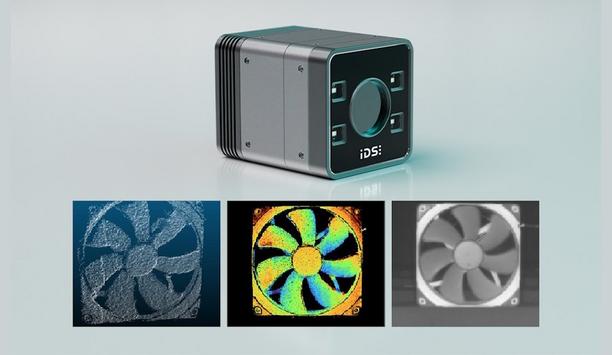
IDS Imaging Development Systems GmbH is expanding its 3D portfolio with Nion, an industrial ToF camera featuring 1.2-megapixel resolution and integrated depth processing. It provides high-resolution and temporally stable depth information at 30 fps, even during rapid movements and in changing lighting conditions. This makes it suitable for applications such as logistics, automation and robotics, where precise 3D data is required at real-world process speeds. The Nion captures moving objects with virtually no blurring. Its high resistance to stray light ensures reproducible measurement results both indoors and outdoors. The measuring range of 0.3 to 7.5 meters covers typical industrial scenarios. The robust IP67-rated housing allows it to be used in more demanding environments. Power over Ethernet (PoE) reduces installation effort and cabling. Variable lighting conditions Patrick Schick, Product Manager for 3D Vision and Imaging Software at IDS, says: "The Nion provides stable depth data even under variable lighting conditions. This provides a solid foundation for automation processes that rely on fast and accurate 3D data." Compared to standard ToF cameras on the market, the onsemi AR0130 depth sensor offers higher resolution, lower noise, more stable results in ambient light and improved motion stability. This enables the Nion to achieve high depth accuracy even when objects are moving quickly and under variable lighting conditions. Cost-effective solution Thanks to its compact design, high measurement quality and excellent value for money, the Nion offers a straightforward introduction to 3D image processing. Companies can integrate the camera flexibly into existing systems and benefit from a cost-effective solution for reliable depth data. “In many cases, existing 2D processes can be retained and supplemented with depth data where necessary, if this aids decision-making within the process,” emphasizes Patrick Schick. The Nion 3D camera is now available in series production. Technical information is available in the IDS Webstore. You can also place orders and make individual enquiries there.
The 19th edition of Secutech Vietnam will take place from 9 – 12 September 2026 at the Friendship Cultural Palace in Hanoi. The fair will bring together 480 exhibiting brands from 14 countries and regions across 13,000sqm of exhibition space. With supports from the Vietnam Fire and Rescue Police Department and the Ministry of Public Safety, Secutech Vietnam continues to promote the adoption of advanced fire safety, emergency response, and security technologies across factories, buildings, public facilities, and infrastructure projects within the country. The exhibition will run alongside Fire & Safety Vietnam and SMABuilding, expanding its scope to include applications in AI, loT, ICT, smart buildings, and industrial automation. Integrated safety solutions The Vietnamese government has pinpointed the digital technology industry as a key driver of productivity, competitiveness, and long-term growth. Under the country’s five-year digital technology industry development plan, Vietnam is aiming to achieve USD 300 billion in digital technology industry revenue and USD 55 billion in annual digital technology export revenue by 2030. The plan also targets the creation of 100,000 digital technology enterprises, training of more than 3 million workers, and the building of modern digital industrial capabilities. These ambitions are expected to accelerate demand for connected infrastructure, intelligent operations, smart building systems, and integrated safety solutions across industrial, commercial and urban projects. Visitors practical insights Commenting on the upcoming fair, Ms Regina Tsai, General Manager of Messe Frankfurt (HK) Ltd – Taiwan Branch, commented: “Vietnam’s digital transformation is entering a new stage of long-term growth, supported by national goals for enterprise development, workforce training, and industrial modernisation. As factories, buildings, and public facilities adopt more digital tools, safety and security planning must advance at the same pace.” “This year, Secutech Vietnam responds with a broader solution-focused format, covering six key themes from critical infrastructure protection and smart factory automation to fire safety, AI operations, smart buildings, and ICT infrastructure. By presenting these cross-sector offerings side by side, the fair will offer visitors practical insights into how different technologies can be implemented together in real-world projects that align with Vietnam’s long-term goals.” Greater operational resilience The 2026 edition will bring together both local and international suppliers with attendance from key decision-makers across government, construction, manufacturing, commercial real estate, industrial parks, system integration, facility management, public safety, and critical sites. Exhibitors from Bulgaria, China, Germany, India, Japan, Korea, Malaysia, Singapore, Spain, Switzerland, Taiwan, the UAE, the US and Vietnam, will present an international breadth of technologies that support safer facilities, smarter performance, and greater operational resilience. Across the show floor, international exhibitors such as Ateis SE, Detnov Security, Matrix Comsec, Potter Global Technologies, Sony Electronics, and Xiamen Leelen Smart Technology will appear alongside Vietnam-based suppliers including Fire Front Vietnam, S-Tec Vina, and TOA Electronics Vietnam, among others. Their displays will span access control, AI surveillance, fire detection, fire suppression, emergency response, public safety, industrial safety, smart buildings, connected infrastructure, and digital enterprise applications. Digital enterprise applications Specialised showcases will add further international and technical depth, with the Japan Pavilion featuring fire safety, inspection, and emergency response technologies; the Korea Pavilion presenting fire protection, rescue, PPE, and smart safety products; and the UL Pavilion focusing on testing, certification, and compliance services. Another key highlight of the fair is its six integrated solution themes, covering: Security & critical infrastructure protection – showcasing technologies for safeguarding airports, factories, industrial parks, utilities, transport hubs, and other high-risk sites through surveillance, access control, intrusion detection, and control room coordination Smart factory & industrial automation – presenting tools that support safer and more efficient production, including factory automation, machine monitoring, robotics, workplace protection, and connected manufacturing Fire safety & emergency management – spanning equipment for detection, alarm, suppression, evacuation, rescue, and incidence response across buildings, factories, warehouses, public spaces, and major projects AI & intelligent operations – including AI-powered systems that allow operators to monitor sites, identify risks, analyse data, and respond faster across security, safety, and facility operations Smart buildings & connected infrastructure – focusing on building technologies that improve safety, comfort and efficiency, including access control, building management, energy monitoring, smart parking, and facility control ICT Infrastructure & digital enterprise – serving as the digital backbone for modern operations, including networks, data platforms, cybersecurity, cloud systems, and enterprise software Together, these themes will give buyers and project owners a strong foundation for comparing safety, security, and smart building technologies across factories, industrial parks, warehouses, commercial buildings, and large-scale developments. This structure will help visitors identify practical solutions that support risk prevention, faster incident handling, operational continuity, and safer site management.
Expert commentary

Artificial Intelligence isn’t just a buzzword anymore. It has become part of our lives, and its uses and applications are growing every other day. Even the public sector, which usually is a late adopter of new technologies, has come onboard this new train. Law enforcement, in particular, has seen the advantages different AI technologies can offer to their work and has started to integrate them into their workflow and daily routines. But there is much more to come. Task automation: AI as a workhorse Due to the increasing importance of media files in police investigations, current police cases have an increasing amount of digital files to be analysed. Videos from mobile phones, computer files, sound recordings, voice messages from chat applications…the list is almost endless. But, in contrast to other types of digital files, like documents or PDFs, it is not possible to search directly a certain information in a video. It has to be watched by someone. And that takes an inordinate amount of time for a human being, as there can be hundreds of videos in a case. This is one of the areas where artificial intelligence shines. Modern analytics systems are able to find almost any kind of information in media files due to the improvement of artificial vision, object recognition and face biometrics. It is simply a matter of feeding the hundreds or thousands of media files to a AI analyser, which will work through them and find specific sounds, words, faces, cars, etc. Case of law enforcement On top of that, an analyser does not tire after long work hours and does not make errors What is more, unlike human officers, these systems can work 24/7 which speeds up investigations considerably, as more evidence is found in less time. On top of that, an analyser does not tire after long work hours and does not make errors. This is why police work can be helped greatly by AI Analytics, as it frees police officers to do high value work, instead of endlessly watching videos on a computer of listening to audio recordings, in search of evidence. As soon as the system finds what the officer has specified (a face, name, number plate, object, etc.) it sends an alarm to the officers’ phone, so he or she can take a look and decide what to do with that information. Despite AI being touted as a danger to many workplaces, in the case of law enforcement, it is a valuable tool to help police do more, with more accuracy, and in less time, freeing officers from the repetitive and boring work of checking mountains of evidence in search of clues. The AI Analyser landscape The field of AI analytics is expanding constantly and new types of analysis are being discovered that may be helpful to police or intelligence. The most used analysers today are probably Automatic Licence Plate Recognition (ALPR), object and face recognition. But OCR is equally useful not just for reading documents, but also signs and logos that may appear in pictures or videos, to help identify a location. And for audio (as in interception or surveillance recordings) there is speech-to-text (S2T), translation, Speaker ID, audio fingerprinting (AFP) and natural language processing (NLP) which is able to extract sentiment from what is said. All of these have their application in daily police work and can save time in investigations or make them possible in the first place. But looming on the horizon are new possibilities, which we will discuss later and that are even more powerful. So the field of AI Analytics is, by no means, a closed one. Generative AI in law enforcement LLMs will be an important part in all those tasks related to investigate large sets of documents For the past year, the term “Generative AI” has become part of our general vocabulary, although most of the time we just say ChatGTP, Copilot o similar. The large language models (LLM) use Deep Learning and different AI strategies to, amongst other things, analyse and summarise vast amounts of information, in order to generate a short report with the highlights. This can be of use for Law Enforcement in all those cases that have great amounts of documents that may contain evidence. Again, this is a case like the above, where AI helps speed up operations by doing the grunt work much quicker than any person could. The difference is in the Deep Learning part. The model can be tuned to specific needs (like financial crimes, for example) and will get better over time when dealing with specific sets of documents. Thus, LLMs will be an important part in all those tasks related to investigate large sets of documents during a case. What the future holds As with all technology, it is virtually impossible to predict what the future will hold. Because any breakthrough can upend complete sectors, as demonstrated by ChatGPT not that long ago. However, there are several promising AI technologies in the pipeline, some of which are already being tested and perfect around the world: Behaviour analysis: as facial recognition systems get better and better, they are not only able to recognise faces, but also facial expressions. This means that AI systems could be assisting during interrogations, to evaluate the truthfulness of what is being said. Combined with the analysis of small voice inflections, they can be a non-invasive “lie detector”. Robotics: already in use by many police forces around the world, robots are going to be ever so important. Particularly the autonomous kind, which is able to do missions on its own, without a human behind the controls. This, combined with swarm technology, could be an incredible help in disaster areas, where time is of the essence in locating victims. Predictive policing: thanks to pattern analysis, predictive policing, which has been to the test several times already, will be an important part of police work, to figure out where to send units or concentrate surveillance efforts. In short, AI has much more to offer, and we are going to see and incredible evolution of this technology applied to law enforcement, over the next years.

Global transportation networks are becoming increasingly interconnected, with digital systems playing a crucial role in ensuring the smooth operation of ports and supply chains. However, this reliance on technology can also create vulnerabilities, as demonstrated by the recent ransomware attack on Nagoya Port. As Japan's busiest shipping hub, the port's operations were brought to a standstill for two days, highlighting the potential for significant disruption to national economies and supply chains. Transportation sector The attack began with the port's legacy computer system, which handles shipping containers, being knocked offline. This forced the port to halt the handling of shipping containers that arrived at the terminal, effectively disrupting the flow of goods. The incident was a stark reminder of the risks associated with the convergence of information technology (IT) and operational technology (OT) in ports and other critical infrastructures. This is not an isolated incident, but part of a broader trend of escalating cyber threats targeting critical infrastructure. The transportation sector must respond by bolstering its defences, enhancing its cyber resilience, and proactively countering these threats. The safety and efficiency of our transportation infrastructure, and by extension our global economy, depend on it. Rising threat to port security and supply chains XIoT, from sensors on shipping containers to automatic cranes, are vital to trendy port functions OT, once isolated from networked systems, is now increasingly interconnected. This integration has expanded the attack surface for threat actors. A single breach in a port's OT systems can cause significant disruption, halting the movement of containers and impacting the flow of goods. This is not a hypothetical scenario, but a reality that has been demonstrated in recent cyberattacks on major ports. Adding another layer of complexity is the extended Internet of Things (XIoT), an umbrella term for all cyber-physical systems. XIoT devices, from sensors on shipping containers to automated cranes, are now integral to modern port operations. These devices are delivering safer, more efficient automated vehicles, facilitating geo-fencing for improved logistics, and providing vehicle health data for predictive maintenance. XIoT ecosystem However, the XIoT ecosystem also presents new cybersecurity risks. Each connected device is a potential entry point for cybercriminals, and the interconnected nature of these devices means that an attack on one, which can move laterally and can have a ripple effect throughout the system. The threat landscape is evolving, with cybercriminals becoming more sophisticated and their attacks more damaging with a business continuity focus. The growing interconnectivity between OT and XIoT in port operations and supply chains is also presenting these threat actors with a greater attack surface. Many older OT systems were never designed to be connected in this way and are unlikely to be equipped to deal with modern cyber threats. Furthermore, the increasing digitisation of ports and supply chains has led to a surge in the volume of data being generated and processed. This data, if not properly secured, can be a goldmine for cybercriminals. The potential for data breaches adds another dimension to the cybersecurity challenges facing the transportation sector. Role of cyber resilience in protecting service availability Cyber resilience refers to organisation's ability to prepare for, respond to, and recover from threats As the threats to port security and supply chains become increasingly complex, the concept of cyber resilience takes on a new level of importance. Cyber resilience refers to an organisation's ability to prepare for, respond to, and recover from cyber threats. It goes beyond traditional cybersecurity measures, focusing not just on preventing attacks, but also on minimising the impact of attacks that do occur and ensuring a quick recovery. In the context of port operations and supply chains, cyber resilience is crucial. The interconnected nature of these systems means that a cyberattack can have far-reaching effects, disrupting operations not just at the targeted port, but also at other ports and throughout the supply chain. A resilient system is one that can withstand such an attack and quickly restore normal operations. Port operations and supply chains The growing reliance on OT and the XIoT in port operations and supply chains presents unique challenges for cyber resilience. OT systems control physical processes and are often critical to safety and service availability. A breach in an OT system can have immediate and potentially catastrophic physical consequences. Similarly, XIoT devices are often embedded in critical infrastructure and can be difficult to patch or update, making them vulnerable to attacks. Building cyber resilience in these systems requires a multi-faceted approach. It involves implementing robust security measures, such as strong access controls and network segmentation, to prevent attacks. It also involves continuous monitoring and detection to identify and respond to threats as they occur. But perhaps most importantly, it involves planning and preparation for the inevitable breaches that will occur, ensuring that when they do, the impact is minimised, and normal operations can be quickly restored. Building resilience across port security and supply chains In the face of cyber threats, the transport sector must adopt a complete method of cybersecurity In the face of escalating cyber threats, the transportation sector must adopt a comprehensive approach to cybersecurity. This involves not just implementing robust security measures, but also fostering a culture of cybersecurity awareness and compliance throughout the organisation. A key component of a comprehensive cybersecurity strategy is strong access controls. This involves ensuring that only authorised individuals have access to sensitive data and systems. It also involves implementing multi-factor authentication and regularly reviewing and updating access permissions. Strong access controls can prevent unauthorised access to systems and data, reducing the risk of both internal and external threats. Network segmentation Network segmentation is another crucial measure. By dividing a network into separate segments, organisations can limit the spread of a cyberattack within their network. This can prevent an attack on one part of the network from affecting the entire system. Network segmentation also makes it easier to monitor and control the flow of data within the network, further enhancing security. Regular vulnerability assessments and patch management are also essential. Vulnerability assessments involve identifying and evaluating potential security weaknesses in the system, while patch management involves regularly updating and patching software to fix these vulnerabilities. These measures can help organisations stay ahead of cybercriminals and reduce the risk of exploitation. EU’s NIS2 Directive EU’s NIS2 Directive came into effect, and member states have until October 2024 to put it into law The transportation sector must also be prepared for greater legislative responsibility in the near future. The EU’s NIS2 Directive recently came into effect, and member states have until October 2024 to put it into law. The Directive aims to increase the overall level of cyber preparedness by mandating capabilities such as Computer Security Incident Response Teams (CSIRTs). Transport is among the sectors labelled as essential by the bill, meaning it will face a high level of scrutiny. Getting to grips with the complexities of XIoT and OT integration will be essential for organisations to achieve compliance and avoid fines. Global transportation infrastructure Finally, organisations must prepare for the inevitable breaches that will occur. This involves developing an incident response plan that outlines the steps to be taken in the event of a breach. It also involves regularly testing and updating this plan to ensure its effectiveness. A well-prepared organisation can respond quickly and effectively to a breach, minimising its impact and ensuring a quick recovery. In conclusion, mastering transportation cybersecurity requires a comprehensive, proactive approach. It involves implementing robust technical measures, fostering a culture of cybersecurity awareness, and preparing for the inevitable breaches that will occur. By taking these steps, organisations can enhance their cyber resilience, protect their critical operations, and ensure the security of our global transportation infrastructure.
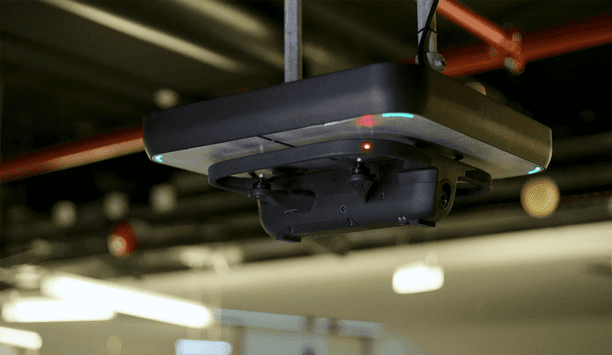
There’s a new security paradigm emerging across malls, server farms, smart office buildings, and warehouses, and its advantage over the status quo are so broad they are impossible to ignore. Instead of a lecture, let’s start with a short narrative scenario to illustrate my point. Darryl's work Darryl works as a security guard at the Eastwood Mall. Like any typical evening, tonight’s shift begins at 9:30 PM, as the stores close and the crowds thin. His first task: Ensure that by 10 pm, all mall visitors have actually left and that all doors, windows, and docks are locked securely. As he walks through most major areas throughout the mall, he checks them off his list. All’s quiet, so after a 45-minute patrol, he stops for a quick coffee break before heading out again. He repeats the process throughout the night, happy to finish each round’s checklist and rest his feet for a few minutes. Challenge: Vandalism during the shift A few cameras located sporadically throughout the mall recorded two dark figures moving in and out of the shadows As usual, there’s nothing notable to report, he clocks out and heads home. The next morning, however, he's greeted by an angry mall manager. He learns that sometime during his shift, three stores were robbed and a back hallway vandalised. A few closed-circuit cameras located sporadically throughout the mall recorded two dark figures moving in and out of the shadows at about 4 am. The mall manager demands an explanation, and Daryl has none, “They must have been hiding during closing time and then waited for me to pass before acting,” he says. “I can only be in one place at one time. And if they were hiding in a dark hallway, I would never have seen them.” Theft explanation “Actually,” explains the manager, “we found a loading door ajar near the furniture store. We’re guessing that’s how they got in, but we can’t be sure. Do you check all the docks? We need to know if we need to replace a lock. Look at your logs - tell me exactly what you saw and when.” Daryl tries to recall. “I'm pretty sure I checked that one a couple of times. I checked it off my list.” Darrell decides not to mention that at 4:00 AM, he was feeling the night's fatigue and might have skipped that area a couple of times. That's the end of our tale. Poor Daryl is not a bad security guard, but he’s only human. His job is repetitive and unstimulating. Darryl's work log He checks off each location for the record, but there's no way for him to record the thousands of details Let’s discuss his hourly log. He checks off each location for the record, but there's no way for him to record the thousands of details he sees to later zoom in on the few observations that might be helpful for an investigation. He has walked by that loading dock door hundreds of times, and it's all a blur. This isn’t an unusual story; Darryl is doing the same job that humans have been doing in almost precisely the same way for millennia. And, like last night, the criminals have always found a way to avoid them. But there is a better way. Solution: Fully-automated indoor drone Replacing a human guard with a fully-automated indoor drone eliminates virtually all the problems we've identified in this story as it flies through the facility: Drone teams can work 24/7: While each drone needs to dock to recharge its battery periodically, a fleet working in concert can patrol around the clock in multiple areas simultaneously. This makes it much more difficult for an intruder to move freely, without risk of discovery. A drone can even keep an eye out and keep recording while docked. Drones see and log everything: Everything is recorded and stored in full detail as they compare what they see with what they expect to see High-resolution onboard cameras and ultrasensitive sensors can detect heat, movement, and moisture, and see into dark areas much more effectively than the human eye. As they aren't limited to the floor, they can also fly high in the air to look above obstacles and at high windows or warehouse shelves. And they don’t lose focus or get bored as the night drags on: Everything is recorded and stored in full detail as they compare what they see with what they expect to see based on a previous flight. Anything unusual triggers an alert. Drones don’t need vacations, snack/bathroom breaks, or new-recruit training: Without the need to deal with biological requirements, you aren't paying for non-work hours, and there’s no overtime for extra hours or holiday shifts. In a high-turnover business like security, there's no time spent training new employees; adding drones to your fleet simply means installing your existing procedures onto each. There is certainly room for judgment calls that require human intervention, but these can often be handled remotely using a control panel that provides all relevant data and alerts from the drones on duty. That means no scrambling to the office in the middle of the night for a false alarm. Drones outshine stationary cameras and the people staring at those screens: A guard in the security office staring at dozens of these screens usually loses their attention span throughout the shift Close-circuit cameras are expensive to install, maintain, and periodically replace. In addition, they are limited in their scope and, almost by definition, leave large blind spots. A guard in the security office staring at dozens of these screens (that generally show nothing notable) usually loses their attention span throughout the shift. Conclusion In short, there is a good reason that our industry is following close on the heels of the manufacturing industry, which has been eagerly adopting robotics as a more cost-effective and precise solution for years. It is simply becoming harder and harder to justify the expense of the traditionally error-prone and monotonous work that we ask of our security guards.
Security beat
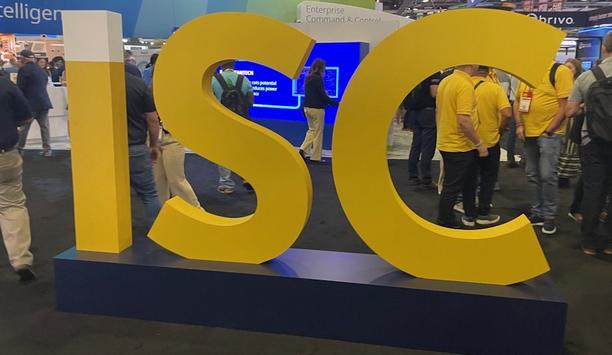
Artificial Intelligence (AI) had a major presence at the ISC West 2026 show in Las Vegas. Almost every booth offered some variation on AI and how intelligence is transforming the physical security industry. Several industry leaders led the way, showcasing how they are tackling complex security challenges with smarter, more efficient solutions. Obviously, the security industry will never be the same. Milestone Systems: Responsible AI and open platforms Milestone has declared 2026 the "year of delivery” on previously announced developments and enhancements. A standout feature is their new natural language AI search, which is being integrated across XProtect, Arcules, and Briefcam platforms to simplify how users interact with vast amounts of video data. A core pillar of their strategy is responsible AI development, which prioritises using licensed data over "scraped" data. They have introduced new anonymisation tools that protect privacy by replacing faces with AI-generated characteristics like hair color while keeping the person unrecognisable. Furthermore, Milestone is moving workloads to Linux to reduce costs, transitioning toward an app marketplace, and has partnered with NVIDIA for the "Hafnia" project to ensure high-quality data to train AI models. Ambarella: Powering the edge with AI chips With their presence at ISC West in a meeting room near the trade show floor, Ambarella is the "engine" behind many high-performance intelligent video products, specialising in low-power AI chips like the N1 and CV7 families. Their technology is moving beyond cameras, where they provide systems-on-chips [SOCs] to many manufacturers. They have expanded into "AI boxes" that can process 64+ video channels simultaneously. A standout feature is the Natural Language technology, which allows users to search for specific objects or abstract scenes using simple prompts. To address modern security concerns, Ambarella has implemented "agentic" programming for a no-code development of automated workflows and media signing to combat AI-generated deepfakes by verifying video integrity through metadata. Motorola Solutions: Simplifying intelligence Motorola Solutions shows physical security evolving into a real-time enterprise intelligence layer Motorola Solutions is prioritising user accessibility by integrating natural language processing into its system configuration. Motorola's portfolio demonstrates how physical security technology is evolving into a real-time operational intelligence layer across the enterprise. Instead of requiring custom coding, operators can now use simple commands—like asking the system to "show me when someone fell down"—to set up advanced analytics and search parameters. The company is also deploying AI agents designed to aggregate data and automatically flag safety or compliance risks, such as perimeter breaches or blocked fire exits. To ensure maximum utility of the hardware, Motorola Solutions’ system can ingest massive, complex physical manuals and automatically generate monitoring rules based on those standard operating procedures. Furthermore, Motorola is focusing on interoperability, using industry-standard interfaces to ingest data from various hardware brands and networks. This approach aims to provide operators with clear, recommended next steps during critical events, streamlining the decision-making process in high-pressure environments. i-PRO: Putting generative AI at the edge i-PRO is bringing generative AI directly to the edge with a new fisheye camera i-PRO is bringing generative AI directly to the edge with a new fisheye camera, which processes complex analytics locally rather than relying solely on the cloud. These cameras, on display at ISC West, have moved beyond simple attribute-based tracking to identify complex behaviors like aggression, fighting, and slip-and-fall incidents. By running on the latest Ambarella chips, i-PRO cameras can use generative AI to improve image quality and analyse scenes in real-time without external processing. This focus on edge-based intelligence ensures high-performance analytics are available even in environments where constant cloud connectivity might be a challenge. Brivo: The rise of agentic AI Brivo and Eagle Eye Networks have officially unified under the Brivo name, focusing on streamlining the experience for large integrators. They are pioneers in agentic AI, introducing features that allow users to talk to their mobile apps to initiate lockdowns or add users. Their Eagle Eye Video Assistant (EEVA) acts as a natural language AI agent that can monitor for specific threats, such as a brandished weapon or a specific vehicle, and automatically trigger access control responses. By treating access and video as a unified system, Brivo enables users to connect specific video skills—like detecting a red car or a brandished weapon—to automated access control actions. They are also using AI to achieve "zero-cost integration," linking disparate cloud systems using AI-generated instructions. Everon: Emphasis on video monitoring Everon is making a massive investment in active video monitoring, using AI-driven systems to deter crime even before it happens. “The market is ripe for it, and customers are demanding it,” says David Charney, Everon’s Sr. Vice President, Video Command Center. Employing virtual guards who can use voice commands, lights, and horns to "shoo away" unauthorised individuals. The company has implemented senior-level leadership that has facilitated more than 5,000 video-based apprehensions. Everon, specialising in integrated systems for multi-site businesses, uses a rigorous selection process to choose AI providers that can accurately filter alerts for specific applications, such as identifying when a fire door is blocked. As a "trusted advisor" to their 300,000 customers, the company focuses on delivering professional-level results that move beyond basic recording to proactive threat mitigation. Hanwha: New hybrid VMS combines cloud and on-prem Hanwha Vision highlighted the official public launch of Blaze, a hybrid video management system (VMS). The platform uses a hybrid architecture to manage on-premise and cloud-connected devices across multiple sites without complex port forwarding. Blaze features native AI capabilities, including semantic search that allows operators to find specific incidents using natural language queries, such as "person with a safety jacket." The AI security platform lets teams search surveillance footage the way they search Google. AI similarity detection allows operators to quickly trace a person’s movement and investigate incidents faster (useful in active shooter behavior, medical emergencies, or crowd panic scenarios, and more). The system also provides a "histogram" view of traffic patterns to help security professionals quickly identify anomalies in historical footage. OpenEye: Operational intelligence and shift to OpEx OpenEye unveiled AI-powered features such as visual chat and scene analysis OpenEye is redefining video surveillance by moving intelligence from the camera level to the cloud, significantly reducing the need for on-site server management. At ISC West, OpenEye introduced new AI-driven tools like visual chat and scene analysis. Beyond security, these tools provide valuable operational alerts, such as identifying overflowing dumpsters, dirty tables in restaurants, or vehicles blocking dock doors. The system also utilises natural language for search, allowing users to find specific attributes like "people wearing backpacks" within designated timeframes. OpenEye also highlighted an industry-wide shift toward operational expenditures (OpEx) billing models, as users increasingly prefer predictable monthly or yearly payments over large upfront capital expenditures (CapEx). This model aligns with their channel-based operations, meeting customers where they currently operate without the burden of high fees. IQSIGHT: New name, same mission for Bosch video Formerly Bosch Video, the newly named IQSIGHT seeks to maintain the “Bosch pedigree” under the new name. It’s the same engineering, manufacturing, etc. IQSIGHT also pledges to be "easier to do business with" by improving user interfaces and end-to-end user experiences. Despite the transition, the company has increased their pace of innovation and reinforced the open systems philosophy with enhanced integrations with Milestone, Genetec, and others. The major product release at the show is IVA Pro Context, which uses generative AI to provide human-level scene understanding. Through a partnership with Laelaps AI, a robotics startup, IQSIGHT is exploring autonomous dispatch and response. When a camera identifies a scene, it triggers a robot to provide a tailored response. Commercialisation is expected in 12 to 18 months. Verkada: How their system can solve a crime But how does AI operate in the real world? Verkada had a “themed” exhibit demonstrating how their system could solve a hypothetical theft at the Louvre museum in Paris. The exhibit took attendees through and showed how Verkada technologies (e.g., license plate recognition and search capabilities) could provide fast results to solve the crime. AI-powered tools, like their newest unified timeline, demonstrate value in the real world of investigations.

An attention-grabbing exhibit at GSX 2024 in Orlando involved a robot dog that could open a door. Boston Dynamics robot dog ASSA ABLOY impressed attendees with the robotics demonstration, featuring the Boston Dynamics robot dog that could open a door using either an HID credential or a mechanical grip. This innovation represents a shift toward more autonomous security solutions and is suitable for environments where human access may be limited. ASSA ABLOY impressed attendees with the Boston Dynamics robot dog Operational efficiency Eye-catching exhibits at the GSX in Orlando, showcasing the future of security technology It was one of many eye-catching exhibits at the GSX in Orlando, showcasing the future of security technology, and offering practical solutions to the industry's challenges. For security professionals, the advancements presented opportunities to enhance operational efficiency and to maintain a proactive stance in a rapidly evolving market. Control ID face identification Alongside their robot demonstration, ASSA ABLOY also highlighted the Control ID Face Identification. Access Controller, providing advanced facial recognition access control. From identity management to AI-driven surveillance systems, GSX 2024 offered a glimpse into the tools that can streamline processes, increase security, and reduce costs. Here are some other highlights. ASSA ABLOY also highlighted the Control ID Face Identification More integration with critical infrastructure A major theme at GSX 2024 was the increasing integration of security solutions with critical infrastructure. ALCEA (formerly ASSA ABLOY Critical Infrastructure) is an example. Their globalised software solution ALWIN is designed for managing access control, visitor management, and other security factors across multiple locations. ALCEA's approach involves not only internal collaborations within ASSA ABLOY but also partnerships with external organisations. An example of innovation is the Neenah Foundry lockable manhole cover, blending safety and security. Solving identity management challenges The solution simplifies onboarding and access request changes while ensuring compliance with policies Identity management continues to be a key focus in the security sector, and AMAG Technology addresses this need with its Symmetry Connect product. The solution simplifies onboarding and access request changes while ensuring compliance with policies. For professionals overseeing identity access management, Symmetry Connect provides a streamlined, automated approach, reducing human error and increasing operational efficiency. AMAG also sees a growing demand for efficient visitor management systems, especially in the post-COVID landscape. AMAG’s products cater to the need for enhanced security without overburdening staff. AI and cloud-based surveillance solutions Axis Communications highlighted its advancements in AI and cloud-based video management systems with its AXIS Camera Station Edge and Pro products. These solutions can connect seamlessly to cloud systems, providing security professionals with easy access to surveillance data anywhere. With the increasing need for centralised management, Axis’s offerings ensure that security teams can efficiently manage surveillance with minimal infrastructure. Axis also showcased its commitment to AI-driven analytics based on superior video quality. There were also networked audio solutions for public announcements and background music, among other uses. Body-worn cameras for corporate and healthcare uses Traditionally focused on law enforcement, Axon is now expanding its body-worn cameras and TASER technology into corporate, retail and healthcare environments. Their Axon Body Workforce camera is a practical solution for protecting frontline workers in high-risk environments. Axon also introduced drone-based solutions for real-time aerial awareness Axon also introduced drone-based solutions for real-time aerial awareness, a significant benefit for large campuses or remote locations. As more industries adopt corporate surveillance systems, Axon’s offerings provide flexible, scalable solutions that address the need for real-time, actionable intelligence. Cloud-based access for smart buildings Brivo’s native cloud systems and flexible credentials offer practical, future-proof security options Brivo showcased how cloud technology is revolutionising access control by offering systems that integrate seamlessly with other smart building platforms. Their open API approach enables collaboration with IT teams, bridging the gap between physical security and IT management. Brivo’s new partnership with Comcast Smart Solutions illustrates how large enterprises can implement advanced solutions, including access control while maintaining flexibility. For professionals managing complex building environments, Brivo’s native cloud systems and flexible credentials offer practical, future-proof security options. AI-powered multi-sensor camera Hanwha focused on an AI-powered multi-sensor camera, equipped with an NVIDIA processor capable of running complex analytics. In addition, Hanwha’s new AI camera technology can process multiple video streams simultaneously, either stream from its sensors or outside cameras, enabling better tracking of objects in complex environments. Their eight-channel AI Box, which converts legacy cameras into AI-enabled devices, is an attractive solution for professionals seeking to upgrade existing systems without the need for complete overhauls. For security teams looking to enhance situational awareness, Hanwha’s AI-based offerings provide advanced, scalable solutions. Workflow management and hybrid cloud security Genetec continued the theme of integrated solutions with their Operations Centre module for Security Centre, which consolidates work management into a single platform. Built on lean management principles, this system simplifies workflow for security professionals, promoting real-time collaboration across mobile and web platforms. As the industry shifts from on-premises systems to hybrid cloud solutions, Genetec’s products provide seamless transitions for organisations. Their new SaaS Security Centre also allows for natural language video searches in multiple languages, making it easier for global teams to manage operations across locations. Simplifying remote surveillance The company’s focus on scalability and efficiency is demonstrated by the “Eagle Eye Complete” subscription service Eagle Eye Networks showcased their continued international expansion, highlighting a new data centre opening in Saudi Arabia and new hiring initiatives in Australia and Europe. Their “Eagle Eye Anywhere” solar-powered camera system exemplifies the move towards flexible, easy-to-install solutions that can be deployed in remote locations. Integrators benefit from simplified maintenance through remote management, reducing the need for on-site support and ensuring operational continuity. The company’s focus on scalability and efficiency, as demonstrated by the “Eagle Eye Complete” subscription service, reflects the broader industry’s shift toward managed security services. Tailored solutions for commercial clients Everon continues its transition away from its former identity as ADT Commercial. Claiming the status of a competitive commercial integrator, Everon is reinventing itself by offering customised billing and monitoring solutions for a range of industries. Their cloud-based business intelligence platform, which combines video surveillance with data analysis, is aimed at enhancing operational awareness by detecting anomalies such as OSHA violations or retail point-of-sale exceptions. With AI-driven dashboards, clients can customise their security solutions to meet specific needs, reflecting a growing demand for tailored, data-driven security applications. Innovation through cloud and mobile LenelS2 is part of Honeywell, and they emphasised their investment in cloud and mobile solutions at GSX 2024. Their "Enterprise OnGuard Cloud" platform, launched in June 2024, is a testament to the growing demand for cloud-enabled access control systems. With the addition of NFC-enabled Blue Diamond credentials, LenelS2 is pushing towards smarter, more secure mobile access options. The strategic combination of Lenel’s solutions with Honeywell’s infrastructure offers users enhanced engineering capabilities and global reach. This reflects a broader market trend of integrating mobile devices into physical security protocols. Bringing AI to everyday security LPR system, combined with their Searchlight Cloud Analytics, offers a powerful tool for identifying security risks March Networks highlighted their new AI-driven smart search feature, designed to help security teams quickly detect operational anomalies in retail and financial environments. From identifying misplaced cash in quick-service restaurants (QSRs) to detecting "jackpotting" attacks on ATMs, their solution highlights the increasing importance of AI in enhancing both security and operational efficiency. Their Licence Plate Recognition (LPR) system, combined with their Searchlight Cloud Analytics, offers a powerful tool for identifying and responding to security risks in real-time, emphasising the practicality of AI in daily security operations. Driving sustainability in security Securitas showcased its commitment to sustainability, a growing concern for businesses across all industries. By providing CO2 data for clients and promoting digital tools like mobile credentials, Securitas is leading the charge in creating greener, more sustainable security solutions. Their focus on remote services and occupancy insights offers companies a way to reduce their environmental impact while enhancing security operations. The company’s alignment with science-based targets and circular economy practices signifies the increasing role sustainability will play in the security sector. Future lies in integration The GSX 2024 trade show revealed that the future of security lies in intelligent integration, AI-driven analytics, and cloud-based management systems. The innovations presented will help security professionals streamline their operations, enhance situational awareness, and future-proof their systems. As these technologies continue to evolve, professionals must stay informed about the latest advancements to maintain a competitive edge in the security marketplace. GSX was a great place to start. At the end of the day at GSX, it wasn’t just the robot dog that was opening doors …. to the future of security systems. {##Poll1727925373 - Of the important factors highlighted at GSX 2024, which do you consider most when adopting new security solutions?##}

Security applications for drones have evolved to provide benefits such as bird's-eye views of large areas, easy access to remote locations, and rapid deployment. However, to date, most drone applications have been outdoors. Not for long. Today, indoor drones are also finding unique opportunities for enhanced surveillance, security, and operational efficiency in indoor environments such as offices, warehouses, self-storage facilities, and malls. Indoor drones can navigate complex indoor spaces, providing real-time data and monitoring without the limitations of fixed cameras. New era of autonomous robotics A significant advantage of using drones indoors, as opposed to outdoors, is their ability to operate fully autonomously, circumventing U.S. Federal Aviation Administration (FAA) regulations that restrict such autonomy in outdoor environments. A new era of autonomous robotics enables drones to work seamlessly for users without the need for specialised flight training. A single security manager can oversee multiple indoor drones simultaneously with simple map clicks or prompts. A new era of autonomous robotics enables drones to work seamlessly for users Indoor monitoring and inspection Indoor Robotics is a company seeking to revolutionise indoor monitoring and inspection through its Control Bridge platform guiding indoor drones. Since its founding in 2018, Indoor Robotics has evolved through years of market engagement and product development. After initially recognising a demand for autonomous indoor monitoring, the company found that existing hardware fell short. “However, we understood the challenges of full autonomy and knew we would solve it using drones,” says Bar Biton, Marketing Manager of Indoor Robotics. Indoor Robotics has evolved through years of market engagement and product development Hardware challenges Seven years later, with the hardware challenges addressed, the company is shifting focus to continually increasing value for security managers, especially with generative AI (artificial intelligence). In 2018, the problem was charging methods, which has been solved with ceiling docking stations and five patents. “Today it’s about making indoor environments safer and even saving lives by identifying blocked emergency exits, missing safety gear, leaks, fire hazards and more,” says Biton. While indoor navigation presents challenges—such as the unreliability of GPS and the need for precision — Indoor Robotics has dedicated significant resources to achieve centimeter-level accuracy and ensure the utmost safety, maintaining a record of zero safety incidents to date, says Biton. Indoor navigation presents challenges—such as the unreliability of GPS and the need for precision Advanced AI-driven navigation systems Navigation challenges for indoor drones include manoeuvering through confined spaces, avoiding obstacles, and maintaining stable flight in varied lighting conditions. To address these, Indoor Robotics employs advanced AI-driven navigation systems, real-time 3D mapping, and robust obstacle avoidance technologies. These solutions enable drones to adapt to dynamic environments, ensuring precise and safe navigation. Additionally, the Control Bridge platform provides real-time data and monitoring, allowing drones to adjust their routes and respond to changing conditions effectively, thus enhancing their operational reliability. Highly versatile indoor drones find applications across numerous vertical markets such as retail, logistics, healthcare, and corporate settings. Key use cases encompass security surveillance, where drones monitor premises continuously; maintenance checks, especially in hard-to-reach areas; safety inspections to comply with regulations and company policies; and emergency response to provide real-time data during incidents. In warehouses, drones efficiently inspect high shelves. Healthcare facilities and data centres use them to oversee restricted zones. Additionally, corporate offices employ drones to automate after-hours security, safety and maintenance routines. Indoor Robotics employs advanced AI-driven navigation systems, real-time 3D mapping, and robust obstacle-avoidance technologies Alerts to the remote management team One Indoor Robotics client, a global tech company, deploys drones to enhance site surveillance and operational efficiency across six offices in three countries. The drones conduct regular security patrols after-hours, monitor facility activities, and ensure compliance with safety standards. This deployment has significantly improved the overall safety and security of their offices. The drones provide real-time alerts to the remote management team, enabling prompt responses to any anomalies, such as maintenance issues or unauthorised access. “The key advantage is the unified security standard provided by our Control Bridge operating system, allowing them to oversee all their sites from one centralised platform, ensuring consistent security management across all locations,” says Biton. When indoor drones co-exist with human workers, primary challenges include ensuring safety and preventing disruptions. Drones are equipped with advanced sensors and AI-driven obstacle avoidance systems to detect and navigate effectively around people. Strict operational protocols and designated flight paths are implemented to minimise interactions. Additionally, many drone operations are scheduled for after-hours to further reduce potential disruptions. “Safety is our top priority, and we invest significant resources to ensure it,” says Biton. “We are proud to report zero safety issues to date, reflecting our commitment to maintaining a secure environment for both drones and human workers.” Deploys drones to enhance site surveillance and operational efficiency across six offices in three countries Implementation of indoor drones Indoor drones are significantly more cost-effective and affordable when compared to traditional security methods like additional cameras, sensors, manpower, and even ground robots, says Biton. They cover larger areas and provide dynamic surveillance in less time, offering real-time data collection and enhanced flexibility. Unlike cameras or ground robots, drones eliminate blind spots and adapt to environmental changes autonomously. They also offer substantial indirect savings by optimising maintenance routines, according to Indoor Robotics. For instance, a drone can instantly identify issues in hard-to-reach areas, allowing for immediate, targeted responses, instead of requiring an inspector first and then a technician, thus streamlining maintenance processes. “The biggest obstacle to greater implementation of indoor drones is education and awareness,” says Biton. “Many people are not yet exposed to the concept of autonomous indoor drones and may find it hard to believe they really work.” To overcome this, Indoor Robotics focuses on creating awareness and educating customers about the reliability and benefits of the technology. Demonstrations, case studies, and clear communication about the capabilities and safety of drones are key. By showcasing successful implementations and providing hands-on experiences, Indoor Robotics seeks to build trust and drive wider adoption of indoor drone technology in security applications. Control Bridge operating system Drones are designed with strict privacy controls and advanced AI to ensure they respect privacy norms A common misconception is that indoor drones are intrusive and pose significant privacy risks. However, drones are designed with strict privacy controls and advanced AI to ensure they respect privacy norms. They operate primarily during off-hours and are programmed to avoid sensitive areas, focusing solely on enhancing security and operational efficiency. The solution also includes rigorous data protection measures to safeguard any collected information, ensuring compliance with privacy regulations and addressing concerns effectively. Soon, automation will become integral to tasks across all facility types, from manufacturing and logistics to retail and office spaces. Using Indoor Robotics’ Control Bridge operating system, facility managers will deploy fleets of robots to identify issues, collect data, and gain insights to enhance operations, maintenance, and safety. Facilities will benefit from 24/7 AI-driven monitoring, eliminating the need for occasional surveys. Managers will receive immediate alerts for any anomalies, with preventive maintenance tasks seamlessly integrated into building management platforms, ensuring optimal performance and safety. New standards in the industry The Indoor Robotics platform-agnostic approach provides flexibility and scalability. “As we continue to evolve, we support more and more platforms, enabling our clients to tailor their indoor monitoring solutions to their specific needs,” says Biton. “We believe that the future of security lies in intelligent, automated systems that can adapt to dynamic environments and provide real-time insights,” says Biton. Indoor Robotics seeks to be at the forefront of this transformation, setting new standards in the industry and paving the way for a safer, more efficient future.
Case studies

Gunnebo Safe Storage has worked in partnership with Capital Vaults to install its high security SafeStore Auto Maxi at Sibaya Entertainment Kingdom and Casino, designed to provide clients with secure, automated access to their valuables. The SafeStore Auto Maxi Solution was seamlessly designed within a certified EN 1143-1 Grade VII vault at a high-security site for a pioneer Casino complex in KwaZulu-Natal, South Africa. As a protected, discreet facility where customers can store and retrieve possessions at any time without relying on staff, the solution enables the maintenance of the highest level of physical protection. Multi-layered authentication “This project demonstrates how SafeStore Auto can provide secure and convenient access to valuables without the limitations of traditional safe deposit services,” stated Theo Moodley, of Capital Vaults. “Gunnebo’s automated system is housed in a certified EN 1143-1 Grade VII vault and combines robotics with rigorous identity verification to give users confidence their belongings are protected at all times.” SafeStore Auto Maxi is an automated safe deposit system which operates entirely within a certified strong room and always remains closed and secure, eliminating the need for staff interaction during access. Multi-layered authentication ensures only the authorised user can call up their safety deposit locker and the installation has been further strengthened by a proprietary six-eye protocol. The vault is completely isolated from external networks and does not require an internet connection, reducing the risk of hacking or data breaches. Significant sentimental value Located within the broader security perimeter of a major entertainment complex, the site benefits from constant surveillance, controlled entry and exit points, and on-site security teams, while offering customers complete privacy once inside the private suite where the locker is delivered. Access is always available, allowing clients to deposit or retrieve items whenever they choose. Items commonly stored include jewellery, documents, luxury watches, precious metals, digital wallets, and family heirlooms; these are possessions that are often irreplaceable or hold significant sentimental value. Advanced vault technology Gail Carew, Sales Director of Gunnebo Safe Storage South Africa added: “Capital Vaults turned to Gunnebo for a secure, automated alternative to conventional safe deposit boxes. Through a close partnership, we combined our SafeStore Auto technology with a certified high-security vault to deliver 24/7 access in a secure environment.” The success of the installation highlights how advanced vault technology can be adapted to local requirements while adhering to international certifications for burglary resistance. As demand for private secure storage continues to grow, Gunnebo Safe Storage expects similar solutions to play an increasing role in providing individuals with peace of mind and uninterrupted access to their most valuable possessions.

Artificial Intelligence Technology Solutions, Inc., a pioneer in AI-driven security and productivity solutions, along with its wholly owned subsidiary, Robotic Assistance Devices, Inc. (RAD), announced that it has received an order for ten ROSA™ units bundled with ten SARA™ (Speaking Autonomous Responsive Agent) licences for deployment inside a major sports venue in the United States. The new installations will support the arena’s security team with enhanced monitoring, rapid event detection and autonomous voice-driven response throughout interior zones. Evaluating modern security technologies The arena had been evaluating modern security technologies to address persistent trespassing, vandalism and other unauthorised activity across its interior spaces. This order follows a series of assessments in which RAD solutions demonstrated clear advantages in autonomous detection, operator support and rapid on-site response. The venue is also reviewing additional RAD offerings for broader facility coverage, including ROAMEO™ and RIO™ units for expanded indoor and outdoor protection. How venues can strengthen security “This is an ideal application for ROSA paired with SARA,” said Mark Folmer, CPP, PSP, President of RAD. “These deployments show how venues can strengthen security, improve response times and reduce operating costs with a solution that works around the clock without added staffing.” SARA’s real-time detections ROSA units equipped with SARA, the Company’s multiple award-winning agentic AI platform, will provide continuous event detection, verification and automated voice response, giving on-site staff and remote operators clearer insight into activity across the arena. SARA’s real-time detections and notifications help reduce operator workload, improve situational awareness and ensure that critical events receive immediate attention. This combination allows security teams to focus on higher-value tasks while maintaining consistent coverage. ROSA’s AI-driven security analytics ROSA is a multiple award-winning, compact, self-contained, portable, security and communication solution that can be installed and activated in about 15 minutes. ROSA’s AI-driven security analytics include human, firearm, vehicle detection, licence plate recognition, responsive digital signage and audio messaging, and complete integration with RAD’s software suite notification and autonomous response library. Two-way communication is optimised for cellular, including live video from ROSA’s high-resolution, full-color, always-on cameras. RAD has published seven Case Studies detailing how ROSA has helped eliminate instances of theft, trespassing and loitering at mobile home parks, retail centres, hospital campuses, multi-family communities, car rental locations and construction sites across the country.

In the fast-evolving landscape of intelligent manufacturing, Dahua Technology is shaping a new benchmark with its advanced innovation capabilities and efficient production models, creating a fully digitalised and automated smart manufacturing system. Dahua AIoT Industrial Park From being recognised with China’s “National Worker Pioneer” award last year to being named one of the country’s first “Excellence-level Smart Factories” this year, the Dahua AIoT Industrial Park has made great strides in transforming its production. The factory features key innovations, such as automated assembly, unmanned testing, visualised supervision, and autonomous logistics. It fully integrates people, machines, materials, methods, and environment to deliver an exceptional user experience to customers worldwide. A model of human-machine collaboration Dahua has created a highly adaptive and collaborative smart manufacturing model By combining intelligent material management, automated assembly and testing, flexible production lines, an AIoT digital system, and digital twin technology, Dahua has created a highly adaptive and collaborative smart manufacturing model. The factory’s flexible production lines are designed for agility — capable of seamlessly switching between tasks at the push of a button, handling precision electronic components and complex structural parts alike. This flexibility is made possible by the deep integration of advanced automation and intelligent equipment in key production processes: Automated Screw Fastening: Equipped with visual positioning and real-time inspection modules for precise fastening and risk prevention. Airtightness Testing: AI-powered testing in collaboration with robotic arms for fully automated operation. Precision Dispensing: Visually guided dispensing combined with real-time quality inspection. Real-time digital twin operations The factory operates 24/7, continuously capturing data from all equipment and production processes With digital twin technology, the factory operates 24/7, continuously capturing data from all equipment and production processes. It creates accurate 1:1 digital models of production lines, robots, and machinery, using real-time data to simulate production flows, monitor line status, and predict potential issues. Even during non-operating hours, smart inspections for environment, perimeter, and fire safety run automatically, with instant alerts for any anomalies. Through the operations centre, managers can access live data and make informed decisions to drive efficiency and reduce costs. Unmanned testing & quality management Dahua enhances product quality through granular market insights, modular R&D design, and intelligent testing systems. Leveraging PLM (Product Lifecycle Management), testing parameters are auto-calibrated, while a big-data-driven “Smart Test Brain” continuously fine-tunes test strategies in real time. Dahua enhances product quality via granular market insights and design. Testing processes for mature products are streamlined, while defect predictions automatically trigger stricter testing standards, ensuring fast, high-quality output. For end-to-end quality control, every product is tracked using a unique QR code, enabling instant traceability across its entire lifecycle. This system builds a comprehensive quality data pool that supports production optimisation and quality strategy adjustments. Autonomous logistics for high-efficiency operations Dahua's smart warehouse combines vertical storage systems with a network of AGVs Dahua’s smart warehouse combines vertical storage systems with a network of AGVs, intelligent conveyor lines, robotic arms, vision systems, and automated labelling equipment, all managed via a digital platform to enable fully unmanned “lights-out” factory operations. During the inbound processes, products are automatically scanned, measured, packaged, and assigned by the Warehouse Control System (WCS), with robotic arms and AGVs handling storage placement. Outbound processes are fully automated as well — whether for full pallets, single-SKU shipments, or mixed-SKU orders — and completed within 10 minutes through coordinated efforts of AGVs, robotic arms, and conveyor lines. Looking ahead From “Pioneer” to “Excellence,” the Dahua AIoT Industrial Park is achieving new levels of production efficiency, product quality, and operational synergy through the deep integration of IT and OT technologies. Moving forward, Dahua will continue driving innovation and contributing to new-generation productivity, helping industries worldwide benefit from intelligent manufacturing and creating a smarter future for all.

The manufacturing sector is currently facing several challenges. Technological change, pressing environmental issues, and globalisation require several adjustments, such as investing in new technologies, conserving resources, and optimising and securing supply chains. Globally operating companies have to face a changing environment and at the same time manage problems in supply chains. Shifting production back to the domestic market is increasingly an option. This requires not only resilience but also compliance with strict environmental regulations and cost-efficient strategies to make domestic manufacturing competitive. Automation through robotics Moreover, those who want to ensure the competitiveness of domestic production must overcome personnel bottlenecks. Automation through robotics has long since become the driving force here, and artificial intelligence (AI) is increasingly taking on a key role. This technology is developing just as rapidly as the pressure for automation is increasing. To map production processes in one's own company with AI, the simplest possible AI integration and the shortening of training phases are already decisive factors. AI-based solution The easy-to-integrate system consists of a module for robot arms, a computing unit with pre-installed intelligent software This is where British start-up Cambrian Robotics Limited comes in with a fully AI-based solution for various robotics applications in manufacturing. It takes over fast bin picking or pick-and-place, the exact feeding of parts for machines as well as different work steps in material handling, for the benefit of more efficiency in assembly tasks or warehouse logistics. The easy-to-integrate system consists of a module for robot arms, a computing unit with pre-installed intelligent software, and a camera module, each equipped in series with two uEye+ XCP cameras from IDS. Self-learning software "The task of the cameras is to take a picture of the area with the objects to be handled. Based on the recordings, the software can analyse the scene and recognise where exactly the objects are located," explains Miika Satori, founder and CEO of Cambrian Robotics. Further processing of the images is carried out with the help of the heart of Cambrian Vision, a specially developed, self-learning software for predicting the position of the parts as well as their pick points. This takes care of the image matching on an AI basis so that no classic 3D point cloud is needed. GPU (Graphics Processing Unit) The AI models for part recognition and communication with the robot are controlled by a powerful GPU Based on simulated data, the AI learns independently and locates the removal points and parts extremely precisely. The AI models for part recognition and communication with the robot are controlled by a powerful GPU (Graphics Processing Unit). The software learns quickly, "With the Cambrian software package, pick points for new parts can be defined and the application configured within just two to five minutes," emphasises start-up founder Satori. uEye XCP industrial cameras The associated camera module is equipped with two space-saving uEye XCP industrial cameras. "The two IDS cameras provide images of the object scene from different viewing angles according to the stereo vision principle. The challenge is to determine the position of the part to be gripped as accurately as possible from these images. This is again the task of AI," says Miika Satori. CAD applications for 3D Standard CAD applications for 3D bin picking often use structured light or sensors to do this" The combination of image acquisition, AI models, and special image processing makes it possible to determine recording points and positions particularly precisely. "Standard CAD applications for 3D bin picking often use structured light or sensors to do this, projecting something onto the environment, creating a point cloud, and then trying to find the part in it. Cambrian uses only two standard IDS industrial cameras instead of a 3D camera." Precise vision With an accuracy of less than one millimetre, Cambrian Vision is also much more precise than competing systems. "The system reliably detects a wide range of parts, including shiny, reflective, or transparent components, where conventional machine vision systems often reach their limits. At the same time, it remains robust against external light conditions," says Miika Satori, describing the special requirements for the cameras, which are an elementary part of the solution. 170 milliseconds inference speed The one-shot system is currently one of the fastest AI image recognition systems on the market "It's also super-fast, with an inference speed of less than 170 milliseconds, whereas it often takes more than 1000 milliseconds for comparable solutions." The fast calculation time allows cycle times of two to three seconds in a bin-picking setting. "This ensures efficient, precise, and accurate execution in a single pass," Miika Satori underlines. This makes the One-Shot system currently one of the fastest AI image recognition systems on the market. This is made possible not least by the SuperSpeed USB 5 Gbps cameras, which reliably deliver high-resolution data for detailed image evaluations in any environment, explicitly in applications with low ambient light or changing light conditions. Back Side Illumination pixel technology Due to BSI ("Back Side Illumination") pixel technology, the integrated sensor (1/2.5" 5.04 MPixel rolling shutter CMOS sensor on semi AR0521) offers stable low-light performance as well as high sensitivity in the NIR (near infrared) range so that the uEye XCPs deliver high-quality images in almost any lighting situation with low pixel noise at the same time. With its compact, lightweight full housing (29 x 29 x 17 millimetres, 61 grams) and screwable USB Micro-B connector, the USB3 XCP is particularly suitable for use in combination with robots and cobots in the field of automation. XCP cameras XCP cameras can be easily integrated into any image processing system and can be used with any suitable software Due to USB3 and Vision Standard compatibility (U3V / GenICam), the XCP cameras can be easily integrated into any image processing system and can be used with any suitable software. The simple integration via the standard interface is particularly advantageous for Miika Satori, "Depending on the customer's requirements, we use other IDS cameras in our system. The standardised interface enables rapid deployment of a wide variety of uEye models." Custom Cambrian Vision solutions Compatible with popular lenses, a wide range of cameras from the IDS portfolio can be used as eyes for custom Cambrian Vision solutions, helping to maximise production performance.The top speed, the particularly high light insensitivity, and the wide component bandwidth that the system achieves due to the powerful IDS cameras and intelligent software make it particularly interesting for automation tasks in the production environment. Intelligent 3D vision system They conserve resources and save costs by operating more efficiently, competitively, and sustainably Another key to efficiency lies in the uncomplicated integration of Cambrian Vision. The intelligent 3D vision system is ready for immediate use without any real robot training, a remarkable acceleration compared to conventional methods. Companies can therefore quickly reap the benefits of automation: They conserve resources and save costs by operating more efficiently, competitively, and sustainably, while improving the quality of their products and the safety of their employees. AI in robotics "The use of AI in robotics is still in its infancy," says Miika Satori. Due to the growing demand, the development in the field of image processing with AI will be further advanced, cameras with higher data rates and faster and larger sensors will come onto the market, as well as further price-optimised models with reliable basic functions. Smaller and more affordable By using AI-powered robots for mundane and repetitive tasks, human resources can be redirected "Industrial cameras are getting smaller and more affordable. This will enable even more applications. Our vision is to give robots capabilities on the same level as humans." By using AI-powered robots for mundane and repetitive tasks, human resources can be redirected to more creative, productive, and valuable tasks. Camera uEye XCP - the industry's smallest housing camera with a C-mount. Model used: U3-3680XCP Camera family: uEye XCP Client By combining robotics and artificial intelligence, Cambrian Robotics is developing a productive tool that replaces human hands in the manufacturing of products. With the help of intelligent automation, costs are to be reduced and people are to be given more time for meaningful tasks. Cambrian Vision is a fully AI-based solution for various robotics applications in manufacturing such as bin picking, assembly, feature recognition and localisation, pick and place, placement, wire harness, and cable assembly.
Round table discussion

The Metaverse sounds like the plot of the latest summer action movie. In reality, it’s a technology - or, more accurately, a group of technologies - that will likely have a transformational impact on a host of markets. For security, the Metaverse has an extensive list of needs. It also presents some opportunities. We asked this week’s Expert Panel Roundtable: What does the Metaverse mean for security?

Perimeter security is the first line of defence against intruders entering a business or premises. Traditionally associated with low-tech options such as fencing, the field of perimeter security has expanded in recent years and now encompasses a range of high-tech options. We asked this week’s Expert Panel Roundtable: What are the latest trends in perimeter security technology?

The new year 2019 is brimming with possibilities for the physical security industry, but will those possibilities prove to be good news or bad news for our market? Inevitably, it will be a combination of good and bad, but how much good and how bad? We wanted to check the temperature of the industry as it relates to expectations for the new year, so we asked this week’s Expert Panel Roundtable: How optimistic is your outlook for the physical security industry in 2019? Why?