Internet of Things (IoT) - Round table discussions

Sadly, active shooter incidents have become so common that they no longer grab big headlines or dominate the news cycle. A near-constant cascade of active shooter events persists in the background of our collective consciousness, a familiar drumbeat that is no less tragic because it is continuous. As more active shooter incidents occur, the security marketplace continues to implement solutions to minimise the impact, including gunshot detection. We asked this week's Expert Panel Roundtable: What...

A new generation of security professional is waiting in the wings. They will be faced with unprecedented challenges, as they seek to transform the security marketplace to the ‘next level’. Technology changes ensure the market will be very different 10 years from now and the fresh labour pool will need to be able to meet the host of new challenges. We asked our Expert Panel Roundtable: What exciting career opportunities in the security industry await the next generation?

Residential security and smart homes are rapidly changing facets of the larger physical security marketplace, driven by advances in consumer technology and concerns about rising crime rates. During the COVID-19 pandemic, many people spent more time at home and became more aware of the need for greater security. As workplaces opened back up, returning workers turned to technology to help them keep watch over their homes from afar. We asked this week’s Expert Panel Roundtable: What are the...

Since the advent of the physical security industry, access control has been synonymous with physical cards, whether 125 kHz ‘prox’ cards or the newer smart card alternatives. However, other credentials have also come on the scene, including biometrics and even smart phones. Some of these choices have distinct cost and security advantages over physical cards. We asked this week’s Expert Panel Roundtable: How soon will the access control card become extinct and why?

Cost is a reality to be managed. No matter how powerful or desirable a technology may be to a customer, the sale often comes down to the basic question: Can I afford it? And affordability extends not just to the purchase price, but to the cost of technology over its lifespan. In addition to advances in technology capabilities, the security industry has also achieved inroads to make its offerings more worth the cost. We asked this week’s Expert Panel Roundtable: What is the physical securi...

Crime prevention is a basic goal of security, even if a security system merely convinces a criminal to seek out a different target. However, many of today’s security technologies are most useful after the fact, to provide forensic information about a crime that has already taken place. Solving a crime presents a whole new level of challenge. Surely, prevention is the best approach. We asked this week’s Expert Panel Roundtable: How successful is the security industry in crime preventi...

The idea of touchless systems has gained new levels of prominence during the last year, driven by the global COVID-19 pandemic. Contactless systems have been part of the industry’s toolbox for decades, while technologies like facial and iris recognition are finding new uses every day. We asked this week’s Expert Panel Roundtable: Which security markets are embracing touchless, contactless systems and why?

Adoption of General Data Protection Regulation (GDPR) by the European Union in 2016 set a new standard for data privacy. But adherence to GDPR is only one element, among many privacy concerns sweeping the global security community and leaving almost no product category untouched, from access control to video to biometrics. Because privacy concerns are more prevalent than ever, we asked this week’s Expert Panel Roundtable: What is the impact on the physical security market?

Many of us take critical infrastructure for granted in our everyday lives. We turn on a tap, flip a switch, push a button, and water, light, and heat are all readily available. But it is important to remember that computerised systems manage critical infrastructure facilities, making them vulnerable to cyber-attacks. The recent ransomware attack on the Colonial Pipeline is an example of the new types of threats. In addition, any number of physical attacks is also possibilities. We asked this we...

Perimeter security is the first line of defence against intruders entering a business or premises. Traditionally associated with low-tech options such as fencing, the field of perimeter security has expanded in recent years and now encompasses a range of high-tech options. We asked this week’s Expert Panel Roundtable: What are the latest trends in perimeter security technology?

In the past few weeks, the light at the end of the COVID-19 tunnel has brightened, providing new levels of hope that the worst of the pandemic is behind us. Dare we now consider what life will be like after the pandemic is over? Considering the possible impact on our industry, we asked this week’s Expert Panel Roundtable: Which security technologies will be most useful in a post-pandemic world?

The topic of video analytics has been talked and written about for decades, and yet is still one of the cutting-edge themes in the physical security industry. Some say yesterday’s analytics systems tended to overpromise and underdeliver, and there are still some skeptics. However, newer technologies such as artificial intelligence (AI) are reinvigorating the sector and enabling it to finally live up to its promise. We asked this week’s Expert Panel Roundtable: What new technologies a...

The “Roaring Twenties” was a decade of economic growth and widespread prosperity, driven by recovery from devastation, a construction boom, and welcoming of new technologies such as automobiles and electricity. As we look ahead to the big picture of the 2020s, 100 years later, are there parallels that suggest a successful decade ahead? Might recovery from the devastation of COVID-19 help to drive even higher levels of economic growth and technical innovation? We asked this week&rsquo...

Video storage has been a challenge since the days of VCRs and videotape. Storing images is a central need for any video systems, especially one that is focused on the forensic and investigative aspects of video. Today, digital video is stored on hard drives and even in the cloud. Increasingly, video is considered “data” that drives a variety of video analytics and even artificial intelligence (AI) applications. We asked this week’s Expert Panel Roundtable: What are the new tren...

Artificial intelligence (AI) and machine learning have made a big splash in the physical security market, transforming video analytics to a new level of accuracy. In fact, the terms have become common buzzwords throughout the industry. However, the potential for AI and machine learning to impact the physical security industry goes far beyond their ability to improve video analytics. We asked this week’s Expert Panel Roundtable: Beyond better video analytics, how can artificial intelligence...

The emergence of smart cities provides real-world evidence of the vast capabilities of the Internet of Things (IoT). Urban areas today can deploy a variety of IoT sensors to collect data that is then analysed to provide insights to drive better decision-making and ultimately to make modern cities more livable. Safety and security are an important aspect of smart cities, and the capabilities that drive smarter cities also enable technologies that make them safer. We asked this week’s Expert...

We are all more aware than ever of the need for cybersecurity. The Internet of Things is a scary place when you think about all the potential for various cyber-attacks that can disrupt system operation and negatively impact a customer’s business. Because most physical security systems today are IP-based, the two formerly separate disciplines are more intertwined than ever. We asked this week’s Expert Panel Roundtable: How can cybersecurity challenges impact the physical security of a...

Ten years is a long time, but it seems to pass in an instant in the world of security. In terms of technology, 2010 is ages ago. Changes in the market have been transformative during that decade, and we called on our Expert Panel Roundtable to highlight some of those changes. We asked this week’s panelists: What was the biggest change in the security industry in the 2010-2019 decade?

The new year is several weeks old, so it is safe to say that many of our New Year resolutions have fallen by the wayside. Despite the limited success of our personal resolutions, the new year is a great time to take stock, look ahead, and plan to make 2020 the best year yet. Thinking about our industry as a whole, we asked this week’s Expert Panel Roundtable: What should be the security industry’s “New Year’s resolution?”

2019 was a big year for the Expert Panel Roundtable. The range of topics expanded, and we had more participation from more contributors than ever before. In closing out the year of contemplative discussions, we came across some final observations to share. They can serve both as a postscript for 2019 and a teaser for a whole new year of industry conversations in our Expert Panel Roundtable in 2020.

The new year comes with new opportunities for the security industry, but what technologies will dominate our discussions in 2020? Topics such as artificial intelligence (AI) and HCI (hyperconverged infrastructure) became familiar in conversations during 2019, and they are likely to dominate our thoughts again in the new year. But other buzzwords are also gaining steam, such as “blockchain” and “frictionless access control.” Connectivity and the cloud will also be timely t...

Securing large campus environments can be particularly demanding and requires a range of technology solutions. In effect, a campus may represent a dozen or more individual facilities to be secured, in addition to protecting the overall environment. Seeking more insight into the number and variety of needs of securing a campus, we asked this week’s Expert Panel Roundtable: What are the security challenges of protecting large campus environments?
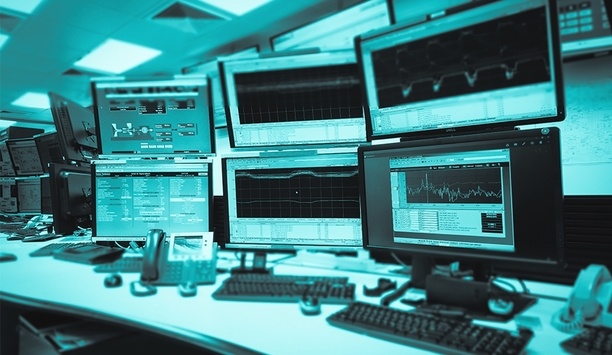
Along with the integration of security and other systems in an enterprise environment comes a need to centralise monitoring and control of the unified network. A control room is at the center of managing integrated systems, providing the focal point to collect information from a variety of sensors, analyse the data, and then respond appropriately. The technologies that drive these functions are changing and evolving, thus increasing the efficiency and efficacy of systems. We asked this week&rsqu...

While unpacking our bags from a trade show, it is interesting to consider the dominant themes and trends we heard and saw at the show. So it is with the recently concluded Global Security Exchange (GSX) show in Chicago, presented by ASIS International. Amid all the product promotion, training sessions, networking and tired feet at the show, what really stood out? We asked this week’s Expert Panel Roundtable: What was the big news at the GSX 2019 trade show in Chicago?

The new school year is a good time to reflect on the role of security in protecting our schools. From video to access control to some newer technologies, our Expert Panel Roundtable found plenty to talk about when we asked this week’s question: How does security technology make our schools safer?

Driven by technology developments such as voice recognition, smart devices and the Internet of Things, our homes are getting “smarter” all the time. Increasingly, we expect our residential environments to be responsive to our voice commands, whether we are adjusting a thermostat, turning on a light, or lowering the window shade. Smarter home integration yields new opportunities and challenges for home security, too, which contributes an element of safety and protection to the conveni...

Passwords are one of the most familiar elements of information systems, but also one that can be overlooked or underutilised. New alternatives are emerging, and the role of passwords is evolving in the age of the Internet of Things. We asked this week’s Expert Panel Roundtable: How is the role of passwords changing in physical security systems?

There will be more artificial intelligence, more machine learning, video systems with more capabilities, and all of it will add greater value to our solutions. Those are among the expectations of our Expert Panel Roundtable as they collectively look ahead to the remainder of 2019. One unexpected prediction is that AI will not prove to be a game changer – at least not yet. We asked this week’s Expert Panel Roundtable: What will be the biggest surprise for security in the second half o...

People are an essential component of any physical security system. Automation hasn’t taken over completely yet! But how has innovation changed the skillsets security operators need to operate systems effectively? The two elements – technology and manpower – must operate seamlessly and hand-in-glove to ensure that modern systems live up to their full potential. We asked this week’s Expert Panel Roundtable: How does technology innovation in security systems impact the skill...

The ability to treat patients in a secure environment is a base requirement of hospitals and other healthcare facilities. Whether facilities are large or small, security challenges abound, including perimeter security, access control of sensitive areas, video surveillance, and even a long list of cyber-risks. We asked this week’s Expert Panel Roundtable: What are the security challenges of hospitals and the healthcare industry?

Technology's role in securing banks and financial institutions
Download
Security technologies promote real-time awareness in K-12 schools
Download
Integrated systems enable critical and compliant security for transportation
Download
Modernising physical access control
Download
Access. Intrusion. One estate.
Download
