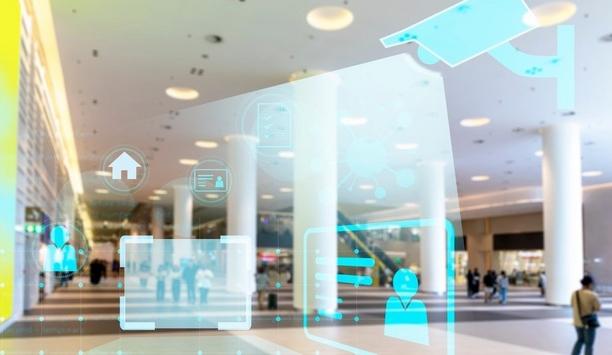
Constantly optimising deep learning algorithms yields better video analytics performance, even in complex applications such as facial recognition or in scenarios with variable lighting, angles, postures, expressions, accessories, resolution, etc.
Deep learning, a form of artificial intelligence (AI), holds the potential to enable video analytics to deliver on long-promised, but not often delivered performance. Our AI series continues here with part 2.
Adapting existing hardware
Today, low-cost system-on-chip (SoC) camera components enable deep neural network (DNN) processing for the next generation of intelligent cameras, thus expanding the availability of AI processing to a broader market.
AI software can even add learning capabilities by adapting existing hardware to AI applications
AI software can even add learning capabilities by adapting existing hardware to AI applications. Today’s smartphones include cameras, gyroscopes and accelerometers to provide sufficient data to drive AI applications. Software can adapt existing hardware to transform them into AI devices capable of continuous learning in the field. Inside a video camera, real-time deep learning processing can be used to detect discarded objects, issue loitering alarms and detect people or objects entering a pre-defined field.
Thank you for submitting your information.
× Detect anomalous data
Additional capabilities are applicable to demanding environments and mission-critical applications, such as the perimeter protection of airports, critical infrastructures and government buildings, border patrol, ship-tracking and traffic-monitoring (e.g. wrong-way detection, traffic-counts and monitoring roadsides for parked cars: all vital video security solutions).
IoT is transforming the lowly security camera from a device that simply captures images, into an intelligent sensor that plays an integral role in gathering the kind of vital business data that can be used to improve commercial operations in areas beyond security. For example, cities are transitioning into smart cities. Deep learning enables systems to search surveillance footage, to detect anomalous data, and to shift surveillance from post-incident response to providing alerts during, or even before, an event.
 |
| The ability of deep learning for video analytics is much more sophisticated and accurate |
Make critical decisions
Deep learning can eliminate previous video analytics limitations such as dependence on a scene’s background. Deep learning is also more adept than humans at discerning subtle changes in an image. The ability of deep learning for video analytics is much more sophisticated – and accurate – than the programmed approaches previously employed to identify targets.
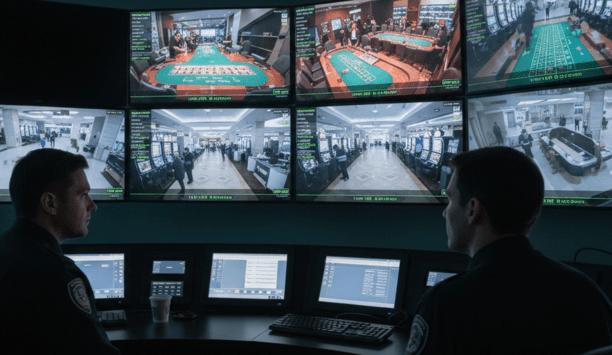
AI is a timely solution in an age when there is more video surveillance than ever. There are too many cameras and too much recorded video for security operators to keep pace with. On top of that, people have short attention spans. AI is a technology that doesn’t get bored and can analyse more video data than humans. Systems are designed to bring the most important events and insight to users’ attention, freeing them to do what they do best: make critical decisions.
Multiple camera streams
AI can reduce information overload to enable humans to work with the data more efficiently
The video benefits reflect the larger goal of AI to amplify human skills. AI can reduce information overload to enable humans to work with the data more efficiently. Another benefit is faster search, and new systems make searching video as easy as searching the internet. AI enables specific people or cameras to be located quickly across all the cameras at a site. Searching can be directed by a reference images or by physical descriptors such as gender or clothing colour.
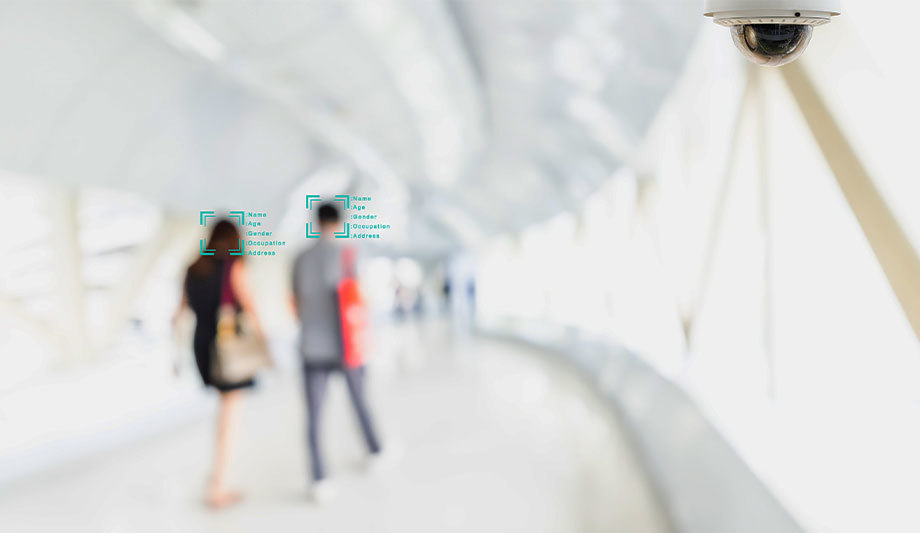
Consider a scenario of a child missing from a crowded shopping mall: Every second can seem like hours, and artificial intelligence and neural networks can enable a rapid search among multiple camera streams using only one photo of the child. The photo does not have to be a full-frontal passport-type photos; it could be a selfie from a party as long as the face is there.
Intrusion detection scenario
AI can find her and match her face from among hundreds of thousands of faces captured from video, in nearly real time. AI can also continuously analyse video streams from the surveillance cameras in its network, distinguishing human faces from non-human objects such as statues and animals. Privacy concerns are minimal as there is no ID or personal information on the photo, and the image can be erased after use. And there is no database of stored images.
In a perimeter security/intrusion detection scenario, an AI-driven video system can avoid false alarms by easily distinguishing different types of people and objects, e.g., in a region set up to detect people, a car driving by, a cat walking by, or a person’s shadow will not trigger the alarm.
Part three coming soon. If you missed part one, see it here.