Security monitoring system


COPS Monitoring and RelyOn today announced a strategic partnership that brings AI-powered mobile personal safety to the U.S. security company channel. The collaboration positions COPS as the first wholesale monitoring center to offer RelyOn's mobile safety platform nationwide. Partnership details The partnership expands professional monitoring beyond fixed locations, enabling security companies to deliver protection that follows their customers wherever life takes them. RelyOn's AI-driven...

Artificial Intelligence Technology Solutions, Inc., a pioneer in AI-driven security and productivity solutions, along with its wholly owned subsidiary, Robotic Assistance Devices Group (RAD-G), now announced that RAD-G has begun invoicing monitoring company clients for SARA™, its proprietary agentic AI platform, marking a decisive shift from pilot programs and proof of concept engagements to live, revenue generating deployments across the remote video monitoring sector. Over the past...

Netwatch, a provider of AI-powered security services, announced now that it has signed a definitive agreement to be acquired by GI Partners. Netwatch is a pioneering global provider of intelligent security solutions, serving a broad range of verticals, including organisations in the automotive, retail, banking, manufacturing, construction, and infrastructure sectors. Netwatch’s services are mission-critical, providing peace of mind to businesses and individuals by delivering a techno...

As the world transitions to renewable energy, Battery Energy Storage Systems (BESSs) are helping meet the growing demand for reliable, yet decentralised power on a grid scale. These systems gather surplus energy from solar and wind sources, storing it in batteries for later discharge. This process helps stabilise the grid by ensuring a steady power supply and mitigating the variability associated with renewables. Excess daytime electricity from solar farms, for instance, can be stored at a BESS...
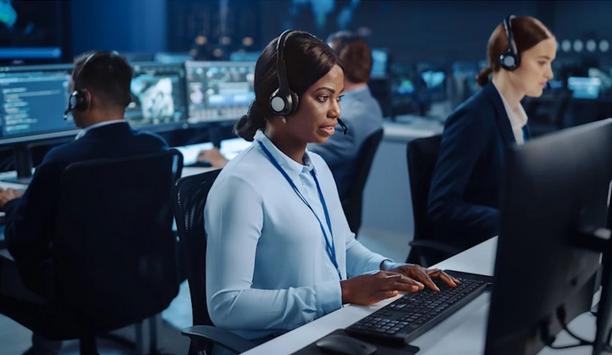
To date, there is no standardised or unified verbal communication protocol specifically tailored for effectively and precisely prioritising intrusion alarm calls to Emergency Communication Centres (ECCs). Without a standardised system of prioritisation, a significant burden can be placed on staffing and budget resources for centres, and a lack of situational information provided during an event risk comprising the safety of first responders and community resources. Implementing a universal solu...
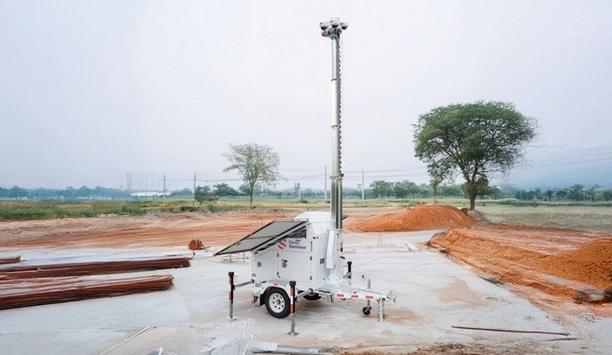
Deep Sentinel, the pioneer in AI-powered proactive video surveillance with real-time human intervention, now announced the launch of its Mobile Monitoring Trailer — a fully mobile, solar-powered security platform that delivers instant access to Deep Sentinel’s remote live guard monitoring anywhere, including places where power and permanent infrastructure are unavailable. Purpose-built for high-value outdoor environments, such as auto and parking lots, construction sites, industrial...
News

Alarm.com and Everon, LLC, a pioneering security integrator and premier provider of commercial security, video, fire, and life safety solutions, today announced a strategic partnership to deliver a unified console for Everon customers to manage integrated intrusion protection, access control, remote video monitoring, and business management solutions. The partnership reflects the growing demand for integrated commercial security platforms that can easily connect with existing infrastructure while delivering remote management capabilities. The Alarm.com partnership with Everon will enable a scalable solution that meets the sophisticated requirements of commercial customers across diverse business environments, from small businesses to multi-location enterprises. Range of commercial customers “Working with Everon allows us to bring enterprise-grade mobile security capabilities to a broader range of commercial customers who need reliable, integrated solutions," said Dan Kerzner, President of Platforms Business at Alarm.com. "By combining our proven platform technology with Everon's operational expertise, we're creating a unified system that transforms how businesses manage their protection and monitoring needs." “This partnership underscores our dedication to delivering next-generation technology across every aspect of the commercial security experience,” said Don Young, Chief Executive Officer at Everon. “By collaborating with a global technology pioneer like Alarm.com, we’re ensuring that innovation remains at the heart of what we do—empowering enterprises with a transformative platform that redefines how they manage and engage with their security and life-safety systems.” Comprehensive mobile integration The Everon integration leverages Alarm.com for Business' platform to provide a complete mobile security experience, including panel arm/disarm functionality, real-time activity monitoring, user management, and push notification capabilities. The partnership continues to enhance customer value through intrusion management, employee administration, customer service integration, and advanced notification customisations. Advanced video and monitoring capabilities This integration extends across Alarm.com for Business' commercial offerings, including OpenEye for enterprise video surveillance and advanced analytics capabilities that seamlessly integrate with security events for comprehensive incident management. Future development will incorporate remote video monitoring integration and functionality. Enterprise-grade flexibility The partnership addresses the sophisticated needs of Everon's diverse customer base through a scalable platform that supports everything from basic intrusion monitoring to advanced multi-location management. Alarm.com for Business demonstrates its commitment to flexibility by integrating existing control panels with app-based management—modernizing systems without costly infrastructure replacements. For Everon enterprise customers, the platform unifies oversight and control across every level of the organisation. Integrated inspection tools, reporting, and real-time technician tracking will drive operational efficiency, with planned future integrations to deliver complete visibility to the order lifecycle. Planned enhancements to the platform also include future integration with Everon’s monitoring and management software suite and order-to-cash tool, empowering customers with real-time visibility, streamlined operations, and faster revenue cycles for smarter service management and a more seamless billing experience.

Artificial Intelligence Technology Solutions, Inc., a pioneer in AI-driven security and productivity solutions, along with its wholly owned subsidiary, Robotic Assistance Devices Group (RAD-G), announced a SARA™ contract covering more than 2000 video channels, marking a large agentic AI monitoring deployment. The agreement begins with SARA Verified replacing a competing solution and is expected to progress into SARA Lite and ultimately SARA Agent as the client expands its use of autonomous intelligence. Modernised security operations SARA (Speaking Autonomous Responsive Agent) is the Company’s multiple award-winning agentic AI platform built for high volume remote video monitoring. It analyzes live streams, identifies activity that matters, and delivers real time responses through voice interaction and targeted alerts. Monitoring centres and security providers are adopting SARA because they want consistent performance at scale without the limits of traditional human review. Every new deployment strengthens RAD-G’s position as it pushes the industry toward fully modernised security operations driven by autonomous intelligence. SARA’s acceptance and penetration “SARA’s acceptance and penetration since its introduction earlier this year has exceeded every expectation,” said Steve Reinharz, CEO, CTO and founder of AITX and all RAD subsidiaries. “We are now approaching a possible $1 million in booked annual recurring revenue from RAD-G alone, and the pace continues to accelerate. This contract is another clear signal that the market is shifting toward autonomous intelligence and that SARA is leading that shift.” RAD-G’s SARA revenue RAD-G’s SARA revenue continues to scale as more clients commit to large multi-channel deployments and expand into higher tiers of autonomous response. The Company sees this latest agreement as further confirmation of the revenue progression already demonstrated by RAD-G’s earlier multi-year SARA contract, which is expected to reach a total value of $2.5 million over three years. These engagements strengthen long-term recurring software volume and reinforce the Company’s push toward a high-margin, software-driven model. How SARA can transform its monitoring operations SARA is offered in several forms so that clients can adopt autonomous intelligence at the pace and depth that matches their operations. Some begin with SARA Verified to remove false positives and reduce noise, while others move quickly into SARA Lite for single call responses or SARA Agent for full autonomous action. Additional modules such as SARA Assist, SARA Edge and SARA Alarm allow organisations to expand their capabilities without replacing existing systems. This modular approach lets RAD-G scale performance across thousands of feeds and supports long-term migration toward fully autonomous operations. The Company invites Remote Video Monitoring, GSOC, and SOC operators interested in learning how SARA can transform their monitoring operations to connect with RAD-G.

DNAKE has been awarded "Preferred Supplier of Top 500 China Real Estate Development Enterprises" in building intercom and smart home areas for eight consecutive years. "Building Intercom" system products ranked No.1! On March 18, 2020, the “2020 Evaluation Results Release Conference of Top 500 China Real Estate Development Enterprises” co-sponsored by China Real Estate Association, Shanghai E-House Real Estate Research Institute, and China Real Estate Evaluation Center was held through live broadcast. Evaluation work The evaluation work has been running for 12 consecutive years and has achieved a good response in the industry. At the conference, the evaluation lists of “Preferred Suppliers of Top 500 China Real Estate Development Enterprises in 2020” were released. Building intercom and smart home DNAKE brand has been recognised by China Real Estate Industry Association experts and pioneers The two major industries of DNAKE – building intercom and smart home are both on the list and have won the “Preferred Supplier of Top 500 China Real Estate Development Enterprises 2020″ awards. This also means that the DNAKE brand has been recognised by China Real Estate Industry Association experts, pioneers, and top 500 real estate companies for eight consecutive years! Honourary medal DNAKE Building Intercom won the “Preferred Supplier Brand of Top 500 China Real Estate Development Enterprises” award with the No. 1 brand preferred rate of 18%, and Smart Home won the “Preferred Supplier Brand of Top 500 China Real Estate Development Enterprises” award with the preferred rate of 8%. Innovation has never been exhausted. For DNAKE, 2020 is bound to be an extraordinary year. This year is the 15th anniversary of the establishment of DNAKE, and the eighth year that DNAKE has won the honourary medal of “Preferred Supplier of Top 500 China Real Estate Development Enterprises”. Innovation Grow together and start again! In 2020, DNAKE will continue to regard innovation as the soul of the enterprise, steadily take root in the field of intelligence, and work together with various real estate development companies to create a new era for customers with more intelligent video intercom and smart home products, etc., to create a “beautiful human settlement” in the new era for the majority of users.

On May 11th, 2021, the "2021 Zhongliang Real Estate Group Supplier Conference" was grandly held in Shanghai. Mr.Hou Hongqiang, DNAKE’s Deputy General Manager, attended the conference and explored the opportunities and challenges for developing the real estate industry with more than 400 guests on the spot, hoping to reach win-win cooperation for the bright future of Zhongliang Real Estate Group. Outstanding Supplier award DNAKE was honourred with the award “Outstanding Supplier of Material & Equipment”. "This honourr is not only the recognition and affirmation of Zhongliang Real Estate Group on DNAKE but also a spur to DNAKE’s original intention of win-win cooperation,” said Mr. Hou Hongqiang at the conference. Mutual benefit Zhongliang Real Estate Group and DNAKE always adhere to the principle of mutual benefit and keep working From knowing each other to strategic cooperation, Zhongliang Real Estate Group and DNAKE always adhere to the principle of mutual benefit and keep working for the common goal of creating value together. As a fast-growing integrated real estate development enterprise located in the Yangtze River delta economic zone, Zhongliang Real Estate Group has maintained its position as a Top 20 China Real Estate Enterprise by Comprehensive Strengths and become one of DNAKE’s strategic partners for many years. Win-win cooperation During the cooperation for many years, by its excellent product quality, high-quality customer service, and long-term stable production capacity, with video intercom, smart home, intelligent transportation, and other industries, DNAKE has worked together with Zhongliang Real Estate Group to complete many smart community projects. Win-win cooperation and common prosperity are the goal. As the competition in the real estate industry has evolved into the competition of high-quality supply chain, facing new changes and opportunities, DNAKE will continue to walk shoulder to shoulder with the vast number of real estate enterprises, such as Zhongliang Real Estate Group, to build intelligent post-modern living environment and smart life for the public.

Salto, a global pioneer in smart access solutions, announced the launch of XS4 Sense, an innovative Smart Energy Management System (SMES) designed to revolutionise energy efficiency in buildings. Combining cutting-edge wireless technology with real-time energy monitoring platform, XS4 Sense empowers building operators to reduce energy consumption, lower carbon footprints, and achieve sustainability goals – all without complex installations or invasive infrastructure upgrades. Building on Salto’s reputation for secure smart access solutions, XS4 Sense expands the smart access ecosystem technology portfolio by integrating real-time energy monitoring, advanced presence detection, and HVAC control into a compact, retrofit-friendly device. The wireless solution integrates seamlessly with Salto’s existing smart access ecosystem, including Salto Space and BLUEnet infrastructure, enabling rapid installation in operational hotels, workspaces, student dorms, cruise ships, and other properties. Energy efficiency and control Built to work together, designed for retrofit, and certified for sustainability, the XS4 Sense enables building operators to reduce energy consumption – without the need for complex wiring or new infrastructure. Energy savings: XS4 Sense provides energy savings at the individual room or space level, ensuring increased energy efficiency. Wireless and retrofit-ready: Designed for seamless retrofit, XS4 Sense eliminates the need for complicated setups or extra tools through its advanced wireless architecture, making installation quick and disruption-free. All-in-one smart controller: This wireless device integrates multiple functionalities into one compact module, including motion detection, door and window sensors, and HVAC control and is suitable for any room or space. Flexible placement: Whether installed on ceilings, under eaves, or on door and window frames, the non-invasive wireless sensor design enables a quick retrofit in live environments which is ideal for hotels, student housing, workspaces, healthcare labs, cruise ship cabins, and other property types. Seamless ecosystem integration: Works harmoniously with Salto’s smart access platform and is integrated to work with Salto Space, combining security, comfort, and energy efficiency into one smart access solution. Complements existing access control solutions The Salto XS4 Sense offers a unique opportunity to complement existing access control solutions and deliver a measurable sustainability impact. The system is ideal for retrofitting projects in operational environments such as hotels, student dormitories, offices, cruise ship cabins, and vacation rental properties. A powerful addition to Salto’s smart access ecosystem, the XS4 Sense delivers value for both existing customers and new developments seeking to align with sustainable building standards, ESG targets, and energy regulations. The system supports real-time monitoring and actionable insights, enabling operators to demonstrate measurable environmental impact and reduce long-term operational costs.

Motorola Solutions announced it has acquired Blue Eye, a pioneering provider of AI-powered enterprise remote video monitoring (RVM) services, based in Salt Lake City, Utah. Blue Eye provides a comprehensive RVM service powered by AI to help detect threats in real time, enabling live voice talk-downs to deter crime and providing verified alerts to help accelerate law enforcement response. Enhanced situational awareness The company’s software platform is interoperable with pioneering cameras and video management systems (VMS), allowing enterprises to integrate with existing security solutions. These RVM services are managed by 24-hour security operations centres (SOCs) that provide businesses with enhanced situational awareness and includes reporting analytics that highlight activity trends. Access real-time intelligence “Security professionals know that the challenge isn’t solely identifying the threat; it’s about moving from detection to action in a matter of seconds,” said Mahesh Saptharishi, Executive Vice President and Chief Technology Officer, Motorola Solutions, adding "The acquisition of Blue Eye is a key component of our strategic focus to provide a single, tightly integrated workflow that seamlessly connects threat detection, verification and response." Relied upon by retail, warehouse, manufacturing and distribution centres, critical infrastructure, and commercial real estate owners, Blue Eye’s platform helps business owners access real-time intelligence to help reduce loss or damage, mitigate risk and enhance profitability. Integrate its advanced AI capabilities Motorola Solutions plans to integrate its advanced AI capabilities into Blue Eye's RVM platform, further differentiating this technology. For example, an AI-powered detection from Motorola Solutions’ Visual Alerts can be verified by Blue Eye and fed directly into the incident management platform, Inform, to automatically orchestrate a response. Additionally, the company plans to expand Blue Eye’s reach across key enterprise sectors through Motorola Solutions’ channel partner network. Impact on enterprise security “Blue Eye's purpose is to deliver proactive, real-time security and business optimisation. Joining Motorola Solutions allows us to accelerate this mission," said Steve Jackson, CEO, Blue Eye, adding "Motorola Solutions’ global scale and deep AI expertise will help expand our reach, advance our solutions and deepen our impact on enterprise security." Terms of the transaction were not disclosed.

Expert commentary
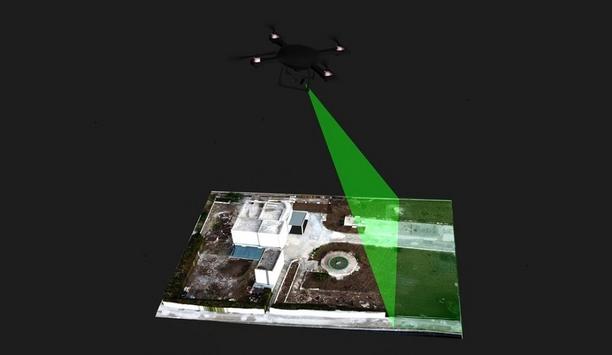
Seven minutes. That’s how long the recent Louvre heist took. In broad daylight, a group of thieves rode up on a construction platform, smashed display cases, stole several historical jewels tied to the Napoleonic dynasty and escaped on scooters before anyone in the control room even realised what was happening. It sounds like a scene straight out of “Mission: Impossible.” Only this time, Tom Cruise wasn’t there. In movies, we often see tight webs of red laser beams guarding treasures, with the hero gracefully sliding between them. Reality, however, is far less cinematic. Most museums still rely on mechanical sensors, simple infrared barriers, cameras and the most fallible component of all: the human eye. But the human eye doesn’t measure space. A camera records an image, but it doesn’t know that a display case has shifted by three centimetres, or that a visitor’s hand just crossed an invisible boundary. That’s where a new kind of perception comes in — LiDAR. From Hollywood fantasy to real-world security Forget the tangled maze of laser beams you’ve seen in films. A modern 128-channel rotating LiDAR fires hundreds of thousands of laser pulses per rotation — and it does this up to 10 times per second. That’s millions of spatial measurements every second, creating an invisible web of light that maps the scene in 3D, without anyone ever noticing. What LiDAR builds is called a point cloud — a live three-dimensional model of the environment. The system constantly compares this “snapshot” with the current scene. If anything changes — a hand moves closer to an artefact, a case is displaced or an object disappears — LiDAR detects it instantly. When technology sees in 3D Pan-tilt-zoom (PTZ) cameras automatically turn to the exact spot and start recording LiDAR technology (such as LidarVision, developed by Hexagon), brings true 3D situational awareness into museums and galleries. It doesn’t just see that someone is moving; it knows where, how fast and in what trajectory. Each detected object is tracked with its precise dimensions, velocity and spatial position. If a visitor steps too close to a protected exhibit, the system triggers an alarm. Pan-tilt-zoom (PTZ) cameras automatically turn to the exact spot and start recording. The operator no longer has to stare at dozens of screens, hoping to catch the right moment. LiDAR data also serves as forensic evidence — allowing investigators to replay the incident as a full 3D reconstruction. They can see exactly how intruders moved, from entry to exit, with centimeter precision. Beyond thieves: Everyday situational awareness LiDAR isn’t just a tool against master criminals. It helps with daily operations, too — recognising when someone lingers suspiciously near a sensitive exhibit, when an unauthorised object enters the room or even when a visitor collapses. The system can trigger a silent alert, notify security staff or automatically redirect nearby cameras. History that never comes back 13 paintings worth more than half a billion dollars vanished from Boston’s Isabella Stewart Gardner Museum Art theft is not a cinematic rarity — it’s a recurring tragedy. In 1990, 13 paintings worth more than half a billion dollars vanished from Boston’s Isabella Stewart Gardner Museum. None have ever been recovered. Even Leonardo da Vinci’s Mona Lisa was stolen from the Louvre in 1911 — though it was miraculously found two years later. That case, however, remains the exception. Thieves often fail to realise that cultural artefacts are not commodities. When they melt them down for gold or strip them for gems, they don’t just destroy value — they erase history. Spatial understanding is the future of security No security system is flawless. But while cameras merely watch, LiDAR understands space. From a single compact device, it monitors the 3D environment in real time, detects anomalies and reacts immediately. Modern security is no longer about higher fences or better cameras. It’s about spatial understanding — knowing what is happening in the room right now. And that’s something even Tom Cruise wouldn’t be able to slip through.

Currently, in security surveillance, the application of intelligent analysis technology has two approaches: front-end intelligence and back-end intelligence. Front-end intelligence Front-end intelligence is typically implemented within the video surveillance camera itself, integrating AI edge algorithms into the camera. Its advantages include: acquiring video in real-time and performing video analysis and feedback results immediately. Benefits No consumption of network resources like bandwidth; Offers real-time and highly efficient analysis; Obtains results immediately; relatively low cost; Highly flexible deployment. Disadvantages Due to the small physical size of cameras, hardware expansion space is limited. AI edge algorithms are often confined to a fixed few types, such as perimeter intrusion detection, tripwire, abandoned object detection, etc. It cannot flexibly load customised intelligent functions. The other approach is back-end intelligence, which usually requires installing an intelligent analysis server in the monitoring centre, integrating AI edge algorithms into this back-end server. Advantages: Hardware components can be flexibly expanded based on project requirements, thereby enhancing the server's overall analytical capability. It can also flexibly customise and load various intelligent algorithms according to project needs, capable of loading dozens or even hundreds of algorithms. Disadvantages: Because back-end intelligence requires first collecting the video stream from the front-end cameras in real-time before analysis, it consumes significant resources like bandwidth. It cannot provide immediate feedback of intelligent analysis results like front-end intelligence, lacks flexible deployment options, and the cost is very high. Development of intelligent analysis technology AI edge analytics boxes have emerged in the security surveillance market, defining another front-end With the development of intelligent analysis technology, AI edge analytics boxes have emerged in the security surveillance market, representing another front-end intelligence product. These boxes themselves can integrate dozens of AI edge algorithms, enriching the variety of AI algorithms available for front-end intelligent cameras while maintaining flexible deployment. Users can freely choose to deploy the box at the front-end (near the camera) or at the monitoring centre end to function as a small intelligent analysis server. Front-end (camera side) When deployed at the front-end (camera side): There is no need to dismantle existing video surveillance equipment. The real-time video stream from the original camera can be analysed directly within the AI box, and results are fed back. Since the camera and AI box are usually on the same network, this consumes minimal bandwidth resources, offering excellent real-time performance, timeliness, and efficiency. After the AI edge analytics box analyses the video, the results can be transmitted to the monitoring centre video management platform server via the internet, VPN dedicated line, 4G, 5G, etc., for storage, real-time display, and retrieval. Monitoring centre end When deployed at the monitoring centre end: The AI edge analytics box can function as a small video analysis server. Individual AI analytics boxes can be stacked to aggregate their analytical power, enabling the analysis of large volumes of video streams transmitted from the front-end. Since the cost of the AI edge analytics box itself is significantly lower than that of a full intelligent analysis server, using AI analytics boxes to implement intelligent solutions is often more economical and practical for small to medium-sized intelligent security surveillance projects. AI box application. AI box deployment application Edge AI Box does not require changes to existing video surveillance kit deployments Since the Edge AI Box does not require changes to existing video surveillance equipment deployments and only upgrades the original system to enable intelligent applications for existing monitoring devices, it can save significant labour costs associated with on-site deployment personnel. After the Edge AI Box and AI-powered cameras transmit intelligent analysis results to the platform, what can the platform do? Taking the video surveillance management platform SVMS Pro as an example. SVMS Pro video surveillance management software First SVMS Pro provides centralised management for multiple AI Boxes across diverse networks (LAN, WAN, VPN, 4G/5G). This flexibility enables users to deploy AI Boxes anywhere project requirements demand. With the AI Box and cameras connected to the SVMS Pro video surveillance management software, users can select video channels for analysis. The AI Box automatically analyses the chosen channels, transmits the results, and triggers alarms back to SVMS Pro. This seamless integration provides a unified platform for users to: Configure event settings Define alarm-triggering actions (such as alarm recording and alarm video pop-up). Alerts originating from the AI Box can trigger video recording via the SVMS Pro platform. These recordings are then stored long-term within the SVMS Pro platform. This capability resolves the limitation of the AI Box itself, which cannot store recordings for extended periods due to constraints imposed by its physical size. Search historical alarm events Manage active alarms View alarm statistics Additionally, SVMS Pro facilitates pushing the analysed results to third-party platforms via the network. SVMS Pro provide various AI intelligent solutions for different scenarios. AI intelligent solutions for different scenarios AI box + video surveillance management software SVMS Pro provides various AI intelligent solutions for different scenarios. For example: In smart construction site applications, AI box can provide not wearing safety helmet and reflective vest detection, fight detection, area intrusion detection, wandering detection, fire detection, etc., and display real-time results in real-time on SVMS Pro. Users can watch real-time video from different places, store the recordings, playback, get the real-time AI alarms, put the video on the video wall, etc., all in one platform. SVMS Pro and AI Edge Boxes Combined force of SVMS Pro and AI Edge Boxes presents a truly unified and intelligent solution In essence, the combined force of SVMS Pro and AI Edge Boxes presents a truly unified and intelligent solution, effectively overcoming the inherent limitations of both traditional front-end and back-end surveillance intelligence. The AI Edge Boxes deliver powerful, real-time analytics at the edge or as scalable micro-servers, offering unprecedented flexibility and cost-effectiveness – particularly vital for small to medium-sized projects. SVMS Pro elevates this capability by providing centralised command and control, seamlessly integrating diverse AI Boxes across any network to offer comprehensive video management. Advanced AI surveillance This synergy enables robust features like intelligent event configuration, alarm-triggered recording with long-term SVMS Pro storage, historical event search, and cross-platform integration, all within a single, cost-optimised platform. From construction sites to broader security networks, this unified solution transforms raw video into actionable intelligence, democratising advanced AI surveillance by making it accessible, practical, and economically viable. SVMS Pro and AI Edge Boxes together redefine intelligent video management for the modern era.

In the ever-evolving struggle between cyber offence and defence, attackers have almost always moved first. In the emerging domain of artificial intelligence, this pattern appears to be repeating itself. Yet, global cybersecurity pioneers appear disconcertingly disengaged. Just over half even agree that AI-driven attacks are set to become dramatically more complex and widespread. Equally concerning is the widespread apathy regarding AI’s role in expanding an already sprawling corporate attack surface. This is no small oversight. A recent global Trend Micro study showed that 73 percent of organisations have already suffered cybersecurity incidents due to unknown or unmanaged assets. In an era where digital blind spots are both common and consequential, hesitation is a risk few can afford. Security has to shift from reactive protection to proactive risk exposure management. The opportunity and the risk of AI Threat actors are now using jailbroken versions of legitimate generative AI tools such as ChatGPT The potential for AI to transform enterprise operations is enormous, but so is the risk. The warnings have been loud and clear. As early as the first quarter of 2024, the UK’s National Cyber Security Centre (NCSC) stated that AI would “almost certainly increase the volume and heighten the impact of cyber-attacks over the next two years.” Their prediction is proving accurate. Threat actors are now using jailbroken versions of legitimate generative AI tools such as ChatGPT, freely traded as services on the dark web, as well as malicious models like FraudGPT, built on open-source large language models (LLMs). These tools are no longer just about automating tasks; they are turbocharging the entire attack lifecycle. From more convincing phishing emails and precise target selection, to sophisticated malware creation and lateral movement within breached systems, AI is driving a step-change in threat actor capability. Integrating open-source models However, this is only one side of the coin. The other, often overlooked, is AI’s impact on the corporate attack surface. Even well-meaning employees can unintentionally expand organisational risk. The widespread use of AI-as-a-service tools like ChatGPT introduces significant shadow IT concerns, especially when sensitive business information is input without proper oversight. Data processing and storage practices for many of these services remain opaque, raising additional compliance concerns under regulations like the UK GDPR and the EU’s AI Act. For those organisations that choose to build or customise their own LLMs, the risks multiply. Integrating open-source models may expose businesses to vulnerabilities, misconfigurations and flawed dependencies. Each new tool and environment adds to the complexity of an attack surface already strained by remote work setups, sprawling cloud deployments, IoT ecosystems, and accelerating digital transformation programmes. Managing the expanding risk landscape Many have already shared security incidents where a lack of asset visibility was the root cause Many security pioneers do understand what is at stake. Nine in ten agree that effective attack surface management is tied directly to business risk. They cite a long list of potential consequences, disruptions to operations, reputational damage, declining competitiveness, strained supplier relationships, financial losses and reduced staff productivity. Many have already experienced security incidents where a lack of asset visibility was the root cause. Despite this recognition, however, the response remains largely inadequate. Fewer than half of global organisations use dedicated tools to monitor their attack surface proactively. On average, only a quarter of cybersecurity budgets are allocated to managing cyber risk exposure. Third-party risk management is similarly neglected: fewer than half of firms actively monitor their vendors for vulnerabilities. This inertia creates an obvious contradiction. Security pioneers understand the business implications of unmanaged risk, but they are not equipping themselves with the tools or processes to respond. That needs to change—and fast. How AI can help defenders take the lead There is good news: AI is not only a weapon for cybercriminals. It can also be a powerful ally for defenders, particularly in the field of Cyber Risk Exposure Management (CREM). The best tools in this category use AI to continuously scan an organisation’s entire digital footprint. They can automatically detect vulnerabilities, spot misconfigurations, identify rogue or shadow assets, and provide prioritised remediation recommendations. CREM platforms apply contextual filtering to reduce false positives and elevate the most urgent threats Intelligent algorithms can also analyse network behaviour to identify anomalies that could signal a breach in progress. Unlike traditional tools, which often drown analysts in noise, CREM platforms apply contextual filtering to reduce false positives and elevate the most urgent threats. For overburdened security teams, this enables a far more focused and effective response. However, the keyword here is “continuous.” The nature of today’s IT environments, especially in the cloud, is dynamic and fast-moving. Assets appear and disappear within minutes. Static, point-in-time assessments are no longer sufficient. Yet more than half of organisations still lack continuous scanning processes. This leaves them exposed to risks that might persist undetected for weeks or months. Overcoming barriers to adoption So what is holding organisations back? In many cases, it’s not the technology itself but the internal politics of investment. Security pioneers interested in CREM tools often prioritise real-time alerting, clear dashboards, and seamless integration with their existing environments. All of this is now achievable. The challenge lies in securing board-level support. Many security teams still work in silos, disconnected from the broader business Boards are often cautious when it comes to cybersecurity investment, particularly when immediate ROI is not clear. To gain their trust, security pioneers must learn to speak the language of business risk, not technical threat. They must frame cyber exposure in terms of reputational impact, regulatory liability, operational continuity, and investor confidence. There is also a cultural component. Many security teams still work in silos, disconnected from the broader business. This limits their influence and makes it harder to embed security as a strategic enabler. In the AI era, this divide must be bridged. Cybersecurity must become a board-level concern, and risk exposure must be treated as a fundamental operational issue. Time to act We are at a critical inflection point. The AI revolution is not on the horizon, it is already here. Threat actors are moving rapidly to exploit it, leveraging tools and techniques that were unthinkable just a few years ago. Meanwhile, organisations remain slow to respond. Too few are investing in the tools, processes, and people needed to manage their risk exposure effectively. AI can be used not only to attack but to defend. CREM tools powered by AI offer a powerful way to regain visibility, restore control, and build lasting resilience. They enable proactive rather than reactive security. And they help organisations align their cybersecurity strategy with their broader business objectives. Security teams have to elevate the conversation. They must advocate not just for new tools, but for a new mindset, one that treats cyber risk as an enterprise risk, and one that prioritises continuous visibility as a prerequisite for resilience.
Security beat

Ibrahim Kassem, Everon’s new Chief Technology Officer (CTO), has been in the security industry since 1998 in various IT leadership roles. Most recently, he was Chief Information Officer for a video monitoring company. With most of his professional experience rooted in commercial security, Kassem has come to understand how customer needs and demands change with the evolving technology landscape. That understanding is a foundation for his new role at Everon, the national provider of commercial security, fire, and life safety solutions formerly known as ADT Commercial. Integrate AI to security operations “In this role, I am responsible for any customer-facing technology at Everon,” says Kassem. “Our primary focus is to provide a platform that will make it easy to do business with us. That platform will involve most of our solutions, including video monitoring which is the near-future focus for us.” As an integrator, Everon’s objective is to identify the best solutions. “We have partners that we leverage to help develop solutions for our customers that directly respond to their needs,” says Kassem. “For example, we partner with video camera providers to integrate AI to take security operations to the next level.” Demand for video monitoring Everon is looking to shift from reacting to events after they take place toward proactive monitoring Like most security operations, Everon is looking to shift from reacting to events after they take place toward proactive monitoring and preventing crimes as they are happening or deterring them from taking place. The ability to detect objects and behaviours is possible through AI. “Through this detection, we can respond accordingly – that’s why it’s at the forefront of our video monitoring efforts,” says Kassem. Every pursuit at Everon is in response to customer demand, and there is tremendous demand for video monitoring, says Kassem. Customer needs are the main philosophy behind the development and acquisition of technology, which also ensures that Everon is at the forefront of evolving with the security industry. Video-based security solutions “Right now, we’re noticing a trend towards video-based security solutions versus solely intrusion and guarding,” says Kassem. Everon seeks to strike a balance between “build versus buy.” The integrator prefers to buy when there is a proven product that will bring the most value. “We’re an integrator before we are a developer of technology,” says Kassem. “However, we are not shy about complementing a technology that we purchase with technology that we build if we don’t find the proper platform.” Video monitoring solutions and services Everon continues to evolve in step with ongoing trends, including smarter AI and analytics, smarter cameras Everon continues to evolve in step with ongoing trends, including smarter AI and analytics, smarter cameras, faster internet connectivity, and availability of wireless through 4G, LTE, and 5G connections. All of these are critical pieces of the video monitoring roadmap, says Kassem. “We aim to develop our video monitoring solutions and services to provide the best value to enterprises, reduce false alarms, and focus on relevant activities to save time and money,” he adds. “That’s what we’re looking forward to in the next couple of years.” Dependence on physical security Everon provides video monitoring services on a monthly basis, so the approach plays well with their recurring monthly revenue (RMR) model. Video monitoring is in great demand, and Everon is working towards being pioneers in that space, pushing to make it a major part of their future offerings. Everon is working towards being pioneer in that space, pushing to make it a major part of their future offerings “The dependence on physical security has gotten expensive, and many responding agencies no longer dispatch without video verification, which is the biggest technology challenge currently in the commercial security space,” says Kassem. “Video monitoring is the most direct, effective answer to that challenge, replacing costly, around-the-clock guarding services while also providing video verification for first responders and law enforcement agencies.” Portfolio of security solution offerings Everon roots all its pursuits in responding to the customer. Making the difference in Everon’s approach is an eagerness to listen, an awareness of industry trends and changes, and a full portfolio of security solution offerings. “Our technological roadmap is ambitious, innovative, and looks to the future through our thoughtful investments in this space, including through acquisitions of technology and top talent,” says Kassem. “All our efforts are supported by our teams of experts with decades of experience.”

The information age is changing. Today, we are at the center of addressing one of the most critical issues in the digital age: the misinformation age. While most awareness of this problem has emerged in the consumer and political worlds, the issue cannot be ignored when it comes to the authenticity and protection of video and security data. Video surveillance data SWEAR is a company with the mission to ensure the integrity of video surveillance data by mapping video data and writing it into the blockchain, providing real-time, immutable proof of authenticity. Blockchain, which is the underlying technology that enables cryptocurrencies, is a decentralised digital ledger that securely stores records across a network of computers in a way that is transparent, immutable, and resistant to tampering. SWEAR solution The SWEAR solution is based on proactive, foundational protection that validates data at the source The SWEAR solution is based on proactive, foundational protection that validates data at the source before any opportunity for manipulation can occur. “Our technology is about proving what’s real and our goal is to ensure that security content and video surveillance data remain untampered with and reliable when needed,” says Jason Crawforth, Founder and CEO of SWEAR. Real-time authentication Security leaders need to ensure that the content they are relying on to make mission-critical decisions is authentic. Once verified, organisations can be sure that their investment in video can be trusted for critical use cases, including intelligence operations, legal investigations, and enterprise-scale security strategies. SWEAR seeks to embed trust and authenticity directly into video surveillance content at the point of creation. This ensures real-time authentication while proactively preventing tampering or manipulation before it can happen. AI-generated content The rise of AI-generated content, such as deepfakes, introduces significant challenges As AI transforms the landscape of video surveillance by enhancing threat detection and predictive analysis, it also introduces the very real risk of manipulation through AI-generated content. This presents a significant challenge in protecting critical security data, especially in mission-critical applications. The rise of AI-generated content, such as deepfakes, introduces significant challenges when it comes to ensuring the protection of digital media like video surveillance. Recent study findings It is a fact that digital media content is being questioned more regularly, which puts businesses, legal systems, and public trust at risk. A recent study from the Pew Research Center found that 63 percent of Americans believe altered videos and images create significant confusion about the facts of current issues. Last month, California Governor Gavin Newsom signed three bills aimed at curbing the use of AI to create fake images or videos in political ads ahead of the 2024 election. Footage authenticity “While most of the news cycle has centered on the use of fake content in politics, we need to think about how manipulated videos could affect security,” says Crawforth. “In video surveillance, ensuring the authenticity of footage is critical for keeping operations secure and safe around the world. That means verifying and protecting video data is a must.” Organisations must be capable of performing thorough digital investigations, which involve retrieving and analysing video and security data from devices and networks through a chain of evidence. Digital forensic capabilities Strong digital forensic capabilities also enhance incident response, risk management, and proactive security An in-depth understanding of who has handled video data, how it was handled, and where it has been is an important step in responding to security incidents, safeguarding assets, and protecting critical infrastructure. Strong digital forensic capabilities also enhance incident response, risk management, and proactive security measures, all essential for risk management, regulatory compliance, and cost control, says Crawforth. An unbroken chain of custody “By using tools to identify, preserve, and analyse digital evidence, organisations can ensure swift and accurate responses to security incidents,” he adds. “Using the latest tools and techniques is vital for maintaining a strong security posture." "But you must ensure your digital content isn’t manipulated.” SWEAR’s technology provides an unbroken chain of custody, ensuring that video evidence can be trusted and admissible in court and forensic applications. Authenticating content Authenticating content also strengthens accountability and trust, protecting organisations By verifying video content is protected from tampering, manipulation, or forgery, organisations can be sure that they have reliable evidence that produces actionable results. Authenticating content also strengthens accountability and trust, protecting organisations from legal disputes or compliance violations. Safeguarding digital content “With an increasing amount of disinformation in today’s world, we sought to develop an innovative solution to safeguard the integrity of digital content,” says Crawforth. SWEAR safeguards security content using real-time “digital DNA” encoding. It integrates directly at the video management system level, ensuring it is preserved with a secure chain of custody and maintains integrity for evidentiary purposes. Real-time “digital DNA” encoding The digital DNA is then stored on a blockchain, creating an immutable record The solution integrates with cameras and other recording devices to map this digital DNA of the video data, all in real-time. The digital DNA is then stored on a blockchain, creating an immutable record that tracks the content’s history and integrity. Any attempt to manipulate the media can be instantly detected by comparing the current state of the media to its original, authenticated version. SWEAR is actively collaborating with video management solution providers to integrate the technology into their platforms. Video and security data benefits “We’re still in the early stages of our collaboration in this space, but it is clear that the industry recognises that we have to work together to mitigate this risk proactively before it becomes a significant issue,” says Crawforth. “The feedback we have received from the industry to date has been beyond our expectations, and we expect to have more integration partners to highlight shortly.” “We should approach this as a collaborative effort across the industry, as ensuring the authenticity of video and security data benefits everyone involved,” says Crawforth.

Casinos face multiple security issues caused by potential bad actors, everything from cheating to vandalism, from theft to vagrancy. A new intelligent technology can monitor for specific keywords and behaviours. The technology scans the entire casino premises constantly for potential threats and notifies key personnel when they happen. Casinos are among the environments deploying the OpticSense system by Huvr Inc., which uses special fibre optic technology called an interferometer to secure large areas. Imagine a very sensitive loop made of fibre-optic cables placed around the perimeter of a facility. System’s artificial intelligence Basically, it converts the entire facility into a highly sensitive microphone, detecting any slight disturbances, such as an unusual movement or sound. When the system senses something out of the ordinary, it immediately triggers cameras to look at the disturbance and record a short video. The system’s artificial intelligence (AI) then analyses both the sound and video to determine what's happening. It compiles a detailed report and immediately sends the information to security teams. OpticSense OpticSense can hear, see, and analyse potential threats automatically before they get out of control. “This makes it possible for fewer people to do more,” says Herman C. DeBoard III, CEO and Founder of Huvr Inc, adding “When you don’t need as many personnel to monitor video feeds and analyse data, you can drastically reduce your labour costs. Best of all, when you optimise your resource allocation, your security teams can respond more effectively to each threat.” The system’s AI analyses sound and video to define what's happening. Combining fibre optics and AI Huvr was originally designed as a platform to provide immersive virtual travel experiences Huvr was originally designed as a platform to provide immersive virtual travel experiences. However, with the acquisition of OpticSense and Grip Places, the company pivoted to integrate advanced fibre-optic technology and AI-driven analytics into a comprehensive security system. The system’s artificial intelligence and fibre-optic interferometer technology work together to detect and analyse real-time threats. When the Fibre Optic Ring Interferometer (FoRi) detects even minute audio abnormalities, it triggers AI analysis. In split seconds, the AI directs cameras to record 60 seconds of video, compiles a detailed report, and then texts the real-time intelligence to security teams and authorities. Intelligent security solutions The growing need for intelligent security solutions can help to drive Huvr's entry into the security marketplace. Advanced technology enables the company to meet the increasing concerns surrounding public safety and the growing need for real-time threat analysis. The AI system classifies each detected anomaly according to its severity and stores data from various incidents to improve its risk assessment abilities over time. This continuous learning enables the AI to become more adept at accurately identifying and responding to threats specific to the casino environment. AI system classifies each detected anomaly according to its severity. Simple and discreet installation The system involves installing fibre optic cables around the casino’s perimeter The system involves installing fibre optic cables around the casino’s perimeter. It’s a simple job that typically requires less than a day. “These cables allow the casino to establish a smart perimeter detection system without significant infrastructure alterations,” says DeBoard Casinos typically employ upwards of 6,000 cameras, but human security teams cannot feasibly monitor all the incoming data at once. Huvr's OpticSense product becomes like the brain of the casino, constantly monitoring disturbances and responding in real time. Huvr’s fibre optic cables Huvr’s advanced detection algorithms work in tandem with a casino’s existing camera infrastructure, simply adding a layer of security that converts traditional security measures into an intelligent system that continuously monitors and analyses video footage. With Huvr’s fibre optic cables easily hidden or buried and the server roughly the size of a shoe box, the system is designed to be extremely discreet. It can be operated by a single person using a small handheld device. The security system is simple to scale and manage without disrupting casino operations. Security system is simple to work without disrupting casino operations. Autonomy boosts productivity Huvr automates surveillance and anomaly detection to decrease the load on security teams Autonomy is an important aspect of this new technology. Traditional security systems have required constant human monitoring, but Huvr automates surveillance and anomaly detection to decrease the load on security teams. “Without any human direction, Huvr detects minute disturbances, triggering the AI system to direct cameras and analyse video footage instantaneously,” says DeBoard. He adds, “The intelligent system rapidly monitors every anomaly and accurately decides which present potential threats. When it detects an issue, it compiles a detailed report that includes the number of individuals involved, their appearances, direction of movement, and licence plates. It takes only seconds to text this report to security teams and authorities.” Applications beyond casinos Beyond casinos, Huvr already provides proactive security in a wide variety of settings. In banks, the system monitors parking lots and ATM machines for suspicious activity. In large stadiums, it proactively detects target words such as “help” or “gun.” In schools, Huvr’s fibre optic ring interferometer secures campuses against unauthorised intrusions. In hospitals, it alerts medical staff when patients need immediate care. In airport terminals, it monitors for suspicious behaviour. In restaurants or construction sites, the system learns to monitor for safety violations and health hazards. Smart perimeters around critical infrastructure The fibre optic cables also form smart perimeters around critical infrastructure like power grids, cell towers, and bridges to watch for physical disturbances or tampering. “Because the system can be customised to each new environment and can learn quickly, the applications are virtually limitless,” says DeBoard. {##Poll1728555696 - Do you believe AI-driven perimeter detection systems will significantly reduce security labour costs?##}
Case studies
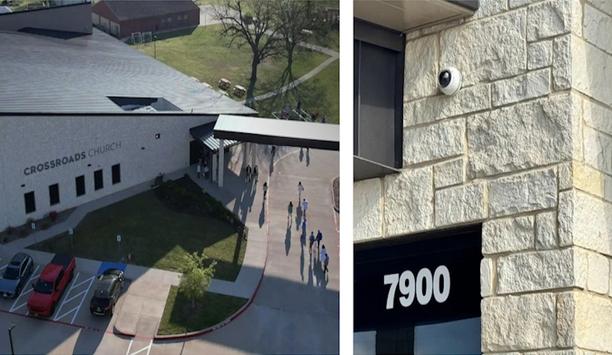
EnGenius Technologies Inc., a pioneer in advanced connectivity and cloud-managed networking solutions, today announced that Crossroads Church in Rowlett, Texas, has completed a comprehensive security and network modernisation project using EnGenius AI cameras, multigigabit switches, and Wi-Fi 7 access points. The upgrade delivers complete visibility across the church’s 30,000-square-foot facility and 15-acre campus, providing staff, volunteers, and families with unprecedented peace of mind. Rapid growth drives need for enhanced safety Serving more than 1,200 members and hosting daily activities including worship services, youth programs, daycare, and community outreach, Crossroads Church faced increasing challenges with its aging surveillance system. The church’s legacy NVR-based surveillance system left numerous blind spots and lacked the clarity, storage, and analytics needed to support a large, active campus. “With ministry happening every day and families trusting us with their children, we needed to be sure we could clearly monitor every part of our campus,” said the church’s Executive Pastor. “Our previous system simply couldn’t keep up.” A unified EnGenius solution Crossroads Church partnered with Smart Technology Solutions to implement a full-scale modernisation built on EnGenius cloud-managed technology. The deployment includes: 57 EnGenius ECC100 AI surveillance cameras for complete indoor, outdoor, and parking-lot coverage Multi-gig EnGenius ECS2552FP and ECS2528FP switches supporting high-capacity video, livestreaming, and campus-wide traffic 12 EnGenius ECW536 Wi-Fi 7 access points providing fast and reliable wireless connectivity for staff, classrooms, and production teams A single-pane-of-glass cloud dashboard delivering centralised management, real-time monitoring, and instant event review “For the first time, we have total visibility,” said the Lead Pastor. “If something happens anywhere on our property, we can see it, isolate it, and respond immediately. That level of clarity is invaluable.” AI features unlock the future of campus security The church has begun using contextual AI analytics, including event detection, vehicle tracking, and customisable alerts. Over time, leadership plans to expand their use of EnGenius AI capabilities to detect human activity, interpret complex scenarios, analyse movement trends, and enhance after-hours oversight — further improving campus safety. Meet the AI that turns video into insight Ever spent hours scrubbing through video just to find one five-second moment? With EnGenius Cloud AI, those days are over. It eliminates the biggest headaches of traditional surveillance—false alerts, slow investigations, and endless manual review—by delivering real-time intelligence and natural language search. Instead of generic motion notifications, the system interprets what it sees, recognising behaviours with context so the team receives fewer false alarms and earlier warnings when something seems off. And when it’s time to find footage, there’s no need to dig through timelines—simply enter a description like “person in a red hoodie with a black backpack,” and the system instantly retrieves the precise clips from any camera or location. This smarter, context-aware approach helps staff work faster, respond with confidence, and stay focused on what matters most. More than a camera system, it’s a smart security assistant that makes investigations faster, simpler, and far more effective. Key camera features 5MP HDR Clarity: Sony Starvis sensor ensures clear day-and-night visuals. Ultra-Wide Coverage: 132° view and 20m IR distance for versatile environments. 8GB eMMC Flash Storage + 4GB DDR4 Memory: Delivers reliable onboard flash storage and efficient multitasking for smooth, stable performance. Built-in Storage, No NVR Needed: ECC100 includes 256GB of reliable onboard storage, supporting continuous and event recording 24/7 for immediate footage access. Durable Build: IP67 weatherproof and IK10 vandal-resistant design. Cloud Access & Mobile Monitoring: Manage cameras anytime, anywhere. The next era of intelligent surveillance With the launch of its AI Cloud Surveillance Solution and ECC100 AI Camera, EnGenius once again sets a new benchmark for intelligent security—empowering businesses to stay one step ahead with smarter, faster, and more reliable protection. “What truly sets our system apart is its ability to analyse contextual sequences rather than just single-frame images, enabling preventive alerts before incidents occur,” said Roger Liu, Executive Vice President at EnGenius Technologies. “Whether it’s spotting loitering before theft, flagging escalating conflicts, or identifying fatigued workers on a factory floor, our system helps businesses act before incidents escalate.” Availability The ECC100 is available from EnGenius authorised resellers and distribution partners.
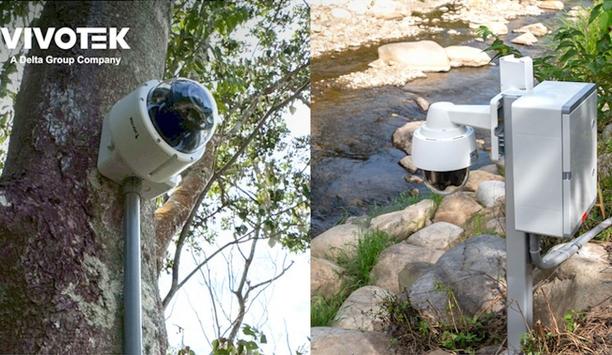
VIVOTEK, the pioneering security solution provider, actively integrates corporate social responsibility into its operations. This year marks the fifth “Safety Map” corporate sustainability event. For the first time, the team extended its efforts beyond urban communities to the natural environment of Zhonggua River in Guoxing Township, Nantou, Taiwan. Collaborating with the National Chung Hsing University’s (NCHU) University Social Responsibility (USR) team on “Environmental Resilience and Sustainability” and the precision AI agriculture partner DATAYOO, the team launched the “Zhonggua River Ecological Restoration Safety Map” project. VIVOTEK deployed its security solutions to monitor the ecosystem, successfully capturing rare footage of the endangered crab-eating mongoose in its natural habitat. Employees also helped remove invasive species, restore native plants, and construct ecological ponds, embedding sustainability into the company’s core security expertise – extending protection from human safety to habitats and biodiversity. “Returning land to the river:” Reviving the ecosystem After a typhoon in 2004, Zhonggua River’s banks were fortified with high walls and riverbed structures for flood control, which disrupted the ecosystem. Over time, cracks formed, foundations eroded, and exposed steel reinforced the risk. In 2018, Professors Chiou-Rong Sheue and Peter Chesson from NCHU’s Department of Life Sciences began living by the river and advocated a subtraction approach: dismantling walls to “return the land to the river,” balancing flood control with conservation. This effort culminated in 2023 with Taiwan’s first community-initiated river restoration project. Today, the USR team led by Professor Hsu continues ecological monitoring and habitat maintenance, while VIVOTEK contributes technology and manpower through the “Safety Map” initiative, jointly safeguarding the reborn river. Security technology supports restoration through action and care “VIVOTEK uses ‘Concern for Others’ Cares’ as a brand catalyst. During the 2010 Chile mining disaster, our cameras were deployed deep inside the mine to monitor the vital signs of trapped miners, transmitting real-time footage to rescue teams and contributing to the miraculous rescue efforts. In Parks Victoria, Australia, we applied AI solutions to observe seal habitats in Port Phillip Bay, monitoring potential threats such as fishing lines and ropes." "VIVOTEK partnered with the NCHU’s USR team to transform our original commitment to care and social safety into active conservation of the river ecosystem and wildlife, turning technology into a bridge for harmonious coexistence between humans and nature,” said Alex Liao, President of VIVOTEK. Building safe habitats, restoring nature’s vitality Under the guidance of the NCHU’s USR team, VIVOTEK employees observed aquatic insects, native plants, and changes in the river ecosystem, gaining insight into the impact of removing cement embankments on local wildlife. To accelerate ecological restoration, they split into teams to construct ecological ponds and build new homes for the Ayers’ tree frogs using bamboo tubes. At the same time, invasive plant species such as Mimosa pudica, fragrant orchids, and elephant grass were removed, while native species including reed orchids, wild peonies, honeysuckles, purple bead trees, Taiwan mountain laurels, and orange osmanthus were replanted to stabilise the soil and restore riparian vegetation. “Being able to personally contribute to ecological restoration and give back to nature is a source of pride as a VIVOTEKer,” shared Ben, an engineer who has participated in the Safety Map event for five consecutive years. Leveraging big data monitoring to deepen corporate impact “The Safety Map event has extended from neighbourhoods, care facilities, schools, and historic settlements to Zhonggua River, engaging hundreds of employees in inspecting sites and proposing safety solutions. Through these efforts, we have expanded the definition of ‘safety’ from simply protecting people to also safeguarding wildlife and habitats, revealing the multidimensional nature of security." "Moving forward, we will continue to promote cross-industry collaboration, using our security expertise as a foundation to amplify social impact and create more inclusive safety values and practices,” said Allen Hsieh, VIVOTEK’s Spokesperson and Director of the CorpComm & Sustainability Office. This year, VIVOTEK further leveraged the expertise of DATAYOO, using its FarmiSpace PRO monitoring service and AI crop monitoring system to analyse various crop indices derived from satellite spectral data. These insights provide the NCHU’s USR team with a scientific basis for their ecological research at Zhonggua River, enabling a data-driven approach to natural habitat restoration and making technology a powerful tool for conservation. Industry and academia join forces to set a benchmark “VIVOTEK Proactively proposed initiatives and involving company employees in hands-on participation are the most powerful ways to implement ecological restoration. Through VIVOTEK’s security expertise, volunteer engagement, and AI-driven long-term ecological monitoring, we have accelerated the restoration of Zhonggua River’s ecosystem, allowing more people to witness the harmony between humans and nature,” said Chiou-Rong Sheue. The habitat restoration efforts have already shown tangible results, with the ecological ponds built by VIVOTEK employees quickly attracting creatures such as pond frogs, dragonflies, water striders, and damselflies. VIVOTEK has emerged as a key driver of environmental restoration through its security technology, demonstrating that safety is not only about protection but also stewardship and shared responsibility, and continues to foster a Safety Map where humans and nature coexist.

Amthal has delivered a complete security upgrade at The Maltings Shopping Centre, building on a partnership of more than three decades to transform the way the centre is monitored and managed. In supporting The Maltings since 2013 and taking on full management in 2017 Amthal could ensure the system remained effective through a dedicated maintenance programme until the time came for a complete upgrade. Integrated with the barrier system The new solution introduces 39 state-of-the-art Dahua cameras, including PTZ, 180-degree and AI-powered people-counting models, to provide full coverage across all seven entrances and car parks. Automatic number plate recognition has been integrated with the barrier system to improve vehicle access control, while people-counting technology now delivers reliable visitor data to track peaks and troughs. Active deterrent measures and signage strengthen site protection, supported by EMCS Sentry software to continuously monitor hardware performance and camera availability. Secure on-premises storage ensures all data remains under the centre’s direct control. Redesigned digital control desk Says Richard Marrett, Centre Director at The Maltings: “The new systems have changed the way we manage the centre. The cameras and control desk give us clearer oversight and together with features like people counting and vehicle access ensures we can identify incidents, respond quickly and review activity with confidence. Behind it all is the trust we have in Amthal, built over three decades of working together to keep The Maltings safe and welcoming.” A redesigned digital control desk now brings all live feeds, recordings and analytics together on a single platform, giving the security team clearer visuals and wider oversight than ever before. These features provide greater efficiency, faster response times and stronger protection. Management and security teams All installation work was carried out while the centre remained fully open. Amthal partnered with Dahua together with the management and security teams to plan the schedule so that tenants, staff and shoppers experienced no disruption. Kris Hallett, Business Development Director at Dahua Technology UK, added: “The upgraded cameras now capture detail even in low light, and features like auto-tracking reduce the need for constant manual monitoring. People-counting sensors give the team reliable data across key areas, while number plate recognition integrated with the car park barrier has streamlined vehicle access and reduced misuse." "All can be accessed at any time, even remotely. Working alongside Amthal, we were able to introduce all of this without disruption to the centre’s daily operations.” New requirements and advances in security technology The original system was first installed in 1995, marking the beginning of a long-term relationship that has seen Amthal support The Maltings in adapting to new requirements and advances in security technology. Paul Rosenthal, Amthal Group Business Development Director, concluded: “Our established partnership with The Maltings demonstrates how we work with clients over the long term. This complete upgrade with latest Dahua technology has delivered an integrated system that is straightforward for the team to use and manage via the new control centre. It ensures the centre remains safe, accessible and an enjoyable experience with complete peace of mind for tenants and shoppers alike.”

When major fire and security specialists Cornerstone were appointed to deliver the life safety systems for the refurbishment of 77 Grosvenor Street, they faced a unique challenge. Located in the heart of London’s Mayfair district, the prestigious building features classical architecture and over 50,000 square feet of premium open-plan office space spread across six floors. The goal was to upgrade the fire protection without compromising the building’s refined aesthetics. The client, a major property management company, required a solution that was robust, reliable and unobtrusive. Working closely with the design and construction teams, Cornerstone turned to Hochiki Europe, a long-standing partner known for dependable systems that blend seamlessly into high-end environments. Latitude fire detection and alarm control system At the core of the installation is the Latitude fire detection and alarm control system. Chosen for its powerful cause and effect programming, flexible networking and modular scalability, Latitude was well suited to the demands of a multi-level heritage building. Its ability to support complex configurations made it ideal for a site where multiple zones, floors and room functions needed to be managed with precision. To deliver complete protection across the site, Cornerstone selected a combination of Hochiki's Enhanced System Protocol (ESP) addressable devices and the FIRElink aspirating detection system. The FIRElink system is adaptable to a broad range of environments and applications. ESP detectors From small, to very large areas, the system is particularly useful in protecting computer rooms or data centres but can be designed to fit almost any environment. ESP detectors offer high performance with a minimal visual footprint, ideal for preserving the character of the restored interiors. In areas requiring an even more discreet solution, such as decorative ceilings or high airflow zones, FIRElink was installed using capillary sampling pipes hidden within the building’s structure. One of the key advantages of the Latitude platform is its ability to interface with wider building management systems (BMS). At Grosvenor Street, this opens the door to centralised monitoring and control of fire safety in conjunction with other building systems. Open integration Latitude’s open integration options mean it can share status updates and alarm events in real time with the BMS, enabling facilities teams to coordinate responses quickly and efficiently. For a high-spec office environment, this not only improves safety outcomes but also supports smoother day-to-day operation and building performance. Patrick Anthony, Project Manager at Cornerstone, explained the decision: “We have a trusted relationship with the Hochiki team. Their systems and devices are reliable, help reduce false alarms and are designed to aesthetically fade into the background, exactly what this project needed and delivers complete peace of mind for the management team.” The site at Grosvenor Street is now protected by a fully integrated, future proof life safety system that meets modern building safety standards while maintaining the building’s elegance.

Artificial Intelligence Technology Solutions, Inc., along with its wholly owned subsidiary Robotic Assistance Devices, Inc. (RAD), announced the publication of a new case study detailing the successful deployment of RAD’s RIO 180 units powered by SARA at a mobile home community managed by Champion Real Estate Services. The project, conducted in collaboration with RAD dealer HUB Enterprises, demonstrates how autonomous security solutions can dramatically reduce incidents, restore resident confidence, and redefine community safety. Newly published case study The newly published case study, titled “Transforming Mobile Home Park Security with RAD and HUB Enterprises,” showcases how the partnership between Champion, HUB, and RAD addressed long-standing security challenges at a large mobile home community. The report details how HUB deployed two RIO 180 units powered by RAD’s agentic AI platform, SARA (Speaking Autonomous Responsive Agent), resulting in a near elimination of resident complaints and a sharp decline in trespassing, theft, and disruptive activity. This case joins a growing collection of real-world examples where RAD’s autonomous technologies are redefining safety and operational efficiency across residential, commercial, and critical infrastructure sectors. LED display and talk-down features “HUB brought us a solution from RAD that works,” said Shannon Noble, Managing Broker at Champion Real Estate Services. “The collaboration between Champion, HUB, and RAD has given us a new level of confidence in how we manage security at our communities. The LED display and talk-down features make a powerful impact. Residents see and hear that their community is protected, and it has completely changed the atmosphere.” Technology-driven adoption “This worked where our patrols just couldn’t,” said Jarrett Willoughby of HUB Enterprises. “It’s visible, it’s active, and it gave Champion the confidence to start talking about more deployments right away. What really surprised us was SARA. We thought of it as just a monitoring tool, but the way it responds on its own, the speed of it, that’s what really sold us.” “The results at Champion’s community clearly show how technology-driven adoption can make neighborhoods safer,” said Mark Folmer, CPP, PSP, President of RAD. “RIO powered by SARA provides an immediate and visible deterrent that residents recognise and appreciate. This collaboration with HUB and Champion demonstrates how autonomous security can deliver measurable improvements in safety and peace of mind.” Transforming residential community safety The full case study is now available for download, offering detailed insights into how autonomous security solutions are transforming residential community safety. Property managers, security providers, and industry professionals are encouraged to review the results and explore how AI-powered autonomy can deliver stronger deterrence, faster response, and greater confidence for the communities they serve. ROSA units Sitting atop a standard RIO 180 configuration is a single ROSA units. ROSA is a multiple award-winning, compact, self-contained, portable, security and communication solution that can be installed and activated in about 15 minutes. ROSA’s AI-driven security analytics include human, firearm, vehicle detection, licence plate recognition, responsive digital signage and audio messaging, and complete integration with RAD’s software suite notification and autonomous response library. Two-way communication is optimised for cellular, including live video from ROSA’s high-resolution, full-colour, always-on cameras. RAD has published six Case Studies detailing how ROSA has helped eliminate instances of theft, trespassing and loitering at mobile home parks, retail centres, hospital campuses, multi-family communities, car rental locations and construction sites across the country. Customised assessment and demonstration The Company encourages property managers, business owners, and municipal leaders seeking to improve security in downtown and high-traffic areas to connect with RAD for a customised assessment and demonstration of its autonomous security solutions. AITX, through its primary subsidiary, Robotic Assistance Devices, Inc. (RAD), is redefining the nearly $50 billion (US) security and guarding services industry through its broad lineup of innovative, AI-driven Solutions-as-a-Service business model. RAD solutions are specifically designed to provide cost savings to businesses of between 35%-80% when compared to the industry’s existing and costly manned security guarding and monitoring model. Cost savings RAD delivers these cost savings via a suite of stationary and mobile robotic solutions that complement, and at times, directly replace the need for human personnel in environments better suited for machines. All RAD technologies, AI-based analytics and software platforms are developed in-house. The Company’s operations and internal controls have been validated through successful completion of its SOC 2 Type 2 audit, which is a formal, independent audit that evaluates a service organisation’s internal controls for handling customer data and determines if the controls are not only designed properly but also operating effectively to protect customer data. This audit reinforces the Company’s credibility with enterprise and government clients who require strict data protection and security compliance. Led by Steve Reinharz RAD is led by Steve Reinharz, CEO/CTO and founder of AITX and RAD, who brings decades of experience in the security services industry. Reinharz serves as chair of the Security Industry Association’s (SIA) Autonomous Solutions Working Group and as a member of the SIA Board of Directors. The RAD team also draws on extensive expertise across the sector, including Mark Folmer, CPP, PSP, President of RAD and Chair of the ASIS International North American Regional Board of Directors, Troy McCanna, former FBI Special Agent and RAD’s Chief Security Officer, and Stacy Stephens, co-founder of security robotics company Knightscope. Their combined backgrounds in security industry pioneership, law enforcement, and robotics innovation reinforce RAD’s ability to deliver proven, practical, and disruptive solutions to its clients. Prospective sales pipeline RAD has a prospective sales pipeline of over 35 Fortune 500 companies and numerous other client opportunities. RAD expects to continue to attract new business as it converts its existing sales opportunities into deployed clients generating a recurring revenue stream. Each Fortune 500 client has the potential of making numerous reorders over time. AITX is an innovator in the delivery of artificial intelligence-based solutions that empower organisations to gain new insight, solve complex challenges and fuel new business ideas. Through its next-generation robotic product offerings, AITX’s RAD, RAD-R, RAD-M and RAD-G companies help organisations streamline operations, increase ROI, and strengthen business. AITX technology AITX technology improves the simplicity and economics of patrolling and guard services and allows experienced personnel to focus on more strategic tasks. Customers augment the capabilities of existing staff and gain higher levels of situational awareness, all at drastically reduced cost. AITX solutions are well suited for use in multiple industries such as enterprises, government, transportation, critical infrastructure, education, and healthcare.

Crime analysts at DeterTech, a trusted security partner to critical infrastructure and law enforcement, are warning of a major rise in reported incidents of copper and cable theft across Greater Manchester and Lancashire. Believed to be orchestrated by Organised Crime Groups (OCGs), the direct to threat to UK infrastructure is being driven by the sustained high price of copper, which hit $10,300 per tonne on 25th September 2025 – the highest recorded price since April 2024. Cable theft from rail network Cable theft from the rail network in Wigan resulted in widespread passenger disruption There have been six key incidents reported in the North-West of England since 14th September, impacting energy, transport, utilities and renewables infrastructure. For example, in Bolton a site was targeted for 33 kv copper cable valued at just under £500,000. Meanwhile, the theft of a significant quantity of string cable from a solar farm near Preston reduced the site’s energy output by around 40% risking the local power supply. Back in August, cable theft from the rail network in Wigan resulted in widespread passenger disruption and estimated losses to the UK economy of more than £1million. Deal with the threats Rachael Oakley, Head of Crime Intelligence, DeterTech, says: "The substantial price of copper is unfortunately driving high rates of offending across all forms of critical infrastructure. In order to protect energy, utilities, transport, and renewable infrastructure, it is imperative that fence lines are checked regularly, CCTV cameras are functioning correctly, and alarm monitoring centres are correctly equipped to deal with the threats posed." Critical infrastructure providers, particularly those with sites in the North-West of the UK, are urged to audit site security plans and to consider taking additional steps to deter unwanted attention from OCGs. Direct threat to infrastructure The current intelligence picture points toward an on-going direct threat to infrastructure, with implications for asset loss service disruption, regulatory penalties and public safety. Operators are reminded to continue reporting all incidents of theft, suspicious vehicles, and hostile reconnaissance to DeterTech and Opal, the national police intelligence unit focused on serious organised acquisitive crime.
Round table discussion

In many cases, architectural design and layout dictate optimal placement of security devices like cameras, access control readers, and sensors. Poor design can lead to blind spots, reduced coverage, and ineffective surveillance. However, planning that involves all the various stakeholders can maximise both security and design elements. We asked this week’s Expert Panel Roundtable: When are building design and physical security systems complementary? When are they at odds?

2025 is likely to see further advancements in artificial intelligence, with potential impacts on various aspects of society, including the security industry. The new year will also require security professionals to adapt to changing market conditions and develop contingency plans for unforeseen events. Industry changes will accelerate and challenge everyone in the security market to keep up. Making specific predictions for the new year can be a struggle, but we asked our Expert Panel Roundtable: What will be the big news for security in the year ahead?

Technology automates tasks, streamlines processes, and improves efficiency in various fields, including physical security. But the success of today’s latest technologies depends on our ability to use them responsibly and efficiently. Optimising our industry’s use of technology requires that the industry’s workforce have the needed skills to operate the latest equipment. We asked this week’s Expert Panel Roundtable: How does technology innovation in security systems impact the skillsets needed by security operators and officers?
Products


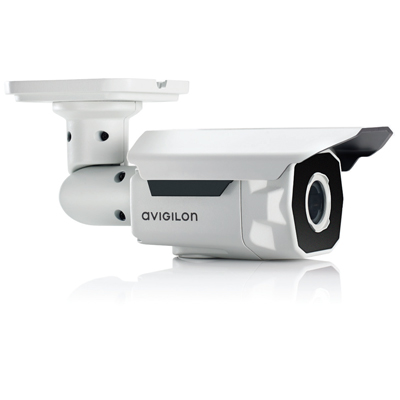


White papers

Preventing loss, securing assets
Download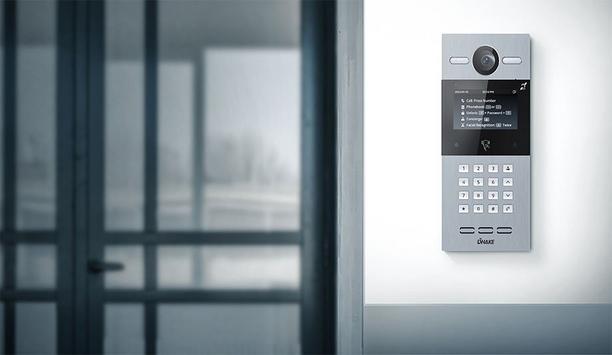
A step-by-step checklist for choosing an intercom system
Download
Safeguard Students With New Techniques And Technology
Download
How to implement a physical security strategy with privacy in mind
Download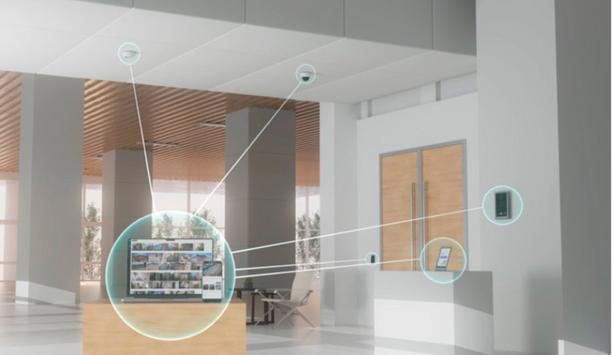
5 ways to strengthen physical security with an integrated system
Download
The benefits of Edge AI + Cloud for security systems
Download
Creating a secure and positive healthcare experience
Download
Integrated access control: reap the benefits of connected security
Download
Connected video technology for safe cities
Download
10 step guide to staying ahead of emerging security threats
DownloadVideos


Security monitoring system: Manufacturers & Suppliers
- Dahua Technology Security monitoring system
- Vicon Security monitoring system
- Bolide Security monitoring system
- Hikvision Security monitoring system
- Seagate Security monitoring system
- BCDVideo Security monitoring system
- LILIN Security monitoring system
- Pelco Security monitoring system
- MobileView Security monitoring system
- AV Costar Security monitoring system
- Hanwha Vision Security monitoring system
- Vanderbilt Security monitoring system
- TESA Security monitoring system
- CEM Systems Security monitoring system
- VIVOTEK Security monitoring system
- Sony Security monitoring system
- DSC Security monitoring system
- OPTEX Security monitoring system
- Parabit Security monitoring system
- Messoa Security monitoring system

Technology's role in securing banks and financial institutions
Download
Security technologies promote real-time awareness in K-12 schools
Download
Integrated systems enable critical and compliant security for transportation
Download
Modernising physical access control
Download
Access. Intrusion. One estate.
Download