Perimeter security
Excelerate Technology Awarded a Co-funded ESA Contract to Deliver Advanced Robotic Security Solution for UK National Infrastructure Excelerate Technology has been awarded a co-funded contract by the European Space Agency Business Applications and Space Solutions (ESA BASS) program to build and demonstrate an innovative, automated robotic response system for perimeter security at a critical UK national infrastructure site. Critical national infrastructure Co-funded by ESA BASS and supported by...

At GSX 2026, September 14-16 in booth 2523, IQSIGHT, formerly Bosch Video Systems, will demonstrate its latest intelligence-first video solutions designed to deliver clarity in all lighting conditions and support more confident decisions. New introductions include fixed multi-sensor and ruggedised moving cameras as well as video management software enhancements. IQSIGHT will also celebrate a milestone for the MIC camera family that has delivered 25 years of uncompromising performance in the wor...
For a data centre operator, risk rarely comes down to a single system or department. It can begin with a cut fence, an intruder approaching a substation, an alarm no one trusted enough to investigate, or a rack that ran hot overnight. The cause may be different, but the consequence is often the same: an interruption to operations that can be costly. More than half of significant data centre outages can now cost a company over $100,000, and roughly one in five exceed $1 million, according to the...

A critical infrastructure security system unifies high-assurance access control, scalable intrusion detection including video verification, perimeter protection, and lone worker safety into a single platform, helping operators of electricity, water, and gas networks protect distributed sites, support regulatory compliance, and maintain the uninterrupted delivery of essential services. A loss of these services disrupts economies and endangers communities, which makes protecting them a national...
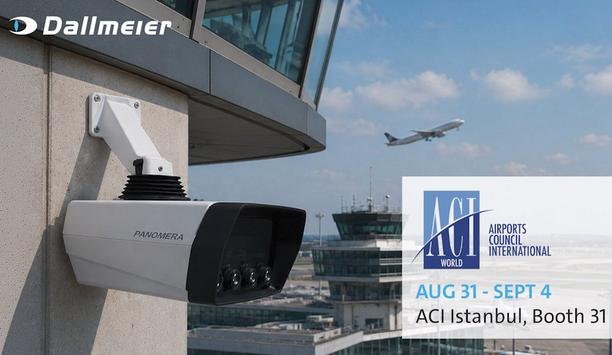
At the ACI Airport Experience Summit 2026 in Istanbul, Dallmeier will present innovative solutions for airports at booth 31. Visitors will learn how intelligent video technology can help enhance security and safety, streamline airport operations, and deliver lasting improvements to the passenger experience. A key focus of Dallmeier’s presence at the show is the protection and monitoring of security-critical areas on the airside. From perimeter security and the monitoring of runways and ta...

Hirsch UK is proud to announce the successful integration of its advanced perimeter security technologies with Genetec™ Security Center, giving Genetec customers a powerful new way to address complex perimeter protection challenges through a unified security platform. For organisations already using Genetec™ Security Center, the integration provides a practical route to enhancing existing security infrastructure with Hirsch UK’s proven high-security perimeter solutions. By bri...
News

Hospitality access solutions pioneer dormakaba will showcase its latest security solutions at HITEC North America 2026, the world's largest showcase of hospitality technology, June 15-18, in San Antonio. At Booth #1838, dormakaba will demonstrate flexible, future-ready access solutions that help hospitality providers simplify operations, modernise guest access, and improve security across their properties. Delivering choice "Hoteliers are being asked to choose between flexibility and simplicity. With dormakaba, you don’t have to," said Darien Long, Senior Vice President, Specialty Access Control Solutions, dormakaba North America. "Modern hospitality environments are increasingly complex, requiring solutions that adapt to each property, technology ecosystem, and guest experience strategy. We deliver that power of choice without the complexity." About HITEC HITEC comes on the heels of Resorts World Las Vegas expanding its digital wallet guest experience to support hotel key in Google Wallet, powered by dormakaba, Alliants, and LEGIC. The launch marks the first implementation of hotel key in Google Wallet on the Las Vegas Strip, enabling guests to securely access their hotel room and resort amenities using the devices they already carry. Behind the scenes, LEGIC’s neon technology provides the secure mobile credential foundation for the Google Wallet experience at the resort, enabling seamless provisioning and secure lifecycle management of digital room keys without adding complexity to the guest experience. Expanding digital access strategy Resorts World Las Vegas has continued to expand its digital access strategy, including its earlier launch of room key in Apple Wallet. Guest adoption continues to grow across the resort’s digital wallet offerings, with nearly 30% of guests arriving at Resorts World last month using digital keys and 80% of guests who completed check-in adding a digital key at that time. This transition not only reflects the increasing demand for seamless, contactless interactions but also offers sustainability benefits by reducing reliance on traditional paper and plastic. Additional dormakaba technologies at HITEC 2026 dormakaba Staff Key Validator: Staff Key Validator is a keycard management solution that simplifies operations and increases security. It uses multi-layer, PIN-based authentication to reduce the front-line workload typically associated with staff keycard management and mitigate the risk posed by lost, stolen, or shared keycards. dormakaba Ambiance™ Cloud Access Management Software: Ambiance Cloud is a powerful, cloud-based access management software designed to simplify and streamline hotel operations. Whether managing a single hotel or multiple properties, Ambiance Cloud gives properties full control over guest and staff access, room locks, perimeter security, and more – from anywhere, at any time. Perimeter Access Solutions: dormakaba Perimeter Access solutions provide flexible, scalable, and centralised access control. From lobby entrances and staff-only corridors to elevators, parking gates, amenity spaces, and restricted back-of-house areas, the solutions work with Ambiance Cloud to help secure guests, operations, and properties.
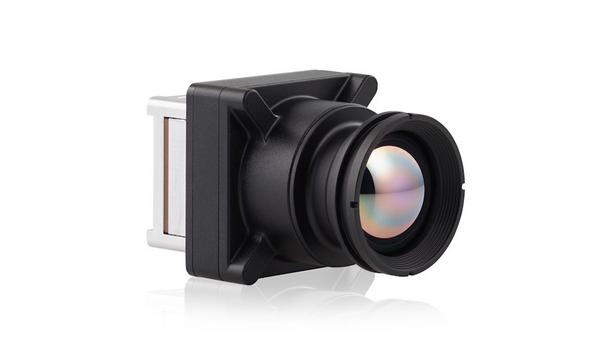
Teledyne FLIR OEM, a business unit of Teledyne Technologies Incorporated, announced the release of the ITAR-free Boson® SX8, the first NDAA-compliant, volume production, uncooled longwave infrared (LWIR) thermal camera module to combine an 8-micron pixel pitch with SXGA (1280 × 1024) resolution. The state-of-the-art 8-micron pixel enables industry-best thermal performance and four times the resolution of today’s high-volume, uncooled VGA (640 × 512) thermal camera modules, all within a similarly sized compact package. Designed for high-performance and optimised for size, weight, and power (SWaP) constrained defense and industrial applications, the Boson SX8 family enables integrators and operators to see more, see farther, and deploy high-performance thermal imaging at production scale. Supply-chain confidence Critical for uncrewed aircraft systems (UAS), counter-UAS, perimeter security, handheld devices, seekers, visual augmentation, and intelligence, surveillance, and reconnaissance (ISR) systems, the Boson SX8 family delivers performance previously available only in heavier, larger, and more power-hungry cooled, midwave infrared (MWIR) thermal imaging systems. “By reducing pixel area by 55% compared to the standard 12-micron LWIR pixel format, Boson SX8 represents a transformational moment for thermal imaging,” said Paul Clayton, President, Teledyne FLIR OEM. “By pairing this advanced 8-micron pixel architecture with SXGA thermal resolution at full-rate production, we’re giving customers greater situational awareness and longer effective range without compromising SWaP or supply-chain confidence.” Thermal gradient compensation In addition to multiple fixed-lens options, the new Boson SX8-CZ 15–75 features a factory-integrated 5x continuous-zoom (CZ) lens to further extend range performance. This option pairs the camera module with a 15–75 mm continuous-zoom lens, engineered and calibrated as a single system. The integration provides optimised optical performance with focus-through-zoom, thermal gradient compensation, factory alignment, and a single-source warranty, reducing integration risk while accelerating time to market. Intelligent embedded software products The Boson SX8 and Boson SX8-CZ 15–75 are manufactured at high volume in the United States by the world’s pioneer supplier of OEM thermal camera modules. Designed for production deployment, the Boson SX8 family offers OEMs a low-risk path from development through full-rate manufacturing, including integration with Teledyne FLIR OEM’s Prism™ intelligent embedded software products. Teledyne FLIR OEM will demonstrate the Boson SX8 product family at Eurosatory 2026 at the Teledyne FLIR booth in Paris, where attendees can experience the latest advances in high-definition, SWaP-optimised thermal imaging.

The Security Industry Association (SIA) has announced the agenda and speaker lineup for the 2026 Perimeter PREVENT, the premier event in perimeter security. This symposium—held June 24 in Washington, D.C., and presented by SIA with guidance from the SIA Perimeter Security Subcommittee—will gather policymakers, federal agency personnel, architects, engineers and security solution providers to engage on the critical issues related to perimeter defence for physical environments, including government and commercial facilities, critical infrastructure and events. Providing military support On Wednesday, June 24, attendees will enjoy an all-day symposium featuring a keynote fireside chat with Ret. General William J. Walker, vice president and corporate security director, enterprise accounts at Allied Universal Security Services, moderated by Rachelle Loyear, vice president of integrated security solutions at Allied Universal. Walker brings over 30 years of distinguished service in security, law enforcement and military leadership to his current role at Allied Universal. Walker was a special agent of the Drug Enforcement Administration (DEA) and served as the 38th Sergeant at Arms, U.S. House of Representatives, 117th Congress. Previously, he served as the 23rd commanding general of the District of Columbia National Guard, overseeing Army and Air National Guard operations and providing military support to civilian authorities. Robust lineup of experts “At Perimeter PREVENT 2026, attendees will hear from a robust lineup of experts in perimeter lighting, LiDAR, protective design, fencing and other innovative physical security technologies used to safeguard the perimeters of public safety, corrections, government facilities, data centers and more,” said SIA CEO Don Erickson. “As the perimeter evolves, so do both the technologies being integrated into perimeter security solutions and the potential threats. This year’s conference offers a unique opportunity for government and industry leaders to connect, share information and drive forward strategies on the most critical perimeter security topics.” Perimeter security topics Additional featured speakers include: Xander Alexander, technical evangelist, Motorola Solutions Matthew Beausoleil, perimeter security lighting specialist, CAST Perimeter Gerald Becker, vice president, market development and alliances, Quanergy Solutions Christa Decker, co-chair, SIA Perimeter Security Subcommittee; vice president, Protective Design Group, Whitman, Requardt & Associates Melissa Dominguez, founder, Dominguez Urban Strategies Amy Dunton, co-chair, SIA Perimeter Security Subcommittee; vice president, Sulton Security Bill Eckard, senior director, public safety, corrections and federal physical security—Americas, Octave David Fortune, director, data center practice, Plugout Joelle Hushen, founder and president, National Institute of Crime Prevention; co-founder, U.S. CPTED Association Cathy McHugh, marketing and sales associate, CIAS Security Rob Millar, regional manager, FLIR Systems Sunil Mudholkar, vice president of product, physical security, Octave Nicole Palumbo, chief operating officer, Magos Americas Gregg Pingitore, detective, threat reduction and infrastructure protection, Counterterrorism Division, New York City Police Department Andriy Tsinyk, business development manager, Gallagher Security Herb Ubbens, president, Paratus Consultant Group Aryn Vastola, vice president, sales and marketing, Betafence Group Permanent perimeter infrastructure Highlighted session topics include: How the convergence of thermal imaging, LiDAR, artificial intelligence-driven video analytics and digital twin visualisation is redefining what it means to secure the edge How crime prevention through environmental design applies to perimeter security in the public safety sphere How to secure the perimeter of at-risk sites with multiple technologies working together on every layer How data center perimeters create—and navigate—a natural collision point between construction-phase security and a permanent perimeter infrastructure How to expand and grow your perimeter security practice How perimeter security is being automated through connecting technology for situational awareness, prevention and response The event will conclude with a happy hour networking reception where attendees can connect with other industry pioneers. Relevant event guidelines Perimeter PREVENT is free for government workers, including public safety, military/defense, education and legislative staff and other government employees. The event is considered a “widely attended gathering” and complies with all relevant event guidelines. Industry access starts at $175 for SIA members; learn more and register to attend here. Perimeter PREVENT 2026 is made possible thanks to the generous support of sponsors CIAS, Echodyne, EPIC iO, Gallagher Security, Gibraltar, iluminar, M.C. Dean, Nasatka Security, Octave and PureTech Systems, as well as media partner SecurityInfoWatch.

Door & Hardware Federation (DHF) has announced a number of new appointments as the trade association continues to strengthen its team and support for members across the industry. As part of the changes, Kay Scattergood, becomes PA to General Manager & Secretary, Michael Skelding. Following many years of dedicated service, Kay Scattergood has chosen to reduce her working hours and workload, transitioning into a new role within the organisation and remains a highly valued member of the DHF team. Overseen daily operations Kay has been with DHF for more than 38 years, progressing from Senior Secretary to Manager of the Administration Team and will continue to bring her extensive knowledge and experience to support the organisation. Joining the organisation in April 2026 is Annie McKay as Office Manager, a newly created role for DHF. Annie is responsible for overseeing all office operations and the day-to-day running of the organisation’s administrative functions, including IT, HR, and the management of DHF’s externally recognised certifications such as ISO 9001 and Cyber Essentials. She brings seven years of office management experience across a variety of sectors, where she has overseen daily operations and supported large teams. Annie now manages the administration team at DHF and helps ensure the smooth running of the organisation. Industry group meetings DHF has also welcomed Huw Barnett as Senior Training and Compliance Officer. Huw brings more than 26 years of experience in the door, gate and barrier industry, and his career has included both hands-on operational roles and senior management positions, giving him experience across installation, maintenance, team leadership and operational delivery. Throughout his career, Huw has represented employers at a range of industry group meetings, contributing to discussions around safety standards, best practice and new technologies. In his new role, Huw will provide technical expertise to DHF members and deliver training across the sector. Commitment to supporting members “We are delighted to welcome new team members, Annie and Huw to DHF at an important time for the organisation,” says DHF’s Deputy CEO, Patricia Sowsbery-Stevens. “Both bring considerable experience, professionalism and energy to their roles, and their appointments reflect our continued commitment to supporting members and strengthening the services we provide industry wide.” DHF has also announced the appointment of two new directors to its board. Wolfgang Gorner, Managing Director of Hörmann (UK) Ltd, joins the board with decades of experience across the building products, perimeter security, windows and doors sectors. Perimeter security products Wolfgang began his career with RMC Group in 1988 before moving into perimeter security products with B&G Group in 1995. In 2000, he moved into the windows and doors industry, holding senior positions at REHAU, Epwin and Inwido before joining Hörmann in 2018 to lead its UK operation. Speaking about his appointment, Wolfgang said he is “Passionate about the door, gate and barrier industries and believes DHF plays an important role in promoting high standards and supporting a level playing field across the sector.” Also joining the board is Ricky Walker, Managing Director of Expert Access Solutions. Ricky has long supported DHF and been an active voice within the industrial doors sector throughout his career, including during his time as Solutions Director at dormakaba. Understanding legislative requirements He has contributed to a range of DHF activities including product group meetings, apprenticeship discussions and technical committee work focused on helping customers understand legislative requirements and industry standards. Ricky also brings significant board level and commercial governance experience and is committed to supporting the continued growth and professionalism of the federation. “All of these appointments represent another positive step forward for DHF,” concludes Patricia. “Annie, Huw, Wolfgang and Ricky each bring valuable experience and knowledge, and we are pleased to welcome them to the DHF family as we continue to support our members and the wider industry.”

Gallagher Security has closed out a landmark three days at The Security Event (TSE) 2026 at the NEC Birmingham, marked by the European launch of its cloud-native AccessNow platform, strong global leadership presence, and active engagement with Channel Partners, End Users, and technology partners across an immersive stand experience. The TSE launch marks the next chapter in Gallagher's European growth story, following a sustained period of regional investment. Real-world applications The Gallagher team drew strong interest from partners and customers across the three day event, with visitors engaging directly with Gallagher’s experts, executive leadership, and technology partners. Live demonstrations across the solution pods showcased real-world applications, from physical perimeter security to cloud native platforms. Executive Vice President – Europe, Spencer Marshall, said: "TSE has always been a critical indicator of market momentum, and this year reinforced Gallagher's trajectory. The atmosphere at our stand surpassed every expectation, and the presence of our global executive team sent a clear message about where Gallagher is headed. The energy spoke for itself.” Managing access requests AccessNow was the centrepiece of Gallagher's product presence at TSE, marking its European debut. The platform tackles one of the most common pain points facing security teams today: the time and resource consumed by manually managing access requests, approvals, and provisioning. By automating that process end-to-end and giving cardholders a self-serve experience, AccessNow frees security professionals to focus on what matters most. Reflecting Gallagher's commitment to the European market, Chief Executive Mark Junge attended TSE for the first time alongside senior colleagues from across the business, including Chief Marketing Officer Merv Williams, Head of Product Marketing Linda McConnell and Senior Product Manager Kate Sobolewska who brought Gallagher's AccessNow and OneLink to life on the show floor. Self-serve experience "Walking the stand at TSE and seeing the quality of conversations our team was having with Partners and End Users was genuinely energising. The depth of interest, particularly around AccessNow, OneLink, and our collaboration with Kenai, confirmed to me that our European growth focus is in good stead. The relationships, the trust, and the momentum are palpable." – Mark Junge, Chief Executive TSE 2026 was further proof of Gallagher's growing European momentum. With AccessNow launched in the region, a Partner and End User community energised by what's ahead, and a deepening presence in the Nordics and Benelux in motion, Gallagher Security leaves Birmingham with a strong foundation for the second half of 2026.

AMAROK, an industry-pioneer perimeter security company, announces it has completed a strategic investment in Evolon Technology, Inc., acquiring a 45% ownership stake in the company. Evolon provides AI-powered video monitoring and virtual guarding solutions for commercial businesses. The partnership brings together proven perimeter defence and AI-powered monitoring to stop threats earlier, reduce losses, and deliver stronger outcomes for customers. This investment reinforces AMAROK’s commitment to providing best-in-class, layered solutions to customers nationwide. As threats to commercial organisations continue to rise in frequency and sophistication, businesses require more advanced deterrents. Electric fencing systems By integrating AMAROK’s proven electric fencing systems with Evolon’s AI-enabled video surveillance and virtual guarding technology, customers gain a state-of-the-art, comprehensive perimeter security solution reinforced by real-time visibility and proactive threat detection. Strengthening the ability to deliver a truly layered, intelligent security solution - unifying The Electric Guard Dog™ Fence, AI-powered camera detection, gate access, and monitoring into one seamless customer experience. The relationship between AMAROK and Evolon began through operational deployment, with AMAROK implementing Evolon’s technology within its own security ecosystem. After extensive technical evaluation and real-world application, AMAROK expanded the relationship through strategic investment, underscoring its confidence in Evolon’s technology and vision. Perimeter security solution “From day one, our focus has been clear: to build the ultimate perimeter security solution in North America,” said Mark Wesley, CEO of AMAROK. “Our investment in Evolon is a natural extension of that commitment. After experiencing the power of its AI-driven virtual guarding technology in our own operations, we recognised the critical role it will play in the future of commercial security. By combining our proven perimeter defense system with Evolon’s intelligent monitoring, we are strengthening our ability to protect customers from the outside in. Just as important, this investment allows us to continue raising the bar for the customer experience by delivering smarter, more proactive protection and greater peace of mind.” Proven perimeter defence “AMAROK shares our conviction about the future of perimeter security: intelligent, highly integrated, and built around the people who rely on it,” said Tom Galvin, CEO of Evolon. “This investment accelerates a roadmap we're deeply excited about — unifying proven perimeter defence with AI-driven monitoring into a single, seamless experience for the security teams who depend on it every day. AMAROK is exactly the partner we hoped to find.” With this investment, AMAROK has appointed two directors to the Evolon Board of Directors: Nathan Leaphart has been appointed to the Board of Directors. He has served as AMAROK’s Chief Financial Officer since 2007, overseeing the company’s financial strategy and execution, compliance, government relations, and legal functions. Leaphart is a Certified Public Accountant and a graduate of the Darla Moore School of Business at the University of South Carolina, as well as Harvard Business School’s Advanced Management Program. Integrated security solutions Hayelom Tadesse has been appointed to the Board of Directors. He serves as AMAROK's Senior Vice President of Strategy and Continuous Improvement, where he leads enterprise strategy, transformation programs, operations, product development, research and development, and mergers and acquisitions. Tadesse is a Lean Six Sigma Black Belt and a Penn State alumnus with deep technology experience, driving operational excellence across complex organisations. AMAROK’s strategic expansion, alongside Evolon’s continued growth, advances both companies’ shared vision to redefine the future of perimeter security in North America. The investment positions AMAROK and Evolon to accelerate innovation, expand their combined market footprint, and deliver more intelligent, integrated security solutions. Together, the partnership strengthens each company’s ability to protect commercial businesses against today’s evolving threat landscape while driving long-term value for customers, partners, and stakeholders.

Expert commentary

Security manufacturers throw around the term “scalable” a lot these days, but few dive into what scalable really means for modern organisations and their security programs. Achieving true scalability, or as I like to refer to as “expandable with a purpose,” takes planning and coordination from security pioneers alongside the broader organisation. Implementing a flexible strategy is critically important in the age of advancing analytics and intelligence-driven technology. So what exactly do we mean by “scalable”? "Scalable" refers to the capability of a system, process, or technology to handle growth or increased demand without compromising performance, efficiency, or quality. To put it simply, scalability refers to the ability of a solution to expand or adapt to accommodate larger workloads, higher volumes of data, or increased complexity without requiring significant changes to its underlying architecture or design. It’s not enough to create a “fix it and forget it” security program. Not only do the needs of the organisations shift, but growth (or even shrink) is inevitable. How to Approach Growth Pioneers must be prepared to adapt their strategies and approaches to manage security risks For many security pioneers, growth has a trickle-down effect. Expansion through mergers and acquisitions or organic growth, in addition to decreases in facility or employee count, directly impacts the security program. Whether it’s an increase or decrease in size, workload, or scope, these pioneers must be prepared to adapt their strategies and approaches to efficiently manage security risks while maintaining operational efficiency. Here are some ways security pioneers can approach growth: Assess the here and now: Begin by looking at the current state of your security program, including the resources, capabilities, processes, and technology infrastructure. Understanding existing strengths, weaknesses, and areas for improvement can help inform planning for the future. Align with the business: This might be one of the most important considerations to make, but ensuring security pioneers understand the organisation’s growth objectives, priorities, and risk tolerance levels is critical to the success of a security program. The most successful security pioneers will be able to align security strategies with business goals to ensure security investments and planning are enabling the company’s growth initiatives. Invest in scalable solutions: Invest in solutions that offer flexibility and can adapt to the changing needs of the organisation. Closed systems that can’t integrate fully with new technologies will severely limit the security team’s ability to seamlessly manage the security portfolio. Optimize processes: Reviewing security processes and workflows – or investing in a platform that can streamline this for you – can improve efficiency and effectiveness for your security team. Identifying opportunities for automation and standardisation can allow for scaling as business needs change. Collaborate across departments: Preparing for growth initiatives requires extensive communication across departments, including leadership teams, human resources, legal, IT, facilities, and many other stakeholders ensure that security priorities, challenges, and requirements are effectively communicated and integrated. Adopting these approaches helps put security teams in the driver’s seat, effectively managing periods of growth and change without compromising the safety and security of the organisation. Technology considerations As security pioneers navigate investments in new technologies that achieve some of the approaches listed above, such as aligning strategy with business goals, optimising processes, and cross-departmental collaboration, there are several considerations to make. Looking at how technology can support (or even hinder) future growth. For example, when making a buying decision around access control systems, security pioneers must consider the number of users, number of credentials, server requirements, facilities, hardware end points, and software features. As these items are being addressed in an RFP or in conversations with a vendor, security pioneers must ask themselves, “Is there a scenario where my program will outgrow the system’s capabilities in any of these areas?” If so, the answer might be to select a different solution. Security pioneers must consider interoperability. We talk a little about this above, but the importance here cannot be overstated: integration is key. The ability to leverage multiple point solutions, such as access control systems and video surveillance cameras – regardless of manufacturer – provides growing companies with the ability to scale quickly and more efficiently than ever before. Centralising the ability to pull these solutions into a single security operations management platform allows security pioneers a better view of their security programs in a current – and even future – state. Cloud-based solutions can provide the ultimate scalability factor, providing flexibility and accessibility advantages compared to traditional on-premise systems. Cloud-based, or Software-as-a-Service (SaaS) platforms, can easily scale up or down based on changing needs, accommodate distributed environments, and provide remote access and management capabilities, making them well-suited for scalable physical security deployments. Data-driven insights and analytics can drive decision-making beyond security, making technology investments that provide these critical. Automated workflows, event-triggered alerts, and AI-driven analytics can streamline security processes, improve threat detection capabilities, and reduce manual intervention, enabling security teams to manage larger environments more efficiently. Centralised management of technology investments can create cohesion for security teams. Centralised management and monitoring of physical security systems across multiple locations or facilities enables personnel to efficiently oversee and control security operations, access controls, and incident response activities. Being able to manage security in a single platform provides security pioneers with the ability to assess staffing levels, streamline training, allocate resources effectively, and scale to additional sites and/or solutions as needed. Tasked with building a security program that can adapt to the changing needs of the organisation, security pioneers must consider a number of factors when setting strategy. First and foremost, taking a close look at the existing program to identify strengths and weaknesses, then truly assessing the technology and processes in place, is the best way to move forward and future-proof the organisation.

The days of being reactive are over. That’s right, we as an industry, can no longer afford to be reactive. As threats evolve, the need for proactive security is critical. While traditional methods, including physical barriers and security personnel, are still necessary, the future of our approach is built on the backs of emerging technologies. Substantial vulnerabilities As an industry, we’ve operated reactively for decades, it has been common for security teams to address threats only after they occur. The growing risk landscape proves that this approach has significant limitations. Human oversight, delayed responses, and the inability to monitor large areas have exposed substantial vulnerabilities. Emergence of AI AI enables real-time monitoring, advanced data analysis, and more accurate risk detection Times are changing though and it’s largely due to the emergence of AI. AI is revolutionising the security landscape by making technology smarter. It enables real-time monitoring, advanced data analysis, and more accurate risk detection. This ensures a higher level of security and safety, minimising potential incidents' impact while enhancing overall safety. Focus on strategic aspects AI's ability to process vast amounts of data quickly and accurately is, quite frankly, a game-changer. It can identify patterns and anomalies that can provide stakeholders with critical insights to respond in a more prepared manner. By automating routine tasks and highlighting potential issues, AI also allows operators to focus on more complex and strategic aspects of security management, rather than responding to false alarms. The future is AI The future of security lies in AI. The Security Industry Association (SIA) has recognised AI as one of the top security megatrends in 2024. However, the challenge is not adopting AI, it is about effectively using it to enhance security. AI can enhance video surveillance by improving object detection and enabling real-time, informed responses AI systems can easily integrate with existing infrastructures, providing a layered defence that combines traditional methods with more modern technology. For example, AI can enhance video surveillance by improving object detection, reducing false alarms, and enabling real-time, informed responses. This ensures that security measures are adaptive, scalable, and capable of addressing the evolving risk landscape. Don’t react, anticipate One of AI's most significant benefits is its ability to provide proactive insights. AI can predict potential breaches by analysing behaviour patterns and detecting anomalies allowing security pioneers to do something before an event happens. This shift, from reactive to anticipatory measures, marks a significant advancement in asset protection and risk management. AI systems can also continuously analyse data and distinguish between everyday events and real-world threats. It’s AI's continuous learning capabilities that mean the systems can adapt and improve over time to become more accurate and efficient in threat detection and response. Save money, scale on demand Contrary to common belief, adopting AI technologies will not put a security department over budget. It may be surprising, but these solutions offer cost-effective and scalable alternatives to traditional security measures. An initial investment in AI technology can result in substantial long-term savings (and ROI) by reducing the need for physical infrastructure and on-site security personnel. Customisable solutions The ability to scale and customise AI solutions makes them an efficient choice for enhancing perimeter defence AI systems are also inherently scalable and can be tailored to meet the specific needs of different environments. This ensures the system can evolve with emerging threats and technological advancements without requiring a complete system overhaul. The ability to scale and customise AI solutions makes them a practical and efficient choice for enhancing perimeter defence. How’s that for staying within budget? Embrace the possibilities Integrating AI into perimeter security is the future of proactive and intelligent security. As these technologies continue to evolve, we can expect even more refined solutions that are predictive, autonomous, and capable of directly addressing new and emerging threats. We’re experiencing an exhilarating transformation as AI becomes more trusted, precise, and advanced on multiple levels. This evolution is bigger than pilots and small, low-profile deployments. AI in perimeter security For instance, France is preparing to deploy AI-powered video surveillance as it gears up to host the 2024 Olympics, part of its efforts to detect sudden crowd movements, abandoned objects, and suspicious activities. Think about the sheer scale of that project. We’re finally moving forward, and staying one step ahead must be our priority. But this shift requires a significant change in mindset. Are you ready to make the change?

Amidst the challenges of a prevailing economic downturn, the retail sector finds itself grappling with an unparalleled rise in incidents of shoplifting, theft, and burglaries. The disconcerting scenes witnessed on London’s Oxford Street in August 2023, where crowds gathered, looting as many stores as possible, sent shockwaves across the nation’s retailers. This alarming surge in retail crime has put retailers on high alert, as they contend with a rising tide of security concerns. Shoplifting concerns Recent data from the Union of Shop Distributive and Allied Workers (USDAW), has raised alarming concerns: shoplifting rates have surged by an unprecedented 24%. In the first half of 2023 alone, there were approximately 8 million reported shoplifting incidents. With the ongoing burden of the cost of living crisis and the approaching festive season, it is expected that these figures will keep surging. Implementing robust security measures Theft and prevention strategies cost retailers approximately £2 billion in 2021/2022 While more help from the Government to support retail workers and the businesses shoplifters target is certainly needed, the implementation of robust security measures will significantly contribute to deterring these crimes from occurring in the first place. British retailers spend millions on tools to deter and catch shoplifters inside stores, from CCTV and security guards to electronic tagging and alarms. The Grocer reported that theft and prevention strategies cost retailers approximately £2 billion in 2021/2022. Despite these initial costs, other threats are at play beyond the shop floor. Break-ins by criminal gangs For many large town centre stores and supermarkets, and units in retail parks, the rear doors and delivery areas are commonly targeted by criminal gangs. It’s not uncommon for thefts to occur from pallets or cages that have been unloaded from lorries and sit waiting to be moved into the building. After-hours break-ins are a risk for all store owners too, particularly over the festive season when a lot of high-value stock has been delivered to shops and supermarkets. Addressing anti-social behaviour The additional fencing was deemed an essential measure to safeguard the community Anti-social behaviour also poses a challenge for retailers. In 2022, an Aldi based in Derby invested in security fencing to protect staff and deter loitering groups. The additional fencing was deemed an essential measure to safeguard the community, as dangerous items were frequently found outside the store, including weapons and hypodermic needles. So how do physical security solutions such as fencing and gates help better protect retail establishments such as supermarkets and edge-of-town retail park shops? Fencing and gates: a critical component of retail security 1. Risk assessment and target hardening A thorough risk assessment will identify potential weak spots that require protection. ‘Target hardening’ involves implementing physical security measures that become more robust as they approach the target. This helps deter intruders while ensuring ease of access for customers and staff. 2. Effective perimeter security Opt for difficult-to-climb security fencing that provides a robust obstacle against thieves, vandals, and intruders Selecting fencing solutions according to the potential threats, site characteristics, and topography is crucial. It is important to specify fencing that strikes a balance and maintains a welcoming appearance while safeguarding external areas of the store or warehouse from potential harm and unauthorised access. Solid fencing which provides concealment can help to conceal expensive goods and remove them as a target for opportunistic theft. Opt for difficult-to-climb security fencing that provides a robust obstacle against thieves, vandals, and intruders. I recommend selecting a sufficiently tall and robust fence such as an acoustic barrier. Its noise-reducing properties are often beneficial for these types of sites too. 3. Controlling vehicular speeds and access To enhance security, consider controlling vehicular speeds and access. One effective approach is the installation of bollards at the ends of traditional high streets. This practice is already commonplace as a means of safeguarding against hostile vehicle attacks, but it can also play a pivotal role in preventing quick getaways of vehicles involved in potential heists. Additionally, employing road blockers and sliding gates at the rear entrances of delivery areas would serve to fortify security further. These measures can help in delaying vehicles, allowing for necessary checks to be conducted. 4. Balancing security with aesthetics The presence of high-security fencing can also make a site more of a target for vandals and burglars Another challenge is avoiding creating an imposing presence, especially important for areas situated near residential communities. The presence of high-security fencing can also make a site more of a target for vandals and burglars. To minimise this risk consider specifying timber fencing and traffic barriers to secure car parks, providing both security and a welcoming atmosphere for shoppers. Taking an integrated approach Combine secure perimeter fencing with effective lighting in places with shaded areas and at doors, gates, and shop windows, alongside Perimeter Intrusion Detection Systems (PIDS), and strategically placed CCTV. These measures will hinder unauthorised entry and escape, increasing the likelihood of detection and apprehension. Prioritising employee wellbeing Installing robust security fencing, complemented by CCTV, good lighting, and guarding, creates a safe environment Installing robust security fencing, complemented by CCTV, good lighting, and guarding, creates a safe environment for employees. This not only safeguards their well-being but also provides peace of mind that they are protected effectively in the case of a burglary or crime. When selecting security products for retail sites, it is advisable to opt for items that have undergone rigorous testing and carry relevant certifications for their security level. Each component should meet industry-specific standards for its intended purpose and originate from manufacturers accredited under ISO 9001:2015. This ensures a high standard of quality and reliability in safeguarding the premises. High-quality security fencing As the cost-of-living crisis continues, crime rates increase, and the festive season approaches, the time to act and implement on-site security is now. By investing in comprehensive security measures, retailers can protect their assets, employees, and customers, ensuring a safer and more secure shopping environment for all. High-quality security fencing is also a sound investment, that requires little or no maintenance once installed. The best fencing solutions are extremely weather-resistant, and won’t suffer from rust or corrosion. With all sectors preparing to ride the rapids of recession in the coming year, improving on-site security while selecting cost-effective measures, is one surefire way to protect your people, your property, and your profits from harm.
Security beat

2025 was another impactful year for mergers and acquisitions (M&As) in the security industry, which is undergoing an enormous transformation as global pioneers prioritise specialised technology to drive future growth. The year 2025 has been defined by massive corporate reorganisations, most notably Honeywell and Resideo spinning off core divisions to unlock shareholder value. Simultaneously, an aggressive wave of mergers and acquisitions is reshaping the landscape, with giants like ASSA ABLOY and Motorola Solutions absorbing innovators in AI-driven surveillance, cloud-native access control, and identity management. From residential security shifts to critical infrastructure enhancements, this article will summarise how these strategic moves signal a decisive industry pivot toward integrated and intelligent security ecosystems. Resideo to spin off ADI business Resideo Technologies, Inc. announced its intention to separate its ADI Global Distribution business from its Products & Solutions (P&S) business via a tax-free spin-off to shareholders. The separation is expected to be completed in the second half of 2026. P&S will continue as Resideo, a building products manufacturer of residential controls The goal is to unlock value, enhance operational performance, and improve strategic flexibility for both entities. After the separation, P&S will continue as Resideo, a building products manufacturer of residential controls and sensing solutions. ADI will become an independent public company and remain a global wholesale distributor of low-voltage products, including security and audio-visual solutions. Honeywell separates into three companies There are big changes pending at Honeywell, another global security industry company. Honeywell announced plans to separate its Automation and Aerospace businesses into two independent, publicly traded companies following a comprehensive portfolio evaluation. Combined with the previously announced spin-off of Advanced Materials, this strategy will create three distinct industry pioneers. The Automation and Aerospace separation is targeted for completion in the second half of 2026 as a tax-free transaction for shareholders. The largest portion of Honeywell’s traditional security business (cameras, access control, and fire safety) sits within the Building Automation segment of the new Honeywell Automation company. This unit includes products from recent major acquisitions, such as LenelS2. SimpliSafe’s new chapter SimpliSafe has agreed to be acquired by private equity firm GTCR from Hellman & Friedman SimpliSafe has agreed to be acquired by private equity firm GTCR from Hellman & Friedman, another private equity firm. As the third largest U.S. residential security provider, SimpliSafe will continue under the leadership of the current CEO, while its founders remain significant investors. GTCR, an experienced security industry investor, intends to support the company’s expansion and continued innovation in AI-powered, DIY home protection. This marks a new chapter in SimpliSafe’s mission to provide professional monitoring without long-term contracts. SimpliSafe is GTCR’s fifth investment in the security alarm industry, including prior investments in residential-focused security companies SecurityLink and Protection1, along with commercial-focused security companies HSM and Everon. Motorola grows technology portfolio Motorola Solutions grew its portfolio through acquisitions in 2025. The industry giant strategically expanded its safety and security ecosystem through the acquisition of four specialised technology firms. The company acquired Blue Eye to integrate AI-driven remote video monitoring and 24/7 security operations into its threat detection workflows. To support frontline workers, Motorola added Theatro’s voice-powered communication platform, which complements existing mobile and video technologies. Motorola further bolster its public safety capabilities with the acquisition of RapidDeploy, a cloud-native Next Generation 911 provider that offers real-time caller mapping and data analytics to accelerate emergency responses. Motorola also agreed to acquire InVisit to enhance its Avigilon Alta suite with cloud-based visitor management, streamlining guest registration and blocklist screening for enterprise security. These acquisitions aim to unify detection, communication, and response across various sectors, including retail, healthcare, and critical infrastructure. Allied sells majority stake in AMAG Allied Universal sold a majority stake in AMAG Technology to Shore Rock Partners In December, Allied Universal sold a majority stake in AMAG Technology to Shore Rock Partners. Shore Rock is a growth investor focused on critical infrastructure, with strategic backing from BellTower Partners. Allied Universal will retain a significant minority share. The sale is intended to allow 54-year-old AMAG, which provides integrated access control, identity, guest, and video management solutions, to operate independently from Allied Universal's services-based model for long-term growth. Shore Rock's plan is to invest in advancing AMAG's product line and customer relationships. With this transaction, David Sullivan, AMAG's President, will become CEO. Everon acquires ADT multifamily segment Commercial security provider Everon announced in September that it had entered into a definitive agreement to acquire the business-to-business (B2B) multifamily segment from ADT. This acquisition is a strategic extension that expands Everon's reach in the valuable multifamily market. It will allow the company to offer a more comprehensive portfolio of tailored solutions, including access control, video surveillance, and self-guided tour capabilities. Everon's CEO states that the deal enables them to help property owners and managers increase net operating income and improve operational efficiency. Dormakaba acquires TANlock and Avant-Garde Dormakaba, a global provider of access solutions, acquired TANlock GmbH in July Dormakaba, a global provider of access solutions, acquired TANlock GmbH in July. TANlock is a German firm specialising in innovative high-security access solutions for data centers and other critical infrastructure. The acquisition strengthens Dormakaba’s presence in the data center market. TANlock's intelligent system provides enhanced server cabinet security using electromechanical rack locks and various authentication modules. This solution is scalable, future-proof, and can be integrated into existing IT infrastructures for both retrofits and new installations. Dormakaba also agreed to acquire Indiana-based Avant-Garde Systems Inc. to strengthen its North American entrance control portfolio. This move bolsters Dormakaba’s presence in high-growth sectors like airports and data centers. Acre acquires REKS for AI Recent M&A activity also reflects the growing importance of artificial intelligence. For example, Acre Security acquired REKS, a purpose-built generative AI solution designed to transform access control, allowing professionals to use natural language queries for instant data insights. Integrated into Acre’s cloud-native ecosystem, this AI-powered platform prioritises data privacy while streamlining operations. Led by a new AI Development Team, Acre plans to expand these capabilities into intrusion detection and visitor management. Two acquisitions for Allegion Global security provider Allegion, through one of its subsidiaries, completed the acquisition of ELATEC Global security provider Allegion, through one of its subsidiaries, completed the acquisition of ELATEC, a manufacturer of security and access technology, specialising in RFID credentials and readers solutions designed in Germany and sold globally. ELATEC’s portfolio of readers leverages their internally developed software stack and ensures compatibility with nearly 100 credential types, making the company a pioneer in interoperability, which aligns well with Allegion’s partner-of-choice strategy. Allegion, also through one of its subsidiaries, acquired Brisant Secure Limited, a security hardware provider in the United Kingdom. Senstar acquires Blickfeld for LiDAR sensors Senstar Technologies Corporation has agreed to acquire Blickfeld, a specialist in 3D LiDAR sensors and software. Expected to close in Q1 2026, the acquisition integrates Blickfeld’s hardware into Senstar’s advanced security ecosystem. This strategic move expands Senstar’s addressable market into volume monitoring and traffic applications while enhancing its AI-powered situational awareness capabilities. Following the transaction, Blickfeld will operate largely independently as a subsidiary. ASSA ABLOY continues acquisition spree Global giant ASSA ABLOY was probably the most active company in the M&A market in 2025 Global giant ASSA ABLOY was probably the most active company in the M&A market in 2025, demonstrating aggressive market growth, strategically reinforcing its core business, and expanding its technological footprint across the global security marketplace. The acquisitions delivered on the company's strategy to strengthen its position in mature markets by integrating complementary products and solutions. A major theme for ASSA ABLOY was the enhancement of the door and perimeter security portfolio, particularly in the Americas. This effort included acquiring US-based Metal Products Inc. (MPI) for custom-made hollow metal doors and frames and International Door Products (IDP) for fire-rated steel door frames, both in the fall. Earlier in the year, ASSA ABLOY gained a stronger presence in Central Canada with the addition of Wallace & Wallace and Wallace Perimeter Security, a manufacturer, distributor, and installer of perimeter fencing, door, and gate solutions. The Entrance Systems Division also saw expansion with the acquisition of Belgium’s Kingspan Door Components, a manufacturer of sectional door panels. Furthermore, Door System, a Danish manufacturer of high-quality fire-rated doors, was signed for acquisition in the spring. Cloud-based platform ASSA ABLOY also made significant moves in electronic and access control solutions. Early 2025 saw two key acquisitions: Uhlmann & Zacher, a German supplier of access control handles and knobs, and InVue, a US-based provider of connected asset protection and access control solutions. Reinforcing this segment, SiteOwl, a pioneering cloud-based platform for physical security lifecycle management, was acquired in the summer. The spring acquisition of Pedestal PRO, a US manufacturer of access control pedestals and mounting solutions, further strengthens the electromechanical offerings in the Americas. ASSA ABLOY bolstered its capabilities in remote care technology with Germany’s TeleAlarm Group in late spring. HID Global expands in 2025 HID Global, a subsidiary of ASSA ABLOY, was also active on the M&A front in 2025 HID Global, a subsidiary of ASSA ABLOY, was also active on the M&A front in 2025, aggressively driving the convergence of physical and digital identity solutions and signaling a clear roadmap for security professionals. HID's move to purchase Vancouver-based IDmelon, announced in the autumn of 2025, targets the critical need for robust logical access control. IDmelon’s proprietary software platform transforms everyday identifiers, including existing physical credentials, smartphones, or biometrics, directly into enterprise-level FIDO (Fast IDentity Online) security keys. This approach streamlines an organisation’s transition to phishing-resistant, passwordless multi-factor authentication (MFA) and minimises the need for disruptive changes by integrating physical and digital access into a single, cohesive solution. Safer patient experience Separate from its focus on digital access, HID also bolstered its Identification Technologies Business Area by acquiring the Calmell Group. Calmell is a long-established manufacturer specialising in smart cards, smart paper, and magnetic tickets for the public transportation sector. This addition is expected to expand HID’s footprint and relevance in global public transportation ecosystems, allowing the Barcelona-headquartered firm to leverage HID’s core expertise in digital credentials to drive future-proof solutions for seamless mobility. Also, HID acquired Intelligent Observation to expand its Healthcare Real-Time Location Systems (RTLS) portfolio. Intelligent Observation provides a platform to reduce hospital-acquired infections (HAIs) by tracking hand hygiene compliance. The system uses wearable Near-Field Magnetic Induction (NFMI) devices and a cloud-based SaaS dashboard. This technology records and reports if healthcare workers sanitize appropriately, providing granular compliance data to administrators to enable a safer patient experience.

Casinos face multiple security issues caused by potential bad actors, everything from cheating to vandalism, from theft to vagrancy. A new intelligent technology can monitor for specific keywords and behaviours. The technology scans the entire casino premises constantly for potential threats and notifies key personnel when they happen. Casinos are among the environments deploying the OpticSense system by Huvr Inc., which uses special fibre optic technology called an interferometer to secure large areas. Imagine a very sensitive loop made of fibre-optic cables placed around the perimeter of a facility. System’s artificial intelligence Basically, it converts the entire facility into a highly sensitive microphone, detecting any slight disturbances, such as an unusual movement or sound. When the system senses something out of the ordinary, it immediately triggers cameras to look at the disturbance and record a short video. The system’s artificial intelligence (AI) then analyses both the sound and video to determine what's happening. It compiles a detailed report and immediately sends the information to security teams. OpticSense OpticSense can hear, see, and analyse potential threats automatically before they get out of control. “This makes it possible for fewer people to do more,” says Herman C. DeBoard III, CEO and Founder of Huvr Inc, adding “When you don’t need as many personnel to monitor video feeds and analyse data, you can drastically reduce your labour costs. Best of all, when you optimise your resource allocation, your security teams can respond more effectively to each threat.” The system’s AI analyses sound and video to define what's happening. Combining fibre optics and AI Huvr was originally designed as a platform to provide immersive virtual travel experiences Huvr was originally designed as a platform to provide immersive virtual travel experiences. However, with the acquisition of OpticSense and Grip Places, the company pivoted to integrate advanced fibre-optic technology and AI-driven analytics into a comprehensive security system. The system’s artificial intelligence and fibre-optic interferometer technology work together to detect and analyse real-time threats. When the Fibre Optic Ring Interferometer (FoRi) detects even minute audio abnormalities, it triggers AI analysis. In split seconds, the AI directs cameras to record 60 seconds of video, compiles a detailed report, and then texts the real-time intelligence to security teams and authorities. Intelligent security solutions The growing need for intelligent security solutions can help to drive Huvr's entry into the security marketplace. Advanced technology enables the company to meet the increasing concerns surrounding public safety and the growing need for real-time threat analysis. The AI system classifies each detected anomaly according to its severity and stores data from various incidents to improve its risk assessment abilities over time. This continuous learning enables the AI to become more adept at accurately identifying and responding to threats specific to the casino environment. AI system classifies each detected anomaly according to its severity. Simple and discreet installation The system involves installing fibre optic cables around the casino’s perimeter The system involves installing fibre optic cables around the casino’s perimeter. It’s a simple job that typically requires less than a day. “These cables allow the casino to establish a smart perimeter detection system without significant infrastructure alterations,” says DeBoard Casinos typically employ upwards of 6,000 cameras, but human security teams cannot feasibly monitor all the incoming data at once. Huvr's OpticSense product becomes like the brain of the casino, constantly monitoring disturbances and responding in real time. Huvr’s fibre optic cables Huvr’s advanced detection algorithms work in tandem with a casino’s existing camera infrastructure, simply adding a layer of security that converts traditional security measures into an intelligent system that continuously monitors and analyses video footage. With Huvr’s fibre optic cables easily hidden or buried and the server roughly the size of a shoe box, the system is designed to be extremely discreet. It can be operated by a single person using a small handheld device. The security system is simple to scale and manage without disrupting casino operations. Security system is simple to work without disrupting casino operations. Autonomy boosts productivity Huvr automates surveillance and anomaly detection to decrease the load on security teams Autonomy is an important aspect of this new technology. Traditional security systems have required constant human monitoring, but Huvr automates surveillance and anomaly detection to decrease the load on security teams. “Without any human direction, Huvr detects minute disturbances, triggering the AI system to direct cameras and analyse video footage instantaneously,” says DeBoard. He adds, “The intelligent system rapidly monitors every anomaly and accurately decides which present potential threats. When it detects an issue, it compiles a detailed report that includes the number of individuals involved, their appearances, direction of movement, and licence plates. It takes only seconds to text this report to security teams and authorities.” Applications beyond casinos Beyond casinos, Huvr already provides proactive security in a wide variety of settings. In banks, the system monitors parking lots and ATM machines for suspicious activity. In large stadiums, it proactively detects target words such as “help” or “gun.” In schools, Huvr’s fibre optic ring interferometer secures campuses against unauthorised intrusions. In hospitals, it alerts medical staff when patients need immediate care. In airport terminals, it monitors for suspicious behaviour. In restaurants or construction sites, the system learns to monitor for safety violations and health hazards. Smart perimeters around critical infrastructure The fibre optic cables also form smart perimeters around critical infrastructure like power grids, cell towers, and bridges to watch for physical disturbances or tampering. “Because the system can be customised to each new environment and can learn quickly, the applications are virtually limitless,” says DeBoard. {##Poll1728555696 - Do you believe AI-driven perimeter detection systems will significantly reduce security labour costs?##}

In an emergency, information is pivotal. More information provides better understanding of an emergency and empowers potentially life-saving decision-making. Emergency response teams depend on information to guide their efforts and to deliver targeted assistance. On the front lines of emergency response are 911 and field responder agencies, which must direct reaction to life-or-death situations rapidly and efficiently. Historically, 911 operators had to respond based on very little information, perhaps just a voice on the phone or a location on their screen. Providing critical information Today, there are literally millions of information sources available, ranging from connected buildings to vehicle telematics to live video streams to health information from wearable devices. In fact, there are 540 million connected devices, any one of which could provide critical information in an emergency. But how can those information sources be leveraged to improve emergency response? That’s the mission and value proposition of RapidSOS, an ‘intelligent safety platform’ company that connects 911 operators with the vast universe of information available to promote better and faster emergency response. Highly sophisticated operation The platform is integrated into every major public safety software system and first responder agency “RapidSOS fuses human and artificial intelligence to put critical information from any connected device directly into the existing systems and operating procedures of first responders across the United States,” says Michael Martin, CEO of RapidSOS. RapidSOS is widely used by first responders. The platform is integrated into every major public safety software system and first responder agency. There are more than 4,600 software integrations that serve more than 21,000 first responders and 911 agencies. In 2023, RapidSOS supported the lifesaving work of public safety across 171 million emergencies with 3.3 billion data payloads. The system is adaptable and configurable to support any agency, from a highly sophisticated operation in New York City to a local sheriff running their own 911 center. Intelligent analytics and reporting RapidSOS Unite is the latest evolution of the product, a single solution that includes AI automation, rich content pathways, redundant connection to caller phones, and access to millions of connected devices. In an emergency, Unite intelligently fuses data from among millions of sensor feeds into a unified picture of an incident, allowing public safety officials to view real-time location, health profile, telematics, alarm data, and more. RapidSOS Unite is the latest evolution of the product, a single solution that includes AI automation RapidSOS offers core modules that handle call, text, video, sensor, mapping, and administration tools, and that provide partner data from connected devices. Additional modules provide enhanced geographic information system (GIS) data, and automated translation and transcription. There is also a single sign-on (SSO) upgrade, intelligent analytics and reporting, and seamless integration into field responder applications. Field responder applications Consider how an emergency might unfold and how RapidSOS can help. In a car accident, data from a modern automobile telematics system can alert a 911 operator of the accident as it happens. Data from a passenger’s wearable device might provide information about their health and condition. A nearby video or traffic camera could fill in details of how the accident occurred. Useful information in an emergency might come from any one of thousands of sources, including public safety data, sensor feeds, enterprise security systems, smart phones, etc. In a train derailment, electronic access to the cargo manifest can identify which train cars contain hazardous materials and how to manage the specific type of hazmat. This information could save valuable time when responding to incidents like the Feb. 3, 2023, Norfolk Southern train derailment involving 38 cars in East Palestine, Ohio. Consider how an emergency might unfold and how RapidSOS can help Institutional security partners Norfolk Southern is one of the companies that provides information to first responders using RapidSOS; in effect, the company provides a direct digital link from their rail security operations to any first responder in the United States. Amazon’s global operations centers also interface with RapidSOS to provide critical information to first responders. Partnering with corporate security helps to better support the flow of data from institutional security partners and their solutions. Information can transform and guide emergency responses. For example, in a structure fire, real-time sensor feeds throughout a building can help 911 and first responders understand how the fire is progressing. Real-time security camera footage Having access to live feeds can save lives as 911 provides pre-arrival instructions such as CPR Leading the way to providing video feeds from private camera systems to 911 operators is an agreement between Eagle Eye Networks and RapidSOS, which was announced in April 2024. The agreement allows an enterprise to opt-in to share real-time security camera footage from an Eagle Eye video stream during a live 911 call. Having access to live feeds can save lives as 911 provides pre-arrival instructions such as CPR. “Security cameras are crucial in many locations, including schools, but previously those cameras could not be accessed by 911 during an emergency but were only used for investigation after an incident,” says Martin. Improving fire and life safety systems RapidSOS is also integrated with Honeywell’s Connected Life Safety Services (CLSS) system, a cloud platform that combines software and hardware to improve fire and life safety systems. Technology integrations between the two companies further modernise and digitise the public safety communications process to provide faster, more accurate communications with emergency centers (i.e., 911 agencies). RapidSOS technology securely transmits detailed data about an emergency CLSS provides real-time visibility and connectivity to help systems integrators and facilities managers make informed decisions and manage fire systems more efficiently. When combined with Honeywell's solutions, RapidSOS technology securely transmits detailed data about an emergency, such as the type of hazard, severity, and location within the impacted building, to emergency response centers. Video object detection Rapid SOS’s emerging Harmony artificial intelligence (AI) product serves as a ‘co-pilot’ for 911 operators, helping them manage the high volume of emergencies by making their response more efficient. Harmony pulls all the sensor feeds in an emergency and works to make only the most important information available in the hands of 911 and first responders. Harmony can take key insights from text and video data, use ‘sentiment analysis’ to determine the emotion tone of a message, and help 911 professionals using language translation, keyword alerts and video object detection. Harmony can help local agencies as they address a 25% average staffing shortage by providing additional support to 911 professionals while lessening the workload. Harmony is also working to help RapidSOS expand the ecosystem, stitching more data together and quickly making it more actionable than ever. Emergency response system RapidSOS also interfaces with Iamresponding, a comprehensive end-to-end emergency response system for first responders in the fire and other emergency sectors. Iamresponding’s field responder application is used by RapidSOS to get information out to first responders in the field. More than 650,000 first responders use RapidSOS’s field application RapidSOS’s recent acquisition of Iamresponding helps the company improve the connection with the last mile “in-the-field” piece of the puzzle, ensuring partners across computer-aided dispatch (CAD), integrated applications, mobile data terminals, body cameras and other responders have access to critical data. More than 650,000 first responders use RapidSOS’s field application. Enhancing emergency response RapidSOS’s Safety Pioneer Program formalises the important partnership between RapidSOS and public safety agencies. Participants in the program receive early access to new platform features, contribute to the platform roadmap, and drive feedback to enhance emergency response. “911 and first responders do incredible lifesaving work,” says Martin. “Everything we have done and built at RapidSOS is a direct result of the engagement, partnerships, inside advice and insight we have gotten from public safety. We have learned from them, developed new technologies and tested them.” Martin adds: “Companies have data and we now know how to make that data actionable into the hands of 911 and first responders to save lives. This is an exciting moment for us continuing our mission in partnership with public safety, and for technology and security companies to have a major hand in that.” {##Poll1719488782 - What is the most valuable benefit of artificial intelligence (AI) in an emergency call center?##}
Case studies

The Sanoat Qurilish Bank (SQB) in Uzbekistan enhanced its security and operations with Dahua’s integrated solution, combining ANPR, under-vehicle scanning, facial recognition, and DSS Pro for centralised management. This improved inspection accuracy, strengthened access control, and enabled faster, more efficient security responses. Overview - SQB is one of Uzbekistan’s key financial institutions, required a stronger, more intelligent security infrastructure to protect its facilities, personnel, visitors, and vehicle entry points. As a banking environment with high daily traffic and strict security requirements, SQB needed a solution that could reduce operational risks, improve inspection accuracy, and unify fragmented security systems under one centralised platform. Key financial institutions Challenges - The bank encountered several key challenges in its existing operations and security systems. Vehicle inspection at entry and exit points was not comprehensive enough, creating potential risks from unauthorised or hazardous vehicles. Manual inspection processes also increased operating costs and were vulnerable to human error. At the same time, visitor control needed improvement, as internal visitors could access important office areas without strict management. The bank’s existing security systems, including CCTV, access control, and under-vehicle scanning, came from different brands, making unified management difficult. Meeting rooms also suffered from low efficiency due to traditional presentation and note-taking methods. Smart security solution Solutions - To address these needs, Dahua provided an integrated smart security solution covering vehicle inspection, personnel access, visitor management, conference room modernisation, and centralised system control. At vehicle entrances, Dahua deployed bollards, under-vehicle scanning systems, ANPR cameras, and gate barriers to support comprehensive vehicle checks and maintain visual records for future audits. This helped improve perimeter security while making inspections smoother and more traceable. For personnel and visitor management, Dahua introduced access control, visitor management, elevator control systems, and facial recognition technology in key areas. These systems enabled accurate identity verification and stricter access permissions, helping SQB protect sensitive office spaces and improve overall site security. Reduced equipment maintenance Dahua also upgraded the bank’s meeting environment with integrated conference room equipment, including electronic whiteboards, lifting screens, and audio and video recording capabilities. This created a cleaner, more efficient meeting space, reduced equipment maintenance complexity, and made meeting content easier to record and trace. A major highlight of the project was the deployment of Dahua DSS Pro, which integrated CCTV, access control systems, and UVSS into one unified management platform. By connecting multiple subsystems, DSS Pro enabled security guards to monitor devices centrally, identify abnormal events faster, and respond more efficiently. Efficient daily operations Results - As a result of successfully implementing Dahua’s Integrated Smart Security Solution, SQB strengthened its physical security, improved vehicle and personnel management, reduced dependence on manual inspection, and achieved more efficient daily operations. The project also demonstrated the value of Dahua’s integrated security ecosystem, combining smart devices, AI-enabled identification, and centralised platform management to meet the demanding security needs of the banking sector.

The healthcare organisation based in Washington state has begun a journey of unifying its video surveillance and access control under one platform, yielding better situational awareness, streamlining investigations, and providing an additional level of safety and security to staff and patients alike. Multicare Health System in Washington State employs more than 20,000 team members across 11 hospitals and more than 300 medical clinics, laboratories, medical imaging, pharmacies and specialty services locations. Physical security assets As a large healthcare organisation, Multicare has many levels of security to attend to, including slips and falls, patient care, guest management, parking and perimeter security, staff and security officer safety and much more. “We had multiple video management system (VMS) solutions and multiple systems were outdated and past their end of life. We needed to consolidate into a single, unified solution with a global interface,” Davis explains. When Joshua Davis, technology system support coordinator, joined MultiCare in 2018, he oversaw the upkeep, implementation and eventual retirement of the organisation’s physical security assets, including its outdated NVR solution, legacy analogue surveillance cameras, as well as access control and video management solutions. Access control solutions Like many robust and expanding organisations, MultiCare has added new sites and facilities over the years, finding itself with disparate security, video surveillance and access control solutions. Prior to upgrading that technology, operators were pulling video footage via a flash drive transfer at legacy sites when incidents occurred. The organisation was experiencing challenges of using older equipment too, and the access control solution didn’t have two-way integration with the VMS, making analytics cumbersome and difficult to manage. Centralised security operations With a focus on efficiency, as well as saving time and money, Multicare wanted a consolidated, easy-to-navigate platform for security staff to be able to view, respond to incidents and pull security video footage as needed. With one centralised security operations centre running 365/24/7, along with about 100 other workstations running video at any given time throughout the organisation’s locations, Davis also needed a way to streamline the number of permissions, access and remote troubleshooting and capabilities across the entire organisation. So, a few years ago, Multicare partnered with integrator Entrance Controls and technology partners, Salient Systems and AMAG Technology, to begin the process of integrating its video surveillance, while upgrading its cameras, VMS, surveillance capabilities and access control operations. IP video capabilities “This was a team effort to pull off a project of this size. We needed to make sure that calculations, server type, and correct camera counts/types were accounted for. We all worked together to make sure that everyone was kept in the loop,” explains Blake Albertsen, regional sales manager for Salient Systems in the Pacific Northwest and Western Canada. The healthcare organisation has nearly completed its security upgrades: upgrading the VMS to a unified platform from Salient Systems; installing roughly 90 servers to allow the organisation to experience full IP video capabilities; upgrading its 3,000-plus analog cameras to IP as they age out, as well as using Salient’s GEN II Capture card technology to get extra life and optimised capabilities out of other existing analogue cameras without having to invest in encoders. Better situational awareness In addition, two-way integration with AMAG’s Symmetry Access Control system and Salient Systems’ CompleteView VMS allows Davis and his team to pull up, search and see motion-related video clips associated with access control events whenever necessary, yielding better situational awareness and streamlining investigations. “We spent over 18 months developing the plan and design of each server before we ever placed one server into the Multicare platform. There were so many different moving pieces we needed to make sure were in place for a successful upgrade,” Albertsen says. Single VMS solution The upgrades have allowed Multicare to not only boost security, safety and efficiency, but it has also saved Davis and his staff significant time already. “Before we had a centralised, single VMS solution, we didn’t have capabilities of customising camera views at every location. Some locations have more cameras than others and once our staff had a view that had been created for them, they couldn’t change the view,” Davis says. Now, the VMS allows staff and operators the ability to easily customise their surveillance views and change those views depending on the locations, cameras and angles they need to see. This has come in handy in many ways, especially when hospital staff need to see a specific room for a day or a period of time depending on what’s happening, but don’t need to watch that view all the time. “The interface has improved our usability dramatically because it’s so customisable,” Davis adds. Indoor and outdoor cameras Another unexpected benefit of the security upgrades thus far has been the peace of mind a unified security platform has given to Multicare employees. Because both indoor and outdoor cameras are all on one centralised platform, hospital employees can be escorted by security to access perimeter cameras in parking garages or outdoor locations when leaving at night so they can virtually scan the area before exiting the building. “That has given many team members a feeling of additional safety, which has been great for staff,” Davis says. Over the next several years, Multicare will continue to upgrade its legacy cameras and servers across sites it hasn’t reached yet, with the ultimate goal of having all its video surveillance under one, customisable platform. Benefits of centralised security In addition, according to Davis, as the healthcare system has begun to experience the benefits of centralised security, they would like to expand the number of cameras and views at many facilities, while also expanding uses and capabilities of the system. “We are taking baby steps as it’s an expensive endeavour, but we are growing exponentially and we see an opportunity to expand our capabilities and use into continuing to provide excellent patient treatment and overall security at our locations,” Davis says.

Interface Systems, a managed service provider delivering remote video monitoring, commercial security systems, business intelligence, and network services for multi-location enterprises, announces that the fast-food hamburger chain, White Castle, has successfully piloted Interface's AI-powered exterior security solution - Virtual Perimeter Guard™ at a high-risk St. Louis location. The pilot delivered measurable reductions in loitering, late-night incidents, and security escalations while improving safety for employees and customers. The pilot focused on a location experiencing after-hours security challenges, including loitering, open-air drug use, customer pestering in drive-thru lanes, and repeated vandalism that cost thousands of dollars per incident. Increased customer comfort Within the first 30 days of deployment, 91% of perimeter security events were resolved automatically through AI detection and live voice deterrence. The site saw a significant reduction in loitering, a reduced need for morning trash clearing, and late-night escalation calls dropped from about once a week to none. White Castle also reported improved employee morale, a stronger sense of safety, and increased customer comfort while waiting in late-night drive-thru lines. “Sometimes we don’t even realise something bad may be happening, and the Interface Security experts are already intervening and telling potential criminals to leave,” said Cheryl Soest, District Supervisor at White Castle. “That allows our team to focus on serving customers instead of worrying about what’s happening outside.” Pre-recorded warning systems Unlike traditional exterior cameras or prerecorded warning systems that are often ignored, Virtual Perimeter Guard combines AI-powered detection, escalating voice downs with powerful strobe lighting, and live security professionals who intervene in real time. The White Castle Virtual Perimeter Guard system is armed nightly when exterior visibility is limited. “People don’t take prerecorded messages seriously,” Soest added. “When the lights come on, and a live person speaks, they move. They don’t wait around.” Reducing cost exposure “What this deployment of Virtual Perimeter Guard demonstrates is the shift from reactive security to proactive prevention,” said Steve Womer, Senior Vice President of Product at Interface Systems. “By combining AI detection with live human intervention, Virtual Perimeter Guard stops issues before they escalate into property damage, safety incidents, or operational disruption. White Castle’s results show how perimeter intelligence can directly improve safety, reduce cost exposure, and give operators peace of mind without adding burden to store teams.” Actively monitoring footage Installation and onboarding were completed without disrupting restaurant operations. Interface Systems managed system tuning, testing, and ongoing monitoring, while White Castle leadership received weekly insight reports, eliminating the need for on-site staff to actively monitor footage. “We didn’t have to worry about anything,” Soest said. “They handled installation, testing, and walked us through everything step by step. The whole process was very easy.” Beyond loss prevention Beyond loss prevention, White Castle noted improvements in employee confidence and customer experience, particularly during late-night operations, where perceptions of safety directly affect retention and traffic. “If customers feel safe coming onto your lot, and team members feel safe working there, it improves your business,” Soest said. Following these positive early results, White Castle is evaluating full-perimeter coverage at the pilot location and potential expansion to additional restaurants with similar challenges.

Interface Systems, a foremost managed service provider delivering remote video monitoring, commercial security systems, business intelligence, and network services for multi-location enterprises, announced that Big Brand Tire & Service, one of the nation’s fastest-growing independent tire and automotive service providers, has eliminated costly overnight break-ins and significantly reduced trespassing and vandalism at a high-risk location. The company achieved these results by deploying Interface Virtual Perimeter Guard, an AI-powered perimeter security solution designed to deter incidents before they occur. Challenges Operating more than 300 locations nationwide, Big Brand Tire & Service faced persistent after-hours security challenges at several sites. Store perimeters became frequent targets for trespassing, illegal encampments, and theft of high-value items, including tires and tools. Incidents also included repeated vandalism, such as broken windows and property damage, creating safety concerns and operational disruption. “We constantly had people in the back alley, and our managers had to regularly deal with transients on the property, some of whom became hostile. Some of our locations were facing frequent break-ins, and someone would have to come in the middle of the night to often board up a broken window,” said Johnny Wedell, Retail Commercial Operations Representative, Big Brand Tire & Service. Security measures Even relatively minor incidents, such as a broken window, could cost more than $1,000 to repair, while a single break-in resulted in damages exceeding $15,000. Beyond the direct financial impact, these events diverted staff time, increased safety risks, and disrupted day-to-day operations. The company determined that reactive security measures were no longer sufficient and began looking for a proactive solution that could deter threats before incidents occurred. Solution Interface deployed its AI-powered Virtual Perimeter Guard at a high-risk Big Brand Tire location using the existing network infrastructure, allowing the system to be implemented without interrupting daily operations. During an initial calibration phase, the system learned the site’s environment and activity patterns to improve detection accuracy. About Virtual Perimeter Guard Virtual Perimeter Guard uses AI-enabled cameras to distinguish genuine threats, such as people or vehicles, from environmental motion. When suspicious activity is detected, the system activates visible and audible deterrents, including strobe lights and pre-recorded audio warnings instructing individuals to leave the property. If activity persists, alerts escalate to Interface’s U.S.-based Interactive Security Operations Center, where trained security professionals issue live voice-down interventions and coordinate with law enforcement when necessary. Results Following deployment, the site saw immediate and measurable results. Break-ins stopped entirely after installation, and monitoring reports showed a steep decline in trespassing and loitering as repeat offenders stopped returning. Ninety-one percent of events were resolved through automated deterrence without human intervention, and overall security activations were reduced by 65 percent within weeks. The improvements also had a direct impact on daily operations, reducing late-night alerts and eliminating the need for overnight responses to secure the property. Perimeter security “The biggest benefit of Virtual Perimeter Guard is the peace of mind that comes from knowing we’re no longer facing overnight break-ins,” said Tim Handel, Loss Prevention and Risk Management Manager, Big Brand Tire & Service. Based on the success of the initial deployment, Big Brand Tire & Service is now evaluating a broader rollout of Virtual Perimeter Guard across additional locations as part of its perimeter security strategy.

Acoem, a pioneer in advanced physical security solutions, announced that a large North American utility is utilising its ATD Gunshot Detection system to protect critical infrastructure at multiple sites across the country. Over the past few years, utilities across the United States have faced a troubling trend: gunfire directed at electrical substations and other energy assets. Whether the intent is vandalism, sabotage, or reckless target practice, the results are the same. A single rifle round can destroy a million-dollar transformer that could take months to replace. This happens when the cooling fluid drains from the transformer. Once the fluid is lost, the unit quickly overheats and frequently ignites. Physical attacks on critical infrastructure A recent DHS Homeland Threat Assessment concurs, stating, “We assess that domestic and foreign violent extremists will continue to call for physical attacks on critical infrastructure in furtherance of their ideological goals…” One of the largest electric power and natural gas utilities in North America recognised this risk after a number of gunshot attacks on substations disrupted power to tens of thousands of customers. In one case, power was not restored for days, and a person dependent on life support equipment tragically lost their life. The challenge Before implementing a new solution, the utility needed to reassess how its security technologies worked together. Traditional security cameras were excellent for documenting clearly visible problems, but they could not reliably detect something as small as a bullet hole in a damaged transformer, leaving a critical awareness gap. The company’s challenge was not only detecting a gunshot but doing it fast enough to act before cascading failures occurred. Threats outside the perimeter In many cases, gunfire at substations originates from hundreds of feet outside the fence line. The sound of the muzzle blast may never reach the site, leaving only the supersonic ballistic wave as evidence of incoming rounds. A system limited to triangulating muzzle blasts within a perimeter would miss these long-range threats entirely. Integration with security cameras and VMS Facing these unique requirements, the utility sought a technology that could provide instant notification with video and audio verification. This capability was essential to confirm whether an event was malicious or accidental. Integration with the utilities existing video management system (VMS) was a requirement, while direct control of a pan-tilt-zoom (PTZ) camera would allow operators to focus immediately on the source of the gunfire and determine if an actual threat existed. "We needed immediate, accurate alerts to prevent catastrophic damage,” said the utility’s physical security program manager. “Whether a threat is close-range or from a high-powered rifle fired from hundreds of feet away, we needed a modern, self-contained, highly accurate system to provide a full picture.” The requirement of a closed, secure network Cybersecurity was another defining requirement for this utility. The company prohibits internet connectivity within its operational network, a strict “air-gapped” policy that rules out any cloud-based system. For these secure environments, any new security technology must operate entirely on-premises, integrating directly with existing video and access control platforms. Finding the correct solution To address the complex nature of the threats and meet these stringent demands, the utility required a specialised solution that avoided a full infrastructure overhaul. After extensive testing, the utility selected Acoem’s ATD (Acoustic Threat Detection) system. The company has now deployed numerous detection systems across multiple states and regions, with new installations continuing every week as part of an ongoing modernisation plan. A principal reason behind choosing the Acoem ATD system was based on how the system works compared to legacy solutions. Instead of sending audio data from multiple sensors to a remote server, the Acoem sensor processes detection right on the device. When a gunshot occurs, it detects both the muzzle blast and the ballistic wave, confirming the event and calculating its location instantly. Cybersecurity requirements of restricted internet access Processing analytics on the edge is instant and gives operators the time they need to respond. That might mean rerouting power, isolating a substation, or taking a transformer offline before it fails. Having that situational awareness can make the difference between a quick repair and an extended regional outage. Acoem developed an on-premises version of its Cadence software specifically to meet the utility’s cybersecurity requirements of restricted internet access. The platform displays live maps, sensor health, and provides audio verification clips that allow operators to hear what the sensor heard while viewing the shooter’s position overlaid on the map. Cadence integrates directly with the utility’s Avigilon video management system. “Running software on-premises was non-negotiable,” said the utility’s program manager. “We needed the benefits of automation and analytics without exposing operational systems to the internet.” Situational awareness with eyes on target Detection is only half the story. Integration with a PTZ camera on site provides immediate visual confirmation. When a gunshot is detected, the sensor automatically commands the camera to pivot to the coordinates of the source. Operators can see what happened as it happens, even if the shooter is several hundred yards outside the fence line. In some locations, thermal or infrared cameras may complement the acoustic sensors to detect movement in tree lines or along rights-of-way. This pairing of acoustic and visual intelligence transforms response operations, allowing the utility security team to verify alarms in real time and coordinate with law enforcement or maintenance crews as needed. Hunters or vandals? In one recent example, the utility’s Acoem ATD system detected gunfire at a remote substation. Through the linked PTZ camera, operators quickly confirmed that the shots came from hunters outside the perimeter and that there was no threat to equipment or personnel. The team was able to assess the situation instantly without dispatching crews or contacting law enforcement. Scalability and integration flexibility The utility required open standards and interoperability. They did not want a proprietary system that locked them into a specific platform. The Acoem ATD system met that demand, integrating through APIs with their existing Avigilon infrastructure. Whether a site runs on VMSs such as Avigilon, Milestone, or Genetec, the ATD sensors connect seamlessly within the same ecosystem. Just as important, the solution had to scale. The utility began with a few high-risk sites and has expanded steadily without redesigning its network. This “start small, grow fast” approach aligns with how the organisation evaluates, validates, and then standardises new technologies. CIP-014 compliance and beyond The North American Electric Reliability Corporation’s CIP-014 standard mandates physical security measures for critical transmission substations, including threat detection. The utility wanted to go further. It set a new benchmark for awareness, resilience, and uptime. Acoustic threat detection is now a key component of its operational strategy, providing actionable intelligence that prevents damage rather than documenting it after the fact. A smarter path forward Protecting critical infrastructure today means recognising that not every threat is digital. A single bullet can cause as much disruption as a cyberattack. The key is giving operators the real-time data they need to act quickly and decisively. By combining edge-based AI, on-premises software, and open integration with existing security systems, Acoem’s ATD system has given the utility company the situational awareness it needed to protect its assets and its customers. The system keeps vital equipment online, strengthens compliance, and helps safeguard the communities that rely on uninterrupted service. “Securing the grid now demands both digital and physical vigilance,” said the utility’s program manager. “Gunshot detection has become a critical layer of defense for the infrastructure that powers our daily lives.”

Crime analysts at DeterTech, a trusted security partner to critical infrastructure and law enforcement, are warning of a major rise in reported incidents of copper and cable theft across Greater Manchester and Lancashire. Believed to be orchestrated by Organised Crime Groups (OCGs), the direct to threat to UK infrastructure is being driven by the sustained high price of copper, which hit $10,300 per tonne on 25th September 2025 – the highest recorded price since April 2024. Cable theft from rail network Cable theft from the rail network in Wigan resulted in widespread passenger disruption There have been six key incidents reported in the North-West of England since 14th September, impacting energy, transport, utilities and renewables infrastructure. For example, in Bolton a site was targeted for 33 kv copper cable valued at just under £500,000. Meanwhile, the theft of a significant quantity of string cable from a solar farm near Preston reduced the site’s energy output by around 40% risking the local power supply. Back in August, cable theft from the rail network in Wigan resulted in widespread passenger disruption and estimated losses to the UK economy of more than £1million. Deal with the threats Rachael Oakley, Head of Crime Intelligence, DeterTech, says: "The substantial price of copper is unfortunately driving high rates of offending across all forms of critical infrastructure. In order to protect energy, utilities, transport, and renewable infrastructure, it is imperative that fence lines are checked regularly, CCTV cameras are functioning correctly, and alarm monitoring centres are correctly equipped to deal with the threats posed." Critical infrastructure providers, particularly those with sites in the North-West of the UK, are urged to audit site security plans and to consider taking additional steps to deter unwanted attention from OCGs. Direct threat to infrastructure The current intelligence picture points toward an on-going direct threat to infrastructure, with implications for asset loss service disruption, regulatory penalties and public safety. Operators are reminded to continue reporting all incidents of theft, suspicious vehicles, and hostile reconnaissance to DeterTech and Opal, the national police intelligence unit focused on serious organised acquisitive crime.
Round table discussion

Access control, video surveillance, and intrusion detection systems evolved largely independently in the physical security industry. Integrating those systems to the benefit of an enterprise's overall security has traditionally fallen on security integrators working in cooperation with manufacturers. However, today's market has also evolved to include companies that provide "unified platforms,” bringing together various disparate security systems and functions under a single, centralised management interface. We asked our Expert Panel Roundtable: What are the advantages of installing physical security systems as a unified platform?

In the physical security marketplace, artificial intelligence (AI) has evolved beyond the novelty phase. The emphasis has now shifted to the more practical aspects of implementing AI technology. That a system implements AI is no longer impressive in and of itself. The question becomes: What can this AI system do for me? How can it improve my physical security stance? We asked our Expert Panel Roundtable: How is artificial intelligence (AI) transforming physical security?
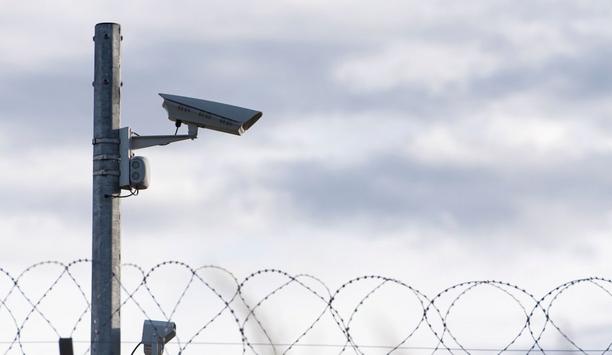
Physical security technologies are a prominent tool used by correctional facilities to provide a safe, secure, and controlled environment for staff, inmates, and the wider community. Among several functions, security technologies are used to prevent unauthorised access, to detect contraband, to monitor inmate movements and activities, and to protect staff. For security technology manufacturers, integrators and consultants, the corrections market presents distinctive challenges. We asked our Expert Panel Roundtable: What are the unique aspects of the corrections market, and how should the physical security industry adapt?
Products




White papers

Securing the modern data centre
Download
Security technologies promote real-time awareness in K-12 schools
Download
An end user's guide to physical security for data centres
Download
One system, one card
Download
Elevating security through multi-sensing solutions and large-scale AI
Download
Using artificial intelligence (AI) to automate physical security systems
Download
The key to unlocking K12 school safety grants
Download
Precision and intelligence: LiDAR's role in modern security ecosystems
Download
Access management in higher education
Download
School security checklist
Download
Levelling up with campus safety
Download
Smart surveillance in the workplace
Download
How to ramp up perimeter security with license plate reader technology
Download
Thermal cameras: Can they accurately detect body temperatures?
Download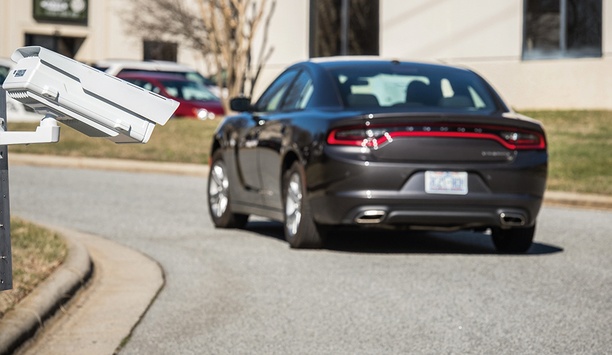
How plate reader technology increases your perimeter security
DownloadVideos
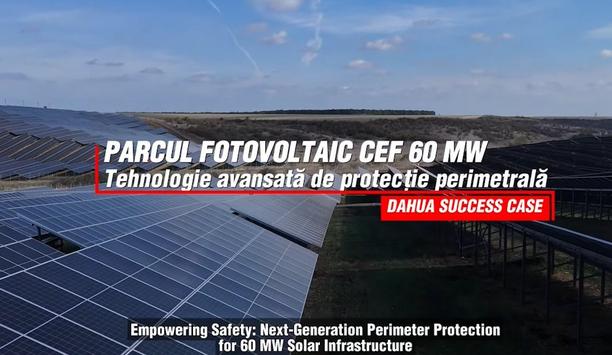


Perimeter security: Manufacturers & Suppliers
- Senstar Perimeter security
- eneo Perimeter security
- OPTEX Perimeter security
- DSC Perimeter security
- Dahua Technology Perimeter security
- Climax Technology Perimeter security
- Gallagher Perimeter security
- Axis Communications Perimeter security
- LILIN Perimeter security
- RISCO Group Perimeter security
- Bosch Perimeter security
- Aritech Perimeter security
- Honeywell Security Perimeter security
- SightLogix Perimeter security
- Hikvision Perimeter security

Technology's role in securing banks and financial institutions
Download
Security technologies promote real-time awareness in K-12 schools
Download
Integrated systems enable critical and compliant security for transportation
Download
Modernising physical access control
Download
Access. Intrusion. One estate.
Download