Technology & Trends - Access control software

Video surveillance systems are producing more unstructured data than ever before. A dramatic decrease in camera costs in recent years has led many businesses to invest in comprehensive surveillance coverage, with more cameras generating more data. Plus, advances in technology mean that the newest (8K) cameras are generating approximately 800% more data than their predecessors (standard definition). Traditional entry-level solutions like network video recorders (NVRs) simply aren’t built...

Access control and management of trusted identities are the building blocks of security, safety, and site management policies for many businesses and organisations. The current pandemic has compounded this with the introduction of new policies and regulations, particularly around social distancing and contact tracing. Most organisations will have some form of legacy access control in place, ranging from the most simplistic options, such as locks and keys, to technology-based systems. The issue...

For many businesses and organisations, the term 'authentication' is synonymous with 'password' or 'multi-factor authentication (MFA)’. However, because today's business ecosystem is complex and stretches across distributed workforces with work from home, BYOD policies, and multiple cloud environments, it is very challenging to efficiently recognise and authenticate identities of people, processes, and devices throughout the enterprise using traditional methods. The problem with passwords...

Martyn’s Law (also known as ‘Protect Duty’) could forever change the landscape of event security if changes to legislation are passed. Some would argue it already has. In 2017, just as concertgoers were leaving the Manchester Arena, a terrorist detonated an improvised explosive device in a suicide attack killing 22 and injuring more than 250. The mother of one of the victims, Martyn Hett, has tirelessly campaigned for tighter security and a duty of care to be placed upon venu...

The last year revolutionised the way people work. When offices transitioned to work-from-home and worksites implemented social distancing, the security industry saw an overnight shift in what technologies our customers wanted. Now that businesses are bringing employees back to work in-person, management has broadened their focus to include healthy access in their security plans. Healthy access is a modern security concept that uses the latest technologies to blend employee and visitor health wi...

Travel and tourism are a colossus of a global industry. From backpackers to private jets, people from all backgrounds can explore the world in a variety of different ways for several different purposes. Many may associate the mention of travel with leisure – holidays, cruises, or other pastimes. However, a significant proportion of the industry is driven by travel for business-related means. According to the World Travel & Tourism Council (WTTC), business travel expenditure exceeded...

TOA Corporation (UK) Ltd discuss what changes COVID-19 has bought to the installation of VA/PA Systems and how the integration of IP has impacted on that. With a year and a half of global uncertainty, we have seen huge changes in what VA/PA systems will need to deliver in order to provide safe and robust solutions with advanced zone and directional messaging. The impact of COVID has pushed installers to re-think what end-users need long-term to manage any future changes in guidelines especiall...

Small and medium businesses of all kinds encountered unprecedented challenges during the COVID-19 pandemic. And now that businesses have reopened, they are facing new obstacles through each stage of recovery. Business owners need to look for solutions that can help them manage these issues now and beyond. Challenges ranging from lack of cash flow to staffing challenges to IT security issues for businesses with remote workers can be lessened by security and automation solutions. One of the main...

It has long been recognised that no one is safe from cyber-attacks, but some sectors face a much higher level of threat than others. Critical infrastructure sectors such as utilities, energy and industrial manufacturing are some of those that face an intense level of interest from cyber criminals and nation-state groups across the globe. The impacts of a successful attack can have detrimental consequences, for both the cyber and physical side of the business, in terms of business disruption, ec...

Amongst the many negative consequences of the pandemic is a rise in violent and abusive behaviour across society. Health workers have experienced it on a regular basis. So too have police officers and public transport workers. Unfortunately, violence and abuse towards shop workers is also endemic in British society. To address this problem which, in truth, has been on the rise since long before the emergence of COVID-19, we need better deterrents. The ability to prosecute these offences is one...

Have you ever stopped to consider the volume of new data created daily on social media? It’s staggering. Take Twitter, for instance. Approximately 500 million tweets are published every day, adding up to more than 200 billion posts per year. On Facebook, users upload an additional 350 million photos per day, and on YouTube, nearly 720,000 hours of new video content is added every 24 hours. While this overwhelming volume of information may be of no concern to your average social media user...

In daily work and life, various locks have always played the role of protecting asset safety. In different usage scenarios, the most appropriate lock must be selected to maximise benefits. In the past applications, the difficulties encountered by managers are as follows. Unlocking authority is difficult to control, unclear access records, emergency unlocking, and troublesome upgrade and installation. Through the following points, how the key-centric access management system solves such problems...

The UK Government has set out an ambitious ten-point plan, known as the green industrial revolution, with an aim “to forge ahead with eradicating its contribution to climate change by 2050.” This makes our government the first major economy to embrace such a legal obligation. Green recovery Acknowledging climate change and meeting net-zero is a demanding challenge especially for those affected by the pandemic. But the UK Government, with the launch of its aspiring strategy, is inve...

Prices and delivery times for essential components in CCTV systems are being driven up as demand soars from other industries. Secure Logiq’s Robin Hughes explains the current state of the market. Challenges Component shortages and supply chain challenges are a hot topic in just about every industry based on semi-conductors and silicon chips right now, and security is no exception. It’s common knowledge that the global Covid lockdown caused a shutdown in the mining of silicon and s...

It is a truism that in the physical security industry your workforce and your reputation are the business’s largest and most important assets. Managing your workforce with empathy to ensure happy, engaged employees can be a balancing act. However, providing flexible working practices that are still profitable for your business is achievable, and something that every security business should be aiming for. SmartTask CEO, Paul Ridden discusses the hidden benefits of an engaged workforce an...

Steven Kenny, Axis Communications, looks at the benefits of physical access control systems within smart environments, and how knowledge gaps and dated methods can inhibit adoption. Physical security is becoming more dynamic and more interconnected, as it evolves. Today’s modern access control solutions are about so much more than simply opening doors, with digitalisation bringing multiple business benefits, which would simply not be possible using traditional models. Digital transformat...

When we talk about security, people are often quick to jump to conclusions and picture bouncers, heavy steel doors and alarms that go off as soon as a door is opened. Access control is in fact one of the most common and least invasive methods of adding extra security to a home, communal or business premises – controlling who is able to enter a space based on the use of entry codes, key fobs, and/or access cards. Communal flats and office blocks are where access control is often an importa...

The 2020s will be a wireless decade in access control, says Russell Wagstaff from ASSA ABLOY Opening Solutions EMEA. He examines the trends data, and looks beyond mobile keys to brand new security roles for the smartphone. The benefits of wire-free electronic access control are well rehearsed. They are also more relevant than ever. A wireless solution gives facility managers deeper, more flexible control over who should have access, where and when, because installing, operating and integrating...

With the continued rolling back of COVID restrictions in the UK, there is a palpable sense of relief. A mixture of mass vaccinations, widespread testing, and track and tracing of the infection is helping to enable a healthy bounce back for businesses – with secure access control taking an important role in facilitating this. However, rather than just being a reaction to the wake of the pandemic, there is every sign that the economy, and consequently the security sector as well, are both r...

COVID restrictions across the UK are slowly easing and many public venues, including stadiums, are beginning to reopen following a year of closures and uncertainty. According to recent ONS figures, criminal offences – excluding fraud and computer misuse – dropped significantly during the lockdown periods of 2020. In fact, 25% less crime was reported in April 2020 compared to the same month in 2019. However, as lockdown measures eased each time, crime levels quickly crept up, sadly e...

The global biometrics market has been recently developing rapidly, and this trend will continue shortly. If in 2018 its volume was estimated at $23.4 billion, according to the forecast of the analytical company BCC Research, the market size may increase to $71.6 billion with an average annual growth rate of 23.2 % by 2024. Fingerprint scanning, facial recognition, iris, vein, and voice technologies are expected to be implemented at the fastest pace. The analysis is based on the revenue indicato...

As the vaccine roll-out proceeds, people across the UK are counting the days until we can get back to some kind of ‘new normal’. Just as we’ve seen in education and healthcare, the return to the workplace and other public spaces will be accompanied by enhanced sanitisation and social distancing measures. To make the return as swift and safe as possible, those of us involved with managing, building and constructing buildings should consider how we can help facilitate and suppor...

Display solutions play a key role in SOCs in providing the screens needed for individuals and teams to visualise and share the multiple data sources needed in an SOC today. Security Operation Centre (SOC) Every SOC has multiple sources and inputs, both physical and virtual, all of which provide numerous data points to operators, in order to provide the highest levels of physical and cyber security, including surveillance camera feeds, access control and alarm systems for physical security, as...

The Annual Fraud Indicator estimates that fraud costs the United Kingdom approximately £190 billion every year. The private sector is hit the hardest and loses around £140 billion a year, while the public sector loses more than £40 billion, and individuals lose roughly £7 billion. The effects of fraud can be devastating on both individuals and organisations. Companies can suffer irreversible damage to reputation and be forced to close, and individuals can experience sign...

The SolarWinds cyberattack of 2020 was cited by security experts as “one of the potentially largest penetrations of Western governments” since the Cold War. This attack put cybersecurity front and centre on people’s minds again. Hacking communication protocol The attack targeted the US government and reportedly compromised the treasury and commerce departments and Homeland Security. What’s interesting about the SolarWinds attack is that it was caused by the exploitation...

The transition to remote working has been a revelation for many traditional office staff, yet concerns over data security risks are rising. Mark Harper of HSM explains why businesses and their remote workers must remain vigilant when it comes to physical document security in homes. Pre-pandemic, home offices were often that neglected room in people’s homes. But now things are different. After the initial lockdown in 2020, 46.6% of UK workers did some work at home with 86% of those doing s...

Though many office workers across the globe have found themselves working remotely for the past year, we are seeing a bit of a silver lining, as vaccine rollouts hint at a return to some pre-pandemic sense of normalcy. However, while some of us might opt for a fully-remote work life, others are anticipating a hybrid solution. Even before the pandemic, offices were taking a new, more open layout approach—moving past the days of cubicles and small office configurations. Going forward, offi...

Q: Mr. Seiter, Mr. Ekerot, you both joined Bosch Building Technologies’ business unit Video Systems & Solutions as Senior Vice Presidents in March 2020, when the Coronavirus pandemic was just beginning. How did your business unit get through 2020? Magnus Ekerot: The crisis was also felt at Bosch. At the same time, demand has risen for solutions that keep businesses open and protect people's health. We offer corresponding video solutions that can make a significant contribution to con...
While COVID-19 caused widespread disruption and many challenges for businesses, its sudden arrival prompted some very quick decision-making around how to maintain operations. For some businesses, cloud-based video conferencing solutions provided a welcome alternative to meeting face-to-face. A year on and it seems that this sudden and mass adoption of cloud has accelerated a digital transformation process in other departments. Physical security too is increasingly moving to the cloud in the form...

What would you do if, tomorrow morning, you opened your work laptop to see a ransomware demand? “Oops: Want Your Files Back? Here’s How to Pay”. It’s a pretty terrifying prospect. In that moment, IT and senior management are rushing to restore previous versions via advanced cybersecurity – or if they can’t, they’re considering paying up. As for the rest of your company’s employees, their online training modules in how to prevent a cyber-attack or...
Browse expert commentaries
Related videos


Find Lost Wallet with Dahua WizSeek

Dahua Traffic Signal Controller Highlight

Dahua DeepHub ST430 Highlight
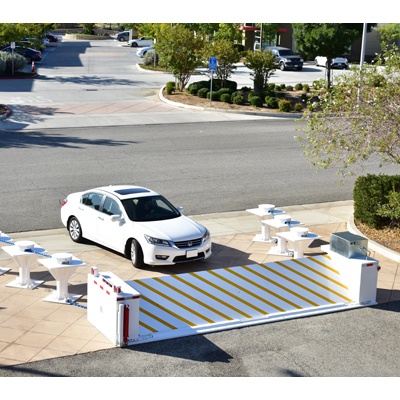
Delta Scientific Rapid Deployment Portable Barrier
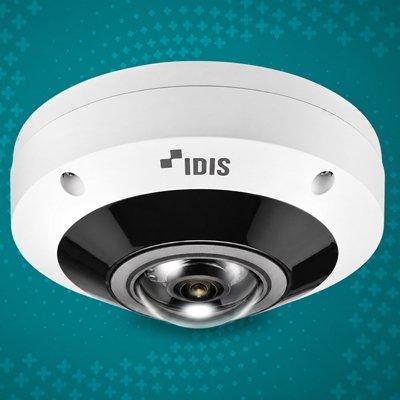
IDIS 12.5MP AI Fisheye Camera with Panoramic Auto-Tracking

Dahua 4G Solar Security System with Dual-Lens AI Detection

Technology's role in securing banks and financial institutions
Download
Security technologies promote real-time awareness in K-12 schools
Download
Integrated systems enable critical and compliant security for transportation
Download
Modernising physical access control
Download
Access. Intrusion. One estate.
Download
