Technology & Trends - Access control software
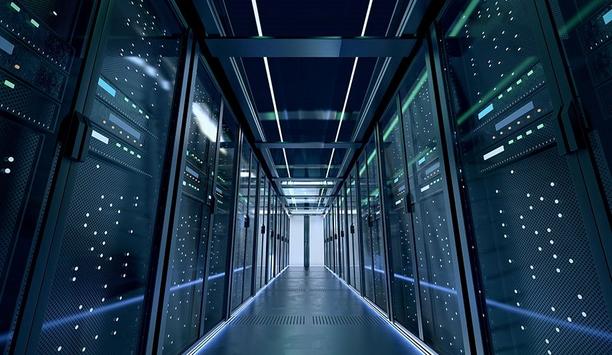
Once upon a time, providers had end-to-end control when deploying a physical security platform, which is not the case anymore when we consider the modernisation to IP. When considering the move to IP physical security, the provider needs to ensure the customer has a robust PoE backbone to connect the IP security device back to the application. Network readiness requirements have complicated IP security deployments, making it challenging for current providers while opening the door to new compet...

We encounter AI with increasing frequency, both online and in the media. AI has penetrated deep into various aspects of our lives, from TV sets that improve picture quality using AI, or air conditioners with automatic temperature and humidity control, to investment management services that predict return rates. AI technology first appeared in the 1950s and was briefly revived in the 1980s before falling off the radar. In the late 2000s, AI re-emerged and went on to become a key technology and d...

If you’re a security or facilities manager, you may already be aware of the quiet revolution that’s taking place across businesses and organisations up and down the country. By the end of 2020, 20% of all ID and access control systems featured mobile capability, and this is set to increase by a further 34% over the next three years. There’s no doubt that using a smartphone or mobile device in place of traditional credential and access control is a growing trend that’s o...

While the application of facial recognition within both public and private spheres continues to draw criticism from those who see it as a threat to civil rights, this technology has become extremely commonplace in the lives of iPhone users. It is so prevalent, in fact, that by 2024 it is predicted that 90% of smartphones will use biometric facial recognition hardware. CCTV surveillance cameras Similarly, CCTV is a well-established security measure that many of us are familiar with, wheth...

Like most industries, the fields of security, access and safety have been transformed by technology, with AI-driven automation presenting a clear opportunity for players seeking growth and leadership when it comes to innovation. In this respect, these markets know exactly what they want. They require solutions that accurately (without false or negative positives) classify and track people and/or vehicles as well as the precise location and interactions between those objects. They want to have a...

Urban populations are expanding rapidly around the globe, with an expected growth of 1.56 billion by 2040. As the number of people living and working in cities continues to grow, the ability to keep everyone safe is an increasing challenge. However, technology companies are developing products and solutions with these futuristic cities in mind, as the reality is closer than you may think. Solutions that can help to watch over public places and share data insights with city workers and officials...

The global pandemic has created a working environment filled with uncertainty and, at times, fear, as COVID-19 cases surge yet again and businesses continue to navigate a complex web of infectious disease mitigation protocols and managing the distribution of a potential vaccine. Organisations are operating in an environment where a critical event, posing significant risk to its employees and daily operations, could occur at any moment. Even with a vaccine showing light at the end of a very dark...

Several major players vigorously employ biometric recognition technologies around the globe. Governments use biometrics to control immigration, security, and create national databases of biometric profiles. Being one of the most striking examples, the Indian Aadhaar includes face photos, iris, and fingerprints of about 1.2 billion people. Financial institutions, on their part, make use of biometrics to protect transactions by confirming a client's identity, as well as develop and provide servi...

This year has brought about changes in virtually every sector. As with other frontline industries, the security sector has been tested more than those able to move entirely to remote working. While the promise of a vaccine means an end is in sight, the post-COVID era will not bring with it a return to the ‘normal’ we knew before the pandemic. Organisations have adapted, becoming more resilient and agile and this will have lasting effects. The coming months will continue to be testi...

The explosion of artificial intelligence used to enhance business processes, propel innovative products, and further automation has touched essentially every industry to date. The security sector, notable for its maturity and complexity, is not exempt from the AI tidal wave. In fact, quite the opposite, the security sector and more specifically the domain of video surveillance have seen an emergence of AI-powered solutions both hardware and software. The widespread adoption of IP cameras, clou...

The Security industry’s role in maintaining safe workplaces has never been more critical. Yet, individual security officers remain likely to drop shifts at the last minute and with greater frequency in the current climate, with illness, lockdown, self-isolation and home-schooling all common reasons for being off. Having a reliable bench with relief officers on hand has never been more important. Sorting drops internally (as opposed to using agency officers) is no longer nice to have to im...
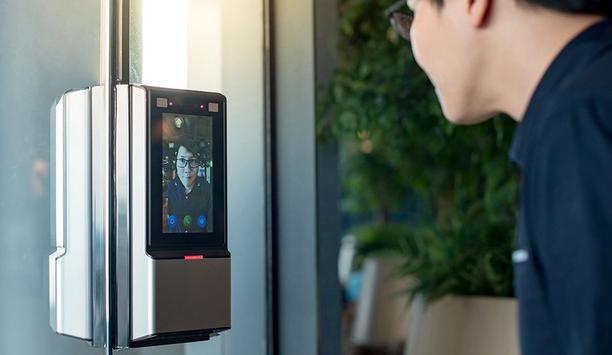
In a world forever changed by the coronavirus pandemic, companies worldwide are now expanding their concept of physical security to best safeguard their facilities and employees. Few incidents have had as much of an impact on businesses globally as the COVID-19 pandemic; much of the world is still struggling to contain COVID-19, navigating the lasting effects and exploring what the “new normal” looks like. While some organisations are still engaged primarily in “anywhere oper...

For decades, the nature of global safety has been evolving. From physical security threats like large-scale terrorist attacks and lone actor stabbings to chemical threats such as the Salisbury poisonings and even microbiological threats such as COVID-19, new challenges are constantly arising and the threat landscape we operate in today is constantly changing. Compounding the complexity of the security issues is the complexity and nature of attacks. With the economic downturn, there is the tradi...
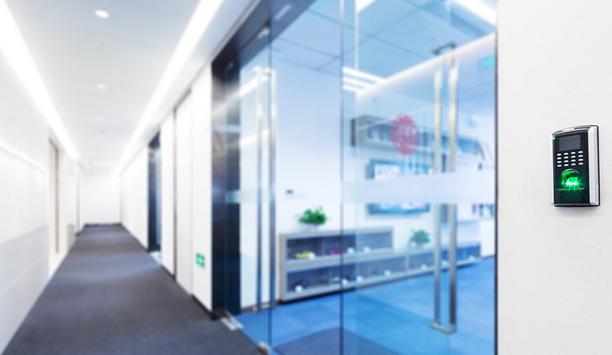
Access control and door entry is a huge responsibility, and challenge, for local authorities and housing associations UK wide. For councils, they’re accountable for the security and safety of many public facilities such as leisure centres, libraries as well as residential housing developments which are often large scale and home to hundreds of people. Housing associations manage affordable rental housing which also means they’re responsible for the appropriate access control managem...

For bricks and mortar retailers, there’s no going back to how it was anytime soon. Even before the COVID-19 pandemic and economic crisis, they had been fighting a fierce battle against online shopping and significant e-commerce players. The high street has done a pretty good job of evolving over the years. From its humble beginnings in the late 19th century to its boom in the late 20th, it’s constantly adapted to meet changing consumer needs. The risk to retail But, i...

Stadiums around the world are still paralysed from the effects of COVID-19. Fans and spectators in masses have been absent from stadiums since April and there doesn’t seem to be a concrete plan on how or when they’ll be able to return to near capacity. The NBA recently opted to form a bubble philosophy concept in Disney’s facilities, although it’s been a relative success, it’s also been a $200 million temporary solution. This then begs the question: How long can st...

Across the world, the impact of the current pandemic has majorly disrupted how we function in our everyday lives, as a society, and the ways in which we do our jobs. Throughout, our personal safety and wellbeing, as well as that of our families, neighbours and colleagues, has been paramount - and adapting our day-to-day lives to meet social distancing measures has been a learning curve for us all. As we start to reassemble normal life, precautionary measures will continue to be put in place to...

Motion detection is a key feature of security systems in residential and commercial environments. Until recently, systems have relied heavily on closed circuit television (CCTV) and passive infrared (PIR) sensors, which both require significant investment and infrastructure to install and monitor. Developments in wireless technology are increasing home security possibilities. Few years ago, these developments led Cognitive Systems to discover that the wireless signals surrounding oneself can be...

The unprecedented global impact of COVID-19 has taken its toll on all of us, but as cases of the virus thankfully recede, employers are now forced to confront how they can enable a safe return to work for employees. For many employers, this means they will have to carry out a COVID-19 risk assessment, redesign workspaces to maintain social distances, carry out more frequent cleaning, manage the transmission risk and find alternatives to touch-based security devices. Protecting workplace occupan...

Returning to work after the global pandemic will not be business as usual, and security systems are an important asset when it comes to helping to keep occupants and buildings safe. For example, video analytics can provide insight into how spaces have previously been used and can help to predict where and when occupants encounter each other or congregate. These foot-traffic patterns can inform settings for a variety of devices – like ventilation and temperature controls – and even he...

Technology has played a vital role in how businesses have enabled their employees to work productively from home during the COVID-19 pandemic. For those of us who can do our jobs from home you only have to look at the ‘Zoom Boom’ to see how much our working lives have changed compared to the beginning of the year. Despite the fact that those companies that can are now productively and efficiently operating remotely, the country is now facing the next challenge in this crisis: how to...

Companies are following government guidance and getting as many people as possible working from home. Some companies will have resisted home working in the past, but I’m certain that the sceptics will find that people can be productive with the right tools no matter where they are. A temporary solution will become permanent. But getting it right means managing risk. Access is king In a typical office with an on-premise data centre, the IT department has complete control over network acce...

Imagine a home surveillance camera monitoring an elderly parent and anticipating potential concerns while respecting their privacy. Imagine another camera predicting a home burglary based on suspicious behaviors, allowing time to notify the homeowner who can in turn notify the police before the event occurs—or an entire network of cameras working together to keep an eye on neighborhood safety. Artificial Intelligence vision chips A new gen of AI vision chips are pushing advanced capabili...

One of the responsibilities of construction project managers is to account for risks during the initial planning for a project and mitigate them. With all the tools, construction materials, and heavy machinery during the initial stages of a project, the construction site is a dangerous place to be at. However, this is not the only risk that project managers need to protect a site from. With plenty of valuables both physical and virtual within a construction site, it is also a prime target for t...

Insider threat programmes started with counter-espionage cases in the government. Today, insider threat programmes have become a more common practice in all industries, as companies understand the risks associated with not having one. To build a programme, you must first understand what an insider threat is. An insider threat is an employee, contractor, visitor or other insider who have been granted physical or logical access to a company that can cause extensive damage. Damage ranges from emot...

Growing up, I was surrounded by the military way of life as my father was a Captain in the Marine Corps during the Vietnam War and my grandfather and uncles all served in the military. Even from a young age, I knew I was going to serve our country. My 22-year career in the military includes serving in the United States Air Force, the California Air National Guard and as a reservist assigned to an active-duty Air Force unit. Training and development operations Over the course of my military c...

The jury is in: traditional security is out — and it’s being replaced with service-based solutions. The bottom line is: if you’re not embracing it, you’ll soon be left behind. XaaS — the collective term referring to the delivery of anything as a service — includes all services made possible through the use of the cloud. Security-as-a-Service (SaaS), which encompasses any type of system from access control to video surveillance, has paved the way for users to...

Rodrigue Zbinden, CEO at Morphean, discusses the business benefits from merging video surveillance and access control technologies as demand for ACaaS grows. The big question facing businesses today is how they will use the data that they possess to unlock new forms of value using emerging technologies such as the cloud, predictive analytics and artificial intelligence. Some data is better utilised than others: financial services were quick to recognise the competitive advantages in exploiting...

We live in an information and data-led world, and cybersecurity must remain top-of-mind for any organisation looking to both protect business operation critical assets. Businesses without proper cyber measures allow themselves to be at risk from a huge list of threats - from cybercriminals conducting targeted spear-phishing campaigns - like the 2018 Moscow World Cup vacation rental scam, to nation-state actors looking to collect intelligence for decision makers - no organisation is safe from in...

In 2017, IoT-based cyberattacks increased by 600%. As the industry moves towards the mass adoption of interconnected physical security devices, end users have found a plethora of advantages, broadening the scope of traditional video surveillance solutions beyond simple safety measures. Thanks in part to these recent advancements, our physical solutions are at a higher risk than ever before. With today’s ever evolving digital landscape and the increasing complexity of physical and cyber-a...
Browse expert commentaries
Related videos


Find Lost Wallet with Dahua WizSeek

Dahua Traffic Signal Controller Highlight

Dahua DeepHub ST430 Highlight
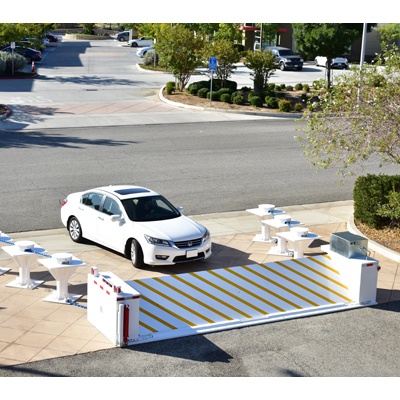
Delta Scientific Rapid Deployment Portable Barrier
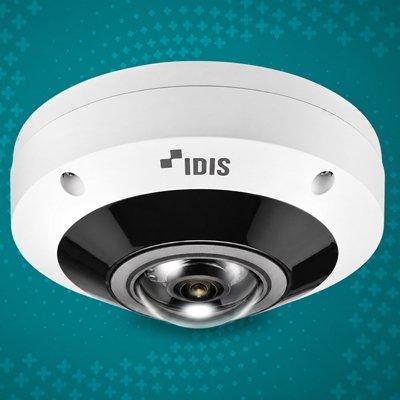
IDIS 12.5MP AI Fisheye Camera with Panoramic Auto-Tracking

Dahua 4G Solar Security System with Dual-Lens AI Detection

Technology's role in securing banks and financial institutions
Download
Security technologies promote real-time awareness in K-12 schools
Download
Integrated systems enable critical and compliant security for transportation
Download
Modernising physical access control
Download
Access. Intrusion. One estate.
Download
