Technology & Trends - Access Control

One of the best business lessons I learned didn’t come from business journals or the boardroom. It came from a biography: Steve Jobs by Walter Isaacson. If you haven’t read it, you should! The book covers the full arc of Jobs’ career, and while many of the most talked about lessons center on his entrepreneurship, perfectionism, and brand building, the one that has stayed with me is his philosophy of design. Digital music player market I don’t mean design in the sense o...

There was a time when physical security and cybersecurity occupied two very different worlds. One was concerned with the nuts and bolts of locks, doors and perimeter protection. The other focused on networks, software and digital threats. Today’s modern access control systems – used in everything from offices and hotels to hospitals and data centres – combine the two, fusing mechanical engineering and cloud platforms. That means that a door is no longer simply a physical barri...

When news broke that a Renoir painting had been stolen from an exhibition in the south of France, days after 600 diamonds were taken from a museum in Vienna, few in the art or security worlds would have been surprised. Europol had recently published “Changing Tactics, Changing Targets: The Evolving Nature of Museum Heists,” highlighting criminals’ growing focus on high-value objects and their increasing use of force. The latest theft also echoes the Louvre heist almost a year...
The eagerness to adopt AI in physical security is increasing as teams want to implement technology solutions for faster, smarter operations. At the same time, the conversations surrounding AI have changed. The focus now includes not only efficiency gains but also concerns about accountability and trust. According to the Genetec 2026 State of Physical Security report, AI ranked alongside access control and video surveillance as a key priority. However, approximately 40% of the over 7,000 physica...
The biggest return on investment from an AI-enabled camera might have nothing to do with security. Organisations are increasingly discovering that the same cameras installed to protect people and property can also improve safety, streamline operations, automate routine workflows, and generate valuable business intelligence. Security remains the primary mission, but it is increasingly only the first customer for the intelligence these systems produce. AI-enabled cameras are rapidly becoming dis...

Across many sectors, AI is transitioning from an experimental process to a trusted tool, but how will construction - and architectural ironmongery specifically - balance this technological opportunity with traditional practice? Artificial intelligence was once considered the trend of tomorrow, but it’s now here, and already it’s impacting the design, specification and management of the built environment. Following a period of refined development, the technology is emerging as a valu...

In logistics hubs, production facilities and distribution centres, the access control system is invisible—until it isn't. For decades, the 125 kHz card has been the workhorse of industrial credentialing: inexpensive, reliable and universally understood. It does exactly what it has always done. That consistency has served many organisations well, even as security needs and credential From authentication to smart buildings, gain expert insights about unified access. The same card technology...

It has been 10 years since the European Union adopted the General Data Protection Regulation (GDPR), triggering a fundamental overhaul of data protection and privacy law. Today, GDPR is embedded in the day-to-day operations of organisations working with, or within, EU member states. GDPR was introduced in recognition that the world had changed profoundly and that existing data protection laws were no longer adequate in an increasingly digital and interconnected environment. The regulation was a...
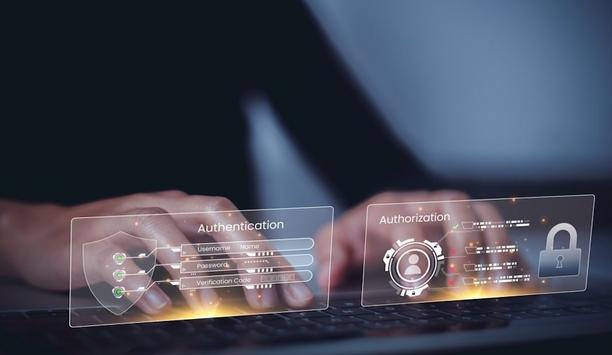
For years, physical security and cybersecurity evolved on parallel tracks. One team managed doors, badges and cameras, while the other handled network access, authentication and logical assets. The systems rarely shared information and, in many organisations, they still do not. That separation is becoming harder to defend now that employees move continuously between physical and logical environments throughout the workday. A single person may badge into a building, access cloud applications, re...

Security is a top priority for any organisation responsible for safeguarding critical infrastructure. However, recent events have highlighted the fragility of the global energy supply chain and the need for change. When tankers cannot safely navigate the Strait of Hormuz, fuel prices rise and public anxiety grows. This often results in long lines at the fuel pump and fears of shortages quickly becoming a self-fulfilling prophecy. The reality is that critical infrastructure will always be a tar...

For years, innovation in physical security has focused on what systems can do: higher-resolution cameras, AI-driven analytics, smarter access control, and cloud-based management. But across deployments, from residential systems to enterprise campuses, a more fundamental issue continues to undermine performance: Connectivity. It is increasingly clear that the effectiveness of modern security systems is not limited by sensors or software, but by the reliability, reach, and architecture of the net...
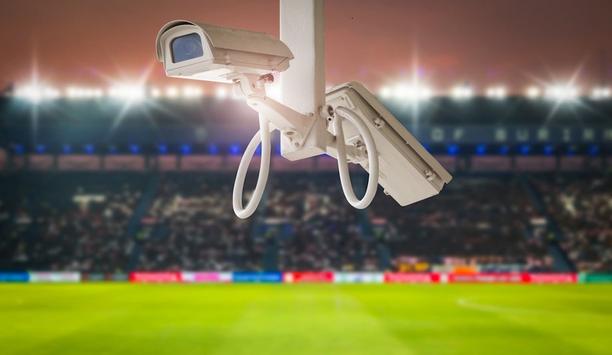
The FIFA World Cup is the ultimate celebration of “The Beautiful Game.” Every four years, we welcome this highly anticipated competition on the global stage, unifying nations and bringing people from all corners of the world together in the name of soccer. While the culmination of the World Cup’s unmatched energy creates electrifying moments on the soccer pitch, the underlying security and risk threats cannot be overlooked.World Cups are not just sporting events, they are tempo...

The physical security industry's entire value proposition is built on the idea that the right people get in and the wrong people stay out. It is somewhat ironic, then, that the industry itself has been fairly cavalier about who gets into a career inside it. I work in an industry that designs and deploys the systems that decide who enters a building, who carries a credential, and who is trusted with access. The technology has grown remarkably sophisticated with AI-based and biometric technologie...

Banking is built on change. The financial services landscape is evolving faster than ever, as mobile adoption, digital transactions, and customer expectations continue to accelerate. Success in this space now depends on more than keeping pace — it’s about anticipating what comes next and building the agility to move with it. At the same time, financial institutions face the dual challenge of transformation and trust. They must modernise operations, integrate emerging technologies, a...

Acquisitions are often billed as moments of bold opportunity. For senior executives and boards, these deals are about accelerating growth, unlocking synergies, and strengthening competitive advantage. But for the teams responsible for making operations run safely and smoothly — including physical security — acquisitions can feel like controlled chaos. Decisions happen without warning, details are opaque, and the ripple effects of choices made in the boardroom cascade down through ev...

As AI infrastructure concentrates into fewer, more powerful data centres, the most dangerous disruption method is no longer just hacking, but control, too. And the weakest link is often identity, authority, and operational access, not software vulnerabilities. All data centres have operational levers that can shut them down instantly, and none require sophisticated cyberattacks. Shut off the cooling, turn off the power, close down access, or misuse maintenance procedures, and you can shut down...

As a digital transformation continues to sweep across the industry, Daniel May of Consort Architectural Hardware examines the growing demand for Building Information Modelling (BIM) and how its use is influencing modern design projects. The future of construction is digital. What was once considered a gradual shift toward greater information management has now become a basic requirement for so many. From early-stage design through to compliance, maintenance and product lifecycle management, dig...

For years, the worlds of physical security and information technology (IT) remained separate and often at cross-purposes. The departments often worked in silos, despite the fact that infrastructure needs were crucial in the security industry and network traffic and data were of interest to IT professionals. Today, these practices are no longer divided. Physical security depends on network security, and vice versa. For partners, this presents a new challenge – how to speak to both IT and s...
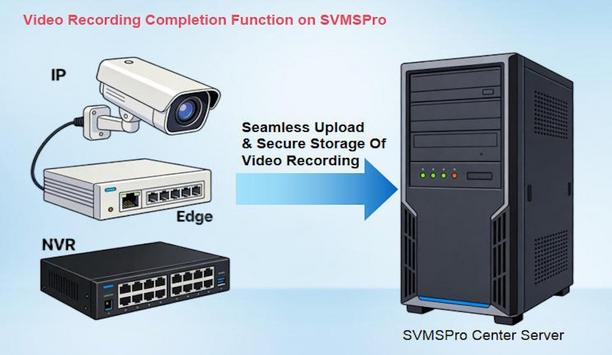
In mobile surveillance, remote sites, and environments with unstable networks, video recordings often suffer from "time gaps" due to network interruptions, a longstanding technical challenge for security systems. Under traditional architectures, central servers rely on real-time streams for storage. Once the network connection is lost, the recording timeline experiences an irrecoverable interruption, leading to the loss of footage of critical events. This creates a fundamental flaw in post-eve...

It took just seven minutes to steal more than $100 million in jewels from the Louvre, in an operation so swift and precise it exposed a deeper flaw in how even the most secure institutions protect what matters most. It's reignited global scrutiny of both physical and digital security, revealing how gaps in coordination can turn sophisticated systems into operational failures. Video intelligence and integrated monitoring Across museums, government facilities, and corporate campuses, vid...

A lot has been said about door security — from reinforced door frames to locking mechanisms to the door construction — all of which is crucial. But what security measures are in place beyond the perimeter door in case the worst happens and it’s somehow breached? Hopefully, many more levels of access control are in place to prevent, or at least slow down, a perpetrator’s ability to compromise protected assets. Additional interior layers Interior security measures must...

Artificial intelligence (AI) creates efficiencies throughout various industries, from managing teams to operating businesses. Key outcomes include faster investigations, fewer false alerts, automated operational checks, and quicker support experiences. These advancements free up valuable time for users, allowing them to focus on high-impact priorities that drive greater ROI. When it comes to surveillance, AI is most visibly powering a new generation of vision language-powered video analytics,...

It is the time of year when city centres transform, as outdoor Christmas markets fill town squares and high streets. An estimated 6,000 markets will open across Europe during the festive season, with some of the largest — including Nuremberg’s Christkindlesmarkt, London’s Hyde Park Winter Wonderland and Craiova in Romania — welcoming millions of visitors. Sadly, these popular events have in recent years been the subject of attacks, most notably Berlin in 2016 and the tra...
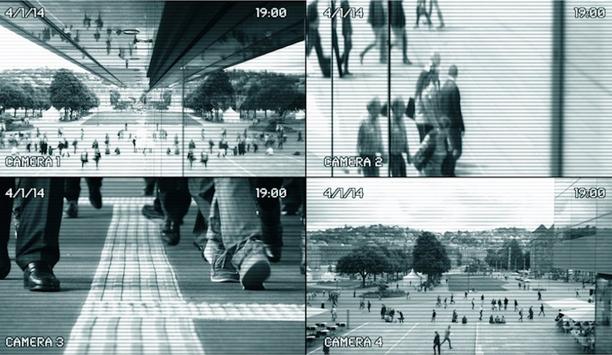
The terrorism threat in the UK is very real. In fact, since July 2019, the threat level has never dropped lower than “substantial” or “severe.” To ensure preparedness across public places and events, the UK government has introduced the new Terrorism (Protection of Premises) Act 2025, more commonly known as Martyn’s Law in memory of Martyn Hett, a victim of the 2017 Manchester Arena bombing. Overarching aim The new legislation requires operators of public spaces...
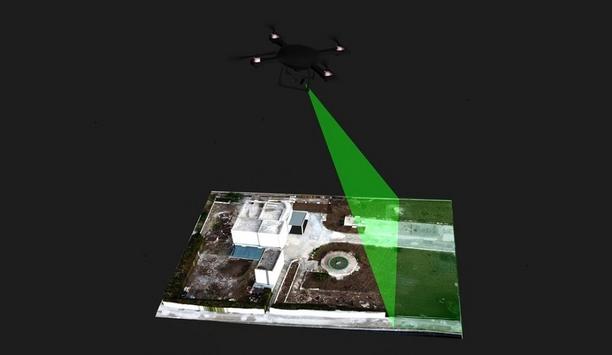
Seven minutes. That’s how long the recent Louvre heist took. In broad daylight, a group of thieves rode up on a construction platform, smashed display cases, stole several historical jewels tied to the Napoleonic dynasty and escaped on scooters before anyone in the control room even realised what was happening. It sounds like a scene straight out of “Mission: Impossible.” Only this time, Tom Cruise wasn’t there. In movies, we often see tight webs of red laser beams guard...

The healthcare infrastructure is ever evolving. Facilities are no longer single entities for one, they are sprawling ecosystems that serve a wide range of users, from medical staff and administrators to vulnerable patients, visitors and maintenance personnel. Safeguarding their safety and security, whilst providing seamless operation is a complex challenge - one frequently solved by access control. Use of access control Today’s security solutions play a central role in protecting peopl...

In today’s connected world, attacks are more likely to target digital than physical entry points. From ransomware and firmware tampering to remote hijacking, AI-driven phishing and automated vulnerability discovery, the nature of threats is evolving rapidly, and no industry can afford to neglect them. As our industry has moved from mainly mechanical to increasingly digital solutions, we have long recognised the importance of constantly monitoring and assessing the risks we face. This mean...
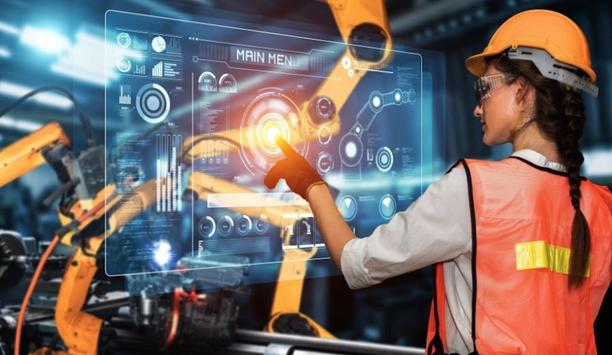
The Internet of Things is growing quickly. It has moved far beyond a few smart gadgets at home. Today, connected technology is in homes, factories, hospitals, farms, and cities. Experts expect the global market for IoT devices to rise from about $70 billion in 2024 to more than $181 billion by 2030. This means more devices, more data, and more opportunities for industries everywhere. This growth comes from several advances working together. 5G connections make it possible to send and receive d...

The sheer volume of smart locks, lock management systems, connected readers and an increasing array of Internet of Things (IoT) devices complicates the issuance and management of certificates that are foundational to establishing trust between a device and the credential used to access it. That’s why more companies are turning to PKIaaS for IoT devices. But there’s another reason to consider PKIaaS: the rise of quantum computing. Secure digital communications Gartner predict...

As the world’s security landscape grows ever more complex, the need for a dynamic, comprehensive, and globally minded gathering of thought pioneers and practitioners has never been more pronounced. Enter the Global Security Exchange (GSX) 2025, hosted by ASIS International, a signature event representing seven decades of commitment to advancing the security profession. This year marks a historic milestone, as GSX and ASIS International both celebrate 70 years of shaping the future of...
Browse expert commentaries
Related videos


Find Lost Wallet with Dahua WizSeek

Dahua Traffic Signal Controller Highlight

Dahua DeepHub ST430 Highlight

Hikvision 4MP ColorVu 3.0 Fixed PT Network Camera

Dahua APOLLO 4G Solar Security System
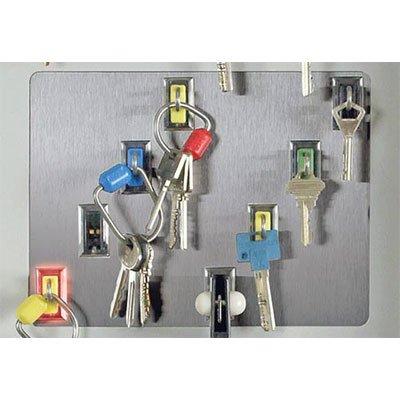
Morse Watchmans KeyWatcher Touch Key Control Modules

Technology's role in securing banks and financial institutions
Download
Security technologies promote real-time awareness in K-12 schools
Download
Integrated systems enable critical and compliant security for transportation
Download
Modernising physical access control
Download
Access. Intrusion. One estate.
Download
