Technology & Trends - CCTV software

The biggest return on investment from an AI-enabled camera might have nothing to do with security. Organisations are increasingly discovering that the same cameras installed to protect people and property can also improve safety, streamline operations, automate routine workflows, and generate valuable business intelligence. Security remains the primary mission, but it is increasingly only the first customer for the intelligence these systems produce. AI-enabled cameras are rapidly becoming dis...
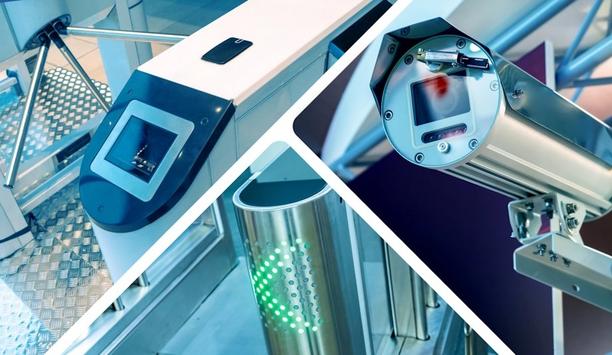
Modernising security infrastructure requires research and planning to build intelligent, connected systems that are secure, scalable and positioned to take the organisation into the future. Prioritising needs, total cost of ownership, interoperability, resilience and sustained value will help ensure that a surveillance system upgrade will deliver both protection and measurable operational impact. Before making that investment, however, security leaders must answer a few key questions to manage...
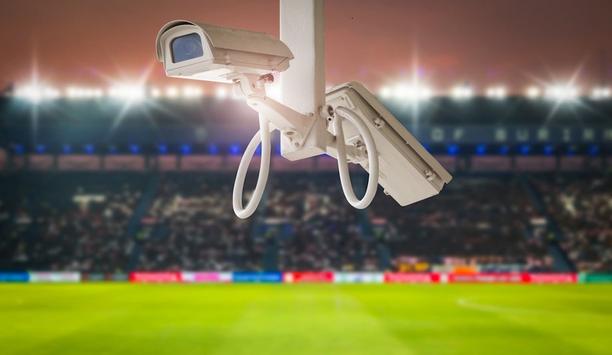
The FIFA World Cup is the ultimate celebration of “The Beautiful Game.” Every four years, we welcome this highly anticipated competition on the global stage, unifying nations and bringing people from all corners of the world together in the name of soccer. While the culmination of the World Cup’s unmatched energy creates electrifying moments on the soccer pitch, the underlying security and risk threats cannot be overlooked.World Cups are not just sporting events, they are tempo...

The physical security industry's entire value proposition is built on the idea that the right people get in and the wrong people stay out. It is somewhat ironic, then, that the industry itself has been fairly cavalier about who gets into a career inside it. I work in an industry that designs and deploys the systems that decide who enters a building, who carries a credential, and who is trusted with access. The technology has grown remarkably sophisticated with AI-based and biometric technologie...

A security camera installed today has more AI processing power than the systems that guided early autonomous vehicle prototypes. And yet the operator who mounts that camera on a wall will, in all likelihood, never use most of that capability. Industry surveys bear this out: a wide gap persists between the number of security professionals who believe AI can improve outcomes and the much smaller share who have adopted it operationally. The reason has nothing to do with the silicon and every...
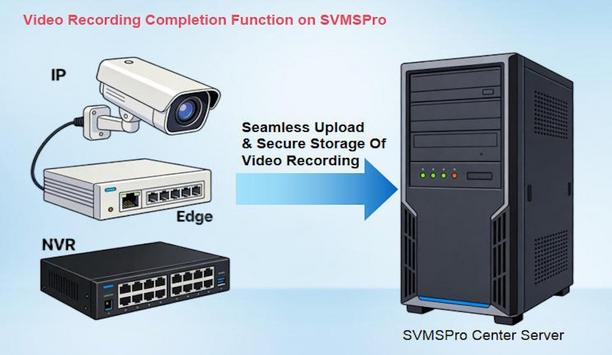
In mobile surveillance, remote sites, and environments with unstable networks, video recordings often suffer from "time gaps" due to network interruptions, a longstanding technical challenge for security systems. Under traditional architectures, central servers rely on real-time streams for storage. Once the network connection is lost, the recording timeline experiences an irrecoverable interruption, leading to the loss of footage of critical events. This creates a fundamental flaw in post-eve...

Where and how to store security camera footage usually depends on the scale of the video surveillance project, the way you are using to record the video and how long you want to keep the recordings. If there are only few IP cameras, say 2~3 IP cameras for example, and you don’t need to keep the recordings for the month, usually using SD card which is installed in the camera is enough. Video management software A VMS provides a unified platform to manage all cameras and record footage on...

Retailers now often find themself in a precarious situation. Profit margins are being squeezed by widespread shoplifting: The Council on Criminal Justice reports that between the first half of 2023 and the first half of 2024, shoplifting reports increased by 24%. Meanwhile, the strategies used by shops to deal with this situation are alienating consumers and affecting total sales. Andy Jassy, the CEO of Amazon, stated during an earnings call that customers are now purchasing more pharmaceutica...

In today's rapidly evolving security landscape, facial recognition has become a buzzword that often triggers privacy and data protection concerns. However, many security professionals may not realise that "facial recognition" is an umbrella term encompassing various technologies, each with distinct applications and privacy implications. Let's dive into what these technologies really mean for security system resellers, integrators, and end-users. Facial recognition tech At its core, faci...

In the past, security and IT teams operated independently, but today collaboration is critical. Modern security systems rely on various devices and systems that are linked to internal and external networks. Without IT involvement, physical security can become a weak point for cybersecurity. Although these groups have made headway in partnering up to ensure the successful implementation of new solutions, often there’s still a disconnect. Differing skills, priorities, and unique ways of th...

The artificial intelligence revolution in physical security has arrived, transforming how we protect people, assets, and infrastructure. From smart buildings that automatically adjust access protocols based on real-time threat assessments to healthcare facilities using AI-enhanced video analytics for patient safety, these technologies are reshaping the industry landscape. But with this transformation comes a new era of regulatory oversight that security professionals must navigate carefully.&nb...

In today’s world, almost any electronic security system holds the potential to become a gateway for cybercriminals. With physical security and cybersecurity increasingly entwined, security professionals aren’t doing their job unless they take all possible precautions to lock down unauthorised access to camera systems, access control platforms, intercoms, and other network-based security devices and solutions. Let’s explore the many steps companies should take throughout their...

As urban populations grow and security challenges evolve, Californian cities have increasingly turned to advanced surveillance systems to enhance public safety. Surveillance infrastructure Between 2022 and 2024, these cities have made significant strides in upgrading their surveillance infrastructure, driven by concerns over crime, public safety, and the need for more sophisticated emergency response systems. This article explores how California's urban areas are improving surveillance techn...

Rapid technological advancement, artificial intelligence (AI) and machine learning (ML) are revolutionising traditional on-premises video security systems. These next-level tools are not just enhancing video data capabilities; they're transforming how businesses approach security, operational efficiency, and information analysis. Video analytics have been a part of security systems for many years, but the arrival of deep learning in 2009 marked a turning point. By training neural networks, basi...

As part of ever-evolving technological advancements and the increase in digitisation, home security systems remain a vital piece of equipment for at least 39 million households in the U.S., and as many as 13 million more households may install new security systems in the next 12 months. Global home security market In addition, a recent study found that 60% of burglars are deterred from attempting a burglary when a home has a security system, looking for alternative targets that are easier. A...

The European Union’s GDPR (General Data Protection Regulation) framework represents some of the toughest and most secure privacy laws in the world. Their creation signaled the EU’s dedication to individual privacy rights and generated new standards and requirements for an organisation inside or outside of the EU wanting to do business in the region. This privacy stance raises an interesting question: to what extent (if any) will France be utilising AI-assisted security and biometri...

As city managers, law enforcement agencies, and first responders face mounting pressure to combat crime and respond to emergencies with limited resources, real-time crime centres empowered by a new generation of data-driven technologies are emerging as an effective force multiplier. Real-time crime centres Real-time crime centres (RTCCs) serve as centralised hubs where dedicated personnel leverage pioneering-edge technologies to analyse diverse data streams and provide critical support t...

The days of being reactive are over. That’s right, we as an industry, can no longer afford to be reactive. As threats evolve, the need for proactive security is critical. While traditional methods, including physical barriers and security personnel, are still necessary, the future of our approach is built on the backs of emerging technologies. Substantial vulnerabilities As an industry, we’ve operated reactively for decades, it has been common for security teams to address...

Choosing the appropriate fingerprint technology for a given application is dependent on factors including the required level of security and matching accuracy, the desired capabilities and features, and the usability to achieve adoption and productivity goals. A successful evaluation process will help ensure that this mature and proven user authentication method performs as expected. Fingerprint biometric advantages The speed, simplicity, accuracy, and cost-effectiveness of the fingerprint m...

In the realm of physical security, the distinction between being perceived as a security vendor and a security partner holds great importance. While both may seem interchangeable at first glance, how an organisation is viewed by its clients can have a huge impact on the success of its security programmes. At the heart of this differentiation is the concept of relationships and how they shape the dynamics between providers and their clients. Time, care, and diligence For security vendors...

Misconceptions about AI and analytics in video security are common due to the rapid evolution of the technology and varying levels of understanding. Artificial Intelligence (AI) and analytics are increasingly used as interchangeable terms when discussing video security cameras. AI v/s analytics While there is some overlap, it is important to articulate the differences between them when speaking to stakeholders or customers. As the myriad types of AI gain more prominence in the global dialogu...
With the rise of organised retail crime (ORC) making headlines, retailers are grappling with the dual challenge of safeguarding both their staff and store assets, while addressing the economic pressures that impact profitability and consumer demand. RFID technology The key lies in identifying effective solutions to counter the current surge in ORC, enabling retailers to secure their vulnerable staff and protect inventory for paying customers. Technology plays a crucial role in supportin...

As we head into a new year, it’s fair to say that it isn’t easy out there for the security integrator community. That’s understandable given the big ruptures felt in the market for physical security in 2023. Typically, Commercial Real Estate (CRE) landlords are the biggest and most influential buyers of physical security hardware and software, but this is starting to wane as heightened borrowing costs and biting inflation cause real estate valuations to plunge. Building secu...

In the early stages of childhood education, kindergarten imparts foundational principles that shape future behaviour. Today, you can think about cloud computing in a similar manner: it has become a fundamental element in the architecture of modern technology. The cloud now plays a critical role in digital interaction, security, and infrastructure development. Far from being just another tool, the cloud is a cornerstone, providing essential support for the intricate network that supports today'...

The importance of data is ever-growing. For every profession, we’re witnessing the increasing reliance on data and its ability to promote efficiency for corporate decision-makers. The security industry is no different. The growing reliance on data and technological tools has allowed for a new breed of professionals with specialised skill sets. This evolution reflects the changing nature of security challenges in the digital age. The new security environment We know one thing from near...
If you were to ask people outside our industry what door and access security entails, chances are their answers would reflect their common encounters with locks, security guards, cameras, and maybe metal detectors, badges, or automatic doors. But if they were curious enough, they’d probably be astounded to learn how extensive, intricate, and interesting the business can be and, of course, how vital it is to life safety, physical security, and cybersecurity. Integrated, inter...

Amidst the challenges of a prevailing economic downturn, the retail sector finds itself grappling with an unparalleled rise in incidents of shoplifting, theft, and burglaries. The disconcerting scenes witnessed on London’s Oxford Street in August 2023, where crowds gathered, looting as many stores as possible, sent shockwaves across the nation’s retailers. This alarming surge in retail crime has put retailers on high alert, as they contend with a rising tide of security concer...

It’s no secret that the data security sector is constantly changing. It has an annual CGR of about 12.3%. Future trends in data security Much of this has to do with the rise of cybercrime in recent years, with reports showing that cyberattacks happen as often as every 39 seconds. To combat the growing rate of cybercrime, data security has been on the rise. As we journey further into this era, it becomes evident that a spectrum of significant trends is molding the future of data se...

GSX 2023 marks a poignant moment for the security industry as an increasingly complex risk landscape converges with the acceleration of technology innovation. Emerging from this environment are three key trends that will dominate the conference and the future of the security industry: (i) the adoption of AI, (ii) the use of predictive analytics, and (iii) a hybrid global and local risk management approach. As Chief Security Officer of Crisis24, a GardaWorld company, I regularly advise cli...

Physical security is essential for a modern production facility, users don’t want just anyone entering the building or accessing secure areas. But what about production machinery? Machine authentication is often a missing link in the security plan for manufacturers. Why machine authentication? Most manufacturers have made significant investments in physical access control (PAC) for production facilities. Few shops currently hand out physical keys to employees or leave the building...
Browse expert commentaries
Related videos


Find Lost Wallet with Dahua WizSeek

Dahua Traffic Signal Controller Highlight

Dahua DeepHub ST430 Highlight

Hikvision 4MP ColorVu 3.0 Fixed PT Network Camera

Dahua APOLLO 4G Solar Security System
Morse Watchmans KeyWatcher Touch Key Control Modules

Technology's role in securing banks and financial institutions
Download
Security technologies promote real-time awareness in K-12 schools
Download
Integrated systems enable critical and compliant security for transportation
Download
Modernising physical access control
Download
Access. Intrusion. One estate.
Download
