Technology & Trends - Access control software

There was a time when physical security and cybersecurity occupied two very different worlds. One was concerned with the nuts and bolts of locks, doors and perimeter protection. The other focused on networks, software and digital threats. Today’s modern access control systems – used in everything from offices and hotels to hospitals and data centres – combine the two, fusing mechanical engineering and cloud platforms. That means that a door is no longer simply a physical barri...

When news broke that a Renoir painting had been stolen from an exhibition in the south of France, days after 600 diamonds were taken from a museum in Vienna, few in the art or security worlds would have been surprised. Europol had recently published “Changing Tactics, Changing Targets: The Evolving Nature of Museum Heists,” highlighting criminals’ growing focus on high-value objects and their increasing use of force. The latest theft also echoes the Louvre heist almost a year...
The eagerness to adopt AI in physical security is increasing as teams want to implement technology solutions for faster, smarter operations. At the same time, the conversations surrounding AI have changed. The focus now includes not only efficiency gains but also concerns about accountability and trust. According to the Genetec 2026 State of Physical Security report, AI ranked alongside access control and video surveillance as a key priority. However, approximately 40% of the over 7,000 physica...
The biggest return on investment from an AI-enabled camera might have nothing to do with security. Organisations are increasingly discovering that the same cameras installed to protect people and property can also improve safety, streamline operations, automate routine workflows, and generate valuable business intelligence. Security remains the primary mission, but it is increasingly only the first customer for the intelligence these systems produce. AI-enabled cameras are rapidly becoming dis...

Across many sectors, AI is transitioning from an experimental process to a trusted tool, but how will construction - and architectural ironmongery specifically - balance this technological opportunity with traditional practice? Artificial intelligence was once considered the trend of tomorrow, but it’s now here, and already it’s impacting the design, specification and management of the built environment. Following a period of refined development, the technology is emerging as a valu...

In logistics hubs, production facilities and distribution centres, the access control system is invisible—until it isn't. For decades, the 125 kHz card has been the workhorse of industrial credentialing: inexpensive, reliable and universally understood. It does exactly what it has always done. That consistency has served many organisations well, even as security needs and credential From authentication to smart buildings, gain expert insights about unified access. The same card technology...

It has been 10 years since the European Union adopted the General Data Protection Regulation (GDPR), triggering a fundamental overhaul of data protection and privacy law. Today, GDPR is embedded in the day-to-day operations of organisations working with, or within, EU member states. GDPR was introduced in recognition that the world had changed profoundly and that existing data protection laws were no longer adequate in an increasingly digital and interconnected environment. The regulation was a...
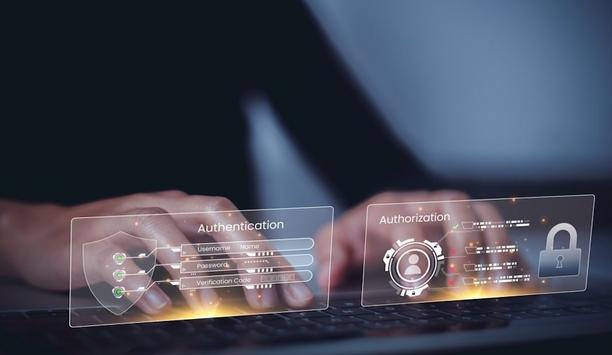
For years, physical security and cybersecurity evolved on parallel tracks. One team managed doors, badges and cameras, while the other handled network access, authentication and logical assets. The systems rarely shared information and, in many organisations, they still do not. That separation is becoming harder to defend now that employees move continuously between physical and logical environments throughout the workday. A single person may badge into a building, access cloud applications, re...
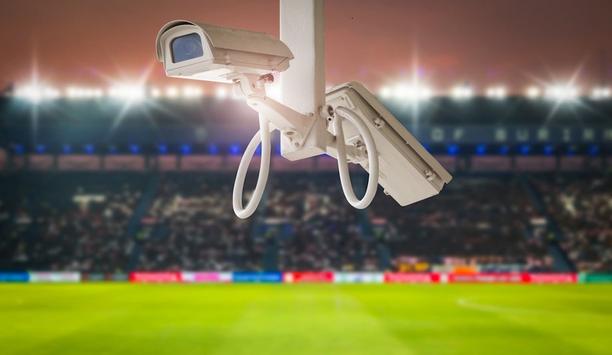
The FIFA World Cup is the ultimate celebration of “The Beautiful Game.” Every four years, we welcome this highly anticipated competition on the global stage, unifying nations and bringing people from all corners of the world together in the name of soccer. While the culmination of the World Cup’s unmatched energy creates electrifying moments on the soccer pitch, the underlying security and risk threats cannot be overlooked.World Cups are not just sporting events, they are tempo...

The physical security industry's entire value proposition is built on the idea that the right people get in and the wrong people stay out. It is somewhat ironic, then, that the industry itself has been fairly cavalier about who gets into a career inside it. I work in an industry that designs and deploys the systems that decide who enters a building, who carries a credential, and who is trusted with access. The technology has grown remarkably sophisticated with AI-based and biometric technologie...

Banking is built on change. The financial services landscape is evolving faster than ever, as mobile adoption, digital transactions, and customer expectations continue to accelerate. Success in this space now depends on more than keeping pace — it’s about anticipating what comes next and building the agility to move with it. At the same time, financial institutions face the dual challenge of transformation and trust. They must modernise operations, integrate emerging technologies, a...

Acquisitions are often billed as moments of bold opportunity. For senior executives and boards, these deals are about accelerating growth, unlocking synergies, and strengthening competitive advantage. But for the teams responsible for making operations run safely and smoothly — including physical security — acquisitions can feel like controlled chaos. Decisions happen without warning, details are opaque, and the ripple effects of choices made in the boardroom cascade down through ev...

As AI infrastructure concentrates into fewer, more powerful data centres, the most dangerous disruption method is no longer just hacking, but control, too. And the weakest link is often identity, authority, and operational access, not software vulnerabilities. All data centres have operational levers that can shut them down instantly, and none require sophisticated cyberattacks. Shut off the cooling, turn off the power, close down access, or misuse maintenance procedures, and you can shut down...

As a digital transformation continues to sweep across the industry, Daniel May of Consort Architectural Hardware examines the growing demand for Building Information Modelling (BIM) and how its use is influencing modern design projects. The future of construction is digital. What was once considered a gradual shift toward greater information management has now become a basic requirement for so many. From early-stage design through to compliance, maintenance and product lifecycle management, dig...
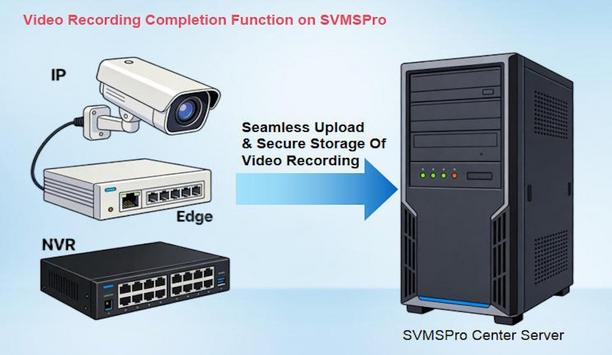
In mobile surveillance, remote sites, and environments with unstable networks, video recordings often suffer from "time gaps" due to network interruptions, a longstanding technical challenge for security systems. Under traditional architectures, central servers rely on real-time streams for storage. Once the network connection is lost, the recording timeline experiences an irrecoverable interruption, leading to the loss of footage of critical events. This creates a fundamental flaw in post-eve...

In today’s fast-evolving aviation landscape, innovation isn’t optional — it’s essential. With passenger traffic in the Asia-Pacific continuing to surge, the region is facing a pivotal moment: adapt with scalable tech, or fall behind. In January 2025 alone, APAC carriers accounted for 56.6% of global passenger traffic growth. Airports are operating at near capacity, with a record-high Passenger Load Factor (PLF) of 82.1%, leading to pronounced congestion at check-in count...

In today's rapidly evolving security landscape, facial recognition has become a buzzword that often triggers privacy and data protection concerns. However, many security professionals may not realise that "facial recognition" is an umbrella term encompassing various technologies, each with distinct applications and privacy implications. Let's dive into what these technologies really mean for security system resellers, integrators, and end-users. Facial recognition tech At its core, faci...
Access control solutions will continue their evolution in 2025 as organisations assess and adapt to dynamic and increasingly dangerous threats. Trends to watch include the growing adoption of mobile access credentials and digital IDs, and the integration of digital and physical security and other technologies. Other ongoing trends include the integration of AI into access control solutions and the increasing adoption of contactless biometrics for enhanced convenience. New access control...

The artificial intelligence revolution in physical security has arrived, transforming how we protect people, assets, and infrastructure. From smart buildings that automatically adjust access protocols based on real-time threat assessments to healthcare facilities using AI-enhanced video analytics for patient safety, these technologies are reshaping the industry landscape. But with this transformation comes a new era of regulatory oversight that security professionals must navigate carefully.&nb...

In today’s world, almost any electronic security system holds the potential to become a gateway for cybercriminals. With physical security and cybersecurity increasingly entwined, security professionals aren’t doing their job unless they take all possible precautions to lock down unauthorised access to camera systems, access control platforms, intercoms, and other network-based security devices and solutions. Let’s explore the many steps companies should take throughout their...

As urban populations grow and security challenges evolve, Californian cities have increasingly turned to advanced surveillance systems to enhance public safety. Surveillance infrastructure Between 2022 and 2024, these cities have made significant strides in upgrading their surveillance infrastructure, driven by concerns over crime, public safety, and the need for more sophisticated emergency response systems. This article explores how California's urban areas are improving surveillance techn...

As the backbone of community welfare, healthcare facilities cater to crucial public needs from emergency care to specialised medical treatments, and due to its position as a significant facet of the world's critical infrastructure, the healthcare sector faces a multitude of challenges in ensuring patient and visitor security, managing high traffic, and safeguarding sensitive data. Medical sites, such as large hospitals and urgent care clinics, see a wide variety of patients, medical staff, adm...

The European Union’s GDPR (General Data Protection Regulation) framework represents some of the toughest and most secure privacy laws in the world. Their creation signaled the EU’s dedication to individual privacy rights and generated new standards and requirements for an organisation inside or outside of the EU wanting to do business in the region. This privacy stance raises an interesting question: to what extent (if any) will France be utilising AI-assisted security and biometri...

With the rise of organised retail crime (ORC) making headlines, retailers are grappling with the dual challenge of safeguarding both their staff and store assets, while addressing the economic pressures that impact profitability and consumer demand. RFID technology The key lies in identifying effective solutions to counter the current surge in ORC, enabling retailers to secure their vulnerable staff and protect inventory for paying customers. Technology plays a crucial role in supportin...

As we head into a new year, it’s fair to say that it isn’t easy out there for the security integrator community. That’s understandable given the big ruptures felt in the market for physical security in 2023. Typically, Commercial Real Estate (CRE) landlords are the biggest and most influential buyers of physical security hardware and software, but this is starting to wane as heightened borrowing costs and biting inflation cause real estate valuations to plunge. Building secu...

The adoption of innovative and interconnected door hardware systems can help overcome the challenges associated with building security, explains Daniel May of Consort Architectural Hardware. The security of our built environment and the safety of its people is paramount throughout a building’s lifecycle. While these elements remain a primary focus at each touchpoint of a construction project, today’s design teams are sooner adopting modern access control systems to address this age-...

In the early stages of childhood education, kindergarten imparts foundational principles that shape future behaviour. Today, you can think about cloud computing in a similar manner: it has become a fundamental element in the architecture of modern technology. The cloud now plays a critical role in digital interaction, security, and infrastructure development. Far from being just another tool, the cloud is a cornerstone, providing essential support for the intricate network that supports today'...
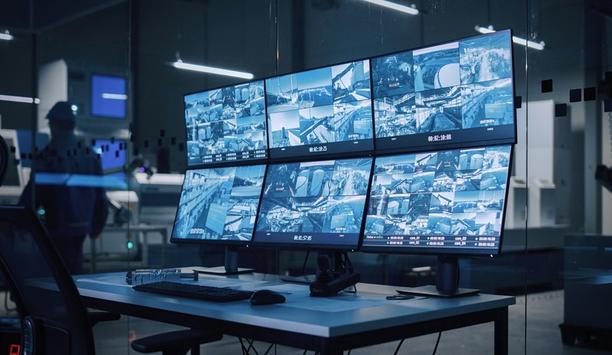
If you were to ask people outside our industry what door and access security entails, chances are their answers would reflect their common encounters with locks, security guards, cameras, and maybe metal detectors, badges, or automatic doors. But if they were curious enough, they’d probably be astounded to learn how extensive, intricate, and interesting the business can be and, of course, how vital it is to life safety, physical security, and cybersecurity. Integrated, inter...

It’s no secret that the data security sector is constantly changing. It has an annual CGR of about 12.3%. Future trends in data security Much of this has to do with the rise of cybercrime in recent years, with reports showing that cyberattacks happen as often as every 39 seconds. To combat the growing rate of cybercrime, data security has been on the rise. As we journey further into this era, it becomes evident that a spectrum of significant trends is molding the future of data se...

GSX 2023 marks a poignant moment for the security industry as an increasingly complex risk landscape converges with the acceleration of technology innovation. Emerging from this environment are three key trends that will dominate the conference and the future of the security industry: (i) the adoption of AI, (ii) the use of predictive analytics, and (iii) a hybrid global and local risk management approach. As Chief Security Officer of Crisis24, a GardaWorld company, I regularly advise cli...
Browse expert commentaries
Related videos


Find Lost Wallet with Dahua WizSeek

Dahua Traffic Signal Controller Highlight

Dahua DeepHub ST430 Highlight

Hikvision 4MP ColorVu 3.0 Fixed PT Network Camera

Dahua APOLLO 4G Solar Security System
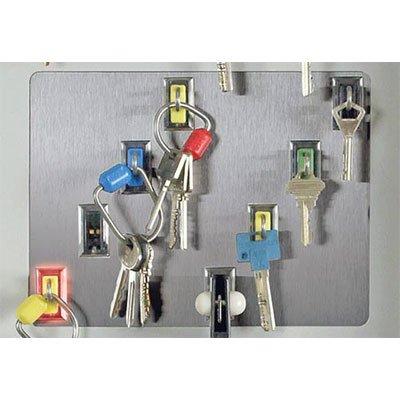
Morse Watchmans KeyWatcher Touch Key Control Modules

Security technologies promote real-time awareness in K-12 schools
Download
Technology's role in securing banks and financial institutions
Download
Integrated systems enable critical and compliant security for transportation
Download
Modernising physical access control
Download
Access. Intrusion. One estate.
Download
