Technology & Trends - Power supplies & batteries
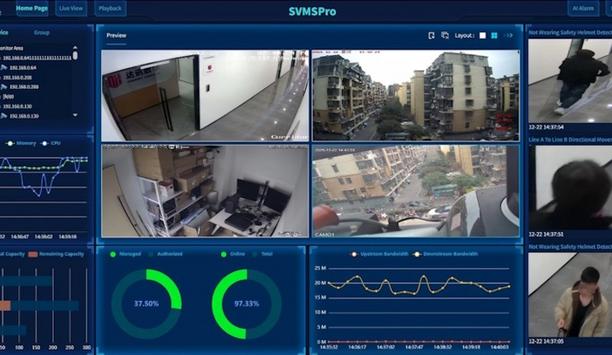
In the modern world of intelligent security, AI cameras and processing units (often called "AI boxes" or "AI servers") are transforming surveillance. They can detect specific behaviours — like someone entering a restricted area, loitering, or a vehicle parking illegally — and send immediate alerts. This represents a significant leap from older systems that merely recorded video for later review. However, a common challenge arises when organisations use devices from multiple manufact...

It took just seven minutes to steal more than $100 million in jewels from the Louvre, in an operation so swift and precise it exposed a deeper flaw in how even the most secure institutions protect what matters most. It's reignited global scrutiny of both physical and digital security, revealing how gaps in coordination can turn sophisticated systems into operational failures. Video intelligence and integrated monitoring Across museums, government facilities, and corporate campuses, vid...

A lot has been said about door security — from reinforced door frames to locking mechanisms to the door construction — all of which is crucial. But what security measures are in place beyond the perimeter door in case the worst happens and it’s somehow breached? Hopefully, many more levels of access control are in place to prevent, or at least slow down, a perpetrator’s ability to compromise protected assets. Additional interior layers Interior security measures must...

Artificial intelligence (AI) creates efficiencies throughout various industries, from managing teams to operating businesses. Key outcomes include faster investigations, fewer false alerts, automated operational checks, and quicker support experiences. These advancements free up valuable time for users, allowing them to focus on high-impact priorities that drive greater ROI. When it comes to surveillance, AI is most visibly powering a new generation of vision language-powered video analytics,...
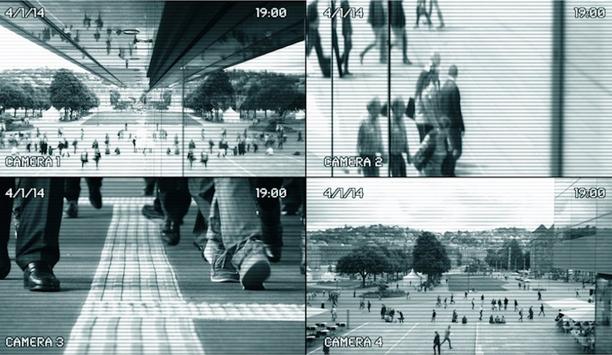
The terrorism threat in the UK is very real. In fact, since July 2019, the threat level has never dropped lower than “substantial” or “severe.” To ensure preparedness across public places and events, the UK government has introduced the new Terrorism (Protection of Premises) Act 2025, more commonly known as Martyn’s Law in memory of Martyn Hett, a victim of the 2017 Manchester Arena bombing. Overarching aim The new legislation requires operators of public spaces...
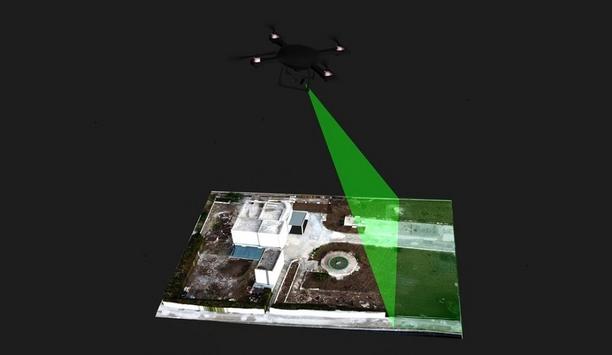
Seven minutes. That’s how long the recent Louvre heist took. In broad daylight, a group of thieves rode up on a construction platform, smashed display cases, stole several historical jewels tied to the Napoleonic dynasty and escaped on scooters before anyone in the control room even realised what was happening. It sounds like a scene straight out of “Mission: Impossible.” Only this time, Tom Cruise wasn’t there. In movies, we often see tight webs of red laser beams guard...

The healthcare infrastructure is ever evolving. Facilities are no longer single entities for one, they are sprawling ecosystems that serve a wide range of users, from medical staff and administrators to vulnerable patients, visitors and maintenance personnel. Safeguarding their safety and security, whilst providing seamless operation is a complex challenge - one frequently solved by access control. Use of access control Today’s security solutions play a central role in protecting peopl...

In today’s connected world, attacks are more likely to target digital than physical entry points. From ransomware and firmware tampering to remote hijacking, AI-driven phishing and automated vulnerability discovery, the nature of threats is evolving rapidly, and no industry can afford to neglect them. As our industry has moved from mainly mechanical to increasingly digital solutions, we have long recognised the importance of constantly monitoring and assessing the risks we face. This mean...

The sheer volume of smart locks, lock management systems, connected readers and an increasing array of Internet of Things (IoT) devices complicates the issuance and management of certificates that are foundational to establishing trust between a device and the credential used to access it. That’s why more companies are turning to PKIaaS for IoT devices. But there’s another reason to consider PKIaaS: the rise of quantum computing. Secure digital communications Gartner predict...

As the world’s security landscape grows ever more complex, the need for a dynamic, comprehensive, and globally minded gathering of thought pioneers and practitioners has never been more pronounced. Enter the Global Security Exchange (GSX) 2025, hosted by ASIS International, a signature event representing seven decades of commitment to advancing the security profession. This year marks a historic milestone, as GSX and ASIS International both celebrate 70 years of shaping the future of...

Where and how to store security camera footage usually depends on the scale of the video surveillance project, the way you are using to record the video and how long you want to keep the recordings. If there are only few IP cameras, say 2~3 IP cameras for example, and you don’t need to keep the recordings for the month, usually using SD card which is installed in the camera is enough. Video management software A VMS provides a unified platform to manage all cameras and record footage on...

Currently, in security surveillance, the application of intelligent analysis technology has two approaches: front-end intelligence and back-end intelligence. Front-end intelligence Front-end intelligence is typically implemented within the video surveillance camera itself, integrating AI edge algorithms into the camera. Its advantages include: acquiring video in real-time and performing video analysis and feedback results immediately. Benefits No consumption of network resources like bandw...

The global maritime surveillance market is projected to grow from $21.9 billion in 2023 to $ 42.7 billion by 2033. This growth is being driven by increasing global trade, maritime security concerns, and the adoption of advanced surveillance technologies such as radars, drones, and satellite monitoring systems. Moreover, the global shipping industry is now on the frontlines of a new kind of conflict — one defined by economic coerc...

Physical security isn’t a one-time project or a static system. It’s a dynamic, ongoing process and program that requires constant attention and management to remain effective. While the initial implementation of a security system — what we often call Day 1 — is critical, the ongoing maintenance, service, and adjustments made after systems are operational, or Day 2, are equally essential. Security program long-term Organisations that fail to focus on post-occupancy sec...

Gun violence remains one of the most unpredictable threats in today’s physical security landscape. When it strikes, seconds matter. The ability to detect and respond to gunfire almost instantaneously can determine outcomes. Security pioneers and first responders know this, and yet too many gunshot detection systems in operation today are shackled by outdated assumptions and aging architecture. The demand now is not for incremental improvements, but for a complete rethinking of how these...

The physical security industry has been in love with the cloud for quite some time. And understandably so. The promise of instant scalability, centralised access, and simplified maintenance is hard to ignore, especially in an era of remote work and distributed facilities. But reality is catching up to the hype. For many, especially those dealing with video surveillance at scale, the cloud is no longer the catch-all solution it once seemed. Rising costs, bandwidth limitations, and latency issue...

In the old days, hopping onto the platform from a not-yet-stopped train was a commonplace stunt for daily commuters in a hurry. It was a thrilling, but dangerous part of railway travel. Today, rail travel is generally much safer, but thrill and fame seekers are finding new, creative ways to use the railway to court notoriety online. Earlier this month, a young man filmed himself laying on the tracks and allowing a train to pass over him. In another instance, two people were seen misusing...

In the ever-evolving struggle between cyber offence and defence, attackers have almost always moved first. In the emerging domain of artificial intelligence, this pattern appears to be repeating itself. Yet, global cybersecurity pioneers appear disconcertingly disengaged. Just over half even agree that AI-driven attacks are set to become dramatically more complex and widespread. Equally concerning is the widespread apathy regarding AI’s role in expanding an already sprawling corporate att...

In 2021, New Orleans took bold steps to modernise its public safety strategy after experiencing a dramatic increase in criminal activity. The city invested $70M in advanced video security systems, placing smart cameras in high-risk areas like busy transit hubs and crowded public spaces to promote community safety. The cameras weren’t just traditional CCTV setups—they were smart security solutions equipped with real-time alerts that leverage AI-powered analytics, facial recogni...

Artificial Intelligence isn’t just a buzzword anymore. It has become part of our lives, and its uses and applications are growing every other day. Even the public sector, which usually is a late adopter of new technologies, has come onboard this new train. Law enforcement, in particular, has seen the advantages different AI technologies can offer to their work and has started to integrate them into their workflow and daily routines. But there is much more to come. Task automation: AI as...

March is Women in Security Month, a time dedicated to celebrating and promoting the contributions of women in the security field—particularly in cybersecurity. This observance aligns with Women’s History Month, providing an opportunity to reflect on the progress made and the work still needed to advance gender equity in security. Evolving role of women in security The security industry has witnessed a steady increase in women's participation. According to ISC2 Research in its &ld...

Technology advances in the security industry are transforming the way modern systems are designed and installed. Customers today are looking for greater scalability and flexibility, lower up-front costs, and operational efficiency. Cloud-based software as a service (SaaS) solutions, AI-enhanced tools, and IoT-enabled sensors and devices are increasingly in demand. The traditional role of the systems integrator is evolving as a result. While security integrators have always worked closely with e...

From where I sit in talking to security pioneers every day, the traditional Global Security Operations Centre (GSOC) stands at a critical inflection point. Security teams are up against challenges in staffing, operational efficiency, and more threat complexity, which means “thinking outside the box” is becoming critical. The use of artificial intelligence (AI) is emerging as more than a buzzword in these situations; it’s becoming a game-changing force multiplier in security o...

Access control solutions will continue their evolution in 2025 as organisations assess and adapt to dynamic and increasingly dangerous threats. Trends to watch include the growing adoption of mobile access credentials and digital IDs, and the integration of digital and physical security and other technologies. Other ongoing trends include the integration of AI into access control solutions and the increasing adoption of contactless biometrics for enhanced convenience. New access control...

In the past, security and IT teams operated independently, but today collaboration is critical. Modern security systems rely on various devices and systems that are linked to internal and external networks. Without IT involvement, physical security can become a weak point for cybersecurity. Although these groups have made headway in partnering up to ensure the successful implementation of new solutions, often there’s still a disconnect. Differing skills, priorities, and unique ways of th...

In today’s world, almost any electronic security system holds the potential to become a gateway for cybercriminals. With physical security and cybersecurity increasingly entwined, security professionals aren’t doing their job unless they take all possible precautions to lock down unauthorised access to camera systems, access control platforms, intercoms, and other network-based security devices and solutions. Let’s explore the many steps companies should take throughout their...

Digital access control has well-known benefits over traditional security, of course, but also costs attached to each stage of its lifetime. However, these costs are not fixed. Many factors – including building size, shape, type, location, national regulations and more – impact affordability and efficiency calculations. Crucially, the type of access solution a business selects – wired or wireless – impacts total operating costs, including during installation, running and...

As the backbone of community welfare, healthcare facilities cater to crucial public needs from emergency care to specialised medical treatments, and due to its position as a significant facet of the world's critical infrastructure, the healthcare sector faces a multitude of challenges in ensuring patient and visitor security, managing high traffic, and safeguarding sensitive data. Medical sites, such as large hospitals and urgent care clinics, see a wide variety of patients, medical staff, adm...

Rapid technological advancement, artificial intelligence (AI) and machine learning (ML) are revolutionising traditional on-premises video security systems. These next-level tools are not just enhancing video data capabilities; they're transforming how businesses approach security, operational efficiency, and information analysis. Video analytics have been a part of security systems for many years, but the arrival of deep learning in 2009 marked a turning point. By training neural networks, basi...

Security manufacturers throw around the term “scalable” a lot these days, but few dive into what scalable really means for modern organisations and their security programs. Achieving true scalability, or as I like to refer to as “expandable with a purpose,” takes planning and coordination from security pioneers alongside the broader organisation. Implementing a flexible strategy is critically important in the age of advancing analytics and intelligence-driven technology....
Browse expert commentaries
Related videos


Find Lost Wallet with Dahua WizSeek

Dahua Traffic Signal Controller Highlight

Dahua DeepHub ST430 Highlight

Hikvision 4MP ColorVu 3.0 Fixed PT Network Camera

Dahua APOLLO 4G Solar Security System
Morse Watchmans KeyWatcher Touch Key Control Modules

Technology's role in securing banks and financial institutions
Download
Security technologies promote real-time awareness in K-12 schools
Download
Integrated systems enable critical and compliant security for transportation
Download
Modernising physical access control
Download
Access. Intrusion. One estate.
Download
