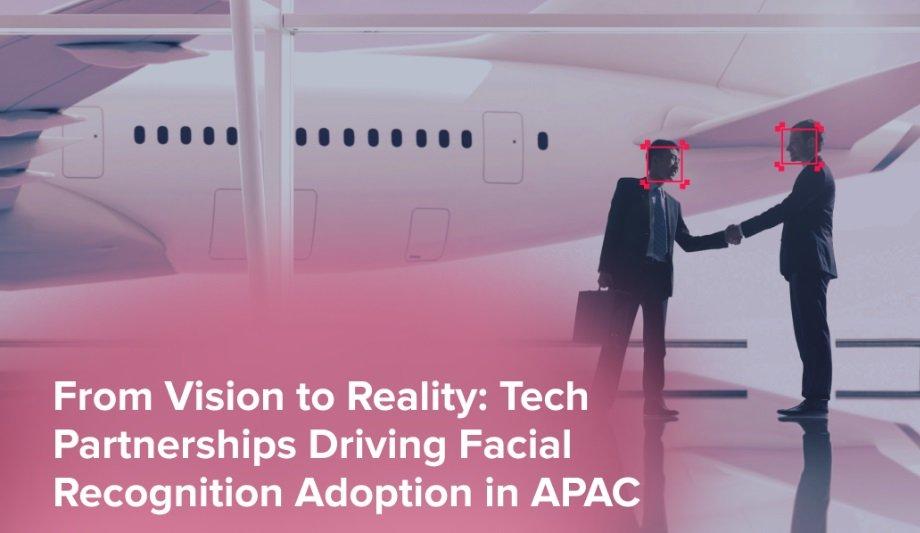


In today’s fast-evolving aviation landscape, innovation isn’t optional — it’s essential. With passenger traffic in the Asia-Pacific continuing to surge, the region is facing a pivotal moment: adapt with scalable tech, or fall behind.
In January 2025 alone, APAC carriers accounted for 56.6% of global passenger traffic growth. Airports are operating at near capacity, with a record-high Passenger Load Factor (PLF) of 82.1%, leading to pronounced congestion at check-in counters, security checkpoints, and boarding gates.
Increasing passenger volumes
As airports strive to manage increasing passenger volumes without resorting to costly and time-consuming infrastructure expansions, technology — particularly facial recognition and biometric automation — emerges as a viable solution.
However, the full realisation of these innovations requires more than just installing new system
However, the full realisation of these innovations requires more than just installing new systems. It’s about building the right ecosystem of partners, processes, and policies to ensure sustainable, secure, and scalable growth.
Presenting physical documents
According to their estimates, over 120 APAC airports have already deployed biometric solutions at key travel touchpoints, including check-in, bag drop, security, and boarding.
Thailand exemplifies this shift, with facial recognition deployed at six major airports — Suvarnabhumi, Don Mueang, Chiang Mai, Chiang Rai, Phuket, and Hat Yai — dramatically reducing passenger processing times. These systems allow travelers to verify their identities seamlessly at multiple touchpoints, from check-in and security screening to boarding gates, without presenting physical documents. This case reflects the Airports of Thailand’s (AOT) commitment to leveraging technology to improve operational efficiency and passenger experience.
Digital identity programs
Biometric solutions also extend beyond the airport: digital identity programs enable travelers to verify their identities before arriving at the terminal, creating seamless journeys from curb to gate.
In this environment, facial recognition is not merely a futuristic innovation; it has become an operational imperative. Airports that fail to adapt risk falling behind, unable to manage burgeoning passenger volumes or meet evolving traveller expectations.
True operational efficiency
Despite its transformative potential, biometric technology cannot be successfully deployed in isolation. Achieving true operational efficiency through facial recognition requires strategic collaboration among technology vendors, IT integrators, airports, airlines, and regulatory authorities.
Several pillars underpin a successful biometric implementation:
- Interoperability: Biometric systems must integrate seamlessly with a wide array of airline platforms, security protocols, and airport infrastructure. Lack of interoperability can lead to fragmented systems that frustrate staff and passengers alike.
- Scalability: Passenger volumes are forecasted to continue rising. Biometric solutions must be designed to scale rapidly in response to demand surges and future security challenges.
- Data Privacy and Security: With growing public scrutiny over personal data usage, airports must implement robust security frameworks that prioritise privacy and transparency. Encryption, consent-based use, and strict access controls are critical to gaining and retaining passenger trust.
Future security challenges
BKI can achieve significant throughput gains without major construction disruptions
A case study illustrates these points: Malaysia’s planned revamp of Kota Kinabalu International Airport (BKI) aims to boost capacity by 33% over the next few years. Rather than expanding physical infrastructure alone, authorities are exploring facial recognition solutions to increase efficiency within existing spaces. By integrating biometric checkpoints at key touchpoints, BKI can achieve significant throughput gains without major construction disruptions.
Such outcomes are only possible through well-coordinated technology partnerships, where vendors, airports, and integrators work toward a shared vision of future-ready travel.
AI-powered computer vision
What’s Next: Fully Biometric-Enabled Travel
Looking ahead, the pressure on APAC airports is set to intensify. Airports Council International projects 9.5 billion air travelers globally by the end of 2025, a volume traditional processing methods cannot manage effectively.
In response, AI-powered computer vision and facial recognition will continue to refine biometric processes, delivering higher accuracy rates and faster verification. Future systems will leverage real-time liveness detection, predictive analytics for crowd management, and seamless integrations across all travel stages.
A fully biometric-enabled journey is becoming reality:
- Check-in with a glance at a kiosk
- Drop bags without producing an ID or boarding pass
- Clear security with automated facial recognition portals
- Board flights through biometric-enabled gates — without ever presenting a physical document.
Experiencing significant growth
Seamless integration across touchpoints creates a unified, frictionless journey
In this vision of the future, identity becomes the ticket. Seamless integration across touchpoints creates a unified, frictionless journey.
For APAC airports experiencing significant growth, full biometric enablement is becoming increasingly important for maintaining efficiency and staying competitive. At the same time, such a future demands robust technology ecosystems, where ongoing innovation is supported by partnerships that align regulatory, operational, and technological goals.
Expanding physical infrastructure
Building the Smart Airports of Tomorrow: Join the Conversation
The aviation sector in APAC stands at a critical crossroads. Passenger growth, operational challenges, and heightened security requirements are converging, creating an urgent need for innovation.
Facial recognition and biometric automation offer a clear path forward, enabling airports to handle growing volumes, enhance security, and deliver superior passenger experiences without necessarily expanding physical infrastructure.
Facial recognition solutions
Yet, the success of these innovations hinges on strategic, trusted technology partnerships. Airports must collaborate with technology vendors, IT system integrators, airlines, and regulators to ensure interoperability, scalability, and data security.
At RecFaces, they believe the future of APAC airports is fully biometric-enabled. To explore how tech collaborations and advanced facial recognition solutions can transform airport operations, they invite users to join their free online panel discussion on April 30: ‘Smart Airports Start With Smart Tech: Facial Biometrics for APAC Airports.’