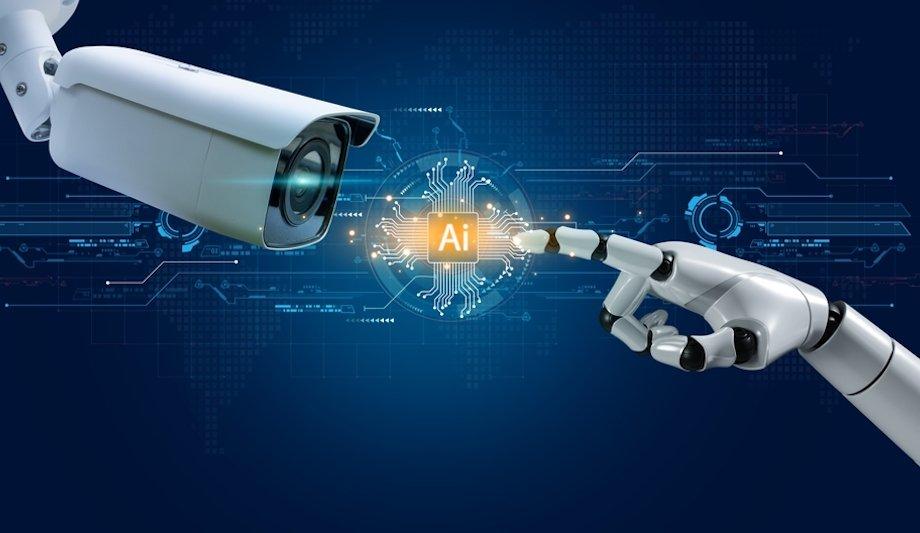


The biggest return on investment from an AI-enabled camera might have nothing to do with security. Organisations are increasingly discovering that the same cameras installed to protect people and property can also improve safety, streamline operations, automate routine workflows, and generate valuable business intelligence. Security remains the primary mission, but it is increasingly only the first customer for the intelligence these systems produce.
AI-enabled cameras are rapidly becoming distributed IoT sensors that continuously observe, interpret, and describe their surroundings. Instead of simply producing video, they generate rich metadata about people, vehicles, objects, movement, and activities. That information has value far beyond surveillance.
As organisations look for better ways to improve efficiency, reduce costs, enhance safety, and automate routine operations, they are discovering that the same camera installed to monitor a doorway or parking lot may also become one of the most valuable operational sensors on the network.
From video to metadata
For years, higher resolution dominated the conversation around video technology
For years, higher resolution dominated the conversation around video technology. More pixels promised better evidence and clearer images. While image quality remains important, AI has fundamentally changed where the real value lies.
Modern edge AI processes video directly inside the camera, identifying people, vehicles, objects, behaviours, and countless other attributes as events unfold. Instead of transmitting every frame for centralised analysis, the device generates lightweight metadata that describes what it sees. That metadata can be searched, filtered, shared, and consumed by other applications without requiring operators to review hours of video footage.
This fundamentally changes the role of the camera. Rather than acting as a passive recorder, it becomes an intelligent sensor that continuously feeds structured information into operational workflows. Once organisations begin thinking in terms of metadata instead of video, entirely new applications emerge.
Movement of critical equipment
The security department may have purchased the camera, but it is increasingly supporting decisions made by operations, facilities, safety, transportation, and executive leadership.
In healthcare, cameras can do far more than document incidents. AI applications can detect when someone has fallen, help staff locate misplaced wheelchairs, count ambulances arriving at emergency departments, or monitor the movement of critical equipment throughout a facility. These capabilities improve patient care while reducing the time staff spend searching for resources.
AI-enabled cameras
As an IoT sensor, the camera has become a shared resource across multiple departments
Logistics organisations are seeing similar benefits. AI-enabled cameras can monitor for compliance issues, automate gate operations using license plate recognition, validate vehicle movements, and track pallet or trailer activity throughout a distribution center. Security remains important, but the same infrastructure also improves throughput, reduces manual processes, and provides operational visibility across the facility.
Barnet Council in the United Kingdom initially modernised its video infrastructure to improve safety and security. Today, the same cameras generate people and vehicle counts that support planning decisions for parks, transportation, libraries, festivals, and other public spaces. Rather than serving only security personnel, the system supplies operational data that helps city planners make better infrastructure and investment decisions. As an IoT sensor, the camera has become a shared resource across multiple departments.
Metadata is only valuable when it drives action
Collecting more information just because it’s possible is not the objective. Organisations are already overwhelmed with data. The real opportunity lies in intelligent automation. The greatest operational value comes when AI-generated metadata automatically triggers meaningful workflows rather than simply identifying people or vehicles.
When a person enters a restricted area after hours, a PTZ camera can automatically focus on the activity while lighting activates to deter loitering. Security personnel receive alerts only if the individual remains in the area.
License plate recognition
AI handles repetitive operational tasks while people remain responsible for judgment and response
When a worker collapses inside a manufacturing facility, safety personnel are immediately notified while responders receive precise location information. At a logistics gate, license plate recognition can validate vehicle credentials, update operational systems, and document the transaction automatically.
In each example, AI handles repetitive operational tasks while people remain responsible for judgment and response. This transition from detection to intelligent automation may ultimately deliver greater value because it focuses on outcomes rather than observations.
The business case is getting stronger
Perhaps the most significant consequence of this evolution is organisational rather than technical. Historically, video projects were often justified solely through security budgets. Return on investment depended largely on reducing theft, improving investigations, or strengthening compliance.
Today, the value proposition reaches far beyond the security department. Facilities managers use camera data to understand occupancy and space utilisation, operations teams streamline workflows, safety officers monitor hazardous activities, transportation managers optimise vehicle movement, and executives gain measurable operational metrics that support planning and resource allocation. The same camera infrastructure can now deliver value to multiple departments, making investment decisions easier to justify while improving long-term utilisation of existing assets.
Open ecosystems will determine who benefits most
Metadata creates the greatest value when it flows freely between systems
As cameras become operational sensors, another requirement becomes increasingly important: openness.
Metadata creates the greatest value when it flows freely between systems. An AI-enabled camera may generate valuable operational information, but that information becomes significantly more useful when it integrates with video management systems, access control, public safety platforms, business intelligence software, facility management applications, or other third-party operational systems.
Organisations want the flexibility to add new AI applications as needs evolve without replacing existing hardware. Developers benefit from standardised platforms that allow applications to run consistently across different environments, while integrators need the freedom to build solutions that reflect each customer's unique operational requirements rather than forcing every deployment into the same proprietary framework. Open architectures make that possible.
Looking beyond security
AI is expanding the role of the camera far beyond traditional security. Organisations are increasingly treating AI-enabled cameras as operational infrastructure that improves safety, streamlines workflows, and supports better decision-making across the enterprise.
Every day, AI-enabled cameras observe facilities, generate metadata, automate workflows, and provide actionable information that helps organisations make faster, better decisions. Security remains the foundation, but the same intelligence now supports business operations, public safety, healthcare, logistics, transportation, and smart city initiatives.
Organisations that recognise this shift early will find that one of the richest sources of operational intelligence is already installed throughout their facilities. They simply need to start thinking beyond security.