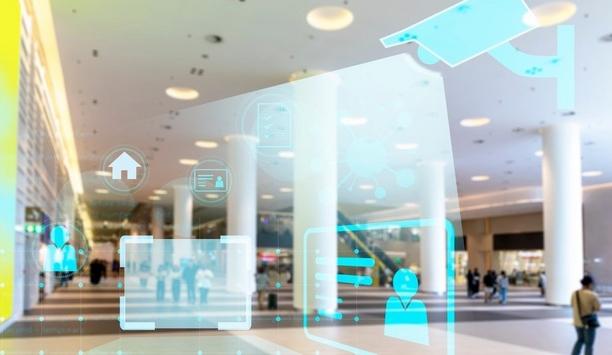
The basic need for public safety is one of the biggest forces driving the adoption of smart city solutions: approaches that seek to solve urban challenges through technological means. The thinking behind these initiatives is that with enough internet connectivity and real-time data, surely environmental, social, economic, and public health issues should become more manageable. However, just adding more technology is not the whole answer.
Although technology is necessary for an urban area to transition in to a safe and smart city, technology alone isn’t sufficient. Truly smart cities are savvy cities and that includes how they employ software, sensing, communications and other technologies to meet their needs.
Cities need solutions that help find what you need and convert the ‘too much information’ into ‘actionable intelligence’
Some of those initiatives, however, like red light cameras or computerised flight passenger screening systems, have amounted to little more than ‘security theater’, which might waste limited resources and further delay the smart city transition due to over-hyped solutions and unrealistic projected return on investment. In other words, technology doesn’t necessarily result in more safety.
But does this mean we are also more likely to quickly find what we need? Cities need solutions that help find what you need (e.g. a missing child or a suspect) and convert the ‘too much information’ into ‘actionable intelligence’.
Thank you for submitting your information.
× Better connectivity promotes safety
There is a growing shift towards younger generations wanting to live in the city where they have access to public transportation, restaurants and entertainment. They also expect to live in a safer environment, and this is where the smart city approach comes into play with the introduction of WiFi in parks and public spaces, along with surveillance systems. These two solutions and services can now sit on the same network, thanks to better connectivity options and interference free solutions, such as mmWave wireless radios.
 |
| Younger generations expect to live in a safer environment, and this is where the smart city approach comes into play with the introduction of WiFi in parks and public spaces, along with surveillance systems |
For example, Siklu Inc., a provider of mmWave wireless solutions, announces Smart City deployments based on Siklu’s broad E-band and V-band product portfolio previously reached, and now have likely surpassed, a milestone of 100 cities installed. Smart Cities, which were initially defined as municipalities connecting low data rate sensors for water, gas and more, have been evolving to demand high-capacity connectivity at gigabit-per-second speed. This high-bandwidth network infrastructure is needed to support new applications such as video security, public Wi-Fi backhaul, and private city network deployments.
Linking AI and smart cities
Dubai is an example of how artificial intelligence and smart city projects have become intrinsically linked. Under the leadership of His Highness Sheikh Mohammed bin Rashid al Maktoum, authorities in Dubai have set out to “make Dubai the happiest city on Earth” by adopting cutting-edge smart city initiatives.
Dubai Police has launched a range of public safety initiatives including Smart Police iOS apps, traffic accident and location systems, and SOS apps for wearable devices. Dubai Police shows how artificial intelligence can power new Robocop prototypes – unarmed, life-sized patrolling robots carrying facial recognition software and automatic license plate recognition (ALPR).
 |
| Authorities in Dubai have set out to “make Dubai the happiest city on Earth” by adopting cutting-edge smart city initiatives |
NVIDIA’s Metropolis™ intelligent video analytics platform is paving the way for the creation of AI cities. Metropolis Deep Learning makes cities safer and smarter by applying deep learning to video streams for applications such as public safety, traffic management and resource optimisation. More than 50 NVIDIA AI city partner companies are already providing products and applications that use deep learning on GPUs.
“Deep learning is enabling powerful intelligent video analytics that turn anonymised video into real-time valuable insights, enhancing safety and improving lives,” said Deepu Talla, vice president and general manager of the Tegra business at NVIDIA. “The NVIDIA Metropolis platform enables customers to put AI behind every video stream to create smarter cities.”
Smarter access control in cities
Advanced software suites can provide access to all operations performed by users
A smart city is one that uses information and communication technologies to increase operational efficiency, share information with the public and improve both the quality of government services and resident welfare. Smart access control is an important step forward in providing technologically advanced security management and access solutions to support the ambitions of smart cities and their respectively smart industries.
With high volumes of people entering and exiting different areas of the city, it is important to be able to trace who has been where, when and for how long. Advanced software suites can provide access to all operations performed by users, including a complete audit trail. This information is often used by business owners or managers for audits, improvements or compliance.
Read parts two and three of our Smart Cities miniseries.