Security monitoring system - Round table discussions

Any marketplace tends to emphasise the newest technologies and products. Confirming the trend is the perpetual rush to buy the latest iPhone. But some legacy products are so good and perform the required functions so well that users may stick with the “tried-and-true.” But does staying with yesterday’s technology suggest a missed opportunity to leverage new product features and benefits? We asked this week’s Expert Panel Roundtable: What is the security market’s app...

It’s a debate almost as old as the security industry itself: open systems versus end-to-end solutions. The argument goes that end-to-end solutions from a single manufacturer tend to “lock in” an end-user to a certain company’s technology platform. In contrast, open systems offer greater flexibility over the long haul. However, the popularity of end-to-end solutions suggests a healthy continuing market for these systems. We asked this week’s Expert Panel Roundtable:...

The advantages of security systems as forensic and investigative tools are well understood and demonstrated in the market. However, the new trend is toward systems that are useful in real-time and that even predict a security event, before it happens. We asked this week’s Expert Panel Roundtable: Which security systems are becoming more proactive than reactive?

Can we finally relax a little and announce that the pandemic is nearing an end? With all the false starts and stops, it’s understandable if uncertainty continues to be the dominant force. The apprehension that ruled at every stage continues even as the pandemic (hopefully) ends. But what about ‘the new normal?’ How will the industry need to reinvent itself in the post-pandemic world? We asked this week’s Expert Panel Roundtable: As the industry transitions back to in-pers...

The last regularly scheduled spring ISC West trade show was held in 2019. The show returned last year with a rescheduled event in the summer, and attendees were largely pleased with the offerings. However, the ‘real’ ISC West, in the spring in Las Vegas, Nevada, will resume a decades-old tradition in 2022 that has been a major driver of industry market growth and innovation. The show is also an annual reunion of sorts for the security industry, and we are all ready for a reunion! We...

Early in the pandemic, before the mechanisms of COVID spread were clearly understood, there was talk about the disease being transmitted through contact with surfaces. Such concerns created a windfall for manufacturers of hand sanitizer, and broadly changed the perceived risks of touching surfaces, perhaps forever. Touching the same surface as hundreds of other people suddenly became less desirable, thus boosting the fortunes of “touchless” access control and security devices. But wi...

As security professionals, one of our goals is a continuous improvement when it comes to protecting people, facilities, and assets. A useful tool for continuous improvement is to apply ‘lessons learned’ in the past to challenges in the future. Because 2021 will be remembered as a challenging and eventful year for all of us, let’s consider what we can learn from the experiences of 2021. We asked this week’s Expert Panel Roundtable: What security lessons did we learn during...

The intersection of consumer electronics and the physical security marketplace is a fertile sector for growth and innovation. Consumers increasingly have the same high expectations for the operation of their workplace technologies as they are accustomed to in the digital world at large. We asked this week’s Expert Panel Roundtable: How do developments in personal electronics impact customer expectations in the physical security market?

Sadly, active shooter incidents have become so common that they no longer grab big headlines or dominate the news cycle. A near-constant cascade of active shooter events persists in the background of our collective consciousness, a familiar drumbeat that is no less tragic because it is continuous. As more active shooter incidents occur, the security marketplace continues to implement solutions to minimise the impact, including gunshot detection. We asked this week's Expert Panel Roundtable: What...

Air travel is returning to pre-pandemic levels. COVID and its aftermath have added new compliance and operational concerns for airport security, and social and political volatility around the world emphasises the need for constant vigilance. A range of new technologies are enhancing airport security, not to mention providing new tools to simplify processes throughout the airport. We asked our Expert Panel Roundtable: Which technologies are transforming airport security?

“Deep learning” is recently among the more prevalent jargon in the physical security industry, and for good reason. The potential benefits of this subset of artificial intelligence (AI) are vast, and those benefits are only now beginning to be understood and realised. But how can we separate the marketing hype from reality? How can we differentiate between future potential and the current state of the art? To clarify the latest on this new technology, we asked this week’s Exper...

Crime prevention is a basic goal of security, even if a security system merely convinces a criminal to seek out a different target. However, many of today’s security technologies are most useful after the fact, to provide forensic information about a crime that has already taken place. Solving a crime presents a whole new level of challenge. Surely, prevention is the best approach. We asked this week’s Expert Panel Roundtable: How successful is the security industry in crime preventi...

Artificial intelligence (AI) is simultaneously an emerging technology, a common term in popular culture, and a buzzword in the security industry. But these aspects of the term can lead to misunderstanding in the marketplace. AI technology is continuing to emerge, but what is the reality today? How do depictions of AI in popular culture impact how it is understood in the real world of security? As a buzzword, at what point does marketing hype garble our understanding of reality? We asked this wee...

Many of us take critical infrastructure for granted in our everyday lives. We turn on a tap, flip a switch, push a button, and water, light, and heat are all readily available. But it is important to remember that computerised systems manage critical infrastructure facilities, making them vulnerable to cyber-attacks. The recent ransomware attack on the Colonial Pipeline is an example of the new types of threats. In addition, any number of physical attacks is also possibilities. We asked this we...

There is a broad appeal to the idea of using a smartphone or wearable device as a credential for physical access control systems. Smartphones already perform a range of tasks that extend beyond making a phone call. Shouldn’t opening the door at a workplace be among them? It’s a simple idea, but there are obstacles for the industry to get there from here. We asked this week’s Expert Panel Roundtable: What are the challenges and benefits of mobile access control solutions?

In-person training sessions were mostly canceled during the worst of the COVID-19 pandemic. However, the need for training continued, and in some cases increased, as the security industry sought to adapt to the changing business climate of a global emergency. So how well did we as an industry adjust? We asked this week’s Expert Panel Roundtable: How has security industry training changed in the last year?

In the past few weeks, the light at the end of the COVID-19 tunnel has brightened, providing new levels of hope that the worst of the pandemic is behind us. Dare we now consider what life will be like after the pandemic is over? Considering the possible impact on our industry, we asked this week’s Expert Panel Roundtable: Which security technologies will be most useful in a post-pandemic world?

We are several weeks into 2021, and it is already shaping up to be an eventful year. The happenings and trends from 2020 will likely carry over into the new year, but in a fast-moving industry such as ours, there will also be additional trends to watch. Looking toward the year ahead, we asked this week’s Expert Panel Roundtable: What will be the biggest security trends in 2021?

Artificial intelligence is on the verge of changing the face of multiple industries – from healthcare to entertainment to finance, from data security to manufacturing to the cars we drive (or that will drive themselves!) In the physical security market, AI has garnered a lot of attention as a buzzword and as a harbinger of things to come. We asked this week's Expert Panel Roundtable: What security markets are most likely to embrace artificial intelligence (AI)?

There will be more artificial intelligence, more machine learning, video systems with more capabilities, and all of it will add greater value to our solutions. Those are among the expectations of our Expert Panel Roundtable as they collectively look ahead to the remainder of 2019. One unexpected prediction is that AI will not prove to be a game changer – at least not yet. We asked this week’s Expert Panel Roundtable: What will be the biggest surprise for security in the second half o...

The ability to treat patients in a secure environment is a base requirement of hospitals and other healthcare facilities. Whether facilities are large or small, security challenges abound, including perimeter security, access control of sensitive areas, video surveillance, and even a long list of cyber-risks. We asked this week’s Expert Panel Roundtable: What are the security challenges of hospitals and the healthcare industry?

Technology advancements often come with new terms and definitions. The language of our marketplace evolves to include new words that describe innovations in the industry. In the skilled hands of marketers, terms intended to be descriptive can also take a new element of ‘buzz,’ often presaging exciting developments that will drive the future. We asked this week’s Expert Panel Roundtable: What new buzzword have you heard, and what does it mean for the industry?

Video cameras are everywhere, and hundreds more are installed every day. Our society appears to be reaching a point of perpetual surveillance. It certainly feels as if we are always being watched even though it is not yet the case. But as cameras are becoming more common than ever, we are also entering a new era of privacy concerns and sensitivities, as evidenced by GDPR and other such initiatives. We presented this quandary to this week’s Expert Panel Roundtable: Surveillance cameras can...

Hospitality businesses work to provide a safe and pleasant customer experience for their guests. Hotels offer a “home away from home” for millions of guests every day around the world. These are businesses of many sizes and types, providing services ranging from luxury accommodations to simple lodging for business travelers to family vacation experiences. Hospitality businesses also include restaurants, bars, movie theaters and other venues. Security needs are varied and require tech...

Products are the building blocks of systems and solutions. How those products are combined, and where the integration happens, is a variable in the physical security market. Before the advent of open systems, a single manufacturer typically combined his own products, using proprietary connections, into end-to-end solutions for customers. Open systems undermined that paradigm to some degree and made it possible for customers to pick and choose products from multiple manufacturers to be integrated...
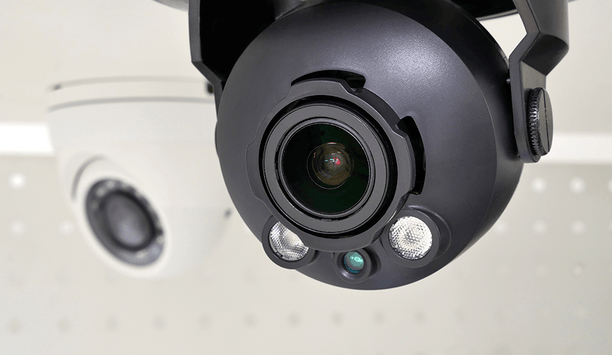
Higher pixel count is better. It’s a basic tenet of the video surveillance market, or at least it is the implication as manufacturers continue to tout their latest products offering ever-higher pixel counts. But the reality is more nuanced, as our Expert Panel Roundtable panelists explain this week. Pixel count shouldn’t be seen as an end unto itself, but rather as a factor in determining what camera is applicable to which application. Pixel count is just one factor of several to con...

An eruption of violence at a church in Charleston, S.C., this June has increased awareness of the potential for such incidents at our houses of worship. On June 17 at Emanuel African Methodist Episcopal (AME) Church in downtown Charleston, a 21-year-old attacker wielding a Glock 41 .45-caliber handgun took the lives of nine people. But it was far from the first security breach at a house of worship. In fact, since 1999, more than 500 people have died a violent death on church or faith-based prop...

We asked this week’s Expert Panel: What are the limitations on where video cameras can be placed because of privacy? With hundreds of new cameras installed every day, the likelihood increases exponentially that a camera will be placed in a location where it violates privacy. In fact, threats to privacy are often among the largest objections when video surveillance is proposed, whether in a public area or in the workplace. Allaying fears about undermining privacy is a basic requirement to m...

Salesmen may face pressure to “seal the deal,” but might an overemphasis on the ABCs of selling (“always be closing”) actually work to the detriment of an unsuspecting customer coerced into buying too much (or the wrong) technology to meet his or her needs? Not likely, according to our Expert Panel, who this week address the topic of salesmanship in the security market. We asked: Can an end user trust a security salesman’s advice? Our responses are overwhelmingly in...

For many years, generally speaking, the use of video surveillance has been seen as an extension of an end user customer’s security system. However, recently, we have also heard about how video can help customers more generally, providing benefits that extend beyond security and encompass better operations and management. Easier economic justification is one important aspect of looking more broadly at the benefits of video surveillance to the enterprise as a whole. Better return on investme...

Security technologies promote real-time awareness in K-12 schools
Download
Technology's role in securing banks and financial institutions
Download
Integrated systems enable critical and compliant security for transportation
Download
Modernising physical access control
Download
Access. Intrusion. One estate.
Download
