Security communication - Round table discussions

The Internet of Things (IoT) is driving innovation in the security marketplace, just as it is in almost every other market. IoT devices, also known as ‘edge devices’, provide sensing, processing ability, software, and other technologies to connect and exchange data. The most common edge devices in the world of IP security are video cameras, which are becoming more intelligent and capable of processing the data they collect. We asked this week’s Expert Panel Roundtable: How are...

It’s safe to say there has been more change in the workplace in the last two years than ever before. Driven by the pandemic, technology has both allowed greater flexibility for employees and enabled continuing prosperity for many companies that otherwise would have had to cease operation. But have security protocols and practices done enough to enable companies to keep pace with the changes? We asked this week’s Expert Panel Roundtable: Have security protocols and practices kept up w...

Any marketplace tends to emphasise the newest technologies and products. Confirming the trend is the perpetual rush to buy the latest iPhone. But some legacy products are so good and perform the required functions so well that users may stick with the “tried-and-true.” But does staying with yesterday’s technology suggest a missed opportunity to leverage new product features and benefits? We asked this week’s Expert Panel Roundtable: What is the security market’s app...

The advantages of security systems as forensic and investigative tools are well understood and demonstrated in the market. However, the new trend is toward systems that are useful in real-time and that even predict a security event, before it happens. We asked this week’s Expert Panel Roundtable: Which security systems are becoming more proactive than reactive?

Early in the pandemic, before the mechanisms of COVID spread were clearly understood, there was talk about the disease being transmitted through contact with surfaces. Such concerns created a windfall for manufacturers of hand sanitizer, and broadly changed the perceived risks of touching surfaces, perhaps forever. Touching the same surface as hundreds of other people suddenly became less desirable, thus boosting the fortunes of “touchless” access control and security devices. But wi...

Supply chain issues have plagued the economic recovery during and after the COVID-19 pandemic, and the problems show every indication of persisting for months or even years to come. Supply chain challenges have impacted the security marketplace in many ways, reflecting the breadth and variety of products needed to secure people, facilities, and assets. Wondering about the specifics of that impact, we asked this week’s Expert Panel Roundtable: How does disruption of the global supply chain...

Environmental concerns and ‘green’ initiatives have been gaining steam recently with increasing attention to issues, such as climate change and the drive to ‘net zero’ emissions. Sustainability has not historically been a big concern in the physical security market, but the times are changing. We asked this week’s Expert Panel Roundtable: How can the security industry be more environmentally friendly and contribute to sustainability?

The intersection of consumer electronics and the physical security marketplace is a fertile sector for growth and innovation. Consumers increasingly have the same high expectations for the operation of their workplace technologies as they are accustomed to in the digital world at large. We asked this week’s Expert Panel Roundtable: How do developments in personal electronics impact customer expectations in the physical security market?

Sadly, active shooter incidents have become so common that they no longer grab big headlines or dominate the news cycle. A near-constant cascade of active shooter events persists in the background of our collective consciousness, a familiar drumbeat that is no less tragic because it is continuous. As more active shooter incidents occur, the security marketplace continues to implement solutions to minimise the impact, including gunshot detection. We asked this week's Expert Panel Roundtable: What...

Diversity in a company’s workforce is arguably more important now than ever. Societal awareness of the importance of diversity has grown, and many people see diversity as an important factor that reflects positively (or negatively) on a company’s culture and image in the marketplace. We asked this week’s Expert Panel Roundtable: What should the security industry do to promote workplace diversity?

The death of Michael Brown at the hands of police in Ferguson, Missouri, in August 2014, highlighted to the public, the importance of body-worn cameras. There was no bodycam footage of the Ferguson tragedy. Arguably, it would have shed additional light on the shooting. Since then, body cameras have become a tangible legacy of Ferguson, Missouri. Bodycam footage is seen as providing greater accountability and ensuring an impartial record that can support, or debunk, any claims of police miscondu...

Air travel is returning to pre-pandemic levels. COVID and its aftermath have added new compliance and operational concerns for airport security, and social and political volatility around the world emphasises the need for constant vigilance. A range of new technologies are enhancing airport security, not to mention providing new tools to simplify processes throughout the airport. We asked our Expert Panel Roundtable: Which technologies are transforming airport security?

A new generation of security professional is waiting in the wings. They will be faced with unprecedented challenges, as they seek to transform the security marketplace to the ‘next level’. Technology changes ensure the market will be very different 10 years from now and the fresh labour pool will need to be able to meet the host of new challenges. We asked our Expert Panel Roundtable: What exciting career opportunities in the security industry await the next generation?

Residential security and smart homes are rapidly changing facets of the larger physical security marketplace, driven by advances in consumer technology and concerns about rising crime rates. During the COVID-19 pandemic, many people spent more time at home and became more aware of the need for greater security. As workplaces opened back up, returning workers turned to technology to help them keep watch over their homes from afar. We asked this week’s Expert Panel Roundtable: What are the...

Since the advent of the physical security industry, access control has been synonymous with physical cards, whether 125 kHz ‘prox’ cards or the newer smart card alternatives. However, other credentials have also come on the scene, including biometrics and even smart phones. Some of these choices have distinct cost and security advantages over physical cards. We asked this week’s Expert Panel Roundtable: How soon will the access control card become extinct and why?

Cost is a reality to be managed. No matter how powerful or desirable a technology may be to a customer, the sale often comes down to the basic question: Can I afford it? And affordability extends not just to the purchase price, but to the cost of technology over its lifespan. In addition to advances in technology capabilities, the security industry has also achieved inroads to make its offerings more worth the cost. We asked this week’s Expert Panel Roundtable: What is the physical securi...

The idea of touchless systems has gained new levels of prominence during the last year, driven by the global COVID-19 pandemic. Contactless systems have been part of the industry’s toolbox for decades, while technologies like facial and iris recognition are finding new uses every day. We asked this week’s Expert Panel Roundtable: Which security markets are embracing touchless, contactless systems and why?

Adoption of General Data Protection Regulation (GDPR) by the European Union in 2016 set a new standard for data privacy. But adherence to GDPR is only one element, among many privacy concerns sweeping the global security community and leaving almost no product category untouched, from access control to video to biometrics. Because privacy concerns are more prevalent than ever, we asked this week’s Expert Panel Roundtable: What is the impact on the physical security market?

Many of us take critical infrastructure for granted in our everyday lives. We turn on a tap, flip a switch, push a button, and water, light, and heat are all readily available. But it is important to remember that computerised systems manage critical infrastructure facilities, making them vulnerable to cyber-attacks. The recent ransomware attack on the Colonial Pipeline is an example of the new types of threats. In addition, any number of physical attacks is also possibilities. We asked this we...
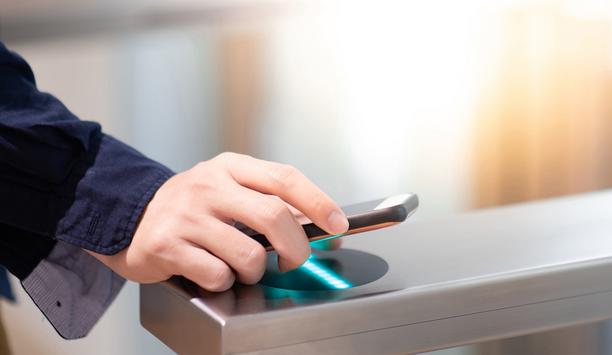
There is a broad appeal to the idea of using a smartphone or wearable device as a credential for physical access control systems. Smartphones already perform a range of tasks that extend beyond making a phone call. Shouldn’t opening the door at a workplace be among them? It’s a simple idea, but there are obstacles for the industry to get there from here. We asked this week’s Expert Panel Roundtable: What are the challenges and benefits of mobile access control solutions?

Perimeter security is the first line of defence against intruders entering a business or premises. Traditionally associated with low-tech options such as fencing, the field of perimeter security has expanded in recent years and now encompasses a range of high-tech options. We asked this week’s Expert Panel Roundtable: What are the latest trends in perimeter security technology?

When technology performs a required task effectively, there is little reason to upgrade to the ‘next big thing’. In this regard, the physical security market is notoriously slow to change. Much of yesterday’s most robust and dependable equipment is still in place at thousands of customer sites, still performing as well as the day it was installed. However, there comes a point when any technology becomes outdated. We asked this week’s Expert Panel Roundtable: Which securi...

It has been two years or so since the last ISC West trade show, the biggest security show in the U.S. market. The coronavirus pandemic has caused a year’s worth of trade show cancellations, and the trend will continue for a while longer. The absence of trade shows has been transformative for the security marketplace, among others, as companies implemented a variety of alternative approaches, with mixed results. We asked this week’s Expert Panel Roundtable: What impact has the cancel...

Security technology has been a vibrant and successful market for decades now, but sometimes the public is not aware of those successes. Awareness in some cases is limited because security technologies work ‘behind the scenes’ to keep everyone safe. In other cases, the industry may be seen in a negative light, based on misinformation about topics such as surveillance and privacy. How can we get the word out about our industry’s successes? We asked this week’s Expert Panel...

The emergence of smart cities provides real-world evidence of the vast capabilities of the Internet of Things (IoT). Urban areas today can deploy a variety of IoT sensors to collect data that is then analysed to provide insights to drive better decision-making and ultimately to make modern cities more livable. Safety and security are an important aspect of smart cities, and the capabilities that drive smarter cities also enable technologies that make them safer. We asked this week’s Expert...

Ten years is a long time, but it seems to pass in an instant in the world of security. In terms of technology, 2010 is ages ago. Changes in the market have been transformative during that decade, and we called on our Expert Panel Roundtable to highlight some of those changes. We asked this week’s panelists: What was the biggest change in the security industry in the 2010-2019 decade?

In the digital age, software is a component of almost all systems, including those that drive the physical security market. A trend toward hardware commoditisation is making the role of software even more central to providing value to security solutions. Software developments make more things possible and drive innovation in the market. We asked this week's Expert Panel Roundtable: How do software improvements drive physical security?

The ability to treat patients in a secure environment is a base requirement of hospitals and other healthcare facilities. Whether facilities are large or small, security challenges abound, including perimeter security, access control of sensitive areas, video surveillance, and even a long list of cyber-risks. We asked this week’s Expert Panel Roundtable: What are the security challenges of hospitals and the healthcare industry?

The definition of a standard is “an authoritative principle or rule that usually implies a model or pattern for guidance, by comparison with which the quantity, excellence, correctness, etc., of other things may be determined.” In technology markets, such as physical security, standards are agreed-upon language, specifications or processes that are used across the board by multiple stakeholders to enable easier interconnectivity and smoother operation of systems. We asked this week&r...

Statistically speaking, incidents of terrorism are unlikely to impact most businesses and institutions. However, the mere possibility of worst-case-scenario attacks is enough to keep security professionals awake at night. Compounding the collective anxiety is the minute-by-minute media coverage when an attack does occur. The immediacy of the shared experience of global tragedy impacts us all – including security system decision-makers. We asked this week’s Expert Panel Roundtable: Ho...

Technology's role in securing banks and financial institutions
Download
Security technologies promote real-time awareness in K-12 schools
Download
Integrated systems enable critical and compliant security for transportation
Download
Modernising physical access control
Download
Access. Intrusion. One estate.
Download
