Building security - Round table discussions

A new generation of security professional is waiting in the wings. They will be faced with unprecedented challenges, as they seek to transform the security marketplace to the ‘next level’. Technology changes ensure the market will be very different 10 years from now and the fresh labour pool will need to be able to meet the host of new challenges. We asked our Expert Panel Roundtable: What exciting career opportunities in the security industry await the next generation?

Residential security and smart homes are rapidly changing facets of the larger physical security marketplace, driven by advances in consumer technology and concerns about rising crime rates. During the COVID-19 pandemic, many people spent more time at home and became more aware of the need for greater security. As workplaces opened back up, returning workers turned to technology to help them keep watch over their homes from afar. We asked this week’s Expert Panel Roundtable: What are the...

Since the advent of the physical security industry, access control has been synonymous with physical cards, whether 125 kHz ‘prox’ cards or the newer smart card alternatives. However, other credentials have also come on the scene, including biometrics and even smart phones. Some of these choices have distinct cost and security advantages over physical cards. We asked this week’s Expert Panel Roundtable: How soon will the access control card become extinct and why?

Cost is a reality to be managed. No matter how powerful or desirable a technology may be to a customer, the sale often comes down to the basic question: Can I afford it? And affordability extends not just to the purchase price, but to the cost of technology over its lifespan. In addition to advances in technology capabilities, the security industry has also achieved inroads to make its offerings more worth the cost. We asked this week’s Expert Panel Roundtable: What is the physical securi...

“Deep learning” is recently among the more prevalent jargon in the physical security industry, and for good reason. The potential benefits of this subset of artificial intelligence (AI) are vast, and those benefits are only now beginning to be understood and realised. But how can we separate the marketing hype from reality? How can we differentiate between future potential and the current state of the art? To clarify the latest on this new technology, we asked this week’s Exper...

The idea of touchless systems has gained new levels of prominence during the last year, driven by the global COVID-19 pandemic. Contactless systems have been part of the industry’s toolbox for decades, while technologies like facial and iris recognition are finding new uses every day. We asked this week’s Expert Panel Roundtable: Which security markets are embracing touchless, contactless systems and why?

Adoption of General Data Protection Regulation (GDPR) by the European Union in 2016 set a new standard for data privacy. But adherence to GDPR is only one element, among many privacy concerns sweeping the global security community and leaving almost no product category untouched, from access control to video to biometrics. Because privacy concerns are more prevalent than ever, we asked this week’s Expert Panel Roundtable: What is the impact on the physical security market?

Many of us take critical infrastructure for granted in our everyday lives. We turn on a tap, flip a switch, push a button, and water, light, and heat are all readily available. But it is important to remember that computerised systems manage critical infrastructure facilities, making them vulnerable to cyber-attacks. The recent ransomware attack on the Colonial Pipeline is an example of the new types of threats. In addition, any number of physical attacks is also possibilities. We asked this we...
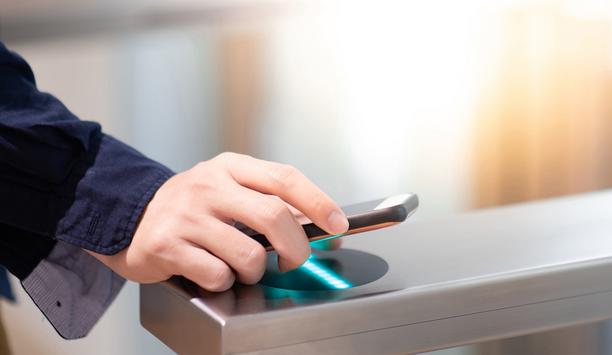
There is a broad appeal to the idea of using a smartphone or wearable device as a credential for physical access control systems. Smartphones already perform a range of tasks that extend beyond making a phone call. Shouldn’t opening the door at a workplace be among them? It’s a simple idea, but there are obstacles for the industry to get there from here. We asked this week’s Expert Panel Roundtable: What are the challenges and benefits of mobile access control solutions?

Perimeter security is the first line of defence against intruders entering a business or premises. Traditionally associated with low-tech options such as fencing, the field of perimeter security has expanded in recent years and now encompasses a range of high-tech options. We asked this week’s Expert Panel Roundtable: What are the latest trends in perimeter security technology?

Security systems are vital to any company. Nowadays, however, they can also provide additional benefits to any enterprise beyond protecting people, assets and facilities. Specifically, systems that were previously focused on security can now be leveraged in new ways to benefit the broader enterprise. When this happens, the security department transitions from a ‘cost centre’ to a repository of data that can benefit the whole company, and even contribute to the bottom line. We asked t...

During the coronavirus lockdown, employees worked from home in record numbers. But the growing trend came with a new set of security challenges. We asked this week’s Expert Panel Roundtable: What is the impact of the transition to remote working/home offices on the security market?

When technology performs a required task effectively, there is little reason to upgrade to the ‘next big thing’. In this regard, the physical security market is notoriously slow to change. Much of yesterday’s most robust and dependable equipment is still in place at thousands of customer sites, still performing as well as the day it was installed. However, there comes a point when any technology becomes outdated. We asked this week’s Expert Panel Roundtable: Which securi...

Our Expert Panel Roundtable is an opinionated group. However, for a variety of reasons, we are sometimes guilty of not publishing their musings in a timely manner. At the end of 2020, we came across several interesting comments among those that were previously unpublished. Following is a catch-all collection of those responses, addressing some of the most current and important issues in the security marketplace in 2021.

What a year 2020 was for the security industry! There were vast challenges that could not have been foreseen at the beginning of the year. It is safe to say that the events of 2020 defied all industry prognosticators. However, is that any reason not to hope our expectations looking ahead to 2021 will be much closer to reality? Can we possibly benefit from looking ahead and trying to plan for the challenges of the year ahead? We asked this week’s Expert Panel Roundtable: What will be the se...
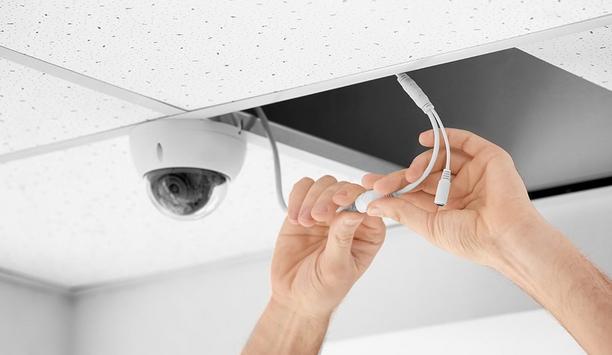
Retrofit projects provide new levels of physical security modernisation to existing facilities. However, retrofits come with their own set of challenges that can frustrate system designers and defy the efforts of equipment manufacturers. We asked this week’s Expert Panel Roundtable: What are the biggest challenges of retrofit projects, and how can they be overcome?

When a fire or other emergency occurs in a building or facility, first responders depend on every available resource to ensure a safe and orderly evacuation and response. One element in any response plan is the facility’s physical security systems, including access control, video surveillance and intrusion detection. How can these systems contribute to an orderly response to a chaotic situation? We asked this week’s Expert Panel Roundtable: What is the role of security systems...

Tools such as standard operating procedures (SOPs) and checklists ensure that every factor is considered when installing a physical security system – or do they? Security system installations are detailed projects, and any overlooked detail is a missed opportunity to make the system better. We asked this week’s Expert Panel Roundtable: What is the most overlooked factor when installing physical security systems?

While unpacking our bags from a trade show, it is interesting to consider the dominant themes and trends we heard and saw at the show. So it is with the recently concluded Global Security Exchange (GSX) show in Chicago, presented by ASIS International. Amid all the product promotion, training sessions, networking and tired feet at the show, what really stood out? We asked this week’s Expert Panel Roundtable: What was the big news at the GSX 2019 trade show in Chicago?

Video analytics are undergoing a fundamental change in the market as machine learning enhances their accuracy while expanding their capabilities. But what are those expanded capabilities and how are they impacting the operation of security and video systems? We asked this week’s Expert Panel Roundtable: What new video analytics are having an impact in the market and how?

Fire and security systems are two elements of the same mission: To keep buildings and their occupants safe. However, the two systems often operate independently and may not be integrated. Should there be more integration and what are the pitfalls? We asked this week’s Expert Panel Roundtable: What are the challenges and opportunities of integrating security and fire systems?

In the digital age, software is a component of almost all systems, including those that drive the physical security market. A trend toward hardware commoditisation is making the role of software even more central to providing value to security solutions. Software developments make more things possible and drive innovation in the market. We asked this week's Expert Panel Roundtable: How do software improvements drive physical security?

The ability to treat patients in a secure environment is a base requirement of hospitals and other healthcare facilities. Whether facilities are large or small, security challenges abound, including perimeter security, access control of sensitive areas, video surveillance, and even a long list of cyber-risks. We asked this week’s Expert Panel Roundtable: What are the security challenges of hospitals and the healthcare industry?

When security topics become a part of current events, it is usually in a negative light. Security generally only becomes news when it fails, sometimes in a dramatic, high profile and tragic way. However, security failures can also shed light on lessons learned and opportunities to improve. Working toward better security can translate into the purchase of more goods and equipment supplied by our market. For additional insights into the intersection of security and current events, we asked this we...

The new year 2019 is brimming with possibilities for the physical security industry, but will those possibilities prove to be good news or bad news for our market? Inevitably, it will be a combination of good and bad, but how much good and how bad? We wanted to check the temperature of the industry as it relates to expectations for the new year, so we asked this week’s Expert Panel Roundtable: How optimistic is your outlook for the physical security industry in 2019? Why?

Employee turnover is a problem for many companies, especially among younger employees who have not developed the philosophy of employer loyalty that was common in previous generations. Nowadays, changing jobs is the norm. The idea of spending decades working for a single employer seems almost quaint in today’s economy. However, excessive employee turnover can be expensive for employers, who are looking for ways to keep their brightest and best employees happily toiling away as long as poss...

The concept of how security systems can contribute to the broader business goals of a company is not new. It seems we have been talking about benefits of security systems beyond “just” security for more than a decade. Given the expanding role of technologies in the market, including video and access control, at what point is the term “security” too restrictive to accurately describe what our industry does? We asked the Expert Panel Roundtable for their responses to this p...

There is no expectation of privacy in a public space. That’s the premise on which most video surveillance applications are justified. But new concerns about privacy, specifically the General Data Protection Regulation (GDPR) in Europe, are changing expectations. And what if a camera must be positioned where a private area happens to be within its range? Fortunately, there are technology approaches to solving these dilemmas, as our Expert Panellists explain. We asked: What new technologies...

The physical security industry is embracing the cloud in a big way. Cloud-based systems – which involve accessing a shared pool of information technology resources via the Internet – are much higher-profile in the video and access control markets, and large and small companies are getting on the cloud bandwagon. We asked this week's Expert Panel Roundtable: What factors are contributing to growth in cloud systems in the security market?

Hospitality businesses work to provide a safe and pleasant customer experience for their guests. Hotels offer a “home away from home” for millions of guests every day around the world. These are businesses of many sizes and types, providing services ranging from luxury accommodations to simple lodging for business travelers to family vacation experiences. Hospitality businesses also include restaurants, bars, movie theaters and other venues. Security needs are varied and require tech...

One system, one card
Download
Aligning physical and cyber defence for total protection
Download
Understanding AI-powered video analytics
Download
Enhancing physical access control using a self-service model
Download
How to implement a physical security strategy with privacy in mind
Download


