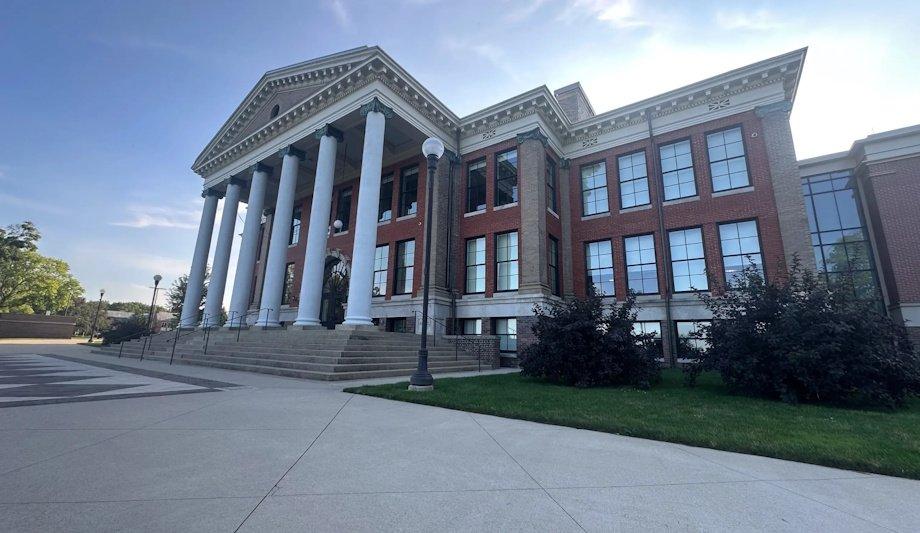
Western Michigan University (WMU) significantly upgraded its security infrastructure, increasing its campus surveillance coverage from less than 5% to over 90%.
This enhancement was part of a comprehensive security modernisation initiative, which involved the deployment of more than 500 Hanwha Vision cameras using the Wisenet WAVE Video Management System (VMS). This initiative addressed a critical gap in the university's capability to provide a safe environment for its 15,000 students and 5,000 staff.
Challenges with previous systems
Before this upgrade, WMU relied on outdated interior cameras and a legacy VMS lacking integration, scalability, and advanced functionality. These outdated systems left high-traffic areas, such as entrances and parking lots, inadequately monitored, creating security vulnerabilities.
Additionally, the University struggled with operational challenges, including short storage durations, expensive subscription costs, and complex management due to disparate systems.
Strengthening security with Hanwha Technology
Additionally, the University struggled with operational challenges, including short storage durations
By strategically deploying high-resolution Hanwha Vision cameras, WMU improved situational awareness across its exterior spaces. The introduction of license plate recognition (LPR) enabled cameras enhanced the University's investigative abilities significantly.
This advanced system has been instrumental in solving many security incidents, including larceny, as highlighted by Scott Merlo, Chief of Police and Director of Public Safety. "We've been able to solve a vast majority of those calls simply because of the camera system," Merlo noted.
Operational efficiency through integration
The Wisenet WAVE VMS was pivotal in unifying WMU's new and existing surveillance equipment into a single, cohesive system.
This integration approach, coupled with a move to a one-time license model, brought substantial operational benefits. Storage capacity increased significantly, from retaining video for seven to ten days to a minimum of 30 days, with some data maintained for up to 90 days.
Improved campus safety and monitoring
WMU's security upgrades have dramatically improved crime prevention and response times
WMU's security upgrades have dramatically improved crime prevention and response times. Recent security incidents, such as bicycle thefts, have been effectively managed using the system’s AI alerts, object tracking, and LPR data.
The advanced functionality of the cameras enabled the quick interception of suspects through real-time alerts to off-duty detectives. "Without the AI functionality, that bicycle would have been taken from campus and likely never returned," commented Lieutenant Matt Page.
Future security enhancements
WMU intends to continue enhancing its security infrastructure by replacing older cameras with the latest Hanwha Vision models and employing advanced PTZ cameras for expansive area monitoring.
This forward-thinking approach is not only improving security but also assuring the university community of a safer environment. Merlo added, "When I talk to parents, the number one concern that they have about their kids coming to our campus is safety. With the systems that we have in place, their sons and daughters are going to be safe here."
Western Michigan University (WMU), home to more than 15,000 students and 5,000 employees, realised a significant gap in its security infrastructure with less than 5% of its campus exterior covered by surveillance cameras.
“Ultimately, our bottom-line goal is to have a safe campus,” said Lieutenant Matt Page, Supervisor of Building Security at Western Michigan University, Police Department. “The security and safety of students, employees, and visitors that come to campus is the top priority.”
WMU recently launched a large-scale security modernisation initiative, based on Hanwha Vision’s Wisenet WAVE Video Management System (VMS) and more than 500 new cameras, primarily the PNM-C32083R 4x4MP multi-sensor models.
Limiting situational awareness
The University’s Department of Public Safety had previously relied on outdated interior cameras and a legacy VMS that lacked integration, scalability, and advanced functionality. The absence of exterior cameras created blind spots in high-traffic public areas, limiting situational awareness and leaving the campus vulnerable to theft and safety incidents.
The University also struggled with short storage durations, high subscription costs, and difficulty in managing disparate systems. WMU needed a unified solution that could expand coverage, integrate legacy equipment, reduce operational costs, and deliver advanced AI analytics features for real-time monitoring and investigative efficiency.
Strengthening investigative capabilities
After a thorough evaluation of multiple vendors, WMU selected the Hanwha Vision high-resolution cameras, strategically deployed across campus exteriors, parking lots, and entrances. The university also installed Hanwha license plate recognition (LPR) enabled cameras at key entry and exit points, further strengthening investigative capabilities.
“Our biggest crime on campus is larceny, and we've been able to solve a vast majority of those calls simply because of the camera system that we have,” said Scott Merlo, Chief of Police and Director of Public Safety at Western Michigan University. “Now, we're able to be proactive and catch people in the act before we even know who the victims are.”
WAVE VMS was a decisive factor in WMU’s choice. It allowed the university to integrate both the new Hanwha cameras and legacy models into a single, unified system. Officers and staff with minimal technical training report that WAVE is simple and intuitive, making it easier to locate, review, and share video evidence.
Operational efficiency benefits
With WAVE VMS, the University has also eliminated recurring subscription fees by moving to a one-time license model. WAVE is delivering operational efficiency benefits, including expanded storage capacity from its previous limit of seven to 10 days to a 30-day minimum retention (with data purged at 90 days).
The impact of WMU’s upgrade has been dramatic. WMU increased exterior camera coverage from less than 5% to more than 90%, effectively doubling the overall number of views to between 2,500 to 3,000 across campus.
Different campus departments
“We were one of the first in the world to get these 4x4K cameras and with their high-quality sensors, we can install them higher than most AI cameras,” said Page. “We get a much larger area of surveillance coverage, while still getting better than expected AI functionality.”
Not only have crime prevention and response times improved, but the new system’s flexibility allows the Department to assign role-based access to different campus departments, including landscaping and dining services.
Multiple previous thefts
Recent incidents such as bicycle thefts outside dining halls were resolved swiftly using AI alerts, object tracking, and LPR data. In one case, motion-based AI alerts helped officers intercept a suspect in real time, preventing the loss of property.
Off-duty detectives received an email notification triggered by a motion sensor set up through the camera’s AI functionality. The camera detected a suspicious person near a bike rack that had been the site of multiple previous thefts.
Wide-area monitoring
“Without the AI functionality, and without the notification systems that are built into the WAVE VMS, that bicycle would have been taken from campus and likely never returned,” said Page. The Campus Services department is also using the system. Landscaping teams have direct access to live camera feeds allowing them to monitor the grounds and assess maintenance needs faster, for example identifying icy sidewalks that need to be cleared.
WMU plans to continue replacing its older cameras with Hanwha Vision models, while leveraging advanced PTZ cameras for wide-area monitoring and investigative use. Western Michigan University’s investment in Hanwha Vision’s WAVE VMS and AI-enabled cameras has transformed its approach to campus security, delivering enhanced visibility while creating a safer environment that benefits students, faculty, staff, and visitors.
“When I talk to parents, the number one concern that they have about their kids coming to our campus is safety,” said Merlo. “With the systems that we have in place, without any question, their sons and daughters are going to be safe here.”