Covert Surveillance

Intersec Europe will make its debut in Frankfurt am Main from 14 to 16 September 2027. For the first time, this new European platform brings together solutions for physical security, cybersecurity and AI in an integrated approach – with a clear focus on the protection of buildings, businesses and critical infrastructure. At the heart of the event are the specific requirements of operators and end users, as well as decision-makers who shape security strategies and are responsible for inves...

Innodisk, a global AI solution provider, announces the Innodisk GMSL2™ Camera Starter Kit, an all-in-one vision solution that bundles four 3MP GMSL2™ camera modules, a capture card, FAKRA cables, and other necessary accessories. A milestone in Innodisk’s edge AI vision strategy, the kit lets customers set up a multi-camera system and begin validation right out of the box, shortening the path from proof of concept (PoC) to deployment. Full camera source code is included, giving...
NIS-2 and CER are raising the requirements for the security and resilience of critical infrastructure and essential and important entities. Recent attacks on critical infrastructure demonstrate why these requirements matter in practice. In this context, the video security technology deployed is also coming under greater scrutiny: Operators must not only manage physical threats but also address cyber risks, supply chain security, and system availability. As part of its current Act Now initiative...

Interface Systems, a provider of AI-powered security and expert remote video monitoring for restaurants, retailers, and commercial businesses, today announced that a veterinary hospital network has consolidated security services with Interface across more than 1,000 U.S. locations, addressing recurring false alarm fines, inconsistent alarm monitoring support, and poor utilisation of its video management system (VMS). For the veterinary network, false alarms had become a costly and recurring pro...

i-PRO Co., Ltd., a global pioneer in professional security and public safety solutions, today announced that its Spatial Integration Camera has received ‘Red Dot: Best of the Best’ in the Red Dot Award: Design Concept 2026, one of the competition’s highest distinctions. The award recognises the concept’s innovative approach to security equipment, bringing professional video protection together with the design and character of the spaces where it is used. Premium commerc...

BCD, a provider of purpose-built video infrastructure solutions, today announced the upcoming official launch of BCD Digital Asset Engine (DAE) at the International Association of Chiefs of Police (IACP) Annual Conference and Exposition, taking place October 25–27, 2026. Built on Dell Technologies infrastructure, Digital Asset Engine is a vendor-neutral digital evidence workflow solution designed to help law enforcement agencies capture, authenticate, process, manage, and preserve digital...
News

Hanwha Vision, a global vision solution provider, builds upon its proven Audio Beacon platform with the introduction of the SPS-A8016—an all-in-one indoor security solution designed to combine intelligent surveillance, audio communication, and visual alerting in a single compact device. By integrating AI-powered video analytics, proactive audio messaging, and multi-color visual notifications into one platform, the All-In-One Camera helps reduce installation complexity, minimise hardware requirements, and streamline deployments across a wide range of indoor environments. The SPS-A8016 combines a 5MP AI-powered camera, powerful 90 dB speaker, beamforming microphones, and a multi-colour RGB LED ring to deliver proactive situational awareness and responsive security operations. Responsive security operations From schools and banks to retail environments and healthcare facilities, the All-In-One Camera delivers complete situational awareness through a single device. It enables immediate detection and response—whether through real-time video analytics, high-volume audio alerts, full-duplex two-way communication, or LED notifications—supporting rapid decision-making and direct interaction with on-site individuals. At the core of the All-in-One Camera is Hanwha Vision's Wisenet 9 SoC, powered by a Dual NPU architecture that ensures video quality and AI analytics operate on independent resources, so neither function impacts the other. The 5MP sensor delivers sharp, detailed footage with AI-based image enhancement, extremeWDR (120dB) for challenging backlight conditions, and WiseStream AI-driven bandwidth reduction. Object classification natively detects and categorises people, faces, vehicles, and licence plates, with detailed attribute metadata and BestShot images for powerful forensic search. Challenging backlight conditions Beyond video, the device features built-in Business Intelligence analytics—including people counting, crowd counting, queue management, and heatmapping—providing actionable operational insights without additional hardware or licenses. AI-based analytics also support slip-and-fall detection, loitering, line crossing, and virtual area monitoring, enabling proactive safety responses in real time. The three built-in MEMS microphones—two beamforming mics for noise reduction and one extreme decibel mic—work alongside the 90 dB speaker to deliver clear, full-duplex two-way audio communication with echo cancellation. SIP 2.0 support enables direct integration with VoIP/PBX phone systems, allowing operators to respond to events from anywhere. The LED ring enhances visibility of alerts in any lighting condition, offering customisable colours (RGB, Green, Blue, Red, Pink, Sky blue, Purple) and sequential flashing patterns to signal different types of events—functioning as both a deterrent and a notification mechanism. AI-based sound classification Additionally, the All-In-One Camera incorporates AI-based sound classification to detect specific sounds—such as screams, breaking glass, aggression, tire screeches, vehicle horns, and extreme decibel levels—using deep learning. The All-In-One Camera supports full integration with major VMS platforms including Genetec, Milestone, Wisenet WAVE, and BLAZE. It supports complex Boolean event logic and delivers alerts via speaker, LED, alarm output, FTP, SFTP, email, HTTP/HTTPS/TCP, and MQTT. With a Secure Element certified to FIPS 140-3 Level 3 and CC EAL6+, EN 303 645 IoT cybersecurity certification, secure boot, signed firmware, and a built-in case tamper switch with IK08 impact protection, the device ensures maximum data protection and physical security. Virtual area monitoring Key Features of the All-In-One Camera: 5MP AI camera with Wisenet 9 Dual NPU and 30fps performance Object classification for people, faces, vehicles, and license plates with BestShot capture Built-in Business Intelligence: people counting, queue management, and heatmap AI-based analytics: slip-and-fall detection, loitering, and virtual area monitoring 90dB speaker for broadcast, deterrence, and alerts Beamforming MEMS microphones with echo cancellation and noise reduction Full-duplex two-way audio with SIP 2.0 VoIP/PBX integration AI-powered sound classification for screams, glass breaks, aggression, and extreme decibel levels Multi-colour RGB LED ring with customisable colours and sequential flashing patterns Supports Boolean logic for complex event triggers Real-time notifications via speaker, LED, alarm, FTP, email, HTTP/S, TCP, and MQTT Compatible with Genetec, Milestone, Wisenet WAVE, and BLAZE. FIPS 140-3 Level 3 Secure Element with EN 303 645 cybersecurity certification IK08 impact protection with built-in case tamper switch Easy Wi-Fi Direct installation via Wisenet installation app Hanwha Vision Open Platform (HVOP) for third-party application support

Strong reflections, changing light conditions, or large brightness differences complicate many applications ofindustrial image processing. High Dynamic Range (HDR) extends the measurable dynamic range and reveals details that may be lost in overexposed or underexposed areas of an image. Since different applications have different requirements, choosing the appropriate HDR method is an important step. Depending on the application, the focus may be on dynamic range, resolution or motion tolerance. Combining softwares Accordingly, IDS Imaging Development Systems GmbH combines various HDR technologies within a singlesoftware environment. This allows users to compare, test, and integrate the respective features into theirapplications more easily. With Clear HDR, Quad HDR, and Sequence HDR, IDS supports three HDR modes for different requirements regarding dynamic range, resolution, and motion. HDR-capable IDS cameras can be configured, output data captured, and HDR results processed and visualised via IDS peak. Authority comment "Users want to use HDR and not develop HDR," says Heiko Seitz, Product Marketing Manager at IDSImaging Development Systems. "That is why we combine various HDR technologies as end-to-end Softwaresupport from capture to the finished HDR result in IDS peak. This simplifies evaluation, reduces integrationeffort, and accelerates the path to the right solution." Integration of softwares HDR is more than just a function of the image sensor. Only the interaction of the sensor and the camerafirmware with the image processing on the PC makes the additional image information practically usable.That is why IDS integrates central functions such as camera acquisition control, various image data formats,as well as the merging of HDR sensor data and tone mapping algorithms directly into the IDS peak SDK. Users thus gain access to individual HDR exposures as well as to calculated HDR and LDR results. The IDSpeak Cockpit allows users to explore and test the entire HDR toolchain and to visualise the resulting HDRimages. All of this is possible without prior programming. Source code samples further simplify integrationinto users' own applications. Numerous industrial image processing applications benefit from this approach. These include quality controlof reflective components, logistics and OCR applications, robotics and automation, welding processes, aswell as traffic and outdoor applications. In medical technology and microscopy, too, HDR can be used tomake more image information from high-contrast scenes usable.

Commvault, a pioneer in unified resilience at enterprise scale, announces new data security and threat hunting capabilities for Microsoft 365. With more than 450 million paid commercial seats worldwide, Microsoft 365 is a popular cloud productivity and collaboration platform. Bad actors often target emails, attachments, and shared files associated with the SaaS application. Historical backup copies Commvault is helping Microsoft 365 customers advance resilience in the following ways: Discover sensitive data: Map where sensitive data, including personally identifiable information (PII) and intellectual property, resides across Microsoft 365 with Commvault Data Posture 360 (previously Risk Analysis) and surface exposure risks to help prioritise response. Hunt for hidden threats: Uncover malware, ransomware, encryption activity, data anomalies, and other indicators of compromise across protected Exchange, OneDrive, SharePoint, and Teams data with Commvault Threat Scan. Know what’s safe to restore: Use threat signals to isolate compromised content and identify clean, trusted recovery points. This helps recover only known-good data, reduce reinfection risk, and accelerate recovery of Microsoft 365 data. Broaden threat discovery: Apply current threat intelligence to historical backup copies in immutable storage to detect threats that may have been unknown or undetected when the data was originally protected. Informed recovery decisions “Commvault is bringing three key elements to the resilience equation with Microsoft 365: detection, visibility, and clean recoveries,” said Pranay Ahlawat, Chief Technology and AI Officer at Commvault. “Resilience and compliance depend on identifying threats fast, understanding if sensitive data is exposed, and what’s safe to restore.” “During a cyber incident, knowing what data can be safely restored is just as important as having a backup,” said Matt Pancheri, IT Manager and Systems Administrator, Spokane Industries. “Commvault gives our team a way to investigate our protected Microsoft 365 data and make more informed recovery decisions, helping limit disruption to the business.” Adopt AI with confidence “Alerting decision-makers to compromised data within Microsoft 365 backup offers both data security and data protection teams the information they need for improved resilience and continuity,” said Jennifer Glenn, Research Director for Information and Data Security, IDC. “This is essential for enterprises to prove operational data is both recoverable and trustworthy.” Threat Scan and Data Posture 360 for Microsoft 365 are both planned for early access preview in the coming weeks, with general availability targeted for early 2027. Both capabilities will be offered as paid add-ons to Commvault Backup & Recovery for Microsoft 365. Customers can purchase either capability independently. Learn more about this announcement at SHIFT 2026, where attendees will explore the new rules of resilience in the age of AI and learn how recovery, visibility, and cyber resilience can help organisations adopt AI with confidence. SHIFT 2026 will be the boldest event in the company’s history, enabling attendees to explore and immerse themselves in the new rules of resilience – and it all starts with AI.

Everon, LLC, a security integrator and premier provider of commercial security, video, fire and life safety solutions ranked the third largest integrated security company in the U.S. by SDM Magazine, announces a strategic collaboration with Teledyne FLIR (FLIR), a global pioneer in thermal imaging and sensing technologies, to deliver FLIR’s UL-listed thermal imaging cameras and bring a first of its kind early warning fire detection and monitoring service to the commercial market. Through this industry pioneer effort, Everon will be offering FLIR’s first UL 2684- and NFPA 72-compliant thermal imaging solution for early warning fire detection, addressing requirements for initiating devices (Chapter 17) and inspection, testing, and maintenance (Chapter 14). FLIR has obtained UL certification for its A-Series thermal imaging cameras as of September 21, 2026, enabling the combined solution to meet stringent fire and life safety code requirements. Faster emergency response Unlike traditional detection devices, the FLIR thermal imaging solution can identify abnormal heat signatures and fire related thermal events as they begin, providing early warning notification while initiating a fire alarm event directly at the fire alarm control panel. This integrated approach helps facilitate faster emergency response, reduces overall risk, and improves protection of critical assets and environments. The system offers highly configurable alarm settings to meet specific customer requirements and use cases, including: Fixed temperature threshold alarms Rate of temperature rise alarms Percentage of change notifications Multiple zones or areas of interest within a single camera Wide range of applications By covering larger areas and monitoring multiple zones simultaneously, one thermal camera can replace multiple traditional detection devices – improving overall effectiveness and detection reliability while simplifying system design and ongoing maintenance. The solution is designed for a wide range of applications, including battery energy storage systems (BESS), energy production and utilities, data centers, warehouses, distribution centers, rooftop solar, manufacturing, food and beverage, and recycling and waste management operations. Thermal imaging technology “Working with FLIR on this solution represents a major advancement in how early fire detection and life safety systems can be designed and deployed,” said Ryan Sandler, Vice President, Fire & Life Safety for Everon. “By combining Everon’s deep expertise in code compliant fire and life safety integration with FLIR’ s proven thermal imaging technology, we’re helping customers detect thermal events earlier, respond faster, and reduce risk – particularly in complex, high hazard environments.” “When it comes to fire detection, the value comes down to one thing: time,” said Kyle McKinney, Vice President, America Sales for FLIR Advanced & Integrated Systems. “By enabling earlier detection of developing thermal events, FLIR's UL-Listed thermal imaging solution gives organisations more time to respond before a fire impacts people, assets, and operations. We are excited to bring this capability to Everon's customer base and help them reduce risk across their most critical environments.”

i-PRO Co., Ltd., a pioneer in professional security and public safety solutions, announces its new Remote Head Camera, a compact modular camera system designed to bring edge-AI to environments where conventional cameras are difficult to deploy due to space constraints, aesthetics, or installation requirements. Built on the proven i PRO S Series platform, the new Remote Head Camera delivers the full capabilities of standard i-PRO cameras, including advanced edge-AI analytics, cybersecurity, and seamless ecosystem integration, in locations traditionally beyond the reach of conventional cameras. Customer-facing environments By separating the camera head from the processing unit, the system enables discreet installation in tight spaces, customer-facing environments, and embedded applications, from point-of-sale (POS) terminals and ATMs to reception areas and equipment enclosures. Organisations can extend intelligent security into previously inaccessible locations without compromising performance, functionality, cybersecurity, or user experience, while maintaining a design that blends naturally into its surroundings. “Organisations across industries are increasingly leveraging AI to improve security, operational efficiency, and decision-making. From retail stores and banking branches to industrial facilities and other demanding environments, customers often face a common challenge: deploying advanced technology in locations where space and installation constraints limit their options,” said Gerard Figols, Chief Operating Officer at i PRO. Challenging lighting conditions “At i PRO, we believe technology should remove barriers, not create them. The Remote Head Camera extends the full power of our edge-AI platform into environments where conventional cameras cannot be deployed, ensuring that size is no longer a limitation. By combining advanced edge-AI, open-platform integration and cybersecurity by design, we continue to transform cameras into intelligent sensors that provide actionable insights and enable faster, more informed decision-making.” Key benefits include: Compact, discreet design for unobtrusive installation High-quality imaging with up to 144 dB wide dynamic range and a wide field of view of up to approximately 135 degrees for challenging lighting conditions frequently found in close-range and embedded use cases Zero-Trust Cybersecurity, including FIPS 140-3 Level 3 compliance, secure boot, and signed firmware Seamless integration with i PRO Active Guard, enabling advanced search, visualisation, faster investigations, and operational insights The modular architecture also simplifies system design for integrators by supporting camera head options for both indoor and outdoor deployments, as well as flexible mounting configurations. This flexibility makes it easier to address a wide range of customer requirements using a single platform. The i-PRO Remote Head Camera is expected to be available in January 2027.

Lumana, a provider of AI video security solutions, and Convergint, the global services platform for tech-enabled security and safety solutions, today jointly announced that the two companies have formed a partnership that expands the AI-enabled video solutions available to Convergint's enterprise, mid-market and public sector customers worldwide. Most organizations already have an extensive network of security cameras and infrastructure. However, a vast majority of the recorded video footage is rarely watched. Lumana's AI video security platform transforms existing IP cameras from passive recording devices into AI agents that can monitor and alert for specific events and surface operational insights that accelerate investigations. Advanced AI capabilities As part of the partnership, Convergint’s global network of Technology Centers will design, quote, deploy and service Lumana’s camera-agnostic AI video security platform, providing enterprise and public sector customers with a trusted integrator to add advanced AI capabilities to their existing security infrastructure. "Convergint is a trusted integrator partner that deeply understands complex facilities, camera infrastructure and the teams responsible for keeping them secure," said Sagi Ben Moshe, Co-Founder and CEO of Lumana. "The combination of our AI video security platform with Convergint’s field engineering expertise gives enterprise and public sector customers a seamless path to transform their video security into actionable intelligence so they can see, understand and act on threats in real time - all without replacing their existing hardware." Reducing bandwidth consumption Lumana's AI video security platform is built around VIA-1, the company's proprietary video intelligence model that continually learns from each environment it is deployed to monitor. The platform’s distributed hybrid-cloud architecture processes video analysis locally on-premises to drastically reduce bandwidth consumption, eliminate latency and ensure strict data privacy, while leveraging the cloud for advanced analysis of incidents flagged for review, remote management and updates. The platform is camera agnostic, supports SOC 2 Type II, ISO 27001, GDPR, HIPAA, and NDAA compliance requirements, and is currently deployed across retail, manufacturing, higher education, healthcare, sports venues and Fortune 500 enterprises around the world. “Convergint’s approach is centered on helping customers select and integrate technology based on their specific security and operational requirements,” said Joe Young, Vice President of Partners and Alliances at Convergint. “Our work with Lumana expands the AI-enabled video options available to customers and combines Lumana’s platform capabilities with Convergint’s experience in solution design, integration, deployment and ongoing service.” Convergint Technology Centers are now able to design, quote, deploy and service Lumana AI video solutions.

Expert commentary

Control room operators face a tricky and ever-growing list of responsibilities. Every day, they're expected to monitor dozens, sometimes hundreds, of camera feeds, identify suspicious behaviour, and respond quickly when something goes wrong. Add in a constant stream of alerts, many of which turn out to be false alarms, and it's easy to see how even the most experienced security professionals can become overwhelmed. Indeed, in the UK alone, there are an estimated six million CCTV cameras, with around one in 70 publicly owned. A human, or team of humans, cannot possibly be expected to keep on top of every single one of those devices without missing something. Monitoring multiple locations Recently, the UK's Centre for the Protection of National Infrastructure (CPNI), now part of the National Protective Security Authority (NPSA), uncovered a challenge faced by many security operators known as the vigilance decrement, where concentration can begin to decline after just 20 to 30 minutes of continuous monitoring. A study of 42 professional CCTV operators, published in Applied Ergonomics, found that they detected only around half of the target behaviours during a 90-minute video review task. For security teams working long shifts and monitoring multiple locations, this presents a significant challenge. Missing an incident can have serious consequences, yet expecting operators to maintain the same level of concentration throughout an entire shift simply isn't realistic. Identifying unusual activity The result is that operators spend less time reviewing routine activity, have faster responses to threats This is where AI-powered video analytics makes a huge difference. By automatically identifying unusual activity, filtering out unnecessary alerts, and highlighting events that require attention, AI can help operators work more effectively and focus on what matters most. The result is that operators spend less time reviewing routine activity, have faster responses to potential threats, and there are more opportunities for security professionals to apply their experience and judgement where it's needed. Breaking the cycle of alarm fatigue Traditional video surveillance systems have often relied on motion detection and basic rules to identify potential security incidents. While useful, these technologies can also generate large volumes of unnecessary alerts. A tree branch moving in the wind, an animal crossing a perimeter, or a delivery vehicle stopping near a building can all trigger a false alarm. Now imagine this happening across hundreds of cameras, throughout an eight- or twelve-hour shift. Operators can quickly find themselves dealing with a seemingly endless queue of notifications, most of which turn out to be harmless. Over time, this can lead to alarm fatigue. When operators are repeatedly presented with false alarms, they may become less responsive to new notifications, increasing the risk of a genuine threat being overlooked. This isn't a reflection of their professionalism or experience, but a natural response to information overload. Persistent alarm fatigue It can also make it harder for organisations to demonstrate the value of their security investments The consequences extend beyond missed incidents. Persistent alarm fatigue can contribute to stress and burnout, slow response times, and place additional pressure on security teams that may already be stretched. It can also make it harder for organisations to demonstrate the value of their security investments. Simply adding more cameras, hiring more operators, or increasing training isn't necessarily the answer. Instead, organisations need to consider how technology can reduce the volume of information operators must process and ensure that the alerts reaching them are genuinely useful. Smarter alerts, faster responses AI-powered video analytics is helping to address this challenge by making surveillance systems more intelligent and proactive. Rather than simply detecting movement, modern analytics can identify objects, recognise patterns and provide greater context around what's happening within a camera's field of view. For example, a traditional system might generate an alert every time something moves near a perimeter fence. AI analytics can help distinguish between an animal passing through, an authorised vehicle following its usual route, and someone loitering near a restricted entrance. Operators can then focus on the activity that warrants further investigation, rather than spending valuable time reviewing harmless events. Providing relevant information The system identifies potential concerns and provides relevant information Advances in vision-language models are taking this a step further. These technologies can interpret and describe activity within video footage, helping operators understand what's happening without having to manually review every camera feed. This shift is gaining momentum across the industry. The Security Industry Association's 2026 Security Megatrends report identifies the automation of security operations centres as a leading trend, highlighting opportunities for AI to support activities such as incident reporting and filtering lower-priority alarms. Importantly, the aim isn't to remove operators from the process. Much of this technology takes an agentive AI approach, where AI assists human decision-making rather than acting independently. The system identifies potential concerns and provides relevant information, while operators remain responsible for assessing situations and deciding how to respond. For security teams, this creates an opportunity to improve situational awareness while reducing the pressure of constant monitoring. Identifying threats before they escalate One of the most valuable capabilities of advanced video analytics is its ability to identify unusual behaviour and patterns over time. Consider a vehicle driving slowly around a business park. On its own, this might not appear suspicious. However, if the same vehicle returns on three consecutive evenings, stopping near a restricted entrance before leaving, it could indicate someone assessing the site's security arrangements. An operator working a single shift might not notice the connection, particularly if the activity occurs across several days. But AI analytics can help identify recurring patterns and flag them for further investigation. Identifying recurring incidents These capabilities also offer benefits beyond immediate security monitoring The same principle applies to other scenarios. Someone repeatedly approaching a restricted area, a person remaining in an unusual location for an extended period, or a vehicle travelling against the normal flow of traffic could all trigger an alert based on predefined rules or patterns of behaviour. With the right information available, security teams can investigate potential threats earlier and respond before an incident escalates. These capabilities also offer benefits beyond immediate security monitoring. Analytics can help organisations identify recurring incidents, understand how spaces are being used and make more informed decisions about patrols, staffing and security resources. For multi-site organisations, this can be particularly valuable, allowing security teams to identify trends across locations rather than treating each incident in isolation. Making investigations faster and more effective AI can also significantly reduce the time required to investigate incidents after they occur. Reviewing hours of recorded CCTV footage has traditionally been a painstaking process. Investigators may need to search through multiple camera feeds to identify a person, vehicle, or sequence of events, often under considerable time pressure. Advanced video search and synopsis technologies can simplify this process by condensing lengthy recordings into a much shorter visual summary. Events and objects captured at different times can be presented together, allowing investigators to identify relevant activity quickly while retaining links to the original footage and timestamps. For example, an investigator looking for a particular vehicle can search footage based on characteristics such as colour, type, or direction of travel, rather than watching hours of recordings manually. For police forces, local authorities and private security teams, these capabilities can make a substantial difference to investigations, reducing the time spent searching through footage and helping important evidence reach the right people sooner. Demonstrating the value of intelligent video AI-powered video analytics can also deliver a measurable return on investment Alongside the operational benefits, AI-powered video analytics can also deliver a measurable return on investment. An Omdia survey of 140 end users across North America and Europe found that more than 85% of organisations achieved a return on investment from their video analytics deployments within one year. More than half reported seeing returns within the first six months, with banking and manufacturing reporting particularly strong results at 95% and 90%, respectively. Evidently, intelligent video can deliver value far beyond traditional surveillance. Improved incident detection Reducing false alarms can help operators use their time more effectively, while faster investigations can lower the resources required to review footage. Improved incident detection and response can also help organisations minimise disruption, protect assets and strengthen their overall security posture. There are benefits for installers and integrators too. By introducing advanced analytics into existing video management systems, they can help customers get more value from their security infrastructure, while offering additional capabilities that can evolve alongside operational needs. Rather than viewing video surveillance solely as a cost centre, organisations can increasingly use the intelligence it provides to improve security performance and inform wider operational decisions. Keeping people at the heart of security As AI becomes more capable, questions around human oversight and decision-making will become increasingly important. There is a distinction between AI that supports operators and fully autonomous systems that can independently make decisions and take action. While more agentic AI capabilities are emerging, many of the most practical applications in video security today are designed to assist people, not replace them. Making informed decisions This combination of machine intelligence and human experience is where the greatest value lies For instance, AI might identify a person behaving unusually near a restricted entrance, but an operator can assess the wider context, determine whether there is a genuine threat and decide on the appropriate response. Similarly, analytics can highlight a vehicle that has repeatedly visited a site, but it takes human judgement to establish whether that behaviour is suspicious or entirely legitimate. This combination of machine intelligence and human experience is where the greatest value lies. AI can continuously analyse large volumes of footage, identify patterns across different cameras and shifts, and highlight events that deserve attention. Operators bring the contextual understanding, professional judgement and accountability needed to make informed decisions. An operator reviewing five relevant alerts, each supported by useful information, is in a much better position to respond effectively than someone attempting to process 50 notifications with little context. The goal is therefore not to automate every aspect of security, but to create a more effective partnership between people and technology. A smarter approach to security operations The demands placed on security teams are unlikely to decrease. Organisations are managing larger sites, more cameras and increasingly complex security environments, often without equivalent increases in staffing or resources. At the same time, the limitations of human attention remain unchanged. No matter how experienced or well-trained an operator may be, maintaining constant concentration across dozens of video feeds is an unrealistic expectation. AI-powered video analytics offers a way forward. By reducing unnecessary alerts, identifying suspicious patterns, and accelerating investigations, these technologies can help security teams become more proactive, efficient, and effective. Most importantly, they allow operators to concentrate on what they do best: understanding situations, making informed decisions and protecting people and places. The future of security isn't about replacing the people behind the screens. It's about giving them the intelligence and tools they need to do their jobs better.

There was a time when physical security and cybersecurity occupied two very different worlds. One was concerned with the nuts and bolts of locks, doors and perimeter protection. The other focused on networks, software and digital threats. Today’s modern access control systems – used in everything from offices and hotels to hospitals and data centres – combine the two, fusing mechanical engineering and cloud platforms. That means that a door is no longer simply a physical barrier. Instead, it’s a connected endpoint within a much wider digital ecosystem. And it’s changing expectations across the industry. Increasingly, developers, architects and operators are turning their backs on separate products in favour of integrated access solutions that combine doors, locks, access controls, environmental monitoring and digital management into a single, connected system. A new connected approach to security This change is part of a wider shift in the way that security itself is perceived This change is part of a wider shift in the way that security itself is perceived. Traditionally, physical security was about keeping unauthorised people out. Today, it’s about making sure the right people have the freedom to move within a restricted space. That is particularly important in places such as hospitals, data centres and other critical infrastructure, where security helps protect essential services while minimising disruption. And it’s why our Research & Security Center (R&S) in Berlin, Germany, brings together both disciplines under one roof. Their job is to test products against both physical attacks and cyber threats. Employing unconventional tactics Sometimes, that means employing unconventional tactics, such as using professional lockpickers to test the security and resilience of new physical products. While modern locks are still based on mechanical engineering, they are more advanced than they look. Improvements in design, materials, and manufacturing mean they are stronger, more reliable, and harder to tamper with. But there’s more to locks than just security. Some systems can even use the motion of inserting and turning a key to generate a small amount of electrical energy, which provides energy to power extra functions without wiring or batteries. This means they are not just standalone locks but can also be used as part of wider digital access systems. Bridging physical and digital security For instance, great strides have been made recently in terms of biometric authentication However, as everyone knows, digital systems have their own security risks, especially now that artificial intelligence (AI) is part of the emerging threat. This means the cybersecurity team needs to ensure that systems are robust enough to withstand a wide range of risks – from attempts to breach access platforms to phishing attacks – as well as other tactics designed to exploit human behaviour. It’s here that researchers adopt a ‘hacker’s mindset’ to keep systems safe. And that means continuously testing, probing, and strengthening systems to identify vulnerabilities against existing real-world threats while also anticipating what might be around the corner. Mobile-based access control systems For instance, great strides have been made recently in terms of biometric authentication, including facial recognition and fingerprint scanning. Similarly, smartphones are increasingly being used to secure credentials for mobile-based access control systems. But improvements in technology also come with their own risks. For instance, For instance, AI-generated deepfake videos and voices are becoming more convincing, making it easier to trick people into giving access, sharing information or approving actions they should not. And as I alluded to earlier, criminals are now using AI and automated tools to identify weaknesses and exploit them much faster than before, sometimes with little or no human involvement. But it’s also true that it’s being used to bolster defences. Work is currently underway to use AI to analyse data in real time to identify unusual entry times, identify multiple failed authentication attempts, or spot any other anomalies that might suggest someone is trying to gain entry illegally. Modern access control Cloud-based platforms allow security teams to issue and revoke credentials remotely Increasingly, the value of modern access control lies not just in the hardware, but in the software that sits behind it. Cloud-based platforms allow security teams to issue and revoke credentials remotely, monitor activity across multiple sites and respond quickly to emerging threats. This makes security a real-time, always-on, continuously managed service rather than a collection of standalone products installed and largely forgotten about. The importance of regulation and compliance This is something that policymakers are aware of. In the European Union, for example, the EU’s NIS2 Directive relates to cybersecurity protecting network and information systems and significantly broadens both the scope and the obligations for compliance. It also takes an “all-hazard” approach to security, which means protecting not just digital networks and systems, but also the physical environments in which they operate. Similarly, the EU’s Cyber Resilience Act is designed to ensure that all digital products are safe from cyber threats. Its goal is to ensure that connected devices and software are built, updated, and maintained with security in mind, helping protect users in an increasingly connected world. And by introducing clearer requirements and standards, the CRA will help consumers and organisations identify products with strong security features and configure them more securely from the outset. Security by design Security can no longer be treated as something that is bolted on at the end of the development process In both cases, it is incumbent on vendors not only to meet or exceed these rules and regulations but also to keep customers, the wider industry, and other stakeholders informed about developments. For me, these regulations also reflect a broader shift in thinking. Security can no longer be treated as something that is bolted on at the end of the development process or addressed only after a vulnerability has been identified. Instead, it needs to be considered from the very beginning and maintained throughout a product's lifecycle. For manufacturers, that means continuously assessing risks, testing products against emerging threats and ensuring they remain resilient as technology and the threat landscape evolve. As I said at the beginning, the reason is simple. Today's buildings are no longer just bricks and mortar. They are connected environments where doors, locks, cameras, sensors and access control systems increasingly communicate with one another and with cloud-based platforms. You might want to think about that the next time you walk into a secure building.

When news broke that a Renoir painting had been stolen from an exhibition in the south of France, days after 600 diamonds were taken from a museum in Vienna, few in the art or security worlds would have been surprised. Europol had recently published “Changing Tactics, Changing Targets: The Evolving Nature of Museum Heists,” highlighting criminals’ growing focus on high-value objects and their increasing use of force. The latest theft also echoes the Louvre heist almost a year ago, both in how quickly it unfolded and in the security lessons it exposes. When every second counts Both French museum thefts happened in broad daylight. Both were fast. CCTV from the Renoir museum shows the perpetrators cutting through the perimeter fence early in the morning. Police were reportedly on site within five minutes of the alarm being raised. It still wasn’t fast enough. That matters. For many museums and galleries, simply building higher walls or stronger fences isn’t an option As criminals become bolder, custodians of national treasures and high-value objects need to rethink where protection begins. For many museums and galleries, simply building higher walls or stronger fences isn’t an option. These buildings are often architectural landmarks and public spaces. Turning them into fortresses defeats the point. But there is another lever security teams can pull: earlier detection. A few extra seconds of warning could give on-site security or nearby police the time they need to intervene before a work of art disappears. Forget the Hollywood lasers The cover of Europol’s museum heist report shows a criminal wielding a mallet in front of artefacts protected by red laser beams. It is the kind of security system made famous by films including “Entrapment,” “Ocean’s Twelve” and “The Thomas Crown Affair.” Virtual perimeters aren’t science fiction. But the technology available today looks very different. Museums and galleries need stronger protection without compromising their architecture or the visitor experience. One technology attracting attention is LiDAR, a spatial sensing system that uses lasers to understand what is happening within a physical environment An invisible perimeter The technology sends out laser pulses and takes millions of spatial measurements every second LiDAR is already used in environments ranging from railway stations and prisons to electricity substations. Its appeal lies in its accuracy and flexibility. It can operate indoors and outdoors, integrate with existing cameras, alarms and sensors and strengthen security without major physical alterations to a site. The technology sends out laser pulses and takes millions of spatial measurements every second, building a three-dimensional picture of its surroundings. Security teams can use that data to create virtual zones around a building, room or individual exhibit. Those zones can be changed as the site changes. Three-dimensional picture A museum perimeter, for example, might remain protected around the clock. A gallery being prepared for a new exhibition could be temporarily excluded while authorised staff work inside it. Once the zone becomes active again, an intrusion can trigger an immediate alert. The same principle can work while a museum is open. If someone gets too close to an exhibit, crowds begin to form or a person remains in a sensitive area, the system can alert staff or bring up feeds from relevant cameras. That means security teams can focus their attention where it is needed instead of relying on someone to spot every incident across banks of CCTV screens. Seeing what cameras can miss During an attempted robbery, LiDAR can identify the location and movement of people and vehicles During an attempted robbery, LiDAR can identify the location and movement of people and vehicles, including their direction and speed. It also has a significant advantage over conventional CCTV: it does not depend on external light. Detection can continue in bright daylight or complete darkness. That makes the perimeter less about a physical barrier and more about knowing, instantly, when someone crosses a line they shouldn’t. Security before the doors even open The technology can do more than detect intruders. Walk-through simulations allow teams to move through a virtual version of a site much as they would navigate an open-world computer game. Before an exhibition changes, teams can test how a new layout could affect visitor movement, identify blind spots and bottlenecks and assess evacuation routes. That gives security teams the chance to find problems before visitors arrive, not after something goes wrong. Protect the art, not the fortress Museums and galleries face a fundamental tension: make art and culture accessible while protecting objects that can be culturally irreplaceable and financially priceless. The answer cannot simply be more barriers. The next generation of museum security needs to detect threats sooner without getting between visitors and the works they came to see. The strongest perimeter may be the one nobody notices.
Security beat

Deploying artificial intelligence (AI) tools should be seen as a business initiative rather than a technology initiative, says Martin Soukup, CTO of Solink, a cloud-based video security and data intelligence platform. The approach makes a difference that plays out in practical terms. A technology initiative is tactical and solution-oriented, often solving an isolated problem within a single department's silo. In other words, it might solve just a security problem. In contrast, a business initiative is cross-disciplinary, driven by executive leadership to impact the entire organisation in a measurable way. “Viewing AI tools as a business initiative ensures they adapt to multiple departmental needs and drive high-level strategic growth rather than just fixing a localised technical issue,” says Soukup. AI platform combines video and business systems Demonstrating the value of embracing AI as a business initiative is Solink’s new video intelligence platform Demonstrating the value of embracing AI as a business initiative is Solink’s new video intelligence platform that combines video with business systems to detect threats and send real-time alerts. The capabilities are designed to help security teams operate smarter and more efficiently, supporting the next generation of lean, intelligence-driven security operations centers (SOCs). And benefits of the platform extend beyond security to include other parts of the business. “At the end of the day, video cameras only tell part of the story, much like looking at a 2D shape,” says Soukup. “They capture dimensions and colors, but only from a single perspective, even with powerful AI analysis providing traffic metrics, wait times, product interaction, and compliance logs. The addition of operational data, such as inventory, shipping, labor, and sales data, fills out that shape into 3D, adding critical context.” For example, while a camera simply shows three people standing in a line, and AI data flags that those individuals have been waiting for over five minutes, operational data lets you know also that a cashier has not checked into their shift yet. Combining these data streams gives businesses full situational awareness, turning passive observation into immediate, contextual intervention. AI agents handle repetitive tasks The Solink platform uses AI Agents, which are software that operates autonomously to handle manual, repetitive, or high-volume tasks based on specific instructions and tools. For Solink users, AI Agents unify their existing camera and data source investments into a single automated workflow. “AI Agents transform Solink from a security tool into an operational investment that benefits all departments,” says Soukup. “Modern operational leaders are turning to AI to scale productivity without increasing overhead.” Integrating business intelligence Operations checks compliance, loss prevention investigates theft, and security assesses threats Customers already use Solink to centralise video, integrate business intelligence, and trigger real-world responses like real-world alerts, two-way communication, or smart locks. AI Agents tie these pieces together, analyse the data and identify what matters most, and then take action either without human intervention or with humans in the loop. Businesses currently watch video manually across separate workflows. Operations checks compliance, loss prevention investigates theft, and security assesses threats. However, a human must always watch the footage to get results. Solink AI Agents automate this entire workflow. If an operational event can be seen on camera and matters to the business, a Solink Agent can be integrated to automatically review, assess, and trigger the next step in the workflow across hundreds or thousands of locations simultaneously. Calling all stakeholders to the discussion When discussing applications, stakeholders should include revenue and marketing officers, compliance officers, and line-of-business executives. Agents leverage existing infrastructure by adding an intelligent automation layer that drives efficiency and grows revenue across the entire organisation without large capital investment. Solink AI Agents will not replace employees; they empower lean teams to maximise their existing resources. Job descriptions will shift toward human-in-the-loop workflows where humans and machines collaborate. The AI Agent handles the high volume, filtering out noise and processing data at scale. Human employees set up and guide the Agents, give feedback to improve performance over time, and step in to make final decisions, managing the nuanced situations that require critical thinking, empathy, and deep context. Passive data visualisation In contrast, a Solink AI Agent is deployed with a clear mandate for a specific task, deliverable, or outcome Given the convergence of physical and digital security, AI Agents, not dashboards, are the right unit of enterprise AI deployment. Dashboards typically aggregate data without evaluating the context or importance of the source. Data looks identical whether it comes from 10 sources or 100. In contrast, a Solink AI Agent is deployed with a clear mandate for a specific task, deliverable, or outcome. This approach shifts the focus from passive data visualisation to active intent, creating a direct path of accountability and clear attribution for business results. With dashboards, everyone can see the problem, but nobody owns it. An agent with a mandate either did the job or it did not, and you can audit exactly what it saw and why it acted or did not. Overcoming obstacles to deploy AI agents The primary obstacles to integrating AI Agents into the physical security workflow are change management, building trust, and system interoperability. Physical security requires absolute reliability, which demands rigorous initial configuration to establish trust. Furthermore, Agents are only as effective as the data they can access. Overcoming these hurdles requires comprehensive team training, shifting organisational mindsets, and ensuring seamless integration with existing tools so the Agents have the full context needed to execute tasks accurately and integrate with human workflows seamlessly. Addressing common security challenges Several use cases are driving the deployment of AI Agents among Solink's customers Several use cases are driving the deployment of AI Agents among Solink's customers. Overnight guarding, loss prevention, and store readiness will be the first wave of use cases. These are proven, high-frequency scenarios in which Solink provides pre-built template Agents to address common security challenges out of the box. The second wave of use cases will include highly customisable occupancy tracking, health and safety, and food quality. Pre-built template Agents are coming for these next. In addition, custom, niche operational use cases can be tailored to a specific business environment. Just like hiring a specialised contractor, companies can deploy custom Agents to tackle unique operational challenges rapidly across all locations. Measuring the effectiveness of AI agents The effectiveness of AI Agents can be measured by multiple factors. Core Accuracy, and consistency and accuracy of detections and automated outputs. Business Outcomes delivered, such as reduced inventory loss, reduced fraud, and faster incident resolution. Financial Impact, measured through recovered budget, reduced operational overhead, and increased per-store conversion. There is a perception that AI Agents possess predictive or flawless capabilities, like stopping crime before it happens or operating perfectly in dark, chaotic environments. Not true, says Soukup. AI cannot understand ambiguous requests like "look for suspicious activity." Success requires explicit parameters, tools, and skills, defining what is acceptable, what is unauthorised, and how to handle the gray areas. Another misconception is that Agents need a fundamentally different security model than people. “I run security for this company as well as engineering, and I hold our own Agents to the same standard I would hold a third-party vendor,” says Soukup. “That means least privilege, full audit trails, anomaly detection, random audits, and no action they can't explain after the fact.”
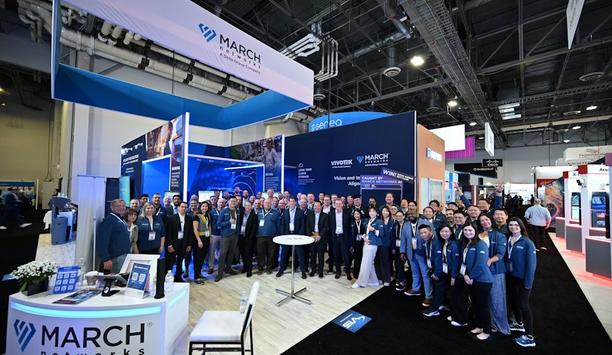
Combining VIVOTEK’s branded video security business with March Networks paves the way for the combined brands to meet customers’ increasing appetite for integrated solutions rather than individual components. The merger brings VIVOTEK's branded video security business together under one operating structure with March Networks’ enterprise-grade video surveillance, AI analytics, and cloud-managed security solutions. Customers now have access to a broader, more integrated portfolio spanning enterprise video management, advanced cameras, edge artificial intelligence (AI), cloud services, recording platforms, and business intelligence, says Net Payne, Chief Sales & Marketing Officer at March Networks and VIVOTEK. Distinct product strategies Given the combined companies, product development, sales, marketing, and customer support can move in step rather than in parallel. March Networks and VIVOTEK were already both part of the Delta Electronics family, but they previously operated as separate businesses with distinct product strategies, teams, and routes to market. March Networks and VIVOTEK announced the merger of their branded video security businesses last spring following Delta Electronics' acquisition of remaining VIVOTEK shares. “Aligning our complementary capabilities lets us innovate faster, simplify engagement, and respond more quickly to a market moving toward AI, cloud and intelligent video,” says Payne. This merger reflects a broader shift across the physical security industry, adds Payne. “Customers no longer see video purely as a tool for reviewing incidents after the fact,” he says. “They expect it to help identify risks earlier, simplify investigations, improve operations, and support better decisions across the organisation.” Cloud video management Meeting customer expectations requires more than bolting AI features onto existing systems Meeting customer expectations requires more than bolting AI features onto existing systems. Rather, it requires cameras, edge intelligence, recording, software, cloud services, and business data working together as one coordinated platform. “By bringing March Networks and VIVOTEK together, we combine deep expertise across the full video technology stack while preserving the relationships, sector knowledge and customer focus both companies have built over many years,” says Payne. “Our goal is to make intelligent video more integrated, scalable, and practical for customers and partners worldwide.” Both entities bring strengths to the combined companies. March Networks brings experience in enterprise software, cloud video management and large-scale deployments; while VIVOTEK brings strength in imaging, camera technology and edge intelligence. Together they seek to ensure more choice when designing systems, a clearer path for future expansion, and technologies that work together more effectively without compromising the reliability, cybersecurity, and support customers expect from both companies. Advantages for channel partners Channel partners gain a broader portfolio to address a wider range of customer requirements, combining components as each deployment demands. Channel partners also benefit from expanded geographic reach, deeper technical expertise, and greater investment in training and enablement. “Importantly, this is designed to be a seamless transition,” says Payne. “Partners keep working with the teams and relationships they already know, while gaining access to new capabilities and certification opportunities. Over time, that alignment should make it easier to design, deploy and support complete solutions.” Because they are established and respected brands, March Networks and VIVOTEK branding will continue to be used. Rebranding is not a goal, and neither identity is being replaced by the other. Coordinated decision-making “The immediate priority is organisational alignment by making it easier for customers and partners to benefit from the combined portfolio,” says Payne. Product branding will continue to reflect the relevant portfolio and market context. As product roadmaps become more closely coordinated, customers can expect greater interoperability and a more cohesive experience, says Payne. Any future branding changes will be managed carefully and communicated clearly. Combining the businesses reduces duplication and enables coordinated decision-making across product strategy, engineering, sales, marketing, operations, and customer support. “Instead of developing capabilities independently, teams can share their expertise, align roadmaps, and direct investment to where it has the greatest customer impact,” says Payne. Combining specialised knowledge globally The combined organisation operates across six continents and more than 75 countries The combined organisation includes more than 300 research and development (R&D) engineers across four Centres of Excellence in Canada, Taiwan, Italy and Poland, thus bringing together a substantial base of specialist knowledge. The unified network also sharpens the ability to prioritise global opportunities, respond to regional needs and bring innovations to market faster. The combined organisation operates across six continents and more than 75 countries, supported by more than 1,100 certified channel partners. That footprint provides greater capacity to support multinational customers while staying responsive to local market needs. Looking ahead, future growth will increasingly come from helping customers turn video into useful, actionable intelligence. “The market is moving beyond conventional surveillance toward solutions combining AI, cloud services, edge processing, video management and operational data — and our new structure brings these together as one connected solution rather than several isolated technologies,” says Payne. Broader technical expertise There will also be closer collaboration among specialists in imaging, hardware, software, analytics, and cloud, which is important given how much customer infrastructure, regulatory, and deployment requirements vary. The companies can support cloud, hybrid, and on-premise environments, giving organisations a practical path toward more intelligent video. More choice comes from bringing together complementary technologies across product groups. Greater scale is achieved through a larger engineering organisation, broader technical expertise and more capacity to invest in innovation. Challenges for the industry at large Looking to the future for the industry at large, the greatest challenge will be managing the rapid growth of AI Looking to the future for the industry at large, the greatest challenge will be managing the rapid growth of AI responsibly, securely and at scale, says Payne. Video systems will generate more data and automate more decisions, but organisations must be able to trust how that intelligence is created, protected, and applied, he adds. “Cybersecurity, privacy, data sovereignty, system interoperability and AI accuracy are more important than ever,” says Payne. Addressing these elements requires expertise across the entire technology stack: from camera and edge processing to recording, cloud infrastructure, video management and analytics. “Together, March Networks and VIVOTEK can coordinate development across all these layers, giving customers flexible architectures that balance innovation with security, transparency and operational control,” says Payne.

The security landscape is undergoing a profound transformation, as evidenced by the innovations showcased at the ISC West Expo 2026. From dismantling of silos between physical and digital security to the ongoing transition to cloud and hybrid platforms, much of the discussion on the show floor was familiar, if somehow more urgent than ever. Clearly the industry is moving toward unified, cloud-native, and highly automated ecosystems. In a series of deep-dive meetings and demonstrations at the recent show, I got a first-hand glimpse of the future of the physical security marketplace. Spoiler alert: The future is now! HID Global: Tearing down the silos HID Global is addressing the long-requested convergence of physical and digital security. Recognising that the industry has historically operated in silos, HID is now leading with a combined implementation team to leverage the power of both sides. HID is supporting the transition by combining its logical and physical security teams to help end users design secure, end-to-end journeys for their employees. By leveraging its massive existing footprint in physical access, HID is uniquely positioned to help organisations upgrade their cybersecurity posture without a total "rip and replace" of their hardware. HID is seeing a surge in demand for converged credentials that unite building access with digital identity. On the digital front, HID has implemented FIDO (Fast Identity Online) and passkeys to replace traditional passwords with more secure, biometric-backed authentication methods. Acre Security: Bridging the gap to the cloud Acre Security previewed a cloud-native video solution, reinforcing its cloud-first security strategyAcre Security is currently consolidating brands, bringing established names like Feenics and AccessIt under a single corporate umbrella. A primary theme for the company at ISC West is the migration of legacy systems to modern infrastructure. To facilitate the transition, they are launching "The Bridge," a technology designed to help on-premise customers transition to the cloud at a pace that suits their operational needs. The company is also expanding its portfolio into video. Attendees at the show received a preview of a new cloud-native video solution slated for release later this year, signaling Acre’s commitment to a holistic, cloud-first security suite. Acoem: Real-time acoustic threat detection With a 35-year foundation in vibration and acoustics—including military sniper detection—Acoem is providing gunshot detection through edge processing. Unlike systems that rely on the cloud and may suffer from latency, Acoem’s technology processes data at the sensor level for instant alerts. Their sensors are engineered for massive outdoor spaces, covering a 500-foot radius (roughly 11 football fields) and can detect high-powered rifle shots from up to half a mile away. The system provides critical intelligence by distinguishing between muzzle blasts and "mach noise" from bullet travel, delivering an audio file to the end-user that maps the location and direction of the threat. They use AI to filter out environmental false positives, such as skateboards hitting metal rails. Alarm.com: The all-in-one dealer ecosystem Beyond hardware, Alarm.com is leveraging AI to streamline the sales process Alarm.com is doubling down on "giving tools to dealers to help them be successful," with a focus on unified commercial solutions. A highlight at ISC West is their new fire communicator, which integrates fire monitoring into their single app, completing what they call the "fourth leg of the stool." The product allows fire systems to benefit from the same real-time customer engagement and push notifications that have long been available for intrusion and video. The key products, such as commercial-grade hardware, are now available for immediate purchase. Beyond hardware, Alarm.com is leveraging AI to streamline the sales process. Their new AI Proposal Builder uses customer meeting notes to automatically generate customised, value-driven sales proposals for dealers. Allegion: A global shift in credentialing Following the acquisition of ELATEC, Allegion is adopting a more global market approach and expanding its OEM business. The company is involved in the development of Aliro, the newly unveiled mobile credentialing standard. Allegion’s strategy is built on versatility: While Aliro serves the burgeoning mobile market, they also offer PKOC for plastic cards, allowing them to provide solutions regardless of the user's preferred credential type. The ELATEC acquisition has effectively filled previous gaps in their use-case portfolio, positioning them as a comprehensive provider for both physical and digital access needs. AtlasIED: Engineering for life safety Transitioning from audio to a fully automated threat detection company, AtlasIED showcased its new IPX line at ISC West. This modular platform uses a single PoE++ port to power various "plug-and-play" modules, allowing for easy system upgrades. Their gun detection technology achieves a 99% confidence rating by "stacking" AI models; it cross-references audio data with infrared signatures to detect muzzle flashes and air quality sensors for particulates. With systems already running in 80% of U.S. international airports, the company maintains 24/7 domestic engineering support to manage these "life-safety adjacent" environments. Axis Communications: Unifying connectivity Axis Communications is advancing network video with 4G/5G surveillance, reducing cabling needs Axis Communications continues to lead in network video, with a new focus on offering surveillance through 4G and 5G networks to eliminate the need for extensive cabling in long-range applications. Axis also introduced several specialised hardware pieces, including the P1486-LE global shutter camera for high-speed traffic monitoring and the Q2802-TE, which integrates thermal and visual monitoring into a single unit. To assist technicians, they launched a new installer app that uses Bluetooth for easier camera pairing and management directly from a mobile device. Axon: De-escalation through enterprise wearables Focusing on frontline safety, Axon is expanding from law enforcement into the enterprise sector with its retail and healthcare-focused body camera. Weighing only 0.25 lb, these cameras are designed to be less intimidating, using colorful designs and acting as a primary de-escalator for aggressive behavior. A clear front display signals when recording is active, striking a balance between safety and a non-intimidating appearance. These devices feature live-streaming and panic alarms that connect workers to a Global Security Operations Center (GSOC). To ensure the footage is legally viable, Axon maintains a rigorous audit trail that authenticates every action recorded. Genetec: The value of the unified platform Genetec is advocating for unified platforms that reduce the time between incident detection and resolution. They argue that AI is becoming a commodity and that the true value lies in unified platforms that reduce the time from incident to resolution. Their approach emphasises the "outcomes" customers need, such as allowing security teams to coalesce around an investigation quickly. Genetec remains a strong supporter of open systems for enterprise customers, ensuring they have the choice to integrate diverse technologies rather than being locked into a manufacturer’s “walled garden.” This flexibility is critical for high-end security environments that require tailored, responsive systems. Johnson Controls: Large-scale enterprise solutions Johnson Controls has made a significant push into the enterprise video market with C-Cure IQ, a standalone VMS designed for major hubs like airports and large campuses. Through a partnership with Scylla, they have integrated 11 advanced analytics—including facial recognition and weapons detection—directly into their cameras. They also showcased new multi-sensor panoramic cameras capable of "stitching" multiple images into a single 360-degree view. While innovating in video, Johnson Controls also confirmed modern upgrades to their intrusion line, including their legacy DSC Neo line. The new DSC PowerSeries Neo 5, a high-end residential and commercial platform, features an all-new user interface and built-in PowerG+. They have also begun shipping the IQ5 family lineup, which is powered by a Qualcomm DragonWing processor. ONVIF: Standardising the future of AI and cloud ONVIF continues to lead the charge in establishing common languages for the security industry. A major focus is their new "Cloud Profile," which enables cameras to connect directly to the cloud through a standardised protocol. They are also expanding into audio standards to ensure IP-based speakers can seamlessly connect to Video Management Systems (VMS). To combat the rise of sophisticated digital manipulation, ONVIF is developing "video signing" standards. ONVIF is actively seeking more diverse enterprise participation to help shape these emerging AI standardsThis feature protects the integrity of video for evidentiary purposes by embedding a digital signature and timestamp directly into the footage at the camera level. Additionally, the organisation has formed an AI Working Group to develop common communication methods for "AI agents" within physical security systems. ONVIF is actively seeking more diverse enterprise participation to help shape these emerging AI standards. Roberto Licari is the new ONVIF Ambassador, seeking to attract new companies (even outside the security sector) to ONVIF as they look to expand their offerings. SwiftConnect: Bridging digital and physical identity SwiftConnect is redefining access control by shifting the focus from physical cards to digital identity. As a cloud-based "connected access network," the platform bridges the gap between IT identity providers (like Okta or Azure AD) and legacy physical access control systems. At the show's Security Experience Center demonstrations, SwiftConnect showcased its ability to integrate mobile credentials within Apple and Google Wallets across multiple technology platforms. By aligning physical security with Zero Trust principles, they ensure that access is governed by the same rigorous standards as digital networks. Their software-centric approach allows for a more seamless employee experience while simplifying the management of complex, multi-site building security. This emphasises a future where the mobile device becomes the primary tool for navigating the physical workspace. Wasabi Technologies: Redefining cloud storage economics With cloud technology becoming a baseline requirement at every booth, Wasabi Technologies highlighted its "hot cloud storage" as a cost-effective alternative to major hyperscalers. Their model claims to be 80% less expensive than competitors, notably removing hidden fees. Wasabi is increasingly bundled at the "back end" of security solutions through partnerships with integrators and end users. A key feature for law enforcement and high-security sectors is their "Object Lock" capability, which ensures that video evidence remains untampered with and immutable during defined retention periods. By providing high-performance storage without the unpredictable costs typically associated with the cloud, Wasabi is positioning itself as the foundational layer for data-heavy video surveillance applications that require long-term, secure retention. Wasabi is positioning itself as the foundational layer for data-heavy video surveillance applications ZKTeco USA: Versatile and integrated access ZKTeco USA showcased a range of integrated solutions, including turnstiles, visitor management, and access control. Their Atlas access control series offers versatility, supporting everything from traditional readers and keypads to QR codes and fingerprint scanning, with the flexibility to operate on-premise or in the cloud. For tight environments, they introduced the Mars 100 turnstile, which features a compact 2x3-foot footprint. They also highlighted the Omni series, an all-in-one standalone reader-controller that manages access, intercom, and visitor functions in a single device. Innovation in portability was evident in their new walk-through metal detectors, which consist of two poles with an 8-hour battery life—ideal for schools and temporary events. While they offer their own Armatura readers, ZKTeco emphasised that their solutions can integrate with other industry leaders to fit diverse customer needs.
Case studies

Located in the mountains just outside Denver, Colorado, Platte Canyon School District serves around 685 students, from preschool through 12th grade, supported by 150 staff members. The district operates multiple school buildings across a single campus, each bringing distinct safety, security, and access requirements. For Platte Canyon, providing a safe learning environment is a deeply held commitment. Following a school tragedy 20 years ago, the district has continually invested in strengthening campus security, protecting students and staff, and ensuring that emergency responders have the information they need to act quickly and effectively. Over the years, this commitment has driven a series of improvements to its security infrastructure, largely supported by grant funding. Today, 3xLOGIC's VIGIL Video Management System (VMS) plays a central role in helping Platte Canyon maintain visibility across its campus, streamline security operations, and support a coordinated approach to student and staff safety. Maintaining reliable surveillance The challenge: Platte Canyon historically had three separate camera platforms securing its different buildings and, as these systems aged, maintaining reliable surveillance became increasingly challenging. Some equipment had reached the end of its useful life, while incompatible operating systems prevented the platforms from working together. Staff had to switch between different applications to access cameras across the campus, creating unnecessary complexity and limiting their ability to accurately follow activity between buildings. In some cases, cameras and entire sections of the legacy systems were no longer functioning, leaving gaps in coverage and making it difficult to retrieve footage when needed. The district also faced challenges associated with its location. Situated alongside a major highway and popular routes into the mountains, the campus regularly experiences passing traffic, including visitors stopping to walk dogs or occasionally attempting to camp in parking areas and on school grounds. With students moving between multiple buildings throughout the day, including younger children using playgrounds directly connected to classrooms, Platte Canyon needed a security environment that could provide consistent, reliable visibility across indoor and outdoor spaces while supporting controlled access for staff, students, parents, and visitors. School Resource Officers (SROs), administrators, and local emergency services also needed quick access to relevant video footage, especially during incidents requiring a coordinated response. Campus security infrastructure The solution: Working with its security technology provider and using grant funding, Platte Canyon undertook a phased modernization of its campus security infrastructure beginning with electronic access control for building entrances, followed by a wider camera replacement program. Subsequent improvements extended security to campus gates and additional outdoor areas, creating a more comprehensive, layered approach to protecting school buildings and grounds. At the center of this video surveillance infrastructure is 3xLOGIC VIGIL VMS, which brings camera feeds from across the district into a single management environment. The system supports approximately 210 to 220 cameras, including bullet, dome, and 360-degree models, positioned strategically throughout the campus to provide extensive coverage of buildings, entrances, corridors, and outdoor spaces. Multiple campus areas The unified platform enables authorized users to monitor activity and retrieve footage without switching between separate camera systems. This is particularly valuable when staff wish to follow the movement of visitors across buildings or when investigating incidents across multiple campus areas. Platte Canyon has also implemented a layered approach to visitor access. Gates at the campus perimeter help manage vehicles entering the parking lots, with visitors required to contact school staff before being admitted. Once on-site, visitors must request access again at the building entrance before proceeding to the school office. Access control arrangements The district's access control arrangements also support scheduled access during busy periods, including student arrivals, class transitions, and afternoon pickup. Staff can use their badges to move between authorized areas, while designated personnel monitor doors during periods when students are moving between buildings. VIGIL VMS provides video visibility that complements these access control measures, allowing staff to monitor activity across the campus from a central platform. For day-to-day security operations, SROs have access to live camera feeds through large monitors in their offices, with some using multiple screens to maintain visibility across different areas. Authorized staff members also have appropriate access levels, ensuring the right people can view relevant footage when needed. Compromising student privacy The district uses sensors to identify potential vaping, elevated noise levels, and other activity in bathrooms, where video surveillance would be inappropriate. When an alert is triggered, staff can use the video system to review activity around entrances and exits, establishing who was in the surrounding area without compromising student privacy. VIGIL also supports collaboration with external emergency services. Authorized personnel from the sheriff's department and fire department can remotely access relevant cameras, including through mobile devices, giving them visibility into events before arriving on-site. This complements the district's separate SchoolSAFE radio communications system, which connects school personnel, dispatch, police, and fire services during emergencies. Video surveillance infrastructure Immediate results: Since consolidating its video surveillance infrastructure onto 3xLOGIC VIGIL VMS, Platte Canyon’s day-to-day security management has been streamlined with improved visibility across its campus. The single, reliable platform has freed up staff resources, and the Facilities and IT team now spends less time maintaining an aging, often-broken system. For SROs, viewing video footage from different cameras on one system has made it easier to maintain situational awareness across the campus. The system also supports a more proactive approach to safeguarding. With extensive camera coverage throughout the campus, staff can review activity in corridors, entrances, playgrounds, and outdoor spaces, helping them investigate incidents and respond to potential concerns. Respond to potential concerns "Our SROs have one location now that they have displayed, whether it's on their iPad or on their big screens. They're not having to try and switch between systems, and it's much more streamlined for them," explains Kay Genschorck, Director of Instructional Services. Beyond operational efficiency, the investment has helped reinforce confidence in the district's approach to school safety. “Parents want to feel confident that their children are safe and secure while they're at school, and it's our responsibility to provide that peace of mind,” Kay Genschorck at Platte Canyon School District said. “By investing in the right technology, we can maintain visibility across our campus, manage who comes and goes, and ensure our staff and emergency responders have the information they need to act quickly if something happens. Ultimately, it's about creating an environment where students can focus on learning, and teachers can focus on teaching.”

In a move to modernise campus operations and create a smoother experience for students and staff, Peru’s National Agrarian University has deployed a comprehensive Hikvision smart campus solution. From streamlined access to safer transportation, the university is building a safer, connected and efficient campus environment. Universidad Nacional Agraria La Molina (National Agrarian University) is one of Peru's most respected academic institutions. Its 102-hectare campus operates more like a small city than a traditional university, serving eight faculties, around 8,000 students, and about 600 teachers every day. Large campus area As campus activity continued to grow, the university wanted a more modern and efficient way to manage daily operations. Previously, visitor and vehicle access relied heavily on manual checks and handwritten records. The university also wanted better visibility over campus bus operations and more effective support for security teams patrolling the large campus area. Their goals included: Streamlining pedestrian and vehicle access Equipping patrol teams with mobile tools to enable them to respond to incidents faster Enhancing safety and visibility across campus bus operations Centralising management through a single unified platform Smart campus solution To achieve these, the university worked with system integrator Consorcio Valtar Security y Serinfortel to deploy a unified Hikvision smart campus solution. To improve pedestrian access, the university installed 18 Hikvision Pro Swing Barriers (DS-K3B530X) and 28 Face Recognition Terminals (DS-K5671-ZV) at the main and side entrances. The solution helps students and staff move through gates quickly while improving entry management. The facial recognition terminals support recognition speeds of less than 0.2 seconds per user and accuracy rates above 99%. Anti-tailgating functions, which prevent people slipping in behind others, helps ensure only authorised individuals can enter. LED indicators, meanwhile, provide visual indicators guide people through the turnstiles in order to avoid bottlenecks. Reducing manual paperwork To further streamline visitor handling, the university deployed a Visitor Terminal (DS-K5032-D) together with an Enrolment Station (DS-K1F600U-D6E-F) at the main entrance. The dual-screen visitor terminal supports paperless registration, helping security staff process guests more efficiently while reducing manual paperwork. At the same time, the enrolment station simplifies face enrolment and user management through an easy-to-use touch-screen interface. For vehicle access, Hikvision deployed 6 ANPR Cameras (DS-TCG406-E(S)) together with 6 Barrier Gates (DS-TMG520-H/B) at two campus entrances. The system automatically recognises license plates and manages vehicle access in real time, helping reduce waiting times and improve traffic flow. Staff vehicles can be pre-registered through the university’s app, allowing smoother entry during peak hours. Adjustable barrier speeds and multiple anti-hitting protection mechanisms also help improve operational safety. To further improve the driver experience, LED Screens (DS-TVL224-4-5Y) display welcome messages and vehicle information in real time. Maintaining daily operations Because of the campus’s large size, motorcycle patrol teams play an important role in maintaining daily operations and responding quickly across different areas. To support these teams, the university has deployed 10 Hikvision Ultra Series Body Cameras (DS-MH2311) together with 2 Dock Stations (DS-MDS001). Several features make this solution particularly suitable for mobile patrol work: Clear 2 MP video recording with a wide 129° horizontal field of view Up to 8 hours of recording with a removable 3,300 mAh battery Wireless connectivity for improved communication Real-time positioning support through GPS Centralised charging, storage, and evidence upload through dock stations Professional campus operations The cameras are mainly used during routine motorcycle patrols and when responding to incidents on campus. Recorded footage helps clearly document security procedures and provides reliable records of how situations were handled, supporting transparent and professional campus operations. The university has also upgraded safety across its fleet of 11 campus buses with Hikvision onboard solutions. Each bus is equipped with: Mobile Dome Cameras (DS-2XM6726G1-IM/ND) and Mobile Network Cameras (DS-2XM6522G1-ID): These provide real-time HD video coverage inside and outside the buses, helping operators monitor passenger boarding, alighting, and road conditions clearly. DSM Camera (AE-VC1B1I-ISF(RJ45)): This improves driving safety by detecting critical safety indicators such as fatigue, distractions, and smoking. When potential risks are identified, alerts are immediately issued to the driver, helping encourage safer driving practices during daily routes. Touch Monitor (AE-MW1203): Drivers can view live camera feeds through the monitor. The display automatically switches to relevant views when doors open or when reversing, helping drivers monitor passenger movement and blind spots more effectively. Alarm Button (DS-1530HMI(AE)(O-NEU)): It allows drivers to immediately notify the control center for rapid assistance in emergency situations. Mobile NVR (AE-MN5043(1T/SSD)(RJ45)(O-STD)): This records and stores video while also supporting GPS positioning, geofencing, and route monitoring through Google Maps integration. Campus bus management Every solution, from access control and patrol operations to campus bus management, is centrally managed through HikCentral Professional. From this single platform, the university can: Monitor access events in real time Manage user permissions and visitor records Track campus buses through GIS-based maps Receive centralised alarms and event notifications Coordinate faster responses across campus Daily campus operations According to the university, the solution has significantly improved operational visibility and coordination across the campus. “With Hikvision’s smart campus solution, we now have a much more efficient and connected way to manage daily campus operations,” says Joseph Jimy Ordóñez Blanco, General Coordinator of the University’s Security Unit. “From access management to transportation safety, the platform gives our teams better visibility, faster response capabilities, and greater confidence in maintaining a safe environment for students and staff.”

Across the Netherlands, housing corporations are under increasing pressure to maintain safe, secure and sustainable living environments while managing large and diverse property portfolios. Rising expectations around resident wellbeing, operational efficiency and asset protection are driving the need for smarter, more scalable technologies. Hef Wonen, a Rotterdam-based housing association managing more than 30,000 rental homes, commercial properties, parking facilities and residential care complexes, is committed to creating affordable, high-quality housing and vibrant neighbourhoods for its residents. As part of this mission, the organisation sought to modernise its surveillance infrastructure to improve security, streamline operations and support its long-term sustainability goals. Video surveillance solution To address these challenges, Hef Wonen partnered with Hanwha Vision and system integrator Alphatron Security to deploy a scalable, future-ready video surveillance solution designed to enhance operator efficiency, accelerate response times and provide a foundation for future innovation. To deliver a superior resident experience and ensure safety and security, the leadership team at Hef Wonen realised that they needed to integrate all of their video surveillance into a single platform. Motion detection alerts The team turned to system integrator Alphatron Security, which had previously worked effectively with Hanwha Vision on other distributed sites. Hanwha Vision was an obvious choice given its track record of success, the range of cameras and other devices that could support Hef Wonen’s needs, and its open WAVE VMS that integrated with the housing corporation’s systems to bring every information source into a single place. Hanwha Vision’s extensive product range meant Hef Wonen could choose from many different cameras that aligned with the team’s needs and budget. Across 200 Hef Wonen residential sites, over 2,000 QNV-6082R and ANV-L6082R cameras have been installed. The QNV-6082R 2MP Network Dome Camera provides 24/7 oversight with a 30m infrared viewable length. Hallway view allows operators to monitor narrow areas such as corridors or walkways. Motion detection alerts operators to movement so they can investigate further, and tampering and defocus detection means the team can respond quickly to any events that may prevent footage from being captured. Multiple device integrations The ANV-L6082R 2MP outdoor dome camera ensures operators can effectively monitor outdoor areas across the site, including entrances/exits, storage areas, and bin stores. The ANV-L6082R is a robust IP66- and IK10-rated device that can withstand inclement weather and detect tampering. It comes with WiseStream II support, which delivers high-quality video footage at a lower bandwidth, helping to reduce storage costs. These cameras are supported by the Wisenet WAVE VMS, a versatile video management system that supports AI-powered video analytics and multiple device integrations through its open SDK/API. Operators can run the WAVE VMS on desktop and mobile devices, allowing them to keep updated with events while on ground patrol or working remotely. The system is fully GDPR compliant. The consolidated video surveillance system provides operators with an intuitive way to proactively monitor vital parts of the system over 200 sites, remotely. This has improved team efficiency and resident safety, while providing a future-proofed, open system that can scale and add new functionality as needed.

Genetec Inc., the pioneer in enterprise physical security software, announces that the City of Carmel, Indiana, has deployed Genetec™ Security Center to unify security and operational systems across more than 40 municipal sites, helping city departments coordinate resources, improve emergency response, and manage day-to-day operations more efficiently. Carmel’s public safety teams use Security Center to monitor video, alarms, emergency calls, response vehicles, and IoT sensors through an interactive city map. First responders can access the same information from mobile devices, helping teams coordinate resources and respond more efficiently when incidents occur. Direct first responders That coordination proved especially valuable when a rare tornado struck Carmel. Using Security Center, city teams quickly mapped the storm’s path and assessed its impact across the community. They identified the hardest-hit areas and used that information to direct first responders, utility crews, and public works resources where they were needed most. “By bringing all our departments onto one city-wide platform, we’ve reduced complexity. The result is better decisions for our community, higher response efficiency, and more cost-effective operations that benefit our residents,” said Morgan Rinehart, Network Architect at the City of Carmel. Making informed decisions Beyond public safety, Carmel is using Security Center to support services across the community. With information from multiple systems available through a unified platform, departments can better understand conditions across the city and make informed decisions about how to deploy resources. For example: Engineering and street teams can monitor road conditions, coordinate snow removal, and manage traffic during construction detours without sending personnel into the field to assess conditions Parks teams can monitor crowd levels, facility usage, and safety across the city’s waterpark and trails Public events teams can monitor pedestrian traffic in community plazas and during gatherings The unified platform also gives Carmel’s IT team a centralised view of system health. Teams can monitor device status, identify potential vulnerabilities, review cybersecurity information, and manage firmware and software updates from one platform, helping the city manage its growing number of connected devices. Providing additional flexibility Carmel is also taking a hybrid approach to its security infrastructure, with the cloud-based Security Center SaaS platform providing additional flexibility when temporary projects or large events require expanded video coverage. The city can deploy mobile cameras and connect with systems operated by local schools, sports organisations, and critical infrastructure partners. Looking ahead, Carmel plans to continue expanding the platform as its smart city initiatives evolve. This includes connecting more systems and community partners. By building on an open platform, the city can add new capabilities as its needs change while maintaining a consistent approach to security and operations.

The Sanoat Qurilish Bank (SQB) in Uzbekistan enhanced its security and operations with Dahua’s integrated solution, combining ANPR, under-vehicle scanning, facial recognition, and DSS Pro for centralised management. This improved inspection accuracy, strengthened access control, and enabled faster, more efficient security responses. Overview - SQB is one of Uzbekistan’s key financial institutions, required a stronger, more intelligent security infrastructure to protect its facilities, personnel, visitors, and vehicle entry points. As a banking environment with high daily traffic and strict security requirements, SQB needed a solution that could reduce operational risks, improve inspection accuracy, and unify fragmented security systems under one centralised platform. Key financial institutions Challenges - The bank encountered several key challenges in its existing operations and security systems. Vehicle inspection at entry and exit points was not comprehensive enough, creating potential risks from unauthorised or hazardous vehicles. Manual inspection processes also increased operating costs and were vulnerable to human error. At the same time, visitor control needed improvement, as internal visitors could access important office areas without strict management. The bank’s existing security systems, including CCTV, access control, and under-vehicle scanning, came from different brands, making unified management difficult. Meeting rooms also suffered from low efficiency due to traditional presentation and note-taking methods. Smart security solution Solutions - To address these needs, Dahua provided an integrated smart security solution covering vehicle inspection, personnel access, visitor management, conference room modernisation, and centralised system control. At vehicle entrances, Dahua deployed bollards, under-vehicle scanning systems, ANPR cameras, and gate barriers to support comprehensive vehicle checks and maintain visual records for future audits. This helped improve perimeter security while making inspections smoother and more traceable. For personnel and visitor management, Dahua introduced access control, visitor management, elevator control systems, and facial recognition technology in key areas. These systems enabled accurate identity verification and stricter access permissions, helping SQB protect sensitive office spaces and improve overall site security. Reduced equipment maintenance Dahua also upgraded the bank’s meeting environment with integrated conference room equipment, including electronic whiteboards, lifting screens, and audio and video recording capabilities. This created a cleaner, more efficient meeting space, reduced equipment maintenance complexity, and made meeting content easier to record and trace. A major highlight of the project was the deployment of Dahua DSS Pro, which integrated CCTV, access control systems, and UVSS into one unified management platform. By connecting multiple subsystems, DSS Pro enabled security guards to monitor devices centrally, identify abnormal events faster, and respond more efficiently. Efficient daily operations Results - As a result of successfully implementing Dahua’s Integrated Smart Security Solution, SQB strengthened its physical security, improved vehicle and personnel management, reduced dependence on manual inspection, and achieved more efficient daily operations. The project also demonstrated the value of Dahua’s integrated security ecosystem, combining smart devices, AI-enabled identification, and centralised platform management to meet the demanding security needs of the banking sector.

Milestone Systems, a provider of open platform video management software (VMS), is helping Columbia Borough, Pennsylvania, strengthen public safety through a community-wide video security system built on Milestone XProtect® VMS. For more than 16 years, Columbia has worked with Lancaster-area security integrator App-Techs to develop and expand a distributed wireless video network serving its downtown, public buildings, parks, and other borough facilities. Today, the system supports roughly 83 camera feeds, including 4K multi-lens and PTZ cameras, primarily from iPro. Traditional wired infrastructure Located along the Susquehanna River in Lancaster County, Columbia is a historic borough of roughly 10,000 residents. As the community worked to revitalise its downtown and attract new businesses, borough leaders wanted safety and security to support that broader effort. Traditional wired infrastructure was impractical across Columbia’s geographically varied environment, requiring App-Techs to engineer a distributed wireless architecture. XProtect provides the video management foundation, with dedicated servers located in the municipal building and a remote park office. Officers can also access live camera feeds from laptops in patrol vehicles, while mobile access extends video to personnel during community events. Immediately dispatched officers Columbia’s dispatchers are the primary day-to-day operators of XProtect, monitoring cameras, and supporting officers in the field. In one incident, a dispatcher spotted someone breaking into a vending machine outside a laundromat and immediately dispatched officers. “Our staff member observed someone breaking into a vending machine just outside that building and was able to dispatch officers to the scene,” said Jack Brommer, Columbia Borough Police Department Chief. “Officers apprehended the individual, and it turns out this was a serial thief who had been breaking into vending machines across the tri-county area. So that single arrest helped resolve a number of thefts across multiple counties. That’s just the kind of impact this technology can have on a community.” Large community events The system also supports holding cells and interview rooms inside the police station, where microphones are integrated with cameras, as well as large community events. During Columbia’s annual “Thunder on the River” antique car show, Emergency Management personnel used the community camera network to support proactive monitoring and rapid response across the event. Over time, Columbia’s video system has supported faster incident response, stronger evidence for prosecution and greater situational awareness for dispatchers and police officers. Borough leaders also use signage in parks and public areas to make camera coverage visible as a deterrent. Gunshot-detection technologies “The data that I can point to is that we are trending downward, probably for the last five, six years, as far as call volume and crime trends. Those numbers have been very positive,” added Brommer. Looking ahead, Columbia plans to expand its use of video analytics, including object-search capabilities that can help investigators filter video by vehicle type, colour, and other attributes. The borough is also exploring emerging gunshot-detection technologies to further improve situational awareness.
Round table discussion
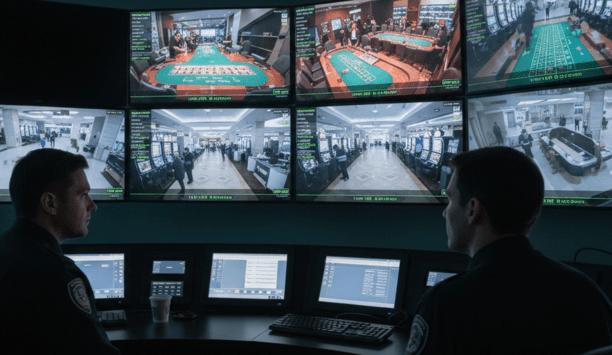
Casinos are tasked with monitoring vast gaming floors, cashier cages, and access points. The market for casino security and surveillance demands software and hardware that provide high-definition, multi-angle visual coverage to ensure the integrity of the games and to protect players, staff, and the public. Like other vertical markets for physical security technology, the casino market is undergoing change and facing challenges. We asked our Expert Panel Roundtable: How are new technologies impacting the casino surveillance and security market?

Adequate video surveillance coverage depends entirely on a facility's layout, square footage, and security goals. Historically, better coverage required more cameras, but technology innovations are changing those expectations and undermining previously held rules of thumb. We asked our Expert Panel Roundtable: Do today's video systems generally require more cameras or fewer cameras, and why?

Access control, video surveillance, and intrusion detection systems evolved largely independently in the physical security industry. Integrating those systems to the benefit of an enterprise's overall security has traditionally fallen on security integrators working in cooperation with manufacturers. However, today's market has also evolved to include companies that provide "unified platforms,” bringing together various disparate security systems and functions under a single, centralised management interface. We asked our Expert Panel Roundtable: What are the advantages of installing physical security systems as a unified platform?
Products









White papers
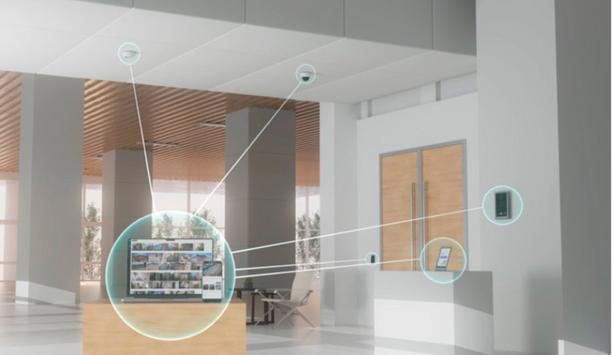
5 ways to strengthen physical security with an integrated system
Download
Video technology: making cities safer & improving lives
Download
Empowering cameras with AI
Download
Protecting dormitory residents and assets
Download
Choosing the right storage technology for video surveillance
Download
Video surveillance as a service: Why are video management systems migrating to the Cloud?
Download
11 reasons video surveillance is moving to the cloud
Download
How security systems ensure healthy workplaces during COVID and after
Download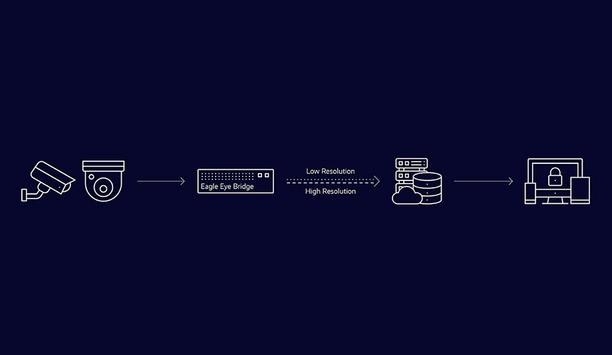
Best practices guide: analogue video to cloud
Download
The inevitability of The Cloud
DownloadVideos


Covert Surveillance: Manufacturers & Suppliers
- Hikvision Covert Surveillance
- Dahua Technology Covert Surveillance
- Hanwha Vision Covert Surveillance
- Axis Communications Covert Surveillance
- Verkada Covert Surveillance
- Avigilon Covert Surveillance
- Milesight Covert Surveillance
- Uniview (UNV) Covert Surveillance
- LILIN Covert Surveillance
- Illustra Covert Surveillance
- MOBOTIX Covert Surveillance
- Honeywell Security Covert Surveillance
- Bosch Security Systems Covert Surveillance
- Iluminar Covert Surveillance
- Climax Technology Covert Surveillance
- Speco Technologies Covert Surveillance
- Raytec Covert Surveillance
- FLIR Systems Covert Surveillance
- i-PRO Covert Surveillance
- Infinova Covert Surveillance

Technology's role in securing banks and financial institutions
Download
Security technologies promote real-time awareness in K-12 schools
Download
Integrated systems enable critical and compliant security for transportation
Download
Modernising physical access control
Download
Access. Intrusion. One estate.
Download