PTZ cameras

Opengear, a Digi International company and pioneer in out-of-band management solutions, has signed its first pan-European distribution agreement with Ingram Micro, one of the world’s largest technology distributors. The agreement will give resellers in participating Ingram Micro countries access to Opengear’s portfolio, supported by Ingram Micro's regional infrastructure, logistics capabilities and partner network. This expands Opengear’s existing reach in the UK, Ireland, Spa...
Dallmeier is expanding its proven Domera® camera portfolio with the new 6900 series. With a resolution of up to 12MP and improved light sensitivity, the new models deliver further enhanced image quality. The higher resolution also helps meet the increased requirements of IEC 62676-4:2025. About the new 6900 series The new series includes the RDF6900DN with Remote Positioning Dome (RPoD) technology and the SDF6900DN fisheye camera with a 360° panoramic view. Both models combine the hig...

Acoem, a global pioneer in advanced acoustic threat detection solutions, announces the appointment of Mike ODea as Managing Director of its Acoustic Threat Detection (ATD) business. ODea brings more than 20 years of experience in public safety and physical security, with a focus on using emerging technologies to improve situational awareness and decision support. An expert in Smart and Safe Cities, he has led major video surveillance deployments and complex security integrations, with a particu...
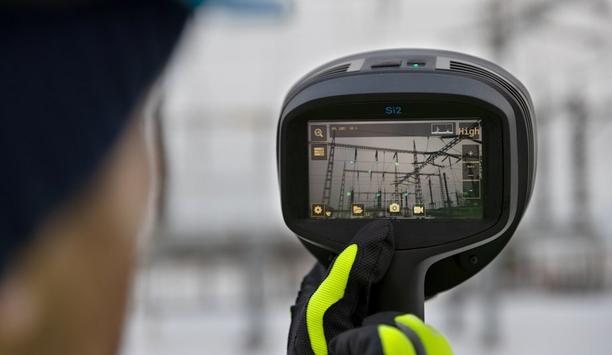
For a data centre operator, risk rarely comes down to a single system or department. It can begin with a cut fence, an intruder approaching a substation, an alarm no one trusted enough to investigate, or a rack that ran hot overnight. The cause may be different, but the consequence is often the same: an interruption to operations that can be costly. More than half of significant data centre outages can now cost a company over $100,000, and roughly one in five exceed $1 million, according to the...
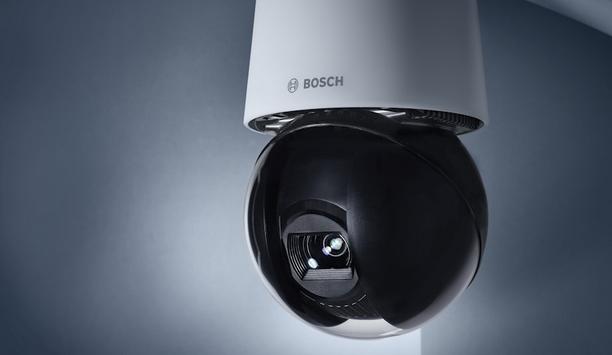
IQSIGHT, formerly Bosch Video Systems and a pioneer in intelligence-first video security, today announced the release of the AUTODOME 7100s and AUTODOME 7100s IR. Designed for outdoor environments, the new pan-tilt-zoom (PTZ) cameras deliver clear images in all lighting conditions and built-in video analytics to secure critical assets day or night. The AUTODOME 7100s series addresses complex surveillance challenges across smart cities, transportation networks, critical infrastructure, and gover...

IQSIGHT, formerly Bosch Video Systems, a global pioneer in intelligence-first video security, announced the expansion of its multi-sensor camera family with the launch of the FLEXIDOME multi+ 7100i. This versatile multi-imager delivers 360-degree coverage, built-in intelligence, and modular flexibility. Featuring four independent 5-megapixel imagers, the FLEXIDOME multi+ 7100i delivers a full 20-megapixel view of an environment from a single IP address. The camera’s unique modular design...
News

Yubico, the pioneer of phishing-resistant authentication and creator of the most secure hardware-backed passkey – the YubiKey – announces its official acceptance as a member of the European Cyber Security Organisation (ECSO), a pan-European public-private federation focused on empowering European cybersecurity communities. The membership empowers both Yubico and ECSO to accelerate a shared commitment to advancing phishing-resistant authentication and modern digital identity standards across Europe. ECSO welcomes Yubico at a pivotal moment, as organisations across the continent – and globally – struggle to mitigate a massive wave of sophisticated credential-based attacks easily bypassing traditional passwords and legacy, phishable multi-factor authentication (MFA). As AI-driven phishing attacks targeting digital identities surged over 200 percent in Europe, this membership highlights Yubico's role as a trusted cybersecurity leader and innovator in digital identity protection throughout Europe. Global cybersecurity innovation “Welcoming Yubico to ECSO is a strong signal of where the European cybersecurity ecosystem is heading,” said Dr Joanna Świątkowska, secretary general at ECSO. “Their globally recognised expertise in authentication and identity protection reflects the level of innovation and excellence required to ensure Europe’s digital sovereignty. Yubico stands as a compelling proof point that Europe can be both secure and at the forefront of global cybersecurity innovation. Welcome to the Family!” While Yubico operates today as a global company supporting organisations in over 160 countries, it holds ongoing, longstanding deep roots in Europe. Founded in Sweden in 2007, the company maintains its European headquarters and significant engineering presence in Stockholm. Yubico continues its legacy of local manufacturing in Sweden, delivering European-made, high-assurance security solutions across the continent and beyond. Automated enterprise environments By partnering with ECSO, Yubico aims to expand its focus on building cyber resilient environments for European businesses, governments and critical infrastructure. The collaboration will focus heavily on education and best practices for accelerating the deployment of modern, hardware-backed passkeys like the YubiKey, eliminating insecure legacy MFA, and establishing strict accountability chains for automated enterprise environments. “Our alliance with ECSO marks a major milestone in Yubico’s mission to make the digital world safer for all,” said Jerrod Chong, chief executive officer at Yubico. “Stockholm, along with our presence in countries like France, Germany and the UK, continues to anchor our commitment to European security and digital sovereignty. We look forward to partnering closely with ECSO to help organisations scale passwordless authentication responsibly, close the identity verification gap, and firmly secure both human and non-human identities across the enterprise.” Phishing-resistant hardware passkeys Yubico’s integration into the ECSO community aligns with broader structural shifts in European cyber policy, including the expanding momentum around European Digital Identity (EUDI) wallets. Yubico continues to drive open identity standards globally and has recently pioneered efforts in the EU to ensure digital identity wallets are backed by non-syncable, phishing-resistant hardware passkeys. As European enterprises navigate tightening regulatory regimes and escalating automated threats, Yubico's role as an ECSO partner ensures that the cornerstone of modern security – verifiable human presence and touch – remains at the heart of the region's cyber defence strategy.
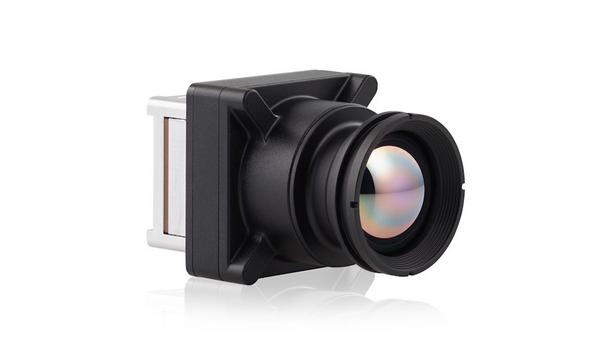
Teledyne FLIR OEM, a business unit of Teledyne Technologies Incorporated, announced the release of the ITAR-free Boson® SX8, the first NDAA-compliant, volume production, uncooled longwave infrared (LWIR) thermal camera module to combine an 8-micron pixel pitch with SXGA (1280 × 1024) resolution. The state-of-the-art 8-micron pixel enables industry-best thermal performance and four times the resolution of today’s high-volume, uncooled VGA (640 × 512) thermal camera modules, all within a similarly sized compact package. Designed for high-performance and optimised for size, weight, and power (SWaP) constrained defense and industrial applications, the Boson SX8 family enables integrators and operators to see more, see farther, and deploy high-performance thermal imaging at production scale. Supply-chain confidence Critical for uncrewed aircraft systems (UAS), counter-UAS, perimeter security, handheld devices, seekers, visual augmentation, and intelligence, surveillance, and reconnaissance (ISR) systems, the Boson SX8 family delivers performance previously available only in heavier, larger, and more power-hungry cooled, midwave infrared (MWIR) thermal imaging systems. “By reducing pixel area by 55% compared to the standard 12-micron LWIR pixel format, Boson SX8 represents a transformational moment for thermal imaging,” said Paul Clayton, President, Teledyne FLIR OEM. “By pairing this advanced 8-micron pixel architecture with SXGA thermal resolution at full-rate production, we’re giving customers greater situational awareness and longer effective range without compromising SWaP or supply-chain confidence.” Thermal gradient compensation In addition to multiple fixed-lens options, the new Boson SX8-CZ 15–75 features a factory-integrated 5x continuous-zoom (CZ) lens to further extend range performance. This option pairs the camera module with a 15–75 mm continuous-zoom lens, engineered and calibrated as a single system. The integration provides optimised optical performance with focus-through-zoom, thermal gradient compensation, factory alignment, and a single-source warranty, reducing integration risk while accelerating time to market. Intelligent embedded software products The Boson SX8 and Boson SX8-CZ 15–75 are manufactured at high volume in the United States by the world’s pioneer supplier of OEM thermal camera modules. Designed for production deployment, the Boson SX8 family offers OEMs a low-risk path from development through full-rate manufacturing, including integration with Teledyne FLIR OEM’s Prism™ intelligent embedded software products. Teledyne FLIR OEM will demonstrate the Boson SX8 product family at Eurosatory 2026 at the Teledyne FLIR booth in Paris, where attendees can experience the latest advances in high-definition, SWaP-optimised thermal imaging.

MultiDyne Video & Fiber Optic Systems will introduce new fiber transport innovations at InfoComm 2026 that help AV professionals simplify AV network deployment, reduce cabling requirements and improve flexibility across modern IP-based infrastructures. Exhibiting at Booth C5006 in the Las Vegas Convention Center (June 17-19), MultiDyne will showcase the new FiberSaver-10G wavelength-shifting multiplexer alongside its widely deployed VersaBrix VB Series fiber transport platform, featuring new all-white frame options with integration-friendly industrial design for contemporary AV environments. Contemporary AV environments “As 10GbE networking rapidly becomes standard across enterprise AV, live events, education, hospitality and hybrid production environments, organizations are facing growing pressure on existing fiber infrastructure,” said Frank Jachetta, CEO, MultiDyne. “At the same time, increasing bandwidth requirements driven by IP video, AI-assisted media workflows, collaborative production and converged AV/IT systems are accelerating the transition toward scalable fiber-based transport architectures. The new FiberSaver-10G and the popular VersaBrix Series will play a prominent role in our broader portfolio for these and other next-generation AV infrastructure transport needs.” True optical isolation The FiberSaver-10G marks the official InfoComm debut of MultiDyne’s newest addition to the FiberSaver Series, widely used in live production and mobile broadcast environments. Designed for modern IP workflows including Dante AV, ST 2110, IPMX, NDI and other IP-based workflows, FiberSaver-10G allows users to simultaneously transport multiple independent 10GbE and 1GbE networks over a single fiber strand while maintaining true optical isolation between networks. By optically isolating, wavelength-shifting and multiplexing signals, FiberSaver-10G can reduce required fiber infrastructure by as much as 94 percent. The result is a more efficient and manageable transport architecture for stadiums, convention centres, corporate campuses, educational facilities and large entertainment venues where fiber availability is limited, expensive to expand or difficult to manage. IP-centric infrastructures Unlike conventional transport approaches that aggregate networks without complete isolation, FiberSaver-10G preserves clean separation between independent VLANs and network domains while dramatically reducing fiber counts and simplifying deployment. The platform also provides a practical migration path toward IP-centric infrastructures without requiring wholesale replacement of existing fiber assets. “As 10 gig networking quickly becomes standard across AV and hybrid production environments, facilities still struggle with the cost and complexity of adding more fiber,” said Jesse Foster, Director of Strategic Accounts and Products at MultiDyne. “FiberSaver-10G offers an efficient way to trunk multiple high-bandwidth networks together over minimal fiber and optically isolate networks for simpler VLAN management, cleaner network separation and more scalable infrastructure design.” Dedicated optical wavelength FiberSaver-10G also helps simplify deployment and configuration workflows in environments where multiple departments, clients or production systems share common infrastructure. By shifting each network onto a dedicated optical wavelength and restoring the original optical path at the receive side, the platform enables independent networks to coexist over a single strand without crosstalk. Complementing FiberSaver-10G is the VersaBrix VB Series, one of MultiDyne’s most popular and flexible compact fiber transport platforms for AV integration, live events and hybrid production environments. VersaBrix products are widely used to extend copper-based signals over fiber for longer distances while simplifying infrastructure design and reducing dependence on bulky copper cabling. Very compact footprint The VersaBrix Series also supports high-density transport of multiple 10GbE copper LAN connections over a single fiber while optically isolating each network. This capability is especially valuable in enterprise and campus environments where separate VLANs, departments or clients must securely coexist across shared infrastructure. “VersaBrix gives integrators tremendous flexibility because it supports so many different transport scenarios within a very compact footprint,” said Foster. “Whether the application requires extending Ethernet, transporting video and data together, or replacing long copper runs with fiber, VersaBrix creates a scalable foundation that adapts as facilities transition toward hybrid AV and IP workflows, including IPMX networks.” IP-based production systems The VersaBrix VB Series all-white frames, now available in two-, four-, six- and ten-slot versions, will receive their InfoComm debut. Beyond aesthetics, the new finish reflects evolving design priorities across modern AV environments where technology systems are increasingly visible within architectural spaces rather than hidden inside machine rooms. The new white frames allow systems integrators and AV designers to better complement white PTZ cameras, projectors and collaboration technologies increasingly specified for meeting rooms, classrooms, hospitality venues, healthcare facilities and corporate environments where industrial design, room aesthetics and technology integration must work together seamlessly. “Today’s AV environments require infrastructure that is flexible, scalable and easy to manage,” said Jachetta. “MultiDyne’s continued focus on solving real-world transport challenges will help customers prepare for the next generation of converged AV, IT and IP-based production systems.”

At COMPUTEX 2026, Cupola360 introduces its Omni Speed Dome and integrated Reality Remote Management ecosystem, combining panoramic AI vision, IoT control, and remote patrol technologies for industrial and high-value infrastructure applications. Cupola360 Inc., a wholly-owned subsidiary of ASPEED Technology, will co-exhibit with ASPEED at COMPUTEX 2026, centering its showcase around "Reality Remote Management" (RRM). Building upon its core 360-degree panoramic camera modules, Cupola360 will unveil a versatile array of comprehensive solutions this year, seamlessly integrating hardware, platform software, AI, and IoT control. 360-degree panoramic monitoring Alongside the debut of the next-generation Omni Speed Dome, which redefines traditional mechanical speed dome cameras, the booth will feature three themed zones: "Mobile 360°," "Reality Remote Management," and "Cupola360 Modular Bundles." These solutions aim to help enterprises address global challenges such as labour shortages, geographically dispersed sites, and high-value facility operations, fulfilling the smart upgrade and automated patrol needs across various industries. Cupola360’s newly unveiled Omni Speed Dome features patented image-stitching technology that delivers instant 360-degree panoramic monitoring without requiring physical rotation. By eliminating mechanical movement, it removes the blind spots and panning delays inherent in conventional speed dome cameras, while also bypassing mechanical wear-and-tear and durability issues entirely. Legacy surveillance infrastructure This advanced system maintains a continuous, comprehensive overview of the entire environment, empowering operators to digitally lock, zoom, and track multiple targets simultaneously on a single screen without losing situational awareness due to mechanical shifts. Compliant with ONVIF international protocols, Omni Speed Dome integrates seamlessly into existing video management systems (VMS) and network video recorders (NVR), offering enterprises an effortless and immediate upgrade path for legacy surveillance infrastructure. In the Mobile 360° Zone, Cupola360 demonstrates how its 360-degree panoramic camera modules serve as the vital "eyes" for autonomous systems, featuring a lineup of panoramic smart patrol robots and robotic dogs. Powered by the Cupola360 panoramic AI vision module, these mobile platforms gain a seamless 360-degree view that optimises movement, obstacle avoidance, remote control, and AI analytics. Real-time anomaly detection This breakthrough drastically boosts situational awareness and autonomous capabilities during patrols, warehouse inspections, and high-risk missions. With instant alerting for real-time anomaly detection, it empowers enterprises to reduce labour-intensive patrol overhead and shift workforce focus toward critical decision-making roles. This smart mobility framework has already seen successful commercial deployment in a tier-one data center in Taiwan, where it manages operational personnel access and powers immersive remote site visits for guests. The Reality Remote Management Zone highlights the Cupola360⁺ hardware-software integrated patrol system platform, featuring live AI demonstrations paired with multiple next-generation RX2000 Panoramic Smart Patrol cameras. The platform seamlessly integrates the core elements required for remote field management: using panoramic vision as the "eyes" of the remote digital twin presence, IoT control as the "hands," view-switching and mobile patrol as the "legs," and vision AI as the "brain." Real-time monitoring It also incorporates real-time On-Screen Display (OSD) data overlay and customised third-party system integration tools. Through this platform, various edge AI applications are demonstrated on-site, including customisable electronic fence intrusion alerts, Personal Protective Equipment (PPE) recognition, and people counting, effectively shifting patrol operations from "post-event review" to "real-time prevention." To assist enterprises with rapid deployment while satisfying the mobility and versatility requirements of diverse locations, the Cupola360 Modular Bundles Zone showcases several ready-to-deploy standard solutions. This includes an integrated solution built specifically for AI data center operations, enabling remote real-time monitoring and status evaluation of all personnel entry and exit activities, as well as server rack and server indicator light status. Cross-video tracking While providing comprehensive, blind-spot-free protection without disrupting data center operations, administrators can remotely and immersively monitor on-site personnel workflows, server additions, replacements, relocations, and the accuracy and real-time progress of specific maintenance tasks. This ensures a complete contextual log and management record, thoroughly safeguarding critical and high-value data center assets. This zone also features the "Panoramic Time Capsule" integrated with network-attached storage (NAS). Utilising a built-in NVR to comprehensively record event activity, it allows users to freely switch perspectives with zero lag during playback. This fully reconstructs event context and significantly reduces the manpower and time required for cross-video tracking, thereby facilitating incident reconstruction and liability clarification. Through its extensive technological portfolio, Cupola360 continues to enrich the reality remote management ecosystem across diverse sectors, fully embodying its strategic vision: "Wherever remote management is possible, a potential market exists." Its application scenarios span large-scale factories, data centres, and airport mass transit systems, extending to parking lots, warehouses, and convenience store chains.

With the Panomera® S4 Skyview, Dallmeier introduces an innovative camera solution specifically developed for high-resolution airspace surveillance at airports. The unique sensor alignment enables reliable coverage of areas far above ground level, thus purposefully expanding the application range of modern video security systems. Optimised for airspace surveillance The Panomera® S4 Skyview is based on the patented multifocal sensor technology and provides continuous coverage of large areas while maintaining a high level of detail. Thanks to its wide vertical capture angle directed upward, airport airspace can be monitored efficiently. This makes the system ideally suited for the detection and observation of all types of airborne objects. For example, aircraft in approach or holding patterns can be reliably tracked. Larger flocks of birds or unauthorised flying objects can also be detected and assessed at an early stage. All relevant image areas are continuously recorded in full and remain available for evaluation. This enables seamless event tracking and detailed forensic analysis, even after the event. Innovative design with practical advantages The exceptional performance of the Panomera® S4 Skyview is based on the special arrangement of the lenses inside the housing. This design enables the monitoring of the sky area while allowing horizontal installation of the camera. This form factor offers decisive advantages in practical operation: The lens front is better protected against precipitation such as rain or snow. In combination with the Panomera® Sunshield, direct sunlight is prevented while weather protection is further enhanced. In addition, the camera can be combined with innovative technologies such as the Dallmeier Air Blast System to actively remove dirt from the front surface and ensure permanently clear visibility. This is achieved contact-free and therefore wear-free by means of compressed air. Open system integration The combination of multiple sensors enables a real-time resolution of 40 MP as well as an effective dynamic range of 130 dB UWDR. As a result, clear and detailed images are generated even under difficult lighting conditions. Modern video compression with H.265 at up to 30 fps as well as support for EdgeStorage ensure efficient recording. In addition, the system fulfills all requirements for open system integration and data protection with ONVIF Profile M, S and T as well as GDPR-compliant functions. Robust system design and easy installation The Panomera® S4 Skyview is designed for permanent outdoor operation. An IP69 housing with integrated heating and double-shell convection cooling ensures reliable operation even under demanding environmental conditions. The absence of moving components – such as those required for PTZ cameras – also significantly reduces maintenance effort. Full compatibility with the Mountera® mounting system enables easy and flexible installation. Comprehensive airport solutions portfolio The Panomera® S4 Skyview is part of Dallmeier’s comprehensive solutions portfolio for airports. While Panomera® S8 Runway systems provide high-resolution monitoring of ground areas and runways, the Panomera® S4 Skyview enables targeted airspace surveillance. In Virtual and Remote Tower scenarios, the Panomera® S4 Skyview also provides additional security by covering areas behind the tower. Combined, this creates a seamless Panomera® solution that fully captures both ground and airspace areas, providing a comprehensive overview of all security-relevant activities at the airport. In 1984, Dieter Dallmeier founded what is now Dallmeier electronic – not in the proverbial garage, but in a garden shed in Regensburg, Germany. Today, the company, which can justifiably call itself a hidden champion for video information technology "Made in Germany", has several hundred employees worldwide, more than 250 of them at the company headquarters in the center of Regensburg alone. Medium-sized companies Dallmeier's camera, recording, software, and analysis solutions optimise security and processes for B2B end customers in a wide range of industries in over 60 countries. The focus is on users from the casino, smart city, airports, logistics, stadiums, and industrial sectors. But also, banks, critical infrastructure facilities as well as medium-sized companies from all sectors. With pioneering innovations, Dallmeier has succeeded time and again in placing itself at the forefront of technology: From the world's first digital image storage system with motion analysis in 1992, the patented "multifocal sensor technology" Panomera® with its "Mountera®" mounting system, to the latest Domera® camera family, which allows up to 300 camera variants with only 18 components. These and many other innovations provide real, tangible customer benefits. And with a low Total Cost of Ownership (TCO) and a high Return on Investment (ROI) they can easily compete with systems produced and supplied from low-wage countries. Maximum vertical integration With "Made in Germany", they also guarantee the customers the highest standards in data protection, cybersecurity, and ethical responsibility. With high quality and short supply chains, they also ensure – almost incidentally – sustainability and environmental protection. From their prestigious headquarters in the centre of Regensburg, Dallmeier not only carries out its own research and development but also the complete manufacturing process – from component to product to solution.

Modular plug-and-play inspection solution combines AI software, edge computing and IDS uEye XC cameras to enable fast, intuitive visual quality inspection without image processing expertise. Quality control is under more pressure today than ever before: It must operate flexibly, precisely and economically. Industries such as automotive, mechanical engineering and electronics manufacturing test a growing variety of components – often under changing conditions and with minimal time for complex integrations. Image processing knowledge This is precisely where preML's inspection solution comes in. It can be quickly integrated, is intuitive to use and enables even users without image processing knowledge to create AI-supported inspection models. Their modular design has proven itself in electronic assemblies, plastic parts and many other industrial applications. The system is supplied as a complete, modular kit – with camera, lighting, edge computing and pre-installed Software. This makes it a genuine plug-and-play solution for industrial quality control. At the heart of the system is the IDS uEye XC industrial camera. Its 13-megapixel sensor delivers detailed images, while the autofocus ensures consistent sharpness – even with changing component heights, variable working distances or different surfaces. AI-based inspection model In live operation of the preML Vision Lab software, the uEye XC captures a plastic dowel, for example, and automatically checks it for deviations. Test models can be created, managed and evaluated in real time directly on the device. Automated quality control of a plastic dowel with the IDS uEye XC and preML Vision Lab: Test model and presentation of results in live view. Electronics manufacturing provides a practical example: TOP. Thomas Preuhs GmbH uses the flexible inspection system to check manually assembled printed circuit boards. The combination of powerful camera technology and an AI-based inspection model opens up a new level of automation with minimal operating effort. David Fehrenbach, founder of preML, emphasises its ease of use: “Our solution fills a crucial gap in the market. For the first time, skilled personnel without knowledge of image processing or AI can independently, intuitively and directly teach, manage and perform visual quality inspections on the device itself.” Varying object distances The uEye XC combines the ease of use of a webcam with the reliability of an industrial camera. A single cable connection is all that is needed for installation and commissioning – an advantage in manufacturing environments where systems are frequently converted or expanded. Inside, the 13 MP sensor AR1335 from onsemi delivers high-resolution images for reliable fault detection. The autofocus sharpens automatically and maintains consistent image quality, even with varying object distances. Jürgen Hejna, Product Manager 2D Machine Vision at IDS, describes it as follows: “The uEye XC is designed for users who require reliable image quality without significant integration effort. The autofocus camera automatically focuses and enables perfect distance adjustment. Its sensor delivers 20 fps at full resolution and, thanks to BSI technology, can also cope with changing lighting conditions.” A quick-change macro attachment lens extends its use at close range: It reduces the minimum object distance and enables the precise detection of small structures, from conductor tracks to material defects and geometric deviations. Features such as digital zoom, auto white balance and colour correction support reliable detail checks. Isolated production environments “Depending on the inspection requirements, up to four uEye XC cameras can be used per system to map multi-sided inspection processes, complex geometries or combined surface and detail inspections,” explains David Fehrenbach. “The uEye XC fits perfectly with our system philosophy: It automatically delivers images without our users having to struggle with optical parameters.” The system is supplied with a compact edge computing unit. It operates completely independently, requires no internet connection and is therefore ideal for isolated production environments. The pre-installed preML Vision Lab software runs as a web application directly on the device. It is designed as a no-code solution and enables the training and execution of test models without programming knowledge. Models can be adapted to new products in just a few minutes, which saves time, especially in production with many variants. Changing lighting conditions TOP GmbH & Co. KG uses the system to inspect manually assembled printed circuit boards – an environment in which a wide variety of variants, different surfaces and changing lighting conditions are commonplace. “For over two decades, TOP has been assembling components and end devices of all kinds, from prototypes to small and large series. Production follows the principles of lean production. Many assemblies are produced by hand, followed by inductive soldering. Because TOP stands for the highest quality, all manufactured parts undergo a 100 per cent inspection. To this end, the company uses the preML GmbH system, among other things,” explains Emil Kurowski, TOP Managing Director. Customisable software functions The solution can be adapted to new products in just a few minutes; test models can be created and expanded without any programming knowledge. Fehrenbach explains: “Our solution combines the best of both worlds: the performance of turnkey inspection systems with the flexibility of customisable software functions. At the same time, it impresses with the operating logic and cost-effectiveness of a smart camera.” “The market is clearly moving towards greater flexibility and independence – away from heavy dependence on integrators,” says Fehrenbach. Many manufacturing companies are clearly feeling the effects of this development: They want systems that can be adapted without external specialists, can be quickly reconfigured and can be operated economically. Flexible inspection solutions At the same time, price pressure is increasing due to a growing variety of available solutions, making short implementation times and low integration costs increasingly important. The modular preML system addresses these requirements and offers a correspondingly high degree of adaptability. The system thus opens up new possibilities not only for today's testing processes. It also lays the foundation for future, even more flexible inspection solutions, ranging from automated series testing to fully self-learning quality control. The next step in development is integration into robotics and automation solutions in order to further network testing processes and fully automate them.

Expert commentary

The biggest return on investment from an AI-enabled camera might have nothing to do with security. Organisations are increasingly discovering that the same cameras installed to protect people and property can also improve safety, streamline operations, automate routine workflows, and generate valuable business intelligence. Security remains the primary mission, but it is increasingly only the first customer for the intelligence these systems produce. AI-enabled cameras are rapidly becoming distributed IoT sensors that continuously observe, interpret, and describe their surroundings. Instead of simply producing video, they generate rich metadata about people, vehicles, objects, movement, and activities. That information has value far beyond surveillance. As organisations look for better ways to improve efficiency, reduce costs, enhance safety, and automate routine operations, they are discovering that the same camera installed to monitor a doorway or parking lot may also become one of the most valuable operational sensors on the network. From video to metadata For years, higher resolution dominated the conversation around video technology For years, higher resolution dominated the conversation around video technology. More pixels promised better evidence and clearer images. While image quality remains important, AI has fundamentally changed where the real value lies. Modern edge AI processes video directly inside the camera, identifying people, vehicles, objects, behaviours, and countless other attributes as events unfold. Instead of transmitting every frame for centralised analysis, the device generates lightweight metadata that describes what it sees. That metadata can be searched, filtered, shared, and consumed by other applications without requiring operators to review hours of video footage. This fundamentally changes the role of the camera. Rather than acting as a passive recorder, it becomes an intelligent sensor that continuously feeds structured information into operational workflows. Once organisations begin thinking in terms of metadata instead of video, entirely new applications emerge. Movement of critical equipment The security department may have purchased the camera, but it is increasingly supporting decisions made by operations, facilities, safety, transportation, and executive leadership. In healthcare, cameras can do far more than document incidents. AI applications can detect when someone has fallen, help staff locate misplaced wheelchairs, count ambulances arriving at emergency departments, or monitor the movement of critical equipment throughout a facility. These capabilities improve patient care while reducing the time staff spend searching for resources. AI-enabled cameras As an IoT sensor, the camera has become a shared resource across multiple departments Logistics organisations are seeing similar benefits. AI-enabled cameras can monitor for compliance issues, automate gate operations using license plate recognition, validate vehicle movements, and track pallet or trailer activity throughout a distribution center. Security remains important, but the same infrastructure also improves throughput, reduces manual processes, and provides operational visibility across the facility. Barnet Council in the United Kingdom initially modernised its video infrastructure to improve safety and security. Today, the same cameras generate people and vehicle counts that support planning decisions for parks, transportation, libraries, festivals, and other public spaces. Rather than serving only security personnel, the system supplies operational data that helps city planners make better infrastructure and investment decisions. As an IoT sensor, the camera has become a shared resource across multiple departments. Metadata is only valuable when it drives action Collecting more information just because it’s possible is not the objective. Organisations are already overwhelmed with data. The real opportunity lies in intelligent automation. The greatest operational value comes when AI-generated metadata automatically triggers meaningful workflows rather than simply identifying people or vehicles. When a person enters a restricted area after hours, a PTZ camera can automatically focus on the activity while lighting activates to deter loitering. Security personnel receive alerts only if the individual remains in the area. License plate recognition AI handles repetitive operational tasks while people remain responsible for judgment and response When a worker collapses inside a manufacturing facility, safety personnel are immediately notified while responders receive precise location information. At a logistics gate, license plate recognition can validate vehicle credentials, update operational systems, and document the transaction automatically. In each example, AI handles repetitive operational tasks while people remain responsible for judgment and response. This transition from detection to intelligent automation may ultimately deliver greater value because it focuses on outcomes rather than observations. The business case is getting stronger Perhaps the most significant consequence of this evolution is organisational rather than technical. Historically, video projects were often justified solely through security budgets. Return on investment depended largely on reducing theft, improving investigations, or strengthening compliance. Today, the value proposition reaches far beyond the security department. Facilities managers use camera data to understand occupancy and space utilisation, operations teams streamline workflows, safety officers monitor hazardous activities, transportation managers optimise vehicle movement, and executives gain measurable operational metrics that support planning and resource allocation. The same camera infrastructure can now deliver value to multiple departments, making investment decisions easier to justify while improving long-term utilisation of existing assets. Open ecosystems will determine who benefits most Metadata creates the greatest value when it flows freely between systems As cameras become operational sensors, another requirement becomes increasingly important: openness. Metadata creates the greatest value when it flows freely between systems. An AI-enabled camera may generate valuable operational information, but that information becomes significantly more useful when it integrates with video management systems, access control, public safety platforms, business intelligence software, facility management applications, or other third-party operational systems. Organisations want the flexibility to add new AI applications as needs evolve without replacing existing hardware. Developers benefit from standardised platforms that allow applications to run consistently across different environments, while integrators need the freedom to build solutions that reflect each customer's unique operational requirements rather than forcing every deployment into the same proprietary framework. Open architectures make that possible. Looking beyond security AI is expanding the role of the camera far beyond traditional security. Organisations are increasingly treating AI-enabled cameras as operational infrastructure that improves safety, streamlines workflows, and supports better decision-making across the enterprise. Every day, AI-enabled cameras observe facilities, generate metadata, automate workflows, and provide actionable information that helps organisations make faster, better decisions. Security remains the foundation, but the same intelligence now supports business operations, public safety, healthcare, logistics, transportation, and smart city initiatives. Organisations that recognise this shift early will find that one of the richest sources of operational intelligence is already installed throughout their facilities. They simply need to start thinking beyond security.

A security camera installed today has more AI processing power than the systems that guided early autonomous vehicle prototypes. And yet the operator who mounts that camera on a wall will, in all likelihood, never use most of that capability. Industry surveys bear this out: a wide gap persists between the number of security professionals who believe AI can improve outcomes and the much smaller share who have adopted it operationally. The reason has nothing to do with the silicon and everything to do with how the industry has asked people to configure these systems. The problem is not that the industry lacks algorithms. The problem is that physical security has never found a scalable way to personalise systems for each site. The personalisation dilemma hiding in plain sight The problem is that physical security has never found a scalable way to personalise systems for each site A surveillance deployment at an airport, a retail chain, a school campus, and a logistics yard can look strikingly similar in hardware terms. Each installation uses image sensors, edge processors, network connectivity, and a management layer. What changes is what the operator cares about. At a school entrance, the priority might be perimeter approach after hours and controlled access during the day. At a loading dock, the concern is tailgating, vehicle dwell time, and safety incidents near forklifts. At an airport, the operator may need queue-flow analytics one moment, unattended-item detection the next, and then a search for a specific person of interest carrying a particular bag. At a retail store, loss prevention teams want to correlate customer flow patterns with point-of-sale data and identify suspicious behaviour near high-value merchandise. This range of needs forces a reality that the industry has acknowledged in principle but never resolved in practice: the application pool across the market is vast, yet each individual site typically requires only a narrow set of outcomes. Each deployment needs personalisation once, at commissioning, and then again whenever the environment or the risk profile shifts. The app store that never became a market For the better part of a decade, the industry’s most visible answer to the personalisation problem was the “app store” model. The logic was straightforward: curate a marketplace of trained neural network algorithms, let integrators browse a catalogue, and download the right analytic for each job. Queue counting for a passport control hall. License plate recognition for a parking structure. Occupancy monitoring for a conference room. The concept borrowed directly from the consumer smartphone approach. In practice, it never matched physical security’s purchasing and operating rhythm. A phone owner discovers and downloads new apps continuously. A physical security deployment selects one or two analytics functions at installation and rarely revisits them. Another maintenance burden A queue-counting algorithm trained on airport data is excellent at queue counting The economic incentive to maintain, curate, and update a broad catalogue across a fragmented ecosystem of camera OEMs, VMS platforms, and system integrators never materialised when the average buyer drew from only a thin slice of it. And the question of who would operate such a marketplace across that fragmented landscape was never satisfactorily answered. The deeper issue is that distribution was not the hard part. Personalisation was. A queue-counting algorithm trained on airport data is excellent at queue counting. It does not naturally become a general-purpose security tool for whatever the operator needs next. Once a model is trained for a narrow task, adaptation requires another project, another integration cycle, and another maintenance burden. AI-enabled cameras The examples that do exist are instructive. Schiphol Airport in the Netherlands has used trained camera systems for over a decade to measure queue length at passport control and alert staff when additional counters should open. Rome trailed AI-enabled cameras to track pedestrian wait times at crosswalks, measure bus queue length, and monitor parking occupancy to support active transport and reduce vehicle emissions. These are effective, well-regarded deployments. They also illustrate the limitation: each required its own trained model, its own integration effort, and its own maintenance cycle. The queue-counting camera at Schiphol cannot be redeployed to detect an abandoned bag. That is a separate algorithm, a separate procurement, and a separate project. What changes with agentic AI Applied to physical security, this translates into a simpler commissioning experience Agentic AI points to a fundamentally different approach. An agentic system can receive goals expressed in natural language, determine the appropriate actions to fulfil those goals, execute those actions using available tools, and verify the results. Applied to physical security, this translates into a simpler commissioning experience: the operator expresses intent in plain language, and the system configures itself to achieve that intent. Consider the practical implications. An installer commissioning cameras at a retail location could type or speak a set of instructions: “Alert the manager if more than five people are waiting at checkout for longer than two minutes.” A facilities director could ask the system to “Track vehicles that enter the east parking lot after 9 p.m. and flag any that remain for more than 30 minutes.” A school security coordinator might specify: “Notify campus police if anyone approaches the perimeter fence between midnight and 5 a.m.” Appropriate perception capabilities None of these instructions require the operator to select a specific analytic from a catalogue, configure a detection model, or define pixel-level zones in a complex VMS interface. The system interprets the intent, selects the appropriate perception capabilities, configures thresholds and context, and validates behaviour over time. When the operator’s needs change, a new instruction replaces the old one. The camera hardware stays the same. The AI adapts. This is the core of the shift: minimal user input, maximum flexibility, and a security system that personalises itself without requiring the operator to navigate the traditional customise-certify-deploy cycle. Vision language models make it practical A conventional neural network trained for people counting can count people The enabling technology is the vision language model, or VLM. A VLM combines visual encoders with language reasoning, allowing it to interpret images or video in the context of natural language prompts. This is a qualitative leap beyond traditional convolutional neural networks, which classify or detect predefined objects and have no mechanism for open-ended interpretation. A conventional neural network trained for people counting can count people. It cannot distinguish between a crowd of commuters exiting a train station and a crowd assembling in protest. A VLM, by integrating contextual reasoning with visual analysis, can draw inferences that a task-specific model cannot. It can assess behavioural patterns, interpret spatial relationships, and respond to queries about scenes it has never been explicitly trained to analyse. Where a neural network might register two people carrying objects, a VLM could infer whether the scene suggests travellers with luggage or workers transporting equipment, provided the visual context supports that inference. Supporting multimodal input This matters in physical security because operational questions are rarely phrased as taxonomy labels. Operators want to express outcomes. They want to say “show me anything unusual near the loading bay after hours,” and the system should be able to reason about what “unusual” means given the site context. VLMs also support multimodal input. Audio cues such as a raised voice, a scream, an alarm, or breaking glass can contribute to scene interpretation when paired with video. In security applications, where events routinely unfold across both visual and auditory channels, this capability adds a meaningful layer of situational awareness. The edge constraint that forces discipline Large language models in the cloud use hundreds of billions of parameters and consume hundreds of watts None of this works if the architecture assumes data centre conditions. Most surveillance cameras operate under strict power and thermal limits. Power over Ethernet (PoE), the standard delivery mechanism, typically provides between 15 and 30 watts depending on the PoE class, and only a fraction of that budget is available for AI processing after the sensor, ISP, video encoder, and network stack have taken their share. In many installations, the AI workload must fit within a few watts. Large language models in the cloud use hundreds of billions of parameters and consume hundreds of watts. That scale does not translate to a camera mounted on a pole or embedded in a ceiling tile. For agentic AI to work at the edge of a physical security network, the models must be compact, efficient, and designed for the purpose. Neural network acceleration This is where smaller, domain-specific VLMs become essential. Models trained on industry-relevant image and text datasets, combined with techniques such as pruning, quantisation, and parameter-efficient fine-tuning, can deliver meaningful visual reasoning within the compute and memory constraints of an edge processor. The result is a VLM that fits inside a camera’s power budget and still responds to natural language instructions with useful accuracy. Ambarella’s CVflow AI architecture, now in its third generation, was designed for this class of workload. The architecture integrates advanced neural network acceleration with high-resolution image signal processing and video encoding on a single system-on-chip, allowing cameras to run complex AI inference alongside their core imaging functions without exceeding the thermal and power boundaries that define edge deployments. The company's latest addition to its portfolio, the 4-nanometer CV7, runs CNNs and vision language models concurrently across multiple video streams while consuming 20 percent less power than its predecessor. For infrastructure and robotic applications requiring heavier models, the 5-nanometer N1 family supports multimodal LLMs in multi-camera configurations. Distributing intelligence across far edge, near edge, and cloud This tier must respond in milliseconds and operate within a fixed power envelope A workable agentic architecture for physical security distributes intelligence across three tiers, each matched to the processing demands and latency requirements of its role. At the far edge, inside the camera itself, the processor handles real-time perception: object detection, tracking, zone logic, and initial event classification. This tier must respond in milliseconds and operate within a fixed power envelope. At the near edge, on a local gateway or network video recorder, a more capable processor orchestrates across multiple cameras, maintains state, correlates events, retrieves site-specific policies and procedures, and classifies incidents requiring more context than any single camera provides. At the cloud/server tier, available when connectivity permits, the system accesses heavier models for forensic analysis, fleet-wide analytics, model updates, and long-horizon reporting. Periodic cloud access This tiered approach keeps the most time-sensitive decisions local, where latency is lowest and data privacy is strongest. It also means agentic capabilities can scale incrementally. A small installation might run entirely at the far edge with periodic cloud access. A large campus might employ all three tiers, with near-edge orchestration coordinating PTZ patrol patterns across dozens of cameras while the cloud generates shift summaries and updates models based on fleet-wide telemetry. In practice, a security workflow built on this pattern often combines real-time detection at the far edge, behaviour-tree orchestration at the near edge for multi-camera coordination, local retrieval over site playbooks, and conservative safe-mode escalation when system confidence is low. The discipline of deterministic guardrails and structured verification loops is essential in security operations, where unpredictable system behaviour is not acceptable. A hybrid future, with VLMs orchestrating specialist models The transition to agentic AI does not eliminate specialised neural networks The transition to agentic AI does not eliminate specialised neural networks. Purpose-trained models will continue to deliver superior accuracy for well-defined, high-frequency tasks such as license plate recognition, face matching, and fire and smoke detection. In a mature agentic system, the VLM acts as an orchestrator. It handles open-ended perception and natural language interaction while routing to specialised models when a task demands their precision. A PTZ camera at a transportation hub might receive the instruction “monitor the west concourse for unattended items.” The VLM interprets the request, manages the interface, and reasons over broader scene context. Real-time video processing When it identifies a candidate object, it routes to a dedicated abandoned-item classifier optimised for that specific validation step. The VLM orchestrates. The specialist model validates. The operator receives a refined, actionable alert. That hybrid pattern places specific demands on the silicon. The processor must support both traditional CNN inference and generative AI workloads simultaneously while maintaining real-time video processing within the same power envelope. The value of a tightly integrated SoC, one that combines an advanced ISP, a deep learning accelerator, and a video encoder on a single die, is that it eliminates the multi-chip complexity and power overhead that would otherwise make this approach impractical at the edge. Making agentic AI deployable for the ecosystem Ambarella’s Developer Zone, launched at CES 2026, provides a centralised portal of tools Physical security is built on a broad ecosystem of camera OEMs, VMS providers, independent software vendors, module builders, and system integrators. For agentic AI to reach the market at scale, these participants need model-ready tooling, reference workflows, and a practical path from prototype to production. This is where developer ecosystems become part of the story. Ambarella’s Developer Zone, launched at CES 2026, provides a centralised portal of tools, optimised AI models, agentic blueprints, low-code templates, and documentation aimed at accelerating edge AI application development on Ambarella’s SoCs. Common software stack ISVs and integrators can evaluate models, prototype applications, and deploy using a common software stack that spans the company’s CV7 and N1 SoC families through the Cooper development platform. That consistency across the product range reduces per-project engineering cost and accelerates time-to-market for partners building perception and analytics solutions. The point is broader than any single portal: agentic systems require components that have already been tested and optimised for edge deployment, so that integrators can focus on solving their customers' problems rather than rebuilding the AI pipeline from scratch. The ecosystem participants who lead the transition to agentic AI in physical security will be the ones with access to tooling that fits into their existing development and deployment processes. What comes next Physical security has searched for years for a scalable answer to personalisation Physical security has searched for years for a scalable answer to personalisation. The app store model did not provide it. Manual configuration, while functional on a per-site basis, scales poorly across large portfolios of cameras and changing operational requirements. Agentic AI offers a credible path forward because it aligns with how operators actually think. They express outcomes, not model specifications. They want systems that adapt to new requirements without repeated engineering cycles. Traditional neural networks With VLMs as the interface layer, smaller domain-specific models at the far edge, orchestration at the near edge, and disciplined verification loops throughout, personalisation can become a standard part of deployment rather than a custom project. The building blocks are now in place. Power-efficient edge AI processors can run VLMs and traditional neural networks simultaneously. Developer ecosystems are maturing to support rapid prototyping and deployment. Reference architectures for distributing intelligence across far-edge, near-edge, and cloud tiers are solidifying. For an industry that already installs vast numbers of AI-capable cameras each year, the opportunity is to make the intelligence already embedded in those endpoints genuinely usable for the people who rely on them every day.
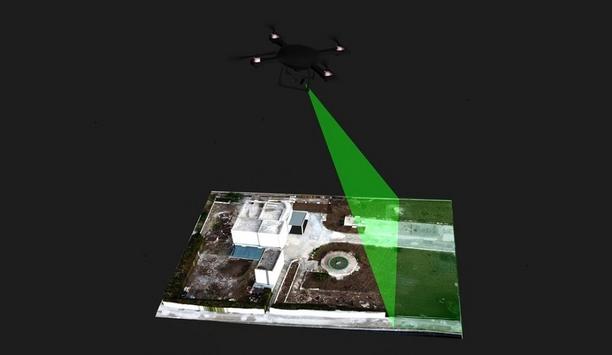
Seven minutes. That’s how long the recent Louvre heist took. In broad daylight, a group of thieves rode up on a construction platform, smashed display cases, stole several historical jewels tied to the Napoleonic dynasty and escaped on scooters before anyone in the control room even realised what was happening. It sounds like a scene straight out of “Mission: Impossible.” Only this time, Tom Cruise wasn’t there. In movies, we often see tight webs of red laser beams guarding treasures, with the hero gracefully sliding between them. Reality, however, is far less cinematic. Most museums still rely on mechanical sensors, simple infrared barriers, cameras and the most fallible component of all: the human eye. But the human eye doesn’t measure space. A camera records an image, but it doesn’t know that a display case has shifted by three centimetres, or that a visitor’s hand just crossed an invisible boundary. That’s where a new kind of perception comes in — LiDAR. From Hollywood fantasy to real-world security Forget the tangled maze of laser beams you’ve seen in films. A modern 128-channel rotating LiDAR fires hundreds of thousands of laser pulses per rotation — and it does this up to 10 times per second. That’s millions of spatial measurements every second, creating an invisible web of light that maps the scene in 3D, without anyone ever noticing. What LiDAR builds is called a point cloud — a live three-dimensional model of the environment. The system constantly compares this “snapshot” with the current scene. If anything changes — a hand moves closer to an artefact, a case is displaced or an object disappears — LiDAR detects it instantly. When technology sees in 3D Pan-tilt-zoom (PTZ) cameras automatically turn to the exact spot and start recording LiDAR technology (such as LidarVision, developed by Hexagon), brings true 3D situational awareness into museums and galleries. It doesn’t just see that someone is moving; it knows where, how fast and in what trajectory. Each detected object is tracked with its precise dimensions, velocity and spatial position. If a visitor steps too close to a protected exhibit, the system triggers an alarm. Pan-tilt-zoom (PTZ) cameras automatically turn to the exact spot and start recording. The operator no longer has to stare at dozens of screens, hoping to catch the right moment. LiDAR data also serves as forensic evidence — allowing investigators to replay the incident as a full 3D reconstruction. They can see exactly how intruders moved, from entry to exit, with centimeter precision. Beyond thieves: Everyday situational awareness LiDAR isn’t just a tool against master criminals. It helps with daily operations, too — recognising when someone lingers suspiciously near a sensitive exhibit, when an unauthorised object enters the room or even when a visitor collapses. The system can trigger a silent alert, notify security staff or automatically redirect nearby cameras. History that never comes back 13 paintings worth more than half a billion dollars vanished from Boston’s Isabella Stewart Gardner Museum Art theft is not a cinematic rarity — it’s a recurring tragedy. In 1990, 13 paintings worth more than half a billion dollars vanished from Boston’s Isabella Stewart Gardner Museum. None have ever been recovered. Even Leonardo da Vinci’s Mona Lisa was stolen from the Louvre in 1911 — though it was miraculously found two years later. That case, however, remains the exception. Thieves often fail to realise that cultural artefacts are not commodities. When they melt them down for gold or strip them for gems, they don’t just destroy value — they erase history. Spatial understanding is the future of security No security system is flawless. But while cameras merely watch, LiDAR understands space. From a single compact device, it monitors the 3D environment in real time, detects anomalies and reacts immediately. Modern security is no longer about higher fences or better cameras. It’s about spatial understanding — knowing what is happening in the room right now. And that’s something even Tom Cruise wouldn’t be able to slip through.
Security beat

Companies at GSX 2023 emphasised new ways that technologies such as artificial intelligence (AI) and the cloud can address long-standing issues in the security market. Among the exhibitors at the event in Dallas were companies seeking creative ways to apply technology, lower costs, and make the world a safer place. Reflecting on the exhibition, here are some additional takeaways. Expanding AI at the edge i-PRO is a company reflecting the continued expansion of edge AI capability in the security market. Today, more than half of the company’s lineup supports AI at the edge so the customer has a wide choice of form factors when seeking to leverage the feature set. AI processing relay, extended warranty i-PRO is increasing their warranty period from 5 to 7 years, which could be a lifetime warranty in some cases I-PRO also has an “AI processing relay” device that accepts non-AI video streams and applies edge analytics. AI has progressed from a high-end technology to a feature available in a variety of cameras at different price points. i-PRO is also increasing its warranty period from 5 to 7 years, which could be a lifetime warranty in some cases depending on a customer’s refresh schedule and lifecycle management. Active Guard, MonitorCast The company’s video management system (Video Insight) is continuing to build new features including “Active Guard,” an integrated metadata sorter. Their access control platform, MonitorCast, is a Mercury-based solution that is tightly integrated with Video Insight. Their embedded recorders now have PoE built in. “We can move at a faster pace to fill out our product line since leaving Panasonic,” says Adam Lowenstein, Director of Product Management. “We can focus our business on adapting to the market.” Emphasis on retail and other verticals Shoplifting is a timely issue, and retail is a vertical market that got a lot of attention at GSX 2023. “We see a lot of retailers who are primarily interested in protecting employee safety, but also assets,” says Brandon Davito, Verkada’s SVP of Product and Operations. “Shrinkage is a CEO-level priority.” “Retailers are getting more engaged with security posture, instead of letting perpetrators walk,” Davito adds. Intrusion detection Verkada has an intrusion product that will notify a central station if there is an alarm On the alarm side, Verkada has an intrusion product that will notify a central station if there is an alarm, and operators can review videos to confirm the alarm. Other capabilities seeking to discourage trespassers include sirens, strobes, and “talkdown” capabilities. International expansion Verkada continues to expand internationally with 16 offices in all, including Sydney, Tokyo, and London. The core value proposition is to enable customers to manage their onsite infrastructure more simply, including new elements such as PTZ cameras, intercoms, and visitor management. Verkada emphasises ease of use, including a mobile application to allow access to be managed across the user base. Forging partnerships “We are committed to the channel and industry, and we continue to build relationships and expand our reach,” says Davito. Among the industry relationships is a new partnership with Convergint, which was hinted at during the show and announced later the same day. They are also expanding their partnerships with Schlage, Allegion, and ASSA ABLOY. Working with other verticals They offer new features for K -12 schools, and a new alarm platform is easier to deploy and manage Verkada has also found success across multiple other verticals, notably healthcare, where they integrate with an electronic medical records system. They offer new features for K-12 schools, and a new alarm platform is easier to deploy and manage. They are integrating wireless locks to secure interior doors in schools, looking to secure the perimeter, and installing guest management systems. Transitioning the mid-market to the cloud Salient is squarely focused on the “mid-market,” a large swath of systems somewhere between small businesses and enterprise-level systems. Pure cloud systems are not as attractive to this market, which has a built-out infrastructure of on-premise systems. Adding a camera to an existing system is easier and less expensive than tying it to the cloud. Benefits of cloud It’s a market that may not be ready for the pure cloud, but there are benefits to be realised from adding a cloud element to existing systems. “We are continuing to augment our premise-based solutions with added cloud capabilities and flexibility,” says Sanjay Challa, Salient’s Chief Product Officer. The feedback Salient hears from their customers is “I want to own my data.” The hybrid cloud approach offers the right mix of control, flexibility, and unit economics. Cloud add-on capabilities We want to provide the flexibility for customers to go full-cloud as it becomes more economically attractive" Cloud add-on capabilities include bringing more intelligence about system operation to the user via the cloud. Over time, Salient expects to sell more cloud-centric offerings based on feedback from integrators and customers. “We want to provide the flexibility for customers to go full-cloud as it becomes more economically attractive over time,” says Challa. Vaidio AI technology Salient seeks to be a transition pioneer to help customers realise the path to the cloud. Their approach is “crawl, walk, run,” and helping customers make the transition at each stage. Salient has added AI to its product offering, incorporating Vaidio AI technology from IronYun into a powerful suite and broad array of on-premise analytics, which are gaining traction. The seamless approach makes it easy for customers to embrace AI analytics, although Salient remains broadly committed to open systems. Addressing ‘soft’ features for integrators AMAG is in the process of enhancing its product line with the next generation of access control panels. However, “product” is just part of the new developments at AMAG. In addition to “hard” features (such as products), the company is looking to improve its “soft” features, too; that is, how they work with the integrator channel. Integrator channel Rebuilding a process to make your organisation more efficient, is relatively easy; it just takes a lot of persistence" “We have the depth of our legacy customer base we can learn from, we just need to close the feedback loop quicker,” says Kyle Gordon, AMAG’s Executive Vice President of Global Sales, Marketing, and commercial Excellence, who acknowledges the value of reinstating face-to-face meetings after COVID. “We are laser-focused on nurturing our integrator channel,” he says. “Developing new features takes time, but rebuilding a process to make your organisation more efficient, that’s relatively easy; it just takes a lot of persistence,” says Gordon. More cohesive internal communication is another useful tool, he says. Disrupting the cloud based on price Wasabi is working to make cloud applications less expensive by offering a “disruptive” price on cloud storage, $6.99 per terabyte per month (80% less than hyperscalers). Contending “hyperscalers” like AWS are charging too much for cloud storage, Wasabi is using its own intellectual property and server equipment co-located in data centres around the world. Wasabi sells “hot cloud storage,” which refers to the fact that they only have one tier of storage and data is always accessible. In contrast, a company such as AWS might charge an “egress fee” for access to data stored in a “colder” tier. Cloud storage “We saw that several video surveillance companies had not yet adopted cloud storage, and we saw an opportunity to make it easy to use,” said Drew Schlussel, Wasabi’s Senior Director of Product Marketing. “We just install a little bit of software that allows them to store data in the cloud and bring it back from the cloud.” Performance, protection (cybersecurity), and price Wasabi works with integrators, resellers, and distributors and also integrates with VMS companies Wasabi works with integrators, resellers, and distributors and also integrates with VMS companies such as Genetec and Milestone. Emphasising performance, protection (cybersecurity), and price, their data centres are certified to SOC 2 and ISO 27001 standards. Faster throughput for weapons detection Xtract One is a young company focusing on weapons detection in a time of accelerated concern about gun issues post-COVID. Founded in Canada and based on technology developed at McMaster University, Xtract One has found a niche in providing weapons detection at stadiums and arenas. These customers already have budgets, and it is easy to shift the money to a newer, faster technology. Madison Square Garden in New York City is among its customers. Cost savings solution Xtract One can increase throughput to 30 to 50 people per entrance per minute (compared to 5 to 6 people per minute when using metal detectors). The solution doesn’t require anyone to empty their pockets and the system alarms on items beyond guns and knives. Using Xtract One allows customers to reduce the number of screening lanes and security staff, providing additional cost savings, all while getting fans through the screening process in half the time. Purpose-built sensors The system uses purpose-built sensors looking for specific characteristics, such as reflective and density properties In addition to stadiums and arenas, Xtract One, formerly Patriot One, is also getting “inbound” interest from schools, hospitals, manufacturers, and other verticals that makeup 50% of their business. “We’re on a rocket ride, mainly because the weapons issues are not going away,” says Peter Evans, CEO and Director at Xtract One. The system uses purpose-built sensors looking for specific characteristics, such as reflective and density properties, all correlated by an AI engine. Providing early warning of violence ZeroEyes is another company focused on weapons detection. Their AI gun detection system works with video images to identify if someone is “brandishing” (carrying) a weapon. In other words, the system does not detect concealed weapons. Identifying someone carrying a weapon provides early warning of a possible violent act. Increased response with AI-enables images Images are identified by AI and sent to a monitoring centre where a human confirms the image before contacting first responders. Knowing the location of a shooter enables staff to lock entry points, move people to safety, and direct first responders. The company was founded to leverage existing camera views to stop mass shootings and gun violence by reducing response times.

New buzzwords were abundant in the articles that generated the most clicks on our website in 2022. From the metaverse to the Internet of Things, from frictionless access control to artificial intelligence (AI), the topics most popular among our site’s visitors were at the cutting edge of change and innovation in the physical security marketplace. Here is a review of the Top 10 Articles of 2022, based on reader clicks, including links to the original content: Metaverse will promote collaboration and enable more efficiencies for security Metaverse is a familiar buzzword currently, but few people grasp what it means. In the simplest terms, the metaverse is an online “place” where physical, virtual, and augmented realities are shared. The term, Metaverse, suggests a more immersive online environment that combines elements of augmented reality (AR) and virtual reality (VR). For the physical security industry, the looming creation of a complex online environment offers possibilities and challenges. Establishing identity will be a central principle of the metaverse, and various biometrics are at the core of ensuring the identity of someone interacting in the virtual world. Cybersecurity elements are also key. On the benefits side, the security market is already taking advantage of technologies related to the eventual evolution of the metaverse. For example, the industry has deployed AR to provide information about a door lock’s status on a screen, headset, or smart glasses as a patrolling guard walks by. What are the security challenges of the transportation industry? Because transit agencies rely on several IoT devices, they get exposed to higher cybersecurity risks Rapid technological advancement, increasing urbanisation, and the growing expectations of commuters and governments are pressuring transit industry players to modernise. Commuters, urban planners, first responders, and other stakeholders want to use transit data to support their decision-making. Transit agencies’ security and operations teams need closer collaboration to stay ahead. However, for many years, most transit agencies have relied on siloed, proprietary systems. Because transit agencies rely on an ever-growing number of Internet of Things (IoT) devices, they also get exposed to higher cybersecurity risks as there are more network access points to manage. The future is here: ADT’s innovation lab evaluating robots and indoor drones New robots and indoor drones for security applications are on the horizon, based on the work of ADT Commercials’ Innovation Lab, which is evaluating the latest technologies’ value to customers and some typical use cases. The ideal use of humanoid robots is to perform jobs that are considered repetitive, dirty, dangerous, and/or mundane. In security, that describes most security guard positions. As the name implies, autonomous indoor drones are focused on flying indoors versus the outdoor environment, which is heavily regulated by the U.S. Federal Aviation Administration (FAA). Flying autonomously indoors not only eliminates FAA oversight but also will enable ADT Commercial to offer another choice to customers to further reduce their dependencies on and costs of human guards. Innovative security: the key to business efficiency, cost savings, and more Organisations have shifted business focus countless times since the onset of the pandemic. While many leaders have been primarily concerned with the immediate health and safety of their customers and employees, 2022 has given rise to a new trend. More than ever, business leaders are seeking security solutions that increase operational efficiency and cost savings as well as improve logistics and business insight. As working environments become more complex, organisations looking to drive higher productivity and profitability margins should consider security upgrades that prioritise integrated analytics and automation. Shoplifting today is more sophisticated, and so are the tools to fight it One tool to fight shoplifting is analytics, which can be used to determine where shrink is occurring Shoplifting is often viewed as petty theft by individuals, but that is not always the case. Overall, shoplifting is becoming more sophisticated and coordinated. Traditional “shoplifting” has two major differences when compared to organised retail crime (ORC). The differences are numbers and motivation. ORC consists of groups working together to monetise theft, very different than an individual taking an item they need. One tool to fight to shoplift is analytics, which can be used to determine where shrink is occurring. Understanding where crimes take place helps retailers make strategic decisions about where to place their loss prevention efforts. Oosto offers 10 reasons to switch to frictionless access control in commercial buildings Access control for buildings is nothing new. It’s only in recent years that the urgency to implement smarter, more efficient, and more convenient forms of access control has increased, in the context of public and private sector digital transformation. Upheavals from the COVID-19 pandemic have forced organisations to re-think, pivot, and invest in new technology solutions that will incorporate Artificial Intelligence (AI) and Machine Learning, to gain speed in their operations, glean actionable insights from their video analytics, and enhance productivity with their teams. Which security trend is here to stay? Technologies and trends in the security marketplace come and go with some regularity. But how can you tell which trends are gaining traction and which amount to “the flavor of the month.” For example, while many physical security departments were hesitant to consider cloud-connected solutions in the past, they now better understand the benefits these solutions bring and how they can help them utilize their resources to achieve business goals while minimising overall operational complexity. Other technologies mentioned in the article include mobile credentials, AI-based analytics, video management systems, cybersecurity, and a new emphasis on data. What do these technology trends have in common? They are opening new possibilities for greater system efficiency and functionality. In short, they are playing a role in transforming our industry. GSX 2022 reflects changing technologies and evolving role of security The role of the security director increasingly will encompass facets of cybersecurity and physical security GSX 2022 in Atlanta highlighted the changing role of security in the enterprise. The role of the security director increasingly will encompass facets of cybersecurity as well as physical security. Transitioning to an operation that incorporates both disciplines requires a workforce that embraces education and building new skills. Education and the opportunity to build new skills are evident everywhere at GSX, including in the hundreds of education sessions and also in the knowledge shared on the show floor in the exhibit hall. Consolidation changing the face of the security market Consolidation is a dominant trend in the security marketplace. Large companies typically swallow up smaller companies as a means of expanding both their technology portfolios and their geographic reach. Sometimes a big fish is swallowed up by an even bigger fish. Despite the pandemic and resulting economic challenges, the security market has continued to be a desirable environment for both big players and startups, which then provide abundant acquisition targets for larger companies. This article highlighted recent mergers and acquisition news. Six trends at the intersection of video and AI Video has evolved beyond the capabilities of advanced imaging and performance to include another level: Artificial Intelligence. Video imaging technology combines with AI, delivers a wealth of new data, not just for traditional physical security applications, but for a much deeper analysis of past, present, and even future events across the enterprise. This is more than a big development for the physical security industry; it is a monumental paradigm shift that is changing how security system models are envisioned, designed, and deployed. Much of the heightened demand for advanced video analytics is being driven by six prevalent industry trends.

For an enterprise, addressing cyber security requires that stakeholders have immediate access to critical information compiled from multiple sources and presented where and how they need it. Various data sources monitor the cyber security status of a company’s computer systems to provide real-time visibility. Aggregating that data into visual dashboards and presenting it to operators enables any cyber security problems to be flagged quickly and resolved. Software system enhances cyber security Userful Corporation provides a software system that enhances cyber security operations for an enterprise Userful Corporation provides a software system that enhances cyber security operations for an enterprise, enabling stakeholders to envision various cyber security factors, such as application security, network security, cloud security and IoT (Internet of Things) security. The software system empowers operators to respond more efficiently. Working in conjunction with a company’s existing IT infrastructure, Userful software combines datasets from diverse systems into a visual format and delivers the information to a desktop computer, a video wall, or even to a home office. Real-time visibility “It provides a new dynamic to how cyber security issues are resolved,” said Shane Vega, Userful Corporation’s Vice President (VP) of Product Marketing, adding “The individuals who have flagged a cyber security issue may not be the ones to respond. Having real-time visibility provides more value to the overall response.” A typical cyber security operations centre resembles a physical security command or emergency management hub – large video walls, individual desktop workstations, and operators that need to share information and respond quickly to any incident. Userful’s software helps in managing operations centres Userful’s software manages how data is presented in an operations centre environment, without relying on proprietary hardware, operating outside an end-user customer’s IT infrastructure. Managing operations centres is a core offering for Userful Corporation, including command centres of all types, from traditional network operation centres to emergency network systems to security systems. The ability to use one software system throughout an enterprise is appealing to companies that have historically grappled with proprietary and siloed systems. Solutions that are easy to deploy, manage and scale Cyber security professionals need solutions that are easy to deploy, manage and scale" “We are a platform that can be utilised across the enterprise,” said Shane Vega, adding “Cyber security professionals need solutions that are easy to deploy, manage and scale, so they can manage all the threats every day.” Compiling and displaying information to an operations centre has historically involved silos of proprietary audio/video (AV) hardware. Ironically, the hardware approach presents cyber security risks that undermine the very mission of protecting a company’s data and networks. The proprietary systems operate outside the company’s network infrastructure, and IT professionals do not have visibility into the systems. Security Orchestration, Automation and Response (SOAR) Instead of hardware, displaying information on Security Orchestration, Automation and Response (SOAR) can be accomplished using software running on off-the-shelf components, managed by the IT department and featuring all the cyber security protections required, throughout the enterprise’s network infrastructure. SOAR includes threat and vulnerability management, security incident response and security operations automation, enabling companies to collect threat-related data from several sources and automate the responses. Cyber security threats Possible threats might include an influx of packet generation, malware, someone seeking access to the network, or a malicious email. Various tools manage each threat, and each must be visualised. Because the threats are related, a comprehensive dashboard enables operators to create parallels and respond more efficiently. The software-as-a-service system ensures that all software is updated and can operate on the latest hardware In the Userful AV-over-IP scenario, an IT department takes full ownership of the computers and subsystems installed on the network. The software-as-a-service system ensures that all software is updated and can operate on the latest hardware. Companies always have an ecosystem of interconnectivity. Single platform/solution The single platform/solution also extends beyond operations centres to include meeting rooms and digital signage. All images are captured using existing protocols, such as Real Time Streaming Protocol (RTSP), HTTP Live Streaming (HLS), Web Real-Time Communication (WebRTC), and so forth. In contrast, the AV industry is hardware-centric and has been known to circumvent software approaches in order to justify selling more hardware. AV systems typically operate in terms of pixels rather than bytes of information and use proprietary software. Companies always have an ecosystem of interconnectivity Different departments in a company have historically installed their own specific AV systems, based on proprietary hardware, so that each department is siloed from the rest of the organisation. Dangers of random hardware on a network Random hardware on a network, beyond the reach of the IT department, can provide access points to the network for hackers and other cyber security threats. Each proprietary hardware system exists outside the existing security protocols of the enterprise and each represents a cyber security vulnerability. Some companies end up with five or six different operations centres that involve three or four manufacturers, all siloed. Software versus hardware Our biggest challenge is to get people to understand what is possible with software versus hardware" “Our biggest challenge is to get people to understand what is possible with software versus hardware,” said Shane Vega, adding “The industry is inundated with hardware, and the risk is the unknown. Customers may not be familiar with a software solution that can accomplish what they have historically depended on hardware for.” Userful Corporation works through channel partners (integrators), who assemble complete systems using Userful software and other components, such as video screens, large-format commercial displays, groups of tiled displays, projectors – any type of display with an input. Corporate policy specifies security at every level Userful’s corporate policy specifies security at every level, including user authentication, encryption, endpoint security, air-gapped servers, information security policies, General Data Protection Regulation (GDPR), and a solution built on industry-leading IT standards. To spread the word about Userful Corporation’s capabilities related to cyber security, the company will be participating in Infosecurity Europe 2022, taking place from June 21 to June 23, 2022 at ExCeL, London, United Kingdom (UK).
Case studies

Milestone Systems, a provider of open platform video management software (VMS), is helping Columbia Borough, Pennsylvania, strengthen public safety through a community-wide video security system built on Milestone XProtect® VMS. For more than 16 years, Columbia has worked with Lancaster-area security integrator App-Techs to develop and expand a distributed wireless video network serving its downtown, public buildings, parks, and other borough facilities. Today, the system supports roughly 83 camera feeds, including 4K multi-lens and PTZ cameras, primarily from iPro. Traditional wired infrastructure Located along the Susquehanna River in Lancaster County, Columbia is a historic borough of roughly 10,000 residents. As the community worked to revitalise its downtown and attract new businesses, borough leaders wanted safety and security to support that broader effort. Traditional wired infrastructure was impractical across Columbia’s geographically varied environment, requiring App-Techs to engineer a distributed wireless architecture. XProtect provides the video management foundation, with dedicated servers located in the municipal building and a remote park office. Officers can also access live camera feeds from laptops in patrol vehicles, while mobile access extends video to personnel during community events. Immediately dispatched officers Columbia’s dispatchers are the primary day-to-day operators of XProtect, monitoring cameras, and supporting officers in the field. In one incident, a dispatcher spotted someone breaking into a vending machine outside a laundromat and immediately dispatched officers. “Our staff member observed someone breaking into a vending machine just outside that building and was able to dispatch officers to the scene,” said Jack Brommer, Columbia Borough Police Department Chief. “Officers apprehended the individual, and it turns out this was a serial thief who had been breaking into vending machines across the tri-county area. So that single arrest helped resolve a number of thefts across multiple counties. That’s just the kind of impact this technology can have on a community.” Large community events The system also supports holding cells and interview rooms inside the police station, where microphones are integrated with cameras, as well as large community events. During Columbia’s annual “Thunder on the River” antique car show, Emergency Management personnel used the community camera network to support proactive monitoring and rapid response across the event. Over time, Columbia’s video system has supported faster incident response, stronger evidence for prosecution and greater situational awareness for dispatchers and police officers. Borough leaders also use signage in parks and public areas to make camera coverage visible as a deterrent. Gunshot-detection technologies “The data that I can point to is that we are trending downward, probably for the last five, six years, as far as call volume and crime trends. Those numbers have been very positive,” added Brommer. Looking ahead, Columbia plans to expand its use of video analytics, including object-search capabilities that can help investigators filter video by vehicle type, colour, and other attributes. The borough is also exploring emerging gunshot-detection technologies to further improve situational awareness.

Milestone Systems, a provider of open platform video management software (VMS), is helping Columbia Borough, Pennsylvania, strengthen public safety through a community-wide video security system built on Milestone XProtect® VMS. For more than 16 years, Columbia has worked with Lancaster-area security integrator App-Techs to develop and expand a distributed wireless video network serving its downtown, public buildings, parks, and other borough facilities. Today, the system supports roughly 83 camera feeds, including 4K multi-lens and PTZ cameras, primarily from iPro. Distributed wireless architecture Located along the Susquehanna River in Lancaster County, Columbia is a historic borough of roughly 10,000 residents. As the community worked to revitalise its downtown and attract new businesses, borough leaders wanted safety and security to support that broader effort. Traditional wired infrastructure was impractical across Columbia’s geographically varied environment, requiring App-Techs to engineer a distributed wireless architecture. XProtect provides the video management foundation, with dedicated servers located in the municipal building and a remote park office. Officers can also access live camera feeds from laptops in patrol vehicles, while mobile access extends video to personnel during community events. Immediately dispatched officers Columbia’s dispatchers are the primary day-to-day operators of XProtect, monitoring cameras, and supporting officers in the field. In one incident, a dispatcher spotted someone breaking into a vending machine outside a laundromat and immediately dispatched officers. “Our staff member observed someone breaking into a vending machine just outside that building and was able to dispatch officers to the scene,” said Jack Brommer, Columbia Borough Police Department Chief. “Officers apprehended the individual, and it turns out this was a serial thief who had been breaking into vending machines across the tri-county area. So that single arrest helped resolve a number of thefts across multiple counties. That’s just the kind of impact this technology can have on a community.” The system also supports holding cells and interview rooms inside the police station, where microphones are integrated with cameras, as well as large community events. During Columbia’s annual “Thunder on the River” antique car show, Emergency Management personnel used the community camera network to support proactive monitoring and rapid response across the event. Gunshot-detection technologies Over time, Columbia’s video system has supported faster incident response, stronger evidence for prosecution and greater situational awareness for dispatchers and police officers. Borough leaders also use signage in parks and public areas to make camera coverage visible as a deterrent. “The data that I can point to is that we are trending downward, probably for the last five, six years, as far as call volume and crime trends. Those numbers have been very positive,” added Brommer. Looking ahead, Columbia plans to expand its use of video analytics, including object-search capabilities that can help investigators filter video by vehicle type, colour, and other attributes. The borough is also exploring emerging gunshot-detection technologies to further improve situational awareness.
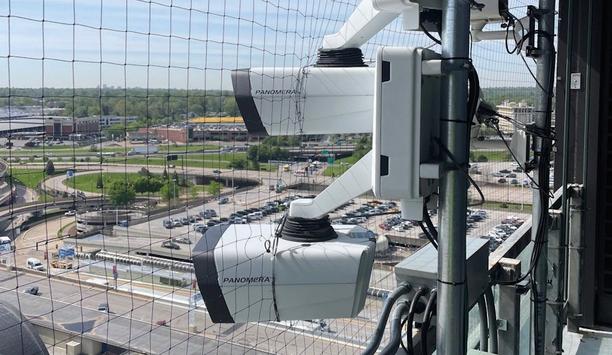
As Missouri’s largest and busiest aviation facility, St. Louis Lambert International Airport (STL) welcomed more than 15 million passengers in 2025. To implement a digital 360-degree surveillance system and secure over 70 million square feet of airport infrastructure, STL required a solution capable of covering vast spatial areas while significantly reducing infrastructure costs and complexity. At the same time, the airport aims to implement AI-applications to optimise its operations. With Dallmeier’s Panomera® multifocal sensor technology, STL achieved comprehensive high-resolution coverage with approximately 90 % fewer cameras and 75 % less infrastructure compared to the original surveillance design. Video security system Due to the continuous growth in passenger numbers, the STL Operations and Security Teams decided to modernise the existing video security system in June of 2018 in two areas: Firstly, in surface parking areas to increase customer safety and eliminate criminal activity such as vandalism and theft. The second solution targeted the airport’s four runways, the taxiways, and all terminal buildings to monitor the activities of aircraft, ground vehicles, and airport personnel. STL Airport Operations Team contacted their security integrator, Tech Electronics, to design and deploy an updated camera solution. The initial design used a combination of PTZ and single sensor IP cameras and would have required more than 130 cameras in total. From an infrastructure perspective, this would have required the installation of more than 42 new camera poles and the corresponding infrastructure (cable, network, power, etc.). The airside solution required significantly more technology to achieve the desired surveillance coverage. So, STL and Tech Electronics decided to look for another, more economical solution. Desired surveillance coverage During their technology search, STL discovered the Dallmeier Panomera® multifocal sensor technology, which was developed specifically for surveillance of large spatial areas using the fewest number of cameras to achieve the required surveillance coverage. David Kulinsky, Deputy Director of Operations & Maintenance at STL, recalls: “When we discovered Panomera® and saw that one Panomera® camera can capture large areas at high resolution and replace several single-sensor cameras, including the costly infrastructure, it became clear that Panomera® provided STL a more economical solution with higher quality images at a lower overall cost.” Intuitive user experience The test installation at the airport proved the image quality of the Panomera®. Kevin Hubble, Services Manager for STL with Tech Electronics, comments: “I was surprised at how few Panomera® cameras were needed to replace several PTZs and single sensor cameras and display the images in a much more user-friendly format. The SeMSy® Compact VMS software enables the user to view a single high-resolution image of the entire scene with simple digital PTZ controls to ‘zoom’ into any part of the image in greater detail. The result is an intuitive user experience resulting in greater operational efficiency – not to mention the superior high resolution video coverage.” To date, STL has installed more than 27 Panomera® cameras. Multiple IPS 10000 recording appliances and 5 user workstations with the SeMSy® Compact VMS client software complete the video system. Compared to the original planning, this resulted in approximately 90 % reduction in the number of cameras and approximately 75 % reduction in infrastructure required for the installation. Comprehensive situational awareness A particular highlight of the deployment is STL’s digital 360-degree surveillance concept. Using only ten Panomera® cameras, the airport achieves comprehensive situational awareness across large airside areas including runways, taxiways and apron operations. Unlike conventional camera concepts that require numerous PTZ and single-sensor cameras, Panomera® delivers a complete high-resolution overview in a single seamless image. This enables operators to monitor critical airport activities more efficiently across large spatial areas, while significantly reducing infrastructure complexity, maintenance effort and overall operating costs. AI-based video analysis Beyond security applications, STL is also evaluating Panomera® technology for operational process optimisation inside the terminals. As part of a planned deployment in the ticketing area, a Panomera® V8 system will support AI-based video analysis functions such as passenger flow and waiting time analysis. The objective is to improve operational efficiency, optimise check-in processes and enhance the passenger experience — while leveraging the same high-resolution surveillance infrastructure already deployed throughout the airport. Video information technology David Kulinsky with STL summarises: “Any technology project at an airport must deliver a solution that is operationally efficient, resilient, and built for long-term performance. Our decision to deploy Panomera® cameras significantly enhanced overall surveillance coverage across the airport while reducing the technology and infrastructure footprint required to support it.” “The system also provides the ability to zoom into specific areas without sacrificing full-scene situational awareness or recording capabilities—an operational advantage over traditional PTZ cameras, which only record the field of view being actively monitored and can limit broader operational visibility.” In 1984, Dieter Dallmeier founded what is now Dallmeier electronic – not in the proverbial garage, but in a garden shed in Regensburg, Germany. Today, the company, which can justifiably call itself a hidden champion for video information technology "Made in Germany", has several hundred employees worldwide, more than 250 of them at the company headquarters in the center of Regensburg alone. Digital image storage system Dallmeier's camera, recording, software, and analysis solutions optimise security and processes for B2B end customers in a wide range of industries in over 60 countries. The focus is on users from the casino, smart city, airports, logistics, stadiums, and industrial sectors. But also, banks, critical infrastructure facilities as well as medium-sized companies from all sectors. With pioneering innovations, Dallmeier has succeeded time and again in placing itself at the forefront of technology: From the world's first digital image storage system with motion analysis in 1992, the patented "multifocal sensor technology" Panomera® with its "Mountera®" mounting system, to the latest Domera® camera family, which allows up to 300 camera variants with only 18 components. Complete manufacturing process These and many other innovations provide real, tangible customer benefits. And with a low Total Cost of Ownership (TCO) and a high Return on Investment (ROI) they can easily compete with systems produced and supplied from low-wage countries. With "Made in Germany", we also guarantee our customers the highest standards in data protection, cybersecurity, and ethical responsibility. With high quality and short supply chains, we also ensure – almost incidentally – sustainability and environmental protection. From our prestigious headquarters in the center of Regensburg, Dallmeier not only carries out its own research and development but also the complete manufacturing process – from component to product to solution.

Stadiums and arenas are no longer places that come to life only on an event day. Increasingly, they are becoming year-round hubs for concerts, conferences, hospitality, retail, and community activity. The Tottenham Hotspur Stadium is one such example of a venue generating additional revenue and audiences beyond football matches, with its 2025 commercial income rising from £255.2 million to £277.1 million, due to hosting four National Football League (NFL) franchises, high-profile boxing events, and a Beyoncé summer concert series. Positive visitor experience Yet, as these venues grow more complex and multifaceted, so does the challenge of keeping visitors and staff safe throughout the year. Security is no longer simply about responding to incidents.; Instead, it has become a strategic function that enables stadium leadership to tailor security to different event types and risk levels, keep on top of health and safety and maintenance, and add value to marketing, sales, operations, and more. More pointedly, venue operators will soon have to comply with the Terrorism (Protection of Premises) Act 2025, better known as Martyn's Law, which received Royal Assent in April 2025 and is expected to come into force in spring 2027. With less than a year before implementation is anticipated, organisations responsible for large publicly accessible venues are increasingly assessing how they can strengthen preparedness while maintaining a positive visitor experience. Wider readiness strategy Named in memory of Martyn Hett, a victim of the Manchester Arena attack in 2017, the legislation introduces new responsibilities for venue operators to consider the risk of terrorism and put appropriate measures in place to help prevent, respond to, and reduce the impact of a terrorist attack if it occurs. Notably, for venues with attendees of over 800 people, physical protection such as video surveillance, vehicle access control, ground security, and more, must be considered and evaluated on a regular basis. AI-powered video solutions can help organisations meet their obligation under Martyn’s Law as part of a wider readiness strategy. Video surveillance systems Traditional video surveillance systems have always played a critical role in venue security, but their effectiveness has often relied on human operators monitoring dozens, or even hundreds, of video feeds simultaneously. In busy environments, critical details can be missed, particularly when security teams are managing large crowds, multiple entry points, and fast-moving situations. With AI-powered cameras and video management systems (VMS), operators no longer need to continuously monitor multiple video, chat, and sensor data streams. Instead, AI does the monitoring, flagging any suspicious activity, unauthorised objects (people and vehicles), crowd congestion, and so on, for operators to respond to if needed. Operators are freed up to focus on other activities, while the system will quickly alert them to events that require intervention, helping them respond to events rapidly and prevent situations from escalating. Ground teams also benefit from contextual, AI-powered insights that can help them track and locate a person or vehicle of interest, such as clothing colour, direction of travel, and if they are potentially carrying a weapon. Multi-directional models By enabling security teams to assess and respond to situations before they develop into something more serious, venues are better prepared for some of the objectives underpinning Martyn's Law. The legislation places particular emphasis on preparedness, requiring organisations to consider how they would respond to incidents through measures such as evacuation, lockdown procedures, and effective communication. Situational awareness is fundamental to all four. Modern-day cameras equip operators with high-definition footage of an event or object of interest. Most cameras available on the market start at 1080p definition, with 4MP, 6MP, 8MP or 4K resolution options. Camera form factors have also improved, with dome, flat eye, bullet, fish eye, pan-tilt-zoom (PTZ), thermal, and multi-directional models providing venues with a range of options to fit any sized area and surveillance need. Monitoring crowd movements Real-time intelligence from video surveillance provides operators with a clearer understanding of what is happening across a venue and its surrounding environment. Vitally, AI-powered video analytics and AI object detection help operators to avoid missing events that need their attention and action. During an emergency, security teams can monitor crowd movements, identify potential bottlenecks, move towards the last known location of a potential attacker, and direct the public away from dangerous areas. Information on an attacker’s location, physical appearance, and direction of travel, plus the location of any casualties or people hiding within the venue, can be shared with on-site personnel and emergency services, helping to coordinate a faster and more efficient response. Multiple analytics triggers To further refine operator response times and efficiency, alerts can be set based on multiple analytics triggers, for example, if a person is detected crossing a line and then remains in a pre-defined area for a set number of seconds. For post-event investigations, operators can search footage quickly using the metadata stored within video. For example, they can pull up all footage of all people wearing a grey top, or, to filter this further, a child wearing a grey top. This improves the efficiency and speed of carrying out investigations. Generative AI tool Moreover, if a video analytics tool supports it, operators can use an AI-powered search feature that enables them to input a phrase or sentence of what they are looking for, with the system showing them all relevant results. This feature, known as semantic search, is a more natural way of searching akin to prompting a generative AI tool to come to a result. Operators can also select a specific area of interest to view all footage related to that area, allowing them to quickly find motion within that area. They can see all motion within that section on all captured video footage, to see, for example, who left a suspicious package in a room. Some video analytics systems can also pull footage of similar objects across multiple cameras, which can help track the direction of a vehicle or person of interest as they move across a busy and large event space. Wider entertainment districts Modern venue security increasingly extends beyond the perimeter fence or turnstile. Many new stadium developments are embedded within wider entertainment districts, retail destinations, and mixed-use communities. As a result, operators are responsible for understanding activity not only inside a venue but also across surrounding public spaces where large crowds gather before and after events. AI-enabled video helps operators to monitor large areas efficiently, maintaining situational awareness across multiple locations and mixed-use premises (the arena, retail, transport links, storage and backroom areas, and so forth). Operators gain a comprehensive understanding of potential risks and a stronger ability to respond before issues escalate. AI-powered video analytics There are also value-added benefits to other departments, such as marketing, sales, maintenance, staffing, and cleaning. Understanding and predicting busy periods and crowd flow patterns, alerting to long queue lengths, identifying congestion points, and monitoring vehicle movements and parking spaces all help to improve the visitor experience and streamline event operations. This is particularly useful for multi-use venues where one day a football match may be hosted, the next day a corporate event, and the following day a concert, with different stadium areas being used each time. Operators need visibility of how people move through their spaces and where resources are best deployed. AI-powered video analytics can provide that intelligence in real time. Venue leaders have a short window of opportunity to strengthen their security strategies ahead of Martyn’s Law coming into force. Investing in AI-powered video security shifts security into a proactive, value-generating function that meets the needs of today’s multi-use event spaces and helps to deliver the visitor experience that attendees have become accustomed to.

Genetec Inc., the global pioneer in enterprise physical security software, announces that World of Volvo, a 22,000 m² brand experience centre in Gothenburg, Sweden, has deployed Genetec™ Security Center to help protect the venue, its visitors, and the vehicles on display. The facility, which is a joint initiative of Volvo Group and Volvo Cars hosts permanent and temporary exhibitions of historical, contemporary, and future Volvo vehicles, as well as external events. More than 2,500 visitors enter the experience centre each day. In line with Volvo’s safety strategy, the goal is to provide all guests with a secure and well-managed environment. Multi-sensor cameras To support that objective, guards manage Genetec Security Center from a central control room, monitoring more than 100 i-PRO cameras installed throughout the building. These include PTZ (pan-tilt-zoom), fisheye, and multi-sensor cameras. The project was managed by Swedish systems integrator Granitor. “With Security Center, it’s easy to see what’s happening and make quick decisions on how to respond. The platform’s usability is great; we were up and running in half a day,” said Ulf Hermansson, Facility & Security Manager at World of Volvo. “Ease of use is critical, as several external safety guards are using Security Center in our central control room.” Security infrastructure appliances In addition to the brand experience centre, a Volvo warehouse site has also implemented Genetec Security Center. Using the Federation™ feature, security personnel can handle alarm verification and gate control for the warehouse directly from the central control room. Systems across both sites run on Genetec Streamvault™, a line of turnkey, pre-hardened security infrastructure appliances (servers, workstations, and recorders) pre-loaded with Genetec Security Center. “Safe technology is in Volvo's DNA. The quality and features of Genetec Security Center match our safety standards, using intelligent technology. It ensures that our visitors feel as safe in our building as they would in a Volvo,” added Hermansson.

Gümüşdoğa Aquaculture is a professional fish farming company based along Turkey’s Mediterranean coastline, managing several large-scale offshore cage farming sites. Located approximately five kilometers from shore, these sites are essential to the company’s core fish production activities. Operating in an offshore environment created the need for a dependable system to support feeding management, real-time monitoring, theft prevention, and stable communication between offshore facilities and the onshore control center. To meet these requirements and enhance overall operational efficiency, a comprehensive smart surveillance and monitoring solution developed by Dahua was implemented. Key challenges in offshore fish farm operations The offshore fish farming environment presented several operational challenges, including frequent nighttime theft by unauthorized individuals using small boats, which was difficult to detect due to poor visibility and delayed response capabilities. At the same time, the onshore monitoring center lacked real-time visibility of offshore cages and could not rely on stable backup communication links. These issues were compounded by inconsistent offshore power supply, which made continuous operation of traditional CCTV systems impractical. In addition, the absence of underwater monitoring limited visibility into fish feeding behavior, resulting in inefficient feeding practices, increased feed waste, and higher operating costs. Implementing an intelligent monitoring solution To address these challenges, Dahua developed an integrated surveillance and monitoring solution specifically designed for offshore aquaculture operations. It comprises: Thermal Imaging for Night Security: Thermal imaging PTZ cameras were deployed to enable reliable detection of unauthorized activity at night, significantly improving security and response efficiency. Wireless Data Transmission: Wireless transmission technology greatly ensures stable, long-distance communication between offshore cameras and the onshore monitoring center. Solar-Powered Camera Systems: Solar-powered solutions provide a dependable energy source, enabling uninterrupted 24/7 camera operation in offshore areas with limited power supply. Underwater Monitoring for Feeding Control: Cameras integrated with professional waterproof housings enable real-time underwater observation of fish behavior, allowing operators to stop feeding when fish were no longer actively eating. A sustainable fish farm management The deployment of the smart surveillance system delivered clear and lasting improvements to fish farm operations. Nighttime theft was effectively eliminated, reducing annual financial losses by at least USD 10,000. The onshore monitoring center now benefits from stable, continuous video transmission, ensuring reliable visibility without data loss caused by network disruptions. Solar-powered camera systems enabled uninterrupted 24/7 operation in the offshore environment, while real-time underwater monitoring optimized feeding management, reducing feed costs by more than 30% and significantly improving overall operational efficiency. “This is something we can do entirely thanks to Dahua. It allows us to stay connected with offshore units. Normally, this kind of setup can only be done on land. Achieving this at sea when there’s constant movement is very difficult. We believe we’ve succeeded with Dahua,” says Mert Deveci, Security Camera Maintenance and Management Supervisor at Gümüşdoğa Aquaculture. Takeways By combining intelligent surveillance, wireless communication, solar energy, and underwater monitoring technologies, Gümüşdoğa Aquaculture successfully overcame the challenges of offshore fish farming management. The project not only enhanced security and operational visibility but also delivered significant cost savings and efficiency improvements, setting a strong foundation for sustainable offshore fish farming operations.
Round table discussion

As physical security technologies become more complex, it is incumbent on the dealer/integrator to have the skills and expertise needed to ensure that a system operates smoothly. The value of integrators increasingly rests on the skill sets they bring to bear when installing a system. If the skills are missing, there is a problem. We asked this week’s Expert Panel Roundtable: What missing skills among security integrators can cause problems for customers?

The role of the integrator/installer in the physical security marketplace is shifting as technologies evolve and applications expand. Integrators are being faced with a need to augment their expertise both in a wider range of systems and deeper into the specifics of each increasingly complex technology. At the end of the day, it falls to the integrator/installer to ensure a system performs as promised, however much a consultant or even a manufacturer might be involved in the process. We asked this week’s Expert Panel Roundtable: How is the role of the security installer/integrator changing?

“Deep learning” is recently among the more prevalent jargon in the physical security industry, and for good reason. The potential benefits of this subset of artificial intelligence (AI) are vast, and those benefits are only now beginning to be understood and realised. But how can we separate the marketing hype from reality? How can we differentiate between future potential and the current state of the art? To clarify the latest on this new technology, we asked this week’s Expert Panel Roundtable: What is “deep learning?” How well does the security industry understand its full potential?
Products



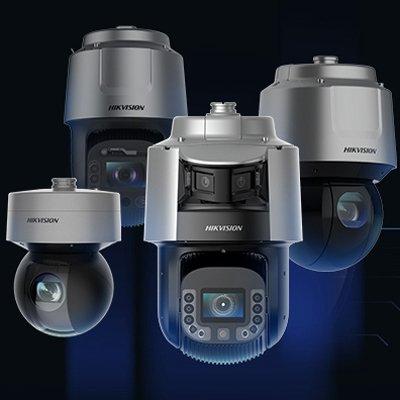




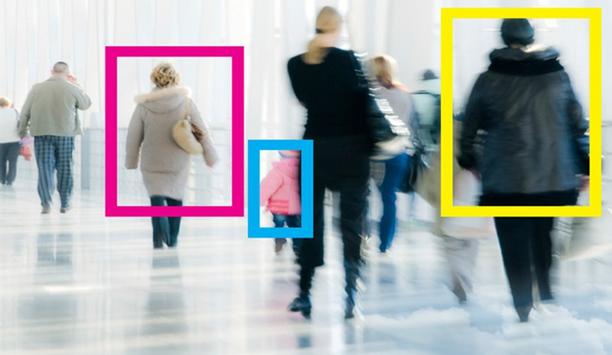

Videos


PTZ cameras: Manufacturers & Suppliers
- Hikvision PTZ cameras
- Dahua Technology PTZ cameras
- Hanwha Vision PTZ cameras
- AV Costar PTZ cameras
- LILIN PTZ cameras
- Bosch PTZ cameras
- Honeywell Security PTZ cameras
- Axis Communications PTZ cameras
- Pelco PTZ cameras
- Vicon PTZ cameras
- Avigilon PTZ cameras
- Verkada PTZ cameras
- Videotec PTZ cameras
- Sony PTZ cameras
- FLIR Systems PTZ cameras
- Messoa PTZ cameras
- IDIS PTZ cameras
- Illustra PTZ cameras
- TruVision PTZ cameras
- Visionhitech PTZ cameras

Technology's role in securing banks and financial institutions
Download
Security technologies promote real-time awareness in K-12 schools
Download
Integrated systems enable critical and compliant security for transportation
Download
Modernising physical access control
Download
Access. Intrusion. One estate.
Download