Smart Cities

OPTEX, a pioneer in sensing technologies, will present its latest perimeter and asset protection solutions at Security Essen 2026, one of Europe’s pioneer security trade fairs. Throughout the exhibition OPTEX will showcase its expertise in intrusion detection technologies, alongside its continued investment in the DACH market and its customer-focused approach. Security Essen will also mark Dirk Schiller’s first event as OPTEX’s new Head of Sales DACH, giving customers and part...

Dallmeier will present its latest video security solutions and integrations at Security Essen from September 22 to 25, 2026, together with its technology partners Advancis and barox. This year’s trade show presence will focus, among other things, on integrated solutions for professional video security – from responding quickly to security-related events to efficiently monitoring the network and video systems in use. Visitors will also have the opportunity to experience the Pa...

From AI-powered hazard detection and connected factories to fire prevention, smart buildings, and robot demonstrations, Secutech Vietnam 2026 opens today in Hanoi with a focus on technologies that help protect, manage, and operate urban environments and production facilities more effectively. Taking place from 9 – 12 September 2026 at the Friendship Cultural Palace alongside Fire & Safety Vietnam and SMABuilding, the 19th edition will host 480 exhibiting brands from 16 countries and r...

Aetina Corporation, a foremost provider of edge AI solutions and accelerator of edge AI infrastructure, announced the launch of MegaEdge AIP-RQ87, a ready-to-deploy 2U edge agentic AI system designed to help enterprises and system integrators (SIs) rapidly implement AI agent, private LLM, RAG application, multimodal AI, and AI-driven intelligent automation. Powered by Intel® Core™ Ultra processors with high-bandwidth PCIe Gen5 x16 architecture, AIP-RQ87 delivers enterprise-grade AI co...

With the new Privacy Mode, Dallmeier is expanding its video solution with a powerful data protection feature: Operators can centrally and temporarily disable image capture, recording, and image output – system-wide or in defined sub-areas. At the same time, the activated Privacy Mode is clearly indicated directly on the cameras. With the new Privacy Mode, Dallmeier is focusing above all on ease of use: The feature allows operators to temporarily disable image capture and recording for the...

Managing access control for a single facility is very different from overseeing dozens of locations across multiple regions. As organisations grow, security teams must manage more access requests, frequent role changes, and compliance across multiple sites. At the same time, access control systems are becoming more connected to identity management platforms, business applications, and corporate networks. Access control was once considered primarily a door-management function, it is now closely...
News

The new AIE-VN34/44 and AIE-VO24/34 combine up to 100 TOPS of AI performance, four GMSL2 camera connections, and fanless rugged operation for transportation, AMR, and industrial automation applications. Aetina Corporation, a pioneer AI solution provider and an accelerator of edge AI infrastructure, announces the DeviceEdge AIE-VN34/44 and AIE-VO24/34, Aetina’s first palm-sized in-vehicle edge AI systems, powered by NVIDIA Jetson Orin NX and NVIDIA Jetson Orin Nano modules. Delivering up to 100 TOPS of AI performance and supporting up to four GMSL2 cameras in an ultra-compact, rugged form factor, the new systems are ready for mass production and target smart transportation, autonomous mobile robots (AMR), and industrial automation deployments where space and reliability are equally critical. Industrial automation deployments As AI-powered vision systems become increasingly essential across smart cities, intelligent transportation, and industrial automation, real-time processing of high-quality, multi-camera video streams within space-constrained environments remains a persistent challenge. The AIE-VN34/44 and AIE-VO24/34 address this directly: powered by NVIDIA Jetson Orin NX (8GB/16GB) and NVIDIA Jetson Orin Nano with Super Mode (4GB/8GB), the systems deliver up to 100 TOPS and 67 TOPS of AI performance respectively, packed into a palm-sized 136.3 x 132 x 63 mm chassis. Each system features four GMSL2 (Fakra-Z) ports, enabling long-distance, low-latency multi-camera streaming, real-time AI inference, and 360-degree environmental perception for surround-view monitoring, blind-spot detection, and situational awareness. Long-distance image transmission To accelerate system integration, the AIE-VN34/44 and AIE-VO24/34 can be flexibly expanded with Aetina validated GMSL2 adapter boards and camera modules, which support with plug-and-play driver-ready for long-distance image transmission of up to 15 meters. This bundle offering brings together camera sensing, high-speed visual data transmission, and NVIDIA Jetson Orin–powered edge inference, helping customers simplify system integration, shorten development and validation cycles, and achieve highly scalable, customisable AI deployment. Automotive electronic equipment Engineered for demanding mobile and industrial applications, the AIE-VN34/44 and AIE-VO24/34 pair rugged reliability with flexible connectivity. Both systems have passed MIL-STD-810H shock and vibration testing and carry E-Mark (E24) certification for automotive electronic equipment, streamlining integration into global vehicle markets. A fanless architecture supports stable, throttle-free operation from -25°C to +55°C, while a 9–36V DC wide-voltage input and integrated Ignition Power Control protect against voltage fluctuations and enable safe startup and shutdown. Isolated CAN FD and GPIO/RS-232 interfaces connect vehicle signals, controllers, sensors, and industrial peripherals, complemented by Gigabit Ethernet (GbE), USB 3.2, HDMI, M.2 M-Key storage, and optional M.2 E-Key wireless expansion. Actionable intelligence for AI agents The convergence of V2X and edge computing continues to drive demand for compact, rugged in-vehicle computing platforms that capable of processing multi-camera vision data locally and in real time. The AIE-VN34/44 and AIE-VO24/34 turn visual data into actionable intelligence for AI agents and autonomous systems, supporting surround-view monitoring and blind-spot detection for commercial vehicles, obstacle avoidance and path planning for AMRs, real-time defect inspection on production lines, and people tracking and security monitoring across smart retail and building environments. AI computing portfolio James Ho, Manager of Edge Computing Product Division at Aetina, stated: “As real-time, multi-camera perception becomes the sensing layer for AI agents operating in vehicles, AMRs, and industrial equipment, customers need edge compute that is rugged enough for the field and ready for mass production from day one, Aetina’s palm-sized in-vehicle edge AI systems bring four-camera GMSL2 support, automotive-grade certification, and NVIDIA Elite Partner-backed BSP support together in one rugged multi-vision platform, helping customers simplify integration and accelerate the deployment of intelligent vision at the edge.” The AIE-VN34/44 and AIE-VO24/34 are available now for mass production, supporting BSP built on NVIDIA JetPack 6.2, with NVIDIA JetPack 7.2 support to be added soon.
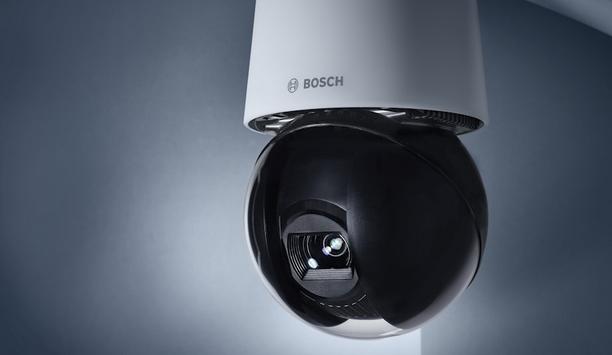
IQSIGHT, formerly Bosch Video Systems and a pioneer in intelligence-first video security, today announced the release of the AUTODOME 7100s and AUTODOME 7100s IR. Designed for outdoor environments, the new pan-tilt-zoom (PTZ) cameras deliver clear images in all lighting conditions and built-in video analytics to secure critical assets day or night. The AUTODOME 7100s series addresses complex surveillance challenges across smart cities, transportation networks, critical infrastructure, and government facilities. Built on IQSIGHT’s intelligence-first platform, both models offer AI-enabled video analytics for precise detection while reducing false positives and are ready for context-aware GenAI capabilities available later this year. Real-world conditions Built for consistent results in real-world conditions and intelligence at the edge, key features of the AUTODOME 7100s series include: Detailed 4MP Video: Capture high-resolution images with a 30x optical zoom lens for reliable object identification up to 919 feet (280 meters). Motion-optimised HDR X technology prevents motion blur and trailing artifacts on fast-moving vehicles and people, even while the camera is actively panning or tracking. Visibility in challenging light conditions: Dynamic IR illumination synchronises beam angle and intensity with the optical zoom level to deliver balanced, glare-free exposure in total darkness up to 1,804 feet (550 meters). Built-in Intelligent Video Analytics Pro (IVA Pro): Comes standard for reliable intrusion detection, alerts, and operational insights in and around buildings and along perimeters. Additional licenses support object classification and counts for a range of security and safety uses. Robust Design for Reliable Operation: Brushless positioning motors deliver precise accuracy and Kevlar-reinforced drive belts are engineered for long-term performance. Positional encoders ensure the camera never loses track of its position, even following power losses or exposure to excessive force. Intelligent Power Modes: Adaptive PoE Management automatically detects available power levels and scales functions, including heaters, IR operation, and pan speeds, for continuous operation on low-power infrastructure. Secure by Design: Features an onboard Secure Element 3.0 certified to Common Criteria EAL6+ and FIPS 140-3 Level 3 to protect sensitive video data.

IQSIGHT, formerly Bosch Video Systems, a global pioneer in intelligence-first video security, announced the expansion of its multi-sensor camera family with the launch of the FLEXIDOME multi+ 7100i. This versatile multi-imager delivers 360-degree coverage, built-in intelligence, and modular flexibility. Featuring four independent 5-megapixel imagers, the FLEXIDOME multi+ 7100i delivers a full 20-megapixel view of an environment from a single IP address. The camera’s unique modular design allows it to be combined with a pan-tilt-zoom (PTZ), panoramic, or fixed camera, delivering a unified platform to meet customers’ precise requirements. It replaces multi-camera setups with one intelligent system for expanded coverage, streamlined installations, and reduced complexity. Demanding operational scenarios HDR-X and starlight technology and an IR variant offering up to 98 feet (30 meters) of illumination ensure consistent clarity across dynamic lighting conditions, low-light environments, and demanding operational scenarios for confident decision-making. The launch of the FLEXIDOME multi+ 7100i builds on IQSIGHT’s continued investment in its multi-sensor portfolio. It follows the rollout of the FLEXIDOME dual 7100i IR earlier this year. With two independent imagers, the camera supports flexible configurations, including dual-directional views, a 180-degree overview, or a combined telephoto and wide-angle perspective in a single direction–maximising coverage along corridors, in stairwells, and around corners. These new models join the established FLEXIDOME multi 7000i cameras, creating a complete portfolio of multi-sensor offerings. Personal protective equipment The entire multi-sensor family features built-in Intelligent Video Analytics Pro (IVA Pro) for reliable intrusion detection, alerts, and operational insights in and around buildings and along perimeters. Additional licenses for the latest models support object classification and counts for a range of security and safety uses, including traffic monitoring in smart cities, person attribute data capture in large transportation applications, and detection of missing personal protective equipment in critical environments. The FLEXIDOME multi+ 7100i also offers the intelligent MultiGuard PTZ solution when paired with the new AUTODOME 7100s PTZ camera. With MultiGuard PTZ, the multi-imager camera’s edge-based analytics automatically detects activity across wide areas and steers the PTZ camera to zoom in and track objects of interest–capturing detailed images, streamlining response times, and reducing operator workload. “With a comprehensive portfolio of intelligent multi-imager cameras, customers can address a wide variety of security and operational needs using IQSIGHT solutions,” said Sachin Khanna, Vice President and Chief Product Officer, IQSIGHT. “With broad-area coverage and AI-driven analytics at the edge, organisations gain greater situational awareness, real-time understanding, and the insight needed to make faster, more informed decisions.”

3xLOGIC, the foremost provider of integrated and intelligent security solutions, has launched VIGIL 13.5, the latest update to its VIGIL Video Management System (VMS). The new release introduces AI Bridge and Face Recognition, allowing organisations to deploy advanced AI-powered video analytics and security intelligence without replacing existing camera infrastructure. VIGIL 13.5 has been designed to support users who wish to improve operational awareness, automate security workflows, and modernise surveillance capabilities while maximising their existing investment. AI Bridge brings AI analytics to legacy ecosystems AI Bridge is a hardware layer that runs deep learning analytics on video from existing IP cameras. It applies edge-based deep learning analytics to existing IP camera deployments, enabling standard cameras to deliver intelligent detection and real-time alerts without the cost and disruption of a complete hardware refresh. For dealers and integrators, AI Bridge creates new opportunities to bring AI capabilities into existing customer environments while reducing barriers to adoption. Organisations can extend the life of their current camera infrastructure, accelerate AI adoption, and build a future-ready surveillance strategy without undertaking costly rip-and-replace projects. AI Bridge supports a broad range of AI-powered analytics, including person, vehicle, object, perimeter and loitering detection, dwell time, people counting, and fall detection. This makes it particularly attractive to retailers, educational institutions, healthcare, hospitality and entertainment, warehouses, and smart city leaders. Object detection, for example, can help operators track unexpected vehicles on an academic campus or warehouse yard. Fall detection ensures a quick response if a person in a clinic or resident in a care home falls, while entry and exit detection will alert to possible absconding. This ensures individuals remain safe while staff can continue their duties with peace of mind that the system will alert them to any unusual behaviour or emergencies. In retail settings, people-counting can improve wait times and queue management in a store, ensuring a good customer experience. Intrusion detection can secure back offices and stockrooms, and dwell times can tell leaders what areas of a store are most popular. Vendor-neutral offers greater flexibility The platform is vendor-neutral, supports mixed camera environments, and can be centrally configured through the VIGIL Server Management Utility (VSMU). Customers can also combine AI Bridge along with 3xLOGIC's Edge-Based Deep Learning cameras within a single VIGIL deployment, providing a flexible approach to modernisation across hybrid environments. Supporting proactive security VIGIL 13.5 also introduces Face Recognition capabilities to the VIGIL platform, helping security teams move beyond passive video monitoring to responsible, proactive awareness. Using edge-based AI processing, the feature allows organisations to create secure local watchlists, receive real-time alerts when persons of interest are detected, rapidly search recorded footage, and automate workflows based on facial recognition events. Designed with privacy in mind, facial recognition processing takes place at the edge, helping organisations maintain control of sensitive data while improving investigation speed, situational awareness, and employee efficiency. Part of the wider ecosystem The latest release integrates seamlessly with the wider 3xLOGIC ecosystem, including VIGIL CLOUD, PACOM VIGIL CORE and SONITROL CORE, inviting users to deploy AI analytics across on-premises, cloud and hybrid environments. AI Bridge is available as either a perpetual license for on-premise deployment or as a subscription through VIGIL CLOUD, giving customers the flexibility to align deployment with operation and budget requirements. Mike Poe, Director of Product Management at 3xLOGIC said: "AI is helping organisations unlock more value from the infrastructure they already own. Now, with VIGIL 13.5, customers can add powerful AI analytics and facial recognition to existing camera deployments without the cost and disruption of replacing their entire surveillance estate. Whether they're looking to improve security, increase efficiency or begin their AI journey, VIGIL 13.5 provides a practical and scalable path forward."

Matrix Comsec, a foremost provider of enterprise security and surveillance solutions, announced a technology partnership with Yotta Data Services, integrating its SATATYA IP Video Surveillance portfolio with Yotta’s Drishticam AI Powered Cloud Native Video Surveillance as a Service(VSaaS). The integration enables organisations to transform conventional video surveillance into a centralised, cloud-managed, AI-powered security ecosystem that simplifies operations across distributed enterprise environments. Matrix–Yotta integration As organisations continue expanding across multiple locations, security teams are increasingly looking beyond traditional on-premise surveillance systems toward cloud-native platforms that offer centralised visibility, remote accessibility, intelligent automation, and greater operational flexibility. The Matrix–Yotta integration brings together Matrix's enterprise-grade IP cameras and Drishticam's cloud-native Intelligent Video Management Platform (VMS) to deliver a comprehensive, future-ready, indigenous sovereign surveillance solution. By combining trusted hardware with an intelligent cloud platform, this partnership empowers enterprises and government organisations to modernise their surveillance infrastructure, streamline security operations, and accelerate their digital transformation through a secure, scalable, and AI-driven video management ecosystem. Matrix SATATYA IP Cameras Built on ONVIF standards, Matrix SATATYA IP Cameras seamlessly integrate with the Yotta Drishticam Cloud AI-Powered Intelligent Video Management Platform, allowing organisations to securely stream video to the cloud while managing geographically dispersed sites through a unified interface. The integrated solution delivers centralised device management, AI-powered video analytics, encrypted cloud recording, real-time event monitoring, and secure remote access—helping organisations respond faster to incidents while improving operational efficiency. Integrated solutions Key capabilities of the integrated solution include: Simplified Deployment: Automatic discovery and onboarding of Matrix IP Cameras using ONVIF standards for faster implementation. Centralised Cloud Management: Unified device registration, health monitoring, lifecycle management, and configuration across multiple locations. AI-Powered Video Intelligence: Advanced analytics including intrusion detection, human and vehicle classification, loitering, line crossing, crowd density, object left/removed detection, fire and smoke detection, PPE compliance, and Automatic Number Plate Recognition (ANPR), etc. Intelligent Event Management: Correlates AI-generated events with live video, recordings, snapshots, and alerts for faster investigation and incident response. Secure Cloud Operations: Encrypted cloud recording with configurable retention policies, remote access to live and recorded video, and intelligent real-time notifications across multiple communication channels. The solution is designed for organisations operating across distributed environments—including corporate campuses, manufacturing facilities, logistics and warehousing, commercial buildings, retail chains, healthcare institutions, educational campuses, critical infrastructure, and smart city projects—where centralised security operations and scalable cloud infrastructure are becoming increasingly important. Authority comments "Enterprise security is rapidly evolving from hardware-centric deployments to intelligent, cloud-managed ecosystems. Organisations today need surveillance solutions that are scalable, easy to manage, and capable of delivering actionable intelligence across geographically distributed operations. Through our integration with Yotta Drishticam, we are combining Matrix's enterprise-grade surveillance technology with cloud-native video management and AI-driven intelligence to help customers build more connected, efficient, and future-ready security operations." Tarun Sharma, Senior Vice President – Marketing, Matrix Comsec. "At Yotta, our vision is to make enterprise video surveillance more intelligent, accessible, and scalable through cloud innovation. Matrix's proven enterprise-grade IP surveillance camera portfolio complements Yotta Drishticam's cloud-native architecture, enabling organisations to deploy secure, AI-powered surveillance solutions that improve operational visibility while simplifying infrastructure management." Sashishekar Panda - Executive Vice President, Business Head, Cloud and Media Services, Yotta Data Services. Partnership benefits The partnership reflects the growing industry shift toward open, interoperable, and transformational AI-driven security ecosystems, where enterprise-grade devices, cloud-native platforms, and intelligent analytics work together to deliver greater scalability, operational visibility, and faster decision-making. By combining trusted surveillance hardware with advanced cloud capabilities, Matrix and Yotta are enabling organisations to confidently accelerate their transition toward modern, cloud-enabled security.

Artificial intelligence is transforming video surveillance from a passive recording system into an intelligent platform for real-time decision-making. Powered by deep learning, computer vision, and edge computing, AI-driven video intelligence enables organisations to move beyond post-incident investigation toward proactive security, operational efficiency, and predictive insights. As governments, enterprises, and critical infrastructure expand surveillance networks, the focus is shifting from deploying more cameras to extracting actionable intelligence from vast volumes of video data. This evolution demands scalable, interoperable, and privacy-conscious solutions capable of delivering real-time analytics that enhance safety, streamline operations, and support smarter, faster decision-making across diverse environments — not controlled demos. AI-powered video intelligence No Indian company has answered that call more decisively than Videonetics. Ranked India’s #1 Video Management Software provider by Omdia and recognised among the top players in Asia-Pacific, Videonetics has spent over 17 years engineering AI-powered video intelligence from the ground up — not adapting foreign technology, but building it indigenously, for the conditions the real world actually presents. Today, its solutions power 150+ cities, 80+ airports, critical infrastructure, manufacturing facilities, financial institutions, and enterprise campuses across India, Southeast Asia, and the Middle East. By combining advanced AI research with open architecture and customer-centric deployment strategies, Videonetics has positioned itself at the forefront of the industry’s transition toward intelligent video computing. Video intelligence platform Founded in 2008 by Dr. Tinku Acharya — an IEEE Fellow, holder of over 180 patents, and former Intel scientist — Videonetics began with a conviction that has never wavered: that video is one of the richest, most data-dense IoT sensors available, and that unlocking its potential requires purpose-engineered AI, not retrofitted analytics. That conviction produced India’s first indigenous Video Management Software. It has since produced a comprehensive AI-powered video intelligence platform serving smart cities, airports, critical infrastructure, manufacturing facilities, financial institutions, and enterprise campuses across 150+ cities in India, Southeast Asia, and the Middle East. According to Bhardwaj Naik, Senior Vice President and Chief Revenue Officer, the company’s founding insight was rooted in a clear market failure. “Organisations were deploying thousands of cameras, yet the intelligence extractable from footages remained practically zero. Surveillance was fundamentally reactive; a forensic tool used only after a failure occurred. Videonetics was built to change that equation.” Conventional facial recognition At the heart of the platform is “Deeper Look” — Videonetics’ proprietary deep learning engine, and the technology that separates the company from the field. Rather than limiting AI capabilities to conventional facial recognition or license plate identification, the platform analyses behavioural patterns, crowd dynamics, unusual activities, and structural anomalies, enabling organisations to detect risks before they escalate into incidents. One of the platform’s defining strengths is its fog computing architecture, which enables AI inference directly at the edge. Processing data closer to the source significantly reduces latency, allowing critical decisions be made almost instantly while remaining integrated with centralised command-and-control systems. This architecture becomes particularly valuable across airports, transportation networks, industrial facilities, and urban environments where rapid response is essential. Proprietary hardware traps Equally important is what Videonetics deliberately refuses to do. The platform is ONVIF compliant and hardware and OS agnostic — meaning it integrates across diverse camera ecosystems without locking customers into proprietary hardware. As Naik puts it plainly: “We refuse to lock our customers into proprietary hardware traps.” “At Videonetics, we are not building cameras smarter; we are building cities, industries, and institutions more intelligent. That is the standard we are setting, and we intend to own it globally." Next-generation analytics Adoption of AI-based video intelligence faces three persistent industry challenges, and Videonetics has structured its technology strategy specifically around overcoming each one. The first is what Naik calls the ‘Garbage In, Garbage Out’ trap, AI models that perform flawlessly in pristine demo environments but collapse under poor lighting, extreme weather, or chaotic real-world scenes. “DeeperLook” is hardened on massive, complex datasets drawn from some of the most demanding environments in India and globally. It is built to perform precisely where standard AI systems fail. The second is infrastructure debt. Most enterprises are constrained by legacy surveillance hardware that cannot easily accommodate next-generation analytics. Videonetics’ open, hardware and OS agnostic platform layers advanced AI capabilities directly over existing infrastructure — eliminating the need for costly, disruptive rip-and-replace programmes. Intelligent surveillance deployments The third is trust and compliance. As AI surveillance scales, privacy must be foundational — not an afterthought. Videonetics embeds privacy-by-design principles at the code level, ensuring advanced analytics and data anonymisation operate in strict alignment with global governance and data protection frameworks. Videonetics’ technology is already delivering measurable impact across numerous sectors, with one of its most notable deployments being the Andhra Pradesh RTGS CCTV360 project. Integrating approximately 15,000 cameras into a unified AI-powered command-and-control framework, the initiative represents one of the world’s largest intelligent surveillance deployments, supporting public safety, rapid law enforcement response, and large-scale situational awareness. Beyond public infrastructure, the company’s solutions are deployed across airports, banking, manufacturing, energy, retail, and smart city ecosystems, where AI-powered video intelligence contributes to faster threat detection, improved operational efficiency, regulatory compliance, and enhanced workplace safety. Critical infrastructure management In the near future, Naik envisions video intelligence fully maturing from a security tool into an autonomous business intelligence layer spanning urban mobility, industrial safety, and critical infrastructure management. The category is expanding; the question is who defines it. For Videonetics, the answer is unambiguous. The company’s long-term vision is absolute global leadership in True AI-powered video computing — delivering technology powerful enough for the world’s most demanding environments, and deployable enough for the world’s fastest-growing cities and industries. The goal: to enable organisations to operate with greater visibility, faster decision-making, and enhanced resilience in an increasingly connected world. After 17 years of indigenous innovation, a #1 ranking in India, and deployments that set global benchmarks, Videonetics is not chasing that standard. It is setting it.

Expert commentary

The biggest return on investment from an AI-enabled camera might have nothing to do with security. Organisations are increasingly discovering that the same cameras installed to protect people and property can also improve safety, streamline operations, automate routine workflows, and generate valuable business intelligence. Security remains the primary mission, but it is increasingly only the first customer for the intelligence these systems produce. AI-enabled cameras are rapidly becoming distributed IoT sensors that continuously observe, interpret, and describe their surroundings. Instead of simply producing video, they generate rich metadata about people, vehicles, objects, movement, and activities. That information has value far beyond surveillance. As organisations look for better ways to improve efficiency, reduce costs, enhance safety, and automate routine operations, they are discovering that the same camera installed to monitor a doorway or parking lot may also become one of the most valuable operational sensors on the network. From video to metadata For years, higher resolution dominated the conversation around video technology For years, higher resolution dominated the conversation around video technology. More pixels promised better evidence and clearer images. While image quality remains important, AI has fundamentally changed where the real value lies. Modern edge AI processes video directly inside the camera, identifying people, vehicles, objects, behaviours, and countless other attributes as events unfold. Instead of transmitting every frame for centralised analysis, the device generates lightweight metadata that describes what it sees. That metadata can be searched, filtered, shared, and consumed by other applications without requiring operators to review hours of video footage. This fundamentally changes the role of the camera. Rather than acting as a passive recorder, it becomes an intelligent sensor that continuously feeds structured information into operational workflows. Once organisations begin thinking in terms of metadata instead of video, entirely new applications emerge. Movement of critical equipment The security department may have purchased the camera, but it is increasingly supporting decisions made by operations, facilities, safety, transportation, and executive leadership. In healthcare, cameras can do far more than document incidents. AI applications can detect when someone has fallen, help staff locate misplaced wheelchairs, count ambulances arriving at emergency departments, or monitor the movement of critical equipment throughout a facility. These capabilities improve patient care while reducing the time staff spend searching for resources. AI-enabled cameras As an IoT sensor, the camera has become a shared resource across multiple departments Logistics organisations are seeing similar benefits. AI-enabled cameras can monitor for compliance issues, automate gate operations using license plate recognition, validate vehicle movements, and track pallet or trailer activity throughout a distribution center. Security remains important, but the same infrastructure also improves throughput, reduces manual processes, and provides operational visibility across the facility. Barnet Council in the United Kingdom initially modernised its video infrastructure to improve safety and security. Today, the same cameras generate people and vehicle counts that support planning decisions for parks, transportation, libraries, festivals, and other public spaces. Rather than serving only security personnel, the system supplies operational data that helps city planners make better infrastructure and investment decisions. As an IoT sensor, the camera has become a shared resource across multiple departments. Metadata is only valuable when it drives action Collecting more information just because it’s possible is not the objective. Organisations are already overwhelmed with data. The real opportunity lies in intelligent automation. The greatest operational value comes when AI-generated metadata automatically triggers meaningful workflows rather than simply identifying people or vehicles. When a person enters a restricted area after hours, a PTZ camera can automatically focus on the activity while lighting activates to deter loitering. Security personnel receive alerts only if the individual remains in the area. License plate recognition AI handles repetitive operational tasks while people remain responsible for judgment and response When a worker collapses inside a manufacturing facility, safety personnel are immediately notified while responders receive precise location information. At a logistics gate, license plate recognition can validate vehicle credentials, update operational systems, and document the transaction automatically. In each example, AI handles repetitive operational tasks while people remain responsible for judgment and response. This transition from detection to intelligent automation may ultimately deliver greater value because it focuses on outcomes rather than observations. The business case is getting stronger Perhaps the most significant consequence of this evolution is organisational rather than technical. Historically, video projects were often justified solely through security budgets. Return on investment depended largely on reducing theft, improving investigations, or strengthening compliance. Today, the value proposition reaches far beyond the security department. Facilities managers use camera data to understand occupancy and space utilisation, operations teams streamline workflows, safety officers monitor hazardous activities, transportation managers optimise vehicle movement, and executives gain measurable operational metrics that support planning and resource allocation. The same camera infrastructure can now deliver value to multiple departments, making investment decisions easier to justify while improving long-term utilisation of existing assets. Open ecosystems will determine who benefits most Metadata creates the greatest value when it flows freely between systems As cameras become operational sensors, another requirement becomes increasingly important: openness. Metadata creates the greatest value when it flows freely between systems. An AI-enabled camera may generate valuable operational information, but that information becomes significantly more useful when it integrates with video management systems, access control, public safety platforms, business intelligence software, facility management applications, or other third-party operational systems. Organisations want the flexibility to add new AI applications as needs evolve without replacing existing hardware. Developers benefit from standardised platforms that allow applications to run consistently across different environments, while integrators need the freedom to build solutions that reflect each customer's unique operational requirements rather than forcing every deployment into the same proprietary framework. Open architectures make that possible. Looking beyond security AI is expanding the role of the camera far beyond traditional security. Organisations are increasingly treating AI-enabled cameras as operational infrastructure that improves safety, streamlines workflows, and supports better decision-making across the enterprise. Every day, AI-enabled cameras observe facilities, generate metadata, automate workflows, and provide actionable information that helps organisations make faster, better decisions. Security remains the foundation, but the same intelligence now supports business operations, public safety, healthcare, logistics, transportation, and smart city initiatives. Organisations that recognise this shift early will find that one of the richest sources of operational intelligence is already installed throughout their facilities. They simply need to start thinking beyond security.
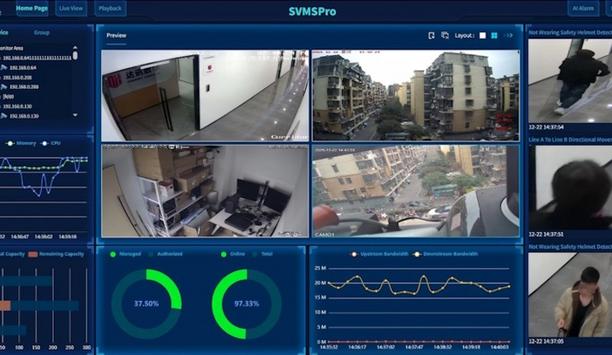
In the modern world of intelligent security, AI cameras and processing units (often called "AI boxes" or "AI servers") are transforming surveillance. They can detect specific behaviours — like someone entering a restricted area, loitering, or a vehicle parking illegally — and send immediate alerts. This represents a significant leap from older systems that merely recorded video for later review. However, a common challenge arises when organisations use devices from multiple manufacturers. Each brand often comes with its own proprietary software, creating a fragmented ecosystem. Unified video management software (VMS) platform Security personnel might need to switch between several different programs to monitor all their cameras. Furthermore, critical evidence — such as video clips triggered by an alarm — is typically stored locally on each device. If that device's storage fills up, new footage can overwrite the old, potentially erasing vital evidence before anyone has a chance to review it. Security personnel might need to switch between several different programs to monitor all their cameras This is where a Unified Video Management Software (VMS) platform becomes indispensable. Acting as a central nervous system, it integrates disparate devices into a cohesive operational framework. Solutions like SVMSPro exemplify this approach, seamlessly merging feeds from diverse AI hardware into a single, intuitive interface. Using SVMSPro as a case study, we can outline the core capabilities of a modern unified AI management platform: Simplified multi-brand management Eliminate the complexity of managing multiple software applications. A unified platform provides a single dashboard to view, control, and manage all AI devices — regardless of manufacturer. This consolidation dramatically streamlines daily operations, reduces training overhead, and provides a holistic view of the entire security infrastructure. Unifying AI surveillance application. Centralised & secure evidence storage Relying on the limited local storage of edge devices is a liability. Critical evidence from alarms is vulnerable to being overwritten and lost. SVMSPro solves this at the source. The moment any connected AI device detects an event — whether it’s intrusion, loitering, or object removal — SVMSPro receives the alert in real time and immediately triggers intelligent actions: Start high-quality alarm-triggered recording, Capture detailed snapshots, Activate PTZ tracking to track the subject automatically, And securely store everything on the centralised SVMSPro platform — not on fragmented front-end devices. This ensures evidence is permanently preserved and readily accessible. Users can swiftly search, review, and retrieve any alarm-related video or image via the web client or desktop application — anytime, anywhere. Illegal parking snapshot. Organised access & smart alerting Effective security is a team effort with tiered responsibilities. A unified platform enables precise, role-based access control. With SVMSPro, administrators can define user roles, create custom accounts, and assign specific video channels — even from different brands — to each operator. A guard may only access parking lot feeds, while a manager receives alerts for perimeter breaches. This granular control enhances operational efficiency, safeguards data privacy, and ensures team focus. Furthermore, real-time alerts can be pushed to mobile apps, guaranteeing immediate notification for the relevant personnel. User management. Integrated data analysis By aggregating data across all connected devices, a unified platform unlocks powerful analytics. It transforms scattered data points into actionable intelligence, generating comprehensive reports on event trends — from peak intrusion times in retail to occupancy heatmaps in large facilities. For instance, by ingesting people-counting data from AI cameras, SVMSPro can produce detailed daily, weekly, monthly, and annual traffic flow reports, supporting informed business and operational decisions. People flow statistics. Conclusion: From fragmented data to cohesive insight A unified management platform is the critical backbone for any multi-brand AI security deployment. It transforms a collection of isolated smart devices into a synchronised, intelligent network. The practical applications are vast: Retail: Combines loss prevention with customer behaviour analytics. Transportation Hubs: Manages vehicle flow and enhances passenger safety. Manufacturing: Monitors compliance in restricted hazardous areas. Smart Cities: Correlates events across districts to provide a unified operational picture for public safety. By centralising control, securing evidence, and delivering intelligent, role-specific alerts, platforms like SVMSPro empower organisations to evolve from simply observing events to understanding and acting upon them with unprecedented speed and clarity.
The Internet of Things is growing quickly. It has moved far beyond a few smart gadgets at home. Today, connected technology is in homes, factories, hospitals, farms, and cities. Experts expect the global market for IoT devices to rise from about $70 billion in 2024 to more than $181 billion by 2030. This means more devices, more data, and more opportunities for industries everywhere. This growth comes from several advances working together. 5G connections make it possible to send and receive data faster. Edge computing processes information close to where it is created, which helps with quick decisions. Analytics allow organisations to understand and act on the data they collect. Together, these improvements are opening the door to new ways of working, producing, and communicating. IoT: The next generation As devices become more advanced, they use more energy and send more data. Think about high-quality security cameras, detailed environmental sensors, or systems in vehicles that send constant updates. All of these devices require a strong supply of power and a steady connection. In 2024, sensors made up more than 32 percent of all IoT device sales. Sensors are essential, yet the next wave of devices will do even more. They will process information themselves, use artificial intelligence, and include many features in one unit. This progress depends on networks that deliver both the energy and the bandwidth to support them. Into the future Devices and applications keep improving, so networks need the flexibility to handle what comes next Setting up IoT systems is about more than meeting today’s needs. Devices and applications keep improving, so networks need the flexibility to handle what comes next. A future-ready design provides extra capacity in both power and data flow. This way, when it’s time to add new devices or upgrade existing ones, the system is prepared without requiring major changes. One smart approach is to use modular equipment. For example, a network switch might deliver more power than devices currently use, while allowing room to connect more advanced devices later. This helps keep the system ready for growth. Built for all IoT devices often operate in challenging places. Factories, power plants, rail lines, and shipping ports face extreme temperatures, dust, vibration, and other difficult conditions. Network equipment in these locations needs the strength to keep working through heat, cold, and constant use. Industrial-grade gear is designed for these environments. It can run in a wide range of temperatures, handle physical impacts, and resist interference. Features such as port security, which keep a connection safe if a cable is removed, help protect both the equipment and the data it carries. Systems with backup power inputs continue to run even when one power source goes offline. Plug into PoE Power over Ethernet (PoE) sends both energy and data through the same cable Power over Ethernet (PoE) sends both energy and data through the same cable. This makes installation simpler and allows flexibility in where devices are placed. And as devices become more capable, they often need more power to operate. The latest innovation for PoE can deliver up to 90 watts on each port. This is enough to support advanced devices like AI-enabled cameras or multi-sensor units. When every port on a switch can supply that much power at the same time, adding more devices is straightforward and performance stays strong. Protecting the network Every connected device is part of a larger network. Protecting this network means securing data from the moment it leaves the device until it reaches its planned destination. Built-in security features in network equipment — such as secure architecture, encryption support, and physical safeguards — help keep information safe. They also help meet industry and government requirements for equipment sourcing and design. A clear path Organisations leading in IoT think ahead. They prepare for the next stage of technology by building networks with flexibility, durability, and protection in mind. These networks supply extra power, allow more bandwidth, and keep data secure while adapting as the system grows. The focus is on creating a foundation that supports innovation year after year. This means planning for devices that are faster, more capable, and more connected, while making sure the infrastructure grows right along with them. Looking ahead Strong, adaptable, and secure networks will allow connected devices to reach their full potential The IoT of the future will touch nearly every part of daily life. It will help farmers grow food more efficiently, guide self-driving vehicles, improve medical care, and keep cities running smoothly. As devices multiply and gain new abilities, the networks powering them need to grow in step. Strong, adaptable, and secure networks will allow connected devices to reach their full potential. By planning for both today’s needs and tomorrow’s possibilities, organisations can make the most of the opportunities IoT brings—and keep those opportunities expanding for years to come. Key takeaways: Preparing for the future of IoT The IoT market is growing fast The global market for connected devices is expected to grow from $70 billion in 2024 to more than $181 billion by 2030. This means more devices in more industries, from farming to healthcare to transportation. Devices are using more power and data Newer devices have more features — such as high-quality video, built-in AI, and multiple sensors — and these require stronger power supplies and faster connections. Future-ready networks are essential Infrastructure should allow extra capacity for both power and data. This ensures new devices can be added without major changes or delays. Environments vary, so equipment should match the setting Industrial areas, outdoor spaces, and transportation hubs need rugged, reliable equipment that works in extreme conditions and stays secure. Security starts at the network level Built-in protections — like secure architecture, encryption, and physical safeguards — help keep information safe and meet important industry requirements.
Security beat

IQSIGHT seeks to bring visual intelligence to environments where clarity, reliability, and trust matter the most, says CEO Sabrina Stainburn. Formerly Bosch Video Systems, IQSIGHT is an intelligence-first video security company, combining more than 60 years of engineering expertise with real-time intelligence to help organisations see clearly, act confidently, and improve outcomes in environments when every second matters. While the brand is new, the technology, reliability, and trust behind it are familiar— the products still carry the Bosch name, and the engineering teams remain the same to ensure the continuation of the Bosch legacy. As a result, customers can expect the same standards they rely on today. Embracing emerging technologies IQSIGHT is embracing emerging technologies. “We are applying AI where it delivers value by helping systems understand what is happening and surface the events and patterns that matter most—so customers can detect risk earlier, make faster decisions, and operate with confidence,” says Stainburn. With intelligence at the edge, the cameras act as sensors to secure premises, make buildings safer, and monitor perimeters — without requiring a cloud connection. Edge-based AI also supports integration into existing systems to add visual intelligence without a rip-and-replace — such as adding cameras with visual gun detection outside of entrances or supplementing systems with the ability to detect clothing colour and other attributes. IQSIGHT combines the Bosch video portfolio with new AI-enabled capabilities AI-enabled capabilities IQSIGHT combines the Bosch video portfolio with new AI-enabled capabilities designed to remove blind spots IQSIGHT combines the Bosch video portfolio with new AI-enabled capabilities designed to remove blind spots and support earlier, better-informed decisions. The portfolio continues to include intelligent cameras, such as the FLEXIDOME, AUTODOME, DINION, and MIC models, AI-enabled Intelligent Video Analytics Pro (IVA Pro) offerings, and recording and video management solutions, such as BVMS software. This year, the portfolio will also expand with technologies and solutions built on IQSIGHT’s new intelligence-first platform. Vertical markets that are core to the strategy include government, critical infrastructure, education, and smart cities, all industries closely connected with safety, continuity, and operational performance. In these environments, visual intelligence helps organisations address practical challenges — securing perimeters, enhancing safety, and improving traffic flow — so they can operate securely and efficiently. Visual intelligence helps organisations address practical challenges Operating securely and efficiently “Reliability is essential in these industries, and our cameras are engineered to Bosch quality standards and designed to perform in demanding conditions, including extreme weather, while delivering dependable video and accurate analytics where it matters most,” says Stainburn. “These strengths make our video solutions ideal for any industry where security must be uncompromised.” IQSIGHT evolves from the sale of Bosch’s security and communications technology product business to European investment firm Triton on June 30, 2025. The product brands for video systems, access control, intrusion systems, and communications systems united under the roof of the new company Keenfinity Group. New organisational structure The Keenfinity Group now operates as a holding company consisting of four businesses In late 2025, Keenfinity Group introduced a new organisational structure designed to unlock the next chapter of growth and innovation. The Keenfinity Group now operates as a holding company consisting of four businesses, including the video systems business now called IQSIGHT. Bosch has a long history of partnerships and integrations, and partnerships will remain essential to how IQSIGHT delivers value and flexibility for customers. “We work closely with technology partners to ensure customers can use visual intelligence within the platforms and architectures that best fit their operations,” says Stainburn. Secure-by-design approach Deep integrations include VMS platforms, such as Genetec and Milestone, thus enabling real-time insights across on-premise and cloud environments. This approach gives customers choice — without compromising performance, security, or reliability, according to IQSIGHT. “Continually strengthening our existing partnerships is vital, and we regularly add capabilities to these integrations to deliver new features to enhance security and safety for customers,” says Stainburn. “Cybersecurity is not a feature for us — it’s a foundation,” Stainburn emphasises. “As video systems become more connected and intelligence moves closer to the edge, trust must be designed in from the start. We take a secure-by-design approach across our hardware, software, and integrations. That means protecting data at every stage — from capture to analysis to delivery.” Combining sight and intelligence Just as important, the company works closely with partners and customers to ensure systems fit into their broader security and IT strategies. “When organisations rely on video to make critical decisions, security and reliability must be non-negotiable,” says Stainburn. Stainburn sees video as evolving from traditional surveillance into “visual intelligence” — moving from simply recording events to understanding what is happening in real time. By combining sight and intelligence, organisations can see patterns, giving them the power to predict events that may happen. Proactively addressing risks Stainburn sees video as evolving from traditional surveillance into “visual intelligence” Traditionally, video security was based on video surveillance — an investigative tool for users to review what has already happened. With AI, users can take a different approach — looking at patterns to better secure their premises and have the foresight to intervene before incidents escalate. AI helps systems understand what is happening in a scene, enabling them to discern between a person standing at a train platform and an individual vandalising a train platform, someone holding a power drill versus someone holding a gun. “This level of visual intelligence brings clarity to unfolding events to assist users in proactively addressing risks,” says Stainburn. AI-enabled video systems With foresight, end users can prevent those events from occurring or other issues from escalating. The ability to discern patterns can also influence decisions around safety, resource use, and the customer experience, says Stainburn. “While security will always remain core, we expect visual intelligence to play an increasingly important role in improving operational efficiency across many environments over the next five years.” Not all AI-enabled video systems are equal. Edge, cloud, and GenAI-based tools have different strengths and selecting one approach over another depends on the application or the problem customers need to solve. IQSIGHT works closely with integrators and end users to understand the challenges they are addressing and to provide guidance on the best AI approach to reduce risks, lower response times, and improve operations. Proof of concept projects are important to demonstrating performance in the real world. That’s where IQSIGHT gains an advantage with solutions that deliver reliable results even in challenging conditions, says Stainburn.

Multiple technology trends are transforming the physical access control market. There is a fundamental shift away from physical cards and keys toward digital identities — mobile credentials, digital wallets, biometrics, and cloud-native access platforms. These next generation access solutions are radically reshaping how buildings operate, protect staff, and perform functionally. At the same time, AI and analytics solutions are being layered onto these physical access control systems to support predictive threat detection and behavioural insights. Access data itself is becoming an asset for sustainability, space optimisation, and smart building initiatives. Risk, impact operations and experience The annual HID Global Security and Identity Trends Report highlights these and other issues The annual HID Global Security and Identity Trends Report highlights these and other issues. The survey cites improving user convenience as a priority for nearly half of organisations, while 41% are focused on simplifying administration, and 28% struggle with system integration. These are not theoretical challenges, they are day‑to‑day friction points that add cost, increase risk, impact operations and experience, and, of course, must be addressed. HID Global’s commercial focus HID Global’s commercial focus is to help organisations digitise their access control — with mobile identities, biometrics, and cloud platforms — and then to use the data to deliver more value. “We are turning access control from an operational cost into a software-driven asset that improves efficiency, supports Environmental, Social, and Governance (ESG) goals and even creates new revenue opportunities,” says Steven Commander, HID Global’s Head of Consultant Relations. The impact of digital transformation Digital transformation is the method of moving access control from hardware and physical credentials Digital transformation is in the process of moving access control from hardware and physical credentials to a software-driven, integrated experience. The transformation strengthens security while also improving user convenience — transforming the “pavement to the desk” journey. HID enables this shift through mobile credentials, biometrics, cloud-native platforms, and solutions that allow third-party applications to run on door hardware. “This helps customers turn access data into operational and commercial outcomes, while also improving the overall user experience,” says Commander. Digital transformation in access control is not focused on chasing the latest trends. Rather, transformation is about turning software, data and integration into outcomes that matter to customers, says HID. “Security becomes stronger and more adaptive,” says Commander. “Operations become simpler and more cost‑effective. Experiences become seamless and consistent. Sustainability moves from ambition to action. And the financial case becomes clearer as efficiencies are banked and new value streams emerge.” The challenge of futureproofing with long lifecycles Given that physical security technologies will be in place for 15 to 20 years, it is important to plan for how systems can evolve over time. Considering how rapidly security threats, compliance standards, and user expectations change, 15 to 20 years is a long time. The decisions made at the beginning of a system’s lifecycle can either limit flexibility later (which will be costly) or enable long-term adaptability. Support for open standards such as Open Supervised Device Protocol (OSDP) is therefore important Choosing products and platforms that are open, interoperable, and designed for updates can enable future-proof projects. Support for open standards such as Open Supervised Device Protocol (OSDP) is therefore important. In addition, systems built on open controller platforms — such as Mercury — enable organisations to switch software providers or expand functionality without replacing core door hardware. Architectural openness is key to system lifecycles and maximising the return on investment (ROI) from a chosen solution. Digital credentials and mobile access Flexibility and upgradeability should also be top of mind when it comes to endpoints like access control readers. While RFID cards are still commonplace, there is a clear trend toward digital credentials and mobile access. Readers that support both allow organisations to transition at their own pace, without committing to a full system overhaul. A long system lifecycle does not mean technology should remain static. Security, particularly cybersecurity, demands more frequent updates. Technologies that support firmware upgrades in the field extend the value of a deployment while helping organisations keep pace with emerging threats. In that sense, lifecycle thinking is not just about longevity — it’s about maintaining resilience and readiness over time. Applying biometrics and mobile identities Biometrics is becoming mainstream as a credential alternative, strengthening security without adding friction Biometrics is becoming mainstream as a credential alternative, strengthening security without adding friction. Many organisations are now deploying biometrics to support fast, seamless access journeys, with adoption already around 39% in access control according to HID’s recent research. In addition, 80% of organisations surveyed expect to deploy mobile identities within the next five years. Full technology integration enables tap‑to‑access without opening an app; the user journey becomes faster, safer, and more convenient. “It is where the industry is headed and we are at the vanguard of this,” says Commander. Ongoing challenge of cybersecurity At HID Global, cybersecurity is embedded into everything, from corporate processes and development practices to the solutions they bring to market. “Our approach ensures that customers can strengthen their overall security posture, not only by deploying secure products but by benefitting from HID’s commitment to the highest industry standards,” says Commander. HID holds multiple globally recognised certifications, including ISO 27001, ISO 14298, SOC Type 2 and CSA STAR, which demonstrate their robust information security and cloud security practices. In addition, HID’s SEOS® secure chipset is independently SEAL-certified, providing one of the most advanced levels of protection available on the market today. “Ultimately, this means organisations are not just purchasing isolated secure products; they are implementing solutions developed and delivered within a comprehensive, cybersecure framework,” says Commander. “When deployed according to best practices, HID solutions enable customers to achieve the highest levels of resilience against evolving physical and cyber threats.” Developing green and sustainable solutions A huge amount of waste is generated from the manufacture of plastic RFID access cards Digital credentials align with the sustainable solutions that everyone wants. A huge amount of waste is generated from the manufacture of plastic RFID access cards. Over 550 million access cards are sold annually. This creates 2,700 tons of plastic waste and 11,400 tons of carbon, based on a PVC card weighing 5 grams. Therefore, digital credentials self-evidently reduce the reliance on plastic cards (helping reduce carbon emissions by up to 75% according to HID’s research), while leveraging access control system data supports energy optimisation by shutting down or reducing systems in unused spaces. Energy use and CO₂ emissions can be cut dramatically, showing how access systems can contribute to sustainability goals and green building certification. What is the latest in smart buildings? Smart buildings increasingly rely on mobile access control as the backbone for digital services. Real-time access data enables new services such as automated room bookings, HVAC control, lift/elevator calling, e-bike hiring, and so on. Smart buildings increasingly rely on mobile access control as the backbone for digital services The financial upside is clear; smart, digitally transformed buildings can deliver around 8% higher yields per square foot versus traditional office space. Operational savings accrue from reduced administration, the removal of card production and shipping, and lighter IT support. This creates a value cycle — better experiences drive adoption, adoption fuels monetisation, and monetisation funds further improvements. Achieving technology impact in the real world One standout project is One Bangkok – a $3.9 billion mixed used development in Thailand – which demonstrates the scale of what can be achieved when access control data is used for optimisation, particularly when it comes to monitoring facilities usage and occupier behaviours. By switching lights off or lowering the temperature in unused rooms, for example, the One Bangkok building demonstrates this potential with a 22% reduction in energy consumption, saving 17,000 MWh and 9,000 tons of CO₂ annually. Sustainability is a key factor in contributing to how properties are valued. And sustainability extends far beyond digital credentials having a lower environmental impact than plastic cards. Buildings with recognised sustainability certifications often command rental premiums of around 6%, and three‑quarters of security decision‑makers now consider environmental impact in their procurement assessments.

Companies at GSX 2023 emphasised new ways that technologies such as artificial intelligence (AI) and the cloud can address long-standing issues in the security market. Among the exhibitors at the event in Dallas were companies seeking creative ways to apply technology, lower costs, and make the world a safer place. Reflecting on the exhibition, here are some additional takeaways. Expanding AI at the edge i-PRO is a company reflecting the continued expansion of edge AI capability in the security market. Today, more than half of the company’s lineup supports AI at the edge so the customer has a wide choice of form factors when seeking to leverage the feature set. AI processing relay, extended warranty i-PRO is increasing their warranty period from 5 to 7 years, which could be a lifetime warranty in some cases I-PRO also has an “AI processing relay” device that accepts non-AI video streams and applies edge analytics. AI has progressed from a high-end technology to a feature available in a variety of cameras at different price points. i-PRO is also increasing its warranty period from 5 to 7 years, which could be a lifetime warranty in some cases depending on a customer’s refresh schedule and lifecycle management. Active Guard, MonitorCast The company’s video management system (Video Insight) is continuing to build new features including “Active Guard,” an integrated metadata sorter. Their access control platform, MonitorCast, is a Mercury-based solution that is tightly integrated with Video Insight. Their embedded recorders now have PoE built in. “We can move at a faster pace to fill out our product line since leaving Panasonic,” says Adam Lowenstein, Director of Product Management. “We can focus our business on adapting to the market.” Emphasis on retail and other verticals Shoplifting is a timely issue, and retail is a vertical market that got a lot of attention at GSX 2023. “We see a lot of retailers who are primarily interested in protecting employee safety, but also assets,” says Brandon Davito, Verkada’s SVP of Product and Operations. “Shrinkage is a CEO-level priority.” “Retailers are getting more engaged with security posture, instead of letting perpetrators walk,” Davito adds. Intrusion detection Verkada has an intrusion product that will notify a central station if there is an alarm On the alarm side, Verkada has an intrusion product that will notify a central station if there is an alarm, and operators can review videos to confirm the alarm. Other capabilities seeking to discourage trespassers include sirens, strobes, and “talkdown” capabilities. International expansion Verkada continues to expand internationally with 16 offices in all, including Sydney, Tokyo, and London. The core value proposition is to enable customers to manage their onsite infrastructure more simply, including new elements such as PTZ cameras, intercoms, and visitor management. Verkada emphasises ease of use, including a mobile application to allow access to be managed across the user base. Forging partnerships “We are committed to the channel and industry, and we continue to build relationships and expand our reach,” says Davito. Among the industry relationships is a new partnership with Convergint, which was hinted at during the show and announced later the same day. They are also expanding their partnerships with Schlage, Allegion, and ASSA ABLOY. Working with other verticals They offer new features for K -12 schools, and a new alarm platform is easier to deploy and manage Verkada has also found success across multiple other verticals, notably healthcare, where they integrate with an electronic medical records system. They offer new features for K-12 schools, and a new alarm platform is easier to deploy and manage. They are integrating wireless locks to secure interior doors in schools, looking to secure the perimeter, and installing guest management systems. Transitioning the mid-market to the cloud Salient is squarely focused on the “mid-market,” a large swath of systems somewhere between small businesses and enterprise-level systems. Pure cloud systems are not as attractive to this market, which has a built-out infrastructure of on-premise systems. Adding a camera to an existing system is easier and less expensive than tying it to the cloud. Benefits of cloud It’s a market that may not be ready for the pure cloud, but there are benefits to be realised from adding a cloud element to existing systems. “We are continuing to augment our premise-based solutions with added cloud capabilities and flexibility,” says Sanjay Challa, Salient’s Chief Product Officer. The feedback Salient hears from their customers is “I want to own my data.” The hybrid cloud approach offers the right mix of control, flexibility, and unit economics. Cloud add-on capabilities We want to provide the flexibility for customers to go full-cloud as it becomes more economically attractive" Cloud add-on capabilities include bringing more intelligence about system operation to the user via the cloud. Over time, Salient expects to sell more cloud-centric offerings based on feedback from integrators and customers. “We want to provide the flexibility for customers to go full-cloud as it becomes more economically attractive over time,” says Challa. Vaidio AI technology Salient seeks to be a transition pioneer to help customers realise the path to the cloud. Their approach is “crawl, walk, run,” and helping customers make the transition at each stage. Salient has added AI to its product offering, incorporating Vaidio AI technology from IronYun into a powerful suite and broad array of on-premise analytics, which are gaining traction. The seamless approach makes it easy for customers to embrace AI analytics, although Salient remains broadly committed to open systems. Addressing ‘soft’ features for integrators AMAG is in the process of enhancing its product line with the next generation of access control panels. However, “product” is just part of the new developments at AMAG. In addition to “hard” features (such as products), the company is looking to improve its “soft” features, too; that is, how they work with the integrator channel. Integrator channel Rebuilding a process to make your organisation more efficient, is relatively easy; it just takes a lot of persistence" “We have the depth of our legacy customer base we can learn from, we just need to close the feedback loop quicker,” says Kyle Gordon, AMAG’s Executive Vice President of Global Sales, Marketing, and commercial Excellence, who acknowledges the value of reinstating face-to-face meetings after COVID. “We are laser-focused on nurturing our integrator channel,” he says. “Developing new features takes time, but rebuilding a process to make your organisation more efficient, that’s relatively easy; it just takes a lot of persistence,” says Gordon. More cohesive internal communication is another useful tool, he says. Disrupting the cloud based on price Wasabi is working to make cloud applications less expensive by offering a “disruptive” price on cloud storage, $6.99 per terabyte per month (80% less than hyperscalers). Contending “hyperscalers” like AWS are charging too much for cloud storage, Wasabi is using its own intellectual property and server equipment co-located in data centres around the world. Wasabi sells “hot cloud storage,” which refers to the fact that they only have one tier of storage and data is always accessible. In contrast, a company such as AWS might charge an “egress fee” for access to data stored in a “colder” tier. Cloud storage “We saw that several video surveillance companies had not yet adopted cloud storage, and we saw an opportunity to make it easy to use,” said Drew Schlussel, Wasabi’s Senior Director of Product Marketing. “We just install a little bit of software that allows them to store data in the cloud and bring it back from the cloud.” Performance, protection (cybersecurity), and price Wasabi works with integrators, resellers, and distributors and also integrates with VMS companies Wasabi works with integrators, resellers, and distributors and also integrates with VMS companies such as Genetec and Milestone. Emphasising performance, protection (cybersecurity), and price, their data centres are certified to SOC 2 and ISO 27001 standards. Faster throughput for weapons detection Xtract One is a young company focusing on weapons detection in a time of accelerated concern about gun issues post-COVID. Founded in Canada and based on technology developed at McMaster University, Xtract One has found a niche in providing weapons detection at stadiums and arenas. These customers already have budgets, and it is easy to shift the money to a newer, faster technology. Madison Square Garden in New York City is among its customers. Cost savings solution Xtract One can increase throughput to 30 to 50 people per entrance per minute (compared to 5 to 6 people per minute when using metal detectors). The solution doesn’t require anyone to empty their pockets and the system alarms on items beyond guns and knives. Using Xtract One allows customers to reduce the number of screening lanes and security staff, providing additional cost savings, all while getting fans through the screening process in half the time. Purpose-built sensors The system uses purpose-built sensors looking for specific characteristics, such as reflective and density properties In addition to stadiums and arenas, Xtract One, formerly Patriot One, is also getting “inbound” interest from schools, hospitals, manufacturers, and other verticals that makeup 50% of their business. “We’re on a rocket ride, mainly because the weapons issues are not going away,” says Peter Evans, CEO and Director at Xtract One. The system uses purpose-built sensors looking for specific characteristics, such as reflective and density properties, all correlated by an AI engine. Providing early warning of violence ZeroEyes is another company focused on weapons detection. Their AI gun detection system works with video images to identify if someone is “brandishing” (carrying) a weapon. In other words, the system does not detect concealed weapons. Identifying someone carrying a weapon provides early warning of a possible violent act. Increased response with AI-enables images Images are identified by AI and sent to a monitoring centre where a human confirms the image before contacting first responders. Knowing the location of a shooter enables staff to lock entry points, move people to safety, and direct first responders. The company was founded to leverage existing camera views to stop mass shootings and gun violence by reducing response times.
Case studies
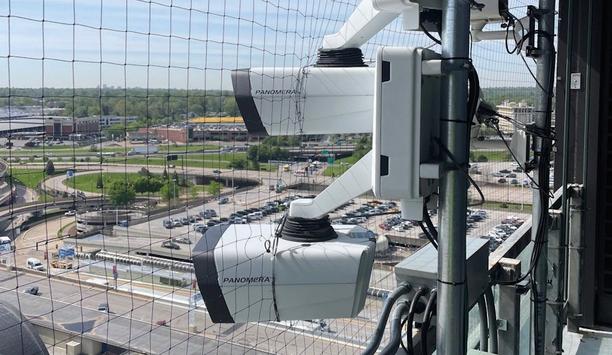
As Missouri’s largest and busiest aviation facility, St. Louis Lambert International Airport (STL) welcomed more than 15 million passengers in 2025. To implement a digital 360-degree surveillance system and secure over 70 million square feet of airport infrastructure, STL required a solution capable of covering vast spatial areas while significantly reducing infrastructure costs and complexity. At the same time, the airport aims to implement AI-applications to optimise its operations. With Dallmeier’s Panomera® multifocal sensor technology, STL achieved comprehensive high-resolution coverage with approximately 90 % fewer cameras and 75 % less infrastructure compared to the original surveillance design. Video security system Due to the continuous growth in passenger numbers, the STL Operations and Security Teams decided to modernise the existing video security system in June of 2018 in two areas: Firstly, in surface parking areas to increase customer safety and eliminate criminal activity such as vandalism and theft. The second solution targeted the airport’s four runways, the taxiways, and all terminal buildings to monitor the activities of aircraft, ground vehicles, and airport personnel. STL Airport Operations Team contacted their security integrator, Tech Electronics, to design and deploy an updated camera solution. The initial design used a combination of PTZ and single sensor IP cameras and would have required more than 130 cameras in total. From an infrastructure perspective, this would have required the installation of more than 42 new camera poles and the corresponding infrastructure (cable, network, power, etc.). The airside solution required significantly more technology to achieve the desired surveillance coverage. So, STL and Tech Electronics decided to look for another, more economical solution. Desired surveillance coverage During their technology search, STL discovered the Dallmeier Panomera® multifocal sensor technology, which was developed specifically for surveillance of large spatial areas using the fewest number of cameras to achieve the required surveillance coverage. David Kulinsky, Deputy Director of Operations & Maintenance at STL, recalls: “When we discovered Panomera® and saw that one Panomera® camera can capture large areas at high resolution and replace several single-sensor cameras, including the costly infrastructure, it became clear that Panomera® provided STL a more economical solution with higher quality images at a lower overall cost.” Intuitive user experience The test installation at the airport proved the image quality of the Panomera®. Kevin Hubble, Services Manager for STL with Tech Electronics, comments: “I was surprised at how few Panomera® cameras were needed to replace several PTZs and single sensor cameras and display the images in a much more user-friendly format. The SeMSy® Compact VMS software enables the user to view a single high-resolution image of the entire scene with simple digital PTZ controls to ‘zoom’ into any part of the image in greater detail. The result is an intuitive user experience resulting in greater operational efficiency – not to mention the superior high resolution video coverage.” To date, STL has installed more than 27 Panomera® cameras. Multiple IPS 10000 recording appliances and 5 user workstations with the SeMSy® Compact VMS client software complete the video system. Compared to the original planning, this resulted in approximately 90 % reduction in the number of cameras and approximately 75 % reduction in infrastructure required for the installation. Comprehensive situational awareness A particular highlight of the deployment is STL’s digital 360-degree surveillance concept. Using only ten Panomera® cameras, the airport achieves comprehensive situational awareness across large airside areas including runways, taxiways and apron operations. Unlike conventional camera concepts that require numerous PTZ and single-sensor cameras, Panomera® delivers a complete high-resolution overview in a single seamless image. This enables operators to monitor critical airport activities more efficiently across large spatial areas, while significantly reducing infrastructure complexity, maintenance effort and overall operating costs. AI-based video analysis Beyond security applications, STL is also evaluating Panomera® technology for operational process optimisation inside the terminals. As part of a planned deployment in the ticketing area, a Panomera® V8 system will support AI-based video analysis functions such as passenger flow and waiting time analysis. The objective is to improve operational efficiency, optimise check-in processes and enhance the passenger experience — while leveraging the same high-resolution surveillance infrastructure already deployed throughout the airport. Video information technology David Kulinsky with STL summarises: “Any technology project at an airport must deliver a solution that is operationally efficient, resilient, and built for long-term performance. Our decision to deploy Panomera® cameras significantly enhanced overall surveillance coverage across the airport while reducing the technology and infrastructure footprint required to support it.” “The system also provides the ability to zoom into specific areas without sacrificing full-scene situational awareness or recording capabilities—an operational advantage over traditional PTZ cameras, which only record the field of view being actively monitored and can limit broader operational visibility.” In 1984, Dieter Dallmeier founded what is now Dallmeier electronic – not in the proverbial garage, but in a garden shed in Regensburg, Germany. Today, the company, which can justifiably call itself a hidden champion for video information technology "Made in Germany", has several hundred employees worldwide, more than 250 of them at the company headquarters in the center of Regensburg alone. Digital image storage system Dallmeier's camera, recording, software, and analysis solutions optimise security and processes for B2B end customers in a wide range of industries in over 60 countries. The focus is on users from the casino, smart city, airports, logistics, stadiums, and industrial sectors. But also, banks, critical infrastructure facilities as well as medium-sized companies from all sectors. With pioneering innovations, Dallmeier has succeeded time and again in placing itself at the forefront of technology: From the world's first digital image storage system with motion analysis in 1992, the patented "multifocal sensor technology" Panomera® with its "Mountera®" mounting system, to the latest Domera® camera family, which allows up to 300 camera variants with only 18 components. Complete manufacturing process These and many other innovations provide real, tangible customer benefits. And with a low Total Cost of Ownership (TCO) and a high Return on Investment (ROI) they can easily compete with systems produced and supplied from low-wage countries. With "Made in Germany", we also guarantee our customers the highest standards in data protection, cybersecurity, and ethical responsibility. With high quality and short supply chains, we also ensure – almost incidentally – sustainability and environmental protection. From our prestigious headquarters in the center of Regensburg, Dallmeier not only carries out its own research and development but also the complete manufacturing process – from component to product to solution.

Barnet Council recently undertook a major upgrade of its CCTV infrastructure, partnering with i-PRO and systems integrator DSSL to enhance security, improve urban planning, and drive smart city initiatives. The project was driven by the need to replace an aging and largely non-functional CCTV network while maximising cost efficiency and scalability. With i-PRO’s market-leading edge computing analytics, the council was able to implement a future-proof technology that not only delivers high-quality security and safety but also provides valuable data insights for business and community planning. Future-proof technology The Customer - Barnet London Borough Council, also known as Barnet Council, is the local authority for the London Borough of Barnet in Greater London, England. The borough's major urban settlements are Hendon, Finchley, Golders Green, Friern Barnet, Chipping Barnet, Whetstone, and Edgware; there are also village settlements notably Totteridge and Arkley along with rural areas and countryside part of the Green Belt. As such, the area is geographically diverse and is also the largest London borough by population, with close to 350,000 residents. Business Challenge - The council’s previous CCTV system was in a state of disrepair, with only 15-20 of its 3000 cameras operational across the entire estate. Further to this, the council also looked ahead and made the decision to future-proof existing technology and enhance the capabilities of the system by strategically upgrading to smarter technology, capable of providing deeper insights, finding new efficiencies and generally improving the quality-of-service Barnet Council could provide to constituents and local businesses alike. Prominent AI capability The Solution - To address this, Barnet opted for a phased upgrade and system enhancement using the X-series AI Processing Relay Application, integrating i-PRO cameras with a newly upgraded control room and an enhanced Genetec video management system (VMS). The decision to go with i-PRO was influenced by its prominent AI capability and the substantial cost savings— an estimate of £600,000 over five years — when compared to server-based alternatives. Additionally, the system’s scalability allowed Barnet to expand its camera network without requiring extra server infrastructure, space, or cooling requirements. “A key factor in the decision was the ability of i-PRO cameras to serve as multifunctional sensors, capturing both security footage and valuable urban analytics. The cameras are used for people and vehicle counting, feeding real-time data into Power BI for internal council reports,” states Aaron Stephens, Managing Director at DSSL Systems. Planning future expansions The analytics data has become instrumental in planning future expansions, which will include additional coverage in parks, railway stations, and high-traffic areas. The insights generated help local businesses understand customer footfall, assist in investment decisions for town infrastructure, and support the council in managing traffic and public spaces more efficiently. “Unlike traditional server-based AI technology, which place a heavy burden on network infrastructure, i-PRO cameras process analytics on the edge, transmitting only metadata rather than large video files,” continues Stephens. Video management solution This approach significantly reduces costs while enabling faster and more efficient data analysis. The system was deployed with strict cyber security compliance, in alignment with regulations such as NDAA. Installed by DSSL, the network adheres to stringent firewall policies and integrates seamlessly with the Genetec video management solution, ensuring secure and reliable data management. "The i-PRO forensic capabilities are directly embedded within Genetec Security Center, which enables control room operators to quickly find specific objects or events by filtering through attributes and characteristics captured by the cameras. This speeds up the investigative process and enhances collaboration with the Metropolitan Police," said Benjamin Durrant, Account Executive, Genetec UK & Ireland. Culturally diverse community The deployment included 127 X-series bullet cameras for general safety and monitoring, 10 fisheye cameras in libraries for heat-mapping and people counting, and dual-view 5G re-deployable units for festivals and outdoor events. In Barnet’s unmanned libraries, the cameras also play a critical role in security, with audio detection triggering alerts for disturbances and automated people counting ensuring buildings are empty before lockdown procedures are initiated. Barnet Council’s investment in smart city technology extends beyond security. Re-deployable 5G cameras are being used to track attendance at public events, festivals, and religious gatherings, providing valuable crowd insights for better planning within a culturally diverse community. Return on investment and planning “With an initial £1 million investment, the council has maximised existing infrastructure to expand its data capabilities without significant additional spending. Phase two of the project, which has already been approved, will see the addition of 60-70 new i-PRO bullet cameras,” states Stephens. Beyond security, the smart city and community safety teams are leveraging i-PRO’s capabilities for advanced applications such as people and vehicle analytics. A new trial for automatic number plate recognition (ANPR) is also set to begin, potentially leading to a larger rollout. The council has already started benefiting from i-PRO’s analytics, such as heat-mapping in libraries, but is awaiting governance approval before publicly sharing results. The system complies with data privacy regulations as it does not use facial recognition. Smart city infrastructure Looking to the future, Barnet is exploring additional IoT integrations, including environmental sensors, flood detection, and traffic signal coordination. These efforts will further enhance the council’s smart city infrastructure. “This transparency, combined with i-PRO’s compliance with strict security standards, solidified the council’s trust in the solution. The i-PRO team came in to answer questions from the council and really won them over with their knowledge and honesty,” said Stephens. “Furthermore, i-PRO’s deep integration with the Genetec security solutions portfolio created a seamless ecosystem, reinforcing its market position as a leading smart city solution provider.” Looking to the future As Barnet Council continues its journey towards a fully integrated smart city, the focus remains on future scalability and efficiency gains. The initial return on investment is still being assessed, but the long-term impact is clear: by leveraging real-time data insights, the council can optimise public spending, justify infrastructure investments, and drive smarter, more connected urban development. As more councils recognise the benefits of data-driven planning, projects like Barnet’s will set the standard for the future of smart city technology.

Paderborn/Lippstadt Airport plays a central infrastructural role in the East Westphalia-Lippe region of Germany. In order to meet the growing requirements of the German Aviation Security Act (LuftSiG), the airport comprehensively modernised its existing video surveillance system. The objective was to ensure efficient monitoring of critical areas such as the apron, access roads, car parks, and terminal entrances – with minimal resource use. Together with systems integrator Horn Sicherheitstechnik, Dallmeier developed a solution that allows gradual migration to IP-based components such as the multifocal sensor system Panomera®, without the need to immediately replace existing analogue technology. The solution complies with all applicable security and data protection requirements and is designed for future scalability. Secure airport operations Roughly six million people live within the catchment area of Paderborn/Lippstadt Airport. As a regional transportation hub, the airport provides vital connectivity to both tourist and business destinations. Scheduled and charter flights as well as business, private, and cargo traffic are all part of daily operations. This makes the airport not only an important infrastructure facility but also a regional employer and mobility partner. Smooth operations and full compliance with legal obligations – such as the Aviation Security Act (§5 and §8), the General Data Protection Regulation (GDPR), and the NIS-2 Directive – form the foundation for secure airport operations. Increasing regulatory requirements The decision to upgrade and extend the video security infrastructure was driven by increasing regulatory requirements and technological advancement. The focus was on reliable video coverage of the approximately 65,000 square metre apron area, as well as other critical zones such as access roads, car parks, terminal entrances and the so-called aviation security boundaries – the transition point for passengers from landside to airside. Analog systems were not replaced in one step; instead, a step-by-step migration to IP technology was planned and implemented – in a manner that was flexible and adapted to the airport’s existing infrastructure and operational needs. Modern IP cameras The implementation was carried out by experienced systems integrator Horn Sicherheitstechnik in collaboration with Dallmeier electronic. At the heart of the project is a hybrid system architecture that combines existing analog components with modern IP cameras. Video recording is handled by Dallmeier recording appliances such as the DMS 2400 and IPS 10000, which enable simultaneous operation of both analogue and IP technologies. To monitor sensitive zones, various camera models are used – including Domera®, fisheye, and bullet cameras, as well as Panomera® systems from the W4 and S8 series. Panomera® enables wide-area coverage with a minimum number of cameras while still delivering high-resolution detail – a major advantage for large apron areas where both overview and detailed monitoring are essential. Video management is handled via SeMSy® Compact in combination with the SeMSy® Event Manager. Additionally, door and alarm contacts were integrated using Moxa devices to enable functional synergies and alarm forwarding – particularly at the aviation security boundaries. Aviation security boundaries With the new system, the airport fully meets the requirements of §5 and §8 of the German Aviation Security Act – for example, in monitoring aviation security boundaries, access roads and other sensitive operational areas. The hybrid system architecture allows targeted expansion of the existing infrastructure. One key benefit: Thanks to Panomera®, the number of cameras required was significantly reduced – without sacrificing field of view or image quality. This results in savings not only in installation and operational costs but also in ongoing maintenance. The modular system design supports step-by-step migration and offers long-term flexibility. “With the Dallmeier solution, we were able to seamlessly modernise our existing infrastructure while efficiently meeting new security requirements. We were particularly impressed by the flexibility to integrate both analog and IP systems,” explains Paul Sawatzki, Head of IT & Technology at Paderborn/Lippstadt Airport. AI-driven technologies The Dallmeier solution meets all requirements set forth by the GDPR and the NIS-2 Directive – especially in terms of data protection, IT security, and system availability. As an ISO-certified company – including certification to ISO/IEC 27001 for information security management systems – Dallmeier delivers the highest standards in the handling of sensitive data. These certifications provide a reliable foundation for deploying the technology in critical infrastructure environments. Additionally, Dallmeier’s in-house development and production in Germany (“Made in Germany”) ensures transparency and legal certainty for operators. Another key advantage of the new system is its future-proof design. Beyond surveillance alone, AI-based analytics for process optimisation and cost savings are increasingly in focus. The airport plans to deploy AI-driven technologies such as the Dallmeier “Attribute Finder”, which can be seamlessly integrated into the existing infrastructure. High integration capability The project at Paderborn/Lippstadt Airport demonstrates how intelligent planning and cutting-edge technology can bridge the gap between legacy infrastructure, system modernisation, and long-term readiness. The “Made in Germany” solution delivers durability, efficiency, and high integration capability – representing a successful deployment of modern video technology in a critical infrastructure environment. Horn Sicherheitstechnik also draws a positive conclusion: “Thanks to close coordination with all project stakeholders and the use of Dallmeier’s PlanD camera planning tool, we always had full control over the project. The tool gave us complete planning reliability right from the design phase,” says Michael Horn, Managing Director of Horn Sicherheitstechnik. Video information technology In 1984, Dieter Dallmeier founded what is now Dallmeier electronic – not in the proverbial garage, but in a garden shed in Regensburg, Germany. Today, the company, which can justifiably call itself a hidden champion for video information technology "Made in Germany", has several hundred employees worldwide, more than 250 of them at the company headquarters in the center of Regensburg alone. Dallmeier's camera, recording, software, and analysis solutions optimise security and processes for B2B end customers in a wide range of industries in over 60 countries. The focus is on users from the casino, smart city, airports, logistics, stadiums, and industrial sectors. But also, banks, critical infrastructure facilities as well as medium-sized companies from all sectors. Image storage system With pioneering innovations, Dallmeier has succeeded time and again in placing itself at the forefront of technology: From the world's first digital image storage system with motion analysis in 1992, the patented "multifocal sensor technology" Panomera® with its "Mountera®" mounting system, to the latest Domera® camera family, which allows up to 300 camera variants with only 18 components. These and many other innovations provide real, tangible customer benefits. And with a low Total Cost of Ownership (TCO) and a high Return on Investment (ROI) they can easily compete with systems produced and supplied from low-wage countries. With "Made in Germany", they also guarantee their customers the highest standards in data protection, cybersecurity, and ethical responsibility. With high quality and short supply chains, they also ensure – almost incidentally – sustainability and environmental protection. From their prestigious headquarters in the center of Regensburg, Dallmeier not only carries out its own research and development but also the complete manufacturing process – from component to product to solution.
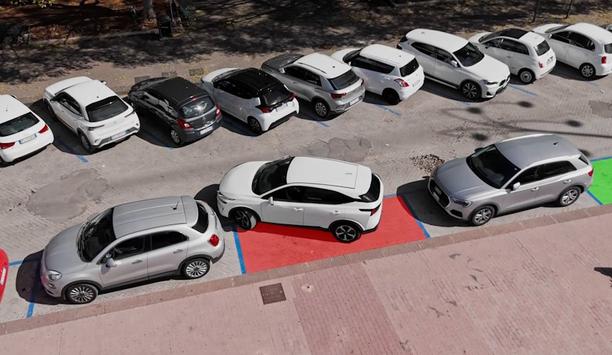
The Municipality of Catania is one of Italy’s largest and most complex urban areas, encompassing the city of Catania and 57 surrounding sites, with a population exceeding one million residents. As the seventh-most-populated metropolitan city in Italy, Catania faces the dual challenge of preserving its rich historic and architectural heritage while modernising urban services to meet the evolving needs of its citizens, visitors, and local authorities. Urban monitoring system Catania leadership understood that smart city technologies could improve efficiency, sustainability, and quality-of-life while also enabling more data-driven decision making. The local administration turned to Hanwha Vision cameras and Park Smart software to make its smart city goals a reality, deploying intelligent parking and an urban monitoring system in the historic city centre. The combined solution provides the city leaders with advanced video analytics and data insights, while citizens receive cutting-edge digital services such as real-time parking availability. For years, the concept of a smart city had been discussed by the Municipality of Catania's leadership. The need for intelligent parking and urban management within the city centre provided the ideal opportunity to test advanced video analytics and smart parking software in a controlled environment before rolling out city-wide. The solution, therefore, needed to deliver immediate value to the administration and citizens while forming the foundation for broader urban intelligence initiatives. Parking monitoring system The combination of Hanwha Vision A-Series cameras with Park Smart provides a connected, AI-powered parking monitoring system that enables real-time visibility of available on-street parking while simultaneously supporting urban monitoring and regulatory enforcement. This has reduced congestion and improved traffic flow, boosted the citizen experience, and increased road safety. Approximately 100 cameras are installed at strategic locations where parking demand is highest. Special consideration was given to aesthetics and heritage preservation: the selected cameras blend discreetly into the city’s Baroque architecture and were approved by the Superintendency for Cultural Heritage for installation directly on historic poles. Urban planning decisions The edge AI cameras carry out analytics within the devices themselves, improving time-to-insight and eliminating the need for costly servers. They monitor time-based and pay-per-use parking spaces, detecting availability and transmitting data in real time to a central dashboard. From there, information is shared with a mobile application and in-vehicle displays, allowing citizens to immediately locate the nearest available parking space. For city administrators, the system provides valuable statistical insights into parking occupancy, turnover, and demand patterns. These data-driven insights support more informed urban planning decisions and enable the municipality to continuously refine mobility policies based on real-world usage. Beyond parking management Beyond parking management, the administration expects to use AI-powered video analytics to detect unsafe driving, for example, a motorcyclist not wearing a helmet, and vehicles circulating despite being impounded. This expands the system’s value beyond mobility into public safety and regulatory enforcement. With the historic city centre project providing tangible value to citizens and the local administration, there are plans to scale the smart city solution to include traffic flow analysis, extreme weather monitoring, roadside waste detection, and broader urban safety initiatives. Providing significant services Building the smart city infrastructure on Hanwha Vision’s open platform provides the flexibility needed to add more devices and cover additional areas in the future without an extensive re-work of the existing infrastructure. Spokesperson at the Municipality of Catania said, “This is a true smart city infrastructure in which we can provide significant services to our citizens, starting with intelligent parking and extending to broader urban monitoring and governance capabilities. Hanwha Vision’s solution gives us a secure, reliable, AI-powered video solution that transforms how we manage the city in real time.”

Snoqualmie Casino & Hotel is located about 30 minutes east of Seattle in the US state of Washington. It is named after the Native American tribe of the same name – the “People of the Moon”. The casino offers nearly 1,800 slot machines and 58 Vegas-style table games. Since 2015, Snoqualmie Casino & Hotel has relied on Dallmeier’s video surveillance solutions, and these proven technologies are being used for the current system expansion. Video surveillance solutions Video surveillance covers all relevant areas of the property, including the gaming floor, front-of-house and back-of-house areas, restaurants, and car parks. The Dallmeier system has proven itself reliable and scalable for over a decade, despite growing requirements and technical developments. However, renovations, expansion plans and new requirements for internal processes have made it necessary to expand the existing surveillance solution. Jolene Stewart, Snoqualmie Casino & Hotel’s Executive Director of Security and Surveillance, reported on the requirements and advantages of a Dallmeier solution. Replacing the proven infrastructure The Washington State Gambling Commission requires casinos to be continuously monitored. The aim was therefore to adapt the existing system to the changed conditions, both functionally and technologically, without replacing the proven infrastructure. It was essential to meet the regulatory requirements while ensuring a safe and pleasant environment for guests and employees. The focus was on reliability, as well as process optimization, system availability, and the capacity for easy integration of new technologies. Existing surveillance system As part of the expansion, the existing surveillance system was upgraded to include specific features. Only Dallmeier components were used, including the modular video management system, Hemisphere® SeMSy® (version 5), and Domera® cameras. The dome cameras feature pre-installed neural networks and integrated edge analytics apps, offering a wide range of intelligent video analysis applications. In addition, the motorized three-axis adjustment allows for easy and flexible remote configuration. The overall solution enables central control of the 1,500 cameras and efficient evaluation of video data. Planning and implementation were carried out in close cooperation with integrator North American Video (NAV), who adapted the system to the spatial conditions and operational processes as required. “The long-standing and solution-oriented cooperation with all parties involved was crucial in enabling us to jointly implement a solution that meets the specific requirements,” adds Joe McDevitt, President of Dallmeier USA. Video security technology “We have continuously expanded our video security technology over the past decade to meet our requirements,” says Jolene Stewart, Snoqualmie Casino & Hotel’s Executive Director of Security and Surveillance. The solution impresses with its high reliability, no downtime and easy maintenance. Characteristics that are crucial for efficiency in daily casino operations. It also pays off economically in the long term: “In the surveillance industry, reliability is a key cost factor. The fact that we have not had any expensive replacements or unexpected service calls over the years speaks for itself,” she adds. Video information technology In 1984, Dieter Dallmeier founded what is now Dallmeier electronic – not in the proverbial garage, but in a garden shed in Regensburg, Germany. Today, the company, which can justifiably call itself a hidden champion for video information technology "Made in Germany", has several hundred employees worldwide, more than 250 of them at the company headquarters in the center of Regensburg alone. Dallmeier's camera, recording, software, and analysis solutions optimize security and processes for B2B end customers in a wide range of industries in over 60 countries. The focus is on users from the casino, smart city, airports, logistics, stadiums, and industrial sectors. But also, banks, critical infrastructure facilities as well as medium-sized companies from all sectors. Tangible customer benefits With pioneering innovations, Dallmeier has succeeded time and again in placing itself at the forefront of technology: From the world's first digital image storage system with motion analysis in 1992, the patented "multifocal sensor technology" Panomera® with its "Mountera®" mounting system, to the latest Domera® camera family, which allows up to 300 camera variants with only 18 components. These and many other innovations provide real, tangible customer benefits. And with a low Total Cost of Ownership (TCO) and a high Return on Investment (ROI) they can easily compete with systems produced and supplied from low-wage countries. Complete manufacturing process With "Made in Germany", they also guarantee their customers the highest standards in data protection, cybersecurity, and ethical responsibility. With high quality and short supply chains, they also ensure – almost incidentally – sustainability and environmental protection. From their prestigious headquarters in the center of Regensburg, Dallmeier not only carries out its own research and development but also the complete manufacturing process – from component to product to solution.

In the City of Genoa, a technology journey started with the vision of becoming a true smart city, long before it was a global trend. That dream has leaped forward: Genoa has joined Project Hafnia, a groundbreaking initiative by Milestone Systems and NVIDIA, to shape the future of video AI. From civil protection to smart transport, from licence plate readers to AI-powered analytics, Genoa is building a city that learns, adapts, and grows. Now, with Hafnia, Genoa steps into a new dimension, helping to build the next generation of visual AI tools - tools that won’t just serve cities but transform them. Densely populated Genoa is the sixth largest city in Italy, with around 570,000 residents Genoa is the sixth largest city in Italy, with around 570,000 residents. It's the heart of a metropolitan area of more than one million people and home to one of the most important ports in the Mediterranean. It’s a city with unique geography, squeezed between the sea and the mountains, highly urbanised and densely populated. “Modern smart cities use ICT to improve the quality of services, infrastructure, and ultimately people’s lives - addressing challenges linked to the growing urbanisation of our cities,” said Andrea Sinisi, Head of Telecommunications Networks, Access Control Systems, and Video Surveillance, Technology Office, Information Systems Department, Genoa Aging infrastructure Recent history has shown how fragile Genoa’s territory is, with hydrogeological issues and aging infrastructure. So a modern, smart city must be able to manage these complex challenges, with the help of technology. “In this context, IoT sensors and especially video surveillance are key tools to manage such a complex urban environment. In 2023, we adopted Milestone, which marked a major step forward in terms of reliability and quality, also allowing us to integrate video analytics through BriefCam,” concluded Andrea Sinisi. Video management software Presently, the cameras serve many purposes as they have become smart devices The video management software (VMS) is owned by the City of Genoa and is the city's official video surveillance system. Presently, the cameras serve many purposes as they have become smart devices. These support urban and road safety, civil protection, urban mobility, public transport, facility management, environmental sustainability, city planning, and tourism. This means stakeholders are not just local police and law enforcement, but also different areas of public administration and local institutions, like the Port Authority, universities, and the Chamber of Commerce. Integrated systems “Our goal is to completely rethink urban mobility, offering an integrated system of buses, trains, parking, and bike sharing,” said Alessandra Raiti, Information Systems Officer, Technology Office – Information Systems Department, Genoa. “An open platform like Milestone is essential in this transformation, as it provides clear, instant access to metadata from applications and AI-powered cameras developed by different brands.” Artificial Intelligence “AI has opened the door to extraordinary results and unimaginable horizons, things we couldn't have dreamed of just a short time ago,” continued Andrea Sinisi. “The many different perspectives show us one thing: we are facing a fast-evolving research field, with rapid and significant changes happening all the time. That's why we enthusiastically accepted the opportunity to take part in the Hafnia Project, a collaboration between Milestone and NVIDIA.” Crucial video data The Hafnia Project has a goal of giving developers access to crucial video data The Hafnia Project has a goal of giving developers access to crucial video data, essential for training and developing new visual AI models. This data-driven approach is also a cornerstone of Italy’s Three-Year Plan for IT in Public Administration, which guides the country’s digital transformation. “Our aim is to build a fully digital public administration, and we plan to support this with intensive training for our staff. Right now, we have a robust infrastructure and a network of platforms that already make Genoa one of the most advanced cities in Italy,” said Andrea Sinisi.
Round table discussion

Technology can be a powerful tool, but it can also be misused. Ethical principles help ensure that technology is used in a way that minimises risks and avoids causing harm to people or society. Issues could include factors such as data privacy and algorithmic bias of certain technologies. As the security industry embraces advanced and evolving technologies, we asked this week’s Expert Panel Roundtable: What are the biggest ethical considerations of using emerging technologies in physical security?

By all reports we have heard, 2024 is rushing by at a rapid pace. Many of us are just now catching our breaths after the busy holiday season, even though spring is practically here. Having had a healthy taste of 2024 already, our Expert Panel Roundtable is eager to weigh in on what lies ahead for the rest of the year to come. We asked this week’s panel: What large trends are driving growth in the physical security industry in the year ahead?

With the new year well underway, 2023 seems almost like a distant memory. However, a bit of distance might be just the thing to enable us to examine the impact of the year 2023 on the physical security marketplace. We asked this week’s Expert Panel Roundtable: What factors had the biggest impact on the security marketplace in 2023?
White papers

How digital transformation is delivering new opportunity
Download
Guide for HAAS: New choice of SMB security system
Download
Understanding all-in-one solutions
Download
Improving city mobility using connected video technology
Download
Video technology: making cities safer & improving lives
Download
Charting the path to safe cities
Download
Connected video technology for safe cities
Download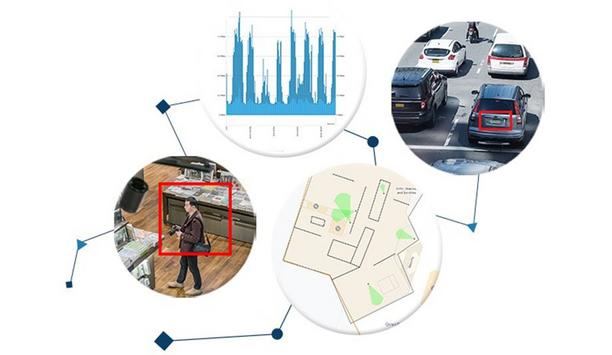
Cloud video and smart cities
Download
Sinaloa, Mexico: Connected cities are safer cities
Download


Technology's role in securing banks and financial institutions
Download
Security technologies promote real-time awareness in K-12 schools
Download
Integrated systems enable critical and compliant security for transportation
Download
Modernising physical access control
Download
Access. Intrusion. One estate.
Download