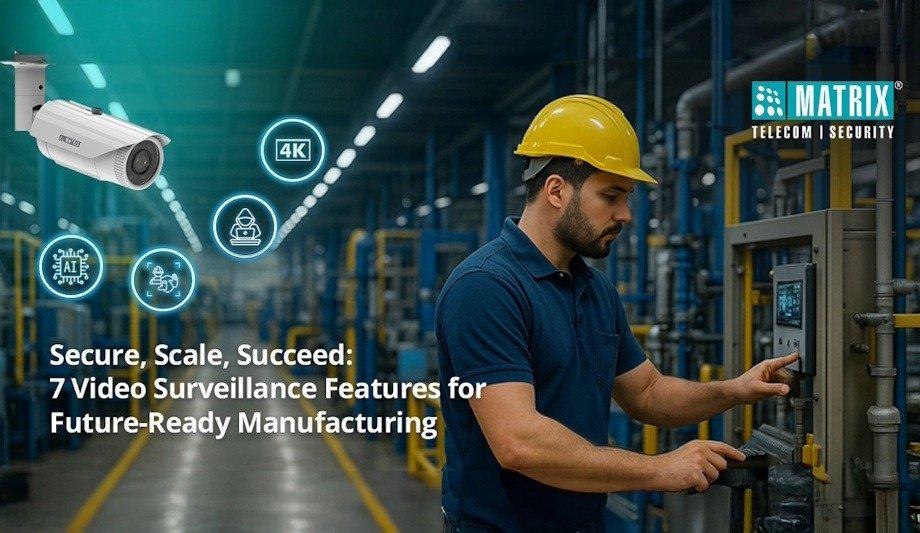

As manufacturing facilities become more automated and interconnected, the need for robust security grows more urgent.
Factors like automation, supply chain complexity, and new regulatory requirements introduce security threats that many facilities aren’t fully prepared for, putting people, assets, and operations at risk.
Range of risks
Modern industrial facilities face a diverse range of risks:
- Cargo Theft: In 2024, U.S. and Canadian businesses faced 3,625 cargo theft incidents—a 27% increase from 2023, according to CargoNet.
- Internal Theft: Internal theft costs U.S. businesses an estimated $50 billion annually, as reported by the National Association for Shoplifting Prevention.
- Workplace Injuries: In 2023, warehousing and manufacturing ranked second and fifth, respectively, for the highest number of fatal work injuries (National Safety Council, 2023).
- Compliance Costs: Manufacturers spend an average of $29,100 per employee to maintain compliance with federal regulations (Compliance Week).
- Cyber-Attacks: In 2023, 25.7% of all reported cyber-attacks targeted the manufacturing industry, according to the IBM X-Force Threat Intelligence Index 2024.
Surveillance systems
A single missed alert can result in costly downtime, non-compliance, or a breach that halts show entirely
A single missed alert can result in costly downtime, non-compliance, or a breach that halts production entirely. Surveillance systems are no longer just about recording incidents—they’re about anticipating them, preventing them, and maintaining control in high-stakes environments.
To meet these demands, manufacturing facilities need surveillance systems equipped with features that go beyond the basics—tools that actively support safety, efficiency, and operational continuity.
Seven features of surveillance systems
The demand for smarter cameras is growing—and fast. According to Market.us, the global IP camera market is expected to hit $16.2 billion by 2025, with hardware dominating at $12.7 billion. Manufacturing is one of the fastest adopters, driven by the need for crystal-clear visibility and proactive risk detection.
AI-enabled video surveillance transforms standard feeds into intelligent oversight—detecting unusual behaviour, identifying faces, and triggering real-time alerts. Whether it's monitoring worker safety or spotting production anomalies, HD and AI capabilities ensure nothing slips through unnoticed.
2. Real-Time Remote Monitoring for Always-On Visibility
Body-worn cameras are increasingly used by safety officers and floor superiors to capture real-time
Surveillance doesn’t end when managers leave the plant. With cloud-based and networked video systems, manufacturers can now monitor operations, receive alerts, and investigate incidents remotely, ensuring real-time oversight across large or multi-site facilities. This always-on visibility improves response time, reduces dependency on physical presence, and ensures business continuity—even during off-hours or emergencies.
In addition, body-worn cameras are increasingly used by safety officers and floor supervisors to capture real-time footage in sensitive zones like assembly lines or chemical storage areas.
Combined with mobile-friendly NVR and VMS applications—offering live view, customised alerts, and intuitive dashboards—remote monitoring becomes seamless, empowering teams to stay in control, wherever they are.
3. Cybersecurity for Surveillance Systems
With 25.7% of all reported cyber-attacks in 2023 targeting the manufacturing industry (IBM X-Force Threat Intelligence Index 2024), cyber protection is a top priority.
Modern IP surveillance systems must include robust cybersecurity features: encrypted data transmission, secure user authentication, regular firmware updates, and network segmentation. Proactive cybersecurity reduces the risk of operational disruption, data breaches, and compliance violations.
Matrix Network Cameras are cyber-secured, aligning with ISO/IEC 27402 standards, protecting captured video data from hacking.
4. Advanced Video Analytics
Analytics adoption in manufacturing is driven by the need for proactive safety enforcement
AI and video analytics are now key innovation drivers for surveillance systems, with features like object detection, people counting, and PPE compliance.
According to Future Market Insights, analytics adoption in manufacturing is driven by the need for proactive safety enforcement and operational optimisation—reducing false alarms and enabling automated compliance checks.
5. Night Vision and Environmental Durability
IR night vision and IP67-rated enclosures are now standard, ensuring 24/7 coverage in low-light and harsh environments. Pan-tilt-zoom (PTZ) and high-resolution cameras are in high demand for comprehensive monitoring of large production floors and outdoor assets.
In manufacturing environments, PTZ cameras with linkage tracking, auto-tracking, and ultra zoom capabilities intelligently follow moving forklifts, monitor material flow, and zoom in on critical operations—enhancing both safety and process control in real time.
Additionally, network cameras offering 24/7 colour imaging are gaining traction in industrial environments. All Colour Cameras deliver vivid footage even in low-light areas, helping manufacturers retain crucial visual details—such as worker attire, vehicle markings, and hazard indicators—that traditional black-and-white footage might miss.
6. Intuitive, User-Friendly InterfacesManufacturing-specific features in surveillance systems like E-map-based plant floor monitoring
In fast-paced manufacturing environments, where seconds can impact productivity and safety, usability is everything. Operator-friendly interfaces with smart tagging, role-based access, and intuitive dashboards help factory staff respond swiftly without needing deep technical expertise.
Manufacturing-specific features in surveillance systems like E-map-based plant floor monitoring, time-lapse playback for shift reviews, event-based search, and day highlights allow teams to trace downtime, safety incidents, or unauthorised activity with precision—streamlining investigations and boosting operational awareness.
7. Smart Alerts and Automated Responses
Real-time alerts and automated actions—such as alarms, buzzers, voice warnings, or instant notifications—are essential for rapid incident management on the shop floor. AI-powered surveillance systems help reduce unplanned downtime, which costs manufacturers an estimated $50 billion annually (National Association for Shoplifting Prevention).
Matrix Video Management System supports multi-channel alerting through WhatsApp, SMS, email, and push notifications. WhatsApp alerts come with a snapshot of the incident, enabling supervisors to take instant, informed, and proactive action—even when off-site.
To sum up
With AI and smart analytics, modern systems actively help reduce risks and support daily operations
Surveillance systems in manufacturing are no longer just about deterrence—they are a tool for enhancing safety, visibility, and control. With AI and smart analytics, modern systems actively help reduce risks and support daily operations.
A recent implementation by Matrix at a packaging and printing manufacturing facility in Gujarat underscores this impact.
Facing challenges in real-time monitoring, employee safety, and vehicle tracking, the facility adopted a comprehensive surveillance solution—deploying 100+ IP cameras, ANPR for vehicle authentication, and intelligent video analytics like tripwire and motion detection.
The result
Enhanced safety on the production floor, improved visibility across operations, and increased control over logistics and compliance.
Matrix offers video surveillance solutions that align with the safety and efficiency goals. The right setup can make a measurable difference on the floor and across the facility.