Technology & Trends - Access Control

When we talk about security, people are often quick to jump to conclusions and picture bouncers, heavy steel doors and alarms that go off as soon as a door is opened. Access control is in fact one of the most common and least invasive methods of adding extra security to a home, communal or business premises – controlling who is able to enter a space based on the use of entry codes, key fobs, and/or access cards. Communal flats and office blocks are where access control is often an importa...

Whenever you say the word “security” in today’s world of digitalisation and technology, minds immediately jump to online security. Encryption, passwords, and website security are all common areas of concern for today’s security teams – so much so that we often pass over physical security installations entirely. But we shouldn’t, because contrary to popular belief, security doors aren’t just for banks and safes. High-security doors are deployed and used...

The 2020s will be a wireless decade in access control, says Russell Wagstaff from ASSA ABLOY Opening Solutions EMEA. He examines the trends data, and looks beyond mobile keys to brand new security roles for the smartphone. The benefits of wire-free electronic access control are well rehearsed. They are also more relevant than ever. A wireless solution gives facility managers deeper, more flexible control over who should have access, where and when, because installing, operating and integrating...

With the continued rolling back of COVID restrictions in the UK, there is a palpable sense of relief. A mixture of mass vaccinations, widespread testing, and track and tracing of the infection is helping to enable a healthy bounce back for businesses – with secure access control taking an important role in facilitating this. However, rather than just being a reaction to the wake of the pandemic, there is every sign that the economy, and consequently the security sector as well, are both r...

Automatic gates remain an increasingly popular security choice for family homes, business premises or public buildings – anywhere that full control over access is needed. While there is much to consider for installers when advising clients on the right solution for their property, from the size, weight and cost of a gate system, it’s useful to be aware of the latest developments in the market, as this can help to find the right option to fit their needs. The need for speed Gates c...

COVID restrictions across the UK are slowly easing and many public venues, including stadiums, are beginning to reopen following a year of closures and uncertainty. According to recent ONS figures, criminal offences – excluding fraud and computer misuse – dropped significantly during the lockdown periods of 2020. In fact, 25% less crime was reported in April 2020 compared to the same month in 2019. However, as lockdown measures eased each time, crime levels quickly crept up, sadly e...

The global biometrics market has been recently developing rapidly, and this trend will continue shortly. If in 2018 its volume was estimated at $23.4 billion, according to the forecast of the analytical company BCC Research, the market size may increase to $71.6 billion with an average annual growth rate of 23.2 % by 2024. Fingerprint scanning, facial recognition, iris, vein, and voice technologies are expected to be implemented at the fastest pace. The analysis is based on the revenue indicato...

As the vaccine roll-out proceeds, people across the UK are counting the days until we can get back to some kind of ‘new normal’. Just as we’ve seen in education and healthcare, the return to the workplace and other public spaces will be accompanied by enhanced sanitisation and social distancing measures. To make the return as swift and safe as possible, those of us involved with managing, building and constructing buildings should consider how we can help facilitate and suppor...

Display solutions play a key role in SOCs in providing the screens needed for individuals and teams to visualise and share the multiple data sources needed in an SOC today. Security Operation Centre (SOC) Every SOC has multiple sources and inputs, both physical and virtual, all of which provide numerous data points to operators, in order to provide the highest levels of physical and cyber security, including surveillance camera feeds, access control and alarm systems for physical security, as...

The Annual Fraud Indicator estimates that fraud costs the United Kingdom approximately £190 billion every year. The private sector is hit the hardest and loses around £140 billion a year, while the public sector loses more than £40 billion, and individuals lose roughly £7 billion. The effects of fraud can be devastating on both individuals and organisations. Companies can suffer irreversible damage to reputation and be forced to close, and individuals can experience sign...

The SolarWinds cyberattack of 2020 was cited by security experts as “one of the potentially largest penetrations of Western governments” since the Cold War. This attack put cybersecurity front and centre on people’s minds again. Hacking communication protocol The attack targeted the US government and reportedly compromised the treasury and commerce departments and Homeland Security. What’s interesting about the SolarWinds attack is that it was caused by the exploitation...

Over the past year, companies have had to deal with the COVID-19 pandemic and how it has affected their operations. From new digital services through to security, the response to more hybrid and remote working showed some of the assumptions that we have made over the years, and it required companies to innovate and fill those gaps. Physical and IT security was no exception to this. In the rush to support home working, many IT security teams realised how much they rely on physical security to he...

The transition to remote working has been a revelation for many traditional office staff, yet concerns over data security risks are rising. Mark Harper of HSM explains why businesses and their remote workers must remain vigilant when it comes to physical document security in homes. Pre-pandemic, home offices were often that neglected room in people’s homes. But now things are different. After the initial lockdown in 2020, 46.6% of UK workers did some work at home with 86% of those doing s...

Though many office workers across the globe have found themselves working remotely for the past year, we are seeing a bit of a silver lining, as vaccine rollouts hint at a return to some pre-pandemic sense of normalcy. However, while some of us might opt for a fully-remote work life, others are anticipating a hybrid solution. Even before the pandemic, offices were taking a new, more open layout approach—moving past the days of cubicles and small office configurations. Going forward, offi...

The return to the workplace is a focal point for many in the built environment but one of the most important elements is easy to overlook. Guest services will be vital in the return to the workplace. Front-of-house teams will be responsible for welcoming building users back and reassuring them as they negotiate shared spaces in the post-Covid era. The workplace will inevitably look different after Covid. We have become more aware of our spaces, how clean they are, and what spaces building users...

Q: Mr. Seiter, Mr. Ekerot, you both joined Bosch Building Technologies’ business unit Video Systems & Solutions as Senior Vice Presidents in March 2020, when the Coronavirus pandemic was just beginning. How did your business unit get through 2020? Magnus Ekerot: The crisis was also felt at Bosch. At the same time, demand has risen for solutions that keep businesses open and protect people's health. We offer corresponding video solutions that can make a significant contribution to con...
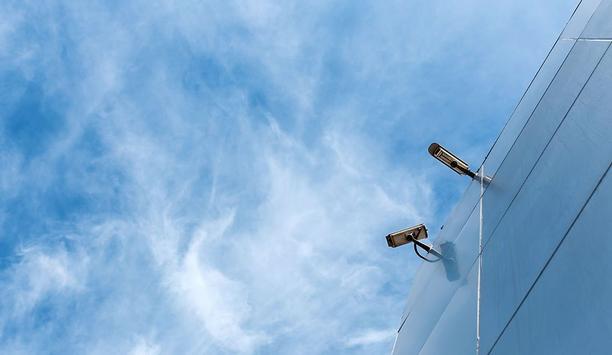
While COVID-19 caused widespread disruption and many challenges for businesses, its sudden arrival prompted some very quick decision-making around how to maintain operations. For some businesses, cloud-based video conferencing solutions provided a welcome alternative to meeting face-to-face. A year on and it seems that this sudden and mass adoption of cloud has accelerated a digital transformation process in other departments. Physical security too is increasingly moving to the cloud in the form...

What would you do if, tomorrow morning, you opened your work laptop to see a ransomware demand? “Oops: Want Your Files Back? Here’s How to Pay”. It’s a pretty terrifying prospect. In that moment, IT and senior management are rushing to restore previous versions via advanced cybersecurity – or if they can’t, they’re considering paying up. As for the rest of your company’s employees, their online training modules in how to prevent a cyber-attack or...

In the 1977 book, The Age of Uncertainty, author John Kenneth Galbraith wrote, “All of the great leaders have had one characteristic in common: it was the willingness to confront unequivocally the major anxiety of their people in their time. This, and not much else, is the essence of leadership.” Fast-forward four decades, and we are facing uncertainty like no other - anxiety levels are high, and fake news has become part of our daily lexicon. With this in mind, what can security an...
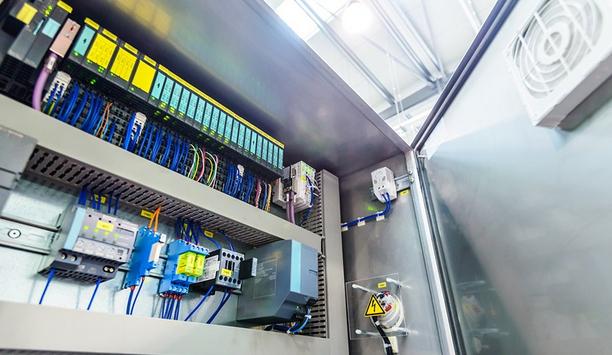
Enclosures containing electronics, communications or cabling infrastructure offer a simple attack point for cyber breaches and an opportunity for a physical attack on the hardware. Yet, many of these assets are housed within enclosures that provide minimal security features to offer a deterrent to any would-be attacker. This has always just been a pet hate. Walking down the high street of a town anywhere in the United Kingdom, you can often see open street communication cabinets. You can actual...
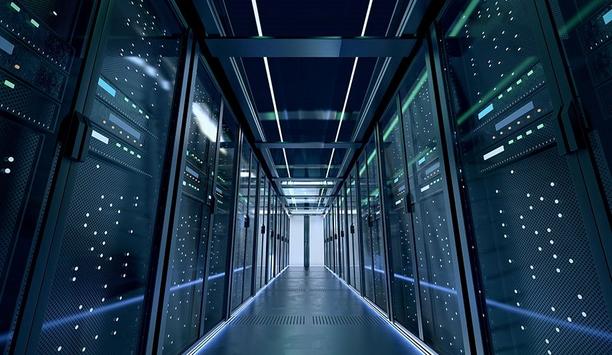
Once upon a time, providers had end-to-end control when deploying a physical security platform, which is not the case anymore when we consider the modernisation to IP. When considering the move to IP physical security, the provider needs to ensure the customer has a robust PoE backbone to connect the IP security device back to the application. Network readiness requirements have complicated IP security deployments, making it challenging for current providers while opening the door to new compet...

We encounter AI with increasing frequency, both online and in the media. AI has penetrated deep into various aspects of our lives, from TV sets that improve picture quality using AI, or air conditioners with automatic temperature and humidity control, to investment management services that predict return rates. AI technology first appeared in the 1950s and was briefly revived in the 1980s before falling off the radar. In the late 2000s, AI re-emerged and went on to become a key technology and d...

If you’re a security or facilities manager, you may already be aware of the quiet revolution that’s taking place across businesses and organisations up and down the country. By the end of 2020, 20% of all ID and access control systems featured mobile capability, and this is set to increase by a further 34% over the next three years. There’s no doubt that using a smartphone or mobile device in place of traditional credential and access control is a growing trend that’s o...
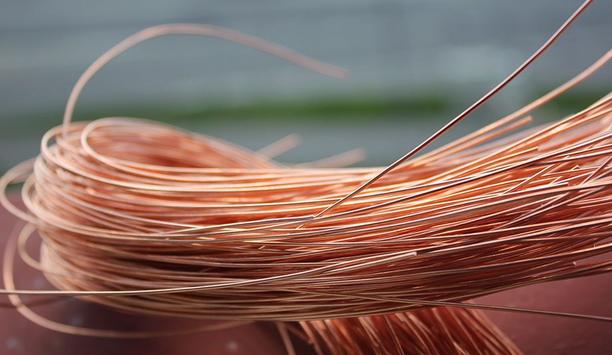
For decades, cable theft has caused disruption to infrastructure across South Africa, and an issue that permeates the whole supply chain. Here, Ian Loudon, international sales and marketing manager at remote monitoring specialist Omniflex, explains how new cable-alarm technology is making life difficult for criminals and giving hope to businesses. In November 2020, Nasdaq reported that, “When South Africa shut large parts of its economy and transport network during its COVID-19 lockdown,...

While the application of facial recognition within both public and private spheres continues to draw criticism from those who see it as a threat to civil rights, this technology has become extremely commonplace in the lives of iPhone users. It is so prevalent, in fact, that by 2024 it is predicted that 90% of smartphones will use biometric facial recognition hardware. CCTV surveillance cameras Similarly, CCTV is a well-established security measure that many of us are familiar with, wheth...

Since the start of the pandemic, almost a quarter of UK businesses have been forced to temporarily close, pause trading, or work remotely, with very little notice. Now nearing the 12th month of the crisis, the country is currently enduring its third national lockdown, with an unspecified timeframe. Most workers are being urged to remain at home and only venture out for essential travel. This means a huge number of premises across the board, from recreational venues such as theatres, pubs and le...

Like most industries, the fields of security, access and safety have been transformed by technology, with AI-driven automation presenting a clear opportunity for players seeking growth and leadership when it comes to innovation. In this respect, these markets know exactly what they want. They require solutions that accurately (without false or negative positives) classify and track people and/or vehicles as well as the precise location and interactions between those objects. They want to have a...

Urban populations are expanding rapidly around the globe, with an expected growth of 1.56 billion by 2040. As the number of people living and working in cities continues to grow, the ability to keep everyone safe is an increasing challenge. However, technology companies are developing products and solutions with these futuristic cities in mind, as the reality is closer than you may think. Solutions that can help to watch over public places and share data insights with city workers and officials...

The global pandemic has created a working environment filled with uncertainty and, at times, fear, as COVID-19 cases surge yet again and businesses continue to navigate a complex web of infectious disease mitigation protocols and managing the distribution of a potential vaccine. Organisations are operating in an environment where a critical event, posing significant risk to its employees and daily operations, could occur at any moment. Even with a vaccine showing light at the end of a very dark...

Several major players vigorously employ biometric recognition technologies around the globe. Governments use biometrics to control immigration, security, and create national databases of biometric profiles. Being one of the most striking examples, the Indian Aadhaar includes face photos, iris, and fingerprints of about 1.2 billion people. Financial institutions, on their part, make use of biometrics to protect transactions by confirming a client's identity, as well as develop and provide servi...
Browse expert commentaries
Related videos


Find Lost Wallet with Dahua WizSeek

Dahua Traffic Signal Controller Highlight

Dahua DeepHub ST430 Highlight

Dahua APOLLO 4G Solar Security System
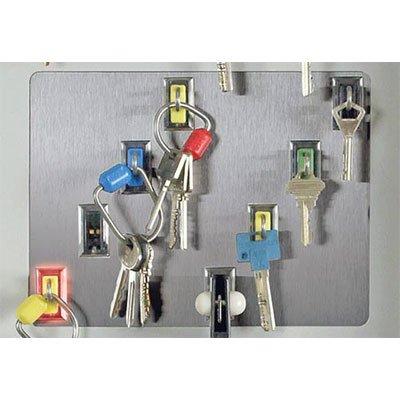
Morse Watchmans KeyWatcher Touch Key Control Modules

Hikvision AX PRO Wireless Alarm Keyfob

Security technologies promote real-time awareness in K-12 schools
Download
Technology's role in securing banks and financial institutions
Download
Integrated systems enable critical and compliant security for transportation
Download
Modernising physical access control
Download
Access. Intrusion. One estate.
Download
