Technology & Trends - Access Control

Physical security isn’t a one-time project or a static system. It’s a dynamic, ongoing process and program that requires constant attention and management to remain effective. While the initial implementation of a security system — what we often call Day 1 — is critical, the ongoing maintenance, service, and adjustments made after systems are operational, or Day 2, are equally essential. Security program long-term Organisations that fail to focus on post-occupancy sec...

Gun violence remains one of the most unpredictable threats in today’s physical security landscape. When it strikes, seconds matter. The ability to detect and respond to gunfire almost instantaneously can determine outcomes. Security pioneers and first responders know this, and yet too many gunshot detection systems in operation today are shackled by outdated assumptions and aging architecture. The demand now is not for incremental improvements, but for a complete rethinking of how these...

A key characteristic of many successful companies is that good ideas come from everyone, not just specific departments or job titles. What one person sees as obvious may be questioned by someone else who is less familiar with the product or process. This simple interaction can spark a whole new, faster, and better approach. While valuing tradition is important, if someone uses the phrase “that’s how we’ve always done it,” it’s essential to analyse the process...

The physical security industry has been in love with the cloud for quite some time. And understandably so. The promise of instant scalability, centralised access, and simplified maintenance is hard to ignore, especially in an era of remote work and distributed facilities. But reality is catching up to the hype. For many, especially those dealing with video surveillance at scale, the cloud is no longer the catch-all solution it once seemed. Rising costs, bandwidth limitations, and latency issue...

In the old days, hopping onto the platform from a not-yet-stopped train was a commonplace stunt for daily commuters in a hurry. It was a thrilling, but dangerous part of railway travel. Today, rail travel is generally much safer, but thrill and fame seekers are finding new, creative ways to use the railway to court notoriety online. Earlier this month, a young man filmed himself laying on the tracks and allowing a train to pass over him. In another instance, two people were seen misusing...

In the ever-evolving struggle between cyber offence and defence, attackers have almost always moved first. In the emerging domain of artificial intelligence, this pattern appears to be repeating itself. Yet, global cybersecurity pioneers appear disconcertingly disengaged. Just over half even agree that AI-driven attacks are set to become dramatically more complex and widespread. Equally concerning is the widespread apathy regarding AI’s role in expanding an already sprawling corporate att...

In 2021, New Orleans took bold steps to modernise its public safety strategy after experiencing a dramatic increase in criminal activity. The city invested $70M in advanced video security systems, placing smart cameras in high-risk areas like busy transit hubs and crowded public spaces to promote community safety. The cameras weren’t just traditional CCTV setups—they were smart security solutions equipped with real-time alerts that leverage AI-powered analytics, facial recogni...

Artificial Intelligence isn’t just a buzzword anymore. It has become part of our lives, and its uses and applications are growing every other day. Even the public sector, which usually is a late adopter of new technologies, has come onboard this new train. Law enforcement, in particular, has seen the advantages different AI technologies can offer to their work and has started to integrate them into their workflow and daily routines. But there is much more to come. Task automation: AI as...

In today’s fast-evolving aviation landscape, innovation isn’t optional — it’s essential. With passenger traffic in the Asia-Pacific continuing to surge, the region is facing a pivotal moment: adapt with scalable tech, or fall behind. In January 2025 alone, APAC carriers accounted for 56.6% of global passenger traffic growth. Airports are operating at near capacity, with a record-high Passenger Load Factor (PLF) of 82.1%, leading to pronounced congestion at check-in count...

Retailers now often find themself in a precarious situation. Profit margins are being squeezed by widespread shoplifting: The Council on Criminal Justice reports that between the first half of 2023 and the first half of 2024, shoplifting reports increased by 24%. Meanwhile, the strategies used by shops to deal with this situation are alienating consumers and affecting total sales. Andy Jassy, the CEO of Amazon, stated during an earnings call that customers are now purchasing more pharmaceutica...

For businesses today, loss prevention is no longer just about safeguarding inventory from theft. While retail theft makes frequent headlines in the United States, and is indeed the leading cause of shrinkage, The National Retail Foundation (NRF) has reported that process failures, operational inefficiencies and employee theft also drive significant losses. Legacy security systems In 2022, the shrink loss is estimated to be $ 120 billion in the United States, and that’s for reta...

March is Women in Security Month, a time dedicated to celebrating and promoting the contributions of women in the security field—particularly in cybersecurity. This observance aligns with Women’s History Month, providing an opportunity to reflect on the progress made and the work still needed to advance gender equity in security. Evolving role of women in security The security industry has witnessed a steady increase in women's participation. According to ISC2 Research in its &ld...

Technology advances in the security industry are transforming the way modern systems are designed and installed. Customers today are looking for greater scalability and flexibility, lower up-front costs, and operational efficiency. Cloud-based software as a service (SaaS) solutions, AI-enhanced tools, and IoT-enabled sensors and devices are increasingly in demand. The traditional role of the systems integrator is evolving as a result. While security integrators have always worked closely with e...

From where I sit in talking to security pioneers every day, the traditional Global Security Operations Centre (GSOC) stands at a critical inflection point. Security teams are up against challenges in staffing, operational efficiency, and more threat complexity, which means “thinking outside the box” is becoming critical. The use of artificial intelligence (AI) is emerging as more than a buzzword in these situations; it’s becoming a game-changing force multiplier in security o...

In today's rapidly evolving security landscape, facial recognition has become a buzzword that often triggers privacy and data protection concerns. However, many security professionals may not realise that "facial recognition" is an umbrella term encompassing various technologies, each with distinct applications and privacy implications. Let's dive into what these technologies really mean for security system resellers, integrators, and end-users. Facial recognition tech At its core, faci...

Security technology has witnessed huge advancements in recent years, particularly for those protecting critical assets or information. Facial and fingerprint recognition, ANPR and even 'mac addresses' or a person of interest's gait, now all make up the technology toolbox of forward-thinking organisations' security policy. However, humans remain the weakest link in any security chain, and the only way to correct this is to eliminate the human burden, argues Richard Hilson, head of sales for secu...

Access control solutions will continue their evolution in 2025 as organisations assess and adapt to dynamic and increasingly dangerous threats. Trends to watch include the growing adoption of mobile access credentials and digital IDs, and the integration of digital and physical security and other technologies. Other ongoing trends include the integration of AI into access control solutions and the increasing adoption of contactless biometrics for enhanced convenience. New access control...

A survey conducted by Blackhawk Network finds the average shopper plans to spend almost half of their holiday budget to buy gift cards this year versus only 39% in 2023. The global gift card market was valued at $1.3 billion USD in 2023, and it is projected to reach more than $5.2 billion USD by 2032. Fraud - a growing concern While gift cards continue to be top of mind for consumers for streamlined gifting, gift card fraud is a growing concern for consumers and businesses alike. Accordin...

In the past, security and IT teams operated independently, but today collaboration is critical. Modern security systems rely on various devices and systems that are linked to internal and external networks. Without IT involvement, physical security can become a weak point for cybersecurity. Although these groups have made headway in partnering up to ensure the successful implementation of new solutions, often there’s still a disconnect. Differing skills, priorities, and unique ways of th...

The artificial intelligence revolution in physical security has arrived, transforming how we protect people, assets, and infrastructure. From smart buildings that automatically adjust access protocols based on real-time threat assessments to healthcare facilities using AI-enhanced video analytics for patient safety, these technologies are reshaping the industry landscape. But with this transformation comes a new era of regulatory oversight that security professionals must navigate carefully.&nb...

In today’s world, almost any electronic security system holds the potential to become a gateway for cybercriminals. With physical security and cybersecurity increasingly entwined, security professionals aren’t doing their job unless they take all possible precautions to lock down unauthorised access to camera systems, access control platforms, intercoms, and other network-based security devices and solutions. Let’s explore the many steps companies should take throughout their...

Digital access control has well-known benefits over traditional security, of course, but also costs attached to each stage of its lifetime. However, these costs are not fixed. Many factors – including building size, shape, type, location, national regulations and more – impact affordability and efficiency calculations. Crucially, the type of access solution a business selects – wired or wireless – impacts total operating costs, including during installation, running and...

As urban populations grow and security challenges evolve, Californian cities have increasingly turned to advanced surveillance systems to enhance public safety. Surveillance infrastructure Between 2022 and 2024, these cities have made significant strides in upgrading their surveillance infrastructure, driven by concerns over crime, public safety, and the need for more sophisticated emergency response systems. This article explores how California's urban areas are improving surveillance techn...

As the backbone of community welfare, healthcare facilities cater to crucial public needs from emergency care to specialised medical treatments, and due to its position as a significant facet of the world's critical infrastructure, the healthcare sector faces a multitude of challenges in ensuring patient and visitor security, managing high traffic, and safeguarding sensitive data. Medical sites, such as large hospitals and urgent care clinics, see a wide variety of patients, medical staff, adm...

Rapid technological advancement, artificial intelligence (AI) and machine learning (ML) are revolutionising traditional on-premises video security systems. These next-level tools are not just enhancing video data capabilities; they're transforming how businesses approach security, operational efficiency, and information analysis. Video analytics have been a part of security systems for many years, but the arrival of deep learning in 2009 marked a turning point. By training neural networks, basi...

The European Union’s GDPR (General Data Protection Regulation) framework represents some of the toughest and most secure privacy laws in the world. Their creation signaled the EU’s dedication to individual privacy rights and generated new standards and requirements for an organisation inside or outside of the EU wanting to do business in the region. This privacy stance raises an interesting question: to what extent (if any) will France be utilising AI-assisted security and biometri...

As city managers, law enforcement agencies, and first responders face mounting pressure to combat crime and respond to emergencies with limited resources, real-time crime centres empowered by a new generation of data-driven technologies are emerging as an effective force multiplier. Real-time crime centres Real-time crime centres (RTCCs) serve as centralised hubs where dedicated personnel leverage pioneering-edge technologies to analyse diverse data streams and provide critical support t...

Security manufacturers throw around the term “scalable” a lot these days, but few dive into what scalable really means for modern organisations and their security programs. Achieving true scalability, or as I like to refer to as “expandable with a purpose,” takes planning and coordination from security pioneers alongside the broader organisation. Implementing a flexible strategy is critically important in the age of advancing analytics and intelligence-driven technology....

The days of being reactive are over. That’s right, we as an industry, can no longer afford to be reactive. As threats evolve, the need for proactive security is critical. While traditional methods, including physical barriers and security personnel, are still necessary, the future of our approach is built on the backs of emerging technologies. Substantial vulnerabilities As an industry, we’ve operated reactively for decades, it has been common for security teams to address...

For K12 education pioneers, embarking on a journey to upgrade security controls can present a myriad of questions about finding the best-fit solutions and overcoming funding hurdles. A majority of public-school districts today are faced with outdated infrastructure and security controls, requiring necessary upgrades. By addressing these concerns head on, schools will ensure a safer environment for both students and staff, mitigating risks posed by unforeseen physical and digital threats. Common...
Browse expert commentaries
Related videos


Find Lost Wallet with Dahua WizSeek

Dahua Traffic Signal Controller Highlight

Dahua DeepHub ST430 Highlight
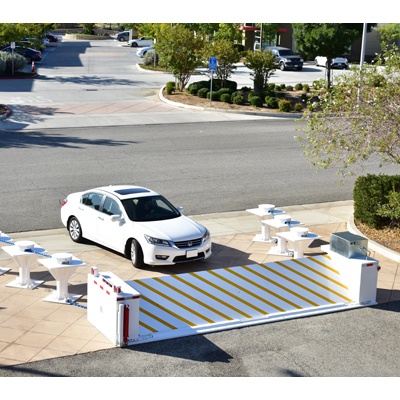
Delta Scientific Rapid Deployment Portable Barrier
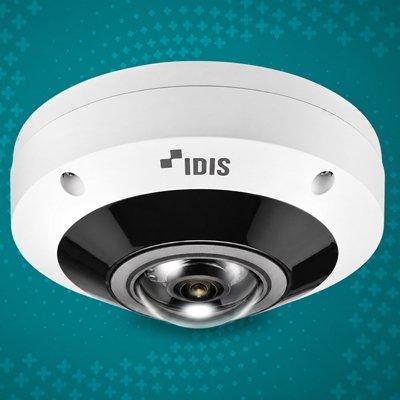
IDIS 12.5MP AI Fisheye Camera with Panoramic Auto-Tracking

Dahua 4G Solar Security System with Dual-Lens AI Detection

Technology's role in securing banks and financial institutions
Download
Security technologies promote real-time awareness in K-12 schools
Download
Integrated systems enable critical and compliant security for transportation
Download
Modernising physical access control
Download
Access. Intrusion. One estate.
Download
