Milestone Systems - Experts & Thought Leaders








































White papers from Milestone Systems

Understanding AI-powered video analytics
Download
Milestone cloud deployment guide
Download
Essential data security strategies for healthcare
Download
Video technology strategies for hospitals are moving beyond security
Download
Safeguard Students With New Techniques And Technology
Download
Levelling up with campus safety
Download
Assessing safety readiness for education campuses
Download
The future of healthcare security is connectivity
Download
Improving city mobility using connected video technology
Download
Video technology: making cities safer & improving lives
Download
Latest Milestone Systems news & announcements

With 1,300 cameras recording 24/7 and more than 1,000 investigations to process per year, Massachusetts General Hospital’s security team was not able to keep up with the vast amounts of recorded video. Now, BriefCam Syndex Pro for fast video review, search and analysis, embedded within a Milestone XProtect video management software (VMS) platform is making efficient and effective video investigation possible. Unique challenges to security Massachusetts General Hospital’s (MGH) Police, Security and Outside Services Department provides some security services to many other Partners hospitals and facilities. Following its recent digital conversion, unified on the Milestone XProtect VMS platform, MGH’s security team was able to expand camera coverage by adding new Axis network cameras directly to the existing IP network. The hospital environment presents unique challenges to security, Michelman points out “The number of investigations we were doing was taking huge amounts of time in terms of reviewing video, and that was really a waste of time,” said Bonnie Michelman, MGH Executive Director of Police, Security and Outside Services and Consultant for Partners Healthcare. The hospital environment presents unique challenges to security, Michelman points out. MGH’s 17-acre urban campus, comprising 29 contiguous and 14 separate buildings (including underground and freestanding garage facilities), is complex. The security team must also take into account not only the main location, but also dozens of satellite facilities around the Boston area. Enterprise risk management “We can’t cover all of these facilities with security staff,” said Michelman. “We need to augment heavily with very good, state-of-the-art technology that allows us to combine our intelligence, labour, policies and procedures, in order to create a better holistic approach to enterprise risk management.” Charged with creating a safe environment, MGH’s security team at the same time is challenged by the clinical team’s needs for increased efficiency through lowering length of stay and moving patients through the hospital as quickly as possible. The 24-hour Emergency Room, with its anxious, highly volatile population presents challenges of its own. In addition, patient elopement and patient wandering – unauthorised departures from the medical facility, whether intentional or unintentional – pose liability threats that can be very damaging to a hospital. Providing customer satisfaction A unified system was required to balance the video surveillance needs of a busy hospital campus A unified system was required to balance the video surveillance needs of a busy hospital campus with remote satellite locations while upholding the highest level of security possible, maintaining operational flow, and providing customer satisfaction that includes expectations of privacy. Michelman, together with MGH Senior Manager, Systems and Technology Robert Leahy, decided on the Milestone XProtect VMS platform. Camera count was increased from 400 to 1,300, and standardised with Axis network cameras connected directly to the IP network. To deal with the marked increase in video data, MGH’s team chose BriefCam Syndex Pro, a powerful set of tools intended to reduce the time and effort needed to conduct video reviews, post-event video investigation and real-time video monitoring. The BriefCam solution ties in seamlessly with the Milestone video management solution, providing efficient workflow for investigators. Presenting video metadata According to Michelman, BriefCam has already proven invaluable. A two year long ROI examination of video surveillance use at MGH has shown a progressive rise in success rates with the use of video in incident investigations. According to Michelman, BriefCam has already proven invaluable “I see BriefCam as a very important part of our toolbox of excellent practices for protecting what is a very complex environment of tangible and intangible assets,” said Michelman. BriefCam Syndex Pro’s ability to present video metadata in graphic visualisation format, such as bar graphs, pie charts and the like, has opened up new realms of possibilities to extend the role of CCTV video beyond security into organisational efficiency and more informed, data-driven decision making. Better investigative focus “In the past, there might have been things that would have been a ‘nice to do,’ but we couldn’t do it because we didn’t have resources to watch many hours of video,” said Michelman. “Now we can manage the content and we can see trends, which in turn can drive redeployment of resources, and by extension, facilitate a better investigative focus and success.” BriefCam Syndex Pro embedded within Milestone XProtect VMS platform is helping MGH in its mission to effectively and efficiently protect and safeguard the hospital community. Michelman said: “We’re happy with these products, but it’s not just about the quality of the technology, it’s about the quality of the partnership. You know, it’s easy to sell a product, but to sustain it, service it, and be there after it is in is really very critical for us.”

Being isolated on the edge of wilderness means there’s a need for a video system that’s both reliable and flexible. For that reason, the team at Jackson Hole Airport (JAC) since 2009 has relied on video management software (VMS) from Milestone Systems to enhance security, safety, and efficiency. Challenge - Help to keep scaling At the edge of the frontier, Jackson Hole Airport has experienced considerable growth over the years. Significant capital investments in expansions have made new video system integrations possible several times, and Milestone XProtect has supported the airport’s needs along the way. As of 2020, over 220 cameras were in use, and the airport shows no signs of slowing down As of 2020, over 220 cameras were in use, and the airport shows no signs of slowing down. New projects will include building a fuel farm, a car wash and expanded parking facilities. XProtect’s open platform software As the need to increase security continues, XProtect’s open platform software will continue to enable both IT team growth and the seamless integration of new cameras and data storage capabilities. Solution - Integrations are in the fly zone Milestone XProtect Professional Plus and Smart Client Network cameras from Axis Communications and Panasonic Optimised video server hardware from Razberi Integrated video analytics from Agent Vi All video is stored for up to a full year, with most of the system’s 200 cameras set for motion recording, 24/7. Result - Greater situational awareness for higher security The video system has enabled improvements throughout the entire airport. For example, Jackson Hole Airport has to contend with a great deal of plane de-icing for several months each year. This occurs at a distance from the main buildings and, thanks to the video expansion, each airline is now able to monitor the de-icing of their planes. Allowing clients to monitor progress on their own has saved airport staff time and resources. The airport uses the system to closely monitor the security checkpoint, too, capturing video documentation in case of an incident. Baggage areas are also monitored, so it’s possible to investigate lost bags and left-behind items by reviewing video. New 4K, multi-sensor cameras New 4K, multi-sensor cameras support a largely unmanned investigatory system New 4K, multi-sensor cameras support a largely unmanned investigatory system. They capture everything and provide enough data to zoom in after the fact, if needed. Additionally, the team has deployed video analytics from Agent Vi to provide a layer of automated alarms and notifications for flagging abnormal occurrences. Video analytics can detect events, such as travelers moving against the foot traffic flow and crossing into restricted areas. Milestone’s XProtect Smart Client Milestone’s XProtect Smart Client has shifted general situational awareness in the airport, as a new standard for authorising users’ remote access to the surveillance from multiple locations. It provides seamless viewing of live and recorded video, instant control of cameras and connected security devices, and a comprehensive overview of activity. The ongoing use of Milestone Systems’ video management software (VMS) makes it possible to maintain the independence and efficiency of a small team of personnel, thereby delivering maximum security at the base of the Grand Teton Mountains. Situational awareness for the JAC team and their clients Andrew Wells, the IT Manager for the Jackson Hole Airport (JAC), said “Situational awareness for our team and our clients allows us to be as secure and efficient as possible with our small team. The flexibility of the open platform VMS allows us to scale our system and add the features we need now and in the future.” Jackson Hole Airport (JAC) lies seven miles north of Jackson, Wyoming, at the base of the Teton Mountains, in USA. It is unique for being entirely within Grand Teton National Park. It is the busiest airport in the US state of Wyoming, with nearly 500,000 in-bound passengers annually. The airport covers over 500 acres and has one runway that supports 11 hard-stands, nine boarding gates and three baggage carousels.

The Commonwealth of Puerto Rico needed to implement a centralised and efficient perimeter security system for all public schools on the island. Intrusions and assaults at educational institutions have increased, and Hurricane Maria further exacerbated problems with the destruction of infrastructure. The solution: The need to repair hurricane damage also provided opportunities to invest in modern improvements. The Department of Education chose to install a video surveillance system with more than 10,000 cameras, speakers, and other security devices in 856 schools. In the same way, a centralised control centre was established using the Corporate version of Milestone Systems XProtect® video management software (VMS). Devices installed Milestone Systems: XProtect VMS Software XProtect Smart Client Milestone Interconnect Cameras from Axis Communications and Uniview DH-Vision Seneca Servers and Optex Sensors The advantages: Audiovisual material captured by the system helps agencies to evaluate and manage areas for public use Endowed with the same annual budget that allowed the monitoring of 250 institutions, the new system enabled the Puerto Rico Department of Education to cover all 856 public schools. Since the system has been operational, there has been a 97% reduction in intrusions within educational institutions. In addition to protecting the educational programme, the audiovisual material captured by the system helps other government agencies to evaluate and manage areas for public use and investigate incidents. Need for a centralised security system Ensuring a safe environment is a growing challenge for schools and colleges: theft, fights, and bullying are some of the problems that not only affect students, but also teachers, employees, and, ultimately, the government entities that subsidize the educational system. In Puerto Rico, for example, the Department of Education was concerned about the increase in unauthorised intrusions, robberies, and assaults within its schools. This index shot up after Hurricane Maria destroyed much of the island’s infrastructure in 2017. Even before this natural phenomenon, there was no centralised security system that integrated an overview of all schools. There were disparate installations of video surveillance equipment (cameras, alarms, and lighting) but only in approximately 250 of the schools. Centralised command centre González said, the proposal was born to begin the process to acquire a video surveillance system for public schools After the hurricane, top priority was given to providing perimeter security for all schools through an effective centralised command centre instead of investing in the repair and purchase of separate systems. “The hurricane damaged the island’s communication and lighting systems, a circumstance that promoted intrusions into schools and increased vandalism. We had no visibility of what was happening and we could not find a way to avoid these escalations,” said César González Cordero, Security Commissioner for the Puerto Rico Department of Education. He adds, “However, we could not afford to buy and repair equipment individually for all schools, so a centralised and coordinated effort was necessary.” Based on this context, González said, the proposal was born to begin the process to acquire a video surveillance system for public schools in Puerto Rico, focused on perimeter security. Perimeter security for all schools Genesis Security Services, Inc. of Puerto Rico was selected to develop the perimeter security project for the 856 public schools on the island. This Puerto Rican corporation was founded in 1997 in Yabucoa, Puerto Rico by brothers Roberto and Emilio Morales, who are leaders in security services at the government level. “We have been providing security to the Department of Education for more than 15 years through our onsite guard service. That is why we knew the design, location, assets, and vulnerabilities of various educational establishments. This was a great advantage when executing the project,” said Yasel Morales, Technology Director at Genesis. Video system Milestone XProtect video management software supports more than 8,500 security and surveillance devices In October 2018, the installation of cameras and other devices began in all schools. The video system mission control was built inside the Genesis Central Station, located in the Carolina municipality (in the island's northeast region). Video data from all schools are returned to Central Station, where it is managed with the Milestone Systems XProtect Corporate open platform VMS. Leveraging the power of the open platform, Milestone XProtect video management software supports more than 8,500 security and surveillance devices, and more than 450 software integrations from more than 3,500 technology partners. NVRs, DVRs and cloud solutions Alliance partners include providers of network video cameras, cloud solutions, DVRs and NVRs, servers and storage equipment, alarm and detection systems, video analytics, GPS technology, laser and radar scanners, boxes of emergency calls, and more. “At the Central Station, we have fifteen workstations, with the same number of operators per shift. There we have a videowall of ten monitors distributed between the stations. Likewise, we have two dispatch centers that serve as backup: one in the municipality of Yauco and the other in the municipality of San Juan,” Morales explained. Uniview DH-Vision 4-megapixel cameras, audio speakers As part of the project, approximately 10,000 Uniview DH-Vision 4-megapixel cameras were installed in 856 schools (an average of 12 cameras per campus). Audio speakers from Axis Communications and a range of Optex sensors also were integrated. The combination of these technologies made it possible for every school to have an anti-intrusions system with its alerts feeding back to the Central Station. XProtect Express+, Milestone Interconnect Milestone Interconnect connects remote sites for a low-cost video surveillance solution Each campus has a Seneca brand server with the XProtect Express+ software installed. This communicates with the Corporate version at the Central Station through Milestone Interconnect™, a licensing platform that opens a communication channel between different hardware that normally cannot communicate with each other. Milestone Interconnect connects remote sites for a low-cost video surveillance solution. It is the ideal surveillance for a wide variety of industries that want an inexpensive way to get centralised supervision of multiple locations spread across one region. Remote management and monitoring With Milestone Interconnect, engineers and managers can easily monitor critical and remote areas from one central location. This means faster intrusion management because operators in the central system can access the video and receive alarms from remotely connected sites. This reduces the need to have local security personnel, maintenance, operation, and other costs, including visits onsite. Virtual gates Genesis created virtual gates using cameras that, in addition to protecting school spaces, also ensure the safety of substations and solar panels, which are considered important assets for institutions. If someone crosses the virtual gate, an alert is generated locally and passed to the Central Station through Interconnect. Operators then make a visual confirmation and, if applicable, the emergency protocol is activated. “The emergency protocol is to contact the Security Commissioner and the Department of Operations. For this liaison, we internally designate an inspector. Once informed, they activate the security officers at the sites, who are trained to give quick responses and inform the police,” said Morales. Identifying suspicious activities Due to the management software, Genesis can easily find any recording of the schools Due to the management software, Genesis can easily find any recording of the schools and send it to the Security Commissioner, who can also receive the alerts directly through an application on his mobile phone. It should be noted that all personnel handling the system, both operators and technicians, have Milestone Systems certifications, which they obtained on the manufacturer’s website. Security Commissioner González explained that the directors and residents of the schools may contact the Central Station if they wish to report any suspicious activity within a school after regular hours. Genesis operations centre González also clarified that “if for any reason a school principal requires a recording, he must contact us, and we request the information from the Genesis operations centre. This protocol is designed to respect the right to be in a place without feeling guarded at all times, as stipulated in the public policy of Puerto Rico. In total, this system directly benefits almost 400,000 people.” Increased security at a lower cost According to the Security Commissioner, since the first camera was installed, they went from two or three intrusions per day to one or zero. Even in October 2018, they had no record of intrusions. Genesis Security Services, Inc. confirmed that since the system has been operational, there has been a 97% reduction in school intrusions. Reduced physical assaults Video technology has helped dispel theft of property by employees and has helped reduce rates of physical assault Video technology has helped dispel problems such as theft of property by employees and, more importantly, has helped reduce rates of physical assault and bullying among students. These results have helped build trust among Puerto Rican families when they enroll their children in schools. “The system provides agility and precision. It is more efficient and immediate than communicating with a guard who has to enter a facility to verify what is happening. It’s great working with a system that has visibility 24/7 in schools,” said González. Cost savings On the other hand, due to this project, it was possible to reduce the cost of security in schools using technology, one of the main objectives of the Department of Education at the beginning. “We spent about $25 million annually covering just 250 schools with the guard system, and we had almost 600 schools left unattended. This project gave us the possibility of covering 100% of the public schools in Puerto Rico with the same budget,” González reported. Finally, it is important to note that many of these schools are located in vulnerable places on the island, so the system is also helping the Police and the Prosecutor’s Office to resolve cases that occurred around the educational facilities, and in general to contribute with the welfare of the community. Future projects On behalf of the Department of Education, the Puerto Rican Government is seeking ways to integrate this type of video analytics system with software programmes and databases of organisations that advocate for sexual assault victims. “In the future, we want to have a system that is capable of identifying if a sex offender crosses the perimeter in school zones so that we can warn in time,” said González. On the Genesis side, Morales said that the next step with this project would be to develop video analytics for the VMS, not only to give perimeter security but also statistics such as counting people and vehicles. They also plan on integrating access control systems into all schools.
Insights & Opinions from thought leaders at Milestone Systems

Adequate video surveillance coverage depends entirely on a facility's layout, square footage, and security goals. Historically, better coverage required more cameras, but technology innovations are changing those expectations and undermining previously held rules of thumb. We asked our Expert Panel Roundtable: Do today's video systems generally require more cameras or fewer cameras, and why?

Artificial intelligence (AI) transforms physical security from a passive, reactive function into an autonomous, proactive one. Rather than just alerting human guards after an event, new systems driven by intelligent agents analyse, decide, and act in real time—handling routine deterrence, investigating anomalies, and reducing alarm fatigue. We asked our Expert Panel Roundtable: What is agentive (or agentic) AI and how is it changing physical security?
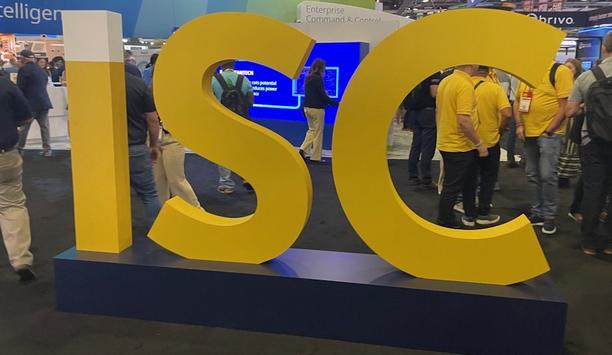
Artificial Intelligence (AI) had a major presence at the ISC West 2026 show in Las Vegas. Almost every booth offered some variation on AI and how intelligence is transforming the physical security industry. Several industry leaders led the way, showcasing how they are tackling complex security challenges with smarter, more efficient solutions. Obviously, the security industry will never be the same. Milestone Systems: Responsible AI and open platforms Milestone has declared 2026 the "year of delivery” on previously announced developments and enhancements. A standout feature is their new natural language AI search, which is being integrated across XProtect, Arcules, and Briefcam platforms to simplify how users interact with vast amounts of video data. A core pillar of their strategy is responsible AI development, which prioritises using licensed data over "scraped" data. They have introduced new anonymisation tools that protect privacy by replacing faces with AI-generated characteristics like hair color while keeping the person unrecognisable. Furthermore, Milestone is moving workloads to Linux to reduce costs, transitioning toward an app marketplace, and has partnered with NVIDIA for the "Hafnia" project to ensure high-quality data to train AI models. Ambarella: Powering the edge with AI chips With their presence at ISC West in a meeting room near the trade show floor, Ambarella is the "engine" behind many high-performance intelligent video products, specialising in low-power AI chips like the N1 and CV7 families. Their technology is moving beyond cameras, where they provide systems-on-chips [SOCs] to many manufacturers. They have expanded into "AI boxes" that can process 64+ video channels simultaneously. A standout feature is the Natural Language technology, which allows users to search for specific objects or abstract scenes using simple prompts. To address modern security concerns, Ambarella has implemented "agentic" programming for a no-code development of automated workflows and media signing to combat AI-generated deepfakes by verifying video integrity through metadata. Motorola Solutions: Simplifying intelligence Motorola Solutions shows physical security evolving into a real-time enterprise intelligence layer Motorola Solutions is prioritising user accessibility by integrating natural language processing into its system configuration. Motorola's portfolio demonstrates how physical security technology is evolving into a real-time operational intelligence layer across the enterprise. Instead of requiring custom coding, operators can now use simple commands—like asking the system to "show me when someone fell down"—to set up advanced analytics and search parameters. The company is also deploying AI agents designed to aggregate data and automatically flag safety or compliance risks, such as perimeter breaches or blocked fire exits. To ensure maximum utility of the hardware, Motorola Solutions’ system can ingest massive, complex physical manuals and automatically generate monitoring rules based on those standard operating procedures. Furthermore, Motorola is focusing on interoperability, using industry-standard interfaces to ingest data from various hardware brands and networks. This approach aims to provide operators with clear, recommended next steps during critical events, streamlining the decision-making process in high-pressure environments. i-PRO: Putting generative AI at the edge i-PRO is bringing generative AI directly to the edge with a new fisheye camera i-PRO is bringing generative AI directly to the edge with a new fisheye camera, which processes complex analytics locally rather than relying solely on the cloud. These cameras, on display at ISC West, have moved beyond simple attribute-based tracking to identify complex behaviors like aggression, fighting, and slip-and-fall incidents. By running on the latest Ambarella chips, i-PRO cameras can use generative AI to improve image quality and analyse scenes in real-time without external processing. This focus on edge-based intelligence ensures high-performance analytics are available even in environments where constant cloud connectivity might be a challenge. Brivo: The rise of agentic AI Brivo and Eagle Eye Networks have officially unified under the Brivo name, focusing on streamlining the experience for large integrators. They are pioneers in agentic AI, introducing features that allow users to talk to their mobile apps to initiate lockdowns or add users. Their Eagle Eye Video Assistant (EEVA) acts as a natural language AI agent that can monitor for specific threats, such as a brandished weapon or a specific vehicle, and automatically trigger access control responses. By treating access and video as a unified system, Brivo enables users to connect specific video skills—like detecting a red car or a brandished weapon—to automated access control actions. They are also using AI to achieve "zero-cost integration," linking disparate cloud systems using AI-generated instructions. Everon: Emphasis on video monitoring Everon is making a massive investment in active video monitoring, using AI-driven systems to deter crime even before it happens. “The market is ripe for it, and customers are demanding it,” says David Charney, Everon’s Sr. Vice President, Video Command Center. Employing virtual guards who can use voice commands, lights, and horns to "shoo away" unauthorised individuals. The company has implemented senior-level leadership that has facilitated more than 5,000 video-based apprehensions. Everon, specialising in integrated systems for multi-site businesses, uses a rigorous selection process to choose AI providers that can accurately filter alerts for specific applications, such as identifying when a fire door is blocked. As a "trusted advisor" to their 300,000 customers, the company focuses on delivering professional-level results that move beyond basic recording to proactive threat mitigation. Hanwha: New hybrid VMS combines cloud and on-prem Hanwha Vision highlighted the official public launch of Blaze, a hybrid video management system (VMS). The platform uses a hybrid architecture to manage on-premise and cloud-connected devices across multiple sites without complex port forwarding. Blaze features native AI capabilities, including semantic search that allows operators to find specific incidents using natural language queries, such as "person with a safety jacket." The AI security platform lets teams search surveillance footage the way they search Google. AI similarity detection allows operators to quickly trace a person’s movement and investigate incidents faster (useful in active shooter behavior, medical emergencies, or crowd panic scenarios, and more). The system also provides a "histogram" view of traffic patterns to help security professionals quickly identify anomalies in historical footage. OpenEye: Operational intelligence and shift to OpEx OpenEye unveiled AI-powered features such as visual chat and scene analysis OpenEye is redefining video surveillance by moving intelligence from the camera level to the cloud, significantly reducing the need for on-site server management. At ISC West, OpenEye introduced new AI-driven tools like visual chat and scene analysis. Beyond security, these tools provide valuable operational alerts, such as identifying overflowing dumpsters, dirty tables in restaurants, or vehicles blocking dock doors. The system also utilises natural language for search, allowing users to find specific attributes like "people wearing backpacks" within designated timeframes. OpenEye also highlighted an industry-wide shift toward operational expenditures (OpEx) billing models, as users increasingly prefer predictable monthly or yearly payments over large upfront capital expenditures (CapEx). This model aligns with their channel-based operations, meeting customers where they currently operate without the burden of high fees. IQSIGHT: New name, same mission for Bosch video Formerly Bosch Video, the newly named IQSIGHT seeks to maintain the “Bosch pedigree” under the new name. It’s the same engineering, manufacturing, etc. IQSIGHT also pledges to be "easier to do business with" by improving user interfaces and end-to-end user experiences. Despite the transition, the company has increased their pace of innovation and reinforced the open systems philosophy with enhanced integrations with Milestone, Genetec, and others. The major product release at the show is IVA Pro Context, which uses generative AI to provide human-level scene understanding. Through a partnership with Laelaps AI, a robotics startup, IQSIGHT is exploring autonomous dispatch and response. When a camera identifies a scene, it triggers a robot to provide a tailored response. Commercialisation is expected in 12 to 18 months. Verkada: How their system can solve a crime But how does AI operate in the real world? Verkada had a “themed” exhibit demonstrating how their system could solve a hypothetical theft at the Louvre museum in Paris. The exhibit took attendees through and showed how Verkada technologies (e.g., license plate recognition and search capabilities) could provide fast results to solve the crime. AI-powered tools, like their newest unified timeline, demonstrate value in the real world of investigations.

Technology's role in securing banks and financial institutions
Download
Security technologies promote real-time awareness in K-12 schools
Download
Integrated systems enable critical and compliant security for transportation
Download
Modernising physical access control
Download
Access. Intrusion. One estate.
Download