Milestone Systems - Experts & Thought Leaders





White papers from Milestone Systems

Understanding AI-powered video analytics
Download
Milestone cloud deployment guide
Download
Essential data security strategies for healthcare
Download
Video technology strategies for hospitals are moving beyond security
Download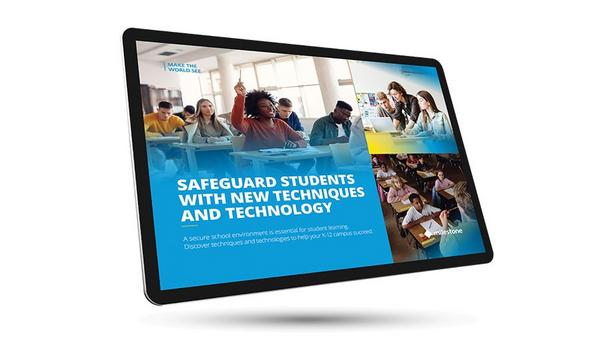
Safeguard Students With New Techniques And Technology
Download
Levelling up with campus safety
Download
Assessing safety readiness for education campuses
Download
The future of healthcare security is connectivity
Download
Improving city mobility using connected video technology
Download
Video technology: making cities safer & improving lives
Download
Latest Milestone Systems news & announcements

With 1,300 cameras recording 24/7 and more than 1,000 investigations to process per year, Massachusetts General Hospital’s security team was not able to keep up with the vast amounts of recorded video. Now, BriefCam Syndex Pro for fast video review, search and analysis, embedded within a Milestone XProtect video management software (VMS) platform is making efficient and effective video investigation possible. Unique challenges to security Massachusetts General Hospital’s (MGH) Police, Security and Outside Services Department provides some security services to many other Partners hospitals and facilities. Following its recent digital conversion, unified on the Milestone XProtect VMS platform, MGH’s security team was able to expand camera coverage by adding new Axis network cameras directly to the existing IP network. The hospital environment presents unique challenges to security, Michelman points out “The number of investigations we were doing was taking huge amounts of time in terms of reviewing video, and that was really a waste of time,” said Bonnie Michelman, MGH Executive Director of Police, Security and Outside Services and Consultant for Partners Healthcare. The hospital environment presents unique challenges to security, Michelman points out. MGH’s 17-acre urban campus, comprising 29 contiguous and 14 separate buildings (including underground and freestanding garage facilities), is complex. The security team must also take into account not only the main location, but also dozens of satellite facilities around the Boston area. Enterprise risk management “We can’t cover all of these facilities with security staff,” said Michelman. “We need to augment heavily with very good, state-of-the-art technology that allows us to combine our intelligence, labour, policies and procedures, in order to create a better holistic approach to enterprise risk management.” Charged with creating a safe environment, MGH’s security team at the same time is challenged by the clinical team’s needs for increased efficiency through lowering length of stay and moving patients through the hospital as quickly as possible. The 24-hour Emergency Room, with its anxious, highly volatile population presents challenges of its own. In addition, patient elopement and patient wandering – unauthorised departures from the medical facility, whether intentional or unintentional – pose liability threats that can be very damaging to a hospital. Providing customer satisfaction A unified system was required to balance the video surveillance needs of a busy hospital campus A unified system was required to balance the video surveillance needs of a busy hospital campus with remote satellite locations while upholding the highest level of security possible, maintaining operational flow, and providing customer satisfaction that includes expectations of privacy. Michelman, together with MGH Senior Manager, Systems and Technology Robert Leahy, decided on the Milestone XProtect VMS platform. Camera count was increased from 400 to 1,300, and standardised with Axis network cameras connected directly to the IP network. To deal with the marked increase in video data, MGH’s team chose BriefCam Syndex Pro, a powerful set of tools intended to reduce the time and effort needed to conduct video reviews, post-event video investigation and real-time video monitoring. The BriefCam solution ties in seamlessly with the Milestone video management solution, providing efficient workflow for investigators. Presenting video metadata According to Michelman, BriefCam has already proven invaluable. A two year long ROI examination of video surveillance use at MGH has shown a progressive rise in success rates with the use of video in incident investigations. According to Michelman, BriefCam has already proven invaluable “I see BriefCam as a very important part of our toolbox of excellent practices for protecting what is a very complex environment of tangible and intangible assets,” said Michelman. BriefCam Syndex Pro’s ability to present video metadata in graphic visualisation format, such as bar graphs, pie charts and the like, has opened up new realms of possibilities to extend the role of CCTV video beyond security into organisational efficiency and more informed, data-driven decision making. Better investigative focus “In the past, there might have been things that would have been a ‘nice to do,’ but we couldn’t do it because we didn’t have resources to watch many hours of video,” said Michelman. “Now we can manage the content and we can see trends, which in turn can drive redeployment of resources, and by extension, facilitate a better investigative focus and success.” BriefCam Syndex Pro embedded within Milestone XProtect VMS platform is helping MGH in its mission to effectively and efficiently protect and safeguard the hospital community. Michelman said: “We’re happy with these products, but it’s not just about the quality of the technology, it’s about the quality of the partnership. You know, it’s easy to sell a product, but to sustain it, service it, and be there after it is in is really very critical for us.”

Being isolated on the edge of wilderness means there’s a need for a video system that’s both reliable and flexible. For that reason, the team at Jackson Hole Airport (JAC) since 2009 has relied on video management software (VMS) from Milestone Systems to enhance security, safety, and efficiency. Challenge - Help to keep scaling At the edge of the frontier, Jackson Hole Airport has experienced considerable growth over the years. Significant capital investments in expansions have made new video system integrations possible several times, and Milestone XProtect has supported the airport’s needs along the way. As of 2020, over 220 cameras were in use, and the airport shows no signs of slowing down As of 2020, over 220 cameras were in use, and the airport shows no signs of slowing down. New projects will include building a fuel farm, a car wash and expanded parking facilities. XProtect’s open platform software As the need to increase security continues, XProtect’s open platform software will continue to enable both IT team growth and the seamless integration of new cameras and data storage capabilities. Solution - Integrations are in the fly zone Milestone XProtect Professional Plus and Smart Client Network cameras from Axis Communications and Panasonic Optimised video server hardware from Razberi Integrated video analytics from Agent Vi All video is stored for up to a full year, with most of the system’s 200 cameras set for motion recording, 24/7. Result - Greater situational awareness for higher security The video system has enabled improvements throughout the entire airport. For example, Jackson Hole Airport has to contend with a great deal of plane de-icing for several months each year. This occurs at a distance from the main buildings and, thanks to the video expansion, each airline is now able to monitor the de-icing of their planes. Allowing clients to monitor progress on their own has saved airport staff time and resources. The airport uses the system to closely monitor the security checkpoint, too, capturing video documentation in case of an incident. Baggage areas are also monitored, so it’s possible to investigate lost bags and left-behind items by reviewing video. New 4K, multi-sensor cameras New 4K, multi-sensor cameras support a largely unmanned investigatory system New 4K, multi-sensor cameras support a largely unmanned investigatory system. They capture everything and provide enough data to zoom in after the fact, if needed. Additionally, the team has deployed video analytics from Agent Vi to provide a layer of automated alarms and notifications for flagging abnormal occurrences. Video analytics can detect events, such as travelers moving against the foot traffic flow and crossing into restricted areas. Milestone’s XProtect Smart Client Milestone’s XProtect Smart Client has shifted general situational awareness in the airport, as a new standard for authorising users’ remote access to the surveillance from multiple locations. It provides seamless viewing of live and recorded video, instant control of cameras and connected security devices, and a comprehensive overview of activity. The ongoing use of Milestone Systems’ video management software (VMS) makes it possible to maintain the independence and efficiency of a small team of personnel, thereby delivering maximum security at the base of the Grand Teton Mountains. Situational awareness for the JAC team and their clients Andrew Wells, the IT Manager for the Jackson Hole Airport (JAC), said “Situational awareness for our team and our clients allows us to be as secure and efficient as possible with our small team. The flexibility of the open platform VMS allows us to scale our system and add the features we need now and in the future.” Jackson Hole Airport (JAC) lies seven miles north of Jackson, Wyoming, at the base of the Teton Mountains, in USA. It is unique for being entirely within Grand Teton National Park. It is the busiest airport in the US state of Wyoming, with nearly 500,000 in-bound passengers annually. The airport covers over 500 acres and has one runway that supports 11 hard-stands, nine boarding gates and three baggage carousels.

The Commonwealth of Puerto Rico needed to implement a centralised and efficient perimeter security system for all public schools on the island. Intrusions and assaults at educational institutions have increased, and Hurricane Maria further exacerbated problems with the destruction of infrastructure. The solution: The need to repair hurricane damage also provided opportunities to invest in modern improvements. The Department of Education chose to install a video surveillance system with more than 10,000 cameras, speakers, and other security devices in 856 schools. In the same way, a centralised control centre was established using the Corporate version of Milestone Systems XProtect® video management software (VMS). Devices installed Milestone Systems: XProtect VMS Software XProtect Smart Client Milestone Interconnect Cameras from Axis Communications and Uniview DH-Vision Seneca Servers and Optex Sensors The advantages: Audiovisual material captured by the system helps agencies to evaluate and manage areas for public use Endowed with the same annual budget that allowed the monitoring of 250 institutions, the new system enabled the Puerto Rico Department of Education to cover all 856 public schools. Since the system has been operational, there has been a 97% reduction in intrusions within educational institutions. In addition to protecting the educational programme, the audiovisual material captured by the system helps other government agencies to evaluate and manage areas for public use and investigate incidents. Need for a centralised security system Ensuring a safe environment is a growing challenge for schools and colleges: theft, fights, and bullying are some of the problems that not only affect students, but also teachers, employees, and, ultimately, the government entities that subsidize the educational system. In Puerto Rico, for example, the Department of Education was concerned about the increase in unauthorised intrusions, robberies, and assaults within its schools. This index shot up after Hurricane Maria destroyed much of the island’s infrastructure in 2017. Even before this natural phenomenon, there was no centralised security system that integrated an overview of all schools. There were disparate installations of video surveillance equipment (cameras, alarms, and lighting) but only in approximately 250 of the schools. Centralised command centre González said, the proposal was born to begin the process to acquire a video surveillance system for public schools After the hurricane, top priority was given to providing perimeter security for all schools through an effective centralised command centre instead of investing in the repair and purchase of separate systems. “The hurricane damaged the island’s communication and lighting systems, a circumstance that promoted intrusions into schools and increased vandalism. We had no visibility of what was happening and we could not find a way to avoid these escalations,” said César González Cordero, Security Commissioner for the Puerto Rico Department of Education. He adds, “However, we could not afford to buy and repair equipment individually for all schools, so a centralised and coordinated effort was necessary.” Based on this context, González said, the proposal was born to begin the process to acquire a video surveillance system for public schools in Puerto Rico, focused on perimeter security. Perimeter security for all schools Genesis Security Services, Inc. of Puerto Rico was selected to develop the perimeter security project for the 856 public schools on the island. This Puerto Rican corporation was founded in 1997 in Yabucoa, Puerto Rico by brothers Roberto and Emilio Morales, who are leaders in security services at the government level. “We have been providing security to the Department of Education for more than 15 years through our onsite guard service. That is why we knew the design, location, assets, and vulnerabilities of various educational establishments. This was a great advantage when executing the project,” said Yasel Morales, Technology Director at Genesis. Video system Milestone XProtect video management software supports more than 8,500 security and surveillance devices In October 2018, the installation of cameras and other devices began in all schools. The video system mission control was built inside the Genesis Central Station, located in the Carolina municipality (in the island's northeast region). Video data from all schools are returned to Central Station, where it is managed with the Milestone Systems XProtect Corporate open platform VMS. Leveraging the power of the open platform, Milestone XProtect video management software supports more than 8,500 security and surveillance devices, and more than 450 software integrations from more than 3,500 technology partners. NVRs, DVRs and cloud solutions Alliance partners include providers of network video cameras, cloud solutions, DVRs and NVRs, servers and storage equipment, alarm and detection systems, video analytics, GPS technology, laser and radar scanners, boxes of emergency calls, and more. “At the Central Station, we have fifteen workstations, with the same number of operators per shift. There we have a videowall of ten monitors distributed between the stations. Likewise, we have two dispatch centers that serve as backup: one in the municipality of Yauco and the other in the municipality of San Juan,” Morales explained. Uniview DH-Vision 4-megapixel cameras, audio speakers As part of the project, approximately 10,000 Uniview DH-Vision 4-megapixel cameras were installed in 856 schools (an average of 12 cameras per campus). Audio speakers from Axis Communications and a range of Optex sensors also were integrated. The combination of these technologies made it possible for every school to have an anti-intrusions system with its alerts feeding back to the Central Station. XProtect Express+, Milestone Interconnect Milestone Interconnect connects remote sites for a low-cost video surveillance solution Each campus has a Seneca brand server with the XProtect Express+ software installed. This communicates with the Corporate version at the Central Station through Milestone Interconnect™, a licensing platform that opens a communication channel between different hardware that normally cannot communicate with each other. Milestone Interconnect connects remote sites for a low-cost video surveillance solution. It is the ideal surveillance for a wide variety of industries that want an inexpensive way to get centralised supervision of multiple locations spread across one region. Remote management and monitoring With Milestone Interconnect, engineers and managers can easily monitor critical and remote areas from one central location. This means faster intrusion management because operators in the central system can access the video and receive alarms from remotely connected sites. This reduces the need to have local security personnel, maintenance, operation, and other costs, including visits onsite. Virtual gates Genesis created virtual gates using cameras that, in addition to protecting school spaces, also ensure the safety of substations and solar panels, which are considered important assets for institutions. If someone crosses the virtual gate, an alert is generated locally and passed to the Central Station through Interconnect. Operators then make a visual confirmation and, if applicable, the emergency protocol is activated. “The emergency protocol is to contact the Security Commissioner and the Department of Operations. For this liaison, we internally designate an inspector. Once informed, they activate the security officers at the sites, who are trained to give quick responses and inform the police,” said Morales. Identifying suspicious activities Due to the management software, Genesis can easily find any recording of the schools Due to the management software, Genesis can easily find any recording of the schools and send it to the Security Commissioner, who can also receive the alerts directly through an application on his mobile phone. It should be noted that all personnel handling the system, both operators and technicians, have Milestone Systems certifications, which they obtained on the manufacturer’s website. Security Commissioner González explained that the directors and residents of the schools may contact the Central Station if they wish to report any suspicious activity within a school after regular hours. Genesis operations centre González also clarified that “if for any reason a school principal requires a recording, he must contact us, and we request the information from the Genesis operations centre. This protocol is designed to respect the right to be in a place without feeling guarded at all times, as stipulated in the public policy of Puerto Rico. In total, this system directly benefits almost 400,000 people.” Increased security at a lower cost According to the Security Commissioner, since the first camera was installed, they went from two or three intrusions per day to one or zero. Even in October 2018, they had no record of intrusions. Genesis Security Services, Inc. confirmed that since the system has been operational, there has been a 97% reduction in school intrusions. Reduced physical assaults Video technology has helped dispel theft of property by employees and has helped reduce rates of physical assault Video technology has helped dispel problems such as theft of property by employees and, more importantly, has helped reduce rates of physical assault and bullying among students. These results have helped build trust among Puerto Rican families when they enroll their children in schools. “The system provides agility and precision. It is more efficient and immediate than communicating with a guard who has to enter a facility to verify what is happening. It’s great working with a system that has visibility 24/7 in schools,” said González. Cost savings On the other hand, due to this project, it was possible to reduce the cost of security in schools using technology, one of the main objectives of the Department of Education at the beginning. “We spent about $25 million annually covering just 250 schools with the guard system, and we had almost 600 schools left unattended. This project gave us the possibility of covering 100% of the public schools in Puerto Rico with the same budget,” González reported. Finally, it is important to note that many of these schools are located in vulnerable places on the island, so the system is also helping the Police and the Prosecutor’s Office to resolve cases that occurred around the educational facilities, and in general to contribute with the welfare of the community. Future projects On behalf of the Department of Education, the Puerto Rican Government is seeking ways to integrate this type of video analytics system with software programmes and databases of organisations that advocate for sexual assault victims. “In the future, we want to have a system that is capable of identifying if a sex offender crosses the perimeter in school zones so that we can warn in time,” said González. On the Genesis side, Morales said that the next step with this project would be to develop video analytics for the VMS, not only to give perimeter security but also statistics such as counting people and vehicles. They also plan on integrating access control systems into all schools.
Insights & Opinions from thought leaders at Milestone Systems

Control room operators face a tricky and ever-growing list of responsibilities. Every day, they're expected to monitor dozens, sometimes hundreds, of camera feeds, identify suspicious behaviour, and respond quickly when something goes wrong. Add in a constant stream of alerts, many of which turn out to be false alarms, and it's easy to see how even the most experienced security professionals can become overwhelmed. Indeed, in the UK alone, there are an estimated six million CCTV cameras, with around one in 70 publicly owned. A human, or team of humans, cannot possibly be expected to keep on top of every single one of those devices without missing something. Monitoring multiple locations Recently, the UK's Centre for the Protection of National Infrastructure (CPNI), now part of the National Protective Security Authority (NPSA), uncovered a challenge faced by many security operators known as the vigilance decrement, where concentration can begin to decline after just 20 to 30 minutes of continuous monitoring. A study of 42 professional CCTV operators, published in Applied Ergonomics, found that they detected only around half of the target behaviours during a 90-minute video review task. For security teams working long shifts and monitoring multiple locations, this presents a significant challenge. Missing an incident can have serious consequences, yet expecting operators to maintain the same level of concentration throughout an entire shift simply isn't realistic. Identifying unusual activity The result is that operators spend less time reviewing routine activity, have faster responses to threats This is where AI-powered video analytics makes a huge difference. By automatically identifying unusual activity, filtering out unnecessary alerts, and highlighting events that require attention, AI can help operators work more effectively and focus on what matters most. The result is that operators spend less time reviewing routine activity, have faster responses to potential threats, and there are more opportunities for security professionals to apply their experience and judgement where it's needed. Breaking the cycle of alarm fatigue Traditional video surveillance systems have often relied on motion detection and basic rules to identify potential security incidents. While useful, these technologies can also generate large volumes of unnecessary alerts. A tree branch moving in the wind, an animal crossing a perimeter, or a delivery vehicle stopping near a building can all trigger a false alarm. Now imagine this happening across hundreds of cameras, throughout an eight- or twelve-hour shift. Operators can quickly find themselves dealing with a seemingly endless queue of notifications, most of which turn out to be harmless. Over time, this can lead to alarm fatigue. When operators are repeatedly presented with false alarms, they may become less responsive to new notifications, increasing the risk of a genuine threat being overlooked. This isn't a reflection of their professionalism or experience, but a natural response to information overload. Persistent alarm fatigue It can also make it harder for organisations to demonstrate the value of their security investments The consequences extend beyond missed incidents. Persistent alarm fatigue can contribute to stress and burnout, slow response times, and place additional pressure on security teams that may already be stretched. It can also make it harder for organisations to demonstrate the value of their security investments. Simply adding more cameras, hiring more operators, or increasing training isn't necessarily the answer. Instead, organisations need to consider how technology can reduce the volume of information operators must process and ensure that the alerts reaching them are genuinely useful. Smarter alerts, faster responses AI-powered video analytics is helping to address this challenge by making surveillance systems more intelligent and proactive. Rather than simply detecting movement, modern analytics can identify objects, recognise patterns and provide greater context around what's happening within a camera's field of view. For example, a traditional system might generate an alert every time something moves near a perimeter fence. AI analytics can help distinguish between an animal passing through, an authorised vehicle following its usual route, and someone loitering near a restricted entrance. Operators can then focus on the activity that warrants further investigation, rather than spending valuable time reviewing harmless events. Providing relevant information The system identifies potential concerns and provides relevant information Advances in vision-language models are taking this a step further. These technologies can interpret and describe activity within video footage, helping operators understand what's happening without having to manually review every camera feed. This shift is gaining momentum across the industry. The Security Industry Association's 2026 Security Megatrends report identifies the automation of security operations centres as a leading trend, highlighting opportunities for AI to support activities such as incident reporting and filtering lower-priority alarms. Importantly, the aim isn't to remove operators from the process. Much of this technology takes an agentive AI approach, where AI assists human decision-making rather than acting independently. The system identifies potential concerns and provides relevant information, while operators remain responsible for assessing situations and deciding how to respond. For security teams, this creates an opportunity to improve situational awareness while reducing the pressure of constant monitoring. Identifying threats before they escalate One of the most valuable capabilities of advanced video analytics is its ability to identify unusual behaviour and patterns over time. Consider a vehicle driving slowly around a business park. On its own, this might not appear suspicious. However, if the same vehicle returns on three consecutive evenings, stopping near a restricted entrance before leaving, it could indicate someone assessing the site's security arrangements. An operator working a single shift might not notice the connection, particularly if the activity occurs across several days. But AI analytics can help identify recurring patterns and flag them for further investigation. Identifying recurring incidents These capabilities also offer benefits beyond immediate security monitoring The same principle applies to other scenarios. Someone repeatedly approaching a restricted area, a person remaining in an unusual location for an extended period, or a vehicle travelling against the normal flow of traffic could all trigger an alert based on predefined rules or patterns of behaviour. With the right information available, security teams can investigate potential threats earlier and respond before an incident escalates. These capabilities also offer benefits beyond immediate security monitoring. Analytics can help organisations identify recurring incidents, understand how spaces are being used and make more informed decisions about patrols, staffing and security resources. For multi-site organisations, this can be particularly valuable, allowing security teams to identify trends across locations rather than treating each incident in isolation. Making investigations faster and more effective AI can also significantly reduce the time required to investigate incidents after they occur. Reviewing hours of recorded CCTV footage has traditionally been a painstaking process. Investigators may need to search through multiple camera feeds to identify a person, vehicle, or sequence of events, often under considerable time pressure. Advanced video search and synopsis technologies can simplify this process by condensing lengthy recordings into a much shorter visual summary. Events and objects captured at different times can be presented together, allowing investigators to identify relevant activity quickly while retaining links to the original footage and timestamps. For example, an investigator looking for a particular vehicle can search footage based on characteristics such as colour, type, or direction of travel, rather than watching hours of recordings manually. For police forces, local authorities and private security teams, these capabilities can make a substantial difference to investigations, reducing the time spent searching through footage and helping important evidence reach the right people sooner. Demonstrating the value of intelligent video AI-powered video analytics can also deliver a measurable return on investment Alongside the operational benefits, AI-powered video analytics can also deliver a measurable return on investment. An Omdia survey of 140 end users across North America and Europe found that more than 85% of organisations achieved a return on investment from their video analytics deployments within one year. More than half reported seeing returns within the first six months, with banking and manufacturing reporting particularly strong results at 95% and 90%, respectively. Evidently, intelligent video can deliver value far beyond traditional surveillance. Improved incident detection Reducing false alarms can help operators use their time more effectively, while faster investigations can lower the resources required to review footage. Improved incident detection and response can also help organisations minimise disruption, protect assets and strengthen their overall security posture. There are benefits for installers and integrators too. By introducing advanced analytics into existing video management systems, they can help customers get more value from their security infrastructure, while offering additional capabilities that can evolve alongside operational needs. Rather than viewing video surveillance solely as a cost centre, organisations can increasingly use the intelligence it provides to improve security performance and inform wider operational decisions. Keeping people at the heart of security As AI becomes more capable, questions around human oversight and decision-making will become increasingly important. There is a distinction between AI that supports operators and fully autonomous systems that can independently make decisions and take action. While more agentic AI capabilities are emerging, many of the most practical applications in video security today are designed to assist people, not replace them. Making informed decisions This combination of machine intelligence and human experience is where the greatest value lies For instance, AI might identify a person behaving unusually near a restricted entrance, but an operator can assess the wider context, determine whether there is a genuine threat and decide on the appropriate response. Similarly, analytics can highlight a vehicle that has repeatedly visited a site, but it takes human judgement to establish whether that behaviour is suspicious or entirely legitimate. This combination of machine intelligence and human experience is where the greatest value lies. AI can continuously analyse large volumes of footage, identify patterns across different cameras and shifts, and highlight events that deserve attention. Operators bring the contextual understanding, professional judgement and accountability needed to make informed decisions. An operator reviewing five relevant alerts, each supported by useful information, is in a much better position to respond effectively than someone attempting to process 50 notifications with little context. The goal is therefore not to automate every aspect of security, but to create a more effective partnership between people and technology. A smarter approach to security operations The demands placed on security teams are unlikely to decrease. Organisations are managing larger sites, more cameras and increasingly complex security environments, often without equivalent increases in staffing or resources. At the same time, the limitations of human attention remain unchanged. No matter how experienced or well-trained an operator may be, maintaining constant concentration across dozens of video feeds is an unrealistic expectation. AI-powered video analytics offers a way forward. By reducing unnecessary alerts, identifying suspicious patterns, and accelerating investigations, these technologies can help security teams become more proactive, efficient, and effective. Most importantly, they allow operators to concentrate on what they do best: understanding situations, making informed decisions and protecting people and places. The future of security isn't about replacing the people behind the screens. It's about giving them the intelligence and tools they need to do their jobs better.

Adequate video surveillance coverage depends entirely on a facility's layout, square footage, and security goals. Historically, better coverage required more cameras, but technology innovations are changing those expectations and undermining previously held rules of thumb. We asked our Expert Panel Roundtable: Do today's video systems generally require more cameras or fewer cameras, and why?

Artificial intelligence (AI) transforms physical security from a passive, reactive function into an autonomous, proactive one. Rather than just alerting human guards after an event, new systems driven by intelligent agents analyse, decide, and act in real time—handling routine deterrence, investigating anomalies, and reducing alarm fatigue. We asked our Expert Panel Roundtable: What is agentive (or agentic) AI and how is it changing physical security?

Technology's role in securing banks and financial institutions
Download
Security technologies promote real-time awareness in K-12 schools
Download
Integrated systems enable critical and compliant security for transportation
Download
Modernising physical access control
Download
Access. Intrusion. One estate.
Download