The rapid expansion of SaaS applications has transformed them into essential tools across various industries. Once considered niche, cloud-based SaaS apps have now become indisputable assets for businesses, with global end-user expenditure on SaaS predicted by Gartner to rise 17.9% to $197 billion in 2023.
Despite the success of software-as-a-service platforms, security concerns remain paramount for managed service providers (MSPs) and their clients. A report from the Annual SaaS Security Survey highlights that 55% of organizations reported experiencing a security incident within the last two years, emphasizing the necessity for effective SaaS security solutions.
SaaS Security Measures
SaaS security encompasses protective measures and protocols designed to safeguard SaaS applications and their associated data. As cybercriminals increasingly target cloud applications, such systems become potential gateways for data theft. The Thales Global Cloud Security Study identified SaaS as the main target for cyberattacks in 2022, underlining the need for cloud-optimized security solutions contrasting traditional perimeter defenses.
Selecting the Right Security Solutions
Choosing the right SaaS security system is crucial for defending against cyber threats. Essential factors to consider include:
1. Continuous Monitoring and Alerts
Effective security platforms integrate monitoring capabilities and alert systems to detect and address SaaS security issues proactively. Key activities monitored include user logins, access to sensitive information, application setting changes, and SaaS application performance. SaaS Alerts is a notable solution, providing email, text, or dashboard alerts tailored to predefined rules and categorizing security events into Low, Medium, or Critical for efficient prioritization.
2. Automated Detection and Response
Automated systems ensure continuous monitoring and rapid response capabilities for any SaaS environment. These systems enhance security through:
- High-speed data analysis
- Immediate incident response
- 24/7 operational coverage
- Allowing MSPs to reallocate human resources to more complex threats
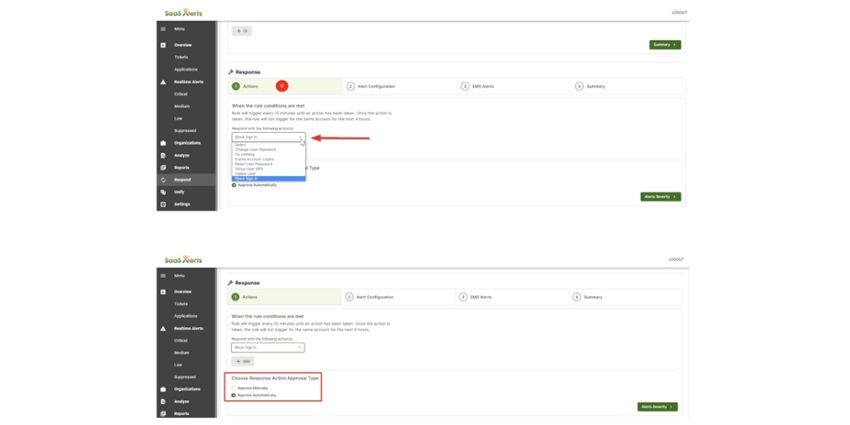
SaaS Alerts’ Respond module facilitates automatic threat remediation, including account locking during breaches and halting unauthorized file-sharing activities.
3. Integration Capabilities
MSPs employ diverse software tools, necessitating integration for comprehensive security. SaaS Alerts effectively merges with these tools, eliminating redundant processes and supporting cohesive security operations. This integration fosters faster response times and improved client service delivery.
4. Reporting Functions
Comprehensive reports are vital for cybersecurity management, boosting threat awareness and proactive decision-making. Reporting capabilities enable MSPs to make informed security decisions, prioritize threats, retain audit trails, and analyze security performance strategies for ongoing enhancement.
5. Compliance and Certifications
Adhering to industry compliance standards and possessing relevant certifications augments the credibility of SaaS security providers. Ensuring compliance mitigates legal risks, secures customer data, aligns with specific data residency regulations, and meets industry-specific demands, benefiting clients across varied sectors.
Whether for large corporations or smaller entities, safeguarding software applications is imperative. SaaS Alerts assists MSPs in securing data while generating recurring revenue, fulfilling all necessary criteria for a specialized SaaS security platform.
The growth of SaaS applications has been nothing short of spectacular. Once considered a niche offering, cloud-based SaaS apps are now a staple for almost every industry. According to Gartner, worldwide end-user spending on SaaS is projected to increase by 17.9% to a total of $197 billion in 2023.
While software-as-a-service (SaaS) is thriving, there is a growing concern for security among MSPs as well as their clients. The Annual SaaS Security Survey Report found that 55% of organisations experienced a security incident in the past two years, underscoring the need for robust SaaS security platforms.
What Is SaaS Security?
SaaS security refers to the measures and processes implemented to protect SaaS applications and associated data.
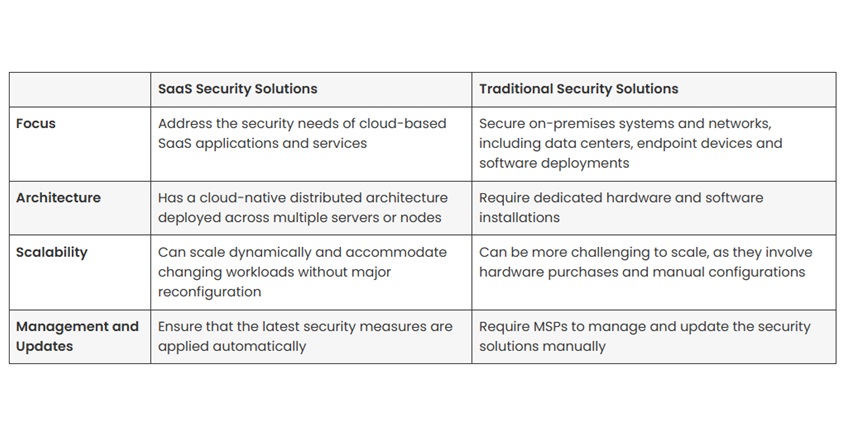
Cloud applications are a common gateway for cybercriminals to steal sensitive and confidential data. In fact, SaaS was the most targeted area for cyberattacks in 2022, per the Thales Global Cloud Security Study. While traditional security tools such as perimeter defense successfully secure on-premises networks, guarding cloud assets requires specialised platforms that are optimised for cloud-hosted software.
How to Select SaaS Security Solutions
Just as a masterful knight selects the perfect armor, the user must select a SaaS security solution that suits the digital kingdom’s needs and defends against menacing cyber villains.
Here are five top factors to help users determine the best cloud SaaS security software.
1. Monitoring and Alerts
A security platform that combines monitoring and cybersecurity alerts helps to proactively detect, respond to, and mitigate SaaS security issues.
SaaS monitoring involves the continuous observation and analysis of the following activities:
- User activity such as logins and file access from unauthorised locations or exceeding the limit of file downloads. Tracking these activities helps security teams detect any anomalies in user behavior.
- Access attempts of sensitive data such as financial records and legal documents. Keeping track of the locations, IP addresses and devices accessing confidential information helps identify when an unauthorised attempt is made.
- Changes in the configuration of application settings and permissions. Monitoring such activities detects when malicious actors attempt to move laterally across systems to expand their control and escalate privileges.
- Performance and health of SaaS applications. Identifying performance bottlenecks, downtime, and resource issues helps prevent potential security risks, such as attacks during vulnerable periods or attempts to exploit system weaknesses.
SaaS Alerts
As a SaaS security monitoring system, SaaS Alerts sends a security alert via email, text message, or dashboard notification when the platform detects an activity that matches the predefined rules.
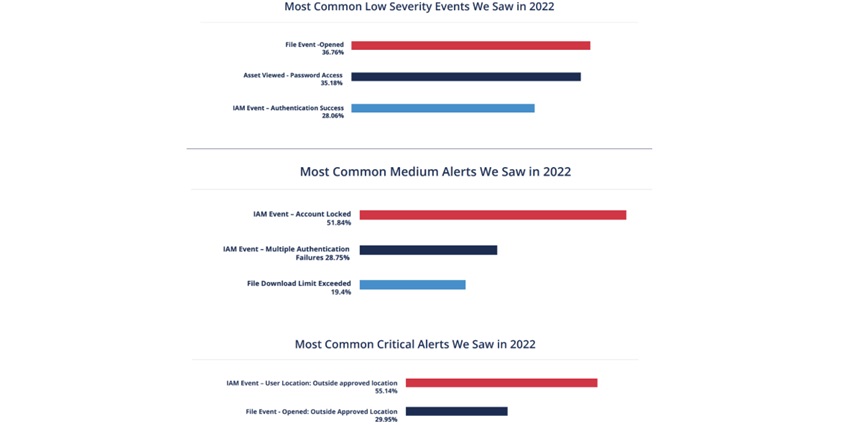
To help prioritise remediation efforts based on the severity of the security events, SaaS Alerts rank events into three categories - Low, Medium, and Critical. Here are the most common security events SaaS Alerts recorded and categorised in 2022:
2. Automated Detection and Response
Automated detection and response work in tandem to continuously monitor the SaaS environment for suspicious activities and take immediate action when a threat is identified. The two are an integral part of the SaaS security checklist because they ensure:
- Speed and accuracy: Automated systems can swiftly and accurately analyse vast amounts of data.
- Rapid mitigation: Automated incident response triggers actions such as blocking compromised accounts and malicious IP addresses to prevent data breaches.
- 24/7 vigilance: The system operates around the clock, ensuring the SaaS environment is protected even when human monitoring might be limited.
- Human effort optimisation: Automating routine tasks allows MSPs to reprioritise their activities and focus on more sophisticated attacks that require human expertise.
The Respond module offered by SaaS Alerts makes it easy for MSPs to automatically remediate detected threats by taking steps such as locking an account when a breach occurs and terminating unauthorised file-sharing activities.
3. Integration Capabilities
MSPs rely on an array of software such as RMM tools, network monitoring tools, performance optimisation software, collaboration tools, vulnerability scanners, and more.
To ensure these tools are not operating in silos and preventing a holistic security approach, the SaaS security solution should have robust integration capabilities. SaaS Alerts offers seamless integration into the most commonly used MSP tools to:
- Eliminate the need for redundant processes.
- Manage security seamlessly within established systems.
- Provide a holistic security solution.
Constant monitoring
This automation contributes to faster response times, improved client service, and a more effective approach
With SaaS Alerts, MSPs do not need to monitor the dashboard constantly. The data that requires attention and investigation is automatically funneled into their existing systems.
This automation contributes to faster response times, improved client service, and a more effective approach to securing multiple client environments.
4. Reporting Capabilities
Providing comprehensive reports of events is a cornerstone of effective cybersecurity management that enhances threat awareness and enables proactive decision-making.
Here’s how reporting capabilities of SaaS security software can help MSPs:
- Informed decision-making: Reports offer the data needed to make informed decisions about security incidents and avoid knee-jerk reactions.
- Prioritisation: Reporting helps MSPs identify high-priority threats that require immediate attention, to ensure the appropriate allocation of resources.
- Auditing: Reports serve as audit trails that show the organisation’s security measures, incident response, and overall security posture. They serve as evidence of due diligence during audits.
- Performance analysis: Reports allow MSPs to assess the effectiveness of their security strategies, identify areas for improvement,t and refine their approach against threats.

5. SaaS Compliance and Certifications
Following industry compliance standards and certifications adds to the credibility of the security provider. Regulatory bodies have issued SaaS security best practices to ensure that organisations and MSPs maintain a secure digital environment.
MSPs should evaluate if the provider follows SaaS security standards to:
- Avoid legal consequences: Non-compliance with industry regulations can lead to legal consequences, fines, and damages to the MSP’s reputation.
- Protect sensitive customer data: To combat SaaS security challenges, the provider should comply with relevant data protection regulations such as GDPR.
- Comply with data residency rules: Data residency certifications indicate compliance with regulations that require data to be stored within specific geographic boundaries.
- Meet industry-specific requirements: Clients in specific industries may have stringent security compliance (e.g., HIPAA for healthcare). Partnering with a compliant provider helps MSPs serve clients across diverse industries.
Improve Cybersecurity with SaaS Alerts
No matter the company’s size, all organisations need to keep their software apps secure.
Helping MSPs protect data and create monthly recurring revenue, SaaS Alerts ticks all the boxes of a purpose-built SaaS security platform:
- Continuous threat detection.
- Automated remediation.
- Comprehensive reporting of security alerts.
- Seamless integration with the tech stack.
- Compliance with industry standards.