 |
| IndigoVision has developed new integration modules for its IP-CCTV solution |
'Control Center', IndigoVision's Security Management Software, can be seamlessly integrated with the majority of the most popular access control systems, alarms and BMS and with specialist systems such as process control and EPOS. This approach is an open-platform solution, ensuring an integrated system can be supplied to cover any access control and security application around the world.
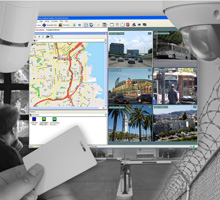
The benefits of integrating systems together can be significant, allowing the user to trigger operations in one system from events generated in another. For example, an alarm generated by a forced door can trigger an alarm in ‘Control Center,' which in turn automatically moves a PTZ camera to a pre-programmed position, displays the video of the incident and indicates the location on a schematic map. Some of the integration modules allow 2-way operation, allowing for example, an analytics motion detection event generated in a camera to lock doors and trigger a local alarm.
The latest additions to the suite of integration modules are for Bosch TCU, MAXxess and Software House C.Cure 9000 access control systems. This takes the total number of third-party systems supported to 21, including Lenel, Cardax, GE, Honeywell, TAC/Andover Controls and Senstar-Stellar.
In an integrated security environment the most used interface is normally the CCTV system. This coupled with IndigoVision's sophisticated alarm handling capabilities makes ‘Control Center' the obvious place to consolidate alarms from all the systems. These advanced alarm features allow ‘Control Center' to operate in what is known as a ‘black' or ‘dark' screen monitoring mode, where video is only displayed on alarm. This method of operation is recognised as providing a more efficient operator environment that leads to quicker incident response.