Perimeter security - Round table discussions

It’s safe to say there has been more change in the workplace in the last two years than ever before. Driven by the pandemic, technology has both allowed greater flexibility for employees and enabled continuing prosperity for many companies that otherwise would have had to cease operation. But have security protocols and practices done enough to enable companies to keep pace with the changes? We asked this week’s Expert Panel Roundtable: Have security protocols and practices kept up w...

The price of a security system and the value it provides are two different things. For end users, the objective is to minimise price, while maximising value. A system may both have a higher price and provide greater value, but not always. Because customers want to pay as little as they can, it is necessary to make a case that a system provides the best possible value, whatever the cost. We asked this week’s Expert Panel Roundtable: How can customers go beyond price to maximise the ‘...

Any marketplace tends to emphasise the newest technologies and products. Confirming the trend is the perpetual rush to buy the latest iPhone. But some legacy products are so good and perform the required functions so well that users may stick with the “tried-and-true.” But does staying with yesterday’s technology suggest a missed opportunity to leverage new product features and benefits? We asked this week’s Expert Panel Roundtable: What is the security market’s app...

The advantages of security systems as forensic and investigative tools are well understood and demonstrated in the market. However, the new trend is toward systems that are useful in real-time and that even predict a security event, before it happens. We asked this week’s Expert Panel Roundtable: Which security systems are becoming more proactive than reactive?

Supply chain issues have plagued the economic recovery during and after the COVID-19 pandemic, and the problems show every indication of persisting for months or even years to come. Supply chain challenges have impacted the security marketplace in many ways, reflecting the breadth and variety of products needed to secure people, facilities, and assets. Wondering about the specifics of that impact, we asked this week’s Expert Panel Roundtable: How does disruption of the global supply chain...

Environmental concerns and ‘green’ initiatives have been gaining steam recently with increasing attention to issues, such as climate change and the drive to ‘net zero’ emissions. Sustainability has not historically been a big concern in the physical security market, but the times are changing. We asked this week’s Expert Panel Roundtable: How can the security industry be more environmentally friendly and contribute to sustainability?

The COVID-19 pandemic has complicated the task of securing hospitals and healthcare facilities by adding new concerns about disease transmission to the long list of other threats healthcare security professionals face. Hospital security must also crack the code to both allow open public access to healthcare facilities while keeping out violence and other security threats. We asked this week’s Expert Panel Roundtable: What are the security challenges of the healthcare industry?

The death of Michael Brown at the hands of police in Ferguson, Missouri, in August 2014, highlighted to the public, the importance of body-worn cameras. There was no bodycam footage of the Ferguson tragedy. Arguably, it would have shed additional light on the shooting. Since then, body cameras have become a tangible legacy of Ferguson, Missouri. Bodycam footage is seen as providing greater accountability and ensuring an impartial record that can support, or debunk, any claims of police miscondu...

Keeping prisoners safely housed is among the biggest challenges the security industry faces. Correctional applications of security technology are often more extreme and require a specialised mix of technologies. We asked our Expert Panel Roundtable: What are the video security and surveillance needs in prisons, and how well do technologies meet those needs? Are there any ethical qualms about selling to prisons?

A new generation of security professional is waiting in the wings. They will be faced with unprecedented challenges, as they seek to transform the security marketplace to the ‘next level’. Technology changes ensure the market will be very different 10 years from now and the fresh labour pool will need to be able to meet the host of new challenges. We asked our Expert Panel Roundtable: What exciting career opportunities in the security industry await the next generation?

Residential security and smart homes are rapidly changing facets of the larger physical security marketplace, driven by advances in consumer technology and concerns about rising crime rates. During the COVID-19 pandemic, many people spent more time at home and became more aware of the need for greater security. As workplaces opened back up, returning workers turned to technology to help them keep watch over their homes from afar. We asked this week’s Expert Panel Roundtable: What are the...

Since the advent of the physical security industry, access control has been synonymous with physical cards, whether 125 kHz ‘prox’ cards or the newer smart card alternatives. However, other credentials have also come on the scene, including biometrics and even smart phones. Some of these choices have distinct cost and security advantages over physical cards. We asked this week’s Expert Panel Roundtable: How soon will the access control card become extinct and why?

Cost is a reality to be managed. No matter how powerful or desirable a technology may be to a customer, the sale often comes down to the basic question: Can I afford it? And affordability extends not just to the purchase price, but to the cost of technology over its lifespan. In addition to advances in technology capabilities, the security industry has also achieved inroads to make its offerings more worth the cost. We asked this week’s Expert Panel Roundtable: What is the physical securi...

“Deep learning” is recently among the more prevalent jargon in the physical security industry, and for good reason. The potential benefits of this subset of artificial intelligence (AI) are vast, and those benefits are only now beginning to be understood and realised. But how can we separate the marketing hype from reality? How can we differentiate between future potential and the current state of the art? To clarify the latest on this new technology, we asked this week’s Exper...

Many of us take critical infrastructure for granted in our everyday lives. We turn on a tap, flip a switch, push a button, and water, light, and heat are all readily available. But it is important to remember that computerised systems manage critical infrastructure facilities, making them vulnerable to cyber-attacks. The recent ransomware attack on the Colonial Pipeline is an example of the new types of threats. In addition, any number of physical attacks is also possibilities. We asked this we...

Perimeter security is the first line of defence against intruders entering a business or premises. Traditionally associated with low-tech options such as fencing, the field of perimeter security has expanded in recent years and now encompasses a range of high-tech options. We asked this week’s Expert Panel Roundtable: What are the latest trends in perimeter security technology?

When technology performs a required task effectively, there is little reason to upgrade to the ‘next big thing’. In this regard, the physical security market is notoriously slow to change. Much of yesterday’s most robust and dependable equipment is still in place at thousands of customer sites, still performing as well as the day it was installed. However, there comes a point when any technology becomes outdated. We asked this week’s Expert Panel Roundtable: Which securi...
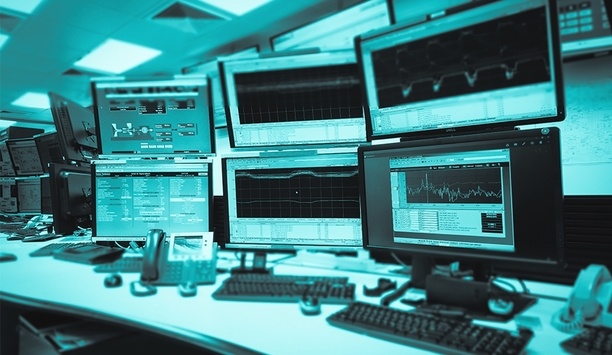
Along with the integration of security and other systems in an enterprise environment comes a need to centralise monitoring and control of the unified network. A control room is at the center of managing integrated systems, providing the focal point to collect information from a variety of sensors, analyse the data, and then respond appropriately. The technologies that drive these functions are changing and evolving, thus increasing the efficiency and efficacy of systems. We asked this week&rsqu...

The high cost of thermal imaging cameras historically made their use more likely in specialised law enforcement and military applications. However, lower pricing of thermal imaging technologies has opened up a new and expanding market for thermal cameras in the mainstream. We asked this week’s Expert Panel Roundtable: What are the new opportunities for thermal cameras in mainstream physical security?

The new school year is a good time to reflect on the role of security in protecting our schools. From video to access control to some newer technologies, our Expert Panel Roundtable found plenty to talk about when we asked this week’s question: How does security technology make our schools safer?

In tidying up after a year of Expert Panel Roundtable questions and answers, we came across some previously unpublished responses from our panel. These interesting responses address some of the hottest topics in the industry, from robots and deep learning to the “race to the bottom.” Taken together, the varied comments offer their own range of insights into the evolving physical security market. This week, we highlight some of these assorted Expert Panellist comments submitted over t...

As the new school term begins, awareness of security at all levels of educational institutions is higher than ever. Technology plays an important role in protecting educational facilities and their students, faculty, staff and visitors. Specific security challenges drive which technologies and other measures are used, and those challenges are evolving, along with the dynamic institutions security is tasked with protecting. We asked this week’s Expert Panel Roundtable: What are the security...

Hospitals and healthcare facilities are an important vertical sector in the physical security market. Protecting healthcare facilities is a rich opportunity to leverage the value of physical security systems that range from video to access control to newer location and asset protection systems. But understanding how technology can excel in the healthcare vertical requires that we first identify and understand what these institutions need. Therefore, we asked this week’s Expert Panel Roundt...

An eruption of violence at a church in Charleston, S.C., this June has increased awareness of the potential for such incidents at our houses of worship. On June 17 at Emanuel African Methodist Episcopal (AME) Church in downtown Charleston, a 21-year-old attacker wielding a Glock 41 .45-caliber handgun took the lives of nine people. But it was far from the first security breach at a house of worship. In fact, since 1999, more than 500 people have died a violent death on church or faith-based prop...

There have been a number of developments in the last year which have impacted the security industry in one way or another. As we begin a new year, we thought we'd ask our panellists to reflect back on 2014 and tell us what changes they think have made the largest impact in their areas of expertise within the security industry.

Security technologies promote real-time awareness in K-12 schools
Download
Technology's role in securing banks and financial institutions
Download
Integrated systems enable critical and compliant security for transportation
Download
Modernising physical access control
Download
Access. Intrusion. One estate.
Download
