Mobile surveillance

LVT (LiveView Technologies, Inc.), the pioneer of rapidly deployable security solutions, today unveiled GuardGate, an advanced portable barrier solution that regulates access to restricted commercial areas. GuardGate augments guards at distribution centres, drop lots, storage yards, and any location to deter bad actors, address liability and compliance requirements, and provide objective evidence to accelerate investigations. GuardGate is a drop-and-go solution that allows customers to: Depl...

SiteStream Security, a provider of mobile video surveillance and UL-listed remote monitoring solutions, will introduce its partner-driven solutions to the security market at ISC West 2026, taking place March 23-27 at The Venetian Expo in Las Vegas. Showcasing products SiteStream Security will exhibit its three-camera mobile surveillance trailer and its just-released compact dual-PTZ “box” solution. Both are designed for temporary and dynamic environments where fixed infrastructure...

VITEC, a pioneer in IP video streaming solutions, has partnered with the Jordan Design & Development Bureau (JODDB) to successfully integrate low latency video streaming technology to enable secure, real time Intelligence, Surveillance, and Reconnaissance (ISR) operations across remote and rugged border regions. The vehicle-mounted mobile solution, which was integrated and commissioned by Haupshy, sees VITEC technology pair with the Dragon Eye electro optical (EO) system and Al Oqab mobile...

Mobile Pro Systems, a provider of mobile surveillance platforms for remote and dynamic environments, announced that Colin DePree has joined the company as Vice President of Sales and Marketing. DePree joins Mobile Pro Systems as organisations across North America increasingly rely on mobile and distributed surveillance to complement fixed security infrastructure. Recent market analysis shows that mobile surveillance deployments grew 28% year-over-year, highlighting a strong demand for solutions...
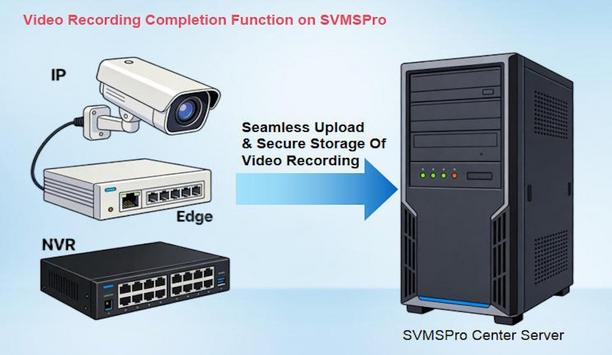
In mobile surveillance, remote sites, and environments with unstable networks, video recordings often suffer from "time gaps" due to network interruptions, a longstanding technical challenge for security systems. Under traditional architectures, central servers rely on real-time streams for storage. Once the network connection is lost, the recording timeline experiences an irrecoverable interruption, leading to the loss of footage of critical events. This creates a fundamental flaw in post-eve...

SiteStream Security (SiteStream), a provider of mobile video surveillance and remote monitoring solutions for the security industry, announced that Jeff Perri has joined the company as Chief Executive Officer. Perri joins SiteStream at a time of accelerated growth as the company taps the quickly expanding market for flexible, scalable, and rapidly deployable perimeter protection. As CEO, he will focus on strengthening SiteStream’s dealer ecosystem, advancing product usability and automat...
News

A regional security manager at a national bank gets a notification about suspicious activity at an ATM in another city. He opens his smartphone to check the feed — but the camera is connected to a different NVR than the one he’s currently logged into. By the time he switches systems, the live view is gone. Situations like this play out daily — across banking networks, retail chains, factories, and logistics hubs, wherever multi-site surveillance depends on fragmented systems. Each location has its own NVR, its own login, its own feed. And for professionals responsible for real-time security, that means wasted time and lost visibility right when it matters most. That’s where a powerful multi-site video surveillance solution built for remote monitoring makes all the difference. The best systems make smartphone monitoring effortless, bringing every site, every feed, and every alert into one secure, unified dashboard. Matrix NVR smartphone App If you’ve ever found yourself switching between NVRs, juggling logins, or waiting for feeds to load on your phone, you’re not imagining the friction. Your surveillance solution should eliminate that burden — not add to it. Here’s how you can get the most out of your Matrix NVR Smartphone App, especially when managing multiple locations and cascaded NVRs for remote video monitoring. 1. Monitor every camera, react faster — all from one app Benefit: Unified visibility that drives real-time decisions for remote monitoring. Most smartphone surveillance apps limit you to one NVR at a time — meaning you can only view cameras connected to that unit. With Cascaded NVR Viewing on the Matrix NVR Mobile App, you can see every camera across all connected NVRs — in one seamless interface. This single, unified view means you don’t waste time switching screens or logins — you can move instantly from awareness to action. When an event occurs, you’re already seeing it happen and can respond faster than ever. Why it matters: In surveillance, seconds count. The ability to see everything and act immediately from your smartphone keeps you in command, no matter where you are. Pro Tip: Create “priority groups” of high-importance cameras so you can focus on what matters most the moment you open the app. 2. Real-time awareness and instant response Benefit: Mobility without compromise. Whether you’re on-site, traveling, or away from your desk, the Matrix NVR mobile app ensures remote monitoring across all locations. However, awareness is only part of the story — you can now make direct calls from the app while viewing the relevant camera feed. No app switching, no wasted seconds — just immediate communication with on-ground teams when something demands attention. Why it matters: Security events don’t wait, and now, neither do you. Real-time monitoring, combined with instant communication, ensures faster, coordinated action when it counts the most. Pro Tip: Assign quick-dial contacts to high-priority cameras for one-tap calling during alerts. 3. Scale without increasing complexity Benefit: Growth made simple. As your organisation expands — adding new branches, NVRs, or cameras — Cascaded NVR Viewing automatically integrates each newly added NVR into your mobile view. You get seamless scalability for remote monitoring without additional configuration, training, or overhead. Why it matters: Growth shouldn’t mean more systems to manage. Unified scalability keeps your operations efficient as you expand. Pro Tip: Use consistent camera naming (e.g., Site-A-Entry, Site-B-Warehouse) to identify feeds instantly while monitoring remotely. 4. Securely share access when it’s needed Benefit: Controlled, temporary visibility. Need to share access with a contractor, auditor, or vendor? With Temporary User Access, you can now grant limited-time visibility to specific cameras — securely and effortlessly. Just select cameras, define the duration, and share a QR code. The recipient scans, logs in, and views what’s needed — for only as long as you allow. Why it matters: Temporary access while remote monitoring ensures collaboration without compromising security. Your system stays protected, and access remains fully under your control. Pro Tip: Use this feature for maintenance checks, audits, or temporary on-site work — access expires automatically when done. Smartphone-powered remote monitoring True mobile surveillance isn’t about adding more cameras — it’s about seeing everything that matters, effortlessly. With the Matrix NVR Mobile App and its Cascaded NVR Viewing capability, you unlock: Every camera, every site — one app Instant mobile access and real-time response Effortless scalability across locations Secure, temporary access control Faster action through unified monitoring
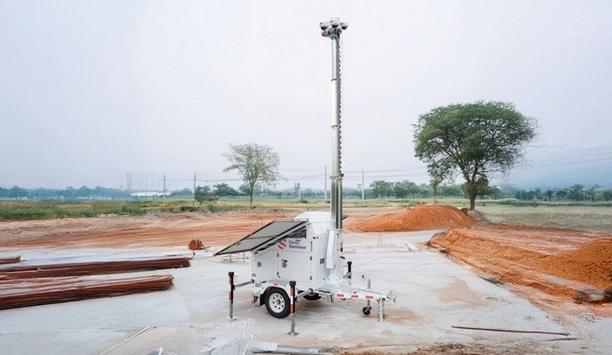
Deep Sentinel, the pioneer in AI-powered proactive video surveillance with real-time human intervention, now announced the launch of its Mobile Monitoring Trailer — a fully mobile, solar-powered security platform that delivers instant access to Deep Sentinel’s remote live guard monitoring anywhere, including places where power and permanent infrastructure are unavailable. Purpose-built for high-value outdoor environments, such as auto and parking lots, construction sites, industrial sites, and other remote locations, the Mobile Monitoring Trailer extends Deep Sentinel’s industry-defining real-time protection to the hardest-to-secure environments. With elevated wide-area visibility, edge AI processing, and guards who intervene within seconds, the solution transforms outdoor security from passive recording into active crime prevention. Ultra-responsive security surveillance “Customers have told us for years: ‘We need Deep Sentinel’s ultra-responsive security surveillance in places where we can’t install cameras or run power.’ This trailer is our answer,” said Founder and CEO, David Selinger at Deep Sentinel. “It delivers the full Deep Sentinel experience, real-time monitoring, human verification, and immediate intervention in a format that can be deployed anywhere in minutes. In short, if a threat can reach the site, Deep Sentinel can stop that threat.” Gen V Deep Sentinel Hub and integrated cellular connectivity Built for reliability and response speed in demanding outdoor environments, the system’s enterprise-grade hardware includes a Gen V Deep Sentinel Hub, four wide-area cameras, a PTZ camera for alignment and tuning, dual solar panels, an 800Ah battery system, and integrated cellular connectivity. The system operates autonomously with minimal maintenance and requires no wiring, trenching, generators, or onsite power. Key differentiators of the Deep Sentinel Mobile Monitoring Trailer Key differentiators of the Deep Sentinel Mobile Monitoring Trailer include: Real-time guard intervention: Trained guards speak through the trailer’s two-way audio to deter intruders, escalate threats, or contact emergency services as needed within 30 seconds or less, stopping crime before loss or damage occurs. Unlike other mobile surveillance competitors, Deep Sentinel publishes clear service-level agreements that outline guard response times. Operational-grade reliability: Built for continuous, high-demand use with SLA-backed performance, far more robust than traditional rental-style surveillance units. Edge AI + elevated visibility: Mast-mounted cameras and on-board AI work together to reduce false alarms, accelerate response, and deliver wide-area situational awareness. $0 upfront costs for customers and dealers: Deep Sentinel has integrated financing covering the full cost of the trailer and all of the attached equipment creating a simple pricing structure, no third-party financing. Nationwide distribution: Leveraging Deep Sentinel’s nationwide distribution partners, the Deep Sentinel Mobile Monitoring Trailer can be delivered, installed and live within days virtually anywhere in the U.S. Designed for reliability within a range of climates: A separate cold-weather model supports deployments in regions with average temperatures below 40ºF, ensuring consistent performance in harsh winter environments. This is ideal for sites such as: Construction sites and material yards Industrial yards and remote lots Auto dealerships and parking lots Utility, energy, and infrastructure projects Retail and multitenant commercial properties Critical infrastructure sites, including bridges, dams, and similar properties Deep Sentinel’s Mobile Monitoring Trailer "Most surveillance trailers watch crime happen. Ours stops it,” added Selinger. “By combining mobility, solar power, and human intervention, we’re giving businesses the ability to secure valuable assets anywhere, without infrastructure, hassle, or compromise.” “Sites without infrastructure have always been some of the hardest environments to secure,” said Jack Azbill, CEO of Varitec Systems Inc, a Deep Sentinel dealer. “Deep Sentinel’s new trailer finally gives us a way to deliver real-time deterrence where traditional systems fall short. It’s a powerful addition to our toolkit.” The Mobile Monitoring Trailer is available exclusively through Deep Sentinel partners and includes hardware, monitoring, connectivity, and system maintenance in a simple monthly subscription.

Zimperium, the pioneer in mobile security, today announced new research from its zLabs team uncovering DroidLock, a rapidly evolving Android malware campaign targeting users in Spain. Unlike traditional mobile malware, DroidLock behaves more like full-scale ransomware, enabling complete device takeover through screen-locking overlays, credential theft, and remote control capabilities. Android safeguards zLabs researchers found that DroidLock is distributed through phishing websites and begins with a deceptive dropper app designed to bypass Android safeguards and exploit Accessibility Services. Once installed, the malware automatically approves additional permissions, granting access to SMS, call logs, contacts, audio, and more, without the victim’s awareness. HTTP and WebSocket channels After establishing persistence, DroidLock communicates with its command-and-control server using both HTTP and WebSocket channels. Through these channels, attackers can issue any of 15 distinct commands, enabling them to: Lock the device or change the PIN/password Wipe the device through a factory reset Silently capture the victim’s image using the front camera Mute notifications and restrict user interaction Stream the device’s screen and remotely control it via VNC Display ransomware-style full-screen overlays demanding payment within 24 hours Dual overlay mechanisms A notable tactic includes dual overlay mechanisms used to steal lock-patterns and app credentials. DroidLock deploys fast in-memory overlays to capture screen unlock patterns, while WebView-based overlays render attacker-controlled HTML to harvest credentials from targeted apps. The malware also displays a convincing fake Android system-update screen to keep victims from powering off or interrupting the attack. Although the ransomware overlay does not encrypt files, DroidLock can wipe the device entirely, permanently locking users out and enabling indefinite control by the attacker. Intercept one-time passcodes “For enterprises, a compromised device becomes a hostile endpoint,” said Vishnu Pratapagiri, Security Researcher at Zimperium and author of the analysis. “DroidLock can intercept one-time passcodes, change device credentials, wipe data, and remotely control the user interface. Organisations need mobile security that stops these attacks before they disrupt operations or enable account takeover.”

Axis Communications, a pioneer in network video, shares its expert insights into some of the principal influences that will guide decision-making in the year ahead in its latest tech trends study. Now in its tenth year, researchers highlight the underlying theme of IT’s increasing involvement in decisions related to security and safety technology. Growing focus on ‘ecosystem-first’ Decisions define direction, and ecosystems drive decisions. Increasingly, as IT’s influence grows, there is a perspective shift to an “ecosystem-first” approach, where the first decision is defined by the solution ecosystem to which the customer wants to commit. With the solutions including a greater variety of devices, sensors, and analytics than ever before, it’s vital to keep things seamless. That need stretches from integration to configuration, from management to scalability. Committing to a single ecosystem makes these things possible in ways that mixed platforms cannot. Selecting a platform that offers adequate breadth and depth in hardware and software, from both the principal vendor and a secondary tier of partners, is now the primary decision. The ongoing evolution of hybrid architectures Hybrid remains a mix of edge computing within cameras, cloud resources, and on-premise servers, but with the growth of new use cases and capabilities, the balance of resources is changing. Edge and cloud are becoming much more significant. More powerful edge AI-enabled surveillance cameras are coming into their own: their image quality is improved, accuracy of analytics has grown, and they can run many previously server-based tasks. Cloud-based resources, too, have grown in their ability to turn camera data into business intelligence and insights. On-prem is still dominant, but this trend meets both the IT department’s drive for efficiency, the security team’s desire for solution quality and effectiveness, and the data integrity and security needs of both. The increased importance of edge computing Enhanced capabilities mark the beginning of a new era of edge, but under a hybrid structure, where on-prem servers still support some tasks, the full potential of edge AI hasn’t always been fully realised. Now, the arguments against moving more to the edge have greatly diminished in part due to the availability of enhanced AI. The discussion around where AI is best deployed has brought focus to the growing capabilities of cameras and the increasing variety of edge AI-enabled sensors. Edge processing data has become the basis for advanced features like smart video searching, and system power has allowed strong cybersecurity to become the default, including dealing with functions like secure boot and signed OS. Mobile surveillance on the rise Mobile surveillance has already seen significant growth, and is set to grow further over the next year. Improved connectivity, remote access and edge AI have helped unlock the use of more advanced, higher-quality surveillance cameras in mobile solutions. This makes cameras an attractive option in a greater variety of situations, from public safety to construction sites to festivals and sporting events. Power management within surveillance cameras has also advanced, resulting in lower power utilisation without a compromise in quality, perfect for battery or renewable-powered solutions. Mobile surveillance solutions also prove more straightforward to approve than permanent installations. Ultimately, these factors mean that security and safety now reach further, to locations where it would be difficult to place physical security personnel. Focused technology autonomy Companies across many sectors have been looking to gain more control over key technologies essential to their products. The problem is, extending an organisation’s focus from its traditional business to a fundamentally different and potentially highly complex area like designing semiconductors is easier said than done. It is becoming clear that technological autonomy makes a fundamental difference to the offering, and everything else should be led by global partnership. Designing its own system-on-chip (SoC), ARTPEC, which Axis started doing more than 25 years ago, has given it the ultimate control over product functionality. With a fast-moving technological landscape, Axis research supports the development of innovations that meet the evolving needs of customers, and opportunities to improve safety, security, operational efficiency and business intelligence. Innovation doesn’t happen in isolation, however; it occurs through collaboration, listening to customers and by maintaining close relationships with partners as we collectively navigate challenges and drive progress into 2026 and beyond.
Building on earlier research published in October 2025, Zimperium announced that its zLabs team has uncovered a significantly enhanced variant of ClayRat, an Android spyware family first detailed in the technical brief “ClayRat: A New Android Spyware Targeting Russia”. While the original ClayRat strain was able to exfiltrate SMS messages, call logs, notifications, device data, take photos, and send mass SMS or place calls, effectively allowing infected devices to become distribution hubs. The newly observed variant demonstrates a substantial escalation in functionality and stealth. The updated strain abuses both Default SMS privileges and Accessibility Services, enabling it to: Capture lock-screen credentials (PIN, password, or pattern) and automatically unlock the device. Record the screen via the MediaProjection API. Present deceptive overlays (for example, fake system-update prompts) to prevent user detection. Programmatically initiate taps — blocking the user from powering down or uninstalling the malicious app. Generate fake or interactive notifications, then intercept and exfiltrate responses. This expanded functionality enables full device takeover, making ClayRat far more dangerous than the version first reported, especially since victims may no longer detect or easily remove the malware. The updated behaviour also increases the risk to corporate endpoints: compromised devices could leak corporate credentials, MFA codes, or sensitive enterprise data through hijacked SMS, notification flows, or screen captures. Reliant on phishing webpages The malware continues to leverage social engineering at scale. As before, ClayRat masquerades as legitimate, widely used applications and services, including major video and messaging platforms, as well as localised or regional services (for example, certain Russian taxi or parking apps). Distribution remains heavily reliant on phishing webpages and sideloaded APKs, including via cloud-storage platforms such as Dropbox. According to zLabs telemetry, more than 700 unique APKs tied to ClayRat have already been identified in a short time window. BYOD environments “ClayRat’s evolution shows exactly why enterprises need protection that works at the device level, not just network-based,” said Vishnu Pratapagiri, lead researcher at zLabs. “By abusing Accessibility Services and overlay tricks, this variant turns Android devices into fully compromised endpoints and conventional defences may not be enough.” As ClayRat continues to evolve, expanding its spyware, remote-control, and lock-screen manipulation capabilities, enterprises should treat this campaign as a critical reminder: mobile devices, especially in BYOD environments, remain among the most vulnerable entry points for attackers. Zimperium continues to monitor ClayRat and share relevant indicators of compromise with industry partners.

Balancing operational efficiencies and customer satisfaction with costs, resources, and legislative obligations is a challenge faced by every security services provider offering keyholding and alarm response. While mobile security operations must adhere to strict compliance, with BS 7984 standard and SIA licencing for guards at the very core of the operations, security providers are increasingly contending with a wider range of regulations. Among the most pressing are sustainability requirements that are prompting a re-evaluation of long-established operational models. From the increased sustainability emphasis within the Procurement Act 2023, which may influence major contract allocations, to incoming frameworks such as the UK Sustainability Reporting Standards (UK SRS) or the Corporate Sustainability Reporting Directive (CSRD) for the EU operations, sustainable practices have shifted decisively from optional to essential. Yet change is rarely quick or easy, and mobile security operations are no exception. Operational challenges and compliance: a system under pressure In-house mobile patrol operations follow strict protocols: keys are numbered, sealed, and stored in designated, secure facilities, with quarterly audits in place. For patrols, substantial quantities of keys are transported in reinforced vehicles, significantly heavier than a standard transit van. For many established security providers, these processes have been refined over years of practice. But increasing pressure to reduce carbon emissions is pushing companies to reassess their approach. Reinforced structures and heavy key lockers At first glance, the answer may seem simple: transition to an electric fleet. In reality, the challenge is far more nuanced. Specialised patrol vans require higher load-bearing capacity to accommodate reinforced structures and heavy key lockers, capabilities not yet widely matched by available electric models. And where suitable options do exist, cost may become a limiting factor. The upfront capital cost of electric vans (even before specialist fit-out) remains significantly higher than for diesel equivalents. Although lower running costs over time can help balance the investment, the initial outlay can still place substantial financial pressure on organisations managing large mobile fleets. An alternative approach is to use lighter vehicles and remove key storage from vans. But this introduces new complexities. Patrol guards may need to collect keys from a central point for every callout, slowing response times, or providers may need to adopt a dual-response model in which a keyless patrol attends first and waits for keys to arrive. Offsetting emissions: a short-term fix, not a long-term strategy A seemingly simple option is to offset emissions and pursue Net Zero compliance. Although better than taking no action, offsetting schemes remain controversial and are often criticised as “greenwashing.” The core issue is that offsetting does not reduce emissions generated by day-to-day operations. Instead, it can function as a temporary workaround, supporting programmes with uncertain long-term outcomes. While offsetting may still play a useful role, it is rarely sufficient on its own. Is outsourcing the answer? The high cost of letting go Given these challenges and operational complexities, it is unsurprising that some large security and facilities management organisations turn to outsourcing. On paper, outsourcing keyholding and alarm response can eliminate the need to transport and safeguard keys internally. No keys, no problems! Yet, this keyholding pass-the-parcel comes with its own risks, particularly the loss of operational control. Providers become dependent on contractors’ processes and performance while remaining accountable to their clients. With limited oversight, they cannot directly influence response times, procedural compliance, or key-management integrity. Although contractors can face penalties for breaches, strained client relationships and jeopardised renewals pose significant commercial risks. Technology to the rescue There is, however, room for optimism. Security technology is advancing rapidly, enabling sophisticated remote site monitoring and intrusion detection through AI-driven systems and IoT devices. Modern SOCs are increasingly data-led, with enhanced capability to identify false alarms and reduce unnecessary site visits. As these technologies evolve, companies must adapt, though transformation inevitably comes with costs. In the longer term, keyless access may become the norm, reducing reliance on physical keyholding. But that future is not yet fully realised, and the operational challenges, along with associated emissions, remain very much in place. Alternative methods gain momentum It’s no surprise that security providers are increasingly exploring alternative keyholding approaches that maintain strong physical security while improving efficiency and reducing emissions. As an example, one of the largest global security companies is adopting SentriGuard, a smart key management solution across its European mobile operations. SentriGuard stores keys at the point of entry in a certified key vault (LPS 1175, SR2 – C1 & C3) and is managed remotely via a cloud-based platform that also offers full access audit. By shifting to this model, the organisation is streamlining keyholding processes, reducing audit complexity, and maintaining robust protection for commercial customers. Crucially, it also supports more sustainable fleet management by allowing lighter electric vehicles to be used, as keys no longer need to be transported during patrols. Compliance considerations: scrutiny remains essential Any new solution must be accompanied by rigorous due diligence. Both the physical and digital security of systems like SentriGuard and their alternatives require thorough evaluation before deployment. The scope of assessment will depend on risk and minimum security requirements. This may include reviewing loss prevention or security certifications, performance ratings, ISO compliance, hardware origin, and digital security auditing. Usability also plays a key role, particularly the ability to revoke access for individuals or groups remotely and run audit reports on the visits that have already taken place. SentriGuard, for example, is managed via a dedicated platform that enables these controls and provides additional operational alerts, including key detection in the vaults and device battery-status monitoring. The future is bright. But only for those ready to adapt Keyholding and mobile operations are undergoing a period of significant change, driven by environmental pressures, rising in-house operational costs, and rapid technological development. In an era where fleet emissions can represent a substantial share of a mobile security provider’s carbon footprint, adapting is no longer optional. Success will depend on embracing new technologies, rethinking long-standing processes, and investing in models that deliver both sustainability benefits and reliable service. Those who move early will set the pace for the industry, reduce long-term costs, and strengthen client confidence in a sector undergoing faster-than-expected transformation. And, perhaps, innovative systems like SentriGuard will help the sector move closer to that balance.

Expert commentary

When a bomb detonated in the Port of Beirut, I had hundreds of employees under my care inside the blast zone. Within just two hours, I was able to determine who was impacted, understand their safety conditions, and share resources for on-the-ground support—all thanks to mobile technology. For Chief Security Officers, receiving calls like these launches a variety of protocols and necessary decision-making with the safety and security of people and assets as a top priority. And these calls are only becoming more common. Dependence on threat intelligence Mobile phones have dominated the post-COVID environment where people work from anywhere Threats ranging from natural disasters to geopolitical conflicts are becoming more frequent and complicate the responsibility organisations have in keeping their people safe. To meet these needs CSO’s are staying ahead of negative outcomes through creating a greater dependence on threat intelligence. In these times, effective, real-time risk management depends on hyper-local data from technology that is accessible, portable, and dynamic–such as cell phones. Mobile phones have revolutionised the way people live and work. They allow us all to walk around with a computer in our pocket, bringing the world to our fingertips and eliminating digital borders for over 90% of the world's population. Mobile phones have dominated the post-COVID environment where people work from anywhere and have geographically distributed teams but are also more vulnerable to threatening events. Mobile-friendly risk management platforms Mobile technology assigns workers with easy entry to data that can help keep them and their teams safe As we approach 2024, many organisations are adopting comprehensive risk management tools that empower personnel across the organisation with the intelligence and knowledge they need to stay safe wherever they are. Mobile-friendly risk management platforms, such as Crisis24 Horizon, provide always-on awareness, on-hand threat intelligence, and immediate communications and distress signalling through location monitoring. Users receive location risk assessments and push notifications directly to their devices about nearby issues and threats no matter if they are on or off the job. While only select risk managers have complete control of the platform and all sensitive employee data is protected through encryption, the app distributes critical intel to foster a culture of shared awareness and responsibility. Thus, mobile technology empowers employees with easy access to information that can help keep them and their teams safe. Creating a culture of mobile technology adoption In the last few years, the world has proven the importance of being well-informed of risks and mitigation plans to minimise harm. However, psychological barriers tend to trump physical barriers when it comes to accessing the vast array of tools our mobile devices offer. World has proven the matter of being well-informed of risks and relief plans to minimise harm Adopting this technology and establishing a culture that enforces risk management across an organisation is a daunting challenge that demands substantial commitment from leadership to be successful. Some companies have tackled this challenge by positioning security technology as part of the organisation’s employee benefits package, such as commuter benefits and health insurance, to encourage people to take advantage of these resources and learn how to use them. Cohesive risk management culture Technology is only as effective as the people whose actions it informs, which is why adoption and integration are so important. When a cohesive risk management culture meets a powerful technology platform, individuals are enabled to receive threat alerts and counter their impacts, letting others know when and how to take the necessary precautions to protect themselves and their team. For more information on mobile technology and other security trends, check out the Global Risk Forecast, an annual report by Crisis24 that provides a comprehensive analysis of key events around the world most likely to affect operations in the coming year.

Daniel May of Consort reviews the integration of access control systems in healthcare settings, outlining the benefits and key considerations decision-makers must make throughout product specifications. From patient safety and traversal to the protection of sensitive data and pharmaceuticals, healthcare environments are faced with several operational challenges. And where security remains at the forefront of decision-making, modern access control systems may often hold the answers. Physical security systems Hospitals in particular have developed into multi-faceted spaces that house hundreds to thousands of patients, staff and visitors at any one time. In England for example, research has found in the three months leading to June 2023, an average of 44,626 people visited major hospital A&E departments each day, with over 16 million attendances typically recorded over the course of a year-not to mention an additional nine million logged at other minor units. For any building, this level of sustained footfall can request severe security difficulties For any building, this level of sustained footfall can invite severe security tests. With that, the need to deploy effective physical security systems in healthcare is clear. And so, as access control continues to become more readily adopted and new products enter the market, decision-makers are reminded to consider the requirements of their building, ensuring they select the solutions most suited to their settings and budget. Security controlled Patient safety will always remain the top priority in healthcare settings, and where matters of health and social care come into question, a diverse set of professional regulatory bodies are tasked with setting and maintaining high standards. When it comes to healthcare premises specifically, patient security and perimeter security often come hand in hand and are amongst the most pressing of challenges that decision-makers must face. To help address operational planning and potential design concerns in the NHS, the Health Building Note (HBN), provides general design guidance for healthcare buildings under HBN 00-01-citing the use of access control measures as a way of maintaining security and protecting the safety of patients, staff and visitors. Use of access control Hospital buildings control varied levels of access for a number of security purposes Hospital buildings, for example, must control varied levels of access for a number of operational and security purposes. Routine scenarios exist where vulnerable patients are under monitoring and thus refrained from exiting the premises for their own safety, while at the same time, permitted staff must be able to reach their patients and medicines when required. For this, the use of access control is key. Equally, access credentials can also help management teams keep track of those who may be entering or exiting rooms with equipment and pharmaceutical supplies, deterring any unwanted visitors and opportunists in the process. Incorporation of access control systems On a similar note, regulations have set a minimum standard for how personal data should be stored and managed in healthcare environments, giving decision-makers an added responsibility to regulate staff-controlled areas with patient medical records. While instances of personal data breaches are rare, healthcare facilities and professionals are at legal risk should confidential data be found misused or missing. As such, the incorporation of access control systems has become essential in keeping data storage areas secure, with intuitive online systems capable of permitting access to staff with the correct credentials while simultaneously tracking who has requested clearance at digital entry points. HBN guidance Healthcare experts are better fitted to control the sheer volume of people entering and exiting To function effectively, healthcare facilities must always be perceived as safe places by the people who reside within them, and as HBN guidance implies, a unified physical security system can help address key safety and security concerns while enhancing patient and staff experience. Opportunely, access control systems are more accessible and adaptable than ever and combine several technologies such as mechanical locks and automatic doors with electronic access credentials in the form of smartphone apps, badge readers and biometric scanners. By integrating these systems into the building’s existing infrastructure, healthcare professionals are better equipped to control the sheer volume of people entering and exiting the premises without impairing the general flow of movement and coordination around the facility. Better by design Despite the clear benefits offered to healthcare facilities, there are a number of considerations to be mindful of when choosing an access control solution. Poorly implemented systems can have an adverse effect on security and functionality - quickly costing healthcare organisations time and budget to rectify and replace the inadequate products that don’t meet the building’s requirements. For that reason, decision-makers and design teams are reminded that there is no single solution that fits all healthcare buildings. As such, it’s crucial for decision-makers to understand the systems that are being put in place throughout each of the touchpoints in their facility. Clear collaboration is required during periods of specification, where together, teams can ensure the selected product works on all angles, from meeting fire safety and sustainability standards to aesthetics and scalability. Modern access control products Scalability is a key area that decision-makers must review when selecting access control systemsFrequently overlooked, scalability is a key area that decision-makers must review when selecting access control systems. Such is their diverse nature; healthcare facilities can often change and develop as years go by, and by selecting a system that facilitates growth, such as a cloud-based solution-security and efficiency is long-established. While modern access control products are known for seamless integration, there are some systems that may restrict the ability to use different vendors throughout the remainder of the building’s infrastructure. This, in effect, causes a monopolisation of products throughout the estate, which can have an adverse effect on growth by increasing costs and reducing the levels of service associated with the security system already in place. Improve security and safety A scalable and reliable access control system will continue to improve security and safety by adapting to a building’s new requirements-and all while having minimal impact on its operational network. And so, while technology will no doubt continue to influence and transform the access control market, healthcare facilities and their professionals must continue to remain educated on their own systems, ensuring they have the best options in place to keep their patients, staff and visitors safe and secure for years to come.

Security systems represent a significant investment, yet many organisations still only use a small percentage of their physical security systems’ capabilities. That’s before we even begin to consider the different ways that the likes of video, access control and ANPR can add additional value beyond security by serving the needs of other business functions. Whether that be to obtain additional insight, streamline compliance or drive operational efficiencies. Consumption gap When users aren’t tapping into the full power of the solution they bought, they aren’t realising their full return on investment. This creates a consumption gap. It’s a situation that has the potential to go in one of two very different directions. A misreading of a system, its capabilities and functionality can fast result in user discontent Left unchecked a consumption gap can create frustration for system integrators, manufacturers and end users alike. A misunderstanding of a system, its capabilities and functionality can quickly result in user dissatisfaction. Leading to a greater likelihood that they’ll look to change or focus investment into overlapping and likely competing solutions. Customers’ security goals Addressed appropriately it can help manufacturers, system integrators and end users to build trusted partnerships in which everybody wins. Understandably, systems integrators are primarily focused on installation—delivering reliable solutions that meet customers’ security goals to ensure their long-term success. However, engagement can go beyond deployment. Closing the consumption gap can be a strategic way to differentiate yourself from competitors. The deeper you understand your customer’s business, the better advice you’re able to offer—and the stronger the partnership you form. Why do consumption gaps exist? For customers, finding the time to learn multiple capabilities of a security system can be time-consuming. Often, taking advantage of new tools and solutions takes a backseat to the urgency of daily tasks. Often, taking use of new tools and keys takes a backseat to the speed of daily tasks There are many reasons why customers may not be taking full advantage of the features available to them in their security platform. They may feel overwhelmed by a steep learning curve after deployment and might delay diving into the additional system features. Sometimes, there might be a lack of awareness of the technology’s full capabilities, and despite a willingness to learn, there are few options for training. Often, it can simply be they are not aware of the benefits of their system or are too busy with day-to-day and urgent tasks to learn other features. Bridging the consumption gap Systems are built to deal with a wide variety of use cases and broaden market appeal, but the goal isn’t to get everyone to use all the features of every product. You want to guide your customers towards the features and functionality that best meet their needs. This could entail reducing the friction they experience in their day-to-day operations, solving unique issues related to their business, or addressing their most important challenges. Having these conversations with your customers deepens your relationship and can organically open up new revenue streams. Continuous engagement allows you to recommend other relevant products or services that they may find helpful. Customised training plan Customers can learn at their own pace and gradually expand their understanding of their system Furthermore, customers are often not able to implement all features at once. You can help by proposing a plan to gradually evolve systems and processes over time. This could include a customised training plan to get the most value from their investment. Some manufacturers are also now providing learning management tools that system integrators can pass on to their customers. Customers can learn at their own pace and gradually expand their understanding of their system in accordance with their bandwidth. This allows them to get more out of their system. Simplifying deployment With the right software partners, systems integrators can focus on solving customer problems, not reactively troubleshooting issues. Look for manufacturers who offer good support systems for integrators. This includes not only quality technical support but also configuration and training services you can build on. Look for partners that offer tools and consultation services you can use to complement your value-added services, either to spend less time on the basics or for specialised expertise on complex projects. Beyond support and services, one telling sign is the configuration interface and tools that you as an integrator will primarily interact with. Ask yourself whether the manufacturer invests in their back-end tools and their primary user interface. Is there a noticeable difference between these two interfaces in terms of look and feel? Does one feel more dated? Widening consumption gap The harder it is to implement upgrades, the more reticent customers are to make the changes If the end user interface is easy to use but changes on the back end are difficult, the resulting friction can contribute to the widening consumption gap. It can become too time-consuming or difficult to upgrade or make changes to the system. The harder it is to implement upgrades, the more reticent customers are to make the changes. Configuration should be painless. If the system has a solid graphical user interface, you’ll be able to interact with the software in a fluid and intuitive way. When the system is intuitive for both you and your customers, you spend less time on setup and training. You can invest more attention in value-added activities. Conclusion A consumption gap could be a sign that technological innovation is outpacing people's ability to implement them in their day-to-day lives. You can work with your customers to simplify the adoption of the innovations so they can more easily implement them and realise the full value of their investment. By reviewing opportunities to bridge the consumption gap for your customers, you increase the likelihood of growing and renewing your system and service contracts. You also build relationships as a trusted partner. Customers will turn to you when looking to expand their security system and proactively solve new and incipient problems.
Security beat
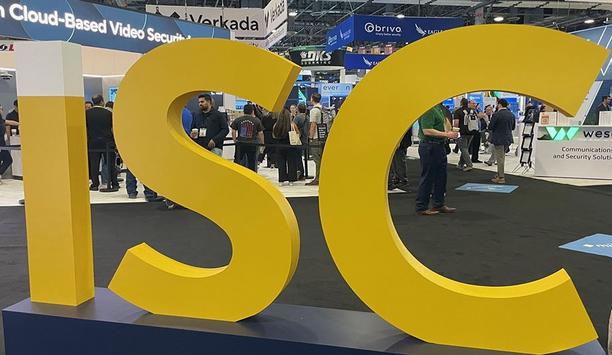
ISC West 2025 in Las Vegas showcased the latest advancements in security technology, offering security professionals a glimpse into the future of the industry. This year's expo highlighted the growing influence of artificial intelligence (AI), cloud computing, and enhanced integration. The pioneering comprehensive and converged security event attracted nearly 29,000 industry professionals to the Venetian Convention Centre. Integration into unified platforms Several companies emphasised the importance of cloud-based solutions and the integration of diverse security components into unified platforms. For example, Brivo's Security Suite provides “everything in one platform” – not just access control. Customers only pay for what they use because the system is flexible and scalable from a single door to enterprise level applications. Brivo’s suite includes video, but the system can also tie in with third-party “partners.” Genetec's Security Centre allows for more frequent updates through the cloud. Milestone is undergoing a two-year transition to bring its Xprotect system into the future by incorporating Arcules and Briefcam into a video-as-a service product. Suprema introduced BioStar X, which integrates access control and video analytics into a single platform. AI and mobile credentials Axis Communications’ Cloud Connect product announced three new partnerships at ISC West 2025 Axis Communications’ Cloud Connect product announced three new partnerships at ISC West – Eagle Eye Networks, SecuriThings, and Wesco. They join the three partners announced during the first year of Axis Cloud Connect – Genetec, Kone (elevators) and Milestone. AI and mobile credentials were still hot topics at ISC West 2025, but the conversation has evolved beyond amazement at the technologies’ capabilities and now centres on more practical aspects. From the theoretical to the practical “AI and mobility are still the ‘flavors de jour,’ but messages are evolving to manifest AI for better outcomes,” says Heather Torrey, General Manager, Commercial Security, Americas, for Honeywell Building Automation. The company has reframed its security portfolio to be very building- and business-focused, continuing to grow and evolve after the recent acquisition of LenelS2. “From the theoretical to the practical, we want customers to be part of the conversation so we can deliver AI that is meaningful to them, focusing on what’s most important,” says Torrey. Under Honeywell’s new ownership structure, “each part of the business can be more focused on customers’ needs,” she says. Honeywell continues its journey around mobile access and credentialing and migrating to cloud solutions. Innovations in Access Control Gallagher’s new Quickswitch access control board simplifies the migration from legacy systems Access control remains a critical component of security systems, and ISC West 2025 showcased several innovations in this area. Acre is releasing “Gallery,” its version of the App Store for access control. DormaKaba is launching the Keyscan KC Series door controller with TCP/IP connectivity and enhanced features. Gallagher’s new Quickswitch access control board simplifies the migration from legacy systems. Johnson Controls highlighted its C-Cure command centre and C-Cure IQ web client, offering a unified approach to access control and video. Hardware integrations for security panels For service provider Alarm.com, hardware products prepare a path to greater customer experiences, says Abe Kinney, Alarm.com’s Director, Product Management, who oversees hardware integrations for security panels, sensors, video, etc., and drives new product development. “We are looking to bridge the physical world to digital world,” he says. “We want to bring an advantage to our dealers that they can bring to customers.” Because Alarm.com’s customers pay a monthly fee, the products must be durable and economical, says Kinney. “It should work with no need for truck rolls.” The importance of longevity and flexibility Products are evaluated based on features, price, and ease of installation Products are evaluated based on features, price, and ease of installation. In particular, longevity is important for the Alarm.com’s pro channel. There is also a growing emphasis on deterrence industrywide. Says Kinney: “We recognise that detection is part of it, but we need to prevent problems from happening in the first place. And the industry is re-evaluating.” When it comes to cloud intelligence, Eagle Eye Networks puts the emphasis on flexibility. They offer AI that can perform anywhere on the system infrastructure, on the camera, on their on-site bridge device, or in the cloud. They support their own AI and also any AI product from a third party. “We focus on what customers want from the data AI detects,” says Hans Kahler, Eagle Eye Networks’ Chief Operating Officer. Integration with other systems A timely alert from gun detection could save a life, but AI can also generate information that might be used and analysed later, such as point-of-sale information, dwell time, foot traffic, etc. “What people want is the ability to work with the data for business intelligence,” says Kahler. Integration with other systems provides new opportunities for customers: For example, a licence plate reader at a restaurant drive-thru could trigger customisation of the menu board digital signage based on the customer’s previous buying pattern. Relentless Innovation Assa Abloy handles more than 40 million SKUs for all its various brands, faked in 28 factories in the US Assa Abloy handles more than 40 million stock keeping units (SKUs) for all its various brands manufactured in 28 factories in the United States. Merely complying with regulations such as the “Buy American Act” is a monumental effort considering the massive product line, attendees heard at Assa Abloy’s Annual ISC West Breakfast focusing on compliance challenges in the security market. Meanwhile, back at the trade show booth, Assa Abloy focused on “relentless innovation” in every corner of its product line. Assa Abloy’s message: Innovation in security does not have to be about AI or automation. In fact, inventive approaches to products come in all shapes and sizes and at every level of the product portfolio, and innovation is happening faster than ever. For example, the Safebolt product from Securitech, a brand recently acquired by Assa Abloy, can quickly lock down existing doors with the press of a red button on a cylindrical or mortise lock. Temporary Systems to Secure Events Securing events is the focus of Allied Universal's Unified Command Solutions, which specialises in setting up temporary security systems for conventions, trade shows, festivals, construction sites, parades, and other events. They can add technology to situations where previously mostly security officers were used, providing safety/security and enabling more efficient event operation. “We can put cameras anywhere, whether they need power or not, use cell service or WiFi, a localised network or the internet, or whatever,” says Andrew LaMadrid, VP, Sales for Allied Universal's Unified Command Solutions. Event operation and management IDIS came to ISC West looking to leverage new products that they did not promote in the past The focus is on easy implementation, flexibility, and fast setup and removal. “We look for a solution to solve each customer’s pain points,” says LaMadrid. They specialise in setting up and deploying surveillance cameras for safety/security and for event operation and management. Mobile surveillance is a relatively new “piece of our puzzle” when it comes to protecting high-profile events. “People are excited about what we can offer that’s new,” says LaMadrid. Unified Command Solutions has been around for about 12 years and was acquired by Allied Universal last summer. IDIS came to ISC West looking to leverage new products that they did not promote in the past, and visitors were very interested in those solutions, says Scott Switzer, IDIS CEO. “The progression of our product line has been tremendous,” he says. Last year, the IDIS booth offered only basic analytics, but this year they had 30 different advanced analytics including gun and aggression detection using the advanced solution “IDIS Vaidio AI.” What Makes You Different? The most common question IDIS hears at their trade show booth is: “What makes you different?” The answer: They offer an end-to-end solution, including cameras; they manage, control, design from end-to-end; and there is no need for multiple integrations. The time needed to install an IDIS system is significantly less because of the simplicity. “We have customers we have supported and grown together for over 20 years,” says Switzer. The company previously deployed IDIS cameras under the Costar brand before the Korean IDIS brand was introduced into the U.S. (IDIS purchased Costar and changed the name to IDIS America.) “This has been a tremendous show for us; we are looking to build our momentum and let more people know about IDIS,” says Switzer. Managing real AI at the edge The depth of their metadata enables new applications, whether for security or business operations Based in Prague, Czech Republic, and with U.S. offices in Pennsylvania, FF Group provides licence plate recognition for harsh environments. Using Axis cameras, they offer “managed real AI at the edge,” selling through a nationwide distributed network, says Alex Osypov, CEO and Founder of FF Group. Markets include parking lots, cities/municipalities, police, government, water systems, etc. The depth of their metadata enables new applications, whether for security or business operations. They are looking to combine and correlate data including LIDAR, RADAR, etc. to exploit the advantages of “data fusion.” Osypov says: “The market is growing because we are involving other adjacent markets.” Unified platforms and advanced tools Several companies are focusing on enhancing security operations centres (SOCs) by providing unified platforms and advanced tools. Axon’s Fusus system “layers” onto existing infrastructure, tying together various sensors into a single interface for real-time monitoring and information sharing. Increasingly, enterprises have invested in a lot of technologies – ac, video, asset trackers – but none of it talks together. Fusus ties all the systems together so that operators no longer have to look at 10 different screens. Rather, there is a “single pane of glass” that shows everything and facilitates sharing of information with law enforcement. Motorola also showcased its Security Operations Centre, which integrates hardware, software, smart sensors, communication radios, and broadband devices to streamline incident management.

Companies at GSX 2023 emphasised new ways that technologies such as artificial intelligence (AI) and the cloud can address long-standing issues in the security market. Among the exhibitors at the event in Dallas were companies seeking creative ways to apply technology, lower costs, and make the world a safer place. Reflecting on the exhibition, here are some additional takeaways. Expanding AI at the edge i-PRO is a company reflecting the continued expansion of edge AI capability in the security market. Today, more than half of the company’s lineup supports AI at the edge so the customer has a wide choice of form factors when seeking to leverage the feature set. AI processing relay, extended warranty i-PRO is increasing their warranty period from 5 to 7 years, which could be a lifetime warranty in some cases I-PRO also has an “AI processing relay” device that accepts non-AI video streams and applies edge analytics. AI has progressed from a high-end technology to a feature available in a variety of cameras at different price points. i-PRO is also increasing its warranty period from 5 to 7 years, which could be a lifetime warranty in some cases depending on a customer’s refresh schedule and lifecycle management. Active Guard, MonitorCast The company’s video management system (Video Insight) is continuing to build new features including “Active Guard,” an integrated metadata sorter. Their access control platform, MonitorCast, is a Mercury-based solution that is tightly integrated with Video Insight. Their embedded recorders now have PoE built in. “We can move at a faster pace to fill out our product line since leaving Panasonic,” says Adam Lowenstein, Director of Product Management. “We can focus our business on adapting to the market.” Emphasis on retail and other verticals Shoplifting is a timely issue, and retail is a vertical market that got a lot of attention at GSX 2023. “We see a lot of retailers who are primarily interested in protecting employee safety, but also assets,” says Brandon Davito, Verkada’s SVP of Product and Operations. “Shrinkage is a CEO-level priority.” “Retailers are getting more engaged with security posture, instead of letting perpetrators walk,” Davito adds. Intrusion detection Verkada has an intrusion product that will notify a central station if there is an alarm On the alarm side, Verkada has an intrusion product that will notify a central station if there is an alarm, and operators can review videos to confirm the alarm. Other capabilities seeking to discourage trespassers include sirens, strobes, and “talkdown” capabilities. International expansion Verkada continues to expand internationally with 16 offices in all, including Sydney, Tokyo, and London. The core value proposition is to enable customers to manage their onsite infrastructure more simply, including new elements such as PTZ cameras, intercoms, and visitor management. Verkada emphasises ease of use, including a mobile application to allow access to be managed across the user base. Forging partnerships “We are committed to the channel and industry, and we continue to build relationships and expand our reach,” says Davito. Among the industry relationships is a new partnership with Convergint, which was hinted at during the show and announced later the same day. They are also expanding their partnerships with Schlage, Allegion, and ASSA ABLOY. Working with other verticals They offer new features for K -12 schools, and a new alarm platform is easier to deploy and manage Verkada has also found success across multiple other verticals, notably healthcare, where they integrate with an electronic medical records system. They offer new features for K-12 schools, and a new alarm platform is easier to deploy and manage. They are integrating wireless locks to secure interior doors in schools, looking to secure the perimeter, and installing guest management systems. Transitioning the mid-market to the cloud Salient is squarely focused on the “mid-market,” a large swath of systems somewhere between small businesses and enterprise-level systems. Pure cloud systems are not as attractive to this market, which has a built-out infrastructure of on-premise systems. Adding a camera to an existing system is easier and less expensive than tying it to the cloud. Benefits of cloud It’s a market that may not be ready for the pure cloud, but there are benefits to be realised from adding a cloud element to existing systems. “We are continuing to augment our premise-based solutions with added cloud capabilities and flexibility,” says Sanjay Challa, Salient’s Chief Product Officer. The feedback Salient hears from their customers is “I want to own my data.” The hybrid cloud approach offers the right mix of control, flexibility, and unit economics. Cloud add-on capabilities We want to provide the flexibility for customers to go full-cloud as it becomes more economically attractive" Cloud add-on capabilities include bringing more intelligence about system operation to the user via the cloud. Over time, Salient expects to sell more cloud-centric offerings based on feedback from integrators and customers. “We want to provide the flexibility for customers to go full-cloud as it becomes more economically attractive over time,” says Challa. Vaidio AI technology Salient seeks to be a transition pioneer to help customers realise the path to the cloud. Their approach is “crawl, walk, run,” and helping customers make the transition at each stage. Salient has added AI to its product offering, incorporating Vaidio AI technology from IronYun into a powerful suite and broad array of on-premise analytics, which are gaining traction. The seamless approach makes it easy for customers to embrace AI analytics, although Salient remains broadly committed to open systems. Addressing ‘soft’ features for integrators AMAG is in the process of enhancing its product line with the next generation of access control panels. However, “product” is just part of the new developments at AMAG. In addition to “hard” features (such as products), the company is looking to improve its “soft” features, too; that is, how they work with the integrator channel. Integrator channel Rebuilding a process to make your organisation more efficient, is relatively easy; it just takes a lot of persistence" “We have the depth of our legacy customer base we can learn from, we just need to close the feedback loop quicker,” says Kyle Gordon, AMAG’s Executive Vice President of Global Sales, Marketing, and commercial Excellence, who acknowledges the value of reinstating face-to-face meetings after COVID. “We are laser-focused on nurturing our integrator channel,” he says. “Developing new features takes time, but rebuilding a process to make your organisation more efficient, that’s relatively easy; it just takes a lot of persistence,” says Gordon. More cohesive internal communication is another useful tool, he says. Disrupting the cloud based on price Wasabi is working to make cloud applications less expensive by offering a “disruptive” price on cloud storage, $6.99 per terabyte per month (80% less than hyperscalers). Contending “hyperscalers” like AWS are charging too much for cloud storage, Wasabi is using its own intellectual property and server equipment co-located in data centres around the world. Wasabi sells “hot cloud storage,” which refers to the fact that they only have one tier of storage and data is always accessible. In contrast, a company such as AWS might charge an “egress fee” for access to data stored in a “colder” tier. Cloud storage “We saw that several video surveillance companies had not yet adopted cloud storage, and we saw an opportunity to make it easy to use,” said Drew Schlussel, Wasabi’s Senior Director of Product Marketing. “We just install a little bit of software that allows them to store data in the cloud and bring it back from the cloud.” Performance, protection (cybersecurity), and price Wasabi works with integrators, resellers, and distributors and also integrates with VMS companies Wasabi works with integrators, resellers, and distributors and also integrates with VMS companies such as Genetec and Milestone. Emphasising performance, protection (cybersecurity), and price, their data centres are certified to SOC 2 and ISO 27001 standards. Faster throughput for weapons detection Xtract One is a young company focusing on weapons detection in a time of accelerated concern about gun issues post-COVID. Founded in Canada and based on technology developed at McMaster University, Xtract One has found a niche in providing weapons detection at stadiums and arenas. These customers already have budgets, and it is easy to shift the money to a newer, faster technology. Madison Square Garden in New York City is among its customers. Cost savings solution Xtract One can increase throughput to 30 to 50 people per entrance per minute (compared to 5 to 6 people per minute when using metal detectors). The solution doesn’t require anyone to empty their pockets and the system alarms on items beyond guns and knives. Using Xtract One allows customers to reduce the number of screening lanes and security staff, providing additional cost savings, all while getting fans through the screening process in half the time. Purpose-built sensors The system uses purpose-built sensors looking for specific characteristics, such as reflective and density properties In addition to stadiums and arenas, Xtract One, formerly Patriot One, is also getting “inbound” interest from schools, hospitals, manufacturers, and other verticals that makeup 50% of their business. “We’re on a rocket ride, mainly because the weapons issues are not going away,” says Peter Evans, CEO and Director at Xtract One. The system uses purpose-built sensors looking for specific characteristics, such as reflective and density properties, all correlated by an AI engine. Providing early warning of violence ZeroEyes is another company focused on weapons detection. Their AI gun detection system works with video images to identify if someone is “brandishing” (carrying) a weapon. In other words, the system does not detect concealed weapons. Identifying someone carrying a weapon provides early warning of a possible violent act. Increased response with AI-enables images Images are identified by AI and sent to a monitoring centre where a human confirms the image before contacting first responders. Knowing the location of a shooter enables staff to lock entry points, move people to safety, and direct first responders. The company was founded to leverage existing camera views to stop mass shootings and gun violence by reducing response times.
A pioneer in the access control sector since 1971, AMAG Technology is looking to the future and the next generation of products that will expand its services to customers. “In our vision, we have advanced approaches that will not only provide our partners with advanced technologies but also ones that are easier to install with tools to expand their services,” says David Sullivan, who was appointed President of the venerable access control company in September 2022. New challenges at AMAG Sullivan brings a new outlook to the AMAG business, a part of Allied Universal, and a new vision to lead the company into the future. We caught up with David Sullivan to discuss his new challenges at AMAG and the journey ahead as the company looks to the future. Q: How does your background inform your approach to leading AMAG? I believe that it helps me to define a vision for AMAG that will be unique and on the leading edge of our industry David Sullivan: With the exception of only a few short years, my career has been in access control. I have experience with several systems and have had the privilege to manage several successful access control companies. As a result, I bring a great deal of experience into my role at AMAG. I believe that it helps me to define a vision for AMAG that will be unique and on the leading edge of our industry. Q: How would you describe AMAG’s journey over the last several years and how do you see the future? Sullivan: Prior presidents of AMAG always shared their leadership vision and direction with senior leaders located in the United Kingdom. This had an impact on the full direction of the business, sometimes limiting its ultimate success. Before I became a part of AMAG, these senior leaders that were located in the UK retired, placing for the first time the full management responsibilities of the president. This has allowed me to integrate the business into a single team, with single objectives, and a single vision. We expect to begin to reveal this new vision in the coming weeks. We are excited about the future of AMAG and believe we will surprise the industry with our new products and approach in the coming months and years. Q: How important is it that a manufacturer provides both hardware and software solutions? How does AMAG’s approach (in general) differentiate it in the market? We can design the complete solution, providing functionality that others may find more difficult to accomplish Sullivan: Regardless of the manufacturer, we all provide hardware and software. An access control solution is not complete without both. Some of us choose to make our panels, and others do not. Those who are dependent on third-party suppliers are restricted to the developments and direction of that company, and while it might be perceived to be an open technology, it still is proprietary to the hardware manufacturer. AMAG has controlled its manufacturing of panels from day one. The result means that we can design the complete solution, providing functionality that others may find more difficult to accomplish. Q: How does the breadth of AMAG’s product suite provide advantages to customers and/or integrators? Sullivan: AMAG’s product portfolio is unique and provides the end user with an end-to-end identity management solution from one company. Our Control Room PSIM, Symmetry CONNECT Identity Management Solution, Symmetry Access Control, and Symmetry GUEST solutions all integrate to provide the user with a broad set of features and capabilities from a single provider. There is no finger-pointing when we come to support your system. We hold full responsibility for making it work and can quickly provide a resolution to any application difficulties the user may be experiencing. Q: How does AMAG address the divide between on-prem and cloud systems? How do you help customers make the transition and/or plan for the future? We are in the early stages of developing our next generation of access control in which we intend to provide on-prem Sullivan: In our current product portfolio, we have three products that are cloud-based. Our mobile credential platform (Symmetry Mobile), our visitor management solution (Symmetry GUEST), and our physical identity and access management solution (Symmetry CONNECT) are all offerings that operate in the cloud. We are in the early stages of developing our next generation of access control in which we intend to provide on-prem, web client, and cloud-based offerings. One of the primary objectives is to ensure that the large installed base of systems that are out there today will be able to migrate not only to our next generation but as well to the cloud if the client so desires. Q: What is AMAG’s approach to mobile credentialing? Sullivan: As an access control provider, adding Symmetry Mobile credentialing to our portfolio just made sense. We want our customers to have a forward-thinking solution with the opportunity to save money not only on the physical badges but the cost of printing and distributing badges. Mobile credentials can be easily issued and revoked remotely, reducing administrative overhead, and eliminating the need for physical inventory management. Organisations can centrally configure what devices are used and the read range for each type of device and operating system, thus providing flexibility. Symmetry Mobile offers a customised questionnaire that controls access and reduces liabilities. Q: What has surprised you the most in your first year or so leading AMAG? Not many companies are blessed with such a broad portfolio that is supported by a resource-rich company Sullivan: I wouldn’t say I was surprised by this as much as happy to see, but I would say that the quality of our people was a pleasant surprise. As well, the AMAG product offering is broad and has some unique elements. When coupled with the depth of the resources that we have in AMAG, I know that we are second to none. Not many companies are blessed with such a broad portfolio that is supported by a resource-rich company that has so many talented people. Q: Please describe your dealer channel, and how you are seeking to expand it. Sullivan: The AMAG products are sophisticated and typically are installed for higher-end applications. With this sophistication comes a need to be well able to install such a solution. We have a strong group of certified and loyal partners who help us to deliver these enterprise solutions. We desire to provide our existing partners with updated and competitive systems to offer to their end users. Q: What is the security industry’s (and/or AMAG’s) biggest challenge in the next five years? We need to find ways to provide both our channel partners and the customers with solutions that are easily integrated Sullivan: I believe that the advancements that we are seeing in technology provide our industry with the opportunity to truly change how security is provided to our collective customers. As we advance these solutions, we will need to do so responsibly and in a way that helps the channel’s abilities. We need to find ways to train our partners to both install and support these more complex solutions. At the same time, we need to find ways to provide both our channel partners and the customers with solutions that are easily integrated, moving away from proprietary closed systems to open and cohesive solutions. This will ensure that the users get the best, and most complete solutions. Q: What does the industry as a whole misunderstand about AMAG -- time to set the record straight! Sullivan: Well, I am not ready to openly share where we are heading. We are in the process of putting together some advanced approaches to how we will do business with our partners. We are focused on providing tools that will enhance their services to their customers, and with products that are leading edge. I can only state that all should keep their eyes on AMAG, because over the next few years, we are going to surprise some people, and more importantly make our loyal partners quite powerful.
Case studies

Thames Valley Police worked with local authorities to improve CCTV coverage, cut costs, and boost efficiency. It’s made public spaces safer and ensured long-term, reliable monitoring across the region. Thames Valley Police is the largest non-metropolitan police force in England and Wales, covering 2,218 square miles and a population of 2.42 million people. Its jurisdiction includes multiple towns, city centres and council areas across the three counties of Berkshire, Buckinghamshire and Oxfordshire. Setting a long-term vision for public space CCTV Public space CCTV is vital in deterring and detecting crime across the Thames Valley Public space CCTV is vital in deterring and detecting crime across the Thames Valley. However, significant pressure on local authority budgets has made it increasingly difficult for councils to provide public space CCTV. There was real jeopardy that financial constraints would result in unmaintained systems, with limited or no real-time monitoring. A fresh approach was needed, so the Thames Valley CCTV partnership between Genetec™ and Hanwha Vision was formed. The first major challenge was securing funding to overhaul several local authorities’ ageing systems, which were proving increasingly expensive to upgrade and maintain. The second was to manage the ongoing costs of staffing control rooms to ensure the long-term sustainability of monitored CCTV across the Thames Valley. Ownership and monitoring of public space CCTV Ambitious plans were devised to pool resources and replace many disparate systems with one police-owned system that could extend across multiple authorities. In effect, the aim was to transfer the ownership and monitoring of public space CCTV from local authorities to dedicated Thames Valley Police control rooms. It would be led by the Thames Valley Police & Crime Commissioner (PCC) Matthew Barber, collaborating with any local authority who chose to participate. It was a feat that had never been attempted in the UK on this scale that held the potential to drive efficiencies and enhance CCTV provision in areas it might otherwise have deteriorated. Ongoing commitment and investment “CCTV is an important part of community safety; benefitting police and local communities in helping to deter crime and antisocial behaviour, identify offenders and support prosecutions." "Ongoing commitment and investment enables high quality, consistent and sustainable CCTV provision now and into the future”, explains Matthew Barber, PCC, Thames Valley. Centralisation creates area-wide visibility and control Several control rooms in the Thames Valley, like Windsor & Maidenhead, had implemented Genetec Security Centre Several control rooms in the Thames Valley, such as Windsor & Maidenhead, had already implemented Genetec Security Centre and were very happy with its operation. Furthermore, as an open platform video management system, it could minimise costs by supporting a phased unification or “takeover” of existing systems across the Thames Valley. Finally, its hybrid cloud architecture provided Thames Valley with maximal flexibility to leverage any combination of cloud or on-premises infrastructure according to Name Thames Valley Police Industries Public Safety Location Thames Valley, United Kingdom Products Genetec Security Centre; Genetec Cloud Services; Federation Technology Partners Hanwha Vision Channel Partners CDS Systems what made sense for each application and location. This made it the obvious choice on which to standardise. Range of multidirectional AI-enabled cameras Following a competitive tender, Thames Valley chose CDS Systems to implement its proposed solution. This would be built on Genetec Security Centre and incorporate a range of multidirectional AI-enabled cameras from Hanwha Vision. A key driver in the decision was the high levels of commitment shown by all three parties to cybersecurity. Another was the recognition that the system design and technology selection could ensure a cost-effective implementation that could continue to evolve in line with the needs of its users. Integration between Genetec and Hanwha Vision technology Legacy cameras were retained and reused to maximise the return on existing investment wherever possible “We urgently needed to improve the quality of CCTV, enhance collaboration, and drive efficiencies for all partners. The respective capabilities and seamless integration between Genetec and Hanwha Vision technology was the optimal way of meeting Thames Valley’s requirements,” says Sam Thomas, CDS Systems. Phase one of the deployment involved CDS taking over an existing control room in Milton Keynes, replacing the legacy analogue infrastructure with a modern IP backbone. It then installed Genetec Security Centre to establish one platform through which officers could smartly interact with all incoming video feeds. Legacy cameras were retained and reused to maximise the return on existing investment wherever possible. A second Genetec workstation was also set up inside Slough Police Station, allowing officers to rapidly review footage for improved community response. Hanwha Vision’s AI-enabled multidirectional cameras CDS then introduced Hanwha Vision’s AI-enabled multidirectional 4k cameras to improve CCTV coverage and quality in public spaces. Each of these cameras incorporates up to five cameras in one device for wide-area surveillance, which would previously have required several separate devices, simplifying installation and resulting in significantly less associated cabling and infrastructure. They also provide powerful AI analytics, including accurate object detection and classification, to enable forensic search and save operators' time when responding to incidents. For example, identifying and establishing the movement of specific people or vehicles based on attributes such as vehicle type. Thames Valley CCTV partnership Phase two will see four additional control rooms in Oxfordshire merged into a single hub Phase two will see four additional control rooms in Oxfordshire merged into a single hub inside Abingdon Police station, also built on the Genetec Security Centre. This and the control room in Milton Keynes will be interlinked, adding further resilience as each site will be able to act as a fallback for the other. At this point, there will be a dedicated team of eighteen staff responsible for monitoring CCTV and enhancing CCTV for all participating communities in the Thames Valley CCTV Partnership. Innovative and cost-effective solutions “The CCTV Command Suite enabled by CDS, Genetec and Hanwha Vision has improved our workflows beyond recognition, enabling staff to quickly review and package evidence for frontline officers or more complex investigations. It has received several plaudits from officers for its ease of use,” says Jason Owen, CCTV Operations Manager, Thames Valley Police. “This collaboration between Thames Valley Police, Genetec, CDS Systems, and Hanwha Vision showcases the power of partnership in driving innovative, cost-effective solutions that improve public safety,” says John Boorman, Head of Product and Marketing at Hanwha Vision Europe. “Our AI-enabled cameras are designed to reduce false alarms and streamline operations, ensuring teams can focus on real incidents and drive efficiency across their monitoring.” Efficiency, at a lower cost All CCTV operators are civilian police staff vetted to the same clearance levels as sworn-in officers Pooling resources and transferring ownership to the police has brought about significant cost efficiencies for participating authorities, while also enhancing the quality and reliability of public spaces CCTV. Just as importantly, it has dramatically improved the police’s direct access to quality video evidence. Unlike in a traditional council-run control room, all CCTV operators are civilian police staff vetted to the same clearance levels as sworn-in officers. This means they have full access to Thames Valley’s suite of police databases and reporting software packages. They are better equipped to rapidly report incidents, support front-line officers, and communicate effectively with investigators as a result. On average, it handles between 300 – 500 incidents a month and has substantially increased the number of successful requests for supporting footage. “We’ve immediately seen the benefit of our investment in equipment and CCTV operators, with the police now much better equipped to deter and detect crime across the Thames Valley,” adds Barber. A solid platform for further improvements Control room operators’ intuition will always be the driving force that brings results Looking forward, Thames Valley has plans to use the Genetec platform to connect its people and mobile surveillance assets back to its control rooms for better cross-force interaction. Genetec Federation as a Service is already allowing live and recorded video to be shared with officers in the field. Soon it will also be extended to ensure video from police CCTV vans and drones is immediately available in the control room. In both cases this is achieved without complex network configuration, requiring only an internet connection. It is also at the beginning of its journey of fully realising the value of the AI-equipped Hanwha Vision cameras specified by CDS. Control room operators’ intuition will always be the driving force that brings results, but AI is freeing them up to do what they do best by saving time on routine monitoring and searches. Cost savings, resilience, and efficiencies Finally, talks continue that would see the addition of further control rooms across the Thames Valley to the Thames Valley CCTV Partnership. Having proven the model, would allow it to scale operations further to deliver even greater cost savings, resilience, and efficiencies. “We’re proud of what we’ve achieved to date but have no intention of resting on our laurels. The foundations we’ve established will ensure continued high-quality, consistent, and sustainable CCTV provision for our communities,” concludes Owen.

Alamo Colleges in San Antonio, Texas supports more than 65,000 students and 7,000 staff. It's five campuses and smaller regional learning centres connect students and staff, expanding the reach of learning for the community. Colleges' challenge Alamo’s challenges included leveraging technology to support its high standards of safety and security as a priority for its campuses. They were tackling a technology gap among users across the diverse landscape of the larger San Antonio area and also wanted to support an effective work-life balance by transitioning faculty and staff from desktop to mobile devices. Action taken To ensure accessibility for all, Alamo deployed secure, high-performance Alcatel-Lucent OmniSwitch® platforms A long-time customer of Alcatel-Lucent Enterprise, Alamo Colleges has stayed focused on providing a secure, reliable, and accessible network for learning. To ensure accessibility for all, Alamo deployed secure, high-performance Alcatel-Lucent OmniSwitch® platforms and Alcatel-Lucent OmniAccess® Stellar wireless networking across its campuses. They expanded the reach of the OmniAccess Stellar Access Points to develop Park and Learn, enabling students to connect and complete their studies from the parking lots without the need to physically be on campus. Alcatel-Lucent solution Security and safety are of the utmost concern, and Alamo has leveraged its Alcatel-Lucent OmniPCX® phone system to make emergency calls to Alamo Colleges dispatch, 911, and local Bear County authorities. They recently added the Alcatel-Lucent Visual Notification Assistant (VNA) solution, which can pick up a call from a user on a mobile device and provide their location, expediting response time. To manage all these systems, Alamo uses Alcatel-Lucent OmniVista® Network Management. With one view of all the networks, Alamo’s IT staff can monitor the network during the ongoing construction of centres and provide maintenance remotely across its far-reaching network. Products and solutions Alcatel-Lucent OmniPCX® Enterprise Alcatel-Lucent 8128 MIPT handsets Alcatel-Lucent OmniSwitch® 6900-X72-F Alcatel-Lucent OmniSwitch® 6960E-U28 Alcatel-Lucent OmniSwitch® 6860E-P48 Alcatel-Lucent OmniSwitch® 6450E-P48 Alcatel-Lucent OmniAccess® Stellar AP1101 Alcatel-Lucent OmniVista® 2500 Network Management System Alcatel-Lucent Visual Notification Assistant (VNA) Results obtained Technical benefits Delivers redundant, reliable networks and high data transfer rates with OmniSwitch layer 3 and chassis solutions. Provides consistent and complete Wi-Fi across campuses and parking lots with OmniAccess Stellar wireless network. Advanced phone system supports 911 calls and notifies college security and county authorities with Alcatel-Lucent VNA solution. Simplifies monitoring with a unified view of the network and visual maps showing the status of switches in all college facilities. Financial benefits Saves on recurring service costs with the ALE solutions. Network Management single view shows how many switches and how many ports are in use, which helps in decision-making. User experience benefits Provides messaging notification services, conferencing capabilities, and broadcast alerts during a crisis on campus with VNA connected with Rainbow™ by Alcatel-Lucent Enterprise. eSports' popularity with students is growing thanks to high-performance networks. “The Alcatel-Lucent Enterprise products are reliable and just work. What I like best about the partnership with Alcatel-Lucent Enterprise is they’re always there for us,” said Christopher Delgado, Senior Manager of Network Operations, at Alamo Colleges.

Type of Site: Apartment Building Location: Nagodziców 6-18, Warszawa, Poland The situation This is an older housing estate located in Nagodziców 6-18, Poland with 3 entrance gates and 105 apartments. The investor wants to retrofit the property to improve community safety and elevate residents' smart living experience. One of the main challenges in this retrofit is managing the wiring. How can the project minimize disruption to the building’s occupants and reduce the impact on residents’ daily activities? Additionally, how can costs be kept down to make the retrofit more economically attractive? Solution highlights No Wiring No Indoor Units Fast, Cost-Saving Retrofits Future-Proof Intercom Solution Installed products S615 4.3” Facial Recognition Android Door Station Smart Pro, an App-based Service without a Physical Indoor Monitor Solution benefits No Indoor Units, Cost-effectiveness: Users pay for a subscription-based service, which is often more affordable and predictable DNAKE cloud-based intercom services eliminate the need for expensive hardware infrastructure and maintenance costs associated with traditional intercom systems. Users don't have to invest in indoor units or wiring installations. Instead, users pay for a subscription-based service, which is often more affordable and predictable. No Wiring, Ease of Deployment: Setting up DNAKE cloud-based intercom service is relatively easier and quicker compared to traditional systems. There's no need for extensive wiring or complicated installations. Residents can connect to the intercom service using their smartphones, making it more convenient and accessible. Easy and Multiple Access Ways: In addition to facial recognition, PIN code, and IC/ID card, there are also multiple app-based access methods available, including calling & app unlocking, QR code, temp key, and Bluetooth. Residence can manage access from anywhere at any time.

Adelante Healthcare currently operates seven healthcare centres in Phoenix, Arizona, and offers a wide array of services to patients of all socio-economic levels. The lock and key system wasn’t at all adequate for securing the seven different facilities. The facilities and all the patient and healthcare data needed to be protected in a highly secure manner. With so many employees, there was no way to track who had keys and how many copies were out there difficult to keep track of who had the keys. The choice It’s very easy to manage and we can focus our time on providing quality care to our patients" “The Brivo system makes my job easier and frees me up for other things. With Brivo, it’s easy to find out what we need; the system doesn’t lie," Larry Kadin, Facilities and Purchasing Manager, Adelante Healthcare. "It’s very easy to manage and we can focus our time on providing quality care to our patients.” The change Adelante has issued access cards to over 200 staff and the cleaning crews at their seven facilities. Without lots of keys floating around, the healthcare provider no longer has security breaches. One person is administering multiple sites from a single web interface. Access can be programmed easily and quickly, it’s done remotely and in a manner of just minutes. The team has better records and easy access to data that can be provided to other departments. The new system has had significant positive effects on staff productivity and effectiveness. “I’ve not seen anything that comes close to what Brivo provides. The Brivo system is a joy to work with. It saves us so much time compared to other systems we were looking at, ” Larry Kadin.

Athena Security’s Concealed Weapons Detection System was selected by Champions Club Texas to protect patrons, members and staff at a first-of-its-kind hospitality destination in Houston that features a full-service hotel, lounge and bar with Southern-inspired cuisine and private-membership poker. Located in Houston’s expanding Westchase community, Champions Club Texas is celebrating its grand opening as a destination offering something for everyone, from business travellers seeking comfortable accommodations with well-appointed amenities to locals looking for a unique night out. Weapons detection system Athena's Concealed Weapons Detection System (WDS)/Walk Through Metal Detector is engineered to detect a wide range of mass casualty threats like handguns, shotguns, and rifles without requiring individuals to stop as they pass through the detector. There is no need to have individuals remove phones, wallets, or other extraneous items from their pockets due to the proprietary multiple-sensor detection method. The system adheres to Federal Standards while allowing both auditory and visual alert options, as seen in the best practices of Homeland Security for WDS. The concealed weapons detection system is designed to scan walking at an average speed of one person per second. Unintimidating approach Athena Security is a solution that detects weapons upon entry and is one of the many layers of security “At Champions we are raising the bar in hospitality and gaming, and that includes ensuring the most comfortable and safe atmosphere for our valued customers,” said Trent Touchstone, Director of Security, Champions Club Texas. “Athena Security is a solution that detects weapons upon entry and is one of the many layers of security protocols in place at Champions that improves operational efficiency of our security team as a workforce multiplier.” Athena Security’s low profile, unintimidating approach is a welcome differentiator from historic metal detector tech by eliminating the need to check cell phones and keys, allowing for a better flow into the venue. Modest-full time security team Advanced analytics and management protocols allow for deep visibility and flexibility to maintain staffing levels providing the highest level of safety. Touchstone, a 28-year veteran of the United States Marshals Service Chief with a long history of threat analysis, notes that given the hotel and membership club will require 24/7 attention with a modest-full time security team, he appreciates Athena Security’s ability to provide a feature-rich entryway security experience with the ability to automate and accomplish so much remotely.

Like most stadiums worldwide, the Alsancak Mustafa Denizli Stadium suffers from vandalism and riots by individual fans. To be able to better identify and track perpetrators and thus reduce financial and non-material damage, the operator opted for a video security solution from the German manufacturer Dallmeier. The Alsancak Mustafa DenizIi Stadium in Izmir–named after former Turkish football player and current football coach Mustafa Denizli–is a multipurpose stadium that mainly hosts football matches. With over 15,000 seats, it is one of the medium-sized stadiums in Türkiye. Originally built in 1929, it was demolished in 2015 and reopened after reconstruction in November 2021. Up to 15% fewer spectators due to riots Outcomes have been painful, ranging from classic fines to the closure of an entire block of viewers In Türkiye, stadiums are usually owned by the Ministry of Sport, which then grants the rights of use to an operator. In the case of the Alsancak stadium, the operator is “Altay Izmir”, an Izmir-based football club that currently plays in Türkiye’s top professional league. The club, like so many other football stadiums, has had its fair share of repeated incidents and threats to spectators and players. These have included verbal abuse and even the throwing of objects onto the pitch. In addition to the intangible damage to the image, the consequences have been painful, ranging from traditional fines to the closure of an entire block of spectators–a loss of 1,000 to 2,000 spectators per home game, and that on a regular basis. How is image quality defined to recognise perpetrators? Under these conditions, the operators were looking for a solution that would allow them to reliably detect and track potential offenders. The tender specified a minimum resolution density of 144 pixels per metre (px/m), which is also required by law. This means that there must be at least 144 pixels in the camera image to represent every metre of “reality” in the stands. This value is between the “recognition” (125 px/m) and “identification” (250 px/m) qualities specified in the IEC EN 62676-4 standard for video surveillance systems. Only ten cameras to monitor the stands The Ministry of Sports decided to invite various manufacturers to a comparative test To find the most suitable solution for the Alsancak Stadium, the Ministry of Sports decided to invite various manufacturers to a comparative test. After receiving the proofs of concept (PoCs) of several companies, the owner chose a solution from the German manufacturer Dallmeier Electronic. In addition to around 140 single-sensor cameras for corridors, outdoor areas and entrances, only ten “Panomera®” multifocal sensor systems are required for the particularly critical grandstand surveillance. 39% more resolution than required The low number of camera systems required for grandstand surveillance is due to the patented multifocal sensor technology: Panomera® cameras combine the images from up to seven detail sensors and one overview sensor in a single camera system. This provides the user with a high-resolution overview of the entire area to be monitored, which acts as a single image of a vast environment. Within this overall picture, system operators can now open any number of detail views at the same time, while the overall scene is always available in high resolution–even during recording, which is essential for possible prosecution. This provides an optimal overview of the situation and ensures that all events can be followed in real-time, in high resolution and in detail. Thanks to this technology, a minimum of 200 px/m is now available throughout the Alsancak stadium instead of the required 144 px/m – 39 percent more than originally required. No surprises: Remote “FAT” and training from Dallmeier Türkiye Due to the COVID-19 pandemic, the stadium's technicians were unable to travel to Dallmeier's headquarters in Regensburg, Germany, to commission the system and attend classroom training. For this reason, the so-called Dallmeier Factory Acceptance Test (FAT) took place online. The entire system was set up, configured and remotely accepted in the FAT centre in Regensburg. The training of the technicians and operators was carried out by Dallmeier Türkiye experts on-site The training of the technicians and operators was carried out by Dallmeier Türkiye experts on site. Serkan Atalar, CEO of RESA Construction Electromechanical Inc. Co, the installer company that implemented the project, is very pleased: “Dallmeier's sincere and collaborative approach, as well as the high-tech products and after-sale support they offered were very impressive. We thank Dallmeier Türkiye for the great cooperation.” Author's quote “The customer is very satisfied with the Panomera® systems. The benefits are equivalent to combining a powerful megapixel camera with any number of high-resolution 'virtual' PTZ cameras. At the same time, the systems reduce the total cost of ownership for infrastructure, cables, masts, screens, workstations, etc.,” Serkan Atalar summarises. “Alsancak Stadium only needs three system operators with one monitor each. They also have two workstations for the police and management. The solution always gives them 100% control of the security situation in the stadium, allowing them to react immediately and reliably track down perpetrators. And all this at a low total cost of ownership and with minimal manpower thanks to the unique multifocal sensor technology.”
Round table discussion

There is safety in numbers, or so the expression goes. Generally speaking, several employees working together tend to be safer than a single employee working alone. Even so, some environments require that workers complete their jobs alone, thus presenting a unique combination of security vulnerabilities. The U.S. Occupational Safety and Health Administration (OSHA) defines a lone worker as “an employee working alone, such as in a confined space or isolated location.” We asked this week’s Expert Panel Roundtable: How can security technologies help to protect "lone workers?"

As physical security technologies become more complex, it is incumbent on the dealer/integrator to have the skills and expertise needed to ensure that a system operates smoothly. The value of integrators increasingly rests on the skill sets they bring to bear when installing a system. If the skills are missing, there is a problem. We asked this week’s Expert Panel Roundtable: What missing skills among security integrators can cause problems for customers?

The role of the integrator/installer in the physical security marketplace is shifting as technologies evolve and applications expand. Integrators are being faced with a need to augment their expertise both in a wider range of systems and deeper into the specifics of each increasingly complex technology. At the end of the day, it falls to the integrator/installer to ensure a system performs as promised, however much a consultant or even a manufacturer might be involved in the process. We asked this week’s Expert Panel Roundtable: How is the role of the security installer/integrator changing?
Products



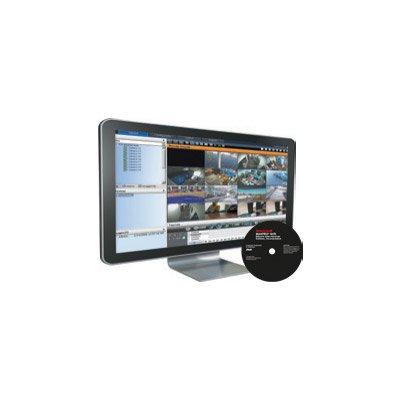

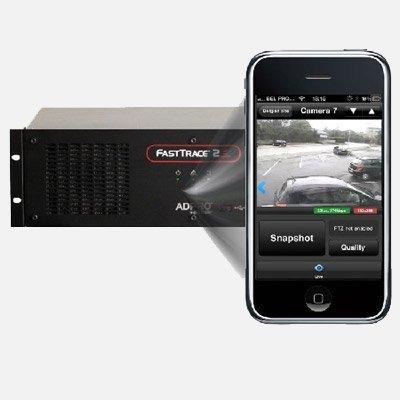
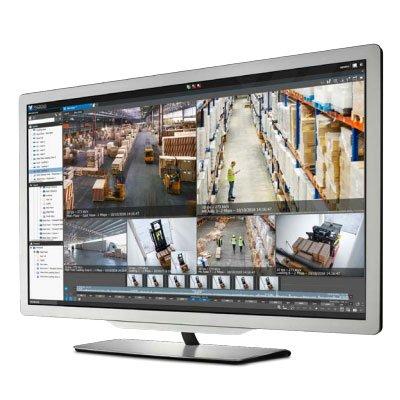
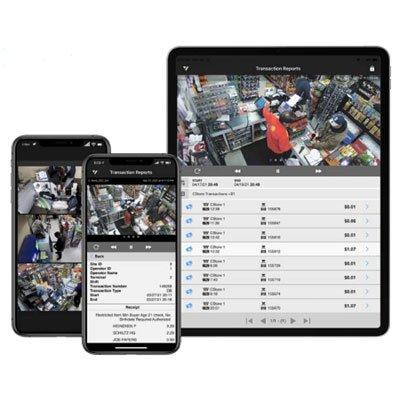
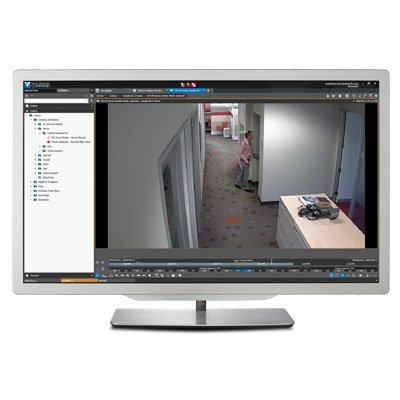
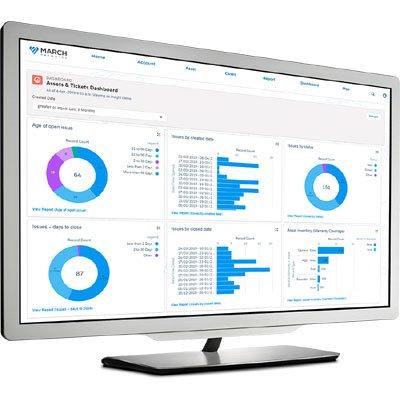

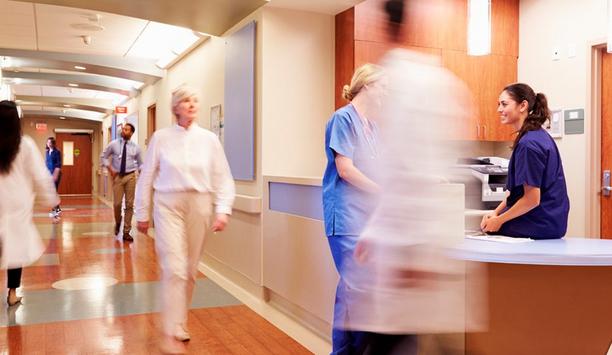

Videos


Mobile surveillance: Manufacturers & Suppliers

Technology's role in securing banks and financial institutions
Download
Security technologies promote real-time awareness in K-12 schools
Download
Integrated systems enable critical and compliant security for transportation
Download
Modernising physical access control
Download
Access. Intrusion. One estate.
Download