IP video surveillance - Round table discussions

Cost is a reality to be managed. No matter how powerful or desirable a technology may be to a customer, the sale often comes down to the basic question: Can I afford it? And affordability extends not just to the purchase price, but to the cost of technology over its lifespan. In addition to advances in technology capabilities, the security industry has also achieved inroads to make its offerings more worth the cost. We asked this week’s Expert Panel Roundtable: What is the physical securi...

Crime prevention is a basic goal of security, even if a security system merely convinces a criminal to seek out a different target. However, many of today’s security technologies are most useful after the fact, to provide forensic information about a crime that has already taken place. Solving a crime presents a whole new level of challenge. Surely, prevention is the best approach. We asked this week’s Expert Panel Roundtable: How successful is the security industry in crime preventi...

Adoption of General Data Protection Regulation (GDPR) by the European Union in 2016 set a new standard for data privacy. But adherence to GDPR is only one element, among many privacy concerns sweeping the global security community and leaving almost no product category untouched, from access control to video to biometrics. Because privacy concerns are more prevalent than ever, we asked this week’s Expert Panel Roundtable: What is the impact on the physical security market?

Many of us take critical infrastructure for granted in our everyday lives. We turn on a tap, flip a switch, push a button, and water, light, and heat are all readily available. But it is important to remember that computerised systems manage critical infrastructure facilities, making them vulnerable to cyber-attacks. The recent ransomware attack on the Colonial Pipeline is an example of the new types of threats. In addition, any number of physical attacks is also possibilities. We asked this we...

Perimeter security is the first line of defence against intruders entering a business or premises. Traditionally associated with low-tech options such as fencing, the field of perimeter security has expanded in recent years and now encompasses a range of high-tech options. We asked this week’s Expert Panel Roundtable: What are the latest trends in perimeter security technology?

In the past few weeks, the light at the end of the COVID-19 tunnel has brightened, providing new levels of hope that the worst of the pandemic is behind us. Dare we now consider what life will be like after the pandemic is over? Considering the possible impact on our industry, we asked this week’s Expert Panel Roundtable: Which security technologies will be most useful in a post-pandemic world?

Contact tracing has been more than a buzzword during the coronavirus pandemic. In some cases, it has been an issue of life and death. Tracking who an infected person has been in contact with is an important tool to minimise disease spread, and technology from the physical security industry claimed a role in contact tracing early on – and continues to provide benefits as companies seek to reopen. We asked this week’s Expert Panel Roundtable: How can the security industry enhance conta...

When technology performs a required task effectively, there is little reason to upgrade to the ‘next big thing’. In this regard, the physical security market is notoriously slow to change. Much of yesterday’s most robust and dependable equipment is still in place at thousands of customer sites, still performing as well as the day it was installed. However, there comes a point when any technology becomes outdated. We asked this week’s Expert Panel Roundtable: Which securi...

Artificial intelligence (AI) and machine learning have made a big splash in the physical security market, transforming video analytics to a new level of accuracy. In fact, the terms have become common buzzwords throughout the industry. However, the potential for AI and machine learning to impact the physical security industry goes far beyond their ability to improve video analytics. We asked this week’s Expert Panel Roundtable: Beyond better video analytics, how can artificial intelligence...
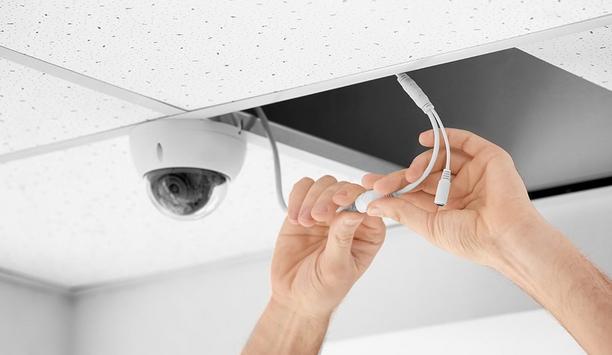
Retrofit projects provide new levels of physical security modernisation to existing facilities. However, retrofits come with their own set of challenges that can frustrate system designers and defy the efforts of equipment manufacturers. We asked this week’s Expert Panel Roundtable: What are the biggest challenges of retrofit projects, and how can they be overcome?

Securing large campus environments can be particularly demanding and requires a range of technology solutions. In effect, a campus may represent a dozen or more individual facilities to be secured, in addition to protecting the overall environment. Seeking more insight into the number and variety of needs of securing a campus, we asked this week’s Expert Panel Roundtable: What are the security challenges of protecting large campus environments?
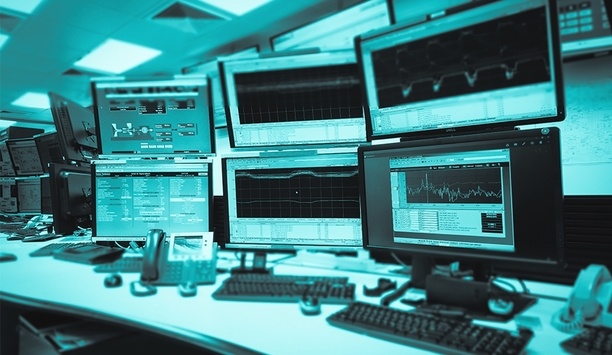
Along with the integration of security and other systems in an enterprise environment comes a need to centralise monitoring and control of the unified network. A control room is at the center of managing integrated systems, providing the focal point to collect information from a variety of sensors, analyse the data, and then respond appropriately. The technologies that drive these functions are changing and evolving, thus increasing the efficiency and efficacy of systems. We asked this week&rsqu...

While unpacking our bags from a trade show, it is interesting to consider the dominant themes and trends we heard and saw at the show. So it is with the recently concluded Global Security Exchange (GSX) show in Chicago, presented by ASIS International. Amid all the product promotion, training sessions, networking and tired feet at the show, what really stood out? We asked this week’s Expert Panel Roundtable: What was the big news at the GSX 2019 trade show in Chicago?

The new school year is a good time to reflect on the role of security in protecting our schools. From video to access control to some newer technologies, our Expert Panel Roundtable found plenty to talk about when we asked this week’s question: How does security technology make our schools safer?

Passwords are one of the most familiar elements of information systems, but also one that can be overlooked or underutilised. New alternatives are emerging, and the role of passwords is evolving in the age of the Internet of Things. We asked this week’s Expert Panel Roundtable: How is the role of passwords changing in physical security systems?

One impact of Chinese companies entering the physical security market has been an erosion in product pricing, creating what has been called the "race to the bottom". However, political forces and cybersecurity concerns have presented new challenges for Chinese companies. Adding cybersecurity increases costs, and the addition of more functionality to edge devices is another trend that has impacted product pricing. We asked this week's Expert Panel Roundtable: Has price erosion ended (or slowed do...

When it comes to security and to ensuring the integrity of gaming operations, today’s casino market is risk-averse. Regulations direct the required surveillance of table games and slot machines, while modern casinos are often sprawling complexes that have a variety of other risks to be addressed, too. We asked this week’s Expert Panel Roundtable: What are the challenges of the casino market relating to security and surveillance technology?

In the simplest terms, video systems capture and record video. But supporting these basic operations are a growing number of other functions that expand usefulness and the ability to interact with related elements in a larger system. As video system functionality expands, we asked this week’s Expert Panel Roundtable: What is the most important function of a CCTV system and why?

There is no expectation of privacy in a public space. That’s the premise on which most video surveillance applications are justified. But new concerns about privacy, specifically the General Data Protection Regulation (GDPR) in Europe, are changing expectations. And what if a camera must be positioned where a private area happens to be within its range? Fortunately, there are technology approaches to solving these dilemmas, as our Expert Panellists explain. We asked: What new technologies...

Even the most advanced and sophisticated security systems are limited in their effectiveness by a factor that is common to all systems – the human factor. How effectively integrators install systems and how productively users interface with their systems both depend largely on how well individual people are trained. We asked this week’s Expert Panel Roundtable: What is the changing role of training in the security and video surveillance market?

The physical security industry is embracing the cloud in a big way. Cloud-based systems – which involve accessing a shared pool of information technology resources via the Internet – are much higher-profile in the video and access control markets, and large and small companies are getting on the cloud bandwagon. We asked this week's Expert Panel Roundtable: What factors are contributing to growth in cloud systems in the security market?

The beginning of the school year and upcoming seasonal changes remind us that demand for security systems, like almost everything else, is seasonal to some extent. Making improvements to educational facilities during the summer months – including installation of security systems – is the most obvious example of seasonal demand, but there are others. We asked this week’s Expert Panel Roundtable: Which vertical markets for security are impacted by seasonal changes in demand?

By definition, an edge device is an entry point to a network. In the physical security industry, edge devices are the cameras, sensors, access controllers, readers and other equipment that provide information to the IP networks that drive today’s systems. In the Internet of Things (IoT), edge computing refers to an increasing role of edge devices to process data where it is created instead of sending it across a network to a data center or the cloud. In our market, edge computing takes the...

In the analogue era, videotape was the storage media of choice for CCTV systems. Since the advent of digital video, and of IP-based systems, a variety of other storage formats have come to the fore, including hard drives, flash drives, SD cards and others. Now we are in the age of the cloud, which offers new opportunities to store vast amounts of video and presents challenges such as bandwidth and cybersecurity. For a current perspective on storage, we asked this week's Expert Panel Roundtable:...

Enterprise customers provide a large, and very lucrative, business opportunity for the physical security market. These customers include big global companies with plenty of revenue to spend and employees and facilities to protect. As a group, enterprise customers also tend to be a demanding lot, requiring systems that are large, scalable, that can operate across a wide geographic area, and that provide top-notch system performance. Enterprise customers set the standards of performance for the en...

The new year presents new opportunities for the physical security marketplace. In many ways, 2018 will undoubtedly see further development of trends we saw in 2017. In fact, some of the trends determining the future of the physical security industry have been in place for many years. However, not every event in 2018 can be foreseen or easily predicted. To be sure, it is sometimes the surprises that keep life interesting! We asked this week Expert Panel Roundtable: What will be the security marke...

In recent years, information technology (IT) departments at end user companies have often been seen as adversaries of traditional security departments – or, at least, as a thorn in their side. One of the issues is territorial: As physical security products have migrated to use of Internet protocols and the network infrastructure, the IT and security departments have clashed – erm… make that interacted – more and more often. New realities such as cybersecurity have made i...

Industry standards make it possible for systems and technologies to connect and work together. Standards enable today’s integrated systems. But does adherence to standards stifle innovation? Does the necessity to interface using an industry-wide standard slow down the implementation of newer (and possibly not standards-compliant) capabilities? Or do standards eliminate extraneous variables, empower more integration and encourage greater innovation? We asked this week’s Expert Panel R...

Remarkable changes are happening in the video camera market for surveillance applications, including the emergence of lower-priced products that offer features that previously were only available at a much higher price point. Deflating prices of cameras are sometimes referred to as a “race to the bottom” – foreshadowing a market of low-cost cameras that all provide similar features. We asked this week’s Expert Panel Roundtable to comment on camera pricing trends and how c...

IP network dependability matters in physical security and safety applications, given that a company’s assets and people are at risk. There have been strides in the areas of network dependability, fault-tolerance, reliability, and survivability. However, networks (or affordable ones, at any rate) still cannot ensure near-100 percent uptime, which is why system designers acknowledge and plan for the possibility of a network outage. We asked this week’s Expert Panel Roundtable: How can/...

Security technologies promote real-time awareness in K-12 schools
Download
Technology's role in securing banks and financial institutions
Download
Integrated systems enable critical and compliant security for transportation
Download
Modernising physical access control
Download
Access. Intrusion. One estate.
Download
