Drones

Excelerate Technology Awarded a Co-funded ESA Contract to Deliver Advanced Robotic Security Solution for UK National Infrastructure Excelerate Technology has been awarded a co-funded contract by the European Space Agency Business Applications and Space Solutions (ESA BASS) program to build and demonstrate an innovative, automated robotic response system for perimeter security at a critical UK national infrastructure site. Critical national infrastructure Co-funded by ESA BASS and supported by...

As millions of people jet off for their summer holidays or make their way home, airports are under increased scrutiny. For many, their eagerly awaited trip begins and ends in the airport. Meeting passenger expectations with a seamless and secure journey from check-in to boarding is critical at a time when passenger numbers are rising, with almost 1.1 billion air passengers travelling through EU airports in 2025, an increase of 4.8% year-on-year. Increased complexity ahead But there are headwi...

Observation Without Limits (O.W.L.), a U.S.-based manufacturer of 2D and 3D radars for ground and low-altitude airspace surveillance applications, is proud to announce it will exhibit at the 2026 Global Security Exchange (GSX), taking place Sept. 14-16 at the Georgia World Congress Center in Atlanta, booth 3550. “During GSX 2026, O.W.L. will focus on the importance of effective, less costly drone and perimeter detection solutions for airports, data centers, utilities, water treatment plan...

ZBeta, a pioneer in delivering comprehensive physical security consulting services, unveils a new Drones and Robotics Consulting Practice designed to help organisations understand, evaluate and prepare for the rapidly expanding role of autonomous and unmanned technologies in physical security. Drones and robotics are changing the security landscape from two directions. Organisations face growing risks from unauthorised drones, including surveillance, espionage, disruption, and threats to critic...

Cyber threats are evolving at a pace that bewilder even seasoned security analysts. Attackers used to be easy to detect; with their reliance on phishing emails riddled with spelling mistakes or predictable malware signatures. Today’s threat actors are harnessing artificial intelligence to automate reconnaissance, generate convincing social engineering campaigns, evade detection, and adapt their attacks in real time. Against this backdrop, many traditional Security Operations Centre, or SOC...

IDS Imaging Development Systems will showcase new camera platforms, technologies and innovation projects for industrial image processing at VISION 2026 (Messe Stuttgart, 6–8 October) at booth 8C60. Under the theme “Trends. Innovations. Future.”, IDS will showcase uEye camera platforms, event-based imaging, 3D vision systems, and AI and embedded vision technologies. “Computer vision must do more today than just reliably capture images. It is crucial how quickly and easily...
News

Observation Without Limits (O.W.L.), a U.S.-based manufacturer of 2D and 3D radars for ground and low-altitude airspace surveillance applications, is proud to announce its upgraded GroundAware® GA1360LH 2D 360-degree digital multi-beamforming radar system. Now available, the customisable GA1360LH target classification distinguishes among humans, animals, and ground and water vehicles for alarming on targets of concern within and around critical sites. “Our original GA1360 radar was designed to function as the wide-area perimeter intrusion detection sensor that helped meet NERC CIP-014 requirements for transmission substations,” said Adam Robinett, O.W.L. CEO. “The GA1360 quickly became our workhorse ground surveillance radar that serves as the foundation for event-based layered security at all kinds of critical infrastructure sites. Now, our GA1360LH provides longer detection ranges and improved target tracking for automated detection, tracking, deterrence, and response to intrusions within a 1 km radius of critical sites.” Physical security requirements Added Robinett, “That’s coverage for up to 750 acres or 300 hectares by a single radar, meaning more coverage with fewer sensors and less costly infrastructure than required by other sensors. This means attractive total cost of ownership at a time when constrained budgets are dealing with ever-growing physical security requirements.” Designed for ground and water surface applications, the GA1360LH is a powerful solution for protecting a range of critical sites, including electrical transmission substations, power plants, natural gas compression stations, dams, water reservoirs, water treatment facilities, midstream oil and gas facilities, airports, seaports, rail facilities, mines, large-scale manufacturing plants, data centres, storage facilities (such as large automobile distribution centers), and campuses of other critical sites with open perimeters and areas of concern. Automatic response triggers Additional GA1360LH features and specifications include: Digital beamforming radar technology for highly reliable all-weather detection and tracking of all target types 1 km+ detection ranges on ground and water vehicles, 600 m range on humans Seamless integration with ONVIF cameras, video management systems (Genetec, Milestone, Avigilon, and many others), access control systems, physical security information management systems, audible alarms, security lights, drones, and more Customisable alarm zones with automatic response triggers Solid state system with no moving parts Full hardware warranty and software maintenance/support coverage Processing Type: Pulsed Doppler Frequency Band: S (3.0 GHz – 3.3 GHz) Azimuth FOV: 360 degree Elevation FOV: 40 degree Operating Temperature: –20 degree C to +60 degree C (–4 degree F to +140 degree F)

IDS Imaging Development Systems will showcase new camera platforms, technologies, and innovation projects for industrial image processing at VISION 2026 (Messe Stuttgart, October 6 to 8) at booth 8C60. Under the theme “Trends. Innovations. Future,” the trade fair appearance includes uEye camera platforms, event-based image processing, 3D vision systems, as well as AI and embedded vision technologies. “Computer vision must do more today than just reliably capture images. What is crucial is how quickly and easily image processing moves from an idea to a concrete application – and how well cameras, software, and AI functions can be integrated into existing systems. This is exactly what we align our product strategy with: IDS offers industrial cameras and computer vision components that users can flexibly combine into their own solutions. Instead of turnkey systems, we focus on modular hardware and software with high quality, long-term availability, technological standards, and comprehensive support – right up to customer-specific customisations. Being close to customers and partners is essential: Requirements from real-world applications feed directly into our development process, helping to improve existing products, expand our portfolio, and bring innovations to industrial applications more quickly. At VISION 2026, we will demonstrate how IDS continues to advance machine vision, from traditional industrial cameras to computer vision components with integrated AI,” explains Jan Hartmann, Managing Partner at IDS. Event-based imaging IDS Imaging Development Systems has been developing industrial cameras and computer vision components for industrial and non-industrial applications for almost 30 years. The focus of this year's trade fair presence is on new uEye vision camera platforms, which serve as the technological basis for upcoming 2D industrial camera series. They are designed for higher performance, simple integration, and long-term availability. Another focus area is event-based imaging. Together with Prophesee, IDS provides insight into further developments in the field of event-based cameras. The technology is particularly suitable for highly dynamic applications such as drones, AGVs, and autonomous systems, for example for object recognition, tracking, or safe navigation. Synchronised image acquisition In the field of 3D vision, the company is presenting news regarding the 3D ToF camera Nion, including a new RGB set for synchronised image acquisition that merges colour and depth data. In addition, IDS will showcase a new version of the Ensenso N Series active stereo vision system for precise and robust 3D data acquisition in robotics, bin picking, and metrology. AI cameras and embedded vision systems are also part of the technology roadmap. IDS is expanding the uEye Live series of monitoring cameras with streaming and recording capabilities to include AI-enabled models, enabling AI-powered image processing on-the-edge. High-performance neural networks from our partner DENKweit perform tasks such as fast object and position detection, precise parcel handling and efficient code reading. Intelligent embedded vision processes As a key innovation project, IDS is presenting the “GMSL Multi-Camera Vision System.” It demonstrates how intelligent embedded vision processes and combines images from multiple cameras with integrated ISPs and SoCs directly within the system, before transmitting the resulting data via a single GMSL cable. This reduces latency and data load in favour of a reliable basis for their own projects with distributed GMSL cameras, especially in mobile applications. Another project demonstrates active focus control fully integrated into the camera, where control and feedback occur directly via the software. The robust hardware is suitable for demanding applications in logistics, autonomous systems, and retail. Image processing challenges For vegetation analysis, IDS is showing an NDVI camera that combines multispectral imaging with high-resolution colour imaging. It makes the health status of plants visible and provides reliable NDVI (Normalised Difference Vegetation Index) values, with which planning and resource allocation in agriculture can be specifically improved. At the VISION Makeathon 2026, tangible prototypes are created from ideas: Interdisciplinary teams develop practical solutions for current image processing challenges within one day. IDS contributes as a project company with its own challenge, technology, and expert know-how. VISION, the trade fair for image processing, will take place October 6–8 at Messe Stuttgart.

ZeroEyes, creators of the pioneering multi-analytics weapons detection and threat intelligence platform, announces a planned $10 million U.S. investment in AI/ML research and development. This includes a commitment to hiring over 100 veterans in Southeastern Pennsylvania over the next 24 months to fill the roles of Technical Program Managers (AI), MLOps Engineers, and AI Solutions Specialists. The company made the announcement at Senator Dave McCormick’s 2026 Pennsylvania Defense and Innovation Summit, being held today and tomorrow at Army War College in Carlisle, Pennsylvania. AI weapons detection The investment will fund additional expansion, including: The company's state-of-the-art, 3,000 sq. ft. experimental AI technology lab that gives ZeroEyes the ability to generate unparalleled data, perform live demos, and test its AI weapons detection models and hardware in any environment The Conshohocken-based ZeroEyes Operations Center (ZOC), the industry's only in-house operations hub staffed primarily by military and law enforcement veterans, including former special forces personnel Small drone technology capabilities, including 3D environment mapping, threat detection (ZeroEyes Aerial Detection [ZAD] Kit), and active shooter disorientation (Drones/Robots for Active Shooter Deterrence [DRASD]) Comprehensive security platform Over the past few months, ZeroEyes has expanded its platform beyond firearm detection to deliver a broader, more intelligent approach to safety. New analytics capabilities including knife detection and real-time threat geolocation, as well as additional security offerings, mark a significant step toward unifying acute threat detection with everyday safety operations. The new capabilities reflect ZeroEyes’ goal to become a single, trusted platform organisations will use to secure, detect, and respond to a wide range of critical security events. These continued investments showcase the company's commitment to further developing a comprehensive security platform that integrates preparedness, operational awareness, and investigative insights. “This investment marks a critical milestone in our evolution into a unified threat intelligence platform that provides organisations with a single, trusted ecosystem for threat response," said Mike Lahiff, CEO and co-founder of ZeroEyes. "We are excited to accelerate our technology roadmap while deepening our commitment to the veteran community within our home of Southeastern Pennsylvania.”

Detection Technology, a pioneer in X-ray detector solutions, addresses increasing inspection and quality assurance requirements in the defence industry with its proven and expanded X-Panel XL series of extra-large X-ray flat panel detectors. The series combines large-area imaging, high-speed acquisition, and high-energy imaging performance to support efficient inspection of defence systems and critical components in demanding production environments. Safety-critical assemblies Demand for non-destructive testing (NDT) is increasing as manufacturers scale production of defence systems and components, including drones, missiles, ammunition, aircraft structures, propulsion systems, turbine blades, and other safety-critical assemblies. The X-Panel XL series addresses these requirements with large-area imaging, high frame rates, and single-glass a-Si TFT technology that support efficient inspection workflows and increased system throughput. "Across the defence industry, production volumes are increasing while quality requirements remain uncompromising. Manufacturers are looking for inspection solutions that can scale with production without sacrificing reliability," said Juha Talasmäki, Vice President, Business Development at Detection Technology. Scanning of multiple objects "Historically, 100% quality assurance has often been time-consuming due to inspection throughput limitations. Advances in X-ray imaging now enable efficient inspection of significantly larger volumes of critical components. For example, five 155 mm artillery shells can be seamlessly inspected in a single scan." The throughput benefits of large-area detector technology have also been demonstrated in collaboration with the German Fraunhofer IIS, one of the world’s pioneer applied research organizations. Fraunhofer's PolyCT technology enables simultaneous scanning of multiple objects, while Detection Technology's X-Panel 43108a provides the large imaging area required for efficient multi-object CT acquisition. Industrial computed tomography Michael Salamon, Group Manager, High-Energy X-ray Systems, Fraunhofer IIS, commented: "We placed our PolyCT rotation stage in front of DT’s X-Panel 43108a detector to scan five objects simultaneously. We achieved excellent CT results in the shortest possible time while maximizing the throughput of our high-energy CT system. Combined with downstream automated evaluation routines, this is a real game-changer for industrial CT." The X-Panel XL series includes the X-Panel 43108a and the recently launched X-Panel 4386a detector solutions. Depending on configuration, the detectors support X-ray tube applications up to 750 kVp and linear accelerator applications up to 16 MV. Combined with high-speed 10G Ethernet connectivity, multiple scintillator options, and frame rates of up to 90 fps, the series supports demanding industrial computed tomography (CT) and digital radiography (DR) applications where throughput, image quality, and reliability are critical. Efficient system integration The X-Panel XL series complies with applicable international industry, safety, and environmental standards, supporting efficient system integration and certification processes. EU-origin deliveries of the X-Panel XL series are planned to begin during the second half of 2026. Detection Technology is showcasing the X-Panel XL series and Fraunhofer IIS's PolyCT system concept at ECNDT 2026, the European Conference on Non-Destructive Testing, taking place in Verona, Italy, on 15–19 June 2026. Visitors can meet Detection Technology at stand 140–141.

Blackline Safety Corp., a global pioneer in connected safety technology, has announced its partnership with MFE Inspection Solutions to integrate Blackline’s cloud-connected portable detector with Boston Dynamics' Spot®, the world’s pioneer mobile industrial robot. The solution extends connected gas detection into robotic workflows, instantly delivering gas readings, alerts and location data to remote monitoring teams, before sending personnel into potentially dangerous areas. Industrial gas monitoring “Gas detection is critical for safety. And teams are no longer limited to collecting that data only when a person enters the area,” said Dylan Duke, CEO of MFE Inspection Solutions. “Robots like Spot are already being used to collect inspection data remotely in hazardous environments. This solution adds real-time gas detection to those workflows, giving operators insight into gas hazards before deciding how and when to send people in.” Industrial gas monitoring has traditionally relied on personal monitors worn by workers. Connected gas detection provides a new model, giving teams access to gas data from multiple sources—personal monitors, area monitors, and remote systems like robots or drones—with live, detailed views of atmospheric conditions that help organisations make faster decisions. The MFE Spot Connected Gas Detection Solution provides a crucial piece of the connected worker puzzle, allowing teams to monitor gas conditions remotely without endangering personnel. Real-time awareness “This is about connecting technologies customers are already using and making them more useful together,” said Christine Gillies, Chief Product and Marketing Officer, Blackline Safety. “MFE has built the digital plumbing to connect Spot with Blackline’s connected gas detection platform, adding another layer to worker protection while giving organisations critical exposure data as it happens, not after the fact like with traditional monitors, so they can make informed decisions in the moment.” The solution lets operators view gas readings and alerts in Blackline Safety’s Blackline Live software, directly on the Spot tablet during operation, providing real-time awareness in the field. It also triggers automated return-to-home actions when defined gas thresholds—such as rising LEL—are detected, helping teams move Spot out of hazardous conditions and protect site personnel. Cartridge-based sensors Teams can use a wide range of hot-swappable, configurable, cartridge-based sensors that can be tailored to different environments and applications: Oil and gas operators can use it to monitor combustible gases like methane or LEL conditions Semiconductor facilities can use it to detect gases like ammonia Chemical processing plants can use it to monitor for toxic gases like hydrogen sulfide (H₂S), carbon monoxide (CO), or sulfur dioxide (SO₂) Robotic gas detection "Spot's thermal, acoustic, and visual inspection abilities provide AI-powered predictive insights into facility health,” said Merry Frayne, Senior Director of Product at Boston Dynamics. “Integrating the Blackline Safety portable device gives process manufacturers an even more complete picture of their site while keeping people out of harm's way." MFE supports deployment of the MFE Spot Connected Gas Detection Solution with Blackline Safety. by helping customers determine where robotic gas detection fits within their existing safety and inspection workflows. The team works with operators to evaluate site needs, configure the right gas detection setup, train personnel, support implementation, and remain engaged after deployment so the system is used effectively in real field conditions.

Netline Communications Technologies, a developer and manufacturer of high-end electronic warfare and tactical spectrum dominance systems for defence forces and homeland security agencies, introduces SonicScan, a passive acoustic detection system designed to provide an additional detection layer for unmanned aerial threats. As part of its strategy to expand its operational suite, Netline is stepping beyond the RF spectrum domain for the first time, introducing a complementary passive detection technology. Passive detection technology Already operationally deployed, SonicScan detects aerial threats by analysing their unique acoustic signatures. The system identifies a wide range of drone types based on user-defined needs. By operating independently of RF signals, it enables detection of drones controlled not only via radio frequency, but also through alternative means such as fiber-optic links or autonomous flight. Operating passively, SonicScan requires no transmissions, enabling continuous monitoring without exposing its position. “The SonicScan has proven to be an effective detection solution for fiber-optic controlled FPV drones in challenging battlefield environments, enabling timely defensive and mitigation actions,” said Mr. Shai Palti, Netline's CEO. Improving detection accuracy Powered by advanced AI-driven signal processing, SonicScan continuously analyses the acoustic environment, improving detection accuracy and distinguishing drone signatures from background noise while reducing false positives. The system adapts and is calibrated for optimal performance across environments. Designed for flexible deployment, SonicScan is integrated with tracking and command & control systems. Equipped with Direction Finding (DF) capabilities, the system provides precise bearing to detected drones for continuous tracking. When deployed across multiple locations, it enables threat geolocation and clear visualisation on a map. Its architecture allows users to expand coverage and enhance detection capabilities, supporting full 360-degree coverage of the operational area. This flexibility supports military bases, border protection missions, critical infrastructure sites, and other sensitive environments.

Expert commentary

It is the time of year when city centres transform, as outdoor Christmas markets fill town squares and high streets. An estimated 6,000 markets will open across Europe during the festive season, with some of the largest — including Nuremberg’s Christkindlesmarkt, London’s Hyde Park Winter Wonderland and Craiova in Romania — welcoming millions of visitors. Sadly, these popular events have in recent years been the subject of attacks, most notably Berlin in 2016 and the tragedy in Magdeburg last December, where a vehicle was driven into the crowd. Incidents such as these have encouraged governments, including the UK with the introduction of Martyn’s Law, to strengthen planning and preparation for large-scale public events. Digital twins: A new standard for event preparation Drone-based photogrammetry captures streets, squares and surrounding buildings with exceptional detail One of the most effective tools for preparing and safeguarding public spaces today is the creation of a photorealistic digital twin — a highly accurate 3D virtual model of the intended market area. Drone-based photogrammetry captures streets, squares and surrounding buildings with exceptional detail, enabling planners to work within a realistic and immersive environment long before any physical structures are installed. Digital twin design tools can ingest these datasets and visualise them using advanced technologies, creating a lifelike representation of even the most complex outdoor scenes. Designing the market in 3D before construction begins Once the digital twin is created, event organisers, city authorities and security specialists can begin shaping the market virtually. Temporary stalls, lighting installations, stages, decorative structures, back-office units, Christmas trees, ice rinks and other festive features can be positioned directly within the digital model. It‘s also possible to place static representations of people or larger groups to approximate crowd density and understand how occupied space will influence visibility, accessibility and the overall perception of the environment. This ability to design and refine the market layout before construction allows planners to test multiple variations, understand how structures interact and ensure that the environment remains safe and manageable throughout the event. Virtual camera planning, coverage assessment and analysis Digital twins also provide a robust foundation for planning the deployment of visual-monitoring systems Digital twins also provide a robust foundation for planning the deployment of visual-monitoring systems. Cameras can be placed directly into the 3D environment, allowing planners to immediately see how temporary structures, decorations or pedestrian flows will influence the field of view. Blind spots become apparent, alternative camera heights or angles can be explored and strategic decisions about additional mounting points or temporary towers can be made with confidence. For each planned camera, the expected resolution per metre or per foot is visualised directly inside the digital twin. Instead of relying on theoretical charts or static design tables, planners can instantly see whether a particular camera position will deliver the clarity required for the intended purpose, whether it is early detection of movement, recognition of behaviour patterns or full identification of individuals. Real-time visual feedback This real-time visual feedback makes the entire planning process more precise, transparent and efficient. These evaluations can be carried out within the realistic daytime environment captured by the digital twin. Planners can also prepare alternative scene variants — for example, dedicated night-time versions or layouts reflecting festive lighting — to understand how visibility and coverage may change throughout the event. Even without full weather simulation, this approach allows teams to anticipate typical operational challenges and refine the monitoring concept well before the first stall is erected. Testing safety and security scenarios Perhaps the greatest advantage of working with a digital twin is the ability to explore the environment from multiple perspectives before the event begins. Although the scene itself is static, planners can move through it using a virtual intruder to understand how the market will appear from ground level and to identify potential vulnerabilities that may not be obvious from a top-down view. This makes it possible to assess where hostile-vehicle barriers should be positioned, how narrow passages might feel when occupied, or where visibility may be reduced due to temporary structures or decorations. The static digital twin also provides a clear way to evaluate emergency access lanes, determine suitable locations for help points or medical posts and plan the general layout of security patrol routes. By navigating the scene freely and observing it from different perspectives, teams can refine the design and address potential blind spots long before construction begins. A unified environment with LiDAR The created digital twin also becomes the primary visualisation environment for LiDAR during live operations Beyond planning, the created digital twin also becomes the primary visualisation environment for LiDAR during live operations. Operators can interact with this 3D map directly and with a single click on any location, all PTZ cameras capable of viewing that point automatically reposition to it. This provides an unmatched navigation interface for real-time camera control, making situational awareness significantly faster and more intuitive. LiDAR then works seamlessly with a video management system, which controls all camera streams, recordings and video evidence, creating a tightly integrated monitoring workflow. Supporting real-world operations Once the market opens, the digital twin continues to serve as a valuable operational resource. If layouts change during the event — for example, because of additional attractions, adjusted walkways or altered security checkpoints — these modifications can be quickly modelled and evaluated before implementation. When the festive season concludes, the same model can be repurposed for future events, long-term city planning or other public-space deployments. A safer and smarter festive season Christmas markets are vibrant, high-profile and densely populated environments, making them attractive targets for those seeking to cause disruption. By combining detailed photogrammetry, advanced 3D visualisation, and rigorous spatial evaluation, cities can create safer, better-prepared, and more resilient festive settings. With tools such as digital twins and LiDAR, authorities can plan more effectively, anticipate risks earlier and ensure that every stall, pathway and vantage point contributes to a joyful — and secure — holiday season.

The global maritime surveillance market is projected to grow from $21.9 billion in 2023 to $ 42.7 billion by 2033. This growth is being driven by increasing global trade, maritime security concerns, and the adoption of advanced surveillance technologies such as radars, drones, and satellite monitoring systems. Moreover, the global shipping industry is now on the frontlines of a new kind of conflict — one defined by economic coercion, shadow fleets, and contested logistics – a durable competition where adversaries seek control and influence over global supply chains. As tariff regimes expand and national security policies increasingly target commercial vessels, maritime operators are being forced to navigate a risk environment shaped more by geopolitics than wind and weather. Infrastructure of global trade Trade disruptions are no longer accidental by products of diplomacy — they are deliberate policy levers. Tariff escalation between the U.S. and China, sanctions on Russian oil, and Houthi attacks in the Red Sea are not isolated threats; they signal a new normal in which governments treat the shipping industry as a tactical asset. From China's military-civil fusion shipbuilding policies to LOGINK, its state-run maritime surveillance network, the very infrastructure of global trade is becoming entangled in nation-state agendas. Contested logistics: Struggle for global economic stability The current maritime threat landscape involving contested logistics contains strategic positioning The current maritime threat landscape involving contested logistics encompasses strategic positioning across critical chokepoints and infrastructure. The statistics are sobering: major shipping companies reported traffic through the Suez Canal dropped by 66% as of September 2024 due to Houthi attacks, with J.P. Morgan estimating shipping costs have surged significantly, particularly from Asia to Europe, nearly five-fold. Regional maritime security issues These developments illustrate how foundational industries, such as shipbuilding, semiconductors, and rare earth minerals, have become battlegrounds in a broader geopolitical struggle where a cascade of effects have the potential to destroy economies. For example, a military blockade of Taiwan — where Taiwan Semiconductor Manufacturing Corporation operates — would impact every company dependent on advanced semiconductors. This interconnectedness means that what may, on the surface, appear to be regional maritime security issues, can be much more — the potential for global economic disruption across multiple industries. Monitoring of Arctic fleet movements Shadow fleets operated by sanctioned states rely on tactics such as false flagging, frequent ownership changes New threat vectors are coming into focus as the seas expand. As the polar ice caps melt, new Arctic shipping lanes are opening, with a large portion of traffic driven by Russian vessels. These routes present unique surveillance challenges due to their remote nature and the limited presence of traditional maritime enforcement bodies. Monitoring of Arctic fleet movements and infrastructure developments is essential for maintaining security in this emerging corridor. Concerns about dual-use capabilities and strategic readiness Shadow fleets, illicit networks, and military-grade commercial vessels represent real risks, posing challenges in the areas of regulatory compliance, insurance viability, and operational safety. Shadow fleets operated by sanctioned states rely on tactics such as false flagging, frequent ownership changes, and manipulations of the Automatic Identification System (AIS). By turning off transponders, spoofing locations, or falsifying data, these vessels can effectively vanish from traditional tracking systems. This disappearance makes ships harder for authorities to trace and easier for adversaries to exploit for sanctions evasions and/or covert logistics. China's commercial fleets increasingly mirror military standards, raising concerns about dual-use capabilities and strategic readiness under the guise of trade. The need for a new risk framework To navigate this new threat landscape on the high seas, organisations must adopt a new kind of visibility For logistics and shipping pioneers, these implications are profound. This is no longer about simply avoiding sanctioned cargo — it's about forecasting how governments will act and how quickly those actions can alter operations. Vessels may be commandeered, sanctioned, or rerouted without warning. Insurance may evaporate. Contracts may become liabilities. To navigate this new threat landscape on the high seas, organisations must adopt a new kind of visibility — one that models the cascading effects of tariffs, military requisition policies, and enforcement shifts. This is where Open-Source Intelligence (OSINT) becomes indispensable. Real-time context on geopolitical risks OSINT draws from publicly available data -- including satellite imagery, port registries, and social media — to provide real-time context on geopolitical risks. It can be used to track vessel flagging and ownership changes, monitor transshipment hubs, and surface anomalies in crew rosters and employment histories — indicators often tied to sanctions evasion or illicit activity. AIS anomaly detection reveals when ships "go dark." Satellite imagery exposes vessels operating without transponders. Tracking shifts in vessels' flagging or changes in crew manifests can signal risk before it hits operations. Early indicators of disruption OSINT supports risk modelling by revealing trends like flag-of-convenience usage, secondary insurance For insurers and regulators, OSINT supports risk modelling by revealing trends such as flag-of-convenience usage, secondary insurance underwriting in high-risk zones, and affiliations with known bad actors. OSINT doesn't just enhance compliance — it enables foresight, empowering industry players to anticipate when and where governments will act. Now, tariff announcements, sanction designations, and strategic military exercises are not isolated datapoints — they're potentially early indicators of disruption. Maritime situational awareness is a business imperative The age of separating business risk from political risk is over. Global shipping is now a domain of contested logistics where the rules can change as fast as a sanctions update or new enforcement directive. Companies that integrate OSINT into their operational planning gain the ability to model and mitigate threats proactively. Those that don't may find themselves caught in the wake of potential financial, operational, and reputational harm. The shipping industry needs access to the same kind of threat modelling governments use to act. In an era of growing complexity, the role of OSINT in securing global shipping networks cannot be overstated.
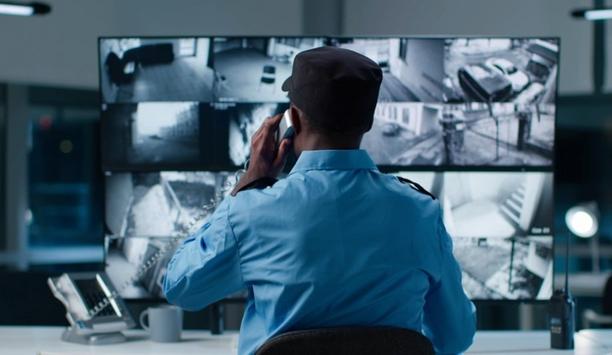
As city managers, law enforcement agencies, and first responders face mounting pressure to combat crime and respond to emergencies with limited resources, real-time crime centres empowered by a new generation of data-driven technologies are emerging as an effective force multiplier. Real-time crime centres Real-time crime centres (RTCCs) serve as centralised hubs where dedicated personnel leverage pioneering-edge technologies to analyse diverse data streams and provide critical support to law enforcement and emergency operations. These 24/7 facilities are transforming how agencies gather, process, and act upon information, enabling more proactive and efficient policing strategies. The core functions of RTCCs These centres provide officers with unprecedented situational awareness and real-time intelligence At their core, RTCCs are tasked with three primary objectives: enhancing safety, facilitating identification, and supporting apprehension. By integrating data from a wide range of data sources, these centres provide officers with unprecedented situational awareness and real-time intelligence. Integrated data approach This integrated data approach allows RTCCs to alert officers to potential threats, quickly identify suspects, and guide responders during critical incidents. For instance, in the event of a robbery, RTCC operators can rapidly search camera and licence plate data to track suspect vehicles, significantly improving the chances of a swift arrest. According to the Bureau of Justice Assistance at the U.S. Department of Justice, the mission of an RTCC is to centralise a broad range of current and evolving technologies, coordinate sworn and non-sworn human resources, and direct the attention to high-crime areas, active crimes in progress, high-profile or highly recidivistic offenders, and large-scale public events that may require law enforcement presence or response. The technology powering RTCCs The effectiveness of an RTCC hinges on its ability to seamlessly integrate a wide array of technologies: Open Platform Video Technology: At the heart of many crime centres is an open platform video management software (VMS) that serves as the central nervous system, unifying diverse data streams into a cohesive operational picture. By leveraging open APIs and SDKs, the VMS can incorporate a wide range of cameras, sensors, and analytics tools. This data-driven approach to video technology enables seamless alert distribution to both the RTCC and field officers via mobile applications. IP Camera Networks: The eyes of an RTCC, these systems combine fixed, PTZ, multi-sensor, thermal, and other specialty cameras to provide continuous city monitoring. Strategically placed throughout urban areas, cameras offer comprehensive coverage of critical locations such as transportation hubs, commercial districts, and high-crime zones. This network forms the foundation for real-time monitoring and incident response. Sensor Arrays: Beyond visual data, RTCCs employ various sensor technologies. Acoustic sensors can detect sounds such as gunshots, shouts for help, breaking glass, and other sounds instantly alerting officers and cueing nearby cameras. Environmental sensors monitor air quality for gasses, smoke, and other non-visible hazards. Licence Plate Recognition (LPR): LPR systems act as a force multiplier, continuously scanning for vehicles of interest. By generating real-time alerts for stolen or wanted vehicles, these systems significantly enhance the ability to track suspects and recover stolen property, contributing to reduced auto theft rates. Aerial Surveillance: Many RTCCs incorporate drone technology, providing on-demand aerial perspectives of developing situations. This capability is particularly valuable for monitoring large-scale events, assessing natural disasters, supporting operations in hard-to-reach areas, and serving as a powerful first response for crime scene situational awareness. AI-Powered Analytics: At the heart of many RTCC operations are sophisticated AI algorithms that analyse video data in real-time. These systems can identify a range of suspicious activities, from unattended packages to unauthorised intrusions. By rapidly processing vast amounts of video data, they help operators focus on potential threats and anomalies. Geospatial Mapping: To make sense of the influx of data, RTCCs rely on advanced mapping software. These tools visualise events, alerts, and data streams geographically, allowing operators to quickly identify patterns, clusters of activity, and relationships between incidents. Database Integration: RTCCs maintain direct connections to various law enforcement databases, including local, state, and federal resources like the National Crime Information centre (NCIC). This integration allows for rapid background checks and threat assessments, providing crucial context for ongoing operations. Cloud Infrastructure: The scalability and flexibility of cloud computing are revolutionising RTCC capabilities. Cloud and hybrid solutions offer secure, off-site storage and facilitate easy data sharing between agencies. This approach not only reduces initial costs but also allows for incremental upgrades, making advanced RTCC functionality accessible even to agencies with limited budgets. Real-world impact RTCC operators tracked shooting suspects via camera feeds, guiding officers to their location The proliferation of RTCCs across the United States with over 80 centres in operation speaks to their proven effectiveness. Cities that have implemented these high-tech command centres are reporting significant improvements in response times, clearance rates, and overall public safety. Real-time surveillance In Winston-Salem, North Carolina, the local RTCC leverages over 1,300 live video feeds to provide real-time surveillance across the city. This extensive network, combined with gunshot detection technology and licence plate readers, has already demonstrated its value. In a recent incident, RTCC operators were able to track shooting suspects via camera feeds, guiding officers to their location for a quick apprehension. Video analysis by RTCC Similarly, Newport News, Virginia, saw an immediate impact after launching its RTCC in 2021. The centre has played a crucial role in solving homicides caught on video and rapidly closing a series of carjacking cases. These success stories underscore the game-changing potential of RTCCs when it comes to solving crimes and gathering evidence. In Memphis, Tennessee, video analysis by RTCC detectives helped identify a shooter in custody following an incident at a community basketball court even when no witnesses had come forward. Identifying suspects with RTCC Officers and analysts can view street and body camera footage to monitor crowds at parades The Jackson Police Department in Mississippi has seen similar benefits since building an RTCC in 2019, part of a broader effort that included deploying 100 cameras and 271 body cams. Officers and analysts can view street and body camera footage to monitor crowds at parades and other events. During pursuits, the cameras provide extra surveillance, allowing officers to identify suspects or witnesses to help solve crimes. Enhancing crime mitigation and emergency response While RTCCs have proven their worth in responding to active incidents, their true potential lies in proactive crime prevention and enhanced emergency preparedness. By leveraging advanced analytics and integrated data sources, RTCCs are evolving into powerful predictive tools for law enforcement. Pattern recognition algorithms For instance, pattern recognition algorithms can analyse historical crime data alongside real-time video feeds to identify potential hotspots for criminal activity. This allows law enforcement to strategically deploy resources, increasing visible presence in high-risk areas before crimes occur. Similarly, anomaly detection systems can alert RTCC operators to unusual behaviors or suspicious activities, enabling early intervention in potentially dangerous situations. Asset and property protection, automated alerts RTCCs can monitor critical infrastructure, government buildings, and other high-value assets 24/7 Asset and property protection is another area where RTCCs excel. By integrating with access control systems and using AI-powered video analytics, RTCCs can monitor critical infrastructure, government buildings, and other high-value assets 24/7. Automated alerts for perimeter breaches, unauthorised access attempts, or suspicious objects left in restricted areas allow for an immediate response, significantly enhancing security postures. Emergency response and preparedness In terms of emergency response and preparedness, RTCCs serve as vital command and coordination centres during crises. Whether facing natural disasters, major accidents, or other large-scale emergencies, RTCCs provide a centralised hub for information gathering and dissemination. Real-time video streams from affected areas, combined with data from environmental sensors and emergency service communications, allow for rapid situational assessment and coordinated response efforts. Post-incident investigation and analysis RTCCs can also play an active role in post-incident investigation and analysis. The ability to quickly compile and analyse vast amounts of data from multiple sources can significantly accelerate case resolution and help identify patterns to prevent future incidents. As RTCCs continue to evolve, their capacity for integrating diverse data streams and leveraging advanced analytics positions them as indispensable tools in modern law enforcement strategy. The future of technology-driven policing The integration of artificial intelligence and machine learning promises to enhance video analytics As RTCCs continue to evolve, they are likely to incorporate even more advanced technologies. The integration of artificial intelligence and machine learning promises to enhance video analytics capabilities, enabling faster and more accurate threat detection. Additionally, the expanding use of drones, subject to FAA regulations, could provide RTCCs with cost-effective aerial surveillance options. Effective and ethical operations However, the implementation of RTCCs is not without challenges. Agencies must navigate issues of privacy, data security, and community trust. Ongoing training for personnel and careful planning is essential to ensure these centres operate effectively and ethically. Data-driven approach Despite these hurdles, the trend toward technology-driven policing shows no signs of slowing. RTCCs represent a shift from reactive to proactive law enforcement strategies, offering a data-driven approach to crime prevention and response. As these centres become more prevalent, they will play an increasingly vital role in helping agencies maximise their resources and make informed decisions, ultimately contributing to safer communities for all.
Security beat
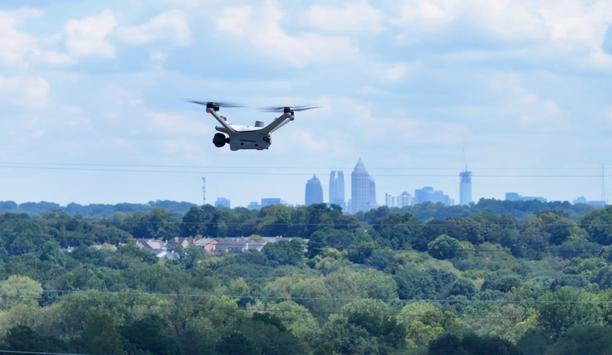
Drones are poised to fill long-standing gaps in physical security. Fixed cameras leave blind spots, and human guards cannot quickly cover large or complex properties during high-risk moments. Drones fill the gaps, providing a missing mobile layer, offering unmatched speed, broad aerial visibility, and proactive coverage that elevates security from reactive to truly responsive and deterrent. As an added element in security systems, drones complement fixed cameras, access control, and licence plate recognition (LPR) systems by serving as dynamic, rapid-response assets that reach areas other technologies cannot. Integrated with existing alarms and sensors, drones can auto-launch on triggers to deliver near-instant, real-time aerial video for accurate threat verification, giving security teams critical information before taking action. Drones as first responders Drones as first responders (DFR) are a new tool in Flock’s suite of security technologies “Drones are a natural fit for physical security because they provide teams with fast, flexible visibility that fixed cameras and human patrols cannot always deliver, especially on large properties,” says Keith Kauffman, Senior Director of DFR Strategy at Flock Safety. Drones as first responders (DFR) are a new tool in Flock’s suite of security technologies, which includes LPR, video surveillance, and gunshot detection systems. “Drones act as a force multiplier, improving coverage without increasing head count,” says Keith Kauffman, adding “Scaling is easy with the ability for one pilot to control multiple drones stationed at multiple locations.” Drones as a force multiplier Drones reduce manpower needs by offering wide-area coverage that would normally require several guards or patrol vehicles. Drones boost security team productivity and safety by automating the most dangerous and tedious tasks, such as alarm verification. Acting as a first responder, a drone can clear a significant portion of false alarms, allowing human guards to concentrate on high-priority roles, complex issues, or confirmed intrusions with real-time aerial intelligence. This improves personnel deployment and cuts down workload, risk, and costly overtime. Drones also significantly improve efficiency and safety for security personnel, says Kauffman. A drone system delivers real-time aerial intelligence in seconds, enabling guards to respond wisely and safely. Initial threat verification Some drone systems' yearly costs are similar to a single mid-level guard's salary Some drone systems' yearly costs are similar to a single mid-level guard's salary, but they can cover up to 38 square miles. This investment provides ROI by reducing large-scale losses and allowing human guards to focus on high-touch roles, while the drone handles initial threat verification. Flock Safety entered the drone space after acquiring Aerodome DFR in October 2024, with their private-sector drone as automated security (DAS) system rolling out in Q3 2025. And because the drones plug directly into FlockOS and work alongside other tools like licence plate recognition (LPR) and gunshot detection, they can launch automatically on alerts, creating a smarter, faster response workflow. Immediate intelligence to combat false alarms Drones fundamentally change false alarm management by providing security teams with immediate, real-time aerial intelligence. When an alarm triggers, the drone can be dispatched to the exact location in seconds, allowing operators to verify instantly the threat's legitimacy via a live HD or thermal video feed. This capability enables staff to safely clear or ignore false alarms remotely, preventing guards from wasting time and resources on unnecessary, lengthy, or potentially dangerous physical checks. This process can significantly reduce alarm fatigue and allow personnel to reallocate their time to genuine security threats. Emerging drone use cases enhance security operations Emerging drone use cases enhance security operations by integrating with existing systems and enabling novel applications. One key area is Post-Storm Damage Assessment, where drones provide rapid, safe aerial visuals of expansive sites, documenting damage for insurance claims far faster than ground inspections. Another area is Ecosystem Integration via platforms such as FlockOS, where the drone automatically launches in response to alerts from other security sensors (LPR, gunshot detection). This creates a powerful, automated workflow that unifies responses, enabling quicker incident interruption, better evidence capture, and a proactive security posture without increasing the number of human patrol staff. Evolving regulations expanding drone usage Evolving FAA regulations and corporate airspace policies impact the usage of drones Evolving Federal Aviation Administration (FAA) regulations and corporate airspace policies impact the usage of drones. Today, operating drones beyond the visual line of sight (BVLOS), at night, and over-people/roadway operations requires special FAA waivers. However, the trend — Remote ID, expanded FAA Part 107 allowances, and growing BVLOS exemptions proven in drones as first responders (DFR) — reduces overhead and allows more automation. Combined with enterprise standard operating procedures (SOPs), geofencing, and data governance, drone adopters can standardise flights, minimise risk, and integrate with other technologies. “In practice, that means automated dock-based dispatch on verified alerts, scheduled perimeter sweeps, and incident-to-incident coverage without on-site pilots,” says Kauffman. “The results are faster detection-to-dispatch, stronger evidentiary chains, and lower costs per incident — unlocking 24/7 remote operations across campuses, logistics, and sites.” Winning over public acceptance Public perception plays an important role in how communities embrace drone technology, which is why transparency and clear policy are essential. When employees and community members understand the drone’s purpose — responding to alarms, patrolling after hours, and deterring crime — they tend to view it much as they do security cameras or access control: a safety tool, not surveillance. Flock’s system is event-driven, privacy-minded, and used only by authorised personnel, and every flight is logged, documented, and fully audit-traceable for accountability. “With clear communication and responsible use, drones become a reassuring layer of protection rather than a cause for concern,” says Kauffman. Drones are extremely safe, actually reducing human risk by acting as a first responder to scout ahead of personnel. They come with layers of protection, such as geofencing, obstacle avoidance, precision landing, autonomous deconfliction with aircraft, and automated safety modes. Smartest approach For security teams considering adding drones, the smartest approach is to choose a system built specifically for 24/7 security operations. That usually means the drone provider handles FAA paperwork, writes clear procedures, develops sound policy, and trains customers’ staff so everything runs smoothly. “With the right partner, drones become a safe, compliant, and incredibly helpful part of your security toolkit,” says Kauffman. Flock ramps up drone production Flock Safety’s immediate focus is ramping production of its U.S.-designed and assembled Flock Alpha hardware, which is already NDAA-compliant and built to meet the growing demand for American-made drone solutions. At the same time, the next six to 12 months will centre on releasing key software updates, such as automated scheduled patrols. Together, increased hardware production and these software advancements will move the DAS product line toward full capability and broader commercial availability. Flock DAS Flock DAS essentially provides a guard’s vantage point from above, with the ability to instantly fly to any corner of a property. “And it doesn’t sleep on duty or call in sick,” says Kauffman. “Picture your traditional security measures: cameras are your static sentries; guards are your roaming patrollers. Now add Flock DAS: it’s your mobile, flying camera that can respond anywhere, anytime.” Just as a dispatcher coordinates police calls, Flock DAS serves as an aerial dispatcher for the security team, triaging alerts and providing eyes on the scene before anyone sets foot into potential danger. It gives the security team immediate, property-wide awareness so they can make safer, more informed decisions during any incident.

With the year 2025 stretched out before us, there are many techniques one could use to predict what will happen in the new year. You might analyse historical data and analyse future trends. Or you could try statistical or economic modelling. Or you could develop multiple scenarios based on various assumptions to explore potential outcomes. Or you could just check your email. At this time of year, my email is full of industry folks looking to predict what the future holds in 2025. Ranging from artificial intelligence (AI) to privacy, the retail market to drones, here is a sampling of forecasts for 2025 provided by various players in the security market, courtesy of my email messages. What’s Ahead for AI? From Faisal Pandit, VP & GM, Global Security Products, Johnson Controls (JCI): “The future of security operations includes customisable, scalable solutions where users can control if, when, and how they use AI to improve efficiency depending on the size and function of their organisation.” Says Kevin Woodworth, Vice President, Global Product Management, Intrusion, JCI: “Next year will see a growing focus from product developers on designing systems that streamline setup and configuration through increased AI integration. This reflects a broader trend of leveraging AI to simplify use and enhance adaptability as solutions evolve, rather simply employing it because it’s popular.” From Peter Evans, CEO of Xtract One Technologies: “AI algorithms will significantly advance in distinguishing between harmless, everyday items and potential threats. With this, we will see false alerts become even more rare.” Says JP Castellanos, Director of Threat Intelligence, Binary Defense: “Machine learning (ML)-powered anomaly detection will move beyond proof-of-concept to become mission-critical, enabling teams to uncover unknown threats and behavioural anomalies in real time – well before they escalate.” Evans of Xtract: “As AI becomes more advanced in threat detection, it will lead to more sophisticated protection of individual privacy. We can expect to see more AI techniques utilised for threat identification that do not capture personal data and are privacy-first.” Predictions on interoperability and compliance Woodworth of JCI: “New products added to singular systems must be interoperable. In 2025, organisations will need to embrace interoperability. AI will progress past reactive measures to achieve predictive capabilities.” Pandit of JCI: “With organisations increasing their focus on the regulatory environment, there will be an uptick in specialised certification programs to meet these needs. New security roles will emerge that will be focused on tracking and applying relevant regulatory changes.” Expanding capabilities for video cameras Woodworth of JCI: “Beyond capturing images, cameras will be able to detect potential threats and also mitigate them instantly, issuing vocal warnings, controlling access, or escalating issues without human intervention.” Looking ahead to retail developments Hansel Oh, Director of Product Marketing at Brivo: “Centralized, cloud-based security platforms will enhance credential management and monitor logistical operations to enable retailers to battle cargo theft.” Stephen Burd, Vice President, Essence Security: “With an increase in police response times, sophisticated crime, and smash and grabs, 2025 will see a huge demand for security solutions that go beyond simply notifying the police and will look to actively intervene and prevent damage or loss from occurring.” The role of drones and training Mary-Lou Smulders, CMO, Dedrone by Axon: “Drones will transition from being viewed as supplementary tools to becoming essential components of public safety operations. As departments recognise their effectiveness in various scenarios, the perception of drones will shift, and they will be integrated into core operational frameworks alongside traditional assets like patrol cars while replacing helicopters as a cost-effective and versatile alternative.” Erik Hohengasser, Electrical Technical Lead at NFPA: “As the skilled trades evolve, there will be an increasing demand for specialised and technical training. Predictive analytics, virtual simulations and hands-on experiential learning will become especially valuable due to allowing employees to gain real-world expertise in safe and controlled environments.”

Security applications for drones have evolved to provide benefits such as bird's-eye views of large areas, easy access to remote locations, and rapid deployment. However, to date, most drone applications have been outdoors. Not for long. Today, indoor drones are also finding unique opportunities for enhanced surveillance, security, and operational efficiency in indoor environments such as offices, warehouses, self-storage facilities, and malls. Indoor drones can navigate complex indoor spaces, providing real-time data and monitoring without the limitations of fixed cameras. New era of autonomous robotics A significant advantage of using drones indoors, as opposed to outdoors, is their ability to operate fully autonomously, circumventing U.S. Federal Aviation Administration (FAA) regulations that restrict such autonomy in outdoor environments. A new era of autonomous robotics enables drones to work seamlessly for users without the need for specialised flight training. A single security manager can oversee multiple indoor drones simultaneously with simple map clicks or prompts. A new era of autonomous robotics enables drones to work seamlessly for users Indoor monitoring and inspection Indoor Robotics is a company seeking to revolutionise indoor monitoring and inspection through its Control Bridge platform guiding indoor drones. Since its founding in 2018, Indoor Robotics has evolved through years of market engagement and product development. After initially recognising a demand for autonomous indoor monitoring, the company found that existing hardware fell short. “However, we understood the challenges of full autonomy and knew we would solve it using drones,” says Bar Biton, Marketing Manager of Indoor Robotics. Indoor Robotics has evolved through years of market engagement and product development Hardware challenges Seven years later, with the hardware challenges addressed, the company is shifting focus to continually increasing value for security managers, especially with generative AI (artificial intelligence). In 2018, the problem was charging methods, which has been solved with ceiling docking stations and five patents. “Today it’s about making indoor environments safer and even saving lives by identifying blocked emergency exits, missing safety gear, leaks, fire hazards and more,” says Biton. While indoor navigation presents challenges—such as the unreliability of GPS and the need for precision — Indoor Robotics has dedicated significant resources to achieve centimeter-level accuracy and ensure the utmost safety, maintaining a record of zero safety incidents to date, says Biton. Indoor navigation presents challenges—such as the unreliability of GPS and the need for precision Advanced AI-driven navigation systems Navigation challenges for indoor drones include manoeuvering through confined spaces, avoiding obstacles, and maintaining stable flight in varied lighting conditions. To address these, Indoor Robotics employs advanced AI-driven navigation systems, real-time 3D mapping, and robust obstacle avoidance technologies. These solutions enable drones to adapt to dynamic environments, ensuring precise and safe navigation. Additionally, the Control Bridge platform provides real-time data and monitoring, allowing drones to adjust their routes and respond to changing conditions effectively, thus enhancing their operational reliability. Highly versatile indoor drones find applications across numerous vertical markets such as retail, logistics, healthcare, and corporate settings. Key use cases encompass security surveillance, where drones monitor premises continuously; maintenance checks, especially in hard-to-reach areas; safety inspections to comply with regulations and company policies; and emergency response to provide real-time data during incidents. In warehouses, drones efficiently inspect high shelves. Healthcare facilities and data centres use them to oversee restricted zones. Additionally, corporate offices employ drones to automate after-hours security, safety and maintenance routines. Indoor Robotics employs advanced AI-driven navigation systems, real-time 3D mapping, and robust obstacle-avoidance technologies Alerts to the remote management team One Indoor Robotics client, a global tech company, deploys drones to enhance site surveillance and operational efficiency across six offices in three countries. The drones conduct regular security patrols after-hours, monitor facility activities, and ensure compliance with safety standards. This deployment has significantly improved the overall safety and security of their offices. The drones provide real-time alerts to the remote management team, enabling prompt responses to any anomalies, such as maintenance issues or unauthorised access. “The key advantage is the unified security standard provided by our Control Bridge operating system, allowing them to oversee all their sites from one centralised platform, ensuring consistent security management across all locations,” says Biton. When indoor drones co-exist with human workers, primary challenges include ensuring safety and preventing disruptions. Drones are equipped with advanced sensors and AI-driven obstacle avoidance systems to detect and navigate effectively around people. Strict operational protocols and designated flight paths are implemented to minimise interactions. Additionally, many drone operations are scheduled for after-hours to further reduce potential disruptions. “Safety is our top priority, and we invest significant resources to ensure it,” says Biton. “We are proud to report zero safety issues to date, reflecting our commitment to maintaining a secure environment for both drones and human workers.” Deploys drones to enhance site surveillance and operational efficiency across six offices in three countries Implementation of indoor drones Indoor drones are significantly more cost-effective and affordable when compared to traditional security methods like additional cameras, sensors, manpower, and even ground robots, says Biton. They cover larger areas and provide dynamic surveillance in less time, offering real-time data collection and enhanced flexibility. Unlike cameras or ground robots, drones eliminate blind spots and adapt to environmental changes autonomously. They also offer substantial indirect savings by optimising maintenance routines, according to Indoor Robotics. For instance, a drone can instantly identify issues in hard-to-reach areas, allowing for immediate, targeted responses, instead of requiring an inspector first and then a technician, thus streamlining maintenance processes. “The biggest obstacle to greater implementation of indoor drones is education and awareness,” says Biton. “Many people are not yet exposed to the concept of autonomous indoor drones and may find it hard to believe they really work.” To overcome this, Indoor Robotics focuses on creating awareness and educating customers about the reliability and benefits of the technology. Demonstrations, case studies, and clear communication about the capabilities and safety of drones are key. By showcasing successful implementations and providing hands-on experiences, Indoor Robotics seeks to build trust and drive wider adoption of indoor drone technology in security applications. Control Bridge operating system Drones are designed with strict privacy controls and advanced AI to ensure they respect privacy norms A common misconception is that indoor drones are intrusive and pose significant privacy risks. However, drones are designed with strict privacy controls and advanced AI to ensure they respect privacy norms. They operate primarily during off-hours and are programmed to avoid sensitive areas, focusing solely on enhancing security and operational efficiency. The solution also includes rigorous data protection measures to safeguard any collected information, ensuring compliance with privacy regulations and addressing concerns effectively. Soon, automation will become integral to tasks across all facility types, from manufacturing and logistics to retail and office spaces. Using Indoor Robotics’ Control Bridge operating system, facility managers will deploy fleets of robots to identify issues, collect data, and gain insights to enhance operations, maintenance, and safety. Facilities will benefit from 24/7 AI-driven monitoring, eliminating the need for occasional surveys. Managers will receive immediate alerts for any anomalies, with preventive maintenance tasks seamlessly integrated into building management platforms, ensuring optimal performance and safety. New standards in the industry The Indoor Robotics platform-agnostic approach provides flexibility and scalability. “As we continue to evolve, we support more and more platforms, enabling our clients to tailor their indoor monitoring solutions to their specific needs,” says Biton. “We believe that the future of security lies in intelligent, automated systems that can adapt to dynamic environments and provide real-time insights,” says Biton. Indoor Robotics seeks to be at the forefront of this transformation, setting new standards in the industry and paving the way for a safer, more efficient future.
Case studies

Security requirements for critical infrastructure are changing rapidly. Recent events, such as the discovery of a drone at Leipzig Airport, have once again demonstrated how quickly modern technologies can become a security challenge. This makes dialogue between industry, authorities and emergency services all the more important. Security Essen, which will take place at Messe Essen from 22 to 25 September 2026, is placing precisely this exchange at the heart of two key programme highlights: the European Drone Conference and the Emergency Services Forum. Unmanned aerial systems open up a wide range of potential applications – from inspecting critical infrastructure to supporting security and emergency services. Protection of critical infrastructure At the same time, they present new challenges for operators of sensitive facilities. The European Drone Conference on 23 and 24 September will therefore bring together experts from the security industry, public authorities, academia and politics to discuss current developments, the regulatory framework and effective protection strategies. The conference is organised by the Drone Expert Committee of the German Security Industry Association (BDSW), together with Security Essen and the Confederation of European Security Services (CoESS). Experts discuss drone deployment, detection and countermeasures Around 20 specialist presentations will examine drone technology from various perspectives – ranging from regulatory issues and the protection of critical infrastructure to detection and counter-drone systems. Managing new risks In his statement, Cornelius Toussaint, Vice-President of the BDSW and Chair of the Drone Expert Committee, will focus on security and drone technology in Germany. Marcus Schermann (DB Sicherheit GmbH) will discuss the protection of critical infrastructure, using multicopter operations as an example. Drone management, with a particular focus on detection and countermeasures, is the main theme addressed by the two speakers, Ralf Holstein and André Danner (German Business Protection GmbH). The programme is complemented by presentations on research and development, as well as international keynote speeches from the worlds of politics and the security industry. The central question is how to capitalise on the opportunities offered by the technology whilst effectively managing new risks. Public safety authorities Emergency Services Forum (Blaulichtforum) takes place for the first time In collaboration with Feuerwehr-Magazin (Fire & Rescue Magazine) and Rettungs-Magazin (Emergency Medical Services Magazine), the Emergency Services Forum 2026 will make its debut at Security Essen. On 22 September, the new forum will bring together public safety authorities and organisations (BOS), the security industry and public authorities, focusing on a key question: How are new threat scenarios and technologies changing security and emergency response? On stage, experts from the fire service, police, civil protection, the security industry and defence will discuss current challenges: What role will drones and autonomous systems play in future operations? Shared situational picture How well is Germany prepared for CBRNE incidents and hybrid threats? And how do control centres, communication technologies and networked systems ensure that a shared situational picture emerges in an emergency? The focus will also be on cooperation between civilian and military actors. Specialist conferences included in the trade fair admission ticket Both the European Drone Conference and the Emergency Services Forum will take place directly in Hall 5. Admission is already included in the Security Essen trade fair ticket. Tickets for Security Essen 2026 are available online. A day ticket costs €49. The trade fair is open from 9 am to 6 pm from Tuesday to Thursday and from 9 am to 4 pm on Friday.
ZeroEyes, creators of the multi-analytics weapons detection and threat intelligence platform, announces that Amos P. Godby High School in Tallahassee, Florida, is the first in the nation to deploy a three-part integrated solution called RADAR (Real-time Alert, Detection And Response). This solution combines ZeroEyes’ AI-based gun detection and situational awareness solution with Ark Strategic’s 3D Mapping solution and Campus Guardian Angel drones to provide comprehensive, real-time threat detection, alerting, and response in the case of a gun-related incident. Enhancing situational awareness "ZeroEyes Al gun detection and Ark Strategic’s 3D mapping solution, combined with Campus Guardian Angel, represent the cutting edge of school security in the United States," said Jimmy Williams, Chief of Safety, Security, and Emergency Management for Leon County School District. "When leveraging these tools collectively in Project RADAR, we’re continuing to set a national standard for school security with solution-oriented and mission-ready resources.” Ark Strategic’s 3D mapping solution blends cutting-edge aerial and interior mapping technologies to deliver unparalleled operational intelligence for its customers. When integrating the exterior and interior intelligence with ZeroEyes AI threat detection software, the solution empowers first responders to quickly identify critical assets, enhance situational awareness, and respond to threats with greater speed and precision. Situational awareness software layers “At Ark Strategic, our mission is to turn the entire campus into actionable intelligence,” said Chris Yellina, Founder & Chief Product Officer at Ark Strategic. “With inside-and-out coverage, responders have a clearer picture of the environment before they ever make entry.” ZeroEyes' AI threat detection and intelligent situational awareness software layers onto existing digital security cameras. If a gun is identified, images are instantly shared with the ZeroEyes Operations Center (ZOC), the industry's only U.S.-based, fully in-house operation center, which is staffed 24/7/365 by specially trained U.S. military and law enforcement veterans. If these experts determine the threat is valid, they dispatch alerts and actionable intelligence — including visual description, gun type, and last known location — to law enforcement and local security teams as quickly as 3 to 5 seconds from detection. Creating a safer environment When a detection occurs at a location mapped in 3D, each camera alert is automatically tied to its exact position on the map, enabling responders to navigate instantly to the area of concern. The system is entirely cloud-based, requiring no installation for local law enforcement. Annotated maps display camera placement, fields of view, and potential blind spots, while operational layers and interactive measurements empower security teams to assess situations and make informed decisions quickly. In tandem, or if a panic button is pressed, Campus Guardian Angel deploys non-lethal drones within seconds, tracking the assailant and navigating obstacles to provide support and situational awareness. While in operation, the drones actively distract, delay, and disrupt the perpetrator, buying precious time and creating a safer environment for students and staff. Truly comprehensive security solution “Amos P. Godby High School’s deployment of RADAR marks a historic step forward in school safety,” said Mike Lahiff, CEO and cofounder of ZeroEyes. “This integrated and innovative approach further demonstrates how utilising a multilayered technology solution can protect students and staff more effectively, setting a new standard for safety nationwide.” "We are thrilled to partner with the innovative team at ZeroEyes in launching Florida’s first-in-the-nation pilot program, which includes Godby High School, bringing together the best in AI-powered gun detection and elite human-piloted drone response capabilities to create a truly comprehensive security solution that can save lives,” said Justin Marston, CEO and co-founder of Campus Guardian Angel. Enhancing campus safety “Our innovative Active Shooter Suppression System is uniquely designed to deliver non-lethal effects that distract, delay, and disrupt a threat within seconds, buying critical time for law enforcement to protect students and staff. We are proud to be working side-by-side with companies like ZeroEyes to advance cutting-edge technology solutions to enhance campus safety in Florida and across the nation.” ZeroEyes, Ark Strategic, Campus Guardian Angel, and the district are hosting a summit June 17 and 18 at Godby High School, featuring demonstrations and discussion sessions surrounding the technologies, including reflections from school leaders on the district’s successful deployment. The event is open to local schools, law enforcement, and the media.

Located in the heart of California’s Central Valley, the Clovis Police Department serves the rapidly growing community of Clovis, California—a vibrant city situated just northeast of Fresno in Fresno County. Home to over 129,000 residents, Clovis is known for its strong community values, family-friendly neighbourhoods, and forward-thinking city leadership. Once a historic railroad town, Clovis has transformed into a modern, thriving municipality, consistently ranked among California’s best places to live. Real-time public safety technology Clovis maintains a lean public safety model, with about 130 sworn officers and a total department staff Despite its growth, Clovis maintains a lean public safety model, with approximately 130 sworn officers and a total department staff of about 230 employees. The department takes pride in its reputation for innovation, responsiveness, and community trust, often operating with fewer resources than larger metropolitan areas—yet delivering highly efficient and effective policing services. As the city continues to expand—adding new residential developments, commercial centres, and educational infrastructure—the need for advanced, real-time public safety technology has never been greater. Commitment to innovation and collaboration Recognising this, Clovis PD launched a bold initiative to build a Real Time Information Centre (RTIC)—a centralised hub designed to unify data from hundreds of surveillance cameras, licence plate readers, dispatch systems, drone feeds, and body-worn cameras. The department’s goal: enhance officer safety, accelerate response times, and support smarter decision-making across the entire public safety ecosystem. With a deep commitment to innovation and collaboration, the Clovis Police Department is setting the standard for what’s possible in modern law enforcement. The challenge For Clovis PD, the answer began with re-imagining how real-time data is gathered, visualised, and acted upon As technology rapidly reshapes the public safety landscape, Clovis PD faced a key question: How could a lean, high-performing department continue to meet the demands of a growing city while maintaining visibility, speed, and responsiveness across a diverse set of threats and situations? For Clovis PD, the answer began with re-imagining how real-time data is gathered, visualised, and acted upon. The department managed streams of mission-critical information from hundreds of surveillance cameras, LPRs, drones, dispatch systems, and body-worn cameras—but these assets were siloed and difficult to manage from a single point of control. Officers and dispatchers needed faster access to the right information at the right time, and leadership needed a way to centralise command operations without overwhelming staff or adding layers of complexity. Future of real-time collaboration What Clovis required was a unified platform that could make sense of multiple inputs, prioritise action, and scale as the city’s needs evolved. It had to be powerful, but also intuitive and accessible to analysts, officers, and supervisors alike. Most importantly, it needed to be built in a way that would support not just the workflows—but the future of real-time collaboration between departments, field units, city pioneers, and neighbouring agencies. That vision became the foundation for Clovis PD’s Real Time Information Centre (RTIC)—and set the stage for a successful deployment with RGB Spectrum and Wildfire Technology. The RGB Spectrum solution: Zio and XtendPoint in action At the heart of Clovis PD’s RTIC is RGB Spectrum’s Zio® AV-over-IP platform and XtendPoint™ KVM-over-IP system, providing the centralised control, flexible visualisation, and easy expandability the department needed. Powering the visual backbone The Zio 4000 video wall processor seamlessly drives a 14’ × 5.6’ Barco TruePix 0.9 mm pixel pitch LED video wall, displaying live video from across the city, interactive maps, drone feeds, dispatch data, and analytic tools. With 16 HDMI inputs and 12 outputs, Zio acts as the visual brain of the RTIC—integrating diverse content streams into a single pane of glass for maximum awareness. Operators can quickly shift between presets for specific scenarios (e.g., drone deployment, vehicle pursuit, or major traffic events). Video streams are not only viewable in the RTIC but are routed to other locations, including Dispatch, the Emergency Operations Centre (EOC), supervisor offices, and field units. Zio also supports future integration with remote web access portals—allowing city officials and council members to view situational data during major incidents. Control with confidence Clovis PD operators use RGB Spectrum’s XtendPoint KVM-over-IP to control and interact with up to eight systems Clovis PD operators use RGB Spectrum’s XtendPoint KVM-over-IP to control and interact with up to eight independent systems simultaneously using a single keyboard and mouse. Each operator station features two 43″ curved 4K displays, creating a panoramic, ergonomic environment that consolidates workflows and boosts productivity. “What sold me on RGB was how effortless it was for everyone to manipulate the screen and display what they needed—everyone had access, and it just worked,” Chief Fleming, Chief of Police, Clovis Police Department. This intuitive plug-and-play interface significantly reduces training time and enables officers, dispatchers, and analysts to work fluidly between tasks—whether monitoring cameras, controlling drones, running licence plates, or launching live body cam feeds. Future-ready architecture: Built to expand RGB Spectrum’s IP-based architecture offers the flexibility Clovis PD needs to grow and adapt over time: Drone Expansion: As Clovis expands its DFR (Drone as First Responder) program with multiple Brink drone launch sites, the system will support direct drone video integration into the video wall and remote routing to field teams and fire personnel. Body-Worn Cameras: Using Axon’s new Respond technology, live body cam video is now accessible in real time—giving analysts and dispatchers critical visual data, especially when officers can’t communicate via radio. Mobile Command & Trailers: RGB Spectrum’s architecture enables future integration with mobile assets like camera trailers and portable operations centres, giving Clovis PD the tools to bring their RTIC capabilities to festivals, parades, emergencies, and other offsite events. “We’re not just solving for today’s challenges—we’re setting the foundation for tomorrow’s public safety technology,” said Chief Fleming. The human factor: Designed for everyday use From video wall presets to XtendPoint switching, every component was designed with the operator in mind Despite the complexity of the system’s backend, Clovis PD has found it remarkably easy to use. From video wall presets to XtendPoint switching, every component was designed with the operator in mind. Chief Fleming notes that even with staff rotating through dispatch or new to the RTIC, most users are up and running with minimal training. As the department continues to grow its analytics and drone teams, they’re confident in scaling the system further—without retraining or major technical overhauls. Inter-agency collaboration & City Council engagement The new RTIC isn’t just benefiting Clovis PD—it’s elevating collaboration with fire, EMS, and neighbouring jurisdictions. Fire & EMS: Fire department command staff are integrated into the drone viewing platform, allowing them to view aerial video in real time from their phones or tablets. County-wide Visibility: Drone video and surveillance feeds are shareable with county partners via secure portals, enabling unified situational awareness across jurisdictions. City Council Access: The Zio platform can generate remote viewing links that allow City Council and department heads to access selected live data and camera feeds during major incidents or EOC activations—keeping decision-makers informed without disrupting operations. This capability has not only improved response times and safety but has also proven to be a valuable selling point for gaining city support. Community pioneers now have full visibility into how investments in public safety technology translate to real-world benefits. The role of Wildfire Technology: Seamless execution As the system integrator, Wildfire Technology delivered end-to-end project success. From vendor selection and budgeting to installation, training, and post-deployment support, Wildfire guided Clovis PD every step of the way. Created detailed project plans and electrical requirements Helped secure sole-source documentation to streamline approval Completed installation and commissioning in under 30 days Provided responsive support and firmware updates post-launch “Everything was clean, professional, and ahead of schedule. Their team cared about the space like it was their own. That kind of integrity is rare,” Chief Fleming. Forward-thinking technology deployment From integrated drone surveillance and mobile command capabilities to remote city leadership access Clovis PD’s RTIC is built not just for now—but for the evolving needs of tomorrow. From integrated drone surveillance and mobile command capabilities to remote city leadership access and future third-party analytics platforms, the department is thinking beyond traditional law enforcement. They’ve already begun planning to host open houses and agency tours, sharing their story to help others nationwide modernise their own public safety operations. “If something doesn’t work, we’ll say so. But RGB Spectrum’s real-time visualisation system is absolutely working for us—and we rely on it every day,” Chief Fleming. Final thoughts The partnership between RGB Spectrum and Wildfire Technology helped Clovis PD bring its vision of a fully connected, mission-critical Real Time Information Centre to life. The result is a scalable, ergonomic, and operator-friendly environment that strengthens officer safety, improves situational awareness, and increases the department’s ability to respond and adapt in real time. “This isn’t just about the tech—it’s about what the tech enables. And with RGB and Wildfire behind us, we’ve built something that’s going to serve Clovis for years to come,” Chief Fleming.
ZE Government Solutions (ZEGS), a wholly owned subsidiary of AI-based gun detection pioneer - ZeroEyes, announced that its new ZeroEyes Awareness Kit (ZAK), a drone featuring advanced built-in video analytics capabilities, which allows for real-time threat detection and early warning, was used to enhance security at Joint Base Charleston (JB-CHS)’s August 16 Summer Fest Concert. ZEGS rapidly deployed its computer vision software onboard an Easy Aerial tethered drone to augment security forces with overwatch capabilities, alerting the teams to any potential firearms or unauthorised personnel on the active flight line. Deployment of ZAK for real-time security Set-up took less than 30 minutes and provided JB-CHS and its defenders with an AI-enabled security platform Joint Base Charleston is a U.S. military installation in South Carolina that serves as a hub for various military operations, including airlift and airdrop operations, naval nuclear training, and logistics support. Its annual Summer Fest concert is sponsored by Air Force Entertainment. This announcement marks the first deployment of ZAK for real-time security in a real-world environment since its development as part of the Air Force Research Laboratory’s Small Business Innovation Research (SBIR) Program. Set-up took less than 30 minutes and provided JB-CHS and its defenders with an AI-enabled security platform to enhance operations for the on-base event. Extra layer of aircrew security ZAK provided overwatch for six continuous hours of flight time, protecting more than 1,000 base personnel and their families. While the operational test was for an in-garrison Morale, Welfare, and Recreational (MWR)-sponsored event, the capability is intended to provide roll-on/roll-off security for C-17 crews based out of JB-CHS. The capability easily transfers to downrange operations providing an extra layer of aircrew security in emergency situations and austere environments and incorporates Tactical Awareness Kit (TAK) plug-in capability. Drone threat detection system “This significant achievement was made possible through our collaboration with the Palmetto Spark Cell at JB-CHS, which played a crucial role in enabling the real-time use of ZAK during this live event, when security was paramount,” said Dustin Kisling, Executive Vice President for ZeroEyes Government Solutions. He adds, “Their support allowed us to tailor our tethered drone threat detection system to meet the most demanding security use cases for Air Mobility Command. By providing a platform for rigorous testing and iterative development, the Palmetto Spark Cell has been instrumental in advancing ZAK’s capabilities and ensuring its readiness for deployment in real-world scenarios.” The future of the Air Force Drone Program and AI July SECDEF memo specifically stated that 'small UAS are such critical force enablers that they must be prioritised' The July SECDEF memo specifically stated that 'small UAS are such critical force enablers that they must be prioritised at the same level as major weapons systems.' 'No later than September 1, 2025, the U.S. Army, the U.S. Navy, the U.S. Marine Corps and the U.S. Air Force will establish deliberately screened, active-duty experimental formations purpose-built to enable rapid scaling of small UAS across the Joint Force by 2026.' Use of small UAS platforms This expedited timeline laid out by the current administration has raised the urgency levels of the force looking to pursue and sustain drone programs. In anticipation of directives like this following the use of small UAS platforms in Ukraine, ZEGS recognised the need for enhanced operations using Artificial Intelligence to combat threats in combat zones and for use in home-station operations where safety of force is crucial. With the help of the SBIR program and the Palmetto Spark, ZEGS was able to add this capability to its portfolio of public safety and DoD solutions. Growing industry need for AI While necessary, the SECDEF drone directive only addresses one component of the issue While necessary, the SECDEF drone directive only addresses one component of the issue – the deployment of a large number of sensors does not necessarily correspond to an improvement in situational awareness, as it often results in a deluge of information being delivered to operators or analysts. This information overload can place a significant cognitive burden, distracting them from the mission at hand. JB-CHS recognised this and has partnered with ZEGS to deliver a unique force multiplier for their drone program through the use of AI and computer vision. ZEGS’ capabilities with drone operations ZEGS enables a streamlined approach to surveillance of threats, whether downrange with adversaries or protecting citizens against insider threats in-garrison during public events. The pre-emptive efforts to combine ZEGS’ capabilities with drone operations has put Joint Base Charleston, Air Mobility Command, and the US Air Force ahead of the curve and leading the pack for future operations.

Summer is here, and with it comes the height of music concerts and festival season. As thousands of music fans gather at venues worldwide, security professionals face increasing challenges in protecting these large-scale events. Milestone Systems, a globally renowned provider of open platform video management software (VMS), is helping security teams leverage integrated technology solutions to enhance safety and create seamless experiences for the thousands of fans attending these events. Comprehensive security via unified technology Securing large-scale public events like music festivals and concerts has become increasingly complex Securing large-scale public events such as music festivals and concerts has become increasingly complex amid evolving threats ranging from severe weather and crowd surges to targeted attacks. To meet these challenges, security professionals are adopting open-platform video management technologies that unify data from fixed cameras, drones, mobile devices, thermal sensors, and AI-driven analytics into a single, real-time operational interface. Flexible VMS platforms These advanced systems support coordinated decision-making between venue security, law enforcement, and emergency services, streamlining both response and prevention. Flexible VMS platforms are particularly valuable for overlaying event-specific venue maps, an essential feature when layouts change frequently for different events throughout festival season. Key technologies for event security Event security professionals are increasingly deploying integrated technology solutions to enhance safety at large gatherings: Video Management Software (VMS): Central platforms that integrate and manage multiple security technologies Thermal Cameras: Detect unauthorised fires, overheating equipment, and monitor crowd density Drone Surveillance: Provides aerial overwatch for large areas with real-time video feeds AI-Powered Analytics: Identifies unusual patterns, counts crowds, and detects potential threats Access Control Systems: Manages entry points with credential verification Mobile Command Centres: Specially equipped vehicles that serve as on-site security headquarters Real-world applications demonstrate value The Jelling Music Festival in Denmark exemplifies how effective video security enhances event safety. This year's festival, hosting nearly 40,000 attendees over four days, features 60 cameras throughout stages, entrances, and the campsite. All video feeds are monitored via Milestone's video management software on 65-inch smart screens in a specially equipped emergency command truck. Thermal cameras at the campsite offer advanced detection capabilities, enabling quick identification of unauthorised fires or barbecues. Open VMS technology Security teams are testing new abilities, including software that accurately counts attendees in specific areas The festival has grown from 1,000 spectators and 16 performances in 1989 to its current scale, thanks to open VMS technology that helps prevent overcrowding around the stages. Security teams are testing new capabilities, including software that accurately counts attendees in specific areas, providing critical data for crowd management and emergency response. Response times and overall crowd safety The synchronisation of video, audio, and geospatial data across agencies creates a shared operating view that improves response times and overall crowd safety. Security professionals can implement thermal imaging, IR-enabled cameras, and drone surveillance to create more adaptive and resilient event security strategies.
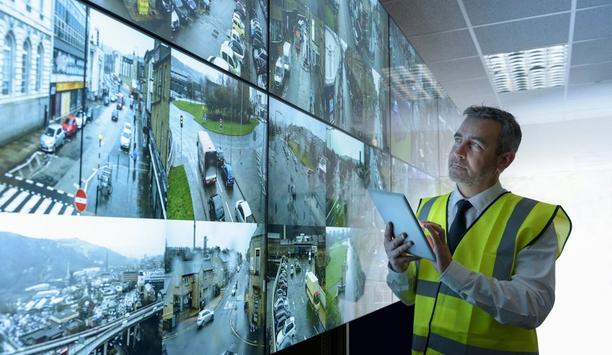
Thames Valley Police worked with local authorities to improve CCTV coverage, cut costs, and boost efficiency. It’s made public spaces safer and ensured long-term, reliable monitoring across the region. Thames Valley Police is the largest non-metropolitan police force in England and Wales, covering 2,218 square miles and a population of 2.42 million people. Its jurisdiction includes multiple towns, city centres and council areas across the three counties of Berkshire, Buckinghamshire and Oxfordshire. Setting a long-term vision for public space CCTV Public space CCTV is vital in deterring and detecting crime across the Thames Valley Public space CCTV is vital in deterring and detecting crime across the Thames Valley. However, significant pressure on local authority budgets has made it increasingly difficult for councils to provide public space CCTV. There was real jeopardy that financial constraints would result in unmaintained systems, with limited or no real-time monitoring. A fresh approach was needed, so the Thames Valley CCTV partnership between Genetec™ and Hanwha Vision was formed. The first major challenge was securing funding to overhaul several local authorities’ ageing systems, which were proving increasingly expensive to upgrade and maintain. The second was to manage the ongoing costs of staffing control rooms to ensure the long-term sustainability of monitored CCTV across the Thames Valley. Ownership and monitoring of public space CCTV Ambitious plans were devised to pool resources and replace many disparate systems with one police-owned system that could extend across multiple authorities. In effect, the aim was to transfer the ownership and monitoring of public space CCTV from local authorities to dedicated Thames Valley Police control rooms. It would be led by the Thames Valley Police & Crime Commissioner (PCC) Matthew Barber, collaborating with any local authority who chose to participate. It was a feat that had never been attempted in the UK on this scale that held the potential to drive efficiencies and enhance CCTV provision in areas it might otherwise have deteriorated. Ongoing commitment and investment “CCTV is an important part of community safety; benefitting police and local communities in helping to deter crime and antisocial behaviour, identify offenders and support prosecutions." "Ongoing commitment and investment enables high quality, consistent and sustainable CCTV provision now and into the future”, explains Matthew Barber, PCC, Thames Valley. Centralisation creates area-wide visibility and control Several control rooms in the Thames Valley, like Windsor & Maidenhead, had implemented Genetec Security Centre Several control rooms in the Thames Valley, such as Windsor & Maidenhead, had already implemented Genetec Security Centre and were very happy with its operation. Furthermore, as an open platform video management system, it could minimise costs by supporting a phased unification or “takeover” of existing systems across the Thames Valley. Finally, its hybrid cloud architecture provided Thames Valley with maximal flexibility to leverage any combination of cloud or on-premises infrastructure according to Name Thames Valley Police Industries Public Safety Location Thames Valley, United Kingdom Products Genetec Security Centre; Genetec Cloud Services; Federation Technology Partners Hanwha Vision Channel Partners CDS Systems what made sense for each application and location. This made it the obvious choice on which to standardise. Range of multidirectional AI-enabled cameras Following a competitive tender, Thames Valley chose CDS Systems to implement its proposed solution. This would be built on Genetec Security Centre and incorporate a range of multidirectional AI-enabled cameras from Hanwha Vision. A key driver in the decision was the high levels of commitment shown by all three parties to cybersecurity. Another was the recognition that the system design and technology selection could ensure a cost-effective implementation that could continue to evolve in line with the needs of its users. Integration between Genetec and Hanwha Vision technology Legacy cameras were retained and reused to maximise the return on existing investment wherever possible “We urgently needed to improve the quality of CCTV, enhance collaboration, and drive efficiencies for all partners. The respective capabilities and seamless integration between Genetec and Hanwha Vision technology was the optimal way of meeting Thames Valley’s requirements,” says Sam Thomas, CDS Systems. Phase one of the deployment involved CDS taking over an existing control room in Milton Keynes, replacing the legacy analogue infrastructure with a modern IP backbone. It then installed Genetec Security Centre to establish one platform through which officers could smartly interact with all incoming video feeds. Legacy cameras were retained and reused to maximise the return on existing investment wherever possible. A second Genetec workstation was also set up inside Slough Police Station, allowing officers to rapidly review footage for improved community response. Hanwha Vision’s AI-enabled multidirectional cameras CDS then introduced Hanwha Vision’s AI-enabled multidirectional 4k cameras to improve CCTV coverage and quality in public spaces. Each of these cameras incorporates up to five cameras in one device for wide-area surveillance, which would previously have required several separate devices, simplifying installation and resulting in significantly less associated cabling and infrastructure. They also provide powerful AI analytics, including accurate object detection and classification, to enable forensic search and save operators' time when responding to incidents. For example, identifying and establishing the movement of specific people or vehicles based on attributes such as vehicle type. Thames Valley CCTV partnership Phase two will see four additional control rooms in Oxfordshire merged into a single hub Phase two will see four additional control rooms in Oxfordshire merged into a single hub inside Abingdon Police station, also built on the Genetec Security Centre. This and the control room in Milton Keynes will be interlinked, adding further resilience as each site will be able to act as a fallback for the other. At this point, there will be a dedicated team of eighteen staff responsible for monitoring CCTV and enhancing CCTV for all participating communities in the Thames Valley CCTV Partnership. Innovative and cost-effective solutions “The CCTV Command Suite enabled by CDS, Genetec and Hanwha Vision has improved our workflows beyond recognition, enabling staff to quickly review and package evidence for frontline officers or more complex investigations. It has received several plaudits from officers for its ease of use,” says Jason Owen, CCTV Operations Manager, Thames Valley Police. “This collaboration between Thames Valley Police, Genetec, CDS Systems, and Hanwha Vision showcases the power of partnership in driving innovative, cost-effective solutions that improve public safety,” says John Boorman, Head of Product and Marketing at Hanwha Vision Europe. “Our AI-enabled cameras are designed to reduce false alarms and streamline operations, ensuring teams can focus on real incidents and drive efficiency across their monitoring.” Efficiency, at a lower cost All CCTV operators are civilian police staff vetted to the same clearance levels as sworn-in officers Pooling resources and transferring ownership to the police has brought about significant cost efficiencies for participating authorities, while also enhancing the quality and reliability of public spaces CCTV. Just as importantly, it has dramatically improved the police’s direct access to quality video evidence. Unlike in a traditional council-run control room, all CCTV operators are civilian police staff vetted to the same clearance levels as sworn-in officers. This means they have full access to Thames Valley’s suite of police databases and reporting software packages. They are better equipped to rapidly report incidents, support front-line officers, and communicate effectively with investigators as a result. On average, it handles between 300 – 500 incidents a month and has substantially increased the number of successful requests for supporting footage. “We’ve immediately seen the benefit of our investment in equipment and CCTV operators, with the police now much better equipped to deter and detect crime across the Thames Valley,” adds Barber. A solid platform for further improvements Control room operators’ intuition will always be the driving force that brings results Looking forward, Thames Valley has plans to use the Genetec platform to connect its people and mobile surveillance assets back to its control rooms for better cross-force interaction. Genetec Federation as a Service is already allowing live and recorded video to be shared with officers in the field. Soon it will also be extended to ensure video from police CCTV vans and drones is immediately available in the control room. In both cases this is achieved without complex network configuration, requiring only an internet connection. It is also at the beginning of its journey of fully realising the value of the AI-equipped Hanwha Vision cameras specified by CDS. Control room operators’ intuition will always be the driving force that brings results, but AI is freeing them up to do what they do best by saving time on routine monitoring and searches. Cost savings, resilience, and efficiencies Finally, talks continue that would see the addition of further control rooms across the Thames Valley to the Thames Valley CCTV Partnership. Having proven the model, would allow it to scale operations further to deliver even greater cost savings, resilience, and efficiencies. “We’re proud of what we’ve achieved to date but have no intention of resting on our laurels. The foundations we’ve established will ensure continued high-quality, consistent, and sustainable CCTV provision for our communities,” concludes Owen.
Round table discussion

The Metaverse sounds like the plot of the latest summer action movie. In reality, it’s a technology - or, more accurately, a group of technologies - that will likely have a transformational impact on a host of markets. For security, the Metaverse has an extensive list of needs. It also presents some opportunities. We asked this week’s Expert Panel Roundtable: What does the Metaverse mean for security?

Perimeter security is the first line of defence against intruders entering a business or premises. Traditionally associated with low-tech options such as fencing, the field of perimeter security has expanded in recent years and now encompasses a range of high-tech options. We asked this week’s Expert Panel Roundtable: What are the latest trends in perimeter security technology?

What is a business, or an industry, but a collection of people and the results of their work? People make all the difference in the destiny of a business or industry. And the people involved in a business reflect the impact of demographic changes – and the passage of time. The security industry has been largely built by Baby Boomers, who are getting older and increasingly stepping aside to make way for younger folks. We asked this week’s Expert Panel Roundtable: Is there a “new generation” of employees and managers entering the physical security marketplace, and what will be the impact?




Technology's role in securing banks and financial institutions
Download
Security technologies promote real-time awareness in K-12 schools
Download
Integrated systems enable critical and compliant security for transportation
Download
Modernising physical access control
Download
Access. Intrusion. One estate.
Download