In 1899, the Texas Legislature established the Southwest Texas State Normal School, which opened in San Marcos four years later. Initially dedicated to training public school teachers, the institution has evolved over time into the multifaceted university now known as Texas State.
Originally housed in a single building, the San Marcos campus has expanded to encompass 485 acres and 267 buildings, along with an additional 5,038 acres of recreational and instructional lands. The university has also developed a secondary campus in Round Rock, now boasting a 101-acre site with state-of-the-art facilities.
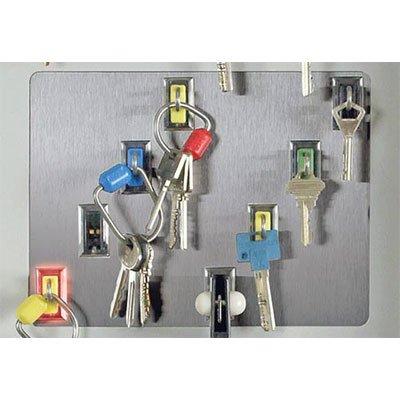
Electronic key control systems
Texas State's student body, originally numbering 303 in 1903, had grown to over 35,546 by 2013, marking an impressive 16 consecutive years of enrolment growth.
Anticipating sustained physical and population expansion, the university evaluated its operational strategies, recognising a need for electronic key control systems in sensitive areas. Based on projected requirements, up to 85 of these systems might be necessary to support the initiative.
Aggressive construction efforts
Texas State mandates that freshmen reside on campus, a strategy aimed at enhancing student retention
In September 2013, Texas State confronted a significant expansion challenge as the influx of freshman enrolment topped 5,000. In line with many academic institutions, Texas State mandates that freshmen reside on campus, a strategy aimed at enhancing student retention.
This policy seems effective, with approximately 80 percent of first-year students returning for subsequent semesters. To accommodate the swelling number of on-campus residents, Texas State has embarked on an aggressive development strategy, constructing a new residential hall complex approximately every two years to house around 600 additional students, and plans are in place for another complex. The university has invested over $190 million in new building projects and renovations, with further developments anticipated.
Key management challenges
With substantial numbers of buildings and increasing personnel, key management quickly emerged as a potential high-risk concern. Maintenance staff often encountered difficulties locating necessary keys, leading to inefficiencies. In response, Texas State upgraded its key management policies to boost efficiency.
The university charged its University Police Department, alongside other stakeholders, with a comprehensive review of key management systems available on the market. This review, which included consultations with customers and presentations by vendors, led to the selection of KeyWatcher Touch from Morse Watchmans.
Implementing KeyWatcher touch
Additionally, domestic production and the company's longstanding history were favourable factors
The decision to deploy KeyWatcher Touch systems was influenced by their extensive features and competitive pricing. Morse Watchmans' responsiveness to specific university requirements, such as a six-digit user ID, and their capability to quickly implement changes were pivotal. Additionally, domestic production and the company's longstanding history were favourable factors.
The largest deployment of KeyWatcher systems is designated for the Department of Housing and Residential Life, which manages approximately 7,000 residents across 25 facilities. The department, which includes 110 full-time employees and 170 building paraprofessionals, finds the system's enterprise management capabilities particularly valuable. According to Kyle Estes, Associate Director of Housing Facilities Services, having department-wide key access has improved efficiency and decreased reliance on multiple master keys.
“The system automatically generates a log of who has each key, we’ve been able to establish much better employee accountability for key usage,” Estes says. “The ability to set a maximum duration that each key can be checked out and to receive alarms when that limit is exceeded has eliminated the problem of having keys unnecessarily checked out when they are needed.”
Enhanced reporting and expansion
All KeyWatcher Touch systems at Texas State are integrated into the university's network, interfacing seamlessly with card access and email systems. The system's centralised management capabilities streamline report generation and incident reviews. Notably, the system's remote accessibility enhances operational efficiency, notes Estes.
As one of the early adopters, the Housing and Facilities Department served as an initial test centre for KeyWatcher Touch. Given the system's successful implementation and the university's continued growth, the rollout of 85 systems is ongoing. Despite the scale, Estes is confident that any further expansion will be manageable.
“We’ve found that expanding these systems is fairly easy and doesn’t involve time-consuming processes that could delay implementation of key management for particularly sensitive areas,” Estes says. “Overall, the system has been very reliable, and the support staff has been very responsive and regularly available to help resolve the very few minor issues we’ve encountered in a timely manner.”
In 1899, the Texas Legislature authorized the formation of the Southwest Texas State Normal School, which opened in San Marcos four years later. At the time, the school’s mission was to prepare Texas public school teachers, but over the years, it has undergone several expansions and name changes to reflect its evolution into the major multi-purpose university Texas State has become.
From its humble beginnings located in a single building, Texas State’s original San Marcos campus has grown to cover a 485-acre campus that is home to 267 buildings, as well as an additional 5,038 acres of recreational, instructional, farm and ranch land. The university added a second campus in Round Rock, which has grown from 15 temporary buildings to a 101-acre campus with state-of-the-art facilities.
Electronic key control systems
Texas State’s student population has kept pace with its physical expansion, growing from 303 in 1903 to more than 35,546 in 2013 – marking the 16th consecutive year of enrollment growth for the university.
Anticipating physical and population growth to continue into the future, Texas reviewed its policies and determined the necessity of implementing electronic key control systems in sensitive areas. Based on its size, the understanding was that as many as 85 of these systems could potentially be needed as part of this initiative.
Aggressive construction campaign
Texas State was faced with a particularly challenging growth-related issue in September 2013, as its freshman enrolment surged to more than 5,000. Like many universities, Texas State requires its freshmen to live on campus, which it sees as a tool for retention. That policy seems to be working, with approximately 80 percent of freshmen living on campus technically returning for the following semester.
To accommodate the growing ranks of on-campus residents, the university has pursued an aggressive construction campaign, building a new residence hall complex every two years to house approximately 600 additional students with plans to break ground this fall on a third new housing complex. In all, Texas State spent more than $190 million on new or renovated buildings, with more construction planned into the foreseeable future.
Growth-related issue
Texas State’s student population has kept pace with its physical expansion, growing from 303 in 1903 to more than 35,546 in 2013 – marking the 16th consecutive year of enrolment growth for the university.
Anticipating physical and population growth to continue into the future, Texas reviewed its policies and determined the necessity of implementing electronic key control systems in sensitive areas. Based on its size, the understanding was that as many as 85 of these systems could potentially be needed as part of this initiative.
New housing complex
Texas State was faced with a particularly challenging growth-related issue in September 2013, as its freshman enrolment surged to more than 5,000. Like many universities, Texas State requires its freshmen to live on campus, which it sees as a tool for retention. That policy seems to be working, with approximately 80 percent of freshmen living on campus technically returning for the following semester.
To accommodate the growing ranks of on-campus residents, the university has pursued an aggressive construction campaign, building a new residence hall complex every two years to house approximately 600 additional students with plans to break ground this fall on a third new housing complex. In all, Texas State spent more than $190 million on new or renovated buildings, with more construction planned into the foreseeable future.
High-risk issue
With a large number of individuals requiring access to so many facilities, the university recognized that key management had the potential to become a high-risk issue and determined to become proactive in reducing that risk.
Maintenance staff members would often reach for the key to a particular building they needed to access, only to find it was already checked out. They would then be forced to go through the time-consuming – and frustrating – process of determining who had the key last and tracking that person down to retrieve it. The decision was made to update key management policies and practices to make them more efficient and effective.
Key management systems
To combat these problems and increase the security and effectiveness of its key management, Texas State charged its University Police Department and other stakeholders with undertaking an extensive review of the available options for key management systems on the market.
This exhaustive process involved gathering research from printed materials and online research, having discussions with current customers of the various vendors, and listening to on-site presentations from the companies under consideration. At the conclusion of its review of key control cabinets and systems, Texas State chose KeyWatcher Touch from Morse Watchmans.
Implementing changes quickly
The main factors that led Texas State to choose KeyWatcher Touch systems were its robust feature set and competitive pricing. The school was also impressed by Morse Watchmans’ receptiveness to its specific needs – a six-digit user ID, for example – and ability to implement changes quickly. Access to support was also a main consideration, so Texas State appreciated that the system was produced domestically by a company with a 130-year history.
Of the KeyWatcher systems to be implemented, the largest number were to be deployed for Texas State’s Department of Housing and Residential Life, which provides housing and services to approximately 7,000 residents in 25 facilities. The department also operates a facilities service group consisting of 110 full-time employees and a staff of 170 building paraprofessionals.
Enterprise management capability
Because of the personnel changes the department experiences on an annual basis, the system’s enterprise management capability has been a valuable feature, as have its robust reporting capabilities, says Kyle Estes, Texas State’s Associate Director of Housing Facilities Services.
Having keys available in each residence hall for use by maintenance staff has made the department more efficient and reduced their liability; staff no longer need to carry multiple master keys across campus for different buildings.
“Because the system automatically generates a log of who has each key, we’ve been able to establish much better employee accountability for key usage,” Estes says. “The ability to set a maximum duration that each key can be checked out and to receive alarms when that limit is exceeded has eliminated the problem of having keys unnecessarily checked out and as a result inaccessible when someone needs them.”
Process of generating reports
All KeyWatcher Touch systems deployed at Texas State are connected to the university’s network and interface with its card access and email systems. The ease of use and centralized management features provided by the system’s network capabilities have streamlined the once cumbersome process of generating reports and reviewing incidents. One particular feature, the ability to access the system from anywhere, has made the system even more effective, Estes says.
As one of the earliest adopters of KeyWatcher Touch, the Housing and Facilities Department served as a test case of sorts for the system. Based on the success the department has had, combined with its continued rapid growth and expansion, Texas State University’s 85-system implementation is ongoing. As more systems are added, expansion will be a consideration moving forward, but Estes doesn’t anticipate that being a problem.
Particularly sensitive areas
“We’ve found that expanding these systems is fairly easy and doesn’t involve time-consuming processes that could delay implementation of key management for particularly sensitive areas,” Estes says.
“Overall, the system has been very reliable, and the support staff has been very responsive and regularly available to help resolve the very few minor issues we’ve encountered in a timely manner.” The University of Texas expanded their KeyWatcher Touch systems in 2015, 2017, 2018, 2020, and 2021.