Technology & Trends - Access control readers

The power supply is the key driving force for access control systems Power plays a crucial role in the effective functioning of any access control system and the choice of the right power system to suit specific requirements is important. In this article, Ronnie Pennington, National Accounts Manager of Altronix Corporation explains various ways to determine and meet the power requirements for access control systems. Usually, an access control system itself acts as the main so...

The lights are turned out at Norbain - momentarily The mysterious demise of UK distributor NorbainOn Monday 2 July Norbain issued a cryptic press release. Apparently, “the UK business and assets of Norbain” – the largest distributor in the UK – have been sold to Newbury Investments (UK) Limited by “the Administrators, KPMG”. Norbain In Administration – this is news to the security industry! Administrators are typically ap...

The outlook of the access control is bright despite economic downturn Belying the tough economic environment in which it is operating globally, the security industry is apparently ‘weathering the storm' quite well. Despite some expected adverse impact of the economic downturn, overall the security industry has been relatively immune and resilient compared to some other sectors. This could well be because of the growth in unemployment and higher crime rates necessi...

Use of virtual credentials to manage identity is opening the access control industry to new solutionsToday's mobile phones are so much more than communication devices - they have become an indispensable consumer appliance for numerous personal, professional and entertainment applications. With the advent of Near Field Communications (NFC) technology, these mobile phones can now also be used to hold your identity keys and used to carry out numerous secure transactions, Dr. Tam Hulusi,...

Keys could be a thing of the past as Near Field Communication technology enables mobile phones to be used as keys Near Field Communications (NFC) technology is a catalyst that will hasten the use of mobile phones as mobile electronic keys for access control. Though the technology already exists, the necessary infrastructure and supporting devices still have some way to go. In this article, Rachel Sa of ASSA Abloy Future Labs evaluates the benefits an...

Using card-based access control solutions alongside IT password management provides an additional layer of security A mandatory part of any organisation's relationship with its employees is the requirement to set up a secure password, which allows access to important documents needed to ensure fluid day-to-day processes of the business. Ken Scotland, Sales Director at ADT Fire & Security, discusses the best ways to build a more secure modern day enterprise by co...

More attention needs to be given to wireless security technology Despite major developments in radio technology and increased demand in the market for new solutions, wireless systems are still not fully embraced by the security industry. Tony Makosinski of Honeywell Security Group asks why, and explores what the future holds for wireless technology. Although wireless technology -specifically radio - has been used in the security industry since the 1980s, penetration rates in...

The use of retinal scans for security applications is increasing The eyes have it. The use of iris recognition technology is expanding around the globe and it is being utilised in a vast array of commercial and government applications ranging from access control to time management. ASSA ABLOY Future Lab examines how this biometric technology is breaking new ground in identity management and other security applications. Retinal vs. iris scans Often confused w...

RedTacton technology makes it possible to transfer data by a simple touchCan you imagine locking or unlocking a door simply by touching the doorknob? Or being able print a document by placing one hand on the copy machine and the other on your laptop? It may sound like science fiction but is actually a very real possibility thanks to a new close-range communication technology called RedTacton. ASSA ABLOY Future Lab explores the implications of this new technology. First developed by Japanese NTT...

Consumers prefer voice recognition technology for biometric identification Voice recognition is the most preferred form of biometric identification among consumers. Derek Scheips for ASSA ABLOY Future Labs outlines the concept behind this technology and some of its uses and drawbacks. With all types of biometric applications on the rise, voice-based authentication is one approach that seems to engender less resistance among users than other biometric forms of s...

Hoteliers don't give security a high enough priority Security is not as high on the hotel agenda as it should be according to Michael Hartmann, Senior Vice President for Hospitality Solutions with Siemens Building Technologies. Here he looks at the reluctance to invest in the latest security systems, the different levels of security typically employed and the benefits of an integrated approach. The contribution to profit, or the perceived lack of it, is one of the major...

PoE technology allows for safer environments through better security systems Power over Ethernet is both convenient and affordable, says Jonas Rehnberg of ASSA ABLOY Future Labs. The benefits to network security are immense, be it in powering security cameras with added features or enabling better access control systems and intruder deterrents. Hailed as a watershed innovation when first standardized in 2003, Power over Ethernet (PoE) offers a way of supplying electricity to n...

HID and Abloy UK are creating the future of intelligent doors At IFSEC 2009, ASSA Abloy launched Hi-O, a new concept for electronic door solutions that improves and simplifies the installation, service and upgrade of access control systems and allows end users to create the first truly "intelligent doors". SourceSecurity.com spoke with Matt Thomas, Managing Director of Abloy UK, and Ian Compton, Director of Sales for UK, IE and Nordics for HID Global, to find out more ab...

Hospitals need stronger 'in-depth' physical security at different entry points Within the course of any given day, a hospital or health care chief security officer (CSO) faces the task of not only protecting multiple points of access but also doing so in a way that enables movement and activity, is convenient for staff and patients and does not impede the facility's primary function: saving lives. Health care facilities exist in a wide variety of medical focus, adm...

Integrated access control solutions have become easier to apply Leading integrated security solutions provider Honeywell explains the importance and benefits of implementing an integrated access control solution for businesses. An access control solution can be as simple as the use of electronic or magnetic swipe cards instead of keys to unlock a front door. This limited functionality still retains a considerable level of value. In most cases, businesses can limit...

Museums facing growing security challenge with rise of armed robbery It only takes a shocking 58 seconds to steal a painting. Jonas Rehnberg, writer at Assa Abloy Future labs, speaks to former museum security chief Ton Cremers about the safe-keeping of precious artefacts in museums and art galleries. In 2004, armed, masked robbers stormed into the Munch Museum in Oslo and stole two masterpieces - "The Scream" and "Madonna" - before the eyes of shocked spectators....

Jeremy Kimber, Honeywell's EMEA Marketing Leader, lays out the key points to consider when choosing a converged access control solution. In the past few years, perhaps no security industry buzzword has been defined in articles and promotional materials as many times as 'convergence'. These definitions have most commonly referred to the integration of physical Convergence of physical and traditional IT systems can provide compelling security benefits for an enterprise securit...

Biometric technology has been with us for over two decades, but how will it evolve over the next ten years? John Davies, Managing Director of access control specialist TDSi, looks at the impact of biometrics and considers how future developments might shape the security industry. Biometrics is quite rightly viewed to be at the cutting edge of security technology. From the very first commercial application of a finger print reader in 1984, we have seen new systems and applications in...
Browse expert commentaries
Related videos

Find Lost Wallet with Dahua WizSeek
Dahua Traffic Signal Controller Highlight

Dahua DeepHub ST430 Highlight

Dahua APOLLO 4G Solar Security System
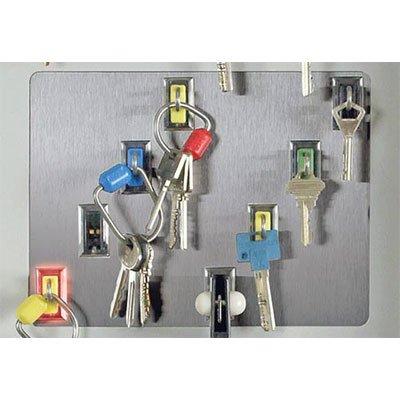
Morse Watchmans KeyWatcher Touch Key Control Modules

Hikvision AX PRO Wireless Alarm Keyfob

Security technologies promote real-time awareness in K-12 schools
Download
Technology's role in securing banks and financial institutions
Download
Integrated systems enable critical and compliant security for transportation
Download
Modernising physical access control
Download
Access. Intrusion. One estate.
Download
