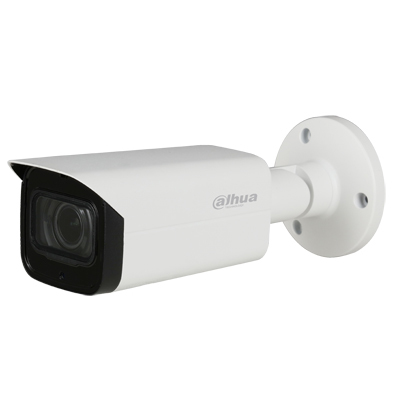


I have been thinking a lot about the U.S. government’s ban on video surveillance technologies by Hikvision and Dahua. In general, I question the wisdom and logic of the ban and am frankly puzzled as to how it came to be. Allow me to elaborate.
Chinese camera manufacturers
Reality check: the government ban is based on concerns about the potential misuse of cameras, not actual misuse. Before the government ban, you occasionally heard about some government entities deciding not to use cameras manufactured by Chinese companies, although the reasons were mostly “in an abundance of caution.”
Even so, I find the targeting of two Chinese companies – three if you count Hytera Communications, a mobile radio manufacturer – in a huge government military spending bill to be a little puzzling. I can’t quite picture how these specific companies got on Congress’s radar. The government ban is based on concerns about the potential misuse of cameras, not actual misuse What level of lobbying or backroom dealing was involved in getting the ban introduced (by a Missouri congresswoman) into the House version of the bill?
And after the ban was left out of the Senate version, was there a new wave of discussions to ensure it was included in the joint House-Senate version (with some minor changes, and who negotiated those?). It all seems a little random.
Concerns for the U.S.
Furthermore, the U.S. ban solves neither of the two main concerns that are generally used as its justification:
Concern: Cybersecurity. The U.S. ban “solves” the issue of cybersecurity only if both of the following statements are true.
- No security system that uses a Hikvision or Dahua camera or other component is cybersecure.
- Any system that does not use a Hikvision or Dahua camera or other component is cybersecure.
 |
| What level of lobbying or backroom dealing was involved in getting the ban introduced into the House version of the bill? |
The ban ignores the breadth and complexity of cybersecurity and instead offers up two companies as scapegoats. Our industry has sought to address cybersecurity, and the one principle that has guided that effort is that cybersecurity is an issue that must be addressed by manufacturers, consultants, integrators and end users – in effect, everyone in the industry. Cybersecurity does not begin and end with the manufacturer and banning any manufacturers from the market does not ensure better cybersecurity.
Concern: “Untrustworthy” Chinese companies. Hikvision and Dahua are only two Chinese companies. Any response to concerns about whether Chinese companies are trustworthy would need to cover many more companies that manufacture their products in China. Australian TV recently claimed that “all Chinese companies pose a risk. Because of Chinese laws, there is a requirement for companies to be engaged in espionage on behalf of the state.”
Even if one embraces that extreme view, the logic fails when only two companies are targeted. One source told me that 60 to 65 percent of the global supply of commercial video cameras are manufactured in China, so it’s a much bigger issue than two companies.The Chinese government has much more effective ways of conducting espionage than exploiting security cameras
And is U.S. security at risk unless or until it is cut off from more than half of the world’s supply of video cameras? Even Western camera companies manufacture some of their cameras and/or components in China. Why name only two (or three) companies, only one of which has ties to the Chinese government?
If the goal of the U.S. ban was to address the possibility of cybersecurity and/or espionage by the Chinese government, shouldn’t there be other companies and product categories included? Clearly, video surveillance is not the only category that has the potential for abuse. The Chinese government has much more effective ways of conducting espionage than exploiting security cameras.
Global response to U.S. ban
And now that the U.S. ban has been passed, how is the ban being misused to justify a new level of alarm about Chinese companies? Australian television effortlessly made the leap from “software backdoors” to a concerted and organised effort by the Chinese government to use cameras to be the “number one country for espionage.”
And it’s not just about government facilities: “Even on the street, [cameras] have the potential to inadvertently contribute toward Chinese espionage activity by providing real-time information about the situation on the ground,” says the Australian TV report.
![Even on the street, [cameras] have the potential to inadvertently contribute toward Chinese espionage activity by providing real-time information about the situation on the ground](https://www.sourcesecurity.com/img/moreimages/2018%20security%20beat/congress-discussion-bill-made-850.jpg) |
| If all Chinese companies pose a risk, why is the U.S. government targeting specific companies rather than all Chinese companies? |
If all Chinese companies pose a risk, why is the U.S. government targeting specific companies rather than all Chinese companies, or at least those with electronics or computer products that could be used for espionage? What about the espionage potential of the 70% of mobile phones that are made in China?
What about other consumer electronics such as PCs or smart TVs? How many government facilities that are eliminating Dahua and Hikvision cameras have employees who use iPhones or use other electronic equipment from China?
Artificial intelligence & IP-over-coax
Also, consider the impact of the ban on business. Hikvision and Dahua have had many successes in the video surveillance market, including in the U.S. market. They have added value to many integrators and end user customers. They have been on the forefront of important trends such as artificial intelligence and IP-over-coax. And, yes, they have made technologies available at lower prices.Cybersecurity issues have plagued several companies in the industry, not just Hikvision and Dahua
Cybersecurity issues have plagued several companies in the industry, not just these two, and both Hikvision and Dahua have worked to fix past problems, and to raise awareness of cybersecurity concerns in general.
Is a U.S. ban on two companies an appropriate response to a series of geo-political concerns that are much bigger than those two companies (and bigger than our entire market)? Should two companies take the brunt of the anti-Chinese backlash?
Video surveillance cameras
Is the video surveillance market as a whole better or worse for the presence of Hikvision and Dahua? Is it up to the U.S. government to make that call?
In some ways, thoughts of Chinese espionage are a sign of these uncertain political times. Fear of video surveillance is perfectly congruent with long-standing anxieties about “Big Brother;” suspicion about China taking over our video cameras just rings true at a time when Russia is (supposedly) controlling our elections. But should two companies be targeted while broader concerns are shrugged off?
Discover how AI, biometrics, and analytics are transforming casino security