What is the impact of remote working on security?
28 Apr 2021


Editor Introduction
During the coronavirus lockdown, employees worked from home in record numbers. But the growing trend came with a new set of security challenges. We asked this week’s Expert Panel Roundtable: What is the impact of the transition to remote working/home offices on the security market?


Home working has been a savior for many businesses, but it also brings new potential security threats. For example, there are cyber security risks as employees connect to corporate networks via their home networks and routers. These network endpoints need to be just as secure as a traditional office. All organisations handle sensitive data, and home working needs to be subject to effective mitigation and security training to ensure the data is kept safe. Undoubtedly, management of these potential risks is an opportunity for security systems and service providers to help their customers stay secure. As well as direct cyber security, there are physical security considerations, too. It is vital that any data stored on portable devices be safe within the home environment (or during transit) – which potentially means home security may need to be beefed up too – increasing demand for extended security networks to cover home workspaces as well.

One of the areas impacted most by remote working has been data security. Little consideration has previously been given as to how critical security information is stored and transmitted from home working locations. Another area has been on knowledge gathering and sharing, information transfer between team members. This is not generally as efficient remotely as when people are in the same room or building. When people work in silos then knowledge transfer is inhibited, innovation is shackled and learning opportunities are limited.

Pre-pandemic, home offices were thought of as a desolate place in people’s homes. But now, with millions making the move to remote working, those semi-permanent workspaces have introduced new security risks – particularly when it comes to the handling of sensitive data. Keeping clear desks has long been a battle for many office managers, for example, with it recognised as a key preventative to personal information being wrongly accessed and so falling foul of GDPR legislation. Today, there’s a growing issue for offices to stop personal information being left visible on multiple desks – including the millions of home setups and the neglected space at the office too. Not only is it imperative for office managers and their teams to handle data security in the correct way, but it’s now also fundamental for the data security market (think shredder manufacturers like ourselves) to educate data handlers on these processes and associated risks.

This response can go two ways – one being that it is shown that people can work remotely and still be proactive and productive. On the other hand, it can slow down the pace of innovation, as connecting and collaborating with peers has been subject to outside influences, such as lockdown measures, adjustments to home office life and even adjusting to at-home schooling. These are short-term impacts; but, looking long-term, we can start to deduce that we could be facing a global shift to reflect the changing hybrid work model of office and home office. From the security industry side, we are starting to see a shift in technological investments towards use cases to support this hybrid working model, such as technology to support biometric access, and other contactless measures that can help the back-to-work strategy of many different types of organisations.

As people across the globe face the continued threat of the coronavirus, the situation continues to be stressful for everyone. As for organisations taking into consideration safety of their employees, remote working or home office has become the norm. Security is an essential service and has been in demand even during the pandemic. Home security sales have significantly increased. There are a number of reasons, from business owners who have had to close shop and are now wanting to keep an eye on their buildings remotely to family members wanting to take care of their elderly loved ones. As the pandemic changes the world, it also brings new challenges and opportunities to security product manufacturers.
Editor Summary
For the business community, cybersecurity challenges are a big part of adapting to a work-from-home model. Secure connectivity to information systems is a basic principle of protecting important proprietary data, and existing home systems are not always up to the challenge. As our Expert Panelists point out, there are other issues, too, and the work-from-home trend is impacting physical security and even the need for better residential security systems.
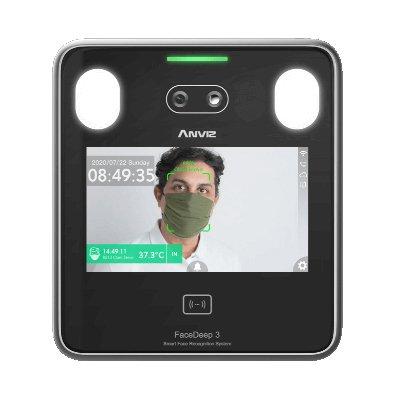
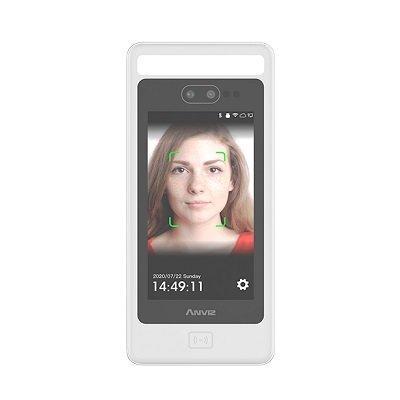
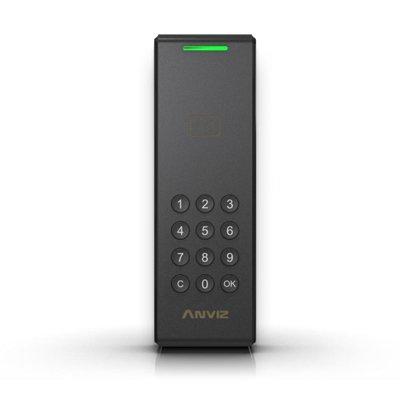
Anviz Global Inc. products




Anviz Global Inc. news

Access control, video surveillance, and intrusion detection systems evolved largely independently in the physical security industry. Integrating those systems to the benefit of an enterprise's overall security has traditionally fallen on security integrators working in cooperation with manufacturers. However, today's market has also evolved to include companies that provide "unified platforms,” bringing together various disparate security systems and functions under a single, centralised...

Anviz, a pioneer in intelligent security solutions, proudly announces the launch of W2 Face, its latest hybrid biometric access control and attendance terminal. Designed to meet the evolving needs of modern enterprises, the W2 Face combines facial recognition, fingerprint authentication, and RFID capabilities in a compact, intelligent device built for dynamic workplaces. Responding to market evolution As the access control landscape shifts toward integrated multi-biometric solutions, business...

The role of audio in physical security is multifaceted and increasingly vital, offering a layer of intelligence and interaction that access control and/or video surveillance alone cannot provide. Sounds provide crucial context to visual events. For instance, someone running might appear suspicious on video, but audio could reveal they are shouting for help, changing the interpretation entirely. Even so, historically speaking, audio has been an underused component in physical security. How is the...
Anviz Global Inc. white papers






Anviz Global Inc. case studies

When they talk about digitalisation, there is one topic that keeps coming up: Smart Office. Intelligent IoT solutions that makes the users’ everyday lives safer, more comfortable, and more efficient. Systems to centrally manage employees' access with no keys and physical cards - face recognition, manage employee time tracking, and secure office printing with the embedded face recognition reader, are now seen as state-of-the-art. Dürr, founded in 1896, is a mechanical and plant engine...

With the market constantly demanding security changes, Anviz has taken a bold step forward with the launch of the M7 Palm—a groundbreaking smart biometric access control terminal that harnesses the power of palm vein recognition technology. As the need for intelligence and security in building spaces continues to evolve, the demand for more compatible yet user-friendly access control solutions has never been stronger. The M7 Palm represents our answer to this challenge, offering a unique...

The Middle East has recently expanded its real estate market as the region's economy grows and urbanisation accelerates. This trend has led to an increasing demand for smart security, and the pace of digital intelligence change is gradually increasing. The security industry in the Middle East is rapidly growing, driven by the government's strong emphasis on national security and terrorism prevention. Centralised systems management Significant attention and investment have been directed towar...
Anviz Global Inc. videos


CrossChex Mobile App Guide for Access Control - M3 PRO

Anviz releases FaceDeep 5 and FaceDeep 5 IRT with touchless face recognition terminal with temperature detection features

Anviz P7- PoE touch fingerprint and RFID access control device
Expert commentary

Security beat

Anviz Global Inc.
32920 Alvarado-Niles Rd Ste 220, Union City, CA 94587
Toll-free: +1-855-ANVIZ4U (855-268-4948)
Email: info@anviz.com
Anviz Singapore
16 Collyer Quay #12-01
Income@Raffles Singapore 049318
Email: info@anviz.com


