Wireless security - Round table discussions

Analogue video cameras are still used in a variety of applications, primarily because yesterday’s robust and flexible technology is still functioning today, although it has been years, or even decades, since the initial installation. In many cases, this past generation of security cameras is still reliable and effective. Embracing an installed base of analogue cameras is often the most cost-effective approach when updating or expanding a surveillance system. But what about the futur...

A sad irony in the physical security industry has been the lax attention paid historically to the cybersecurity elements of our industry’s systems. However, the picture has improved starkly in recent years as manufacturers have stepped up to meet the cybersecurity challenges and awareness of the issue has become much higher. We asked this week’s Expert Panel Roundtable: What's new in cybersecurity for physical security systems?

Integrators and installers are on the front line of creating most security systems. They are also usually the first point of contact if there is a problem with the system. In general practice, many end users deal with integrators and seldom if ever speak to the manufacturer. Should it be that way? We asked this week’s Expert Panel Roundtable: Why does a manufacturer need a direct relationship with an end user?

Every security system is unique, of course. Specific to each installation are the problems the customer and the integrator may experience along their journey. However, given the installation of hundreds of physical security systems, there are commonalities that occur. We asked this week’s Expert Panel Roundtable: What are the major pain points when installing a physical security system?

Biometrics is both a mature technology in the physical security world and an innovation perpetually on the cutting edge. Biometric technologies received a boost during the COVID pandemic when “touchless” became a buzzword with particular relevancy to the world of biometrics. Higher security needs, such as “two-factor authentication,” are also driving demand for biometric products. We asked this week’s Expert Panel Roundtable: What are the latest technology trends in...

The upcoming ISC West trade show in Las Vegas will offer innumerable networking and learning opportunities for attendees. Manufacturers will take the opportunity to promote their businesses and showcase products and services to a targeted audience. Best of all, the event will be "in person," an advantage we should never again take for granted. We asked this week's Expert Panel Roundtable: What big announcements do you expect at ISC West 2023?

There’s always more to talk about in our Expert Panel Roundtable discussions, and we appreciate the variety of opinionated responses offered throughout the year. Looking back at 2022, we found several random and uncategorised Expert Panel responses that were not previously published. We have rescued these responses from our cutting-room floor and present them here in the interest of generating even more discussion.

With 2023 well underway, it’s a good time to look back on what we learned in the tumultuous previous year. In the security marketplace, there was no shortage of technology developments and a few challenges that kept 2022 interesting, to say the least. But what can we learn from the past? We asked this week’s Expert Panel Roundtable: What changes had the biggest impact on the security marketplace in 2022?

Some trends in the security marketplace continue for several years, while others come and go quickly and are soon forgotten. Scrutinising a trend’s expected lifespan can help predict its impact on the marketplace. Trends that evaporate seemingly overnight are not useful for the greater good, and they can also distract customers from more enduring subjects. Unfortunately, sometimes hype is just hype. We asked this week’s Expert Panel Roundtable: Which new security trend do you think w...

Connectivity is literally the difference between products operating individually and those combined into a more powerful system. Many of the devices that connect today’s security products reflect mature technologies that have been proven over time. However, innovation is also driving the need for new approaches to connectivity and networking. We asked this week’s Expert Panel Roundtable: What are the new developments in networking and connectivity for security?

Machine learning refers to the evolving ability of computer systems to learn and adapt without following explicit instructions. It essentially involves the use of algorithms and statistical models to analyse and draw conclusions from patterns in data. In the security industry, when it comes to buzzwords, artificial intelligence (AI) has a higher profile than the more specific related term, although machine learning is a better description of tools that are gaining popularity in physical security...

Obtaining needed funding for security technology improvements often requires going to senior management with a hat in hand. But requests for more security funding from the C-suite may fall on deaf ears unless a security professional can make a compelling case for the needed expenditures. It starts with learning to speak in terms that resonate with upper management and also involves carefully analysing the benefits of security investments to the broader enterprise. We asked this week’s Expe...

Generally speaking, security becomes a topic of conversation among the general public only after something bad has happened. The context in these situations is: What went wrong? Largely absent from awareness by the public at large is how often things go right; that is, how often security systems work as intended to avoid expensive or even deadly consequences. We asked this week’s Expert Panel Roundtable: How can the industry communicate the value of security to the public?
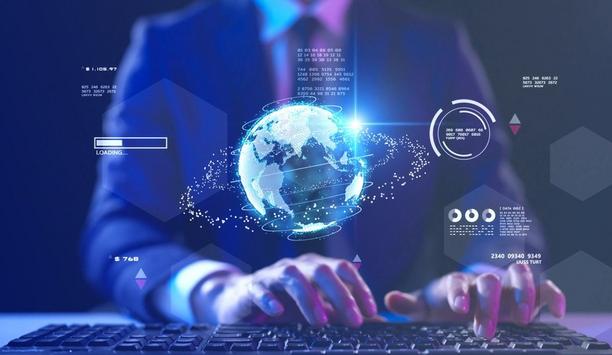
The Metaverse sounds like the plot of the latest summer action movie. In reality, it’s a technology - or, more accurately, a group of technologies - that will likely have a transformational impact on a host of markets. For security, the Metaverse has an extensive list of needs. It also presents some opportunities. We asked this week’s Expert Panel Roundtable: What does the Metaverse mean for security?

The Internet of Things (IoT) is driving innovation in the security marketplace, just as it is in almost every other market. IoT devices, also known as ‘edge devices’, provide sensing, processing ability, software, and other technologies to connect and exchange data. The most common edge devices in the world of IP security are video cameras, which are becoming more intelligent and capable of processing the data they collect. We asked this week’s Expert Panel Roundtable: How are...

It’s safe to say there has been more change in the workplace in the last two years than ever before. Driven by the pandemic, technology has both allowed greater flexibility for employees and enabled continuing prosperity for many companies that otherwise would have had to cease operation. But have security protocols and practices done enough to enable companies to keep pace with the changes? We asked this week’s Expert Panel Roundtable: Have security protocols and practices kept up w...

Early in the pandemic, before the mechanisms of COVID spread were clearly understood, there was talk about the disease being transmitted through contact with surfaces. Such concerns created a windfall for manufacturers of hand sanitizer, and broadly changed the perceived risks of touching surfaces, perhaps forever. Touching the same surface as hundreds of other people suddenly became less desirable, thus boosting the fortunes of “touchless” access control and security devices. But wi...

The intersection of consumer electronics and the physical security marketplace is a fertile sector for growth and innovation. Consumers increasingly have the same high expectations for the operation of their workplace technologies as they are accustomed to in the digital world at large. We asked this week’s Expert Panel Roundtable: How do developments in personal electronics impact customer expectations in the physical security market?

The COVID-19 pandemic has complicated the task of securing hospitals and healthcare facilities by adding new concerns about disease transmission to the long list of other threats healthcare security professionals face. Hospital security must also crack the code to both allow open public access to healthcare facilities while keeping out violence and other security threats. We asked this week’s Expert Panel Roundtable: What are the security challenges of the healthcare industry?

The death of Michael Brown at the hands of police in Ferguson, Missouri, in August 2014, highlighted to the public, the importance of body-worn cameras. There was no bodycam footage of the Ferguson tragedy. Arguably, it would have shed additional light on the shooting. Since then, body cameras have become a tangible legacy of Ferguson, Missouri. Bodycam footage is seen as providing greater accountability and ensuring an impartial record that can support, or debunk, any claims of police miscondu...

A new generation of security professional is waiting in the wings. They will be faced with unprecedented challenges, as they seek to transform the security marketplace to the ‘next level’. Technology changes ensure the market will be very different 10 years from now and the fresh labour pool will need to be able to meet the host of new challenges. We asked our Expert Panel Roundtable: What exciting career opportunities in the security industry await the next generation?

Since the advent of the physical security industry, access control has been synonymous with physical cards, whether 125 kHz ‘prox’ cards or the newer smart card alternatives. However, other credentials have also come on the scene, including biometrics and even smart phones. Some of these choices have distinct cost and security advantages over physical cards. We asked this week’s Expert Panel Roundtable: How soon will the access control card become extinct and why?

Cost is a reality to be managed. No matter how powerful or desirable a technology may be to a customer, the sale often comes down to the basic question: Can I afford it? And affordability extends not just to the purchase price, but to the cost of technology over its lifespan. In addition to advances in technology capabilities, the security industry has also achieved inroads to make its offerings more worth the cost. We asked this week’s Expert Panel Roundtable: What is the physical securi...

“Deep learning” is recently among the more prevalent jargon in the physical security industry, and for good reason. The potential benefits of this subset of artificial intelligence (AI) are vast, and those benefits are only now beginning to be understood and realised. But how can we separate the marketing hype from reality? How can we differentiate between future potential and the current state of the art? To clarify the latest on this new technology, we asked this week’s Exper...

The idea of touchless systems has gained new levels of prominence during the last year, driven by the global COVID-19 pandemic. Contactless systems have been part of the industry’s toolbox for decades, while technologies like facial and iris recognition are finding new uses every day. We asked this week’s Expert Panel Roundtable: Which security markets are embracing touchless, contactless systems and why?

Many of us take critical infrastructure for granted in our everyday lives. We turn on a tap, flip a switch, push a button, and water, light, and heat are all readily available. But it is important to remember that computerised systems manage critical infrastructure facilities, making them vulnerable to cyber-attacks. The recent ransomware attack on the Colonial Pipeline is an example of the new types of threats. In addition, any number of physical attacks is also possibilities. We asked this we...
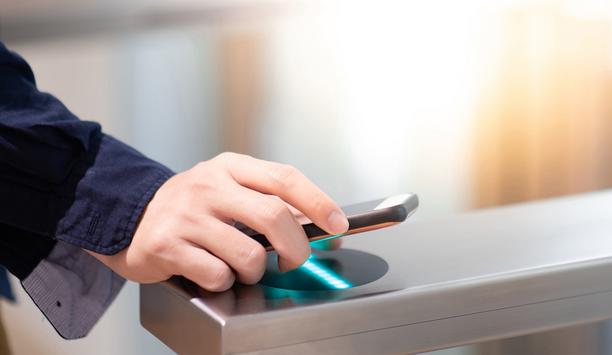
There is a broad appeal to the idea of using a smartphone or wearable device as a credential for physical access control systems. Smartphones already perform a range of tasks that extend beyond making a phone call. Shouldn’t opening the door at a workplace be among them? It’s a simple idea, but there are obstacles for the industry to get there from here. We asked this week’s Expert Panel Roundtable: What are the challenges and benefits of mobile access control solutions?

Driven by technology developments such as voice recognition, smart devices and the Internet of Things, our homes are getting “smarter” all the time. Increasingly, we expect our residential environments to be responsive to our voice commands, whether we are adjusting a thermostat, turning on a light, or lowering the window shade. Smarter home integration yields new opportunities and challenges for home security, too, which contributes an element of safety and protection to the conveni...

A basic tenet of sales is ABC – always be closing. But it's a principle that most professional salespeople would say oversimplifies the process. Especially in a sophisticated, high-tech market such as physical security, the required sales skills are much more involved and nuanced. We asked this week's Expert Panel Roundtable: What unique characteristics are required of salespeople in the arena of physical security systems?

Where does the time go? Before you know it, here we are at mid-year reflecting on an eventful first half of 2018 in the physical security market. It’s also a good time for our Expert Panel Roundtable to pause and look ahead at what we might expect in the second half of the year. We asked this week’s Expert Panel Roundtable: What technology development will have the greatest impact in the second half of 2018?

Technology's role in securing banks and financial institutions
Download
Security technologies promote real-time awareness in K-12 schools
Download
Integrated systems enable critical and compliant security for transportation
Download
Modernising physical access control
Download
Access. Intrusion. One estate.
Download
