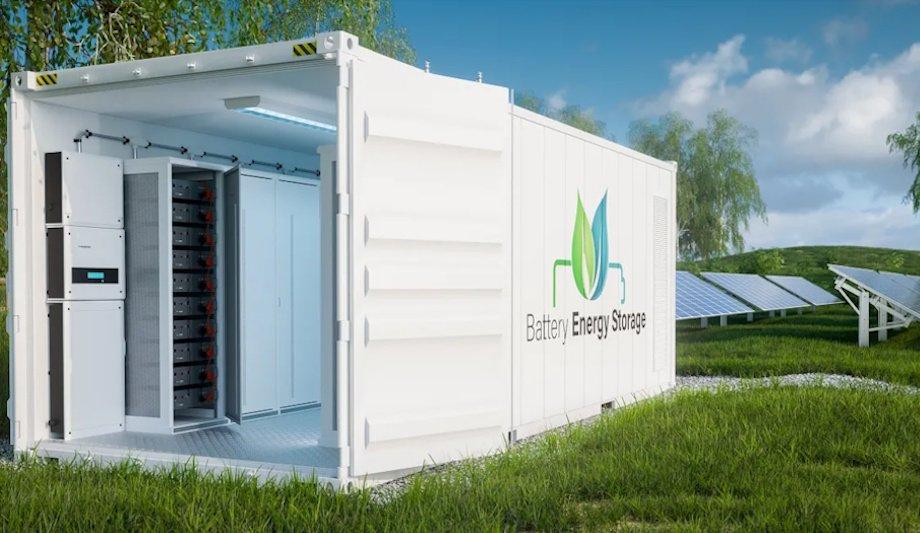
As the adoption of renewable energy accelerates, Battery Energy Storage Systems (BESS) have become crucial in addressing the demand for consistent, yet decentralised power on a large scale. These systems are designed to collect surplus electricity from solar and wind energy, storing it for later use. This facilitates grid stabilisation by ensuring an uninterrupted power supply and compensating for the fluctuating nature of renewable sources. For example, excess energy produced by solar farms during the day can be stored and utilised at night through BESS.
Lithium-ion batteries are used in over 90% of these large-scale energy storage systems, with investment in BESS expected to surge at an annual rate of over 30%, reaching $12.1 billion by 2025. These batteries are favoured for their superior energy density, rapid charging capabilities, and longevity compared to traditional battery types.
Addressing safety concerns in battery energy storage systems
Lithium-ion batteries in BESS pose specific safety challenges that can create significant fire hazards
Despite their benefits, lithium-ion batteries in BESS pose specific safety challenges that can create significant fire hazards if not managed properly. The key to preventing such hazards lies in using comprehensive fire detection and prevention strategies proactively. If a thermal runaway event occurs—an overheating situation—that particular cell's heat can cause a cascade effect in the system, risking substantial damage and endangering the safety of emergency responders.
Past incidents highlight these risks, such as a fire in April 2022 at a 10 MW facility in Chandler, Arizona, which took fire crews four days to extinguish. Similarly, a 2019 event in Surprise, Arizona, caused by an overheated battery, led to serious injuries to first responders and considerable damage to the facility and neighbouring areas.
Understanding abuse factors
Lithium-ion batteries must be maintained within certain environmental parameters to prevent failure. Exceeding these conditions triggers abuse factors that can lead to thermal runaway. Recognising these factors early can help prevent them:
- Electrical Abuse: If battery cells exceed voltage limits during charging or discharging, overheating could occur, triggering a potential fire.
- Mechanical Abuse: Physical damage, such as crushing or puncturing, can result in overheating due to vibrations or impacts.
- Thermal Abuse: When operational temperatures exceed safe limits, overcharging can cause the breakdown of battery electrolytes, creating flammable gases.
The importance of early failure detection
Failure to handle abuse factors can result in gas venting from batteries, ruling to pressure and heat build-ups
Failure to address abuse factors can result in gas venting from batteries, leading to pressure and heat build-ups, eventually causing smoke emission and imminent thermal runaway. It is critical to detect battery failures as early as possible to avoid disasters.
Standard smoke and heat detectors often used in mobile BESS units may provide alerts only after a fire has begun, which is too late to prevent thermal runaway. These systems are also difficult to maintain due to design constraints.
Preventive measures through technology
A comprehensive approach incorporating advanced detection technologies and battery management systems can significantly mitigate risks. Here's how each component contributes:
- Battery Management Systems: These monitor crucial variables like voltage and temperature to identify abuse factors.
- Temperature and Humidity Sensors: These instruments assess air conditions, including ambient temperature and vibration impacts.
- Advanced Detection Systems: Innovations in detection provide early warnings of adverse conditions within BESS, allowing timely emergency responses.
- Thermal Imaging Cameras: These devices graphically represent temperature distributions, aiding in early detection of overheating.
- Off-Gas Detection: Alerts at the first stages of battery venting enable quick action to prevent further damage.
- Very Early Warning Smoke Detection: Utilising ultra-sensitive sensors, these systems monitor signs of upcoming fire events.
In cases of off-gas events, facilities can rapidly react by shutting down systems or alerting emergency responders, thus controlling the spread of fire between cells.
Adapting to evolving safety standards
The fire and life safety sector continues to adapt to address the risks linked with BESS accurately. Current standards help safeguard building occupants, the public, and emergency personnel through various regulations and codes. Notably, the International Fire Code (IFC) 2021 and National Fire Protection Agency (NFPA) 855, along with UL 9540 and UL 9540A standards, offer guidelines for the safe design, installation, and management of BESS.
With ongoing advancements, it is vital for operators to stay updated with these standards to ensure the safe implementation of BESS. As the world progresses towards greener energy solutions, so must the methodologies to protect these systems from potential hazards. Advanced technologies such as off-gas detection, early smoke detection, and thermal imaging are essential tools for maintaining high safety standards in BESS operations.
As the world transitions to renewable energy, Battery Energy Storage Systems (BESSs) are helping meet the growing demand for reliable, yet decentralised power on a grid scale.
These systems gather surplus energy from solar and wind sources, storing it in batteries for later discharge. This process helps stabilise the grid by ensuring a steady power supply and mitigating the variability associated with renewables. Excess daytime electricity from solar farms, for instance, can be stored at a BESS facility for use overnight.
More than 90% of these grid-sized energy storage systems utilise lithium-ion batteries with spending for new facilities expected to grow at an annual rate of more than 30%, reaching $12.1 billion by 2025. Lithium-ion batteries offer higher energy density, faster charging and longer life than traditional batteries.
Addressing BESS safety concerns
Lithium-ion batteries in energy storage systems have distinct safety concerns that may present a serious fire hazard unless operators understand and address the risk proactively with holistic, advanced fire detection and prevention methods.
Once a lithium-ion battery overheats in a BESS and the process of “thermal runaway” occurs, it can be nearly impossible to extinguish, potentially causing catastrophic damage and risking the lives of first responders called to put out the fire. Such an event occurred in April 2022 at a 10 MW storage facility in Chandler, AZ, where fire crews struggled to extinguish a blaze for four days.
In 2019, a fire and explosion at an energy storage system in Surprise, AZ, near Phoenix, was triggered by an overheated lithium-ion battery injuring several first responders and resulting in significant damage to the facility and disruption to the surrounding community.
Abuse Factors
Lithium-ion cells are prone to failing if not kept within specific environmental conditions. When these conditions are compromised, so-called abuse factors can lead to thermal runaway. Awareness of these abuse factors can help operators prevent thermal runaway at its earliest stage.
- Electrical Abuse: This occurs when a battery exceeds voltage limits during charge or discharge and overheats. The simultaneous operation of these batteries poses the risk that any one of the battery cells could exceed voltage limits during charge or discharge and can cause overheating that triggers a potential fire event.
- Mechanical Abuse: This can be caused by physical or mechanical damage to the battery such as a crush, indentation, or puncture from vibration or shock.
- Thermal Abuse: This is initiated when the operational temperature exceeds the limits of the battery. If caused by overcharging, the extra current triggers a chemical reaction that breaks down the battery’s organic liquid electrolytes and changes them from a liquid to a highly flammable gaseous state.
Why is the earliest possible detection of a battery failure
When an abuse factor continues unaddressed, more of the liquid electrolyte from the battery will convert to gas, causing an internal build-up of pressure sufficient to vent or rupture the battery seals and resulting in an off-gassing event. Eventually, as more gas is generated, internal pressure and heat continue to increase rupturing, melting the separator, and releasing the smoke. By this point, thermal runaway is imminent.
A single cell failure can quickly overheat and spread to surrounding cells. That’s why the earliest possible detection of a battery failure is crucial to preventing a potential disaster caused by thermal runaway.
It is common for mobile BESS units to utilise traditional heat and smoke detectors in interior spaces, but these sensors are not equipped to provide sufficiently early warning of an impending fire. They are only sensitive enough to detect smoke after a fire has started, which is much too late to stop thermal runaway from igniting an entire bank of batteries. Furthermore, these pre-installed systems cannot be serviced, monitored, or maintained to ensure they are in basic working order due to unit design.
The best protection is prevention
A holistic approach using advanced detection and performance-based solutions combined with battery management systems can work together to establish layers of safety and fire protection.
- Battery Management Systems monitor voltage, current, and temperature to identify any battery abuse factors. While this is an important initial layer, it should not be the only layer of protection.
- Temperature and Humidity Sensors measure the temperature of the air surrounding the sensor including ambient room temperature, shock/vibration/AC power quality and conditions.
- Advanced detection innovations provide the very earliest possible intelligence about conditions inside the BESS. These early warning systems can be professionally tested, serviced, maintained, and monitored at the fire alarm control panel.
- Thermal Imaging Cameras graphically illustrate the temperature of the objects and equipment the camera can see.
- Off-Gas Detection technologies can provide an alert in the initial stage of lithium-ion battery failure when venting of electrolyte solvent vapors begins and prior to thermal runaway.
- Very Early Warning Smoke Detection systems use ultra-sensitive sensors to provide early warning of an impending fire event, buying time to initiate an appropriate emergency response to prevent injury, property damage or business disruption.
If an off-gas event occurs, sensors can be used to quickly notify facility operators to shut down the system or contact first responders to mitigate the spread of fire from cell to cell.
Responding to the ever-evolving fire and life safety industry
Fire and life safety industry standards are evolving to minimise the fire risks associated with BESSs. Ensuring appropriate criteria to address the safety of such systems in building codes and fire codes is an important part of protecting the public, building occupants, and emergency responders.
- International Fire Code (IFC) 2021 1207.8.3 Chapter 12, Energy Systems requires that storage batteries, prepackaged stationary storage battery systems, and pre-engineered stationary storage battery systems are segregated into stationary battery bundles not exceeding 50 kWh each, and each bundle is spaced a minimum separation of 10 feet apart and from the building wall.
- National Fire Protection Agency (NFPA) 855 establishes requirements for design, construction, installation, commissioning, operation, maintenance and decommissioning of stationary energy storage systems and applies to battery installations over 70 kWh.
- UL 9540—Standard for Safety Energy Storage Systems and Equipment outlines safety requirements for the integrated components of an energy storage system requiring that electrical, electro-chemical, mechanical and thermal energy storage systems operate at an optimal safety level.
- UL 9540A—Test Method for Evaluating Thermal Runaway Fire Propagation in Battery Energy Storage Systems implements quantitative data standards to characterise potential battery storage fire events and establishes battery storage system fire testing on the cell level, module level, unit level and installation level.
Design, construction, installation, and operation of a BESS
Because these requirements are continuously evolving, careful investigation of all standards must be performed before beginning the design, construction, installation, and operation of a BESS.
Lithium-ion battery storage facilities are pivotal to the transition to a greener economy. Just as eco-friendly technology is evolving to strengthen the renewable energy industry, advanced fire prevention and life safety technology must also advance to protect it. Off-gas detection, very early warning smoke detection and thermal imaging camera systems combined with advanced alarm monitoring can help keep BESSs operating at the highest levels of safety.