

The potential for catastrophic injury in the petrochemical industry makes safety training and credentialing of employees imperative. Coordinating this process for a variety of industries, including many in the petrochemical fields of southern Alabama, is Training Solutions for Construction and Industry (TSCI).
The mission of TSCI is to promote and facilitate workforce development ‘by providing industry-recognised training with portable credentials to create a diverse, trained and sustainable workforce’. TSCI provides computer-based and instructor-led training developed by the Association of Reciprocal Safety Councils (ARSC) and based on requirements from the Occupational Safety and Health Act (OSHA) and the U.S. Department of Homeland Security. Within one day, a person can gain all of his or her required training for a year, and it will be accredited.
ID cards with encoded results
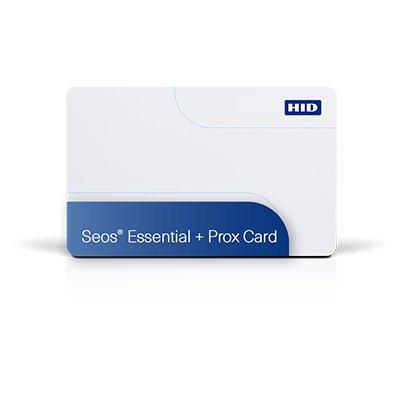
Workers who successfully complete a TSCI safety orientation receive a tamper-proof ID card, encoded with the results of his or her training. “ID cards give students a record of their training and eventual access to a plant,” said Jack Fecas, Operations Manager, TSCI. The card is valid for one year. If other safety or specialised training is completed during that year, the card is encoded with the additional credentials. All member plants of TSCI and ARSC member organisations recognise and accept the ID card.
Workers look to TSCI for training in such areas as fire safety, process safety management, confined space entry, respiratory protection, hazardous energy, basic first aid and CPR, scissor lift, scaffolding, excavation and trenching, elevated work surfaces, electrical safety and disaster site safety. The Office of Homeland Security also can set criteria for credentialing, such as asking for drug screen results.
Site-specific and fire safety training TSCI provides site-specific training, which might include a focus on fires or explosions at a refinery or dust-particle respiratory safety at a mill
In addition to its basic orientation training programs, TSCI provides site-specific training, which might include a focus on fires or explosions at a refinery or dust-particle respiratory safety at a mill. “Some companies using dangerous materials have wind socks to indicate which direction the wind is blowing, telling employees which exit route is safe for use at that time,” said Fecas. “This kind of training needs to be site-specific.” Other site-specific training might include basic alarm system safety, teaching employees what to do when they hear a constant alarm versus what they might do if they hear several short bursts of an alarm.
About 1,500 workers take the basic orientation program from TSCI every year, and the numbers are growing. With only one printer, clearly more capacity was needed.
Fargo’s DTC550 printer/encoder
Fecas knew that his organisation needed more capacity in order to handle the increasing volume, so he began looking for an additional printer – one that was fast, yet reliable. He needed barcode code technology and a printer that could encode new data as workers took additional classes. TSCI found all of the requirements it was seeking in Fargo’s DTC550 Direct-to-Card printer/encoder from ID Wholesaler.
Not surprisingly, the security offered by the DTC550 was a primary selling point for Fecas. In addition to being recommended by other ARSC Safety Councils, it just made good business sense. TSCI chose a standard holographic overlaminate available with the DTC550, which improves the card’s durability and reduces the risk of counterfeiting.
More than 80 percent of training occurs at the TSCI offices, according to Fecas, but it also can take place at a plant site. With the new DTC550 able to handle the increasing demand at TSCI, the old printer will be used for remote training, thus increasing TSCI’s ability to meet the needs of its customers.
Workspace security
The common curriculum of our safety training levels the playing field, so when workers leave TSCI they can recognise the hazards in the worksite and protect themselves and their co-workers"
“The common curriculum of our safety training levels the playing field, so when workers leave TSCI they can recognise the hazards in the worksite and protect themselves and their co-workers,” Fecas added. “They still have information to learn at the plant, but they are ready to go to work.”
“We have had ID cards since we began in 1995,” he said, “but with the early cards, there was much more hand-work. Our operator had to add a photo by hand and then wait for the laminating machine to heat up before the card could be laminated. The evolution has been very interesting. In addition, we have been very pleased with the service provided by the Fargo printer and by ID Wholesaler. I can pick up the phone or send an e-mail, and a representative is available for assistance.”
Most secure system
“We recommended the DTC550 printer because it is very reliable and has more than one holographic laminate choice,” said Jeff Gunhus, ID Wholesaler Sales Team Leader. “TSCI originally bought just the printer and had to wait until its next budget cycle to purchase the lamination unit. They liked the fact that the Fargo printer had an upgrade path. It is important to listen to our clients’ wants, needs and concerns,” Gunhus added. “Then we simply do our best to help them out.”
“If a company is going to do business nowadays, it needs to be secure,” adds Fecas. “Our business relies on plants and regulatory agencies trusting what we do. We need to be on the cutting edge when it comes to information technology. The best system is the most secure system. We made a decision to go with what has been tried and true and working in industry now.”