Private sector security - Expert commentary

Access control for buildings is nothing new. Early forms of security access for business security systems were introduced in the 1960s, as business owners and managers looked for alternatives to keys, as a result of needing to frequently replace them, when there was a change in personnel. It’s only in recent years that the urgency to implement smarter, more efficient, and convenient forms of access control has increased, in the context of public and private sector digital transformation....

As we navigate the new normal, the power of choice and flexibility continues to take centre stage. We’ve grown accustomed to the choice to work from home or virtually anywhere and the flexibility to have everything delivered (sometimes even right into your fridge!). Seamless access control With this, we are seeing heightened demand for seamless access control through smart locks and mobile credentials. This powerful combination creates exciting new opportunities to meet resident demand f...

Corporate global security operations centres (GSOCs) bear the responsibility for protecting C-suite executives from physical and reputational harm amid the social upheaval, extreme weather events, and escalating cyber threats. That mission, daunting as it is, becomes more difficult when GSOCs lack the data necessary for conducting a comprehensive threat assessment. Threat intelligence Unfortunately, many centres never move past basic threat intelligence which focuses on scenario-driven queries...

As we enter into 2022, there is still a level of uncertainty in place. It’s unclear what the future holds, as companies around the world still contend with the COVID-19 pandemic. Remote working has been encouraged by most organisations and the move to a hybrid working system has become ‘business as usual’, for the majority of businesses. Some have reduced their office space or done away with their locations altogether. Following best security practices With all this change in...

There is no denying that the COVID-19 pandemic has radically changed the way we work. In May 2021, 31% of the countries workforce was still working remotely, with 71% of businesses in professional, scientific, and technical industries remote-working. Work patterns shifting Although the conversation often focuses on office workers, the COVID-19 pandemic has impacted the way many other, non-office sectors operate. In the security industry, since the introduction of lockdowns and social distancin...

They say nothing stays the same for long, and this has never been truer than in today’s world of technology and innovation. The 21st century has seen rapid changes and every day brings a new update in one of the many segments of technology. Technology is evolving at such a rapid rate, due to a phenomenon dubbed accelerating change. Each new improvement is now a stepping stone, enabling stronger and better generations of technology, at faster speeds. Accelerating change evolving across all...
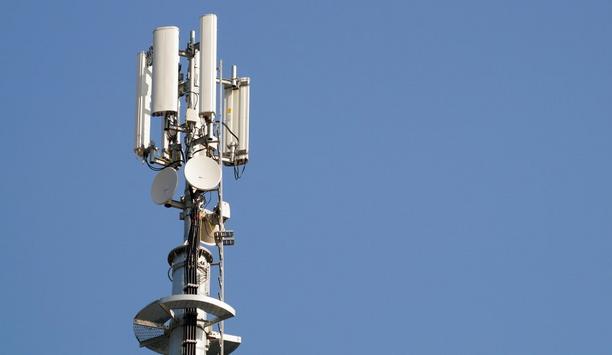
Businesses large and small rely on their CCTV systems to deter intruders and provide recorded evidence of security incidents. Overtime, CCTV has evolved to offer real-time intrusion detection and monitoring, and businesses now expect easy, secure and anytime access to cameras, and data. For that, they need connected CCTV systems. These modern installations can benefit from cellular connectivity, helping businesses protect their sites, while also supporting enhanced capabilities for CCTV to deliv...

In the field of access control, face recognition has come a long way. Once considered too slow to authenticate people's identities and credentials in high traffic conditions, face recognition technology has evolved to become one of the quickest, most effective access control identity authentication solutions across all industries. Advancements in artificial intelligence and advanced neural network (ANN) technology from industry leaders like Intel have improved the accuracy and efficiency of fa...

Gregor Schlechtriem has worked in the access control market for over 20 years and is now responsible for the Access & Intrusion Business Unit at Bosch Building Technologies. In this interview, the expert talks about key industry trends, the impact of the COVID-19 (Coronavirus) pandemic, technical innovations and his company’s strategy. Mr. Schlechtriem, you have many years of experience in the security technology market. What is your background and what are your responsibilities as Se...

Recent cyber-attacks have disabled and even shut down physical assets. Robust foundational security and training staff, able to recognise an attack can help mitigate the threat, as ABB’s Rob Putman explains. Edge devices and data analytics As cyber security specialists, we must navigate an ever-changing threat landscape, one that is made even more complex by the increased interconnectivity between Operational Technology (OT) and Information Technology (IT), as companies look to leverage...

The COVID-19 pandemic is only accelerating the expansion of Automation, Robotics, Machine Learning (ML) and Artificial Intelligence (AI), and changing how people live their daily lives. This expansion leads the way with technologies that are developed to solve problems, improve operations, streamline processes and assist people, to focus on learning new skills, creativity, and imagination. Transformation of the physical security industry One of the latest industries to be permanently transform...

Today’s organisations face numerous diverse threats to their people, places and property, sometimes simultaneously. Security leaders now know all too well how a pandemic can cripple a company’s ability to produce goods and services, or force production facilities to shut down, disrupting business continuity. For example, a category three hurricane barreling towards the Gulf of Mexico could disable the supplier’s facilities, disrupt the supply chain and put unexpected pressure o...

Intrusion alarm systems are currently facing a growing number of potential error sources in the environment. At the same time, alarm systems must comply with increasingly demanding legal requirements for sensors and motion detectors. As a future-proof solution, detectors equipped with Sensor Data Fusion technology raise the level of security while reducing the risk of cost- and time-intensive false alarms. This article provides a comprehensive overview of Sensor Data Fusion technology. Anti-mas...

From analogue to digital, from stand-alone to interlinked, building systems are in a state of transition. Moreover, the rate of change shows no sign of slowing, which can make it difficult to keep up to date with all the latest developments. If asked to pinpoint the single biggest driver of this revolution, one could point out the growing clamour for platform convergence. A security guard in a building doesn’t want to use different systems to check video cameras, fire alarms or if someone...

Today, we live in a technology-obsessed age. Whichever way you look, it’s hard to avoid the increasing number applications, products and solutions that continue to redefine the boundaries of what we previously thought possible. From autonomous vehicles and edge computing to 5G and the Internet of Things, all facets of our lives are continuing to evolve, thanks to an endless stream of differentiated innovations. In this article, we’ll be focusing on the latter of these - the Internet...

Heras was a premium partner exhibitor at this year’s International Security Expo (ISE) – and it’s fair to say that visitors couldn’t miss the stand, which was at the entrance of the Grand Hall at London’s Olympia. Heras’s Country Marketing Manager (UK) Rebecca Hughes pinpoints five things that the Heras team learned from the show and talking to visitors. 1) Physical still just as important as cyber Cyber(security) was the buzzword of the show – and t...

As the number of connected devices increases worldwide, the ways that they are being used, designed, and tested have also expanded. The rise of connected devices is demanding engineers to harness the power of the internet of things, which is expected to hit 28 billion by 2025. A comprehensive approach to device design is needed more than ever to address the challenges that this rapid growth will bring. Why engineers should be using IoT technology in product design The demand for devices desig...

The impact of the COVID-19 pandemic has accentuated our digital dependency, on a global scale. Data centres have become even more critical to modern society. The processing and storage of information underpin the economy, characterised by a consistent increase in the volume of data and applications, and reliance upon the internet and IT services. Data centres classed as CNI As such, they are now classed as Critical National Infrastructure (CNI) and sit under the protection of the National Cybe...

Access control and management of trusted identities are the building blocks of security, safety, and site management policies for many businesses and organisations. The current pandemic has compounded this with the introduction of new policies and regulations, particularly around social distancing and contact tracing. Most organisations will have some form of legacy access control in place, ranging from the most simplistic options, such as locks and keys, to technology-based systems. The issue...

Everyone in security understands the significance of events, such as trade shows, road shows, seminars, galas and meet-and-greets. Whether virtual or in-person, these gatherings are important for a number of reasons. Role of security events For start-ups and high-profile manufacturers alike, security events have been the place to display new products, interact with key customers and strengthen existing partnerships. They serve as a forecast for evolution, showcasing the latest advancements in...

For many businesses and organisations, the term 'authentication' is synonymous with 'password' or 'multi-factor authentication (MFA)’. However, because today's business ecosystem is complex and stretches across distributed workforces with work from home, BYOD policies, and multiple cloud environments, it is very challenging to efficiently recognise and authenticate identities of people, processes, and devices throughout the enterprise using traditional methods. The problem with passwords...

Travel and tourism are a colossus of a global industry. From backpackers to private jets, people from all backgrounds can explore the world in a variety of different ways for several different purposes. Many may associate the mention of travel with leisure – holidays, cruises, or other pastimes. However, a significant proportion of the industry is driven by travel for business-related means. According to the World Travel & Tourism Council (WTTC), business travel expenditure exceeded...

It has long been recognised that no one is safe from cyber-attacks, but some sectors face a much higher level of threat than others. Critical infrastructure sectors such as utilities, energy and industrial manufacturing are some of those that face an intense level of interest from cyber criminals and nation-state groups across the globe. The impacts of a successful attack can have detrimental consequences, for both the cyber and physical side of the business, in terms of business disruption, ec...

Whenever you say the word “security” in today’s world of digitalisation and technology, minds immediately jump to online security. Encryption, passwords, and website security are all common areas of concern for today’s security teams – so much so that we often pass over physical security installations entirely. But we shouldn’t, because contrary to popular belief, security doors aren’t just for banks and safes. High-security doors are deployed and used...

With the continued rolling back of COVID restrictions in the UK, there is a palpable sense of relief. A mixture of mass vaccinations, widespread testing, and track and tracing of the infection is helping to enable a healthy bounce back for businesses – with secure access control taking an important role in facilitating this. However, rather than just being a reaction to the wake of the pandemic, there is every sign that the economy, and consequently the security sector as well, are both r...

Human beings have a long-standing relationship with privacy and security. For centuries, we’ve locked our doors, held close our most precious possessions, and been wary of the threats posed by thieves. As time has gone on, our relationship with security has become more complicated as we’ve now got much more to be protective of. As technological advancements in security have got smarter and stronger, so have those looking to compromise it. Cybersecurity Cybersecurity, however, is s...

Q: Mr. Seiter, Mr. Ekerot, you both joined Bosch Building Technologies’ business unit Video Systems & Solutions as Senior Vice Presidents in March 2020, when the Coronavirus pandemic was just beginning. How did your business unit get through 2020? Magnus Ekerot: The crisis was also felt at Bosch. At the same time, demand has risen for solutions that keep businesses open and protect people's health. We offer corresponding video solutions that can make a significant contribution to con...
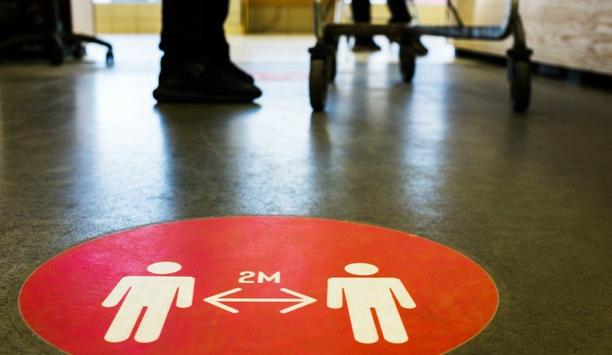
The role of physical security has expanded and grown rapidly over recent years. Below are some of our observations, particularly throughout the pandemic, and a look towards the changing times ahead. The new era of physical security The role of private security has shifted dramatically over the last decade and beyond. Historically, the focus was on protecting assets such as property and goods, but more frequently now the sector is being asked to play an even bigger role in protecting the...

Timely and important issues in the security marketplace dominated our list of most-clicked-upon articles in 2018. Looking back at the top articles of the year provides a decent summary of how our industry evolved this year, and even offers clues to where we’re headed in 2019. In the world of digital publishing, it’s easy to know what content resonates with the security market: Our readers tell us with their actions; i.e., where they click. Let’s look back at the Top 10 article...

There’s only so much a corporation can do to counteract the threat of a major incident. You can ask everyone to be vigilant and to report anything suspicious, but you cannot stop someone intent on deliberately starting a fire, threatening a work colleague with a knife or something much worse. And of course, most businesses recognise that even routine events – such as burst pipes, IT system failures, extreme weather event or power outages – can have significant consequences unle...

Security technologies promote real-time awareness in K-12 schools
Download
Technology's role in securing banks and financial institutions
Download
Integrated systems enable critical and compliant security for transportation
Download
Modernising physical access control
Download
Access. Intrusion. One estate.
Download
