

 |
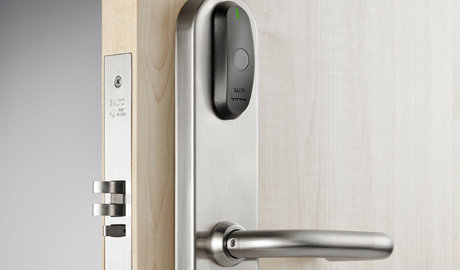
| The security industry as a whole is migrating from the historical mechanical lock to the newest technology of electronic locks |
Mechanical locks and keys date back thousands of years and have undergone many changes, but the industry’s transition to electronic locks might be the most important, lasting, and surprisingly affordable security and safety change of all.
The objective behind the creation of locks so long ago remains: to control a value on the other side of a door. But the security industry as a whole is migrating from the perceived “cheaper” and historical mechanical lock to the newest technology of electronic locks.
Mechanical locking systems
Mechanical locks have made a lot of progress in their long history. The invention of keys that couldn’t be copied and secured keyways certainly helped, but the issue of keeping tabs on key holders, replacing bad keys or locks in a timely manner, and ensuring the integrity of employees with master — and grand master — keys remained. Re-keying “everything” in the aftermath of such a breach is an expensive and labour-intensive task. The invention of removable cores helped, but at the end of the day, when a mechanical key or lock is compromised, it requires a physical resolution.
Electronic door access control
In the 1980s, electronic locks began to emerge. The hardware inside the lock remained the same, but instead of having a physical key control the locking and unlocking function of the lock, electronic methods to control the lock took over.
Use of magstripe may have actually |
Door access became electronic with the invention and use of magstripe. The magnetic stripe on a credential — usually a card issued instead of a brass key — is read by swiping past a magnetic reading head. While it provided improved security, use of magstripe may have actually increased expensive man hours as it still required someone in security or IT to physically go to each door for programming and changes.
Smart locks
As electronic locks progressed, however, locks got smarter. Electronic lock manufacturers began using the newest technology of Radio-frequency identification to open locks. RFID uses electromagnetic fields to automatically identify and track tags attached to objects. Data is actually held on the user’s card so it can be easily reprogrammed and updated. Use of RFID to control locks eliminated the man hours associated with physically walking to each door with a handheld unit to make changes.
Age of smarter, wireless and Bluetooth-controlled locks
As technology progressed, electronic locks got even smarter. Taking advantage of the ubiquitous wireless technology, locks today have the capability of being controlled via networks, the internet, and even Bluetooth — a technology present in just about every smartphone.
Wireless locks can communicate — without wires — with a central computer via a gateway which acts as a bridge between the lock and the computer. It should use a secure and encrypted wireless protocol so it doesn't use any internet or public network. The ability to manage locks wirelessly makes it less expensive since wires do not have to be run to each door, and it also makes it more efficient since they can be controlled by the computer network.
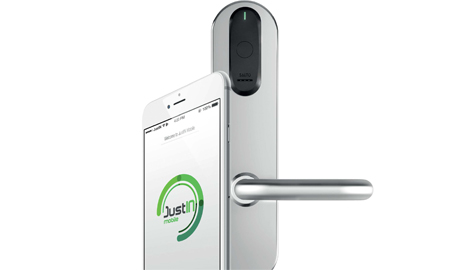 |
| Taking advantage of the ubiquitous wireless technology, locks today have the capability of being controlled via networks, the internet, and even Bluetooth |
Recent advances also mean locks can now be operated by the end user with a smartphone using Bluetooth Low Energy (BLE) technology. Since most potential lock end users — employees, residents, hotel guests, security — have smartphones it just made sense to incorporate BLE technology into the ability to open doors. The smartphone is the credential — versus a regular key, access card, wristband or fob — which makes it easier on the user and more likely to not be forgotten. Users may misplace or forget their access card, but they usually don’t forget their smartphone. The use of BLE makes it the ideal solution: BLE is low consumption, which is good for battery operated locks.
Security and management
From a security standpoint, the ability to control locks via wireless technology, networks, and the internet means almost instantaneous credential updates. This is convenient in a lockdown situation — such as with an active shooter — where security can control all door locks with the push of a button. Another, perhaps more common scenario would be the ability to shut off access for a recently-terminated employee.
In addition to security, wireless locks managed via the internet and virtual networks provide a wealth of benefits for management. Doors can be electronically controlled according to hours of operation and individual employee schedules which oftentimes vary. Access can be controlled for those who are only allowed in certain areas at certain times and this access can be granted temporarily or for the long term. Updates can be made regularly either by management via the network or directly from the door reader to the end user’s card since information now can be held at the card level.
This ability to program when and where access cards work via electronic locks is an immeasurable benefit. Banks, hospitals, schools, retail stores, and even “mom and pop” establishments can now give access without having to physically be there. Hotels and multi-housing units that deal with numerous different residents and doors can give temporary or permanent access at the push of a button.
Managing locked doors and |
Future of electronic locks
Managing locked doors and controlling access will always present challenges as it’s the cornerstone of security and is often a target. Electronic lock manufacturers in Europe have taken advantage of technology and use of Near Field Communication (NFC) in locks; however, the American market has been slow to produce a Trusted Service Manager (TSM). When this happens, it will open up a great deal of additional features and benefits for users of electronic locks.
Advantages of electronic over mechanical locks
As mentioned, there are a variety of benefits of deploying the use of electronic locks over mechanical. A helpful list to consider when weighing the benefits should include:
- Programming: The ability to control who can unlock the door, even for certain time periods and varying schedules.
- Control: The ability to quickly give someone credentials from just the click of a mouse. This might include those that need remote access to work on cell towers or water stations or for those in the energy industry that do field work. Rather than give a temporary worker a key, they can be given the authority to use a credential and their phone can be updated to use as a credential.
- Future proof and integration: Electronic lock manufacturers need to always have the future in mind and consider what technological innovations are ahead and how the lock can adapt. By having an open platform electronic lock — that can integrate with a variety of other systems — you provide a solid foundation for a total security solution.
“Too expensive” myth
There is a perception — and presumption — that electronic locks are going to be more expensive than traditional mechanical locks. They aren’t. There are various costs associated with both mechanical and electronic locks. These costs can be upfront or throughout the life cycle of the lock, but in the end the better investment is the electronic lock.
There’s a well-cited misnomer that a mechanical key costs only $4. Broken down over the life cycle of the key, however, the cost is closer to $28. The cost of a blank mechanical key usually falls into one of these categories: cutting of the key; re-cutting a key that for some reason wouldn’t work at the lock; time it takes to get the key to an authorised user; replacing and re-cutting lost keys; keys for new employees; and more. And, of course, factor in that the cost of a lost key that ends up in the wrong hands could be priceless.
Electronic locks tend to have a higher perceived upfront expense but can be less expensive when the installation is part of a new construction. The costs associated with the electronic lock tend to decrease over time since there is no need to replace physical keys or to have maintenance or technical support out to the door to re-key the lock whenever an employee changes or a key is lost or stolen.
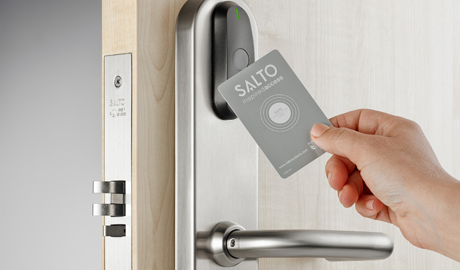 |
| The security industry’s migration from mechanical locks to electronic locks is a smart choice and it doesn’t have to be an expensive one |
How to choose an electronic lock provider
Investing in locks, whether electronic or mechanical, is a very important decision since the goal is to control, protect, and reduce liability for that value on the other side of the door. Making the decision to go forward with the innovation of what electronic locks have to offer is the best choice; however, make sure you are choosing a provider that has the best support for its products and future-proofs its products by investing in things like research and development.
- Longevity: There is a lot of technology out there presented by many companies you may not have heard of, so look for long-running history and experience. You need to know that the company will be around to service and support your equipment rather than some new, crowd-source-funded company that is here today, gone tomorrow. Don’t lock yourself into a company that isn’t forward thinking and doesn’t have a strong financial background.
The company should be
able to provide the technology
available today and produce
the technology of tomorrow - On the cutting edge: Look for a company that is on the cutting — and bleeding — edge of technology. For example, updates and changes should be done by software and firmware — without changing the locks. The company should be able to provide the technology available today and produce the technology of tomorrow. A company that shows a commitment to research and development is a company that shows a commitment to the cutting edge. Look for a company that has smart card technology; Bluetooth technology; NFC technology; and everything that is built in. Don’t choose a company that has a one way — their way — proprietary system.
- Strong industry partnerships: Choose a company that has a solid background with reputable dealer networks that do installations, support the installation, and service the customer. They should know the laws and codes for door hardware installations; for example, the door’s fire rating. This is definitely not a do-it-yourself project.
- Product variety: Look for a company that offers a variety of styles, lever sets, and escutcheons to meet your architectural demands. The quality and craftsmanship of the hardware should match the innovation and reliability of the electronic lock’s operational features.
- Keying needs: The need for locks extends way beyond traditional doors. An electronic lock provider should be able to offer a solution for all keying needs: locker locks, server rack locks, cabinet locks, panic devices, and any situation that requires lock protection.
The security industry’s migration from mechanical locks to electronic locks is a smart choice and it doesn’t have to be an expensive one. Studies have shown that in the long run, electronic locks are just as affordable as mechanical locks while offering additional layers of security and enriched programming features. To stay ahead of the trends in locks and door access control, choose electronic locks. Just make sure the electronic lock manufacturer you choose is a reputable company that stands behind its products and invests in unlocking the technology of the future.



