


Sooner or later (hopefully sooner), the novel coronavirus global pandemic will allow workplaces to reopen. But as we move into this recovery phase, there are many questions surrounding the transition. How can companies ensure facilities are in acceptable working order to reopen? How do they decide who is coming back and when? How will social distancing impact the operation of a company’s physical access control system? How can companies ensure that both visitors and employees are aware of the policy changes and extra controls?
For answers to these and other salient questions, we called on Ian Lowe, Product Marketing Director of HID SAFE Identity and Access Management (IAM) solutions.
“There’s no doubt about it: the global pandemic will change the way we live, work, and conduct business for some time,” says Lowe. “Over the past several weeks, we have been working with customers to enable a safe return to the workplace. We have observed that the number of challenges in the mid-to-long-term level and the associated complexity vary by location.”
Lowe shares some of the proactive measures and best practices that can assist in a safe return to the workplace as we settle into a “new normal”.
Challenge 1: Ensuring building readiness
After being unoccupied for weeks or months, building readiness must be addressed completely before welcoming anyone inside. Even though employees may be eager to return, the workplace itself may not be ready. Companies may want to consider continuing remote work while facility operations are prepped.
Challenge 2: workforce management
There’s no doubt about it: the global pandemic will change the way we live, work, and conduct business for some time
While it is dependent on location and industry, taking a phased approach is the best course of action when allowing employees, contractors and visitors back into facilities. First, facilities management will want to survey the property for readiness and then provide an estimate as to when employees may begin reporting back into the office.
Next, it’s important to consider that office density needs are interrelated to the facility architecture. It is possible to accommodate a higher capacity of workforce in an airy, open office space than in a constrained one. A good rule of thumb is to start by introducing no more than 30% of employees back into the workplace at first. This could be a rolling group model in which the population total remains controlled and constant, but specific individuals vary from day to day. This option is good for a workforce that needs to be together in person but not necessarily all at the same time due to office density concerns.
Welcoming visitors or customers into the office should be delayed as long as possible. If that’s not feasible, visitor numbers should be factored into the total density count. A cloud-based visitor management system can help with implementation.
Challenge 3: Controlling access
The ability to vet staff, employees, contractors and visitors before and during the return will vary greatly depending on the location. Policies should be implemented that require employees to be screened regularly — and for an extended amount of time. Look to answer the following questions:
- Where have you visited in the days since last entering the workplace?
- Have you come into contact with anyone else who has recently visited high-risk areas?
- Have you shown any symptoms of infection in the past xx number of days?
Policies should be implemented that require employees to be screened regularly — and for an extended amount of time
If there is cause for concern, refuse the visitor and/or supplement the screening process with additional steps. Temperature checking is mandatory in many organisations— often multiple times a day. This applies to interactions at delivery bays, too.
A policy-based physical identity and access management solution integrated with existing physical access controls makes it possible to enforce, monitor and report this type of activity.
Challenge 4: Social distancing and contact tracing plan
Social distancing may continue within the office, which will impact restrictions and guidelines related to access control. The office layout may be reworked for proper distance between cubicles, workplace positions and employees. Specific entrances, exits and pathways may be designated as one-way-only.
Assigning Bluetooth LE beacons to employees once they are inside the workplace will allow companies to monitor proximity to others and measure localised density in real-time by using location services, contact tracing, and surge response technologies.
Challenge 5: Reduced physical touchpoints
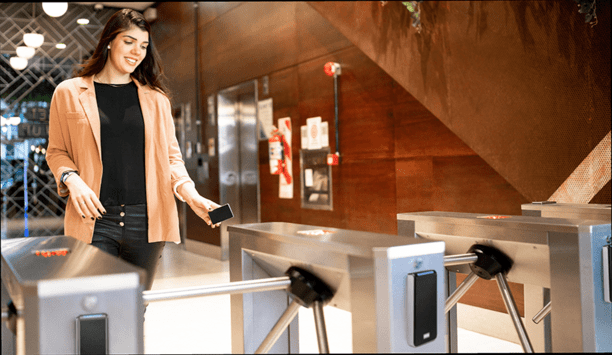
Contactless technologies can help enforce social distancing and reduce touchpoints on common surfaces
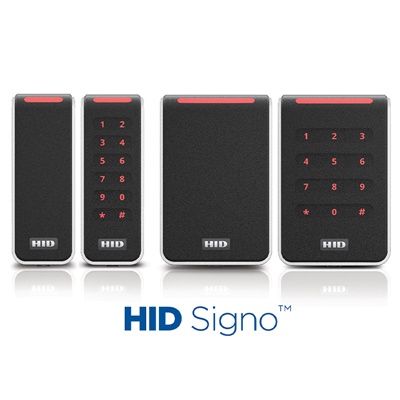
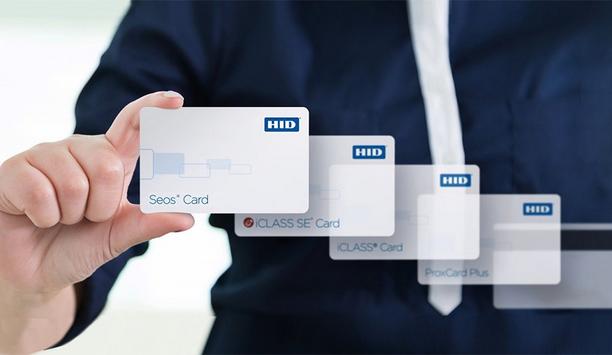
Reducing the number of physical touchpoints is desirable throughout a workplace. Contactless technologies can help enforce social distancing and reduce touchpoints on common surfaces such as faucets, doorknobs, coffee pot handles, etc. While introducing additional security checks and screenings, it’s important to not increase touchpoints and further infection risks. There have been more requests for a contactless experience to secure workplace access, including automatic doors and turnstiles, contactless cards and mobile access.
Challenge 6: Communicating for confidence
Proactive communication is key to provide reassurance that appropriate safety measures have been taken and that both visitors and employees are aware of the policy changes and extra controls. Equally important is to communicate a policy change – and the reasoning behind it – before it happens. While there may not be an exact expiration date on these new policies, ensuring that impacted individuals will have a safer experience is universally appreciated.