What will be important technology developments in the second half of 2022?
15 Jul 2022

Editor Introduction
Six months can go by in the blink of an eye. In 2022, it almost seems as if it has. Here we are already at mid-year after what has been an eventful six months for the security marketplace. There is still a lot ahead in 2022 for the industry, and our Expert Panel Roundtable has been considering what the coming months might hold in terms of technology change. We asked this week’s panelists: What will likely be the most important technology development in the security marketplace in the second half of 2022?


In an increasingly connected world, physical security is a major concern for American companies as a heightened threat environment prevails, spurred by geopolitical, economic and extremism. Businesses are facing more risks than ever before with security professionals receiving new information daily from Open Source Intelligence, social media, the Dark Web, weather feeds, technology systems, real-time news, HR systems, public event notifications and more. It’s crucial for businesses to have technology that enables them to detect, investigate and assess risks before they occur. In the second half of 2022, the most important development in the security marketplace will be a focus on actionability. Being able to keep track of changing situations in real-time and make quick decisions is the difference between simply knowing a threat is there and proactively acting on it. It’ll be imperative for organisations to mitigate threats proactively to preserve business continuity and build long-term organisational resilience.

This is a timely question because 2022 is a turning point in the video surveillance industry. Users will be able to search for specific video the same way they search the web, replacing the need to scrub through hours of video in a storage closet. Cloud-based artificial intelligence is powering this new technology, and we expect to see significant investment across the industry. Similar to the evolution of the internet, the future standard for video surveillance will be a Google-like search platform that is easy to use and accessible to all.

Generally, new security technology takes a while to mature and capture the attention of the market, so current trends (such as the use of Bluetooth security credentials via a smartphone) are likely to be at the forefront of demand during the second half of the year as well. Looking further ahead, IoT devices are having a big influence on security systems and how they are used, so expect to see more use of smart sensors that feed data back to the integrated security and IT network. As we have seen in the security industry already, greater integration puts more pressure on providers to use standardised platforms, so we are likely to see lots of conversations between security providers about shared protocols and networks. The other consideration with security and other IoT systems sharing a network will be the strain this puts on network bandwidth and resources.

It’s tough to say any one technology will receive the notoriety of ‘most important,’ but there will certainly be key themes in the marketplace that are poised to play a large role in shaping the future of security technology. One will be the integration of Artificial Intelligence (AI) and analytics into every aspect of video surveillance and security technology to optimise and enhance all aspects of performance. Advancements in AI video analytics will further enable new use cases – beyond traditional security use cases – as the technology evolves across industries. Alongside this, it will also be important for the marketplace to focus on integrated solutions, such as access control and audio that communicates with surveillance technologies, to further provide comprehensive and robust security offerings that span business operation imperatives.

In my world it’s all about entryway security. Through that lens I see major developments in AI, drone uses, auto-locking technologies and immediate deployment of countermeasures. There’s also a movement to decrease the number of entryways along with an increased adoption of access control that includes prevention of prohibited items such as guns with a weapon screening program and known prohibited people. Technology that will safeguard your entryway will continue to be key and will require increased training and retraining along with major efforts to reduce workplace violence.

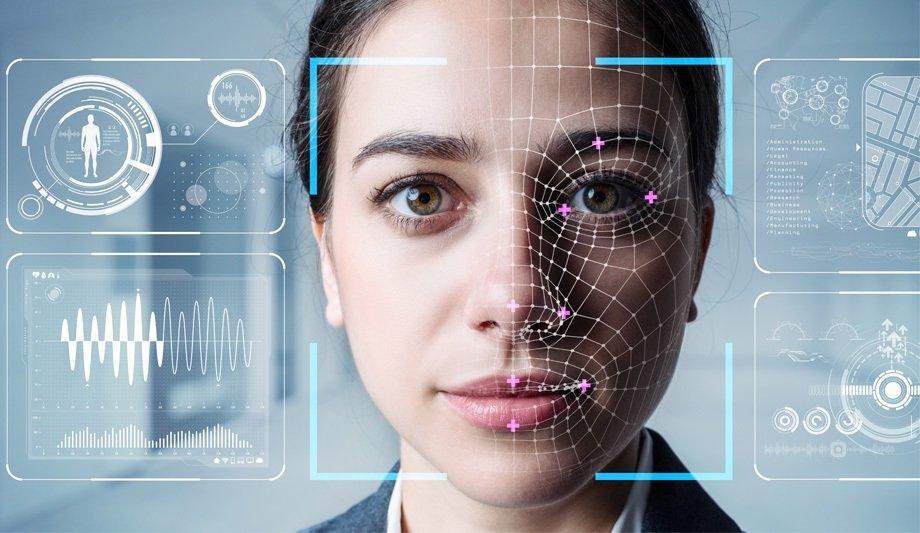
Touchless biometric technology will take big steps, especially facial recognition. The pandemic has been changing a lot worldwide, including the physical security industry, especially the booming demand for contactless biometric systems that prevent virus spread, lower infection risk, and eliminate unauthenticated access. Face recognition will be among the most widely implemented and accepted biometric solutions. According to a report of Mordor Intelligence, the global biometrics market was valued at USD 12.97 billion in 2022 and is projected to be worth USD 23.85 billion by 2026, registering a CAGR ([Compound Annual Growth Rate]) of 16.17%. According to Global Industry Analysts, the global facial recognition market will be valued at USD 15 billion, registering a CAGR of 18.2%. Face recognition brings users a safer environment, more efficiency, and less risk of physical contact with the biometric data protected. It will be in the pioneer position of biometric industry development in the second half of 2022.

For the second half of 2022, I see three areas of development, each driven by the need to provide customers with an easier way to cover more of their environment, without requiring more operators, and continue to support a remote workforce. The first is that analytics availability and reliability have increased over the years and are now integrating with platforms such as video management systems (VMS). Customers are looking to use best-of-breed analytics in their deployments to help monitor situations around operational efficiency and life safety without having to replace their VMS platform. The second is the drive to provide reliable and secure remote access and management for systems. The cloud is one way to achieve remote access and management, but it does not have to be the only way. The third area of development is with system density. Camera resolutions continue to increase, and customers want to use the highest frame rate of cameras to get the most out of their video systems.

In the second half of the year, it is likely that more firms will require services that enable the use of video analytics to extract operational value from visual data, while using AI-powered tools to protect privacy. Both public and private organisations are turning more towards video analytics as they can be useful in many different contexts. They can help in saving time for CCTV camera operators, help efficiency in monitoring places for crime, and can be integrated into other systems – i.e., counting footfall at different locations – as well as use for smart parking, automatic licence plate recognition, and facial recognition. 2022 will also bring further growth in consumers investing in personal video surveillance for their homes. With the pandemic having forced many to stay at home, home security has become more of a priority. Ring, which produces doorbell cameras, is increasingly popular: They are now the largest corporate-owned civilian-installed surveillance network in the U.S.
Editor Summary
Will the remainder of 2022 be a turning point for video surveillance? Will the next six months see the integration of AI and analytics into every aspect of video and security? Will we see big steps for touchless biometrics? These are just a few of the technologies our Expert Panel Roundtable mentions as likely to be dominant forces in the second half of the year. The observations of our panel suggest a need for continuing vigilance as security professionals strive to stay abreast of the latest fast-moving developments in technology.
Anviz Global Inc. products






Anviz Global Inc. news

Access control, video surveillance, and intrusion detection systems evolved largely independently in the physical security industry. Integrating those systems to the benefit of an enterprise's overall security has traditionally fallen on security integrators working in cooperation with manufacturers. However, today's market has also evolved to include companies that provide "unified platforms,” bringing together various disparate security systems and functions under a single, centralised...

Anviz, a pioneer in intelligent security solutions, proudly announces the launch of W2 Face, its latest hybrid biometric access control and attendance terminal. Designed to meet the evolving needs of modern enterprises, the W2 Face combines facial recognition, fingerprint authentication, and RFID capabilities in a compact, intelligent device built for dynamic workplaces. Responding to market evolution As the access control landscape shifts toward integrated multi-biometric solutions, business...

The role of audio in physical security is multifaceted and increasingly vital, offering a layer of intelligence and interaction that access control and/or video surveillance alone cannot provide. Sounds provide crucial context to visual events. For instance, someone running might appear suspicious on video, but audio could reveal they are shouting for help, changing the interpretation entirely. Even so, historically speaking, audio has been an underused component in physical security. How is the...
Anviz Global Inc. white papers






Anviz Global Inc. case studies

When they talk about digitalisation, there is one topic that keeps coming up: Smart Office. Intelligent IoT solutions that makes the users’ everyday lives safer, more comfortable, and more efficient. Systems to centrally manage employees' access with no keys and physical cards - face recognition, manage employee time tracking, and secure office printing with the embedded face recognition reader, are now seen as state-of-the-art. Dürr, founded in 1896, is a mechanical and plant engine...

With the market constantly demanding security changes, Anviz has taken a bold step forward with the launch of the M7 Palm—a groundbreaking smart biometric access control terminal that harnesses the power of palm vein recognition technology. As the need for intelligence and security in building spaces continues to evolve, the demand for more compatible yet user-friendly access control solutions has never been stronger. The M7 Palm represents our answer to this challenge, offering a unique...

The Middle East has recently expanded its real estate market as the region's economy grows and urbanisation accelerates. This trend has led to an increasing demand for smart security, and the pace of digital intelligence change is gradually increasing. The security industry in the Middle East is rapidly growing, driven by the government's strong emphasis on national security and terrorism prevention. Centralised systems management Significant attention and investment have been directed towar...
Anviz Global Inc. videos


CrossChex Mobile App Guide for Access Control - M3 PRO

Anviz releases FaceDeep 5 and FaceDeep 5 IRT with touchless face recognition terminal with temperature detection features

Anviz P7- PoE touch fingerprint and RFID access control device
Expert commentary

Security beat

Anviz Global Inc.
32920 Alvarado-Niles Rd Ste 220, Union City, CA 94587
Toll-free: +1-855-ANVIZ4U (855-268-4948)
Email: info@anviz.com
Anviz Singapore
16 Collyer Quay #12-01
Income@Raffles Singapore 049318
Email: info@anviz.com


