SourceSecurity.com
  • Products
    CCTV
    • CCTV cameras
    • CCTV software
    • IP cameras
    • Digital video recorders (DVRs)
    • Dome cameras
    • Network video recorders (NVRs)
    • IP Dome cameras
    • CCTV camera lenses
    Access Control
    • Access control readers
    • Access control software
    • Access control controllers
    • Access control systems & kits
    • Audio, video or keypad entry
    • Electronic locking devices
    • Access control cards/ tags/ fobs
    • Access control system accessories
    Intruder Alarms
    • Intruder alarm system control panels & accessories
    • Intruder detectors
    • Intruder warning devices
    • Intruder alarm communicators
    • Intruder alarm accessories
    • Intruder alarm lighting systems
    Technology's role in securing banks and financial institutions
    Technology's role in securing banks and financial institutions
    ASSA ABLOY eCLIQ programmable key access system

    ASSA ABLOY eCLIQ programmable key access system

    Dahua Wi-Fi Pan & Tilt Camera with AI Detection and Smart Dual Light

    Dahua Wi-Fi Pan & Tilt Camera with AI Detection and Smart Dual Light

    Dahua Wireless Alarm Hub 2

    Dahua Wireless Alarm Hub 2

    Hikvision LinkVu integrated security and networking solution for SMB installers

    Hikvision LinkVu integrated security and networking solution for SMB installers

  • Companies
    Companies
    • Manufacturers
    • Distributors
    • Resellers / Dealers / Reps
    • Installers
    • Consultants
    • Systems integrators
    • Events / Training / Services
    • Manned guarding
    Companies by Product area
    • CCTV
    • Access control
    • Intruder alarm
    • IP networking products
    • Biometrics
    • Software
    • Digital video recording
    • Intercom systems
    Technology's role in securing banks and financial institutions
    Technology's role in securing banks and financial institutions
  • News
    News
    • Product news
    • Corporate news
    • Case studies
    • Events news
    Latest
    • Gunnebo reveals secure storage At Security Essen 2026
    • Paxton solo: Student housing access control simplified
    • Zero Networks expands Palo Alto integration: AI focus
    • Cribl advances AI SOC with Radiant Tech acquisition
    Technology's role in securing banks and financial institutions
    Technology's role in securing banks and financial institutions
  • Insights
    Insights
    • Expert commentary
    • Security beat
    • Round table discussions
    • Round Table Expert Panel
    • eMagazines
    • Year in Review 2023
    • Year in Review 2022
    Featured
    • Responsible AI adoption starts with governance
    • Solink's AI agents boost efficiency of existing infrastructure with automation
    • How AI-enabled cameras are becoming operational sensors that power safety, automation, and business intelligence
    • What is the changing role of intelligence in physical security?
    Technology's role in securing banks and financial institutions
    Technology's role in securing banks and financial institutions
  • Markets
    Markets
    • Airports & Ports
    • Banking & Finance
    • Education
    • Hotels, Leisure & Entertainment
    • Government & Public Services
    • Healthcare
    • Remote Monitoring
    • Retail
    • Transportation
    • Industrial & Commercial
    Technology's role in securing banks and financial institutions
    Technology's role in securing banks and financial institutions
    Hikvision solution boosts Muçum flood preparedness

    Hikvision solution boosts Muçum flood preparedness

    Carrefour Brazil: Enhanced security with Dahua solutions

    Carrefour Brazil: Enhanced security with Dahua solutions

    El Loa Aerodrome security with Dahua Technology

    El Loa Aerodrome security with Dahua Technology

    Enhance business intelligence with key control systems

    Enhance business intelligence with key control systems

  • Events
    Events
    • International security
    • Regional security
    • Vertical market
    • Technology areas
    • Conferences / seminars
    • Company sponsored
    Virtual events
    • Video Surveillance
    • Access Control
    • Video Analytics
    • Security Storage
    • Video Management Systems
    • Integrated Systems
    Technology's role in securing banks and financial institutions
    Technology's role in securing banks and financial institutions
    Intersec Buenos Aires 2026

    Intersec Buenos Aires 2026

    Securex Caspian 2026

    Securex Caspian 2026

    PACK EXPO Chicago 2026

    PACK EXPO Chicago 2026

    OFSEC - Oman Fire, Safety & Security Expo 2026

    OFSEC - Oman Fire, Safety & Security Expo 2026

  • White papers
    White papers
    • Video Surveillance
    • Access Control
    • Video Analytics
    • Video Compression
    • Security Storage
    White papers by company
    • HID
    • ASSA ABLOY Opening Solutions
    • Milestone Systems
    • Software House
    • ELATEC USA
    Other Resources
    • eMagazines
    • Videos
    Technology's role in securing banks and financial institutions

    Technology's role in securing banks and financial institutions

    Integrated systems enable critical and compliant security for transportation

    Integrated systems enable critical and compliant security for transportation

    Modernising physical access control

    Modernising physical access control

    Access. Intrusion. One estate.

    Access. Intrusion. One estate.

About us Advertise
  • Securing financial institutions
  • AI special report
  • Cyber security special report
  • 6
Video surveillance
  • Home
  • About
  • News
  • Expert commentary
  • Security beat
  • Case studies
  • Round table
  • Products
  • White papers
  • Videos

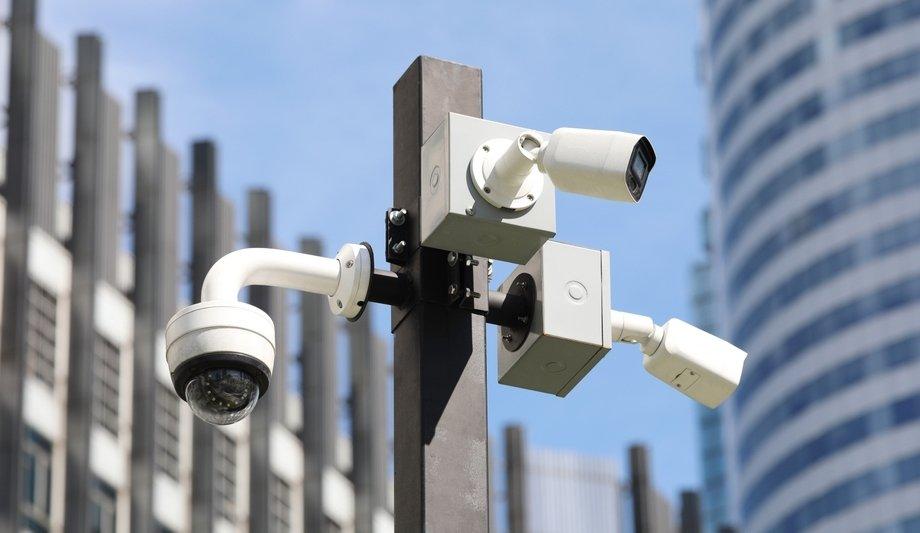
Do today’s video systems require more cameras or fewer?

17 Jul 2026
Do today’s video systems require more cameras or fewer?
Larry Anderson
Larry Anderson
17 Jul 2026
Quick Read
⌵
Summary is AI-generated, newsdesk-reviewed
  • Video system effectiveness hinges on facility layout, size, and specific security objectives.
  • Technological innovations challenge the notion that more cameras equal better surveillance coverage.
  • Expert Panel discusses if newer systems generally need more or fewer cameras today.

Editor Introduction

Adequate video surveillance coverage depends entirely on a facility's layout, square footage, and security goals. Historically, better coverage required more cameras, but technology innovations are changing those expectations and undermining previously held rules of thumb. We asked our Expert Panel Roundtable: Do today's video systems generally require more cameras or fewer cameras, and why?


Card image cap
Laurent Villeneuve Genetec, Inc.

Generally, we are still seeing a steady, sustained growth in the number of cameras and other edge sensors globally – but the growth drivers vary for each application. Across many industries, the focus has shifted from maximising camera counts to selecting the right combination of technologies for each environment. An airport, manufacturing facility, or school will likely require a different mix of devices based on its operational and security objectives. Today's video systems are typically part of a broader ecosystem of connected devices, where cameras work alongside radar, LiDAR, access control, audio, and other sensors to give operators better context and situational awareness. At the same time, cameras themselves have become more capable. Higher resolutions, multi-sensor designs, and built-in analytics often allow organisations to cover areas that previously required multiple devices. This is where open architecture becomes increasingly valuable. Organisations want the flexibility to combine technologies from different manufacturers and manage them in a single unified system. That gives them the freedom to adopt new capabilities as requirements evolve, rather than being tied to a single vendor's ecosystem.

Card image cap
Adam Lowenstein i-PRO

For most deployments, the answer is fewer cameras. Advances in sensor technology mean a single device can now cover areas that previously required multiple cameras. Higher resolutions preserve image detail across wider fields of view, while multi-sensor cameras with two to five imaging sensors provide comprehensive coverage from a single mounting location. That reduces installation costs, simplifies infrastructure, and minimises maintenance without sacrificing situational awareness. Artificial intelligence (AI) analytics have also increased the value of every camera by turning them into intelligent edge devices that classify events, generate metadata, and deliver actionable insights rather than simply recording video. The result is that organisations can often achieve better outcomes with fewer, more capable devices. That said, every deployment should be designed around operational requirements rather than camera counts alone. The objective is not to install the most cameras, but to provide the right coverage, intelligence, and resilience for the environment while maximising long-term return on investment.

Card image cap
Barry Norton Milestone Systems

I will push back a little on the premise here. The trend is less about the absolute number of cameras and more about the volume and variety of data streams those cameras now generate, which is not restricted to video streams. Camera count used to be the default way people measured system growth, but that thinking has not kept pace with what today's hardware can do. A modern camera is a smart edge device, where a single unit can comprise multiple image sensors, together with onboard analytics, metadata and event generation, audio capture, etc., such that each may be producing far more usable data streams than its predecessors ever did, often with substantial onboard processing that used to require a dedicated server down the hall. What changes, especially in a heterogeneous vendor environment is less about capacity and more about coherence; making sure video, audio, and sensor data, processed through increasingly sophisticated AI, all come together into something operators can actually work with instead of a fragmented muddle. That's where a video management system developed with an open platform philosophy earns its keep, pulling all of data into one operational whole.

Card image cap
Michael Wilson Salient Systems

Today's systems achieve the same or greater coverage with fewer physical devices than they did a decade ago. A single multi-sensor or panoramic camera now covers areas that once took three or four separate units, cutting installation, cabling, and maintenance costs across a deployment. But fewer devices does not mean less video. Each unit holds several lenses, so coverage and detail go up even as the camera count comes down. The net result is surveillance that is both more capable and more cost-efficient than it was a decade ago. For integrators, this shifts the core planning question. The issue is no longer how many cameras a site needs, but how much resolution, bandwidth, and storage the system behind them can handle, and how well it turns that into usable detail, whether for live operators or analytics flagging events automatically. Increasingly it is the video management system (VMS), not the camera count, that defines what a deployment can do.

Card image cap
Scott Brothers Oncam

In my experience, organisations are worried less about camera count and more about whether they have the right cameras in the right locations. Thanks to significant advances in imaging technology, edge processing, and AI-powered analytics, individual cameras deliver far broader coverage and greater operational value compared to a decade ago. Meanwhile, organisations are expanding surveillance beyond traditional security applications to support safety, operations, compliance, and business intelligence, creating demand for additional coverage in areas that were previously unmonitored. As a result, we are seeing two trends happen simultaneously: organisations are becoming more strategic about camera placement while also increasing the overall value they expect from their video systems. The outcome may require more cameras in some environments and fewer in others; however, across applications, success is measured by visibility, actionable insights, and ease of management — not camera count alone.

Card image cap
Rebecca Herold Privacy & Security Brainiacs

Current and emerging video systems may require either fewer or more cameras depending on their purpose. For basic security and situational awareness, high-resolution, panoramic, multi-sensor, and plan, tilt and zoom (PTZ) cameras can replace multiple legacy devices by covering larger areas with fewer installations. Conversely, organisations using AI-driven analytics, operational monitoring, or computer vision often require more cameras to capture precise, uninterrupted views and generate high-quality data for AI analysis and training. As video systems migrate to IP-based networks and cloud-based Video Surveillance as a Service (VSaaS) platforms, they create cybersecurity and legal risks. Cybersecurity risks include compromised IoT devices, unpatched vulnerabilities, unsecured video transmission, and supply chain threats. Compliance obligations continue to expand under evolving privacy, biometric, AI, and cross-border data protection laws, with substantial penalties for non-compliance.


Editor Summary

Whether modern video systems require more cameras or fewer cameras depends on the application, as technology shifts the focus from device counts to data quality. High-resolution, multi-sensor cameras and AI analytics allow fewer physical devices to cover larger areas, thus reducing installation costs while providing better context. However, expanding operational needs and integration with broader sensor ecosystems mean some environments still experience camera growth. Ultimately, success relies on unified data management and operational value.

  • Related links
  • Genetec CCTV software
  • i-PRO CCTV cameras
  • i-PRO CCTV software
  • Milestone CCTV software
  • Oncam CCTV cameras
  • Oncam CCTV software
  • Salient Systems CCTV software
  • ANPR Software CCTV software
  • Infrared CCTV cameras
  • Thermal CCTV cameras
  • Wireless CCTV cameras
  • IP Surveillance Software CCTV software
  • Management Software CCTV software
  • Monitoring Software CCTV software
  • Related categories
  • CCTV cameras
  • CCTV software
Related white papers
Technology's role in securing banks and financial institutions

Technology's role in securing banks and financial institutions

Download
Integrated systems enable critical and compliant security for transportation

Integrated systems enable critical and compliant security for transportation

Download
Minimizing storage, maximizing focus

Minimizing storage, maximizing focus

Download
Related articles
Euralarm's guide to cloud sovereignty in security

Euralarm's guide to cloud sovereignty in security

DoorBird D22x: Next-gen building security solutions

DoorBird D22x: Next-gen building security solutions

Responsible AI adoption starts with governance

Responsible AI adoption starts with governance

Follow us

Sections Products CCTV Access Control Intruder Alarms Companies News Insights Case studies Markets Events White papers Videos AI special report Cyber security special report RSS
Topics Artificial intelligence (AI) Mobile access Healthcare security Counter terror Cyber security Robotics Thermal imaging Intrusion detection Body worn video cameras
About us Advertise About us 10 guiding principles of editorial content FAQs eNewsletters Sitemap Terms & conditions Privacy policy and cookie policy
  1. Home
  2. Topics
  3. Video surveillance
  4. News
  5. Round table discussions
About this page

Explore expert insights on whether today's innovative video systems need more or fewer cameras for optimal surveillance, considering facility layout, square footage, and evolving security technology.

See this on SecurityInformed.com

Subscribe to our Newsletter

Stay updated with the latest trends and technologies in the security industry
Sign Up

DMA

SourceSecurity.com - Making the world a safer place
Copyright © Notting Hill Media Limited 2000 - 2026, all rights reserved

Our other sites:
SecurityInformed.com | TheBigRedGuide.com | HVACinformed.com | MaritimeInformed.com | ElectricalsInformed.com

Subscribe to our Newsletter


You might also like
Technology's role in securing banks and financial institutions
Integrated systems enable critical and compliant security for transportation
Modernising physical access control
Minimizing storage, maximizing focus
SourceSecurity.com
SecurityInformed.com

Browsing from the Americas? Looking for our US Edition?

View this content on SecurityInformed.com, our dedicated portal for our Americas audience.

US Edition International Edition
Sign up now for full access to SourceSecurity.com content
Download Datasheet
Download PDF Version
Download SourceSecurity.com product tech spec