Touchless Security - Expert commentary

Gregor Schlechtriem has worked in the access control market for over 20 years and is now responsible for the Access & Intrusion Business Unit at Bosch Building Technologies. In this interview, the expert talks about key industry trends, the impact of the COVID-19 (Coronavirus) pandemic, technical innovations and his company’s strategy. Mr. Schlechtriem, you have many years of experience in the security technology market. What is your background and what are your responsibilities as Se...

Recent cyber-attacks have disabled and even shut down physical assets. Robust foundational security and training staff, able to recognise an attack can help mitigate the threat, as ABB’s Rob Putman explains. Edge devices and data analytics As cyber security specialists, we must navigate an ever-changing threat landscape, one that is made even more complex by the increased interconnectivity between Operational Technology (OT) and Information Technology (IT), as companies look to leverage...

The COVID-19 pandemic is only accelerating the expansion of Automation, Robotics, Machine Learning (ML) and Artificial Intelligence (AI), and changing how people live their daily lives. This expansion leads the way with technologies that are developed to solve problems, improve operations, streamline processes and assist people, to focus on learning new skills, creativity, and imagination. Transformation of the physical security industry One of the latest industries to be permanently transform...
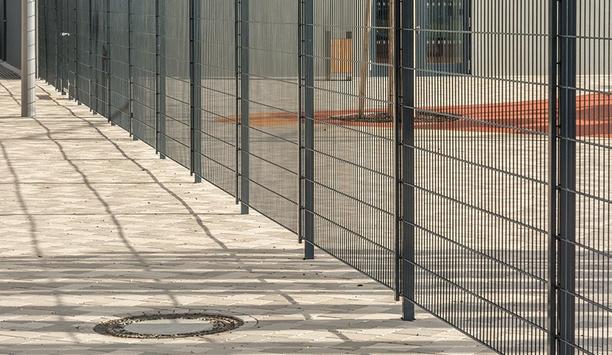
Schools were never designed and built with social distancing in mind. So it’s perhaps not surprising that as children returned to schools for the autumn term this year, the prospect of outdoor classes and assemblies was mooted in the media and by the Government. Many in the education sector are making the case that, should there be further COVID-19 outbreaks, in the coming months, it would be better to utilise outside space, rather than resort to closing schools. In the COVID-19 era, head...

The past year has elevated consumer awareness about personal safety, from COVID-19 issues to social unrest, making safety top-of-mind and the need for personal safety solutions, even more prevalent. In addition, consumers spent more time at home, as schools closed, events were canceled and remote work increased. This prompted two major shifts that, in my opinion, most significantly opened the need for and raised the popularity of mobile safety solutions. Demand for grocery and food delivery...

Today’s organisations face numerous diverse threats to their people, places and property, sometimes simultaneously. Security leaders now know all too well how a pandemic can cripple a company’s ability to produce goods and services, or force production facilities to shut down, disrupting business continuity. For example, a category three hurricane barreling towards the Gulf of Mexico could disable the supplier’s facilities, disrupt the supply chain and put unexpected pressure o...

The concept of security has substantially upgraded because of technological advancements. We have seen a shift from mechanical locks to electronic locks and door access control systems which are more relied upon nowadays for watertight security and safety. But, choosing the system that is the best for you requires understanding how both these technologies work. In this article, you will get a clear idea of: How electronic locks are better than traditional locks The difference between access...

Today, we live in a technology-obsessed age. Whichever way you look, it’s hard to avoid the increasing number applications, products and solutions that continue to redefine the boundaries of what we previously thought possible. From autonomous vehicles and edge computing to 5G and the Internet of Things, all facets of our lives are continuing to evolve, thanks to an endless stream of differentiated innovations. In this article, we’ll be focusing on the latter of these - the Internet...

Most consumers are enjoying the convenience brought by electronic locks. With the existence of electronic locks, people no longer need to be restricted by keys. There are a variety of unlocking methods and more convenient remote control unlocking options. Suppose, you are going on vacation, and with the presence of an electronic lock, you can easily enter your house with your babysitter, without a spare key. Of course, not only smart homes, but also some infrastructure and commercial buildings...

Ensuring employee health and safety remains a key priority for organisations this year, especially as we see COVID-19 cases continue to rise in different areas of the world. As an ongoing challenge, COVID-19 has shifted the priorities of many organisations. In fact, “improving health and safety for employees” is the top strategic goal this year of manufacturing and logistics organisations in the U.S. and U.K., according to research conducted by Forrester on behalf of STANLEY Securit...

Household adoption of smart home systems currently sits at 12.1% and is set to grow to 21.4% by 2025, expanding the market from US$ 78.3 billion to US$ 135 billion, in the same period. Although closely linked to the growth of connectivity technologies, including 5G, tech-savvy consumers are also recognising the benefits of next-generation security systems, to protect and secure their domestic lives. Biometric technologies are already commonplace in our smartphones, PCs and payment cards, enhan...

In the past decade, we’ve seen an unfortunate increase in gun-related incidents on school campuses, making security and policy efforts a top priority for educational facilities nationwide. While the causes for this increase are hotly debated in and around the education community, the facts remain that specific steps can be taken to mitigate risks. To tackle this issue, officials from campus stakeholders, law enforcement officials, architects, and security personnel, have met to find solut...

The impact of the COVID-19 pandemic has accentuated our digital dependency, on a global scale. Data centres have become even more critical to modern society. The processing and storage of information underpin the economy, characterised by a consistent increase in the volume of data and applications, and reliance upon the internet and IT services. Data centres classed as CNI As such, they are now classed as Critical National Infrastructure (CNI) and sit under the protection of the National Cybe...

Everyone in security understands the significance of events, such as trade shows, road shows, seminars, galas and meet-and-greets. Whether virtual or in-person, these gatherings are important for a number of reasons. Role of security events For start-ups and high-profile manufacturers alike, security events have been the place to display new products, interact with key customers and strengthen existing partnerships. They serve as a forecast for evolution, showcasing the latest advancements in...

For many businesses and organisations, the term 'authentication' is synonymous with 'password' or 'multi-factor authentication (MFA)’. However, because today's business ecosystem is complex and stretches across distributed workforces with work from home, BYOD policies, and multiple cloud environments, it is very challenging to efficiently recognise and authenticate identities of people, processes, and devices throughout the enterprise using traditional methods. The problem with passwords...

The last year revolutionised the way people work. When offices transitioned to work-from-home and worksites implemented social distancing, the security industry saw an overnight shift in what technologies our customers wanted. Now that businesses are bringing employees back to work in-person, management has broadened their focus to include healthy access in their security plans. Healthy access is a modern security concept that uses the latest technologies to blend employee and visitor health wi...

It has long been recognised that no one is safe from cyber-attacks, but some sectors face a much higher level of threat than others. Critical infrastructure sectors such as utilities, energy and industrial manufacturing are some of those that face an intense level of interest from cyber criminals and nation-state groups across the globe. The impacts of a successful attack can have detrimental consequences, for both the cyber and physical side of the business, in terms of business disruption, ec...

COVID-19 impacted nearly every industry virtually overnight, and the security sector was no different. It challenged us, as a society, to rethink how we view security entirely, and expanded the scope of security from protecting physical and digital assets to promoting safer, healthier, and more efficient environments in every context. Now, as we progress through 2021, keeping people safe has become even more of a priority as workers begin heading back to the office. Businesses are evaluating ho...

Steven Kenny, Axis Communications, looks at the benefits of physical access control systems within smart environments, and how knowledge gaps and dated methods can inhibit adoption. Physical security is becoming more dynamic and more interconnected, as it evolves. Today’s modern access control solutions are about so much more than simply opening doors, with digitalisation bringing multiple business benefits, which would simply not be possible using traditional models. Digital transformat...

With the continued rolling back of COVID restrictions in the UK, there is a palpable sense of relief. A mixture of mass vaccinations, widespread testing, and track and tracing of the infection is helping to enable a healthy bounce back for businesses – with secure access control taking an important role in facilitating this. However, rather than just being a reaction to the wake of the pandemic, there is every sign that the economy, and consequently the security sector as well, are both r...

Automatic gates remain an increasingly popular security choice for family homes, business premises or public buildings – anywhere that full control over access is needed. While there is much to consider for installers when advising clients on the right solution for their property, from the size, weight and cost of a gate system, it’s useful to be aware of the latest developments in the market, as this can help to find the right option to fit their needs. The need for speed Gates c...

Display solutions play a key role in SOCs in providing the screens needed for individuals and teams to visualise and share the multiple data sources needed in an SOC today. Security Operation Centre (SOC) Every SOC has multiple sources and inputs, both physical and virtual, all of which provide numerous data points to operators, in order to provide the highest levels of physical and cyber security, including surveillance camera feeds, access control and alarm systems for physical security, as...

As technology develops at an ever-faster rate, the possibilities for where and how new innovations can be used are endless. The property sector is one such area where new technology, such as smarter video surveillance, is being used to improve the quality of life for families and communities by increasing security as well as implementing changes based on new insights. Specifically for the coliving movement, cloud-based video surveillance is helping operators to improve the communal spaces for t...

The Annual Fraud Indicator estimates that fraud costs the United Kingdom approximately £190 billion every year. The private sector is hit the hardest and loses around £140 billion a year, while the public sector loses more than £40 billion, and individuals lose roughly £7 billion. The effects of fraud can be devastating on both individuals and organisations. Companies can suffer irreversible damage to reputation and be forced to close, and individuals can experience sign...

Though many office workers across the globe have found themselves working remotely for the past year, we are seeing a bit of a silver lining, as vaccine rollouts hint at a return to some pre-pandemic sense of normalcy. However, while some of us might opt for a fully-remote work life, others are anticipating a hybrid solution. Even before the pandemic, offices were taking a new, more open layout approach—moving past the days of cubicles and small office configurations. Going forward, offi...

The return to the workplace is a focal point for many in the built environment but one of the most important elements is easy to overlook. Guest services will be vital in the return to the workplace. Front-of-house teams will be responsible for welcoming building users back and reassuring them as they negotiate shared spaces in the post-Covid era. The workplace will inevitably look different after Covid. We have become more aware of our spaces, how clean they are, and what spaces building users...
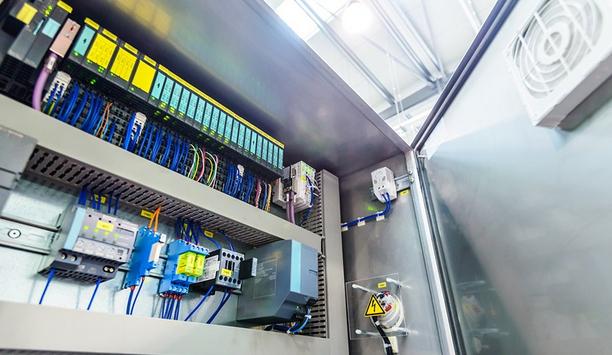
Enclosures containing electronics, communications or cabling infrastructure offer a simple attack point for cyber breaches and an opportunity for a physical attack on the hardware. Yet, many of these assets are housed within enclosures that provide minimal security features to offer a deterrent to any would-be attacker. This has always just been a pet hate. Walking down the high street of a town anywhere in the United Kingdom, you can often see open street communication cabinets. You can actual...

If you’re a security or facilities manager, you may already be aware of the quiet revolution that’s taking place across businesses and organisations up and down the country. By the end of 2020, 20% of all ID and access control systems featured mobile capability, and this is set to increase by a further 34% over the next three years. There’s no doubt that using a smartphone or mobile device in place of traditional credential and access control is a growing trend that’s o...

While the application of facial recognition within both public and private spheres continues to draw criticism from those who see it as a threat to civil rights, this technology has become extremely commonplace in the lives of iPhone users. It is so prevalent, in fact, that by 2024 it is predicted that 90% of smartphones will use biometric facial recognition hardware. CCTV surveillance cameras Similarly, CCTV is a well-established security measure that many of us are familiar with, wheth...

Urban populations are expanding rapidly around the globe, with an expected growth of 1.56 billion by 2040. As the number of people living and working in cities continues to grow, the ability to keep everyone safe is an increasing challenge. However, technology companies are developing products and solutions with these futuristic cities in mind, as the reality is closer than you may think. Solutions that can help to watch over public places and share data insights with city workers and officials...

Technology's role in securing banks and financial institutions
Download
Security technologies promote real-time awareness in K-12 schools
Download
Integrated systems enable critical and compliant security for transportation
Download
Modernising physical access control
Download
Access. Intrusion. One estate.
Download
