Security communication - Expert commentary

The evolution of smart video technology continues at pace. As in many other industries, the onset of the COVID-19 pandemic expedited timelines and the artificial intelligence (AI) video world is continuing its rapid evolution in 2021. As video demand and the use of AI to make sense of the visual data increase, the number of cameras and subsequent data produced are growing rapidly, and these are forcing the creation of new edge architectures. Cameras and AI in traffic management ‘Smart f...

It has long been recognised that no one is safe from cyber-attacks, but some sectors face a much higher level of threat than others. Critical infrastructure sectors such as utilities, energy and industrial manufacturing are some of those that face an intense level of interest from cyber criminals and nation-state groups across the globe. The impacts of a successful attack can have detrimental consequences, for both the cyber and physical side of the business, in terms of business disruption, ec...

James Twigg is the Managing Director of Total Integrated Solutions (TIS), an independent life safety, security and communication systems integrator, specialising in design & consultancy, technology and regulatory compliance. Total Integrated Solutions work primarily with retirement villages, helping to ensure the safety of residents in numerous retirement villages across the country. In this opinion piece, James shares how smart technology is helping security teams and care staff alike in e...

Prices and delivery times for essential components in CCTV systems are being driven up as demand soars from other industries. Secure Logiq’s Robin Hughes explains the current state of the market. Challenges Component shortages and supply chain challenges are a hot topic in just about every industry based on semi-conductors and silicon chips right now, and security is no exception. It’s common knowledge that the global Covid lockdown caused a shutdown in the mining of silicon and s...

Steven Kenny, Axis Communications, looks at the benefits of physical access control systems within smart environments, and how knowledge gaps and dated methods can inhibit adoption. Physical security is becoming more dynamic and more interconnected, as it evolves. Today’s modern access control solutions are about so much more than simply opening doors, with digitalisation bringing multiple business benefits, which would simply not be possible using traditional models. Digital transformat...

Whenever you say the word “security” in today’s world of digitalisation and technology, minds immediately jump to online security. Encryption, passwords, and website security are all common areas of concern for today’s security teams – so much so that we often pass over physical security installations entirely. But we shouldn’t, because contrary to popular belief, security doors aren’t just for banks and safes. High-security doors are deployed and used...

With the continued rolling back of COVID restrictions in the UK, there is a palpable sense of relief. A mixture of mass vaccinations, widespread testing, and track and tracing of the infection is helping to enable a healthy bounce back for businesses – with secure access control taking an important role in facilitating this. However, rather than just being a reaction to the wake of the pandemic, there is every sign that the economy, and consequently the security sector as well, are both r...

Automatic gates remain an increasingly popular security choice for family homes, business premises or public buildings – anywhere that full control over access is needed. While there is much to consider for installers when advising clients on the right solution for their property, from the size, weight and cost of a gate system, it’s useful to be aware of the latest developments in the market, as this can help to find the right option to fit their needs. The need for speed Gates c...

The UK government recently announced a doubling of the Safer Streets Fund to £45 million, as it seeks to reassure the public that safety is a top priority, as the night-time economy makes a return. More than just surveillance While this funding increase is much needed, it’s vital that the government and local councils use the money strategically, or risk missing out on a great opportunity to deliver real change and enhance safety across the United Kingdom. One of the main strategi...

Display solutions play a key role in SOCs in providing the screens needed for individuals and teams to visualise and share the multiple data sources needed in an SOC today. Security Operation Centre (SOC) Every SOC has multiple sources and inputs, both physical and virtual, all of which provide numerous data points to operators, in order to provide the highest levels of physical and cyber security, including surveillance camera feeds, access control and alarm systems for physical security, as...

The Annual Fraud Indicator estimates that fraud costs the United Kingdom approximately £190 billion every year. The private sector is hit the hardest and loses around £140 billion a year, while the public sector loses more than £40 billion, and individuals lose roughly £7 billion. The effects of fraud can be devastating on both individuals and organisations. Companies can suffer irreversible damage to reputation and be forced to close, and individuals can experience sign...

The SolarWinds cyberattack of 2020 was cited by security experts as “one of the potentially largest penetrations of Western governments” since the Cold War. This attack put cybersecurity front and centre on people’s minds again. Hacking communication protocol The attack targeted the US government and reportedly compromised the treasury and commerce departments and Homeland Security. What’s interesting about the SolarWinds attack is that it was caused by the exploitation...

Though many office workers across the globe have found themselves working remotely for the past year, we are seeing a bit of a silver lining, as vaccine rollouts hint at a return to some pre-pandemic sense of normalcy. However, while some of us might opt for a fully-remote work life, others are anticipating a hybrid solution. Even before the pandemic, offices were taking a new, more open layout approach—moving past the days of cubicles and small office configurations. Going forward, offi...
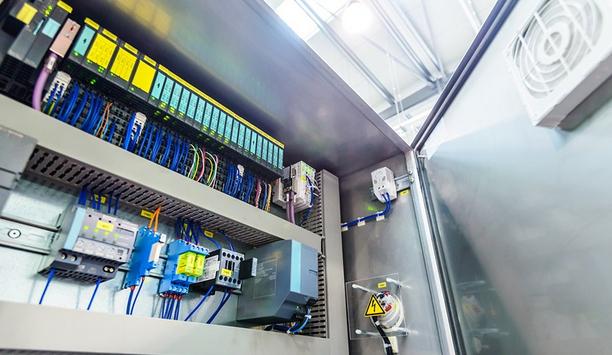
Enclosures containing electronics, communications or cabling infrastructure offer a simple attack point for cyber breaches and an opportunity for a physical attack on the hardware. Yet, many of these assets are housed within enclosures that provide minimal security features to offer a deterrent to any would-be attacker. This has always just been a pet hate. Walking down the high street of a town anywhere in the United Kingdom, you can often see open street communication cabinets. You can actual...

While the application of facial recognition within both public and private spheres continues to draw criticism from those who see it as a threat to civil rights, this technology has become extremely commonplace in the lives of iPhone users. It is so prevalent, in fact, that by 2024 it is predicted that 90% of smartphones will use biometric facial recognition hardware. CCTV surveillance cameras Similarly, CCTV is a well-established security measure that many of us are familiar with, wheth...

The global pandemic has created a working environment filled with uncertainty and, at times, fear, as COVID-19 cases surge yet again and businesses continue to navigate a complex web of infectious disease mitigation protocols and managing the distribution of a potential vaccine. Organisations are operating in an environment where a critical event, posing significant risk to its employees and daily operations, could occur at any moment. Even with a vaccine showing light at the end of a very dark...

Several major players vigorously employ biometric recognition technologies around the globe. Governments use biometrics to control immigration, security, and create national databases of biometric profiles. Being one of the most striking examples, the Indian Aadhaar includes face photos, iris, and fingerprints of about 1.2 billion people. Financial institutions, on their part, make use of biometrics to protect transactions by confirming a client's identity, as well as develop and provide servi...

This year has brought about changes in virtually every sector. As with other frontline industries, the security sector has been tested more than those able to move entirely to remote working. While the promise of a vaccine means an end is in sight, the post-COVID era will not bring with it a return to the ‘normal’ we knew before the pandemic. Organisations have adapted, becoming more resilient and agile and this will have lasting effects. The coming months will continue to be testi...

The unprecedented global impact of COVID-19 has taken its toll on all of us, but as cases of the virus thankfully recede, employers are now forced to confront how they can enable a safe return to work for employees. For many employers, this means they will have to carry out a COVID-19 risk assessment, redesign workspaces to maintain social distances, carry out more frequent cleaning, manage the transmission risk and find alternatives to touch-based security devices. Protecting workplace occupan...

From drone fleets and autonomous transportation systems to smart homes with computer-controlled lighting, heating, media and security systems, a new group of highly-automated technologies is gripping the popular imagination. These technologies – made possible by the Internet of Things (IoT) – form advanced ecosystems of interrelated devices with the capacity to monitor, detect, communicate and act on the real world independently of human intervention. Promising to fulfil all of our w...

Today, the world is connected like never before. Your watch is connected to your phone, which is connected to your tablet and so on. As we’ve begun to embrace this ‘smart’ lifestyle, what we’re really embracing is the integration of systems. Why do we connect our devices? The simplest answer is that it makes life easier. But, if that’s the case, why stop at our own personal devices? Connection, when applied to a business’ operations, is no different: it lowe...

There’s a lot of hype around the term ‘digital transformation.’ For some, it’s the integration of digital technology into everyday tasks. For others, it’s the incorporation of innovative processes aimed at making business optimisation easier. In most cases, digital transformation will fundamentally change how an organisation operates and delivers value to its customers. And within the security realm, the age of digital transformation is most certainly upon us. Tech...

The healthcare sector is a crucial part of a functioning society as it provides life-saving care and reassurance to the population. A key part of ensuring the professionals in this industry have the best work environment is the ongoing security of the facilities. Overcoming environmental challenges Hospitals are challenging environments for security integrators. There is little room for mistakes because staff, patients and assets cannot be compromised. Medical centres and their facilities can...

In 2017, IoT-based cyberattacks increased by 600%. As the industry moves towards the mass adoption of interconnected physical security devices, end users have found a plethora of advantages, broadening the scope of traditional video surveillance solutions beyond simple safety measures. Thanks in part to these recent advancements, our physical solutions are at a higher risk than ever before. With today’s ever evolving digital landscape and the increasing complexity of physical and cyber-a...

In the next three years, software as a service ‘SaaS’ is likely to grow by around 23%. That’s according to reports by Cognizance. It’s growth rests on the adoption of cloud public, private and hybrid. Without the cloud applications can’t truly pervade an organisation, nor can operational or customer benefits be derived. But there’s no point in adopting the cloud if it’s not secure - the proliferation of SaaS demands security, none more so in a GDPR wor...
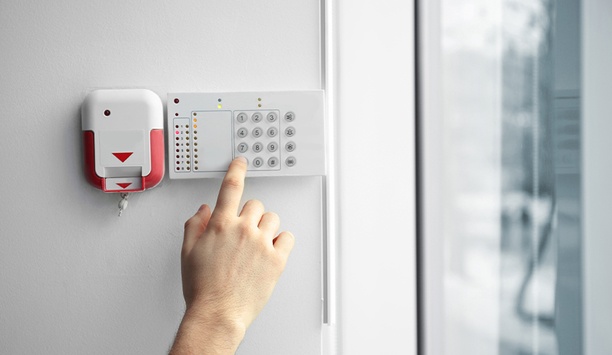
Across the country, law enforcement officers are finding it increasingly difficult to respond to the near overwhelming number of calls coming from security alarms. Police departments commonly define a false alarm as a call, which upon investigation, shows no evidence of criminal activity, such as broken windows, forced doors, items missing, or people injured. While false alarms bog down police, they can also negatively impact customers and integrators. End users can expect hefty fines for fals...

The extensive analysis and discussion preceding any decision to implement a new physical security solution – whether it’s hardware, software or a combination of both – often focuses on technology, ROI and effectiveness. When it comes to deciding what type of security entrances to install at your facility, you will almost certainly also consider the aesthetics of the product, along with throughput and, if you’re smart, you’ll also look into service concerns. Each o...

It’s not surprising that people are nervous about the security of newer technologies, many of which are part of the Internet of Things (IoT). While they offer greater efficiency and connectivity, some people still hesitate. After all, there seems to be a constant stream of news stories about multinational corporations being breached or hackers taking control of smart home devices. Both of these scenarios can feel personal. No one likes the idea of their data falling into criminal hands. A...

When dealing with a substantial, complex security system installation – often covering multiple sites and many hundreds of people – you clearly need a security vendor with the resources and experience to deliver. Smaller security companies may not have adequate means to support the longevity of these projects. This generally isn’t an issue for larger companies, but beware - not all such companies are well placed to deal with large projects; that’s because not all of the...

In the age of massive data breaches, phishing attacks and password hacks, user credentials are increasingly unsafe. So how can organisations secure accounts without making life more difficult for users? Marc Vanmaele, CEO of TrustBuilder, explains. User credentials give us a sense of security. Users select their password, it's personal and memorable to them, and it's likely that it includes special characters and numbers for added security. Sadly, this sense is most likely false. If it's anythi...

Aligning physical and cyber defence for total protection
Download
Understanding AI-powered video analytics
Download
Enhancing physical access control using a self-service model
Download
How to implement a physical security strategy with privacy in mind
Download
Security and surveillance technologies for the casino market
Download

