Physical Security Information Management (PSIM) - Expert commentary

Motion detection is a key feature of security systems in residential and commercial environments. Until recently, systems have relied heavily on closed circuit television (CCTV) and passive infrared (PIR) sensors, which both require significant investment and infrastructure to install and monitor. Developments in wireless technology are increasing home security possibilities. Few years ago, these developments led Cognitive Systems to discover that the wireless signals surrounding oneself can be...

We all know that having CCTV around your home can help to protect you and your family. Without CCTV, you could end up in danger and an intruder could get away with breaking into your house, hurting your loved ones and stealing your possessions. Similarly, without CCTV in the office, you’ll be leaving yourself open to all kinds of damage and could lose a lot of equipment in the process. In short, making sure you have CCTV is important for both home and business security. However, it can be...
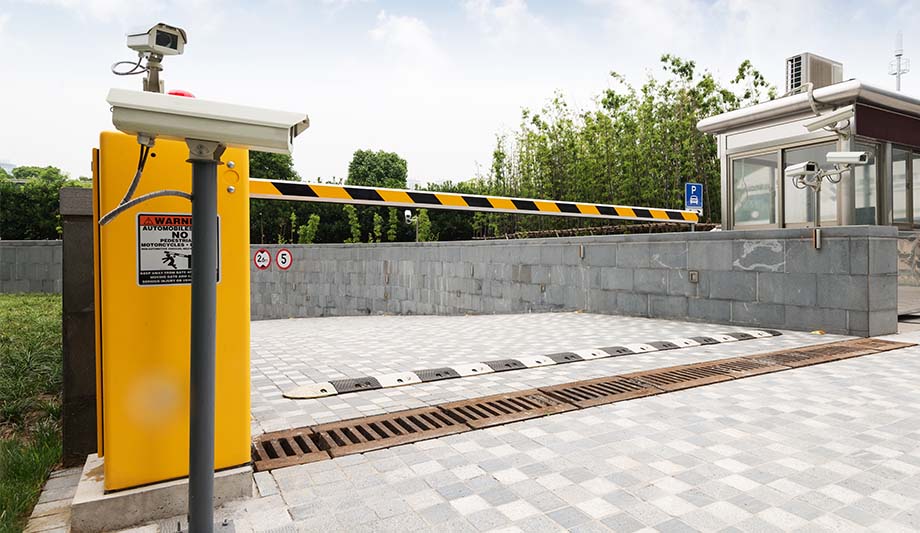
The experience of the COVID-19 pandemic has made us all more conscious of who is coming and going from our property. Whether it is a family home, business premises or public building, property owners want full control over access for protection and peace of mind. As a provider of access control technologies, we are seeing a growing demand for automated gates with a variety of access control systems. There are a number of considerations that buyers need to make when investing. And as an installe...

The unprecedented global impact of COVID-19 has taken its toll on all of us, but as cases of the virus thankfully recede, employers are now forced to confront how they can enable a safe return to work for employees. For many employers, this means they will have to carry out a COVID-19 risk assessment, redesign workspaces to maintain social distances, carry out more frequent cleaning, manage the transmission risk and find alternatives to touch-based security devices. Protecting workplace occupan...

Returning to work after the global pandemic will not be business as usual, and security systems are an important asset when it comes to helping to keep occupants and buildings safe. For example, video analytics can provide insight into how spaces have previously been used and can help to predict where and when occupants encounter each other or congregate. These foot-traffic patterns can inform settings for a variety of devices – like ventilation and temperature controls – and even he...

You are not alone: operators everywhere are asking themselves what are they going to do? How are they going to get back to business, and fast? How are they going to cost-effectively operate with all the new safety requirements that have arisen as a result of COVID? How are they going to ensure it all gets done for the safety of customers and staff? How are they going to protect their brand from the negative exposure of being identified as a property with a reputation for COVID? The economic imp...

Companies are following government guidance and getting as many people as possible working from home. Some companies will have resisted home working in the past, but I’m certain that the sceptics will find that people can be productive with the right tools no matter where they are. A temporary solution will become permanent. But getting it right means managing risk. Access is king In a typical office with an on-premise data centre, the IT department has complete control over network acce...

Artificial Intelligence. You’ve heard the words in just about every facet of our lives, just two words, and they’re quite possibly the most moving, life-changing words employed in everyday conversations. So what exactly is AI, who currently uses it and should be using it? What is AI? AI is a powerful way of collecting, qualifying and quantifying data toward a meaningful conclusion to help us reach decisions more quickly or automate processes which could be considered mundane or rep...

Many industries are, to a greater or lesser extent, in the throes of digital transformation. As with any change programme, digital transformation efforts often under-perform against expectations. Yet, the number of digital transformation programmes continue to increase, as commercial pressures intensify. As security professionals we need to embrace our role in digital transformation, as security is everybody’s business. For all those people weary of hearing about digital transformation an...

ISC West, the world's largest security industry trade show, is just around the corner. This in-person show gathered more than 1,000 manufacturers and over 30,000 visitors from all over the world in 2019. On top of that, more than 200 brands exhibited at ISC West for the first time. This year's event promises to be just as exciting, if not more so. Let’s overview some leading security trends in video management systems development, and what's worth your time and attention at ISC West 2020....

Being in the physical security industry for almost two decades has been an exciting journey, with significant changes that have impacted the world of security. Companies today must be proactive when it comes to securing their facility and are lucky to have so many choices when it comes to security technology. From the beginning, the ISC West show was always at the forefront of new technology and brought together the very best technology and industry professionals in the “City of Lights&rdq...

Two of the most familiar names in the physical security market – Pelco and Panasonic – underwent ownership changes during 2019. Consolidation continued on multiple other fronts. Security service companies, video companies and access control companies were all among the entities involved in merger and acquisition (M&A) activity during the last 12 months. In short, the industry landscape continues to transform in response to a changing market. Here's a look at the Top 10 M&A s...

2017 demonstrated the need for increased safety, security, and collaboration. We predicted that there would be an increase in the role of cybersecurity in 2017, and without a doubt there was great focus around the need for stronger network security protocols. Growing focus on cybersecurity Cybersecurity continues to be top of mind and organisations demand solutions that are cyber-secure. Manufacturers, integrators, and end-users must actively collaborate to develop policie...

The past year has proved to be a year full of many changes both within our industry and for Robotic Assistance Devices (RAD). While we have experienced increased adoption of artificial intelligence-based solutions, the industry has been challenged with an ever-evolving technology landscape. Protecting enterprise organisations from both cyber and physical security threats will be an ongoing challenge the industry must grapple with. Greater adoption of robotic solutions To...

The security industry was strong and healthy in 2017. High-end security markets, such as the power distribution and critical infrastructure sectors, saw continued growth and opportunity for perimeter security technologies like thermal imaging, video analytics and radar. For the low-end security markets, there was significant competition from Chinese manufacturers. Despite this challenge, we saw continued growth from premium Western security manufacturers in 2017 in which many introduced cost-ef...

The threat of international terrorism has changed the way the domestic security industry thinks about protection, just as much as it has for national security services. Whilst violent attacks and terrorism were once predominantly aimed at government, military or political establishments, an uncertain global political climate means the ability to rapidly lock down facilities has risen to the top of any organisation’s security wish list. In reality though, just how easy is it for most organ...

PSIMs have had a bad rap in the pro security industry for a multitude of reasons; ranging from suppliers overpromising on integration and control capabilities to complexity of implementation and use. However, there is a silver lining to this story. Today, advanced PSIM solutions are being successfully deployed in commercial applications with the ability to integrate previously disparate professional access, video, notification, building operations and more onto a unified control and management...
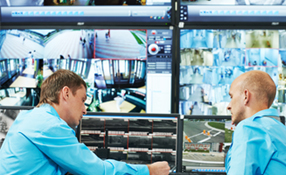
Today, we find ourselves in a world where we all need to talk less about products and more about solutions The security industry has changed a lot in recent years. Many will remember a time not so long ago when it was about buying boxes/pieces of tin, opening them up and installing them. Today, we find ourselves in a world where we all need to talk less about products and more about solutions. Despite this, there is still an inclination to put everything in a ‘box’...

Cloud connectivity can provide a linkage between the mobile users and the facilities and systems they want to interact with From enterprise applications to small businesses, schools, health care facilities and beyond, investments in physical security systems provide valuable resources to help protect people, property and assets – and ultimately the financial security and well-being of the organisation. As need and demand for better security has dramatically increased ove...

PSIM systems extend their value beyond emergencies by including routinemanagement tools, that provide value during daily operations, such as automatingmaintenance activities Physical Security Information Management (PSIM), an acronym termed to describe a family of software platforms that claim to replace traditional command and control (C&C) systems, primarily used to provide situation awareness in control and monitoring centres of Critical Facilities. Traditional C...

Many transformations have occurred that have caused PSIM’s true definition to be misunderstood and miscategorised The evolution of Physical Security Information Management (PSIM) over the past ten years has been rapid and transformative. In fact, according to a recent report from marketsandmarkets.com, the global physical security market, estimated to be $65.41 billion in 2015, is expected to reach $105.26 billion by the year 2020. At the forefront of this movement...

The disaster training exercise took place at four sites, with the primary locationbeing a disused power station in Kent (Image credit: London Fire Brigade) Europe's biggest-ever disaster simulation provided a test to evaluate London’s ability to "detect, prevent and if necessary to withstand, handle and recover from disruptive challenges." Exercise Unified Response replicated the aftermath of a tower block falling into Waterloo Station, a transport hub on the south bank...

The development of PSIM security systems and the move towards smart buildings and cities holds huge potential for environmental performance in the security industry Is the drive to give clients improved CCTV, perimeter protection, intruder alarms and access control making our industry any greener? Is technological innovation consistent with reducing security industry’s carbon footprint? In any case, green operating practices are more a side effect of current developments...

As the world faces new threats and challenges at the end of 2015, the security market looks more and more attractive for companies and employees around the world. Digital technology increasingly is replacing a traditional physical security approach, upgrading old-school analogue alarms and CCTV. Attractive security projects From AxxonSoft’s point of view, security projects seem very attractive because they normally can bring up to 30% profit for a standard security system installation....

Many of the most well-trafficked articles posted at SourceSecurity.com in 2015 were those that addressed timely and important issues in the security marketplace. In the world of digital publishing, it’s easy to know what content resonates with the market: Our readers tell us with their actions; i.e., where they click. Let’s look back at the Top 10 articles we posted in 2015 that generated the most page views. They are listed in order here with the author’s...

The Eiffel tower illuminated with colours of the French national flag on November 16 Let’s say it up front: The physical security sector has limited solutions to address events like those in Paris on the 13th November. The series of coordinated terrorist attacks consisted of mass shootings, suicide bombings, and hostage-taking in which 129 people died. Among the dead were 89 people at the Bataclan theatre where American band Eagles of Death Metal was playing at the t...

Aventura continues to expands expand its feature set of products beyond PSIM As the 61st annual ASIS 2015 kicked off in Anaheim, Calif., it became increasingly clear that physical security continues to move from the realm of traditional intrusion detection, video surveillance and alarms into value-added applications that extend into new markets, uses and purposes – many of them centred on business and operational processes. While video surveillance, intrusion detection,...

(see bigger image) The very nature of true enterprise PSIM software is that it has the capability to connect to other systems and subsystems In this article, James I. Chong, CEO & Founder of Vidsys, sheds light on true PSIM (Physical Security Information Management). He mentions how Vidsys is continually innovating and accelerating its roadmap for PSIM toward Converged Security and Information Management or CSIM. Citing various analysts’ projection, James s...
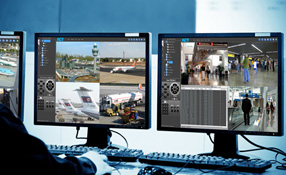
Michael Byrden, Sales Director of ACT, considers the convergence of facility management. He describes how ACT, the access control manufacturer, has acquired a VMS and analytics development house in order to unify security solutions and bring customers nearer to the goal of a truly intelligent building. Desire for open systems Major acquisitions have been dominating the news recently and, even if this lays me open to a charge of naivety, I genuinely believe that they aren’t predatory. As...

The security industry continues to move away from closed, proprietary systems and instead is fine-focused on open solutions that assist the move to total integration. The benefits of achieving this feat belong to both installing company and end user. Benefits of open security solutions Open, interoperable systems make it easier to integrate a wide array of sensors, devices and communication technologies across the enterprise. That means quicker installations, lower labour costs and heightened...

Aligning physical and cyber defence for total protection
Download
Understanding AI-powered video analytics
Download
Enhancing physical access control using a self-service model
Download
How to implement a physical security strategy with privacy in mind
Download
Security and surveillance technologies for the casino market
Download

