Network cameras - Expert commentary

Back in 1890, Samuel Warren and Louis Brandeis published a ground-breaking article in the Harvard Law review called ‘The Right to Privacy’. To this day, it is regarded as one of the most influential essays in the history of American law and is widely regarded as the first publication in the United States of America to advocate a right to privacy, articulating that right primarily as a ‘right to be let alone’. In this essay, the authors questioned whether the arrival of p...

Many people, quite correctly, point to Salesforce.com—which launched in February of 2000—as the first example of cloud computing. In the years following, the term ‘cloud’ became so popular and was applied to so many products and service offerings, that it became almost meaningless. The result was cloud confusion in the business world and in the media. In one stark example from 2008, Oracle CEO Larry Ellison described news stories about cloud as, ‘complete gibberis...

Currently and unfortunately, there is no such thing as Cloud Police. If there were, two-thirds or more of the companies using ‘cloud’ in their advertising and documentation would be in Cloud Jail for seriously misusing the word in their marketing. The term ‘Cloud’ is over-used and misused—sometimes intentionally and knowingly, but also often in ignorance. It’s just a word—but in the context of cloud computing technology, it does have a specific meaning...

The world around us is full of technological innovation. Smart locks are commonplace in our homes and control access to buildings, but when it comes to industrial locking and access control for equipment cabinetry, options can seem limited. Equally, there’s not enough accessible information to act as a guide. The development of new technologies and cabinet capabilities feels as though it is being held back. But that doesn’t have to be the case. Common problems are seen across the l...

In the era of the ‘Great Resignation’, it may seem counterintuitive to say that people will power business security in 2022. However, a convergence of challenges over the past few years has led to an undeniable trend in the security industry: With more technology comes the need for more people to monitor, analyse and leverage the data that technology produces. Always-on approach to security Since businesses were forced into lockdown two years ago, we’ve seen technology adopti...

Every day, millions of people worldwide use their personal credentials to prove their identity and access a range of services, from databases in their workplace to the banking app on their smartphone. But while this ensures only authorised people have access to certain systems, the use of this personal data opens users up to cyber risks, primarily in the form of identity theft. On Identity Management Day, Source Security spoke to seven IT and cybersecurity experts to discuss their experiences a...

Most individuals have strong opinions about what is more essential to our civilisation: personal privacy or security. After more than a decade of technology enabling greater and greater amounts of Personally Identifiable Information (PII) and data harvesting, now the pendulum is swinging towards a society that places more emphasis on individual rights and privacies. This shift is manifesting in a variety of ways, quickly changing the technology, security and cyber security landscapes, and requi...

Most of the assumptions you’ve made about gunshot detection could be wrong. To those security professionals who stay on top of their homework, this is probably not true, but the ‘you’ in this context is directed to the collective security industry reader that, when looking into indoor gunshot detection products, sees terms like concussive force, percussion, or shockwave and wonders if these are important differentiators – or something the marketing department decided woul...

As we navigate the new normal, the power of choice and flexibility continues to take centre stage. We’ve grown accustomed to the choice to work from home or virtually anywhere and the flexibility to have everything delivered (sometimes even right into your fridge!). Seamless access control With this, we are seeing heightened demand for seamless access control through smart locks and mobile credentials. This powerful combination creates exciting new opportunities to meet resident demand f...

As a result of COVID-19, artificial intelligence (AI) has become table stakes for factories. Google’s 2021 Cloud Manufacturing Report found that 76% of manufacturing executives increased their adoption of disruptive technologies, including AI, during the pandemic. AI-based facial recognition technology AI has long been used in the sector to monitor the pace of work and anticipate machine failures, a trend that is expected to continue this year as factories look to optimise operations. Ho...

Corporate global security operations centres (GSOCs) bear the responsibility for protecting C-suite executives from physical and reputational harm amid the social upheaval, extreme weather events, and escalating cyber threats. That mission, daunting as it is, becomes more difficult when GSOCs lack the data necessary for conducting a comprehensive threat assessment. Threat intelligence Unfortunately, many centres never move past basic threat intelligence which focuses on scenario-driven queries...

There is no denying that the COVID-19 pandemic has radically changed the way we work. In May 2021, 31% of the countries workforce was still working remotely, with 71% of businesses in professional, scientific, and technical industries remote-working. Work patterns shifting Although the conversation often focuses on office workers, the COVID-19 pandemic has impacted the way many other, non-office sectors operate. In the security industry, since the introduction of lockdowns and social distancin...

Cloud-based applications and platforms revolutionise supply chain management, helping stakeholders scale operations from small businesses to complex enterprises. Cloud supply chain solutions are showing significant increases in implementation – so much so the sheer number of organisations with a cloud solution outpace or far outnumbers the ones that don't. But there is one area that has still not made the switch to the cloud, most often the security department. But the advent of using vid...

They say nothing stays the same for long, and this has never been truer than in today’s world of technology and innovation. The 21st century has seen rapid changes and every day brings a new update in one of the many segments of technology. Technology is evolving at such a rapid rate, due to a phenomenon dubbed accelerating change. Each new improvement is now a stepping stone, enabling stronger and better generations of technology, at faster speeds. Accelerating change evolving across all...

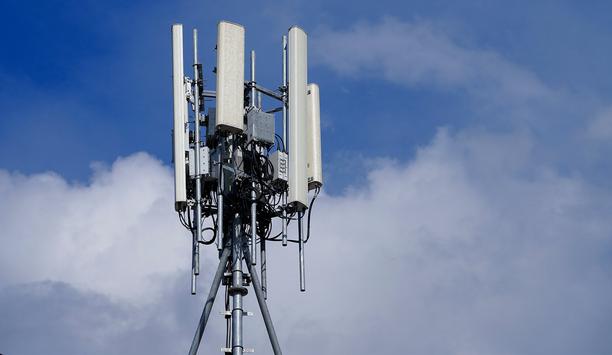
Businesses large and small rely on their CCTV systems to deter intruders and provide recorded evidence of security incidents. Overtime, CCTV has evolved to offer real-time intrusion detection and monitoring, and businesses now expect easy, secure and anytime access to cameras, and data. For that, they need connected CCTV systems. These modern installations can benefit from cellular connectivity, helping businesses protect their sites, while also supporting enhanced capabilities for CCTV to deliv...

In the new era of work, our relationship with the workplace is defined by flexibility and mobility. Employees are working across the home, office, and blended spaces more than ever before, as well as working varied hours to suit the modern work schedule. This new hybrid workforce model holds the potential for more diverse talent and better productivity, but it also comes with its challenges – one being how to ensure security, health, and safety in the workplace. Strong a...

Technology has certainly become an intrinsic part of our day-to-day lives, from the retail industry, to food and beverage outlets, and even within the health and fitness industry. It’s all around us, in varying formats, making processes more efficient. It has refined some of our older approaches, and in the hospitality industry, this is certainly true. Technological advances are leading the way forward for the future of hotels, and with the sector now free from COVID-19 restrictions, venu...

Security is a critical requirement for all organisations. Getting security right involves the correct mix of people, processes and technology working together. However, many enterprise companies don’t look at the full mix that encompasses information security, and instead split their physical security and business continuity teams away from their IT security departments. According to research by ASIS, around half (52 per cent) of companies have converged two or three out of their physica...

In the field of access control, face recognition has come a long way. Once considered too slow to authenticate people's identities and credentials in high traffic conditions, face recognition technology has evolved to become one of the quickest, most effective access control identity authentication solutions across all industries. Advancements in artificial intelligence and advanced neural network (ANN) technology from industry leaders like Intel have improved the accuracy and efficiency of fa...
As anti-fraud company Revector marks 20 years of operating, CEO and Founder Andy Gent believes that telecommunications fraud is still not high enough on the corporate agenda for network operators – this should be a significant concern to shareholders. In 2001, Revector was launched to combat specific fraudulent activity against mobile network operators. The company’s management expected the business to have a shelf life of no more than five years – such as the belief tha...

More than a year and a half after the COVID-19 pandemic began, countless workers are still doing their jobs remotely rather than from their offices. While there are many positives to working from home, there can also be some negatives at play like nefarious actors taking advantage of the tools and connections that employees use in work from home environments. Insider threats, a security risk that comes from within the organisation, are posing a major security problem for businesses. This is pa...

The COVID-19 pandemic is only accelerating the expansion of Automation, Robotics, Machine Learning (ML) and Artificial Intelligence (AI), and changing how people live their daily lives. This expansion leads the way with technologies that are developed to solve problems, improve operations, streamline processes and assist people, to focus on learning new skills, creativity, and imagination. Transformation of the physical security industry One of the latest industries to be permanently transform...

Today’s organisations face numerous diverse threats to their people, places and property, sometimes simultaneously. Security leaders now know all too well how a pandemic can cripple a company’s ability to produce goods and services, or force production facilities to shut down, disrupting business continuity. For example, a category three hurricane barreling towards the Gulf of Mexico could disable the supplier’s facilities, disrupt the supply chain and put unexpected pressure o...

Intrusion alarm systems are currently facing a growing number of potential error sources in the environment. At the same time, alarm systems must comply with increasingly demanding legal requirements for sensors and motion detectors. As a future-proof solution, detectors equipped with Sensor Data Fusion technology raise the level of security while reducing the risk of cost- and time-intensive false alarms. This article provides a comprehensive overview of Sensor Data Fusion technology. Anti-mas...

The concept of security has substantially upgraded because of technological advancements. We have seen a shift from mechanical locks to electronic locks and door access control systems which are more relied upon nowadays for watertight security and safety. But, choosing the system that is the best for you requires understanding how both these technologies work. In this article, you will get a clear idea of: How electronic locks are better than traditional locks The difference between access...

Cyber threats hit the headlines every day; however digital hazards are only part of the security landscape. In fact, for many organisations - physical rather than virtual security will remain the burning priority. Will Liu, Managing Director of TP-Link UK, explores the three key elements that companies must consider when implementing modern-day business surveillance systems. 1) Protecting more than premises Video surveillance systems are undoubtedly more important than ever before for a...

Technology based on the cloud has become a popular trend. Most IT systems now operate within the cloud or offer cloud capabilities, and video surveillance is no exception: virtually every major hardware and software vendor offers cloud-based services. Users benefit from the cloud due to its numerous advantages, such as ease of implementation, scalability, low maintenance costs, etc. Video surveillance as a service (VSaaS) offers many choices, so there is an optimal solution for each user. Howev...

As the number of connected devices increases worldwide, the ways that they are being used, designed, and tested have also expanded. The rise of connected devices is demanding engineers to harness the power of the internet of things, which is expected to hit 28 billion by 2025. A comprehensive approach to device design is needed more than ever to address the challenges that this rapid growth will bring. Why engineers should be using IoT technology in product design The demand for devices desig...

The impact of the COVID-19 pandemic has accentuated our digital dependency, on a global scale. Data centres have become even more critical to modern society. The processing and storage of information underpin the economy, characterised by a consistent increase in the volume of data and applications, and reliance upon the internet and IT services. Data centres classed as CNI As such, they are now classed as Critical National Infrastructure (CNI) and sit under the protection of the National Cybe...

Video surveillance systems are producing more unstructured data than ever before. A dramatic decrease in camera costs in recent years has led many businesses to invest in comprehensive surveillance coverage, with more cameras generating more data. Plus, advances in technology mean that the newest (8K) cameras are generating approximately 800% more data than their predecessors (standard definition). Traditional entry-level solutions like network video recorders (NVRs) simply aren’t built...

Technology's role in securing banks and financial institutions
Download
Security technologies promote real-time awareness in K-12 schools
Download
Integrated systems enable critical and compliant security for transportation
Download
Modernising physical access control
Download
Access. Intrusion. One estate.
Download
