Network cameras - Expert commentary

There was a time when physical security and cybersecurity occupied two very different worlds. One was concerned with the nuts and bolts of locks, doors and perimeter protection. The other focused on networks, software and digital threats. Today’s modern access control systems – used in everything from offices and hotels to hospitals and data centres – combine the two, fusing mechanical engineering and cloud platforms. That means that a door is no longer simply a physical barri...

The biggest return on investment from an AI-enabled camera might have nothing to do with security. Organisations are increasingly discovering that the same cameras installed to protect people and property can also improve safety, streamline operations, automate routine workflows, and generate valuable business intelligence. Security remains the primary mission, but it is increasingly only the first customer for the intelligence these systems produce. AI-enabled cameras are rapidly becoming dis...

In logistics hubs, production facilities and distribution centres, the access control system is invisible—until it isn't. For decades, the 125 kHz card has been the workhorse of industrial credentialing: inexpensive, reliable and universally understood. It does exactly what it has always done. That consistency has served many organisations well, even as security needs and credential From authentication to smart buildings, gain expert insights about unified access. The same card technology...

Europe has set an ambitious goal. With the European Green Deal, leaders aim to make the continent climate neutral by 2050. Ireland is following this lead, promising to cut greenhouse gas emissions by 51% before 2030. And solar energy is a key part of this plan. If you drive through rural Ireland today, you can see the changes happening. Solar farms now cover former grazing land and open fields. They work quietly and efficiently, providing clean electricity to homes, hospitals, schools, and busi...

For years, physical security and cybersecurity evolved on parallel tracks. One team managed doors, badges and cameras, while the other handled network access, authentication and logical assets. The systems rarely shared information and, in many organisations, they still do not. That separation is becoming harder to defend now that employees move continuously between physical and logical environments throughout the workday. A single person may badge into a building, access cloud applications, re...
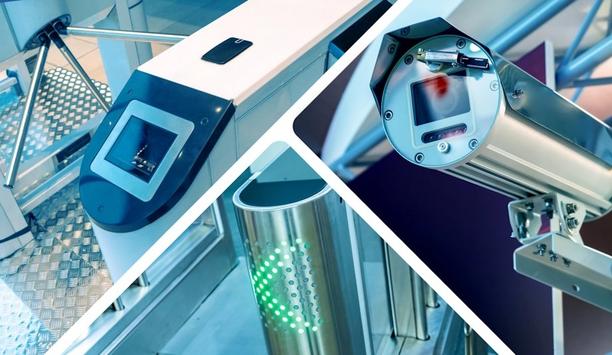
Modernising security infrastructure requires research and planning to build intelligent, connected systems that are secure, scalable and positioned to take the organisation into the future. Prioritising needs, total cost of ownership, interoperability, resilience and sustained value will help ensure that a surveillance system upgrade will deliver both protection and measurable operational impact. Before making that investment, however, security leaders must answer a few key questions to manage...

For years, innovation in physical security has focused on what systems can do: higher-resolution cameras, AI-driven analytics, smarter access control, and cloud-based management. But across deployments, from residential systems to enterprise campuses, a more fundamental issue continues to undermine performance: Connectivity. It is increasingly clear that the effectiveness of modern security systems is not limited by sensors or software, but by the reliability, reach, and architecture of the net...

A security camera installed today has more AI processing power than the systems that guided early autonomous vehicle prototypes. And yet the operator who mounts that camera on a wall will, in all likelihood, never use most of that capability. Industry surveys bear this out: a wide gap persists between the number of security professionals who believe AI can improve outcomes and the much smaller share who have adopted it operationally. The reason has nothing to do with the silicon and every...

As AI infrastructure concentrates into fewer, more powerful data centres, the most dangerous disruption method is no longer just hacking, but control, too. And the weakest link is often identity, authority, and operational access, not software vulnerabilities. All data centres have operational levers that can shut them down instantly, and none require sophisticated cyberattacks. Shut off the cooling, turn off the power, close down access, or misuse maintenance procedures, and you can shut down...

For years, the worlds of physical security and information technology (IT) remained separate and often at cross-purposes. The departments often worked in silos, despite the fact that infrastructure needs were crucial in the security industry and network traffic and data were of interest to IT professionals. Today, these practices are no longer divided. Physical security depends on network security, and vice versa. For partners, this presents a new challenge – how to speak to both IT and s...

In security, vision is paramount. The surveillance camera serves as an unwavering digital eye—the foundational source of truth. Yet a critical vulnerability persists: what happens when these “eyes” falter without warning? Corrupted footage or unexplained gaps in recorded evidence can render an entire system unreliable, turning trusted video into questionable data. Relying on chance is no longer a viable strategy. Traditionally, ensuring the health of a video surveillance syste...

In mobile surveillance, remote sites, and environments with unstable networks, video recordings often suffer from "time gaps" due to network interruptions, a longstanding technical challenge for security systems. Under traditional architectures, central servers rely on real-time streams for storage. Once the network connection is lost, the recording timeline experiences an irrecoverable interruption, leading to the loss of footage of critical events. This creates a fundamental flaw in post-eve...

Currently, in security surveillance, the application of intelligent analysis technology has two approaches: front-end intelligence and back-end intelligence. Front-end intelligence Front-end intelligence is typically implemented within the video surveillance camera itself, integrating AI edge algorithms into the camera. Its advantages include: acquiring video in real-time and performing video analysis and feedback results immediately. Benefits No consumption of network resources like bandw...

A key characteristic of many successful companies is that good ideas come from everyone, not just specific departments or job titles. What one person sees as obvious may be questioned by someone else who is less familiar with the product or process. This simple interaction can spark a whole new, faster, and better approach. While valuing tradition is important, if someone uses the phrase “that’s how we’ve always done it,” it’s essential to analyse the process...

The physical security industry has been in love with the cloud for quite some time. And understandably so. The promise of instant scalability, centralised access, and simplified maintenance is hard to ignore, especially in an era of remote work and distributed facilities. But reality is catching up to the hype. For many, especially those dealing with video surveillance at scale, the cloud is no longer the catch-all solution it once seemed. Rising costs, bandwidth limitations, and latency issue...

In the old days, hopping onto the platform from a not-yet-stopped train was a commonplace stunt for daily commuters in a hurry. It was a thrilling, but dangerous part of railway travel. Today, rail travel is generally much safer, but thrill and fame seekers are finding new, creative ways to use the railway to court notoriety online. Earlier this month, a young man filmed himself laying on the tracks and allowing a train to pass over him. In another instance, two people were seen misusing...

In the ever-evolving struggle between cyber offence and defence, attackers have almost always moved first. In the emerging domain of artificial intelligence, this pattern appears to be repeating itself. Yet, global cybersecurity pioneers appear disconcertingly disengaged. Just over half even agree that AI-driven attacks are set to become dramatically more complex and widespread. Equally concerning is the widespread apathy regarding AI’s role in expanding an already sprawling corporate att...

March is Women in Security Month, a time dedicated to celebrating and promoting the contributions of women in the security field—particularly in cybersecurity. This observance aligns with Women’s History Month, providing an opportunity to reflect on the progress made and the work still needed to advance gender equity in security. Evolving role of women in security The security industry has witnessed a steady increase in women's participation. According to ISC2 Research in its &ld...

Technology advances in the security industry are transforming the way modern systems are designed and installed. Customers today are looking for greater scalability and flexibility, lower up-front costs, and operational efficiency. Cloud-based software as a service (SaaS) solutions, AI-enhanced tools, and IoT-enabled sensors and devices are increasingly in demand. The traditional role of the systems integrator is evolving as a result. While security integrators have always worked closely with e...

A survey conducted by Blackhawk Network finds the average shopper plans to spend almost half of their holiday budget to buy gift cards this year versus only 39% in 2023. The global gift card market was valued at $1.3 billion USD in 2023, and it is projected to reach more than $5.2 billion USD by 2032. Fraud - a growing concern While gift cards continue to be top of mind for consumers for streamlined gifting, gift card fraud is a growing concern for consumers and businesses alike. Accordin...

In today’s world, almost any electronic security system holds the potential to become a gateway for cybercriminals. With physical security and cybersecurity increasingly entwined, security professionals aren’t doing their job unless they take all possible precautions to lock down unauthorised access to camera systems, access control platforms, intercoms, and other network-based security devices and solutions. Let’s explore the many steps companies should take throughout their...

Digital access control has well-known benefits over traditional security, of course, but also costs attached to each stage of its lifetime. However, these costs are not fixed. Many factors – including building size, shape, type, location, national regulations and more – impact affordability and efficiency calculations. Crucially, the type of access solution a business selects – wired or wireless – impacts total operating costs, including during installation, running and...

As urban populations grow and security challenges evolve, Californian cities have increasingly turned to advanced surveillance systems to enhance public safety. Surveillance infrastructure Between 2022 and 2024, these cities have made significant strides in upgrading their surveillance infrastructure, driven by concerns over crime, public safety, and the need for more sophisticated emergency response systems. This article explores how California's urban areas are improving surveillance techn...

The European Union’s GDPR (General Data Protection Regulation) framework represents some of the toughest and most secure privacy laws in the world. Their creation signaled the EU’s dedication to individual privacy rights and generated new standards and requirements for an organisation inside or outside of the EU wanting to do business in the region. This privacy stance raises an interesting question: to what extent (if any) will France be utilising AI-assisted security and biometri...

As city managers, law enforcement agencies, and first responders face mounting pressure to combat crime and respond to emergencies with limited resources, real-time crime centres empowered by a new generation of data-driven technologies are emerging as an effective force multiplier. Real-time crime centres Real-time crime centres (RTCCs) serve as centralised hubs where dedicated personnel leverage pioneering-edge technologies to analyse diverse data streams and provide critical support t...

Choosing the appropriate fingerprint technology for a given application is dependent on factors including the required level of security and matching accuracy, the desired capabilities and features, and the usability to achieve adoption and productivity goals. A successful evaluation process will help ensure that this mature and proven user authentication method performs as expected. Fingerprint biometric advantages The speed, simplicity, accuracy, and cost-effectiveness of the fingerprint m...

Educational institutions worldwide increasingly rely on robust wireless networks to enhance academic pursuits, safety measures, and operational efficiency. The campus environment, a complex network of interconnected buildings, and the humans navigating them require innovative technologies to meet these diverse needs. The solution lies in a new wireless protocol that provides an ideal fit for the long-range, low-power connectivity requirements of educational campuses: Wi-Fi-certified HaLow. Wi...

Changing customer needs can make specifying an alarm system that will continue to deliver in the long term a challenge. However, the latest modular alarm solutions provide the opportunity to build a more individualised system from the outset, as well as offering the ability to up-scale in the future without causing disruption. Martin Wilson, North EMEA Regional Director at Resideo, looks at how alarm specialists can use this style of solution to both benefit customers and build their own busine...

The adoption of innovative and interconnected door hardware systems can help overcome the challenges associated with building security, explains Daniel May of Consort Architectural Hardware. The security of our built environment and the safety of its people is paramount throughout a building’s lifecycle. While these elements remain a primary focus at each touchpoint of a construction project, today’s design teams are sooner adopting modern access control systems to address this age-...

The importance of data is ever-growing. For every profession, we’re witnessing the increasing reliance on data and its ability to promote efficiency for corporate decision-makers. The security industry is no different. The growing reliance on data and technological tools has allowed for a new breed of professionals with specialised skill sets. This evolution reflects the changing nature of security challenges in the digital age. The new security environment We know one thing from near...

Technology's role in securing banks and financial institutions
Download
Security technologies promote real-time awareness in K-12 schools
Download
Integrated systems enable critical and compliant security for transportation
Download
Modernising physical access control
Download
Access. Intrusion. One estate.
Download
